

 economics
Similar presentations:




Economics. Introduction
1. Economics
Grade: 12Economics
2. Introduction
3.
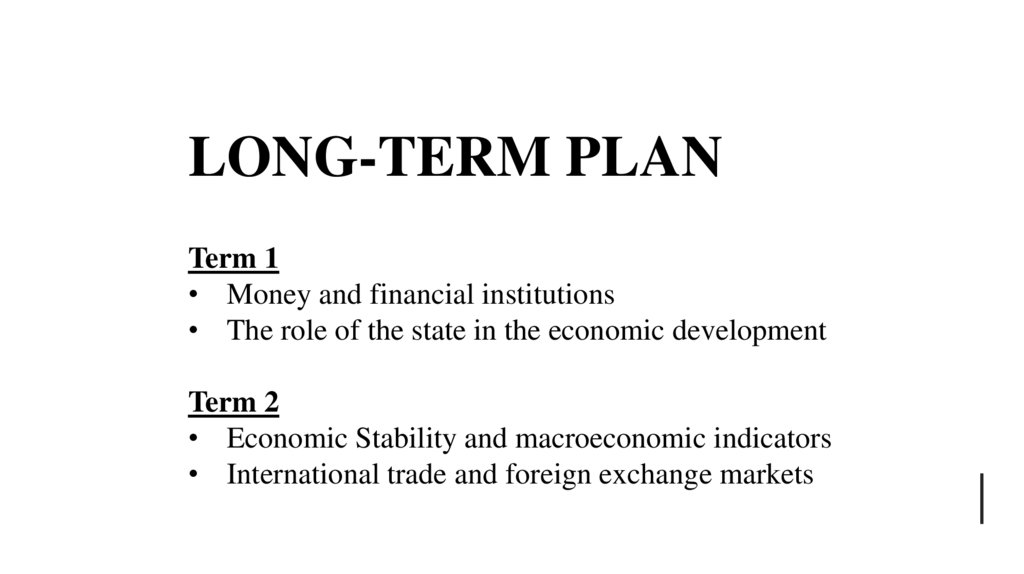
LONG-TERM PLANTerm 1
• Money and financial institutions
• The role of the state in the economic development
Term 2
• Economic Stability and macroeconomic indicators
• International trade and foreign exchange markets
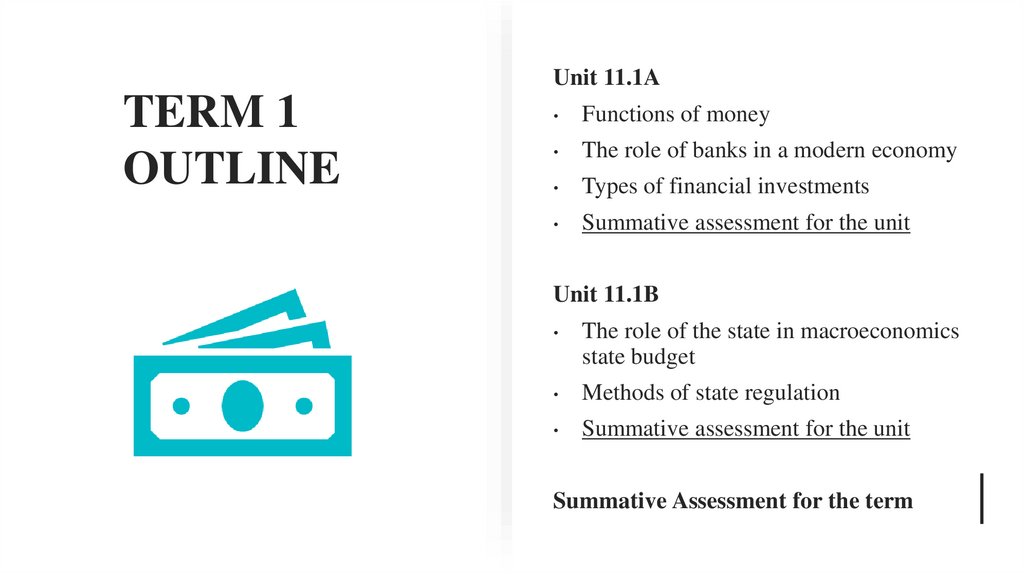
4. TERM 1 OUTLINE
Unit 11.1ATERM 1
OUTLINE
Functions of money
The role of banks in a modern economy
Types of financial investments
Summative assessment for the unit
Unit 11.1B
The role of the state in macroeconomics
state budget
Methods of state regulation
Summative assessment for the unit
Summative Assessment for the term
5. Learning Objectives
Describe what money is
List and summarize the functions of money
Identify different types of payment systems
Identify the functions and evaluate the
importance of money in the macro
economy
6. What Is Macroeconomics?
a branch of economics that studies how an overall
economy behaves.
Macroeconomics deals with the performance,
structure, and behavior of the entire economy, in
contrast to microeconomics, which is more focused
on the choices made by individual actors in the
economy (like people, households, industries, etc.)
7. Questions addressed and focus
e.g. What causes unemployment? What causes
inflation? What creates or stimulates economic
growth?
Macroeconomics studies economy-wide
phenomena such as inflation, price levels,
rate of economic growth, national income,
gross domestic product (GDP), and changes
in unemployment.
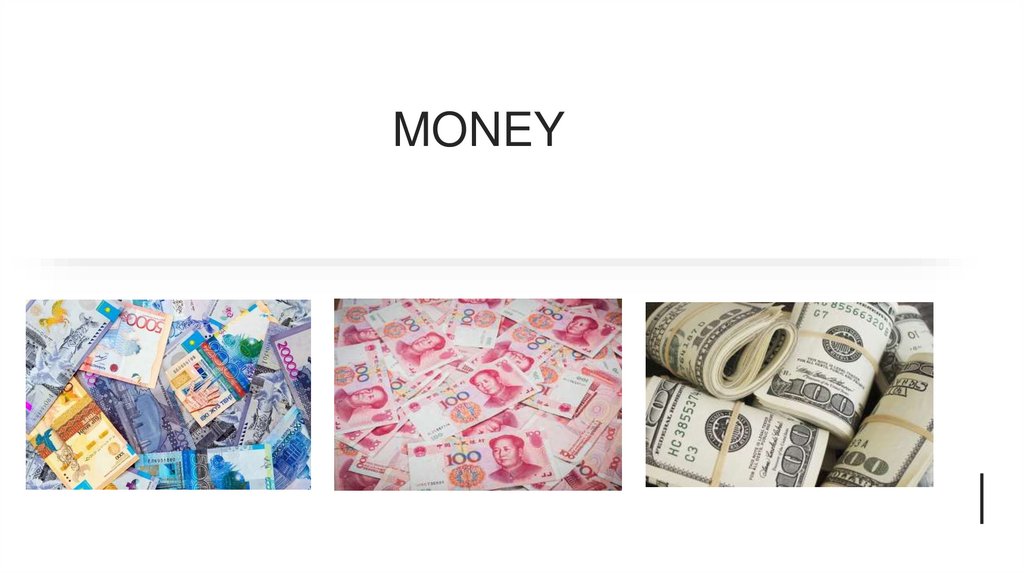
8. MONEY
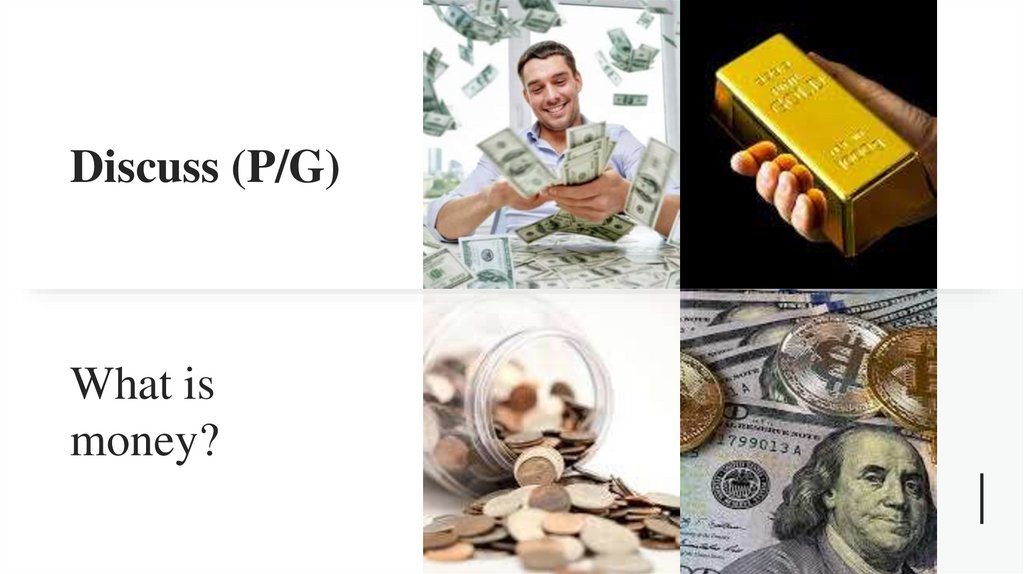
9. Discuss (P/G)
What ismoney?
10.
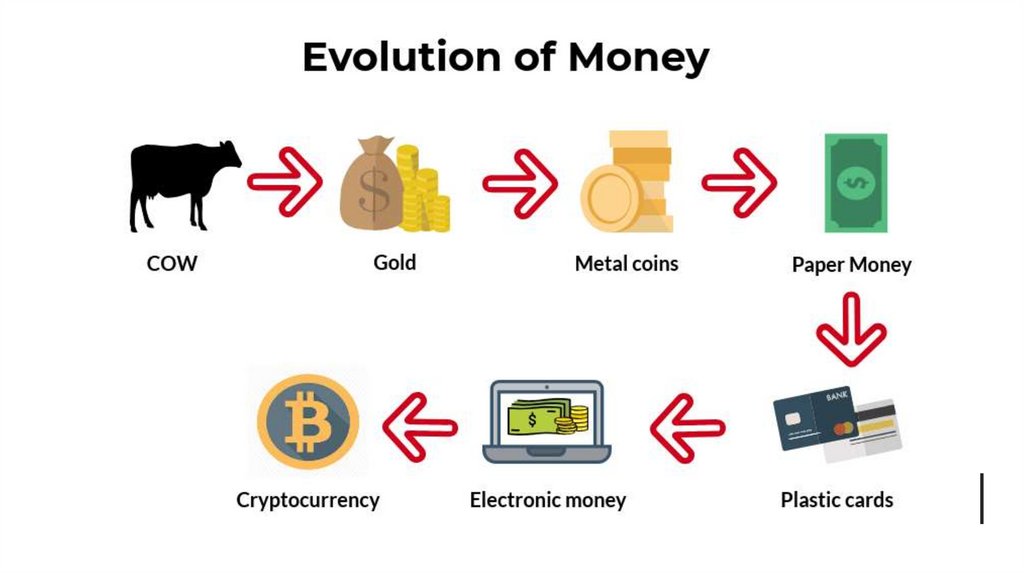
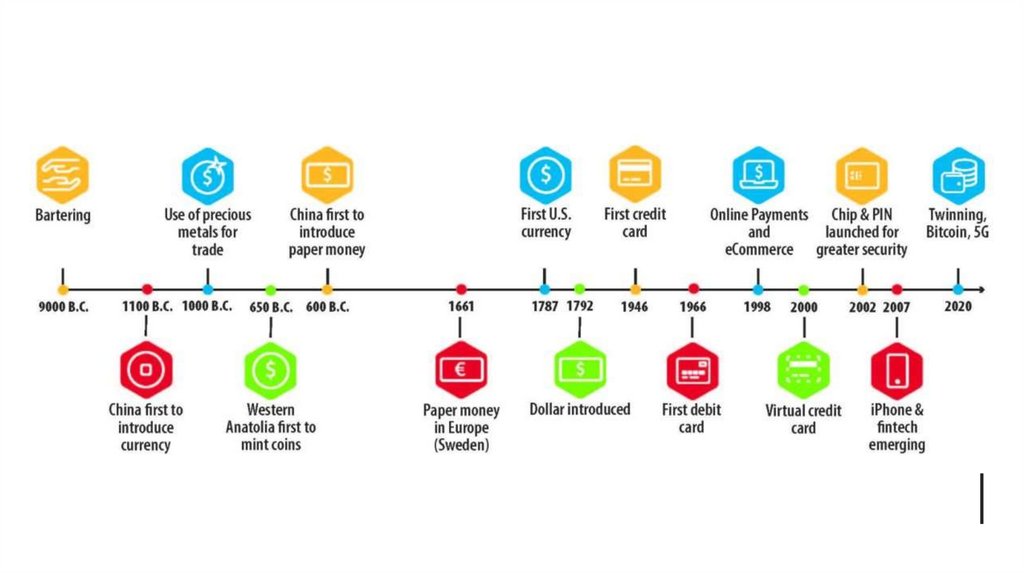
11. Watch a video about money and discuss
A brief history of money - From gold to bitcoin and cryptocurrencies - YouTube12. Meaning of Money
Money is a system of value that
Money (or the “money supply”):
facilitates the exchange of goods in an
anything that is generally accepted as
economy.
payment for goods or services or in the
repayment of debts.
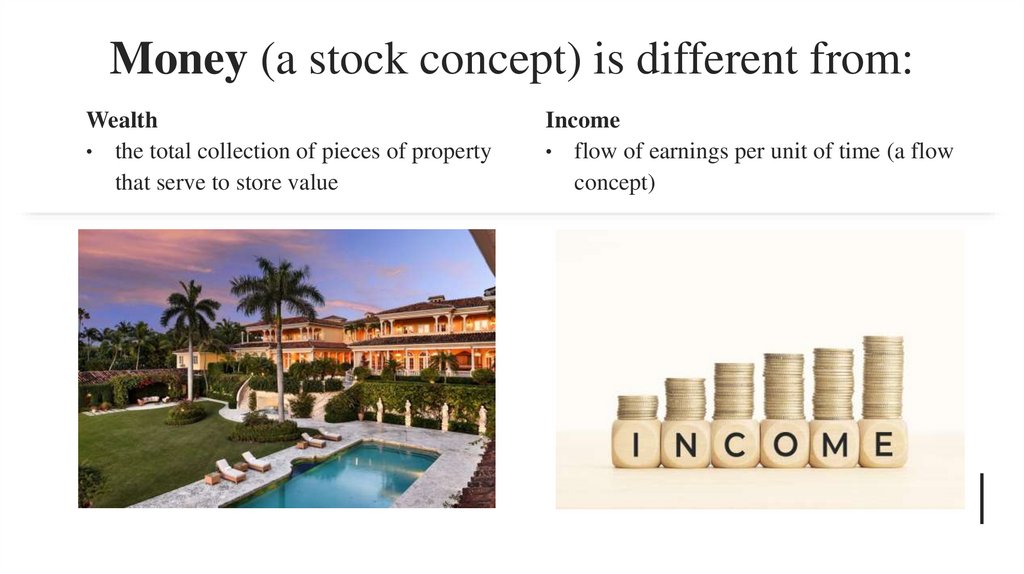
13. Money (a stock concept) is different from:
Wealth• the total collection of pieces of property
that serve to store value
Income
• flow of earnings per unit of time (a flow
concept)
14.
15.
16.
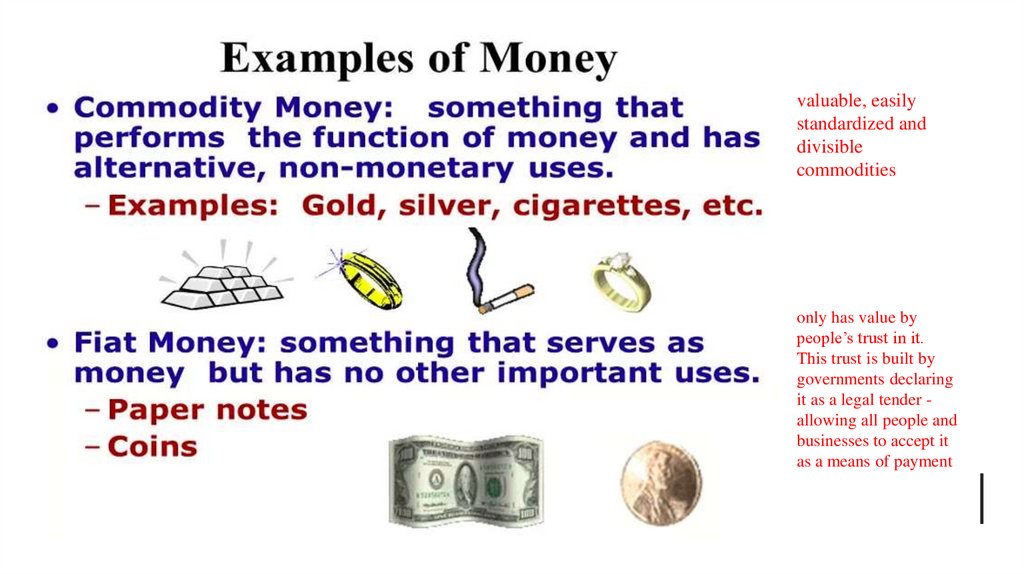
valuable, easilystandardized and
divisible
commodities
only has value by
people’s trust in it.
This trust is built by
governments declaring
it as a legal tender allowing all people and
businesses to accept it
as a means of payment
17.
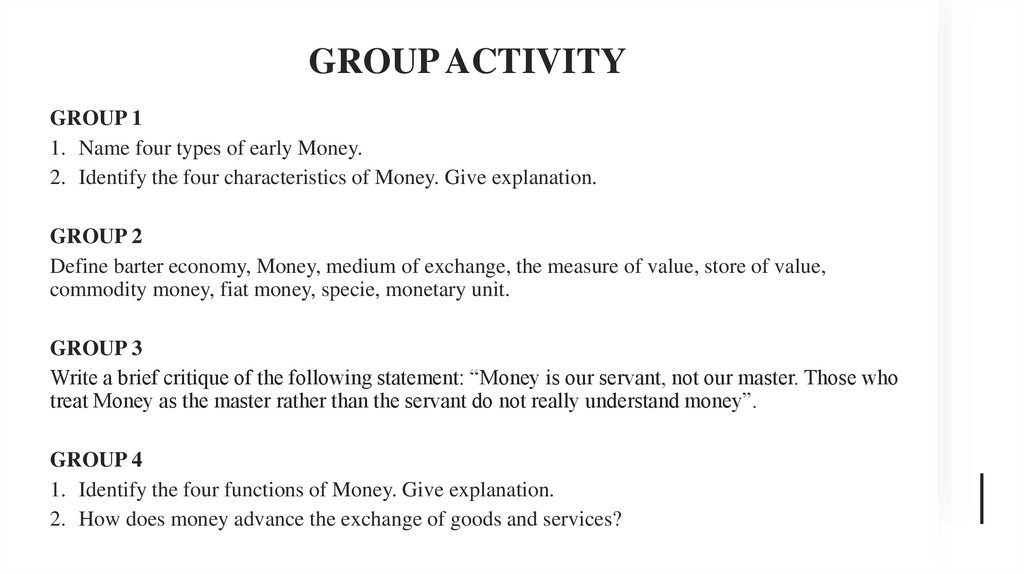
18. GROUP ACTIVITY
GROUP 11. Name four types of early Money.
2. Identify the four characteristics of Money. Give explanation.
GROUP 2
Define barter economy, Money, medium of exchange, the measure of value, store of value,
commodity money, fiat money, specie, monetary unit.
GROUP 3
Write a brief critique of the following statement: “Money is our servant, not our master. Those who
treat Money as the master rather than the servant do not really understand money”.
GROUP 4
1. Identify the four functions of Money. Give explanation.
2. How does money advance the exchange of goods and services?
19.
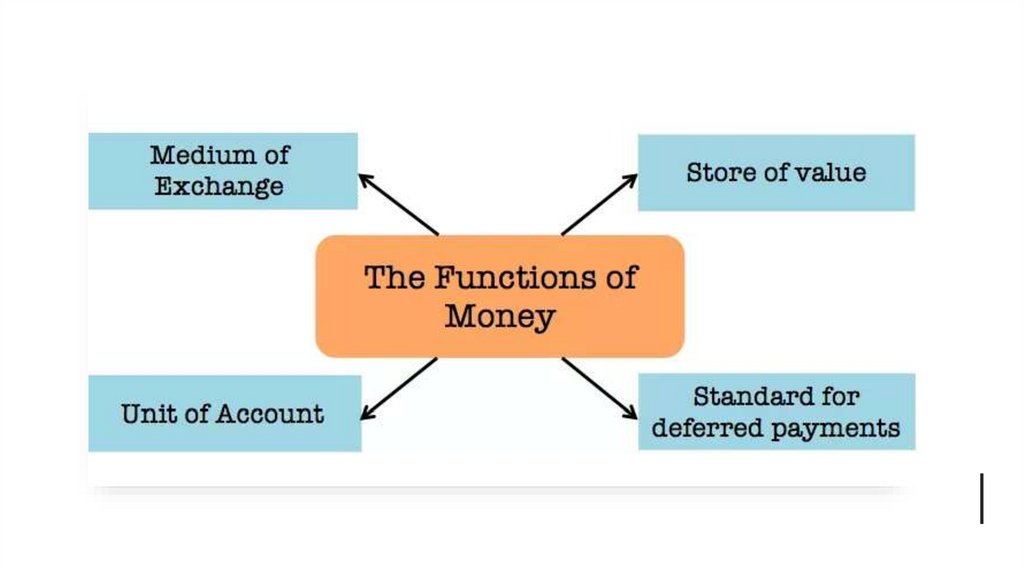
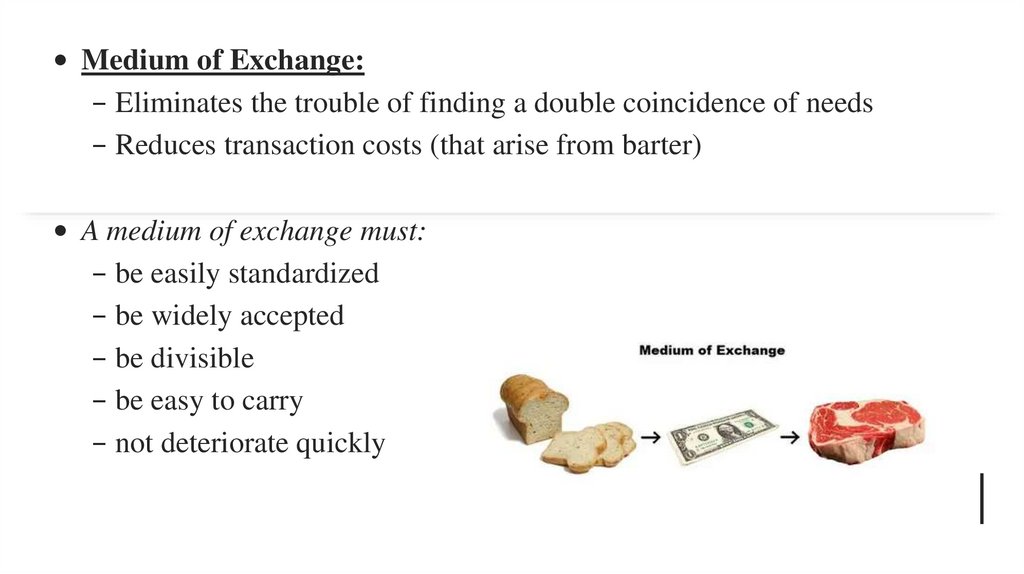
• Medium of Exchange:– Eliminates the trouble of finding a double coincidence of needs
– Reduces transaction costs (that arise from barter)
• A medium of exchange must:
– be easily standardized
– be widely accepted
– be divisible
– be easy to carry
– not deteriorate quickly
20.
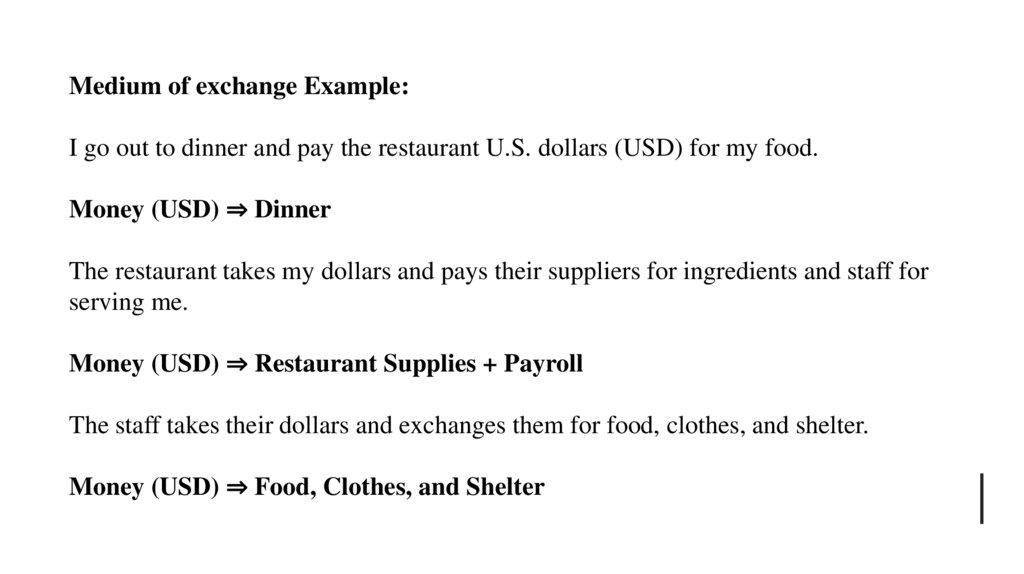
Medium of exchange Example:I go out to dinner and pay the restaurant U.S. dollars (USD) for my food.
Money (USD) ⇒ Dinner
The restaurant takes my dollars and pays their suppliers for ingredients and staff for
serving me.
Money (USD) ⇒ Restaurant Supplies + Payroll
The staff takes their dollars and exchanges them for food, clothes, and shelter.
Money (USD) ⇒ Food, Clothes, and Shelter
21.
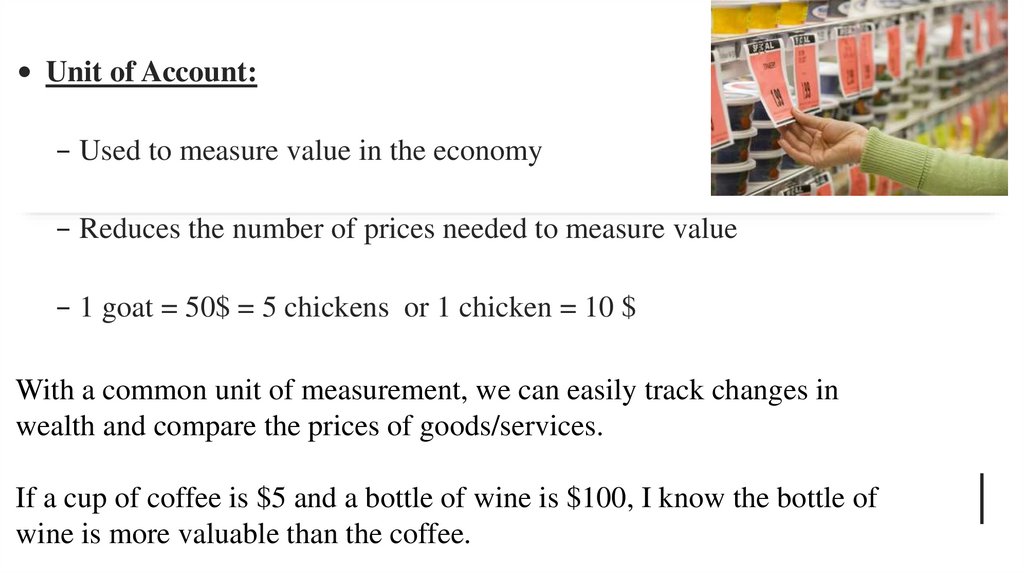
• Unit of Account:– Used to measure value in the economy
– Reduces the number of prices needed to measure value
– 1 goat = 50$ = 5 chickens or 1 chicken = 10 $
With a common unit of measurement, we can easily track changes in
wealth and compare the prices of goods/services.
If a cup of coffee is $5 and a bottle of wine is $100, I know the bottle of
wine is more valuable than the coffee.
22.
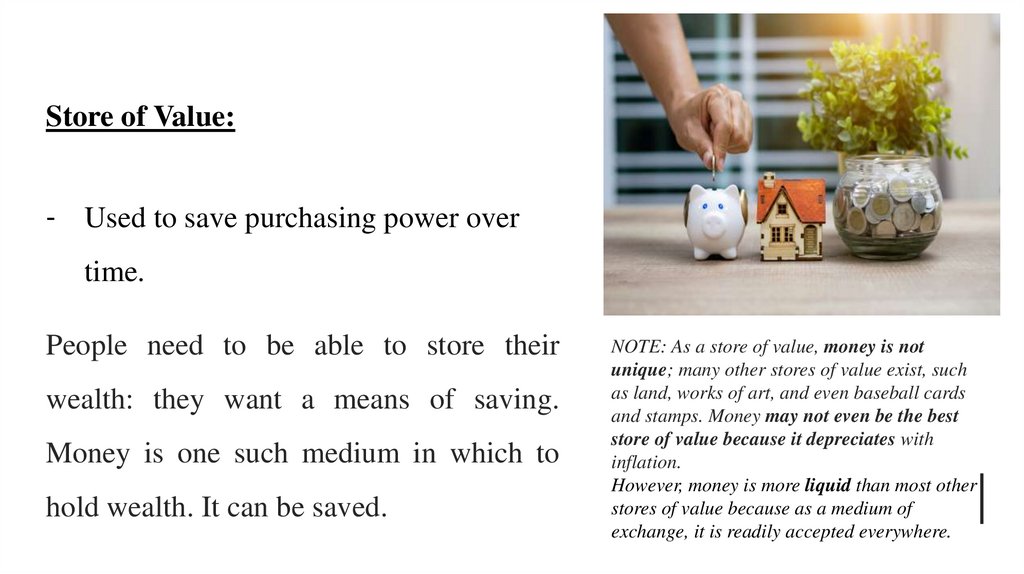
Store of Value:- Used to save purchasing power over
time.
People need to be able to store their
wealth: they want a means of saving.
Money is one such medium in which to
hold wealth. It can be saved.
NOTE: As a store of value, money is not
unique; many other stores of value exist, such
as land, works of art, and even baseball cards
and stamps. Money may not even be the best
store of value because it depreciates with
inflation.
However, money is more liquid than most other
stores of value because as a medium of
exchange, it is readily accepted everywhere.
23.
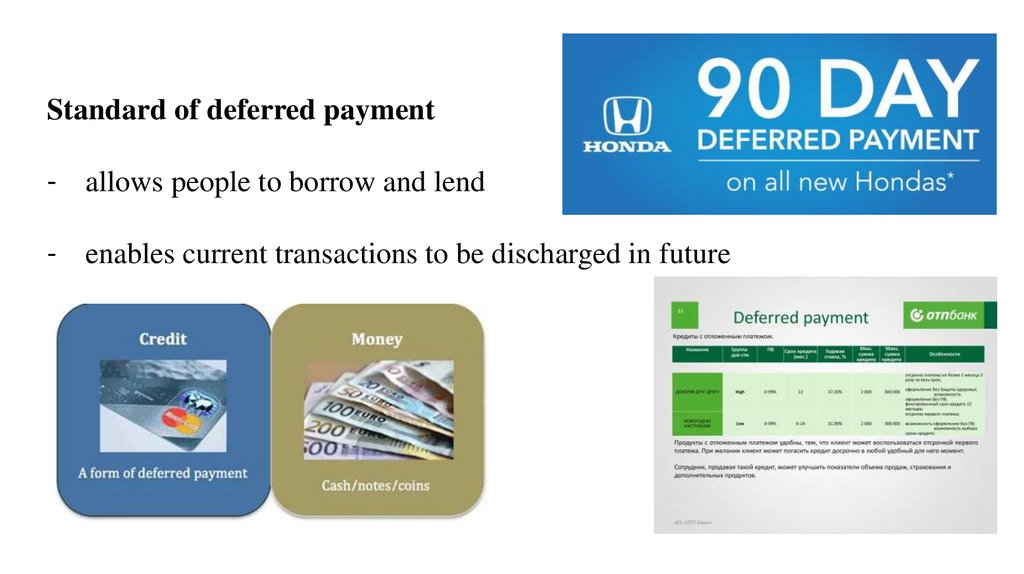
Standard of deferred payment- allows people to borrow and lend
- enables current transactions to be discharged in future
24.
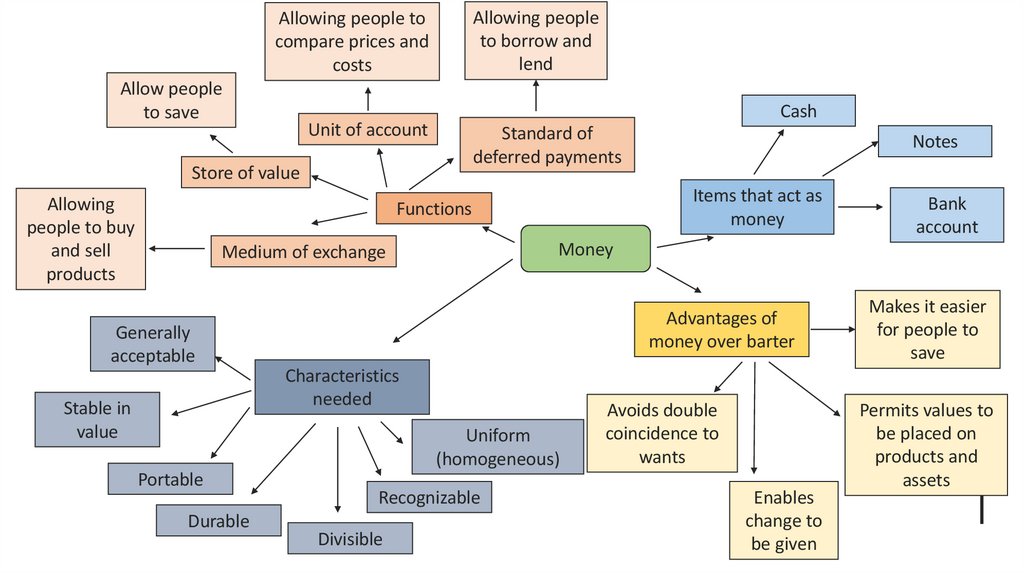
Allowing peopleto borrow and
lend
Allowing people to
compare prices and
costs
Allow people
to save
Cash
Unit of account
Standard of
deferred payments
Store of value
Allowing
people to buy
and sell
products
Items that act as
money
Functions
Advantages of
money over barter
Generally
acceptable
Characteristics
needed
Uniform
(homogeneous)
Portable
Durable
Recognizable
Divisible
Bank
account
Money
Medium of exchange
Stable in
value
Notes
Avoids double
coincidence to
wants
Enables
change to
be given
Makes it easier
for people to
save
Permits values to
be placed on
products and
assets