Similar presentations:




Equines Cushing Syndrom (ECS)
1. Equines Cushing Syndrom (ECS)
2. Causes
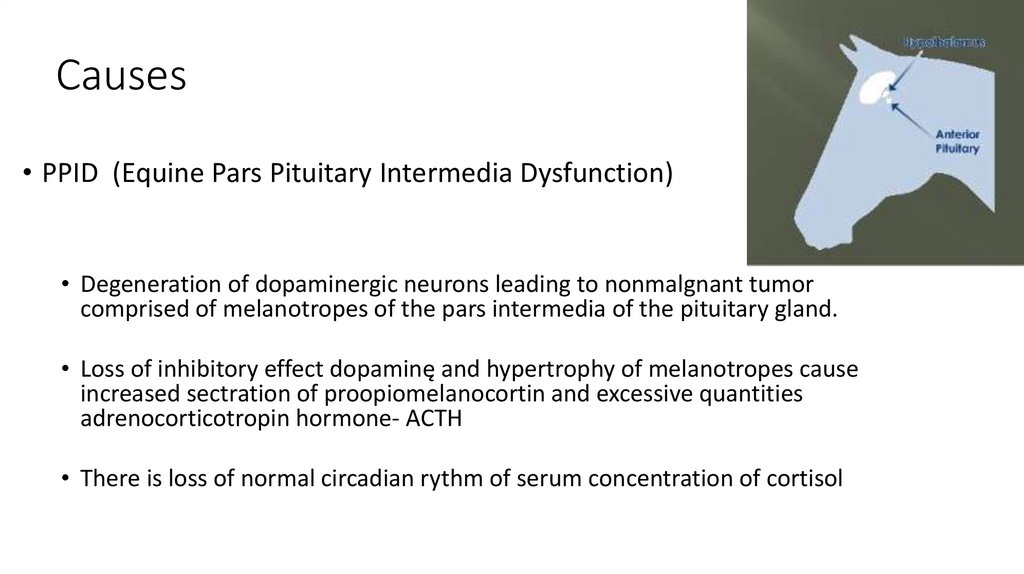
• PPID (Equine Pars Pituitary Intermedia Dysfunction)• Degeneration of dopaminergic neurons leading to nonmalgnant tumor
comprised of melanotropes of the pars intermedia of the pituitary gland.
• Loss of inhibitory effect dopaminę and hypertrophy of melanotropes cause
increased sectration of proopiomelanocortin and excessive quantities
adrenocorticotropin hormone- ACTH
• There is loss of normal circadian rythm of serum concentration of cortisol
3.
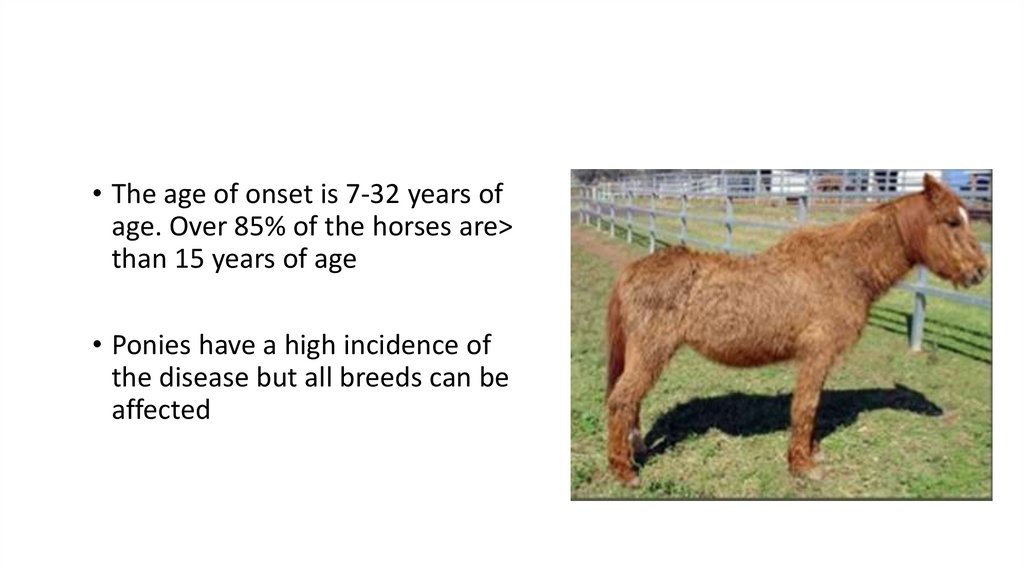
• The age of onset is 7-32 years ofage. Over 85% of the horses are>
than 15 years of age
• Ponies have a high incidence of
the disease but all breeds can be
affected
4. Sign
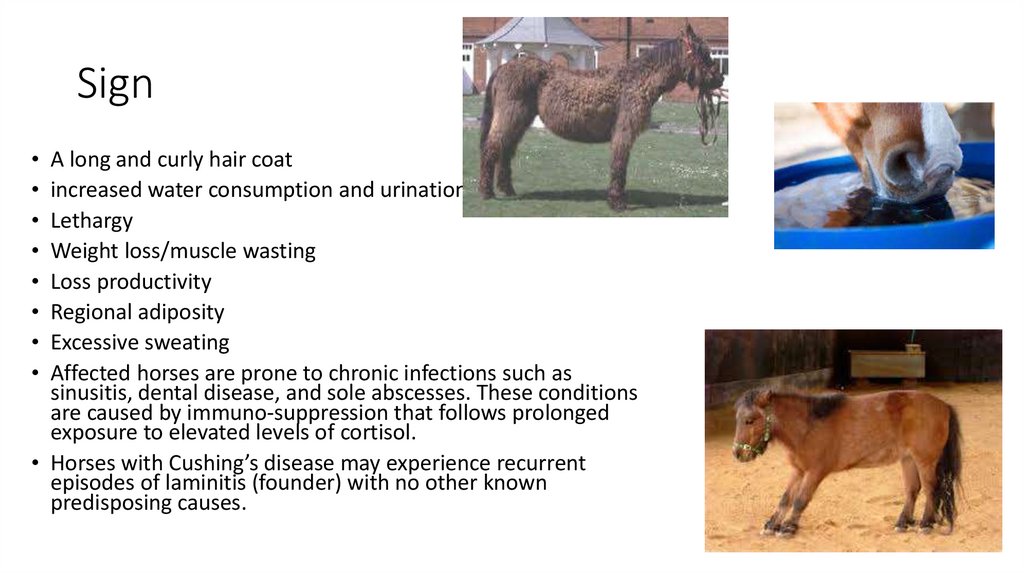
A long and curly hair coat
increased water consumption and urination,
Lethargy
Weight loss/muscle wasting
Loss productivity
Regional adiposity
Excessive sweating
Affected horses are prone to chronic infections such as
sinusitis, dental disease, and sole abscesses. These conditions
are caused by immuno-suppression that follows prolonged
exposure to elevated levels of cortisol.
• Horses with Cushing’s disease may experience recurrent
episodes of laminitis (founder) with no other known
predisposing causes.
5. Diagnosis
• Diagnosis of Cushing’s disease is usually based on clinical signs and bloodtests.
• Affected horses may have elevated levels of glucose, insulin, cortisol and ACTH in
their blood.
• Additional diagnostic tests include:
• Dexamethasone supression test
• Injection of dexamethasone given, mesaure cortisol on 19 hours
• Administration of dexamethasone (a synthetic type of cortisol) to normal horses
causes marked suppression of blood cortisol, whereas horses with Cushing’s disease
have little to no change in cortisol levels in response to dexamethasone.
• Mesaurement of serum concentration of ACTH
6. treatment
• Pergolide- dopamine agonist• Cyproheptadine – serotonin antagonist
• Inhibition of steroid production- trilostan
• Treatment for a life of horse
• Medical management of affected horses is usually a long-term or lifelong commitment.
• excellent management practices, including routine foot care, deworming,
vaccinations, dentistry, and nutrition.