


 psychology
Similar presentations:









The Importance of Empathy in the CASA Paradigm
1.
The Importance of Empathy inthe CASA Paradigm
Bredov Maxim Pavlova Ekaterina
SPBU faculty of psychology
2.
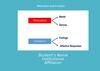
The concept of empathyDr. Renate Reiners
Cognitive Empathy: the
ability to construct a working
model of the emotional
states of others.
Affective Empathy: the
ability to be sensitive to and
vicariously experience the
feelings of others.
perspective taking
online simulation
emotion contagion
proximal responsivity
peripheral responsivity
3.
ComputersAre
Social
Actors
4.
What kinds of AIs exist?empathetic avatars
AI Bots vs AI Agents:
What's the Difference?
An AI bot is an automated tool for
simple, routine tasks based on a
preset algorithm.
An AI agent is an intelligent assistant
that analyzes context, learns, adapts,
and operates on a higher level.
and text assistants
5.
Quantitative Superiority of AI in EmpathyChatbot responses are 9.8 times more empathetic than responses from verified doctors
WASSA 2024 has participants’ ratings for overall conversation quality, assessed by a single 5-point Likert question,
“How was the conversation” (1=“very bad” and 5 =“very good”).
6.
Where AI Loses to HumansResults from the t-tests revealed that,
compared to their human
counterparts, chatbots were rated
significantly lower in general empathy,
overall state empathy, affective state
empathy, cognitive state empathy,
and associative state empathy.
There were no statistical differences
in closeness between conversation
types (chatbot vs. human).
Humans better account for the life
context of their interlocutor and
reference it more
7.
Where AI Loses to HumansAnalysis
r overall
r human
r chatbot
mean human
mean chatbot
t
p-value
Psychological Ratings
<
General Empathy
-
-
-
5.42
4.04
5.37
<
<
0.001
<
Overall State Empathy
-
-
-
2.58
2.00
4.06
<
<
0.001
<
Affective State Empathy
-
-
-
2.37
1.62
4.54
Cognitive State Empathy
-
-
-
2.66
2.33
2.26
<
<
0.001
0.025
<
Associative State Empathy
-
-
-
2.70
2.04
4.28
<
8.
PAD Model ComparisonHuman interlocutors' utterances are, on average,
closer in distance to each other than utterances
between humans and bots
People get along better with people than with
chatbots
PAD emotional state model:
Pleasure
Arousal
Dominance
P
9.
10.
Problems and Risks of Artificial EmpathyAI Accountability
4 aspects of accountability:
- responsibility - who is accountable for
the AI's decisions and
recommendations?
- trust - how much can we trust the
conclusions and advice of an AI agent?
- justifiability - can the logic behind its
decisions be explained and verified?
- safety - will using the AI cause harm to
the user?
Within the CASA paradigm,
where we perceive the
computer as a social partner, a
dangerous illusion arises:
The predictability of AI begins
to be perceived as safety, and
one-sided emotional
investment from the human is
mistaken for mutual sympathy.
11.
Emotional Authenticity1. The Compassion Illusion
Emotion recognition (emo-detection) is mistakenly taken for emotional
resonance. AI imitates the expression of empathy, but not the experience itself
— it lacks intentionality (conscious directedness toward another).
2. Cognitive vs. Affective Empathy
AI is capable of cognitive empathy (understanding perspective), but is excluded
from affective empathy (sharing feelings). AI empathy is the result of affective
mapping (probabilistic template matching), not emotional experience.
12.
Psychological Risks forHumans
• Asymmetric trust: the human
invests emotions and becomes
vulnerable, while AI remains
indifferent
• Emotional substitution:
satisfaction from interacting with
AI reduces motivation to seek
deep human connections
• Affective dependency: the
habit of turning to AI weakens
one's own self-regulation
13.
Main ConclusionEmpathy must be cultivated as a human
capacity, not as a constructed performance.
Otherwise, authentic connection is devalued
in favor of efficient but empty simulation.
14.
Reference List1. Reniers, R. L. E. P., Corcoran, R., Drake, R., Shryane, N. M., & Völlm, B. A. (2011). The QCAE: A Questionnaire of Cognitive and Affective Empathy. Journal
of Personality Assessment, 93(1), 84–95. https://doi.org/10.1080/00223891.2010.528484
2. Kuryan, S. M., Petrushkevich, M. A., & Selivanova, E. A. (2025). Mental health support through artificial intelligence: How AI agents can provide support during
stress. Science in Human Life, 1, 131–142.
3. Study on empathetic avatars: measuring empathy in dialogues between humans and embodied AI agents. (2024). Habr. https://habr.com/ru/articles/838152/
4. Groh, M. (2025). Most people need to learn empathy from AI. Science TV. https://naukatv.ru/news/chemu_chatboty_mogut_nauchit_lyudej_v_plane_empatii
5. University of Toronto. (2025). ChatGPT's capacity for empathy. Lenta.ru. https://lenta.ru/news/2025/01/23/empathetic/
6. Artificial intelligence: empathy and accountability. (2024). CyberLeninka. https://cyberleninka.ru/article/n/iskusstvennyy-intellekt-empatiya-ipodotchetnost/viewer
7. AI shows more empathy to patients than doctors. (2024). Gismeteo. https://www.gismeteo.ru/news/science/iskusstvennyj-intellekt-proyavlyaet-bolshe-empatiik-pacientam-chem-vrachi/
8. The illusion of empathy: How AI chatbots shape conversation perception. (2024). arXiv, 2411.12877v2. https://arxiv.org/html/2411.12877v2
9. The compassion illusion: Can artificial empathy ever be emotionally authentic? (2025). Frontiers in Psychology. PMC12665657.
https://pmc.ncbi.nlm.nih.gov/articles/PMC12665657/
10. WASSA 2024 Shared Task: Overall conversation quality ratings. (2024). Workshop on Computational Approaches to Subjectivity, Sentiment & Social Media
Analysis.