 english
Similar presentations:







The Infinitive
1. The Infinitive.
2.
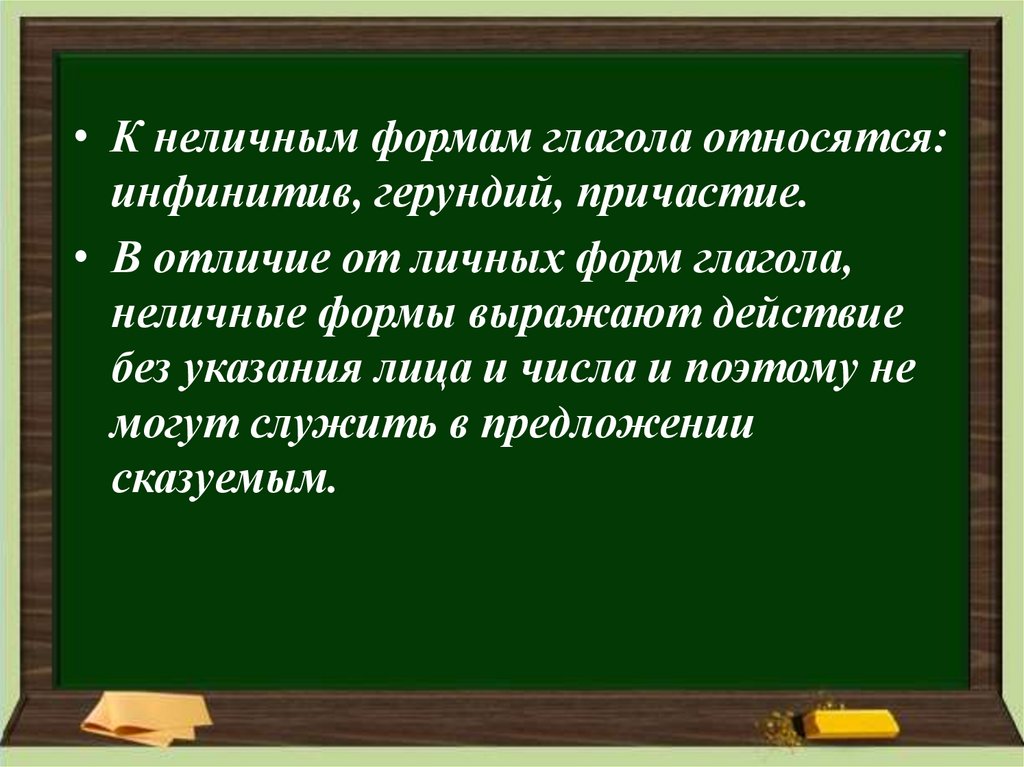
• К неличным формам глагола относятся:инфинитив, герундий, причастие.
• В отличие от личных форм глагола,
неличные формы выражают действие
без указания лица и числа и поэтому не
могут служить в предложении
сказуемым.
3. The Infinitive
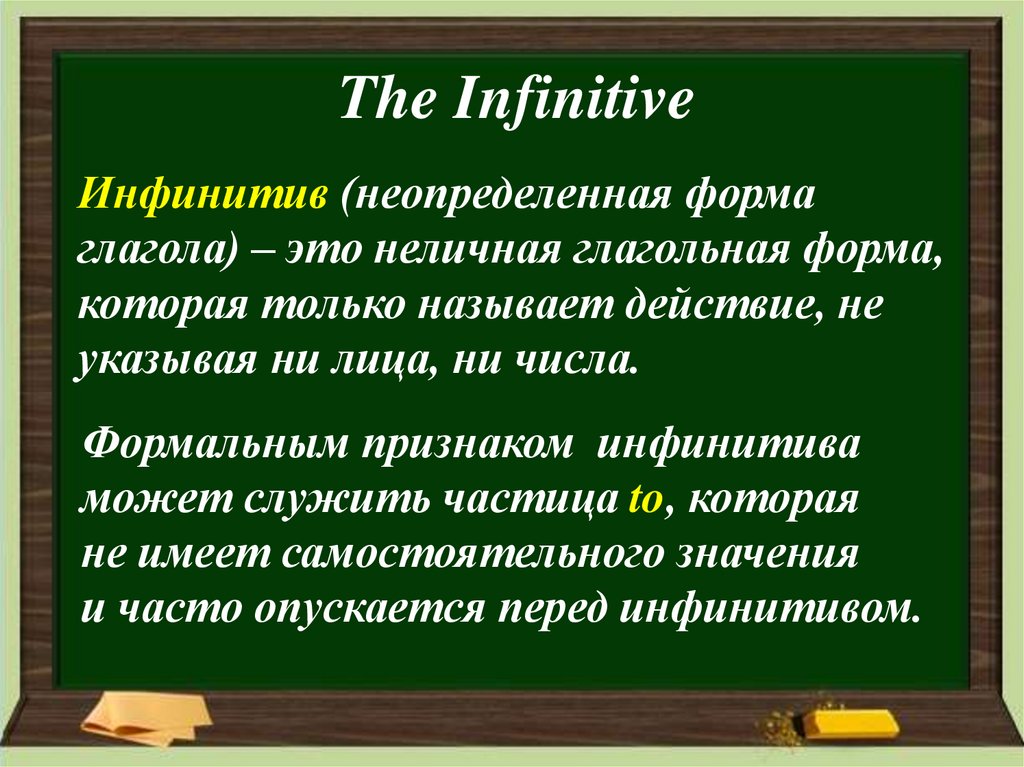
Инфинитив (неопределенная формаглагола) – это неличная глагольная форма,
которая только называет действие, не
указывая ни лица, ни числа.
Формальным признаком инфинитива
может служить частица to, которая
не имеет самостоятельного значения
и часто опускается перед инфинитивом.
4. The forms of the Infinitive
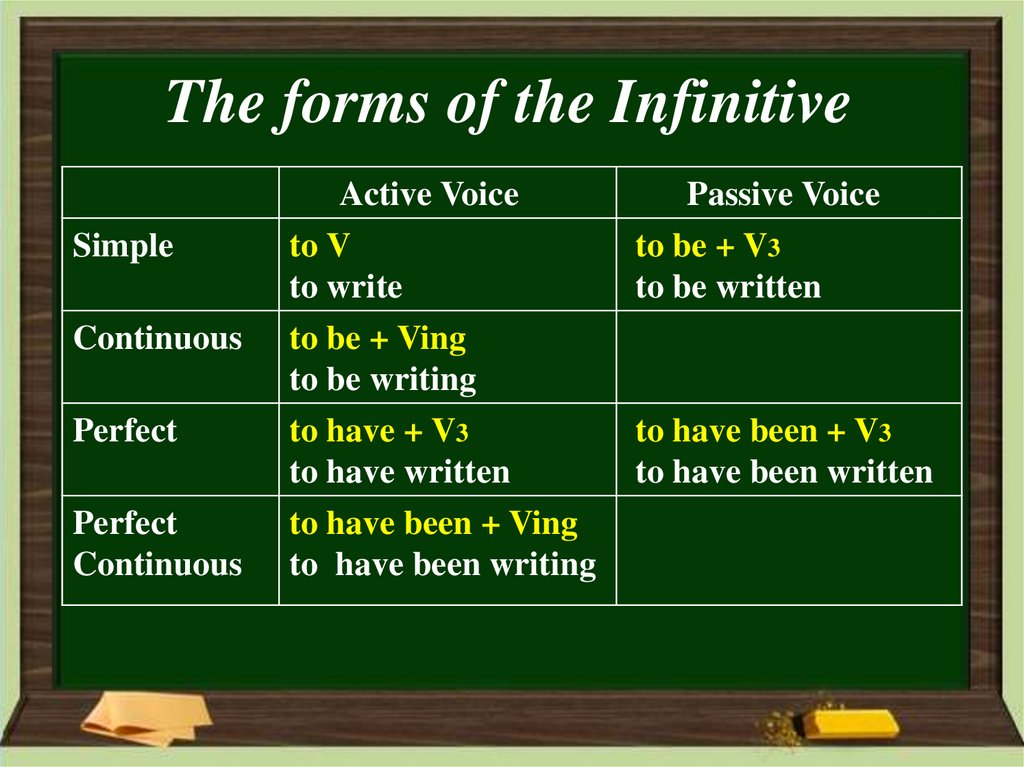
Active VoiceSimple
Continuous
Perfect
Perfect
Continuous
Passive Voice
to V
to write
to be + Ving
to be writing
to be + V3
to be written
to have + V3
to have written
to have been + Ving
to have been writing
to have been + V3
to have been written
5.
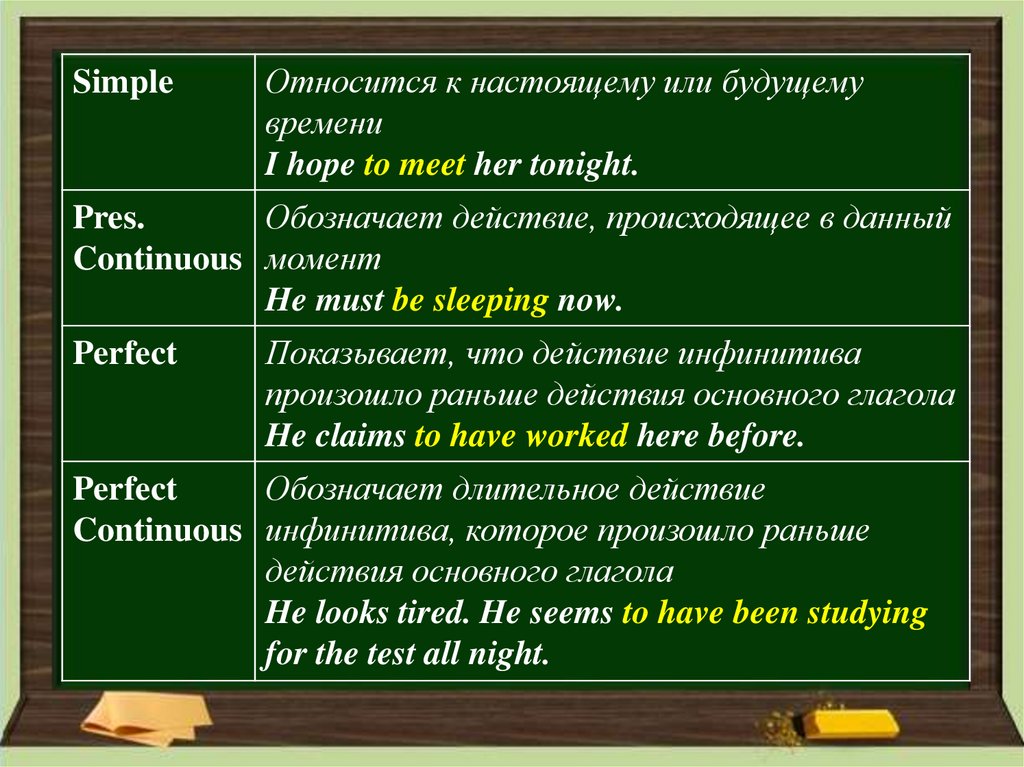
SimpleОтносится к настоящему или будущему
времени
I hope to meet her tonight.
Pres.
Обозначает действие, происходящее в данный
Continuous момент
He must be sleeping now.
Perfect
Показывает, что действие инфинитива
произошло раньше действия основного глагола
He claims to have worked here before.
Perfect
Обозначает длительное действие
Continuous инфинитива, которое произошло раньше
действия основного глагола
He looks tired. He seems to have been studying
for the test all night.
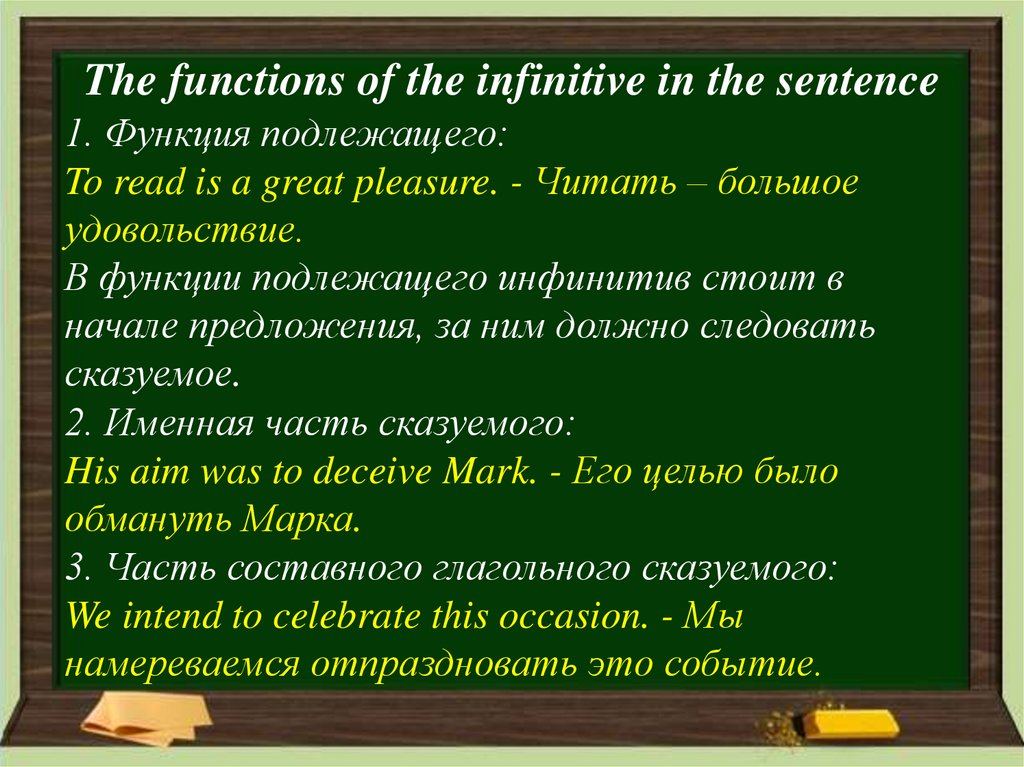
6. The functions of the infinitive in the sentence
1. Функция подлежащего:To read is a great pleasure. - Читать – большое
удовольствие.
В функции подлежащего инфинитив стоит в
начале предложения, за ним должно следовать
сказуемое.
2. Именная часть сказуемого:
His aim was to deceive Mark. - Его целью было
обмануть Марка.
3. Часть составного глагольного сказуемого:
We intend to celebrate this occasion. - Мы
намереваемся отпраздновать это событие.
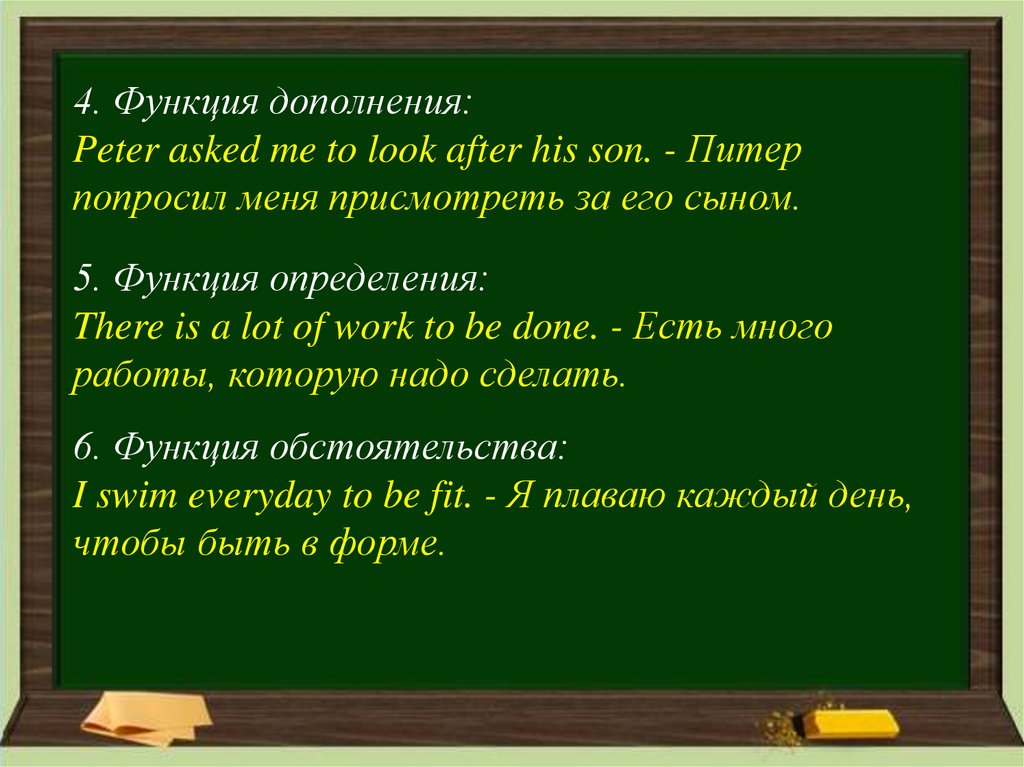
7.
4. Функция дополнения:Peter asked me to look after his son. - Питер
попросил меня присмотреть за его сыном.
5. Функция определения:
There is a lot of work to be done. - Есть много
работы, которую надо сделать.
6. Функция обстоятельства:
I swim everyday to be fit. - Я плаваю каждый день,
чтобы быть в форме.
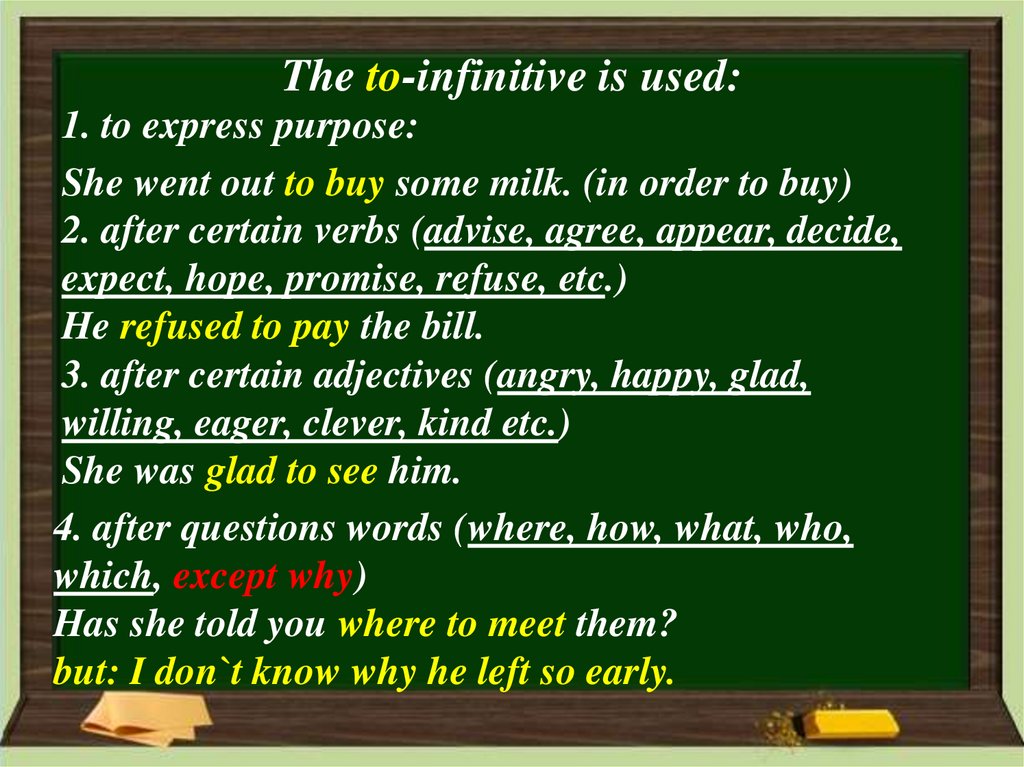
8. The to-infinitive is used:
1. to express purpose:She went out to buy some milk. (in order to buy)
2. after certain verbs (advise, agree, appear, decide,
expect, hope, promise, refuse, etc.)
He refused to pay the bill.
3. after certain adjectives (angry, happy, glad,
willing, eager, clever, kind etc.)
She was glad to see him.
4. after questions words (where, how, what, who,
which, except why)
Has she told you where to meet them?
but: I don`t know why he left so early.
9.
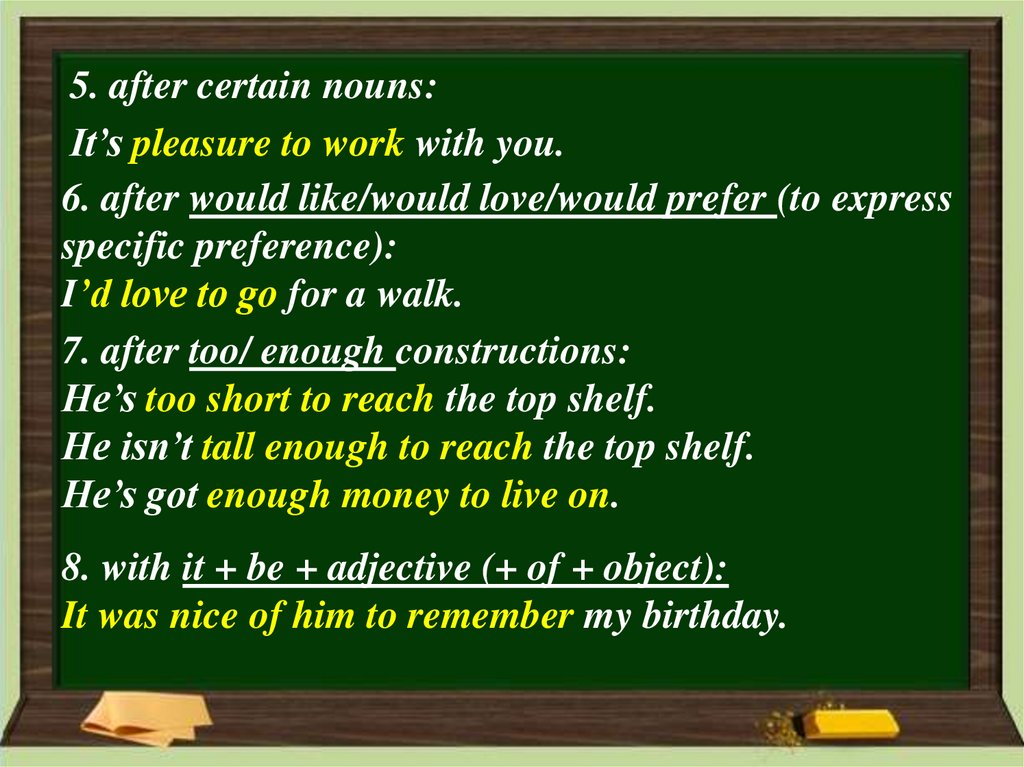
5. after certain nouns:It’s pleasure to work with you.
6. after would like/would love/would prefer (to express
specific preference):
I’d love to go for a walk.
7. after too/ enough constructions:
He’s too short to reach the top shelf.
He isn’t tall enough to reach the top shelf.
He’s got enough money to live on.
8. with it + be + adjective (+ of + object):
It was nice of him to remember my birthday.
10.
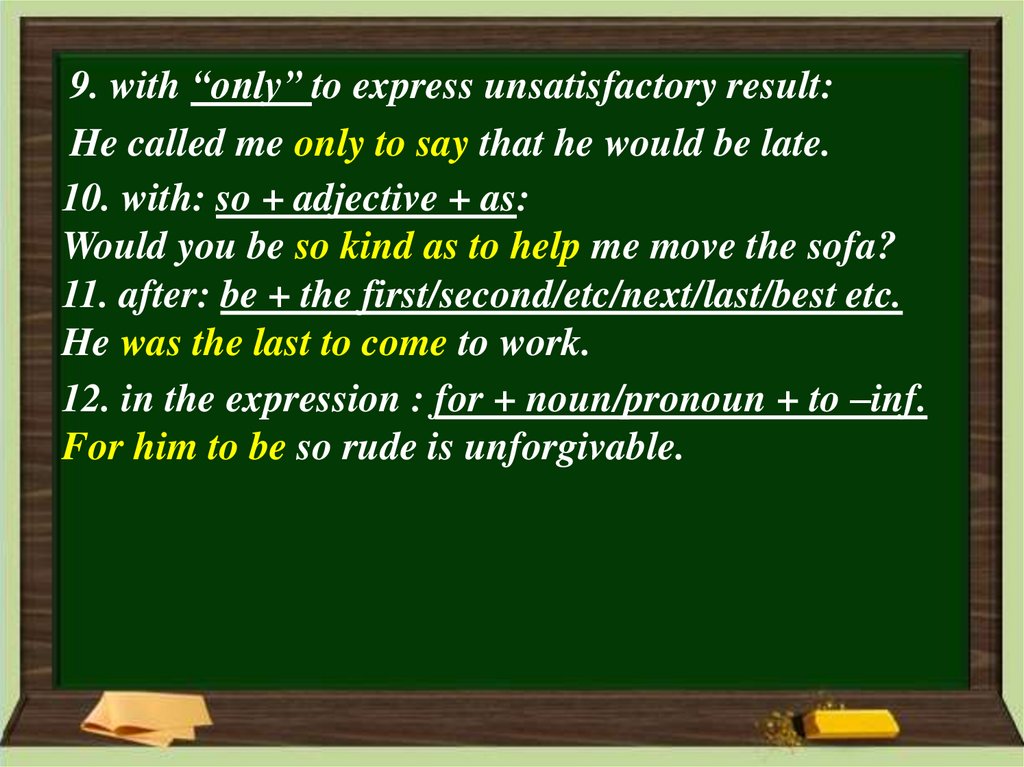
9. with “only” to express unsatisfactory result:He called me only to say that he would be late.
10. with: so + adjective + as:
Would you be so kind as to help me move the sofa?
11. after: be + the first/second/etc/next/last/best etc.
He was the last to come to work.
12. in the expression : for + noun/pronoun + to –inf.
For him to be so rude is unforgivable.
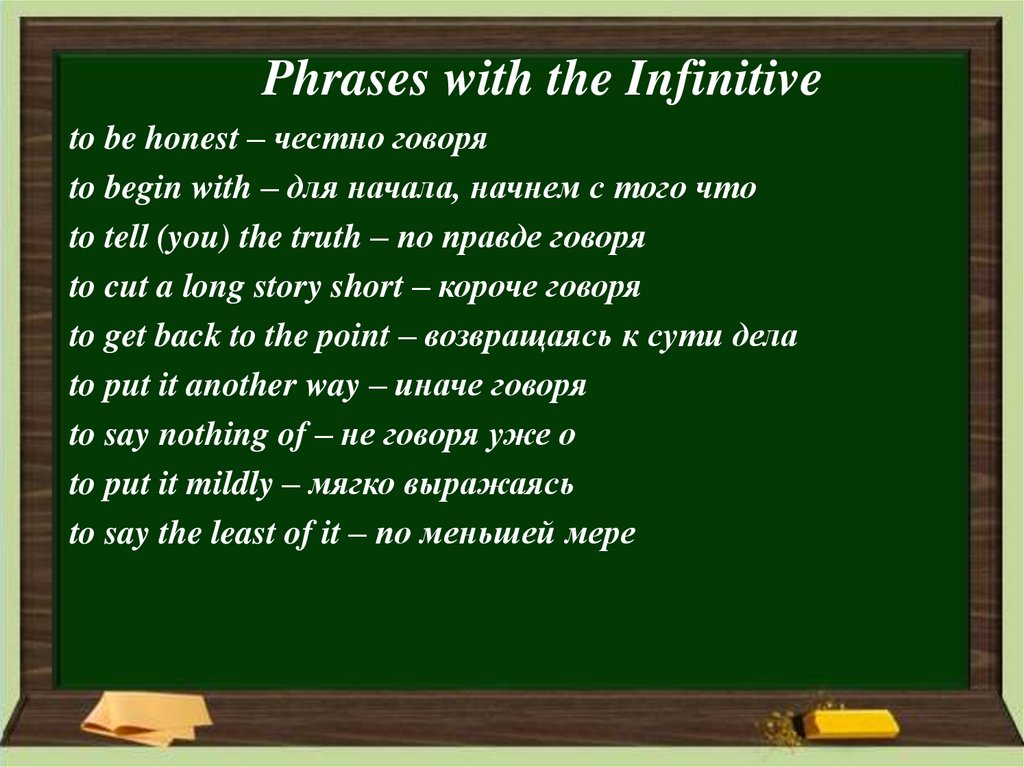
11. Phrases with the Infinitive
to be honest – честно говоряto begin with – для начала, начнем с того что
to tell (you) the truth – по правде говоря
to cut a long story short – короче говоря
to get back to the point – возвращаясь к сути дела
to put it another way – иначе говоря
to say nothing of – не говоря уже о
to put it mildly – мягко выражаясь
to say the least of it – по меньшей мере