 industry
Similar presentations:





The International Civil Aviation Organization (ICAO)
1.
The International Civil AviationOrganization (ICAO)
The International Civil Aviation Organization (ICAO) is a specialised agency of the United
Nations. Established by States in 1944, ICAO’s mission is to promote the safe and orderly
development of international civil aviation worldwide. It sets global standards and
recommendations to facilitate air navigation, ensure safety, and protect the environment,
forming the bedrock of a globally harmonised aviation system.
2.
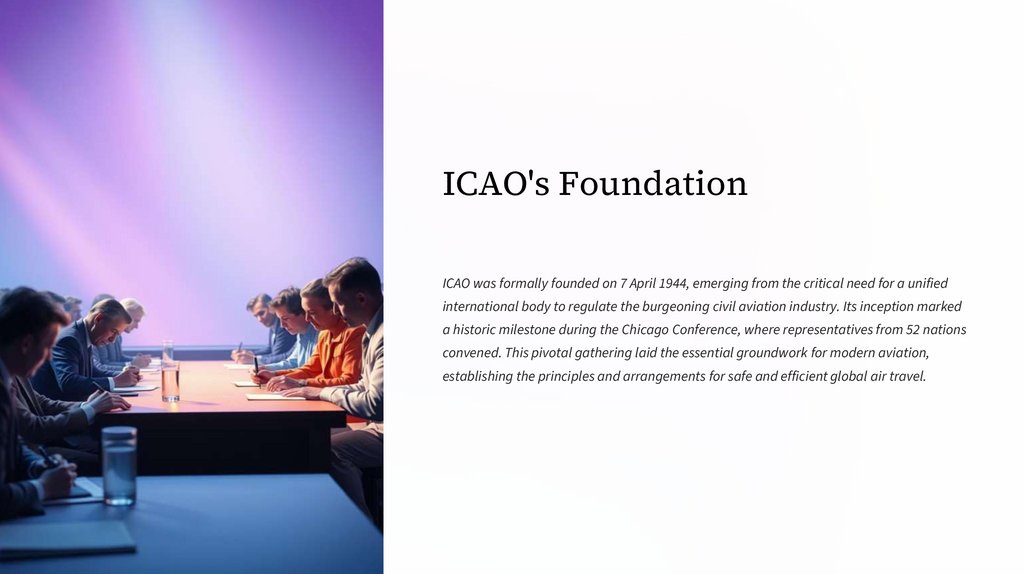
ICAO's FoundationICAO was formally founded on 7 April 1944, emerging from the critical need for a unified
international body to regulate the burgeoning civil aviation industry. Its inception marked
a historic milestone during the Chicago Conference, where representatives from 52 nations
convened. This pivotal gathering laid the essential groundwork for modern aviation,
establishing the principles and arrangements for safe and efficient global air travel.
3.
Leadership and Governance: Steering Global AviationThe Secretary General
The Council of 36 Member States
Appointed by the ICAO Assembly, the Secretary General serves as the
Elected by the Assembly, this Council is central to ICAO's governance. It
chief executive officer, acting as the main representative and
is responsible for critical decision-making, the implementation of
overseeing the organisation's daily operations and strategic direction.
internationally agreed policies, and the continuous development of
aviation regulations.
This leadership structure ensures that ICAO remains responsive to the dynamic needs of the global aviation sector, fostering collaboration and consensus
among its diverse member states.
4.
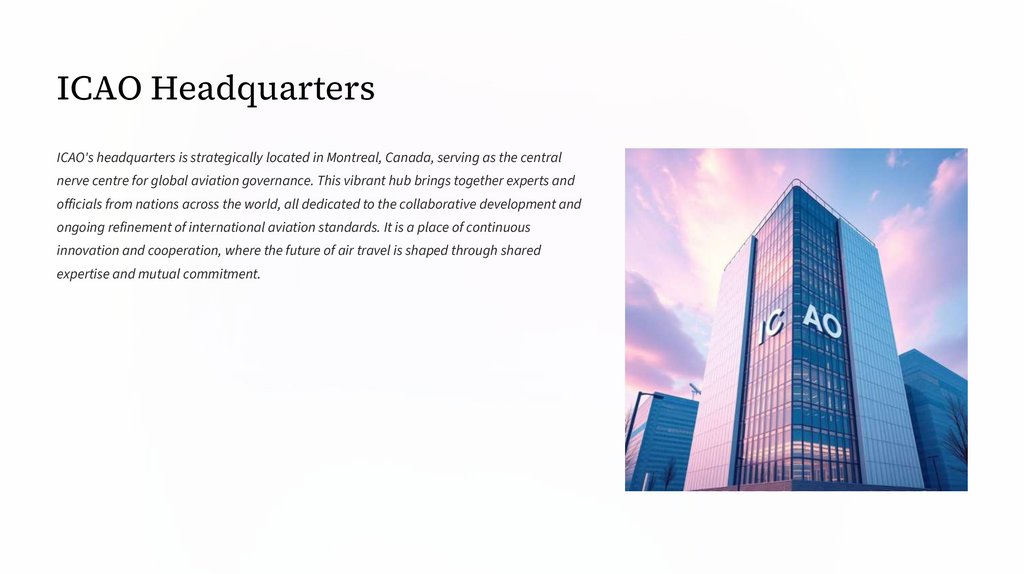
ICAO HeadquartersICAO's headquarters is strategically located in Montreal, Canada, serving as the central
nerve centre for global aviation governance. This vibrant hub brings together experts and
officials from nations across the world, all dedicated to the collaborative development and
ongoing refinement of international aviation standards. It is a place of continuous
innovation and cooperation, where the future of air travel is shaped through shared
expertise and mutual commitment.
5.
Objectives and FunctionsICAO's mandate extends across various critical aspects of air transport, with a clear focus on safety, efficiency, and sustainability.
Development of International
Standards
International Cooperation
Air Safety Enhancement
It plays a crucial role in fostering
Through rigorous incident analysis and the
ICAO meticulously develops and updates
coordination and cooperation among
proposal of preventive measures, ICAO
Standards and Recommended Practices
member states, ensuring the adoption of
continuously strives for the enhancement of
(SARPs) that govern safety protocols, air
unified aviation policies and procedures
global aviation safety records.
navigation, environmental protection, and
across borders.
the overall efficiency of air transport
operations.
6.
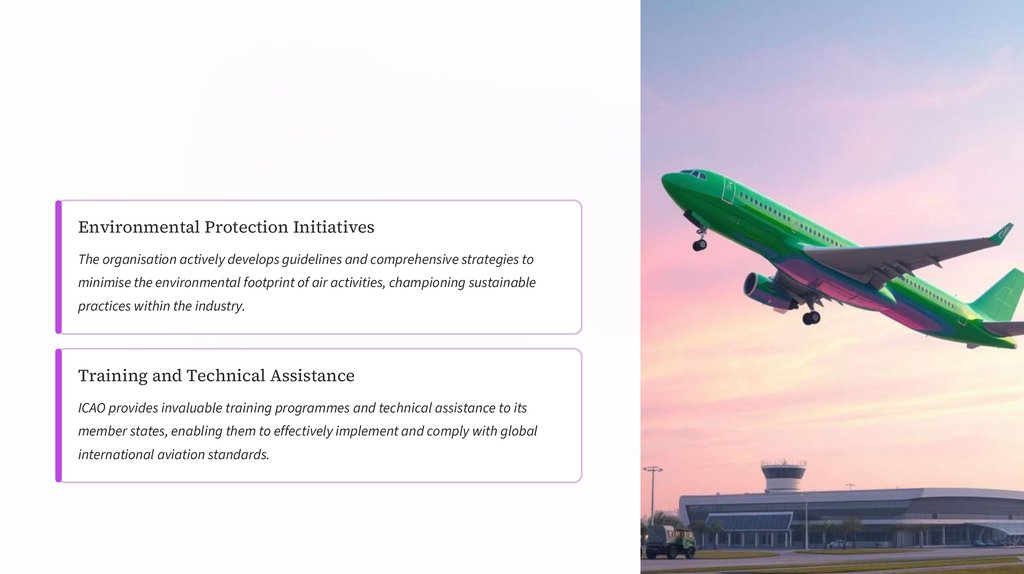
Environmental Protection InitiativesThe organisation actively develops guidelines and comprehensive strategies to
minimise the environmental footprint of air activities, championing sustainable
practices within the industry.
Training and Technical Assistance
ICAO provides invaluable training programmes and technical assistance to its
member states, enabling them to effectively implement and comply with global
international aviation standards.
7.
The Indispensable Role of ICAO in AviationICAO's profound significance in the aviation industry stems from its unique ability to harmonise criteria and establish universal standards, thereby facilitating
seamless interoperability between countries and airlines worldwide.
Uniformity in Standards and Procedures
Enhanced Safety and Efficiency
Through ICAO, member states adhere to a common set of rules,
ICAO's recommendations have been instrumental in significantly
dismantling technical barriers and streamlining communication
improving global air safety. International coordination ensures rapid
among air traffic controllers, pilots, and regulatory authorities
implementation of measures during emergencies or incidents,
globally.
safeguarding air travel.
8.
Promoting Cooperation andGlobal Impact
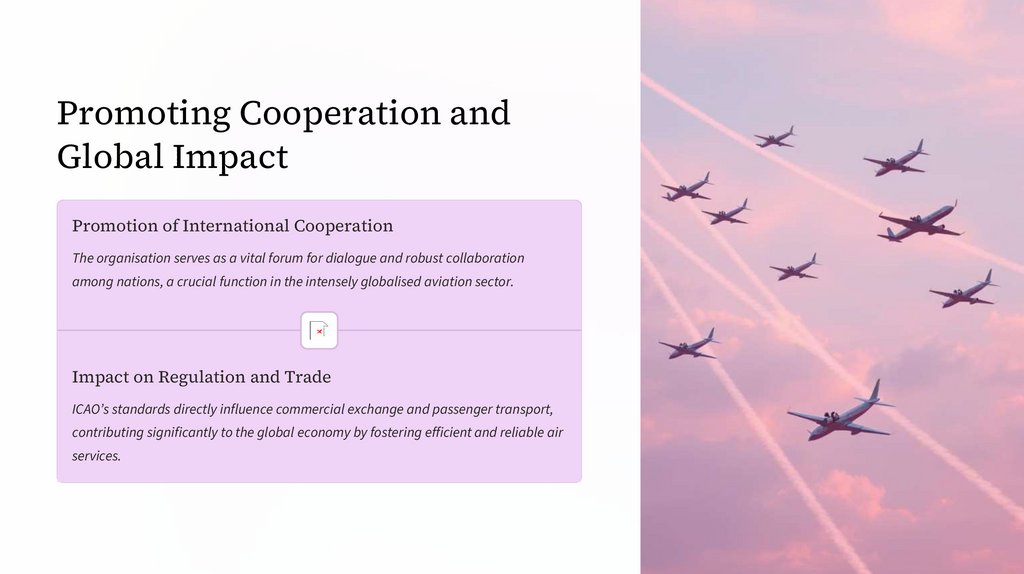
Promotion of International Cooperation
The organisation serves as a vital forum for dialogue and robust collaboration
among nations, a crucial function in the intensely globalised aviation sector.
Impact on Regulation and Trade
ICAO’s standards directly influence commercial exchange and passenger transport,
contributing significantly to the global economy by fostering efficient and reliable air
services.
9.
ICAO Codes: The UniversalLanguage of Aviation
The ICAO code is a unique, four-letter alphanumeric designation used to identify airports
and other aeronautical facilities across the globe. Assigned by ICAO, these codes are
fundamental for precision in communication, efficient flight planning, and accurate
navigation within the international air traffic system. Each code provides a concise and
unambiguous identifier, crucial for safe and organised air operations.
Example: Madrid-Barajas International Airport
ICAO Code: LEMD
10.
ICAO vs. IATA Codes:Understanding the Distinction
While both ICAO and IATA codes identify airports, they serve different audiences and purposes
within the aviation ecosystem. Understanding this distinction is crucial for clarity.
ICAO Code
IATA Code
Consists of four letters.
Comprises three letters.
Primarily utilised by air traffic
More commonly encountered in
controllers, flight planners, and in
ticketing, passenger information, and
technical aviation documentation.
airline marketing materials.
Focuses on operational and navigation
precision.
Aims for passenger convenience and
commercial usage.
Comparative Example: Madrid-Barajas International Airport
ICAO Code: LEMD
IATA Code: MAD