
 english
Similar presentations:



The primary parts of the sentence. Subject. Predicate
1.
Presentation prepared by Panjiyeva Zarnigor,1st-year FIT-424 group student of the Faculty of
Foreign Philology of Termiz State University,
from the subject of Practical Phonetics and
Grammar
THE PRIMARY PARTS OF THE
SENTENCE . SUBJECT.
PREDICATE
STUDENT:PANJIYEVA
ZARNIGOR
TEACHER :DAVLATOVA
ELVIRA
2.
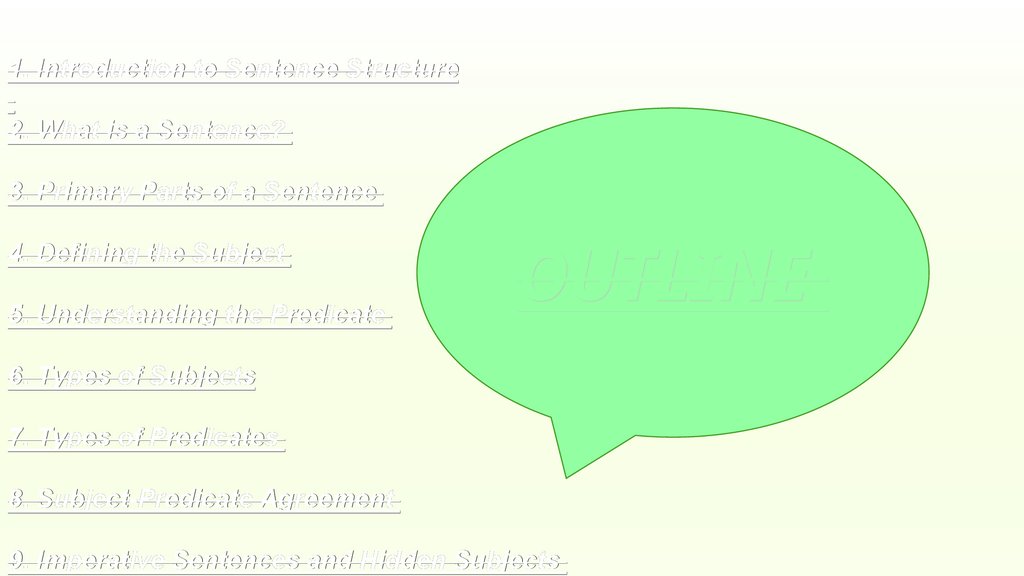
1. Introduction to Sentence Structure2. What is a Sentence?
3. Primary Parts of a Sentence
4. Defining the Subject
5. Understanding the Predicate
OUTLINE
6. Types of Subjects
7. Types of Predicates
8. Subject-Predicate Agreement
9. Imperative Sentences and Hidden Subjects
3.
Introduction to Sentence Structure1
2
3
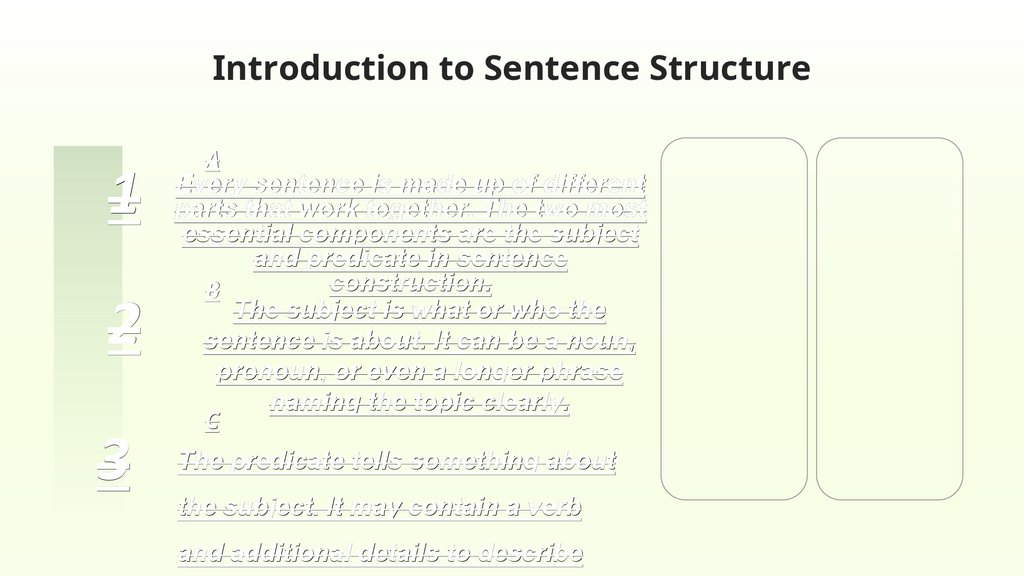
A
Every sentence is made up of different
parts that work together. The two most
essential components are the subject
and predicate in sentence
construction.
B
The subject is what or who the
sentence is about. It can be a noun,
pronoun, or even a longer phrase
naming the topic clearly.
C
The predicate tells something about
the subject. It may contain a verb
and additional details to describe
4.
UnderstandingSentence
Components
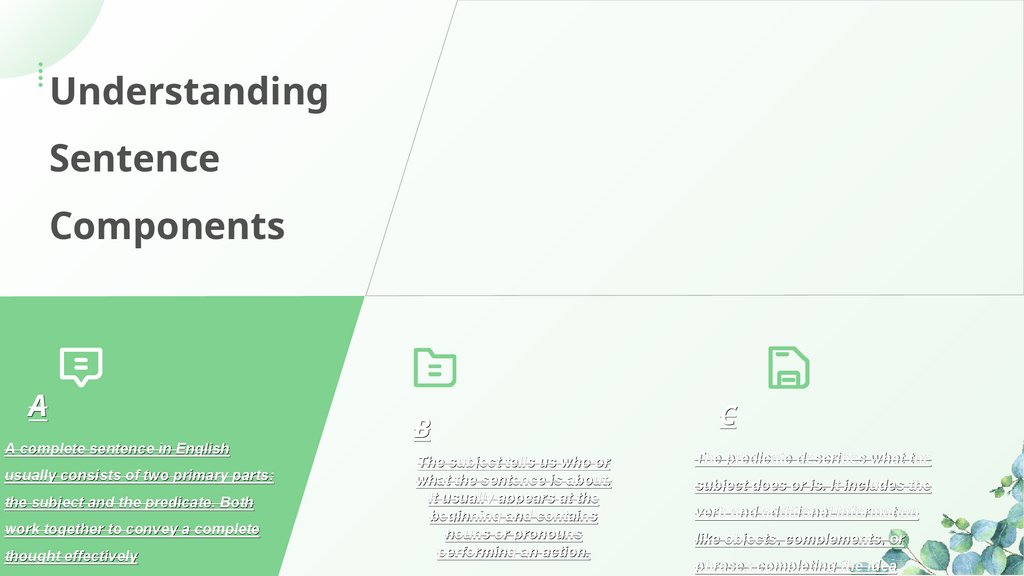
A
A complete sentence in English
usually consists of two primary parts:
the subject and the predicate. Both
work together to convey a complete
thought effectively
B
The subject tells us who or
what the sentence is about.
It usually appears at the
beginning and contains
nouns or pronouns
performing an action.
C
The predicate describes what the
subject does or is. It includes the
verb and additional information
like objects, complements, or
phrases completing the idea
5.
Defining the Subject01
A
A sentence typically consists of
two major parts: the subject and
the predicate. Understanding
these elements is essential to
form correct and meaningful
02
B
The subject is the part of
the sentence that names
who or what the sentence
is about. It is usually a
noun, pronoun, or noun
6.
A complete sentence in Englishtypically
consists
of two
essential
Subject
vs.
Predicate
parts: the subject and the predicate.
Each plays a key role in sentence
construction.
The subject of a sentence tells us
who or what the sentence is about.
It is typically a noun or pronoun
performing an action or state.In
contrast, the predicate describes
7.
TYPES OF SUBJECTSSIMPLE AND COMPLETE
SUBJECTS
The subject refers to the person, place, thing, or idea that the sentence
is about. It usually appears at the beginning of the sentence structure.A
sentence is made up of two main parts: the subject and the predicate.
These elements together help express a complete thought or statement
clearly.
There are different kinds of subjects including simple, complete,
and compound subjects. Each kind helps in shaping the structure
and meaning of the sentence effectively.
A sentence has two main parts: the subject and the predicate. The
subject tells who or what the sentence is about, giving it meaning.
The predicate explains what the subject does or is. It includes the
verb and all words that relate to the action or state of being
described.
8.
Compound SubjectsExamples of Subjects
A
01
B
02
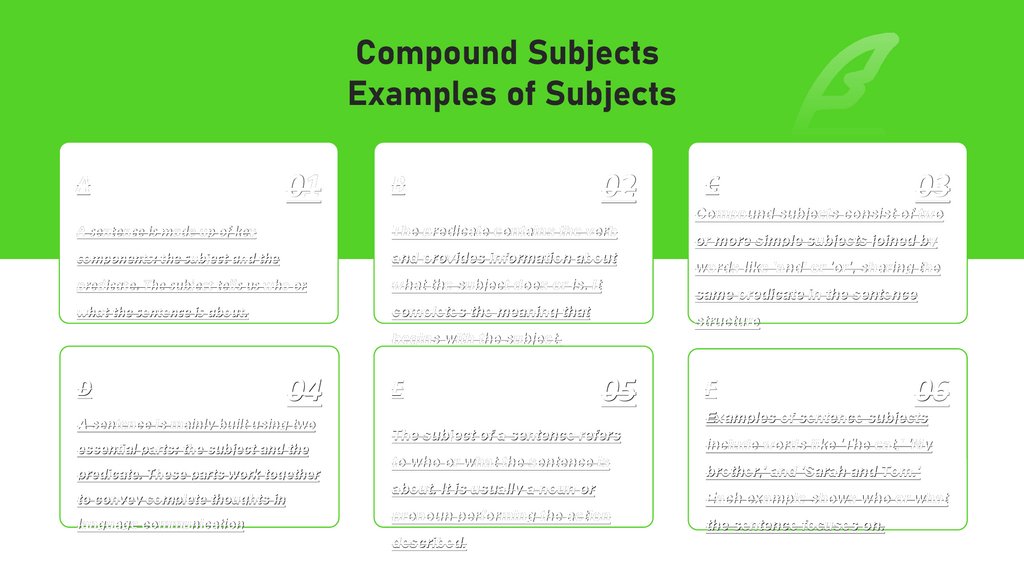
A sentence is made up of key
The predicate contains the verb
components: the subject and the
and provides information about
predicate. The subject tells us who or
what the subject does or is. It
what the sentence is about.
completes the meaning that
C
03
Compound subjects consist of two
or more simple subjects joined by
words like 'and' or 'or', sharing the
same predicate in the sentence
structure
begins with the subject.
D
04
A sentence is mainly built using two
essential parts: the subject and the
predicate. These parts work together
to convey complete thoughts in
language communication
E
05
The subject of a sentence refers
to who or what the sentence is
about. It is usually a noun or
pronoun performing the action
described.
F
06
Examples of sentence subjects
include words like 'The cat,' 'My
brother,' and 'Sarah and Tom.'
Each example shows who or what
the sentence focuses on.
9.
Compound Subjects1
A sentence typically has two main
parts: the subject and the
predicate. The subject tells who or
what the sentence is about, giving
2
meaning
contextually.
The predicate explains what the subject does or is. It
starts with a verb and includes everything else that
provides more information about the subject.There are
different types of predicates: simple, compound, and
complete. Each type adds descriptive or functional details
to the main verb or clause's meaning.
10.
Simple and CompletePredicates
PREDICATES
Every sentence consists of two key
parts: the subject and the predicate.
The subject tells who or what the
sentence is about or involves.The
predicate explains what the subject
does or is. It includes the verb and
all the words that give more
information about the action or
11.
Compound PredicatesA
02
02
I
01
01
In sentence construction, the subject
The predicate is the part of the
is the person, place, thing, or idea that
sentence that contains the verb
is performing the action or being
and tells something about the
described within the statement
subject, including its actions or
provided.
states of being clearly.
03
03
C
The predicate is the part of the
sentence that contains the
verb and tells something about
the subject, including its
actions or states of being
clearly.
12.
Examples of PredicatesB
C
The predicate tells what
A sentence has two
Examples of predicates include
the subject does or is. It
main parts: the
includes the verb and all
subject and the
the words that come after
predicate. The
A
'runs in the park', 'is hungry
now', and 'has finished
homework'. Each shows action
or state related to subject.
13.
Subject-Predicate Agreement01
02
A sentence has two
main parts: the subject
and the predicate. The
subject tells who or
what the sentence is
about in
communication.
The predicate
provides information
about the subject,
usually containing a
verb. It tells what
action the subject
does
or what
Subject-predicate
agreement
condition exists.
means the subject and
predicate must match in
14.
Imperative Sentences andHidden Subjects
A sentence is typically made up of two primary
parts: the subject and the predicate. The subject
tells who or what the sentence is about.
Imperative sentences often have hidden
subjects. In such sentences, the subject is
usually 'you', implied and not directly
mentioned, which makes communication
concise and direct.
The predicate contains the verb and gives
information about the subject. It tells what the
subject does or what happens to the subject
described.
15.
How to Find the Subject and Predicate01
1
Every complete sentence in English has two main parts: the
subject and the predicate. Subjects tell who or what the
sentence is about clearly.The predicate contains the verb
and tells what the subject does or is. It gives important
information about the action or state of the subject.
02
2
To find the subject, ask who or what before the verb. To find the
predicate, look for what the subject is doing or experiencing
afterward
16.
.Comm
on
Errors
with
Senten
ce
Parts
Every sentence has two main parts: the subject and predicate. The
subject tells who or what the sentence is about, forming the
sentence’s main topic.The predicate contains the verb and explains
what the subject is doing. Together, subject and predicate create
clear, complete thoughts that help sentences convey meaning
properly.Common errors include missing subjects or predicates,
subject-verb disagreement, and using fragments. Ensuring both
parts are present makes communication more effective and
grammatically correct.
17.
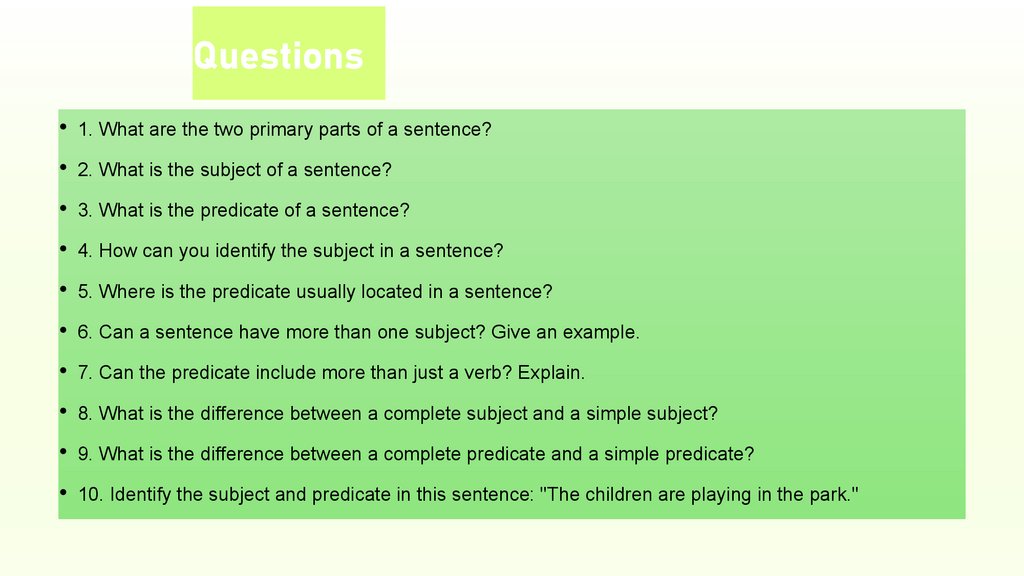
Questions• 1. What are the two primary parts of a sentence?
• 2. What is the subject of a sentence?
• 3. What is the predicate of a sentence?
• 4. How can you identify the subject in a sentence?
• 5. Where is the predicate usually located in a sentence?
• 6. Can a sentence have more than one subject? Give an example.
• 7. Can the predicate include more than just a verb? Explain.
• 8. What is the difference between a complete subject and a simple subject?
• 9. What is the difference between a complete predicate and a simple predicate?
• 10. Identify the subject and predicate in this sentence: "The children are playing in the park."
18.
REFERENCES• 1. Azar, M. (2010). Understanding English Grammar. (Pearson Education.)
• 2. Biber, D., Conrad, S., & Leech, G. (2002). Longman Student Grammar of Spoken and Written English.
(Longman.)
• 3. Huddleston, R. (1988). English Grammar: An Outline. (Cambridge University Press.)
• 4. Swan, M. (2005). Practical English Usage. (Oxford University Press.)
• 5. Leech, G., & Svartvik, J. (2002). A Communicative Grammar of English. (Longman.)