 industry
Similar presentations:










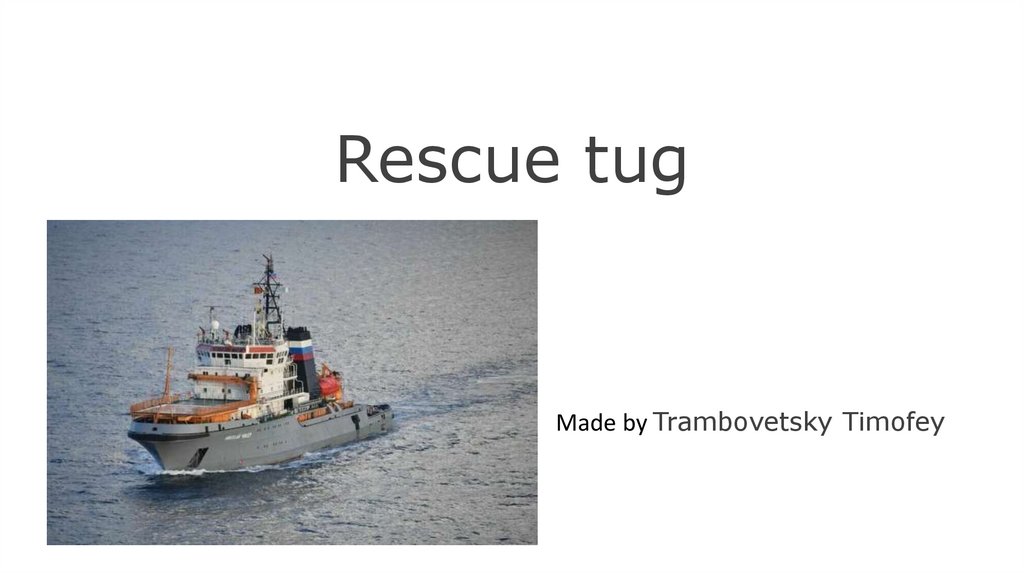
Rescue tug
1. Rescue tug
Made by Trambovetsky Timofey2. Main features
A rescue tug - specialized vessel designed to move other vessels, floating objects, or structures by pulling,pushing, or come along with it. These tugs can be used for emergency rescue operations, towing damaged vessels
and objects, firefighting, etc.
Structure. Some elements of rescue tug:
• The reinforced housing is designed to withstand high loads and impacts.
• High-сapacity power plant (diesel, diesel-electric, gas).
• Screw steering gear with screws or azimuth columns.
• Winches and towing hooks with emergency release system.
• Deck equipment (bumpers, mooring devices, life-saving equipment).
• Wheelhouse with 360-degree visibility.
Requirements
To prevent tugboats from capsizing, the following structural measures are taken:
superstructures, wheelhouses, manholes, and doors are made watertight;
the angle of the towing rope is limited by shifting the point of its application towards the stern;
To soften the jerks, the tug is equipped with spring hooks, towing winches, and hydraulic shock absorbers.
3. Technical characteristics
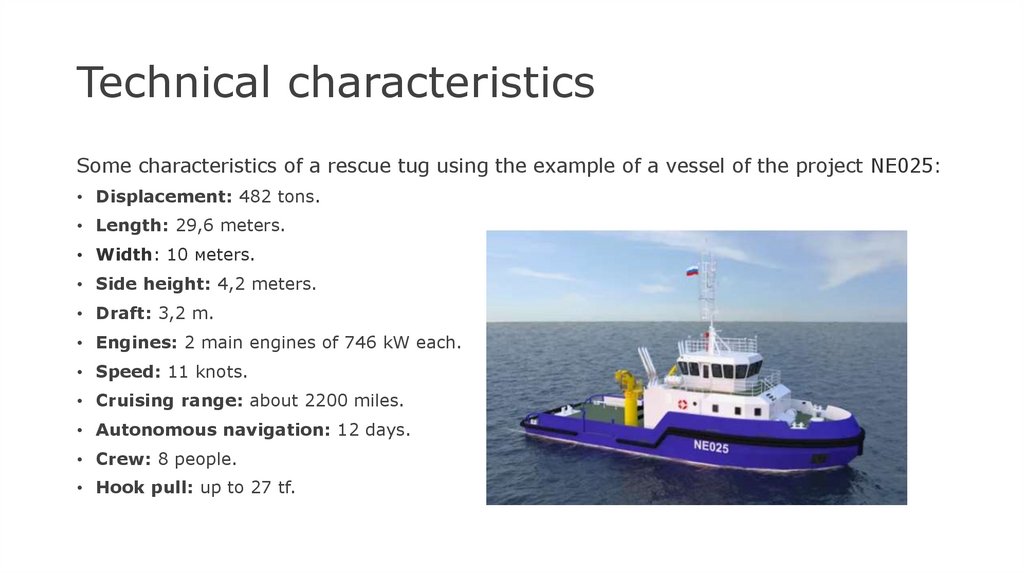
Some characteristics of a rescue tug using the example of a vessel of the project NE025:• Displacement: 482 tons.
• Length: 29,6 meters.
• Width: 10 мeters.
• Side height: 4,2 meters.
• Draft: 3,2 m.
• Engines: 2 main engines of 746 kW each.
• Speed: 11 knots.
• Cruising range: about 2200 miles.
• Autonomous navigation: 12 days.
• Crew: 8 people.
• Hook pull: up to 27 tf.
4. Role in the economy
Rescue tugs play a vital role in the economy, ensuring maritime safety andemergency response. These specialized vessels are designed to assist ships in distress and
recover damaged vessels.
Some tasks of rescue tugs
:
Emergency towing and vessel recovery. Tugs assist vessels that encounter difficulties,
such as running aground or with flooded compartments.
Extinguishing fires on floating and coastal objects, eliminating oil spills.
Evacuation of people. Tugboats can be equipped with life rafts and a hospital to provide
medical care to victims.
Safe maneuvering of large vessels in difficult areas of ports and harbors.
Demand for rescue tugs is growing due to:
Growing maritime trade means more vessels are navigating potentially dangerous waters,
increasing demand for tugboats.
Strict environmental standards – shipping companies invest in robust rescue capabilities
that meet safety and pollution prevention standards.
5. Live example
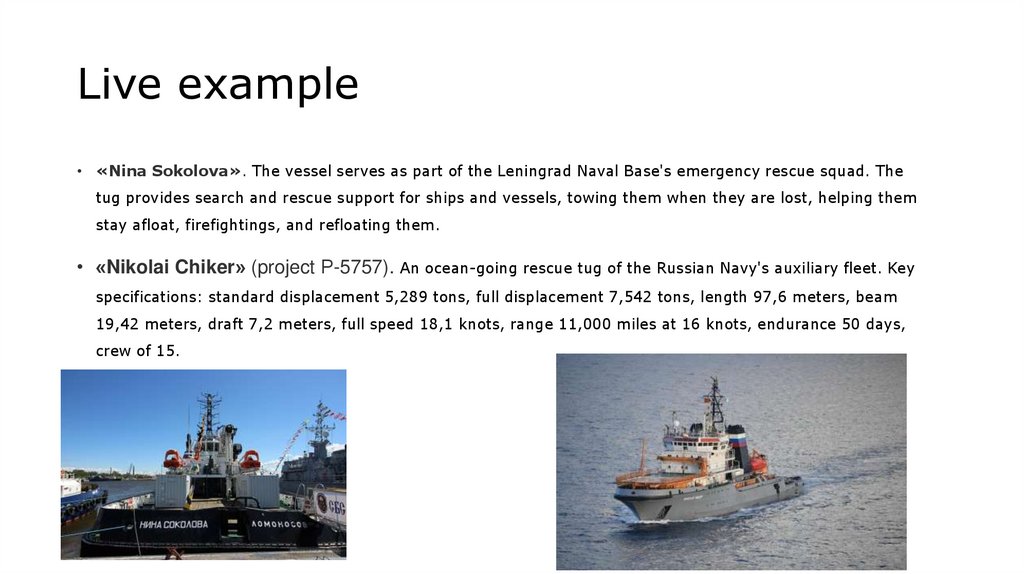
• «Nina Sokolova». The vessel serves as part of the Leningrad Naval Base's emergency rescue squad. Thetug provides search and rescue support for ships and vessels, towing them when they are lost, helping them
stay afloat, firefightings, and refloating them.
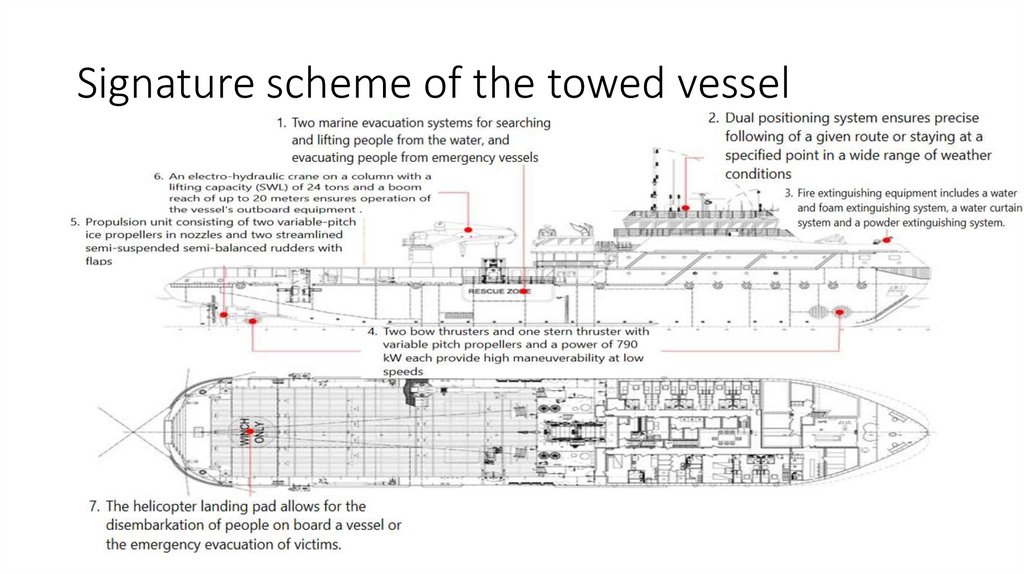
• «Nikolai Chiker» (project Р-5757). An ocean-going rescue tug of the Russian Navy's auxiliary fleet. Key
specifications: standard displacement 5,289 tons, full displacement 7,542 tons, length 97,6 meters, beam
19,42 meters, draft 7,2 meters, full speed 18,1 knots, range 11,000 miles at 16 knots, endurance 50 days,
crew of 15.
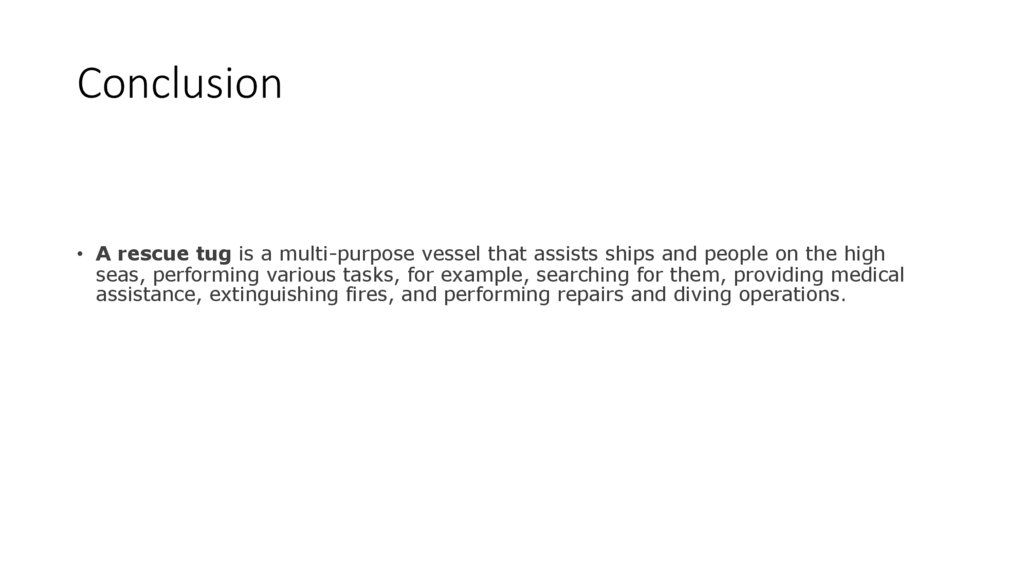
6. Signature scheme of the towed vessel
7. Conclusion
• A rescue tug is a multi-purpose vessel that assists ships and people on the highseas, performing various tasks, for example, searching for them, providing medical
assistance, extinguishing fires, and performing repairs and diving operations.