


 medicine
 english
Similar presentations:





Medical Terms
1.
Medical TermsUnderstanding essential terminology in the
medical field.
2.
Introduction3.
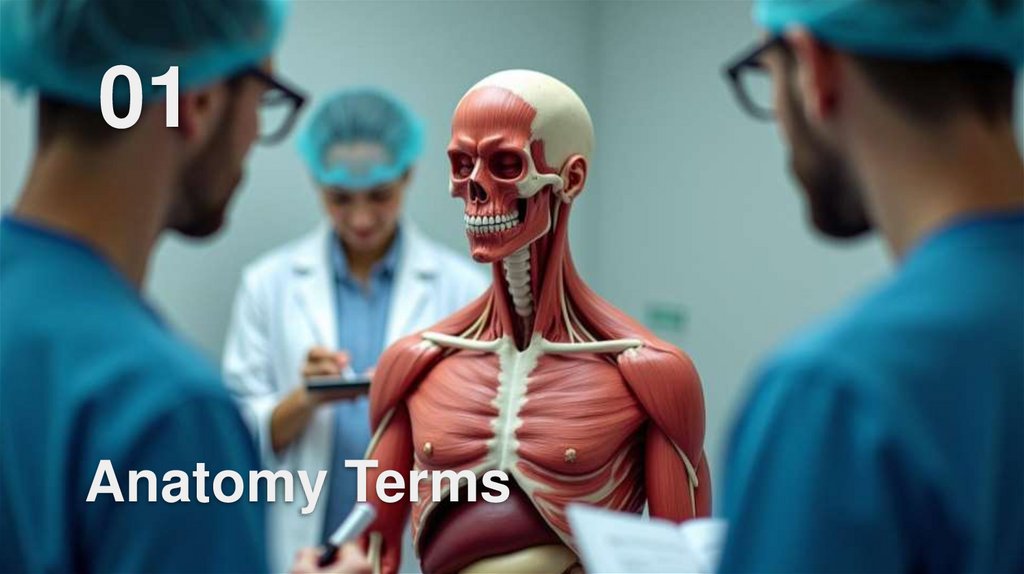
01Anatomy Terms
4.
The human body is organized into several major systems, includingthe circulatory, respiratory, digestive, nervous, and musculoskeletal
systems. Each system has specific functions that are essential for
maintaining homeostasis and overall health.
Major body systems
5.
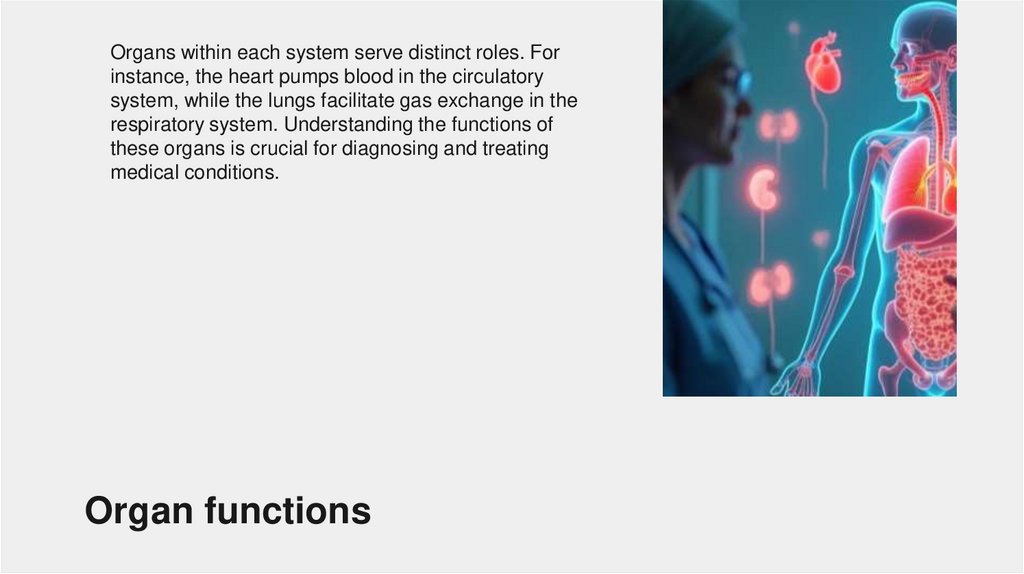
Organs within each system serve distinct roles. Forinstance, the heart pumps blood in the circulatory
system, while the lungs facilitate gas exchange in the
respiratory system. Understanding the functions of
these organs is crucial for diagnosing and treating
medical conditions.
Organ functions
6.
Directional terms are used to describe the locations of structures inthe body relative to other structures. These important terms include
'anterior' (front), 'posterior' (back), 'superior' (above), 'inferior'
(below), 'medial' (toward the midline), and 'lateral' (away from the
midline). Understanding these terms is essential for clear
communication in medical contexts.
Directional terms
7.
02Common Conditions
8.
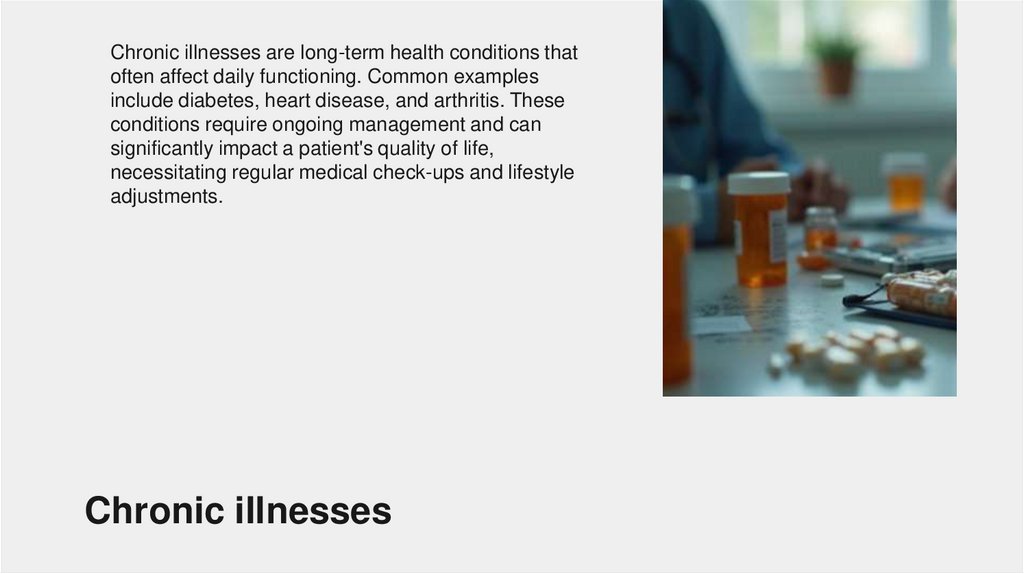
Chronic illnesses are long-term health conditions thatoften affect daily functioning. Common examples
include diabetes, heart disease, and arthritis. These
conditions require ongoing management and can
significantly impact a patient's quality of life,
necessitating regular medical check-ups and lifestyle
adjustments.
Chronic illnesses
9.
Infectious diseases are caused by pathogenic microorganisms,such as bacteria, viruses, fungi, or parasites. Examples include
influenza, tuberculosis, and COVID-19. These diseases can spread
from person to person and require precise diagnosis and treatment
strategies to prevent outbreaks and protect public health.
Infectious diseases
10.
Diagnostic terms are used to describe the process of identifying adisease or condition based on symptoms and clinical findings.
Common diagnostic terms include 'diagnosis' (identifying a
condition), 'prognosis' (forecasting the likely outcome), and
'differential diagnosis' (distinguishing between two or more
conditions). Accurate diagnosis is critical for effective treatment.
Diagnostic terms
11.
In summary, understanding medical terminology is essential foreffective communication in the healthcare field. Directional terms
help describe anatomical positions, while knowledge of common
conditions is necessary for diagnosis and treatment. Mastery of
these terms is vital for healthcare professionals.
Conclusions
12.
+00 000 000 000Thank you!
Do you have any questions?
CREDITS: This presentation template was created by
Slidesgo, and includes icons, infographics & images by
Freepik