
 english
Similar presentations:





Zero & first conditionals
1.
ZERO&
FIRST
CONDITIONALS
2.
ZERO CONDITIONALif + present, present
(present = simple, continuous, or perfect)
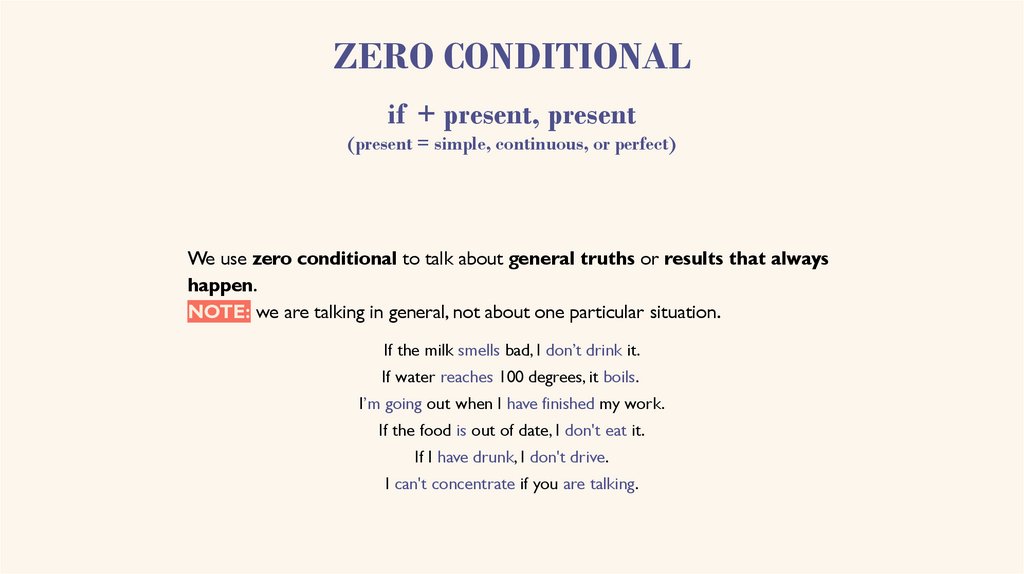
We use zero conditional to talk about general truths or results that always
happen.
NOTE: we are talking in general, not about one particular situation.
If the milk smells bad, I don’t drink it.
If water reaches 100 degrees, it boils.
I’m going out when I have finished my work.
If the food is out of date, I don't eat it.
If I have drunk, I don't drive.
I can't concentrate if you are talking.
3.
if + present, present(present = simple, continuous, or perfect)
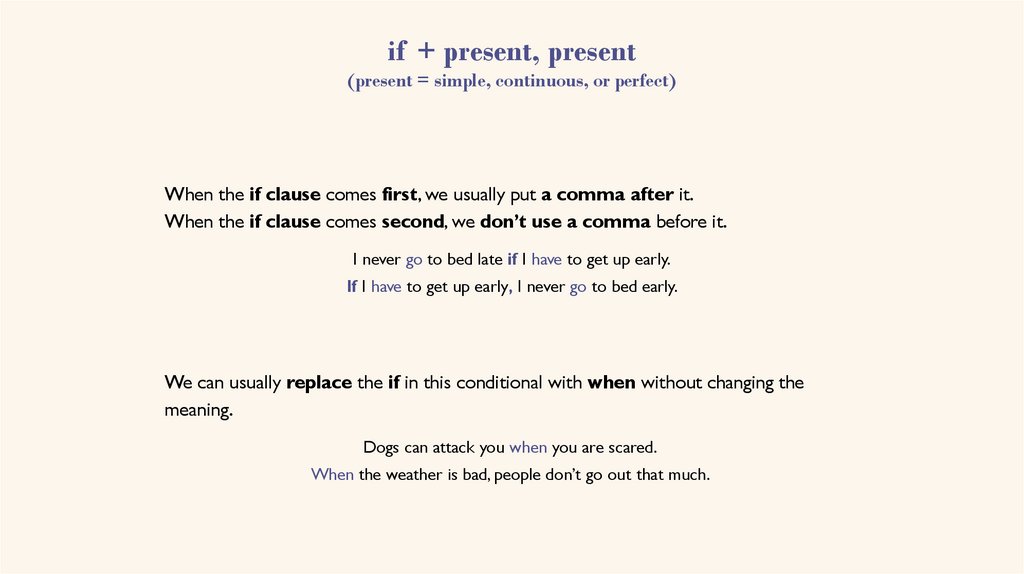
When the if clause comes first, we usually put a comma after it.
When the if clause comes second, we don’t use a comma before it.
I never go to bed late if I have to get up early.
If I have to get up early, I never go to bed early.
We can usually replace the if in this conditional with when without changing the
meaning.
Dogs can attack you when you are scared.
When the weather is bad, people don’t go out that much.
4.
FIRST CONDITIONALif + present, future
(present = simple, continuous, or perfect)
(future = simple, continuous, or perfect; imperative; modal)
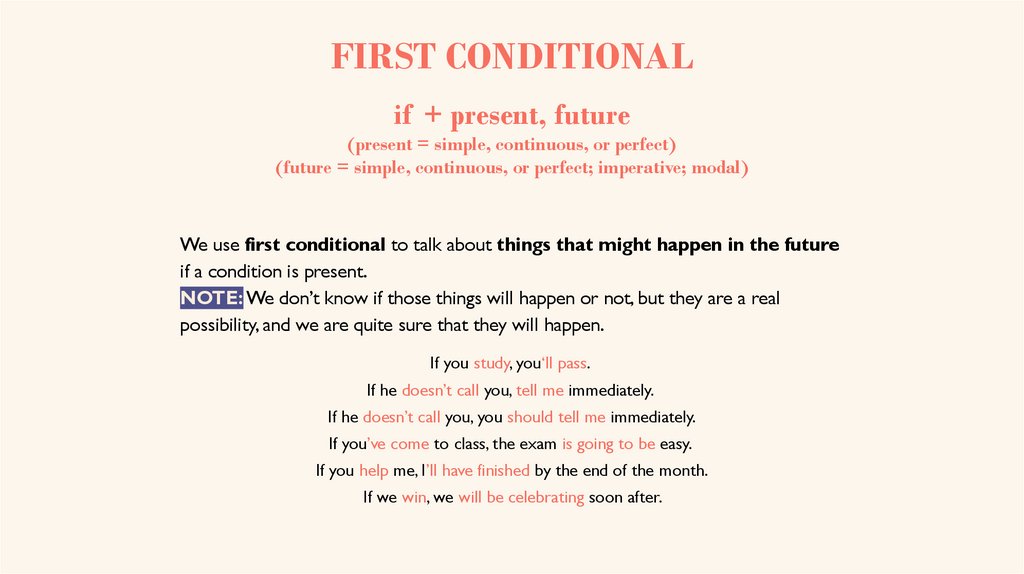
We use first conditional to talk about things that might happen in the future
if a condition is present.
NOTE: We don’t know if those things will happen or not, but they are a real
possibility, and we are quite sure that they will happen.
If you study, you‘ll pass.
If he doesn’t call you, tell me immediately.
If he doesn’t call you, you should tell me immediately.
If you’ve come to class, the exam is going to be easy.
If you help me, I’ll have finished by the end of the month.
If we win, we will be celebrating soon after.
5.
if + present, future(present = simple, continuous, or perfect)
(future = simple, continuous, or perfect; imperative; modal)
When we are talking about the future we use the present (NOT will) after the
expressions:
unless, when, as soon as, until, once, before, after, while (=as long as).
I’ll go to bed as soon as I finish my homework.
When I am 65, I will retire.
I won’t leave until you arrive.
You should text me before you come.
Once you are living together, there might be disagreements.
While you are kind, people will trust you.
6.
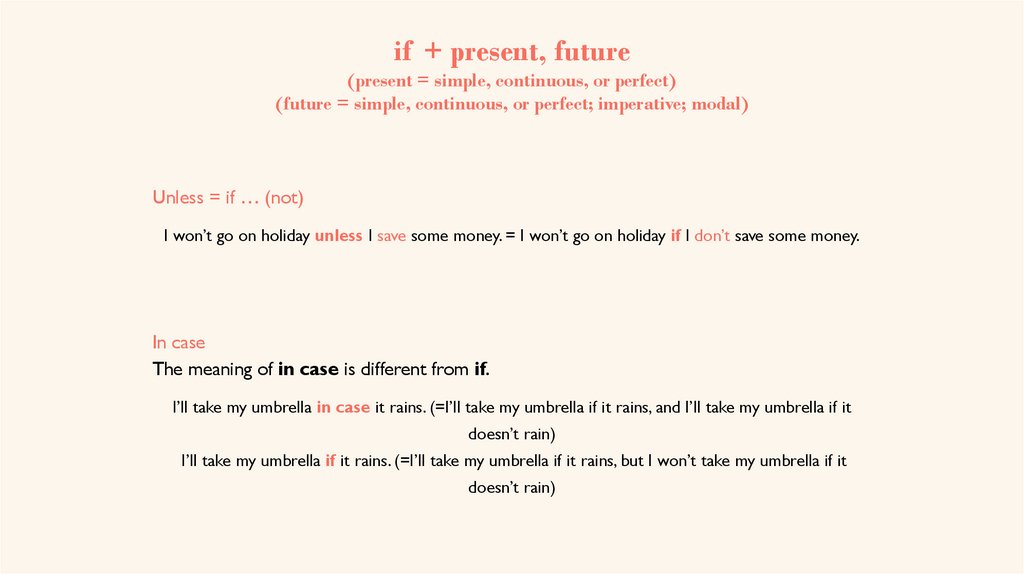
if + present, future(present = simple, continuous, or perfect)
(future = simple, continuous, or perfect; imperative; modal)
Unless = if … (not)
I won’t go on holiday unless I save some money. = I won’t go on holiday if I don’t save some money.
In case
The meaning of in case is different from if.
I’ll take my umbrella in case it rains. (=I’ll take my umbrella if it rains, and I’ll take my umbrella if it
doesn’t rain)
I’ll take my umbrella if it rains. (=I’ll take my umbrella if it rains, but I won’t take my umbrella if it
doesn’t rain)
7.
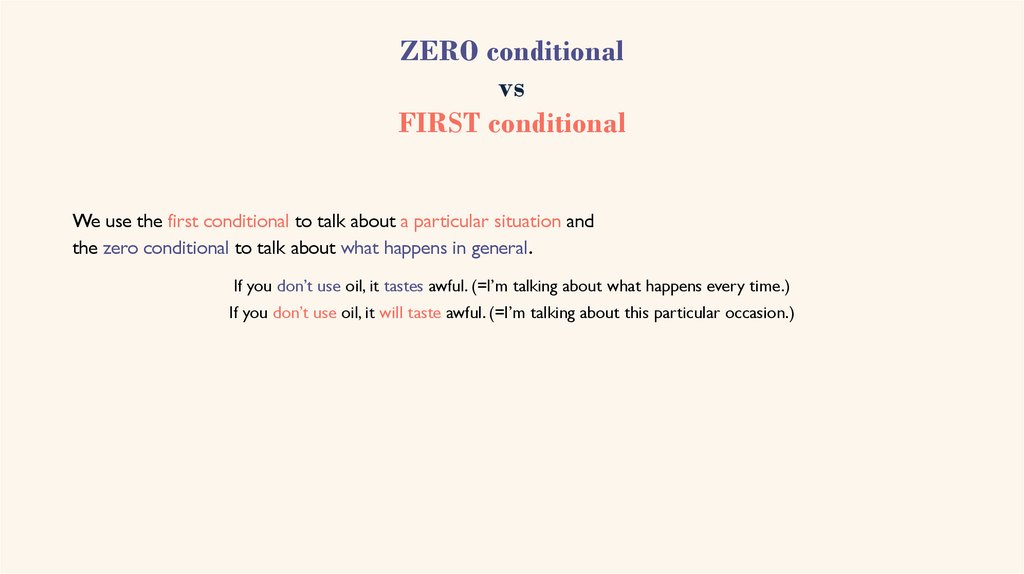
ZERO conditionalvs
FIRST conditional
We use the first conditional to talk about a particular situation and
the zero conditional to talk about what happens in general.
If you don’t use oil, it tastes awful. (=I’m talking about what happens every time.)
If you don’t use oil, it will taste awful. (=I’m talking about this particular occasion.)