
 informatics
Similar presentations:










Public Key Cryptography
1. Public Key Cryptography
2. Private-Key Cryptography
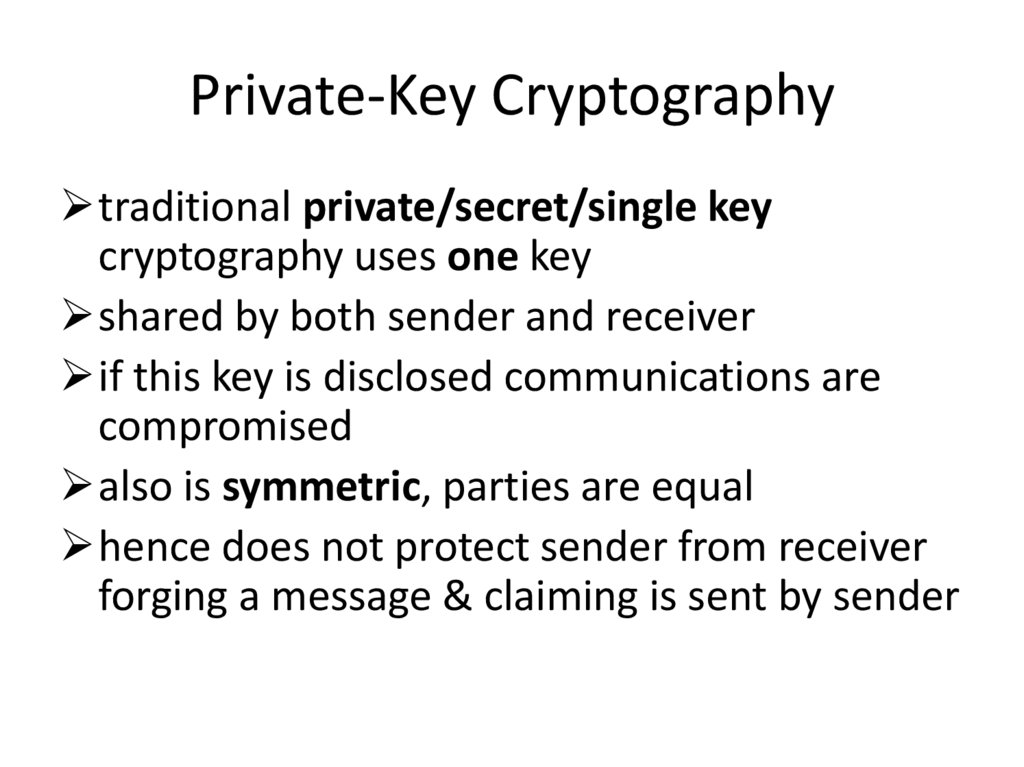
traditional private/secret/single keycryptography uses one key
shared by both sender and receiver
if this key is disclosed communications are
compromised
also is symmetric, parties are equal
hence does not protect sender from receiver
forging a message & claiming is sent by sender
3. Public-Key Cryptography
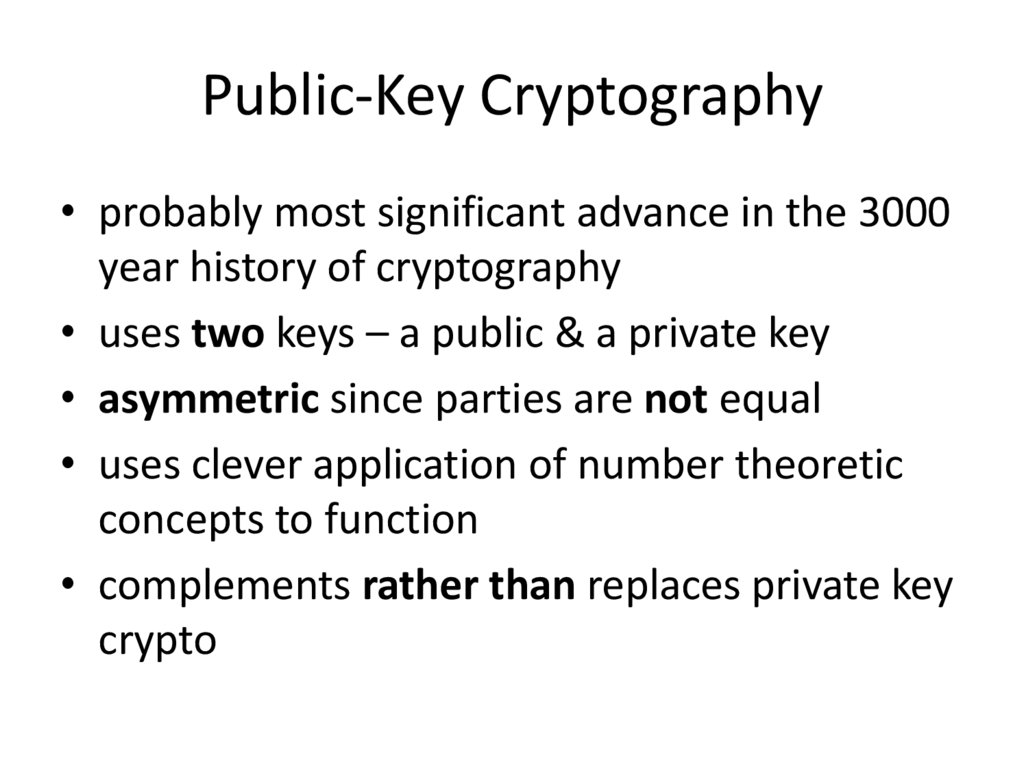
• probably most significant advance in the 3000year history of cryptography
• uses two keys – a public & a private key
• asymmetric since parties are not equal
• uses clever application of number theoretic
concepts to function
• complements rather than replaces private key
crypto
4. Why Public-Key Cryptography?
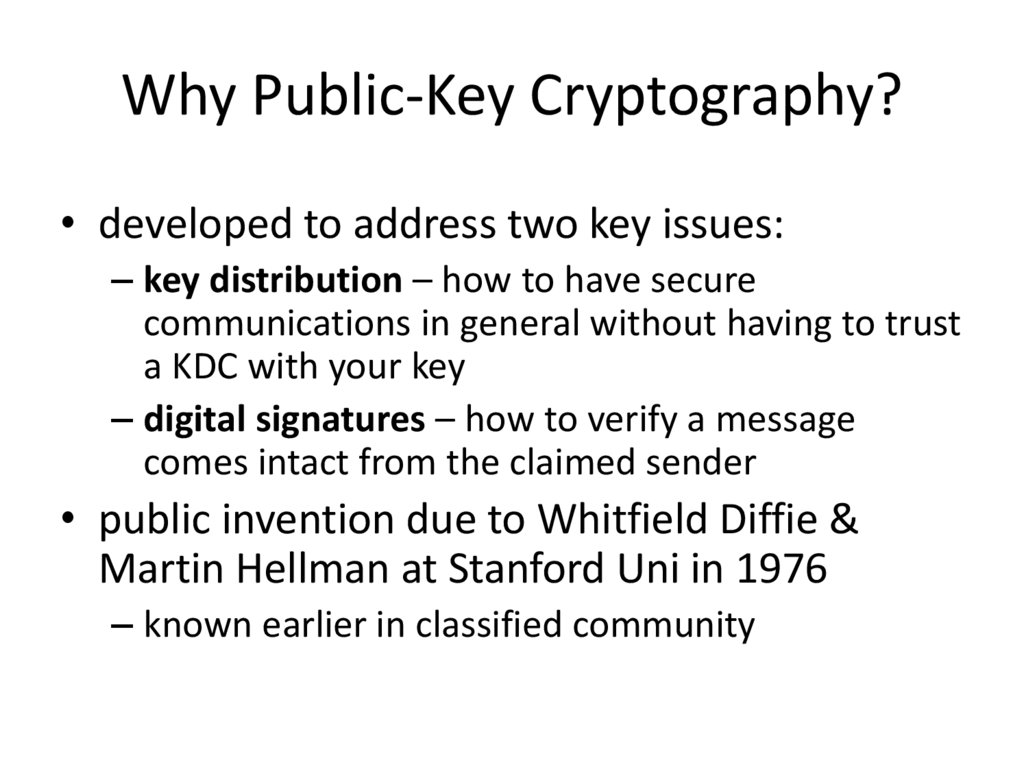
• developed to address two key issues:– key distribution – how to have secure
communications in general without having to trust
a KDC with your key
– digital signatures – how to verify a message
comes intact from the claimed sender
• public invention due to Whitfield Diffie &
Martin Hellman at Stanford Uni in 1976
– known earlier in classified community
5. Public-Key Cryptography
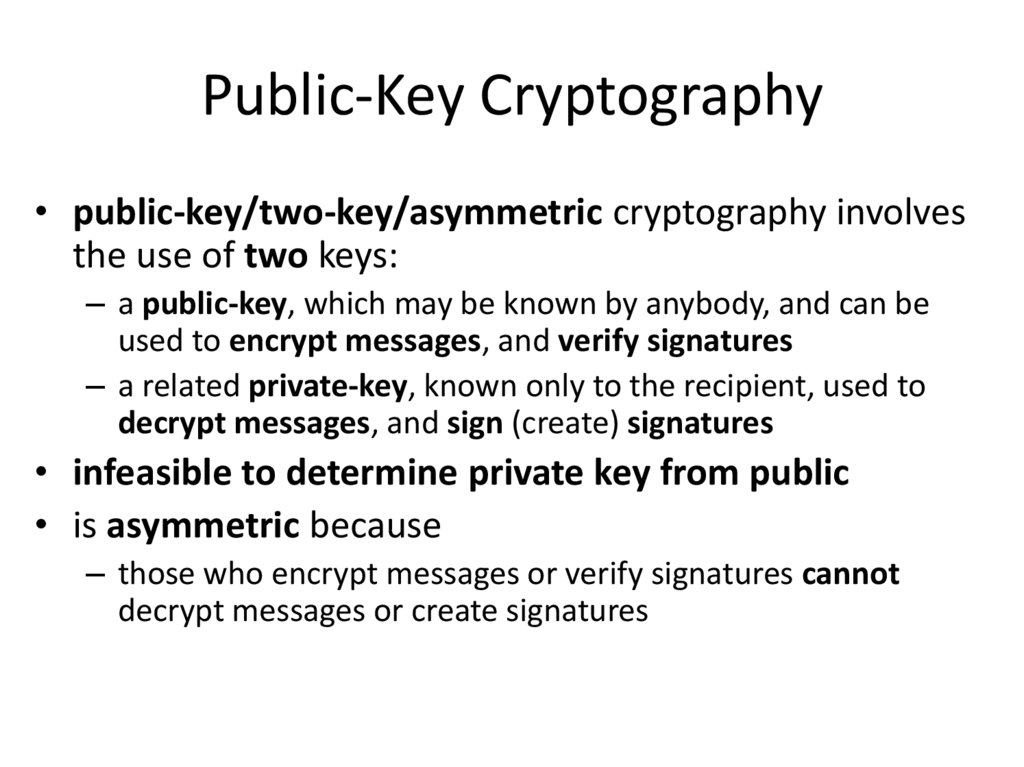
• public-key/two-key/asymmetric cryptography involvesthe use of two keys:
– a public-key, which may be known by anybody, and can be
used to encrypt messages, and verify signatures
– a related private-key, known only to the recipient, used to
decrypt messages, and sign (create) signatures
• infeasible to determine private key from public
• is asymmetric because
– those who encrypt messages or verify signatures cannot
decrypt messages or create signatures
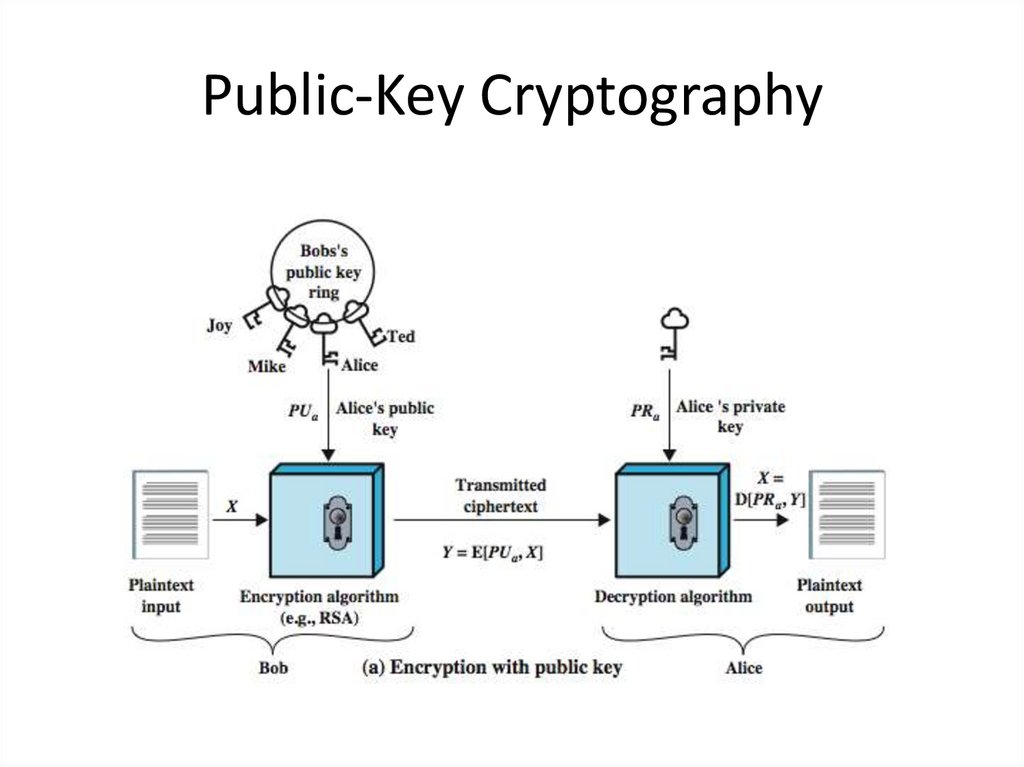
6. Public-Key Cryptography
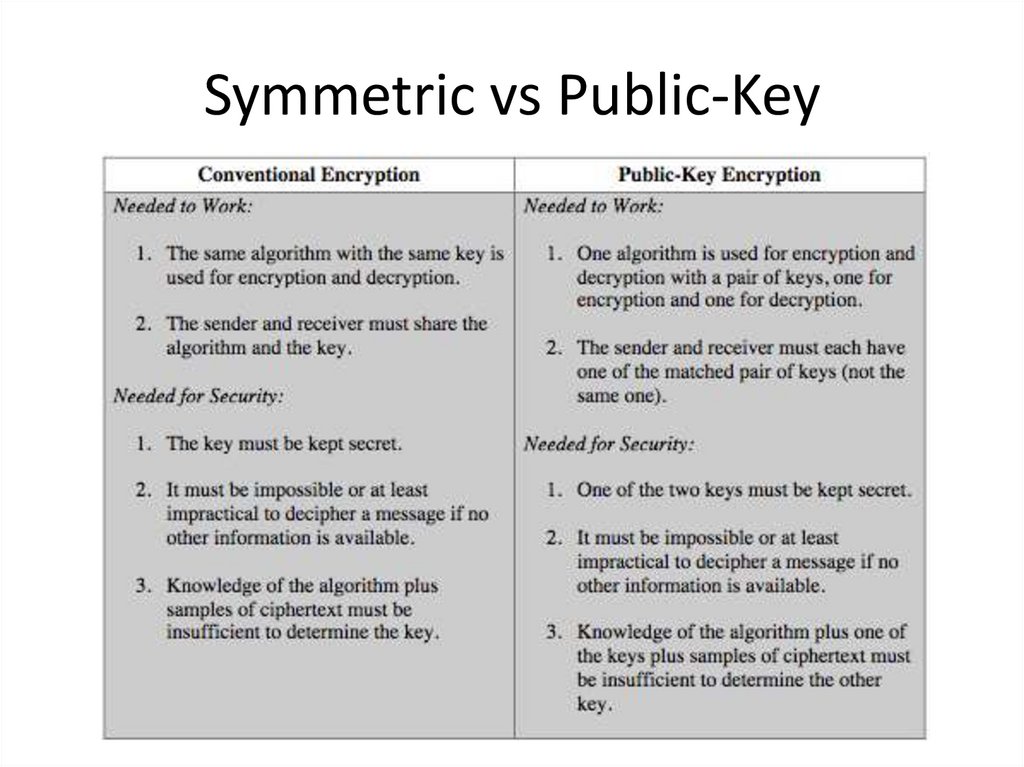
7. Symmetric vs Public-Key
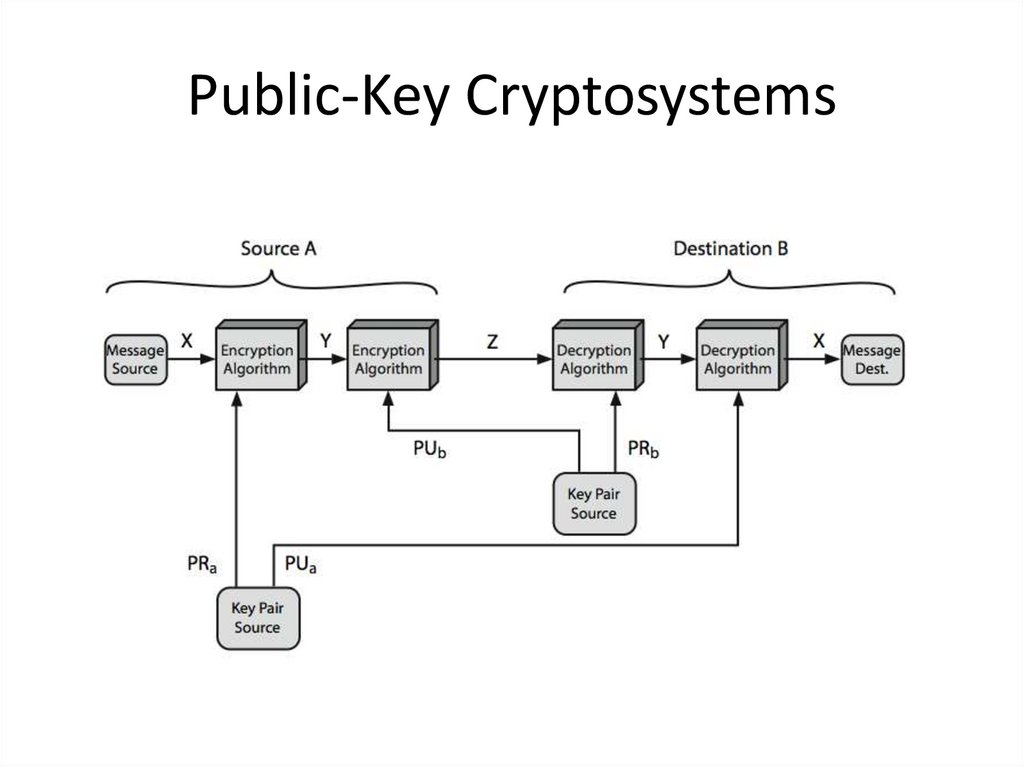
8. Public-Key Cryptosystems
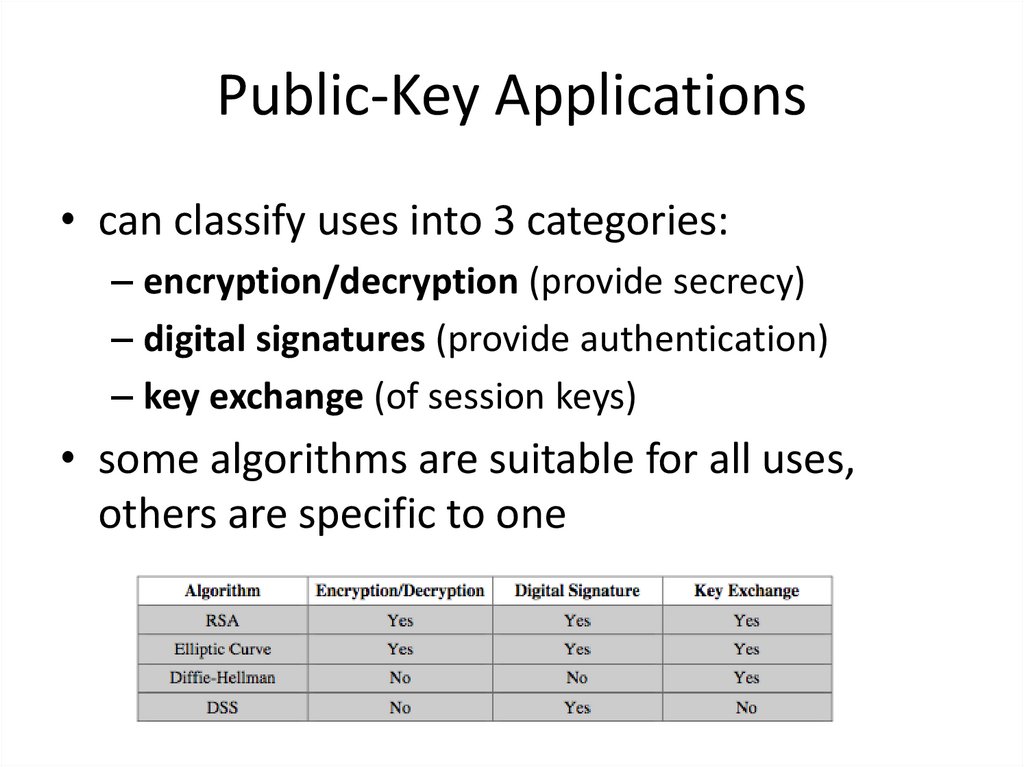
9. Public-Key Applications
• can classify uses into 3 categories:– encryption/decryption (provide secrecy)
– digital signatures (provide authentication)
– key exchange (of session keys)
• some algorithms are suitable for all uses,
others are specific to one
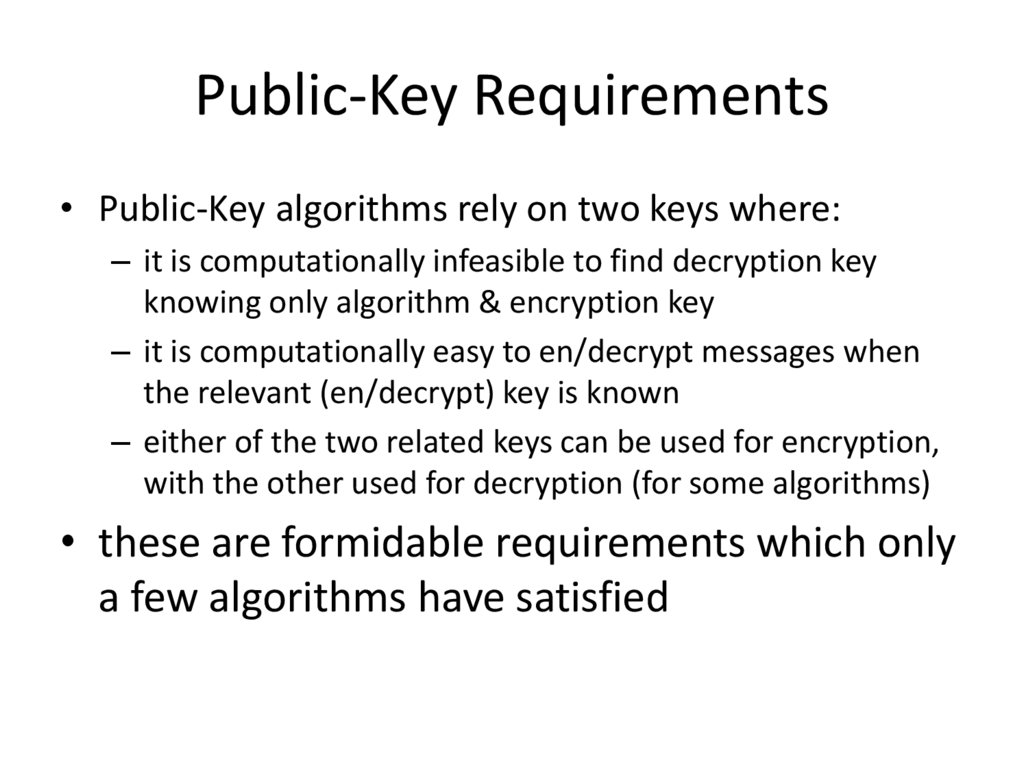
10. Public-Key Requirements
• Public-Key algorithms rely on two keys where:– it is computationally infeasible to find decryption key
knowing only algorithm & encryption key
– it is computationally easy to en/decrypt messages when
the relevant (en/decrypt) key is known
– either of the two related keys can be used for encryption,
with the other used for decryption (for some algorithms)
• these are formidable requirements which only
a few algorithms have satisfied
11. Public-Key Requirements
• need a trapdoor one-way function• one-way function has
– Y = f(X) easy
– X = f–1(Y) infeasible
• a trap-door one-way function has
– Y = fk(X) easy, if k and X are known
– X = fk–1(Y) easy, if k and Y are known
– X = fk–1(Y) infeasible, if Y known but k not known
• a practical public-key scheme depends on a
suitable trap-door one-way function
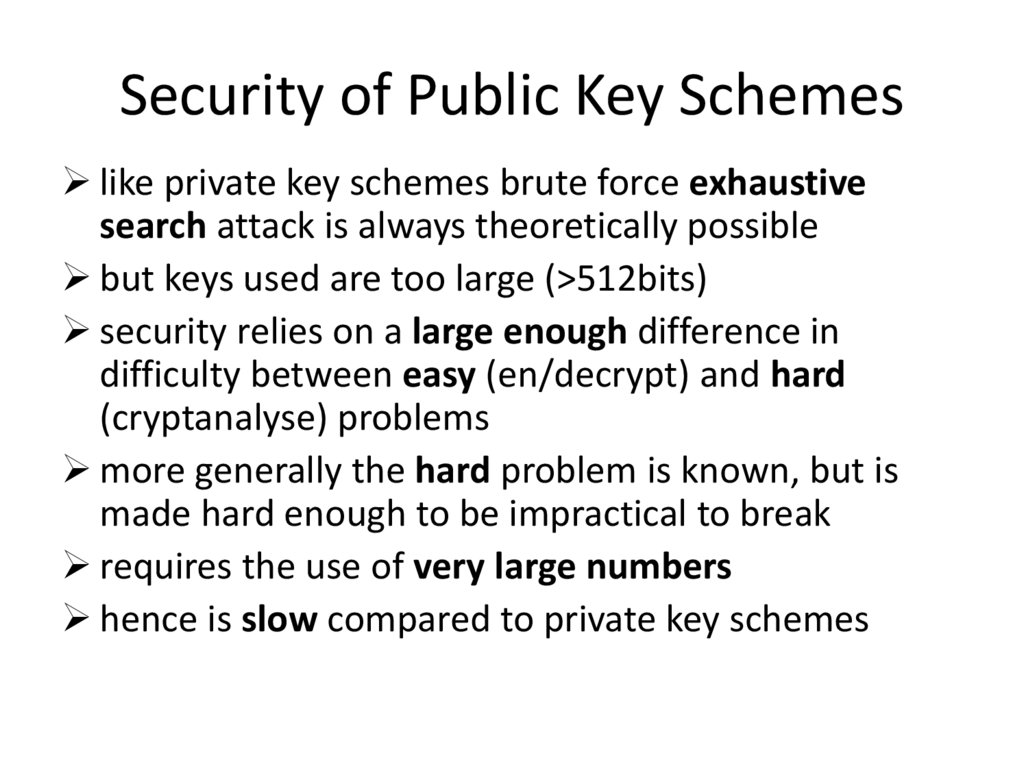
12. Security of Public Key Schemes
like private key schemes brute force exhaustivesearch attack is always theoretically possible
but keys used are too large (>512bits)
security relies on a large enough difference in
difficulty between easy (en/decrypt) and hard
(cryptanalyse) problems
more generally the hard problem is known, but is
made hard enough to be impractical to break
requires the use of very large numbers
hence is slow compared to private key schemes