
 informatics
Similar presentations:



Private Key Encryption. Symmetric Block Ciphers
1.
Private Key Encryption.Symmetric Block Ciphers.
2.
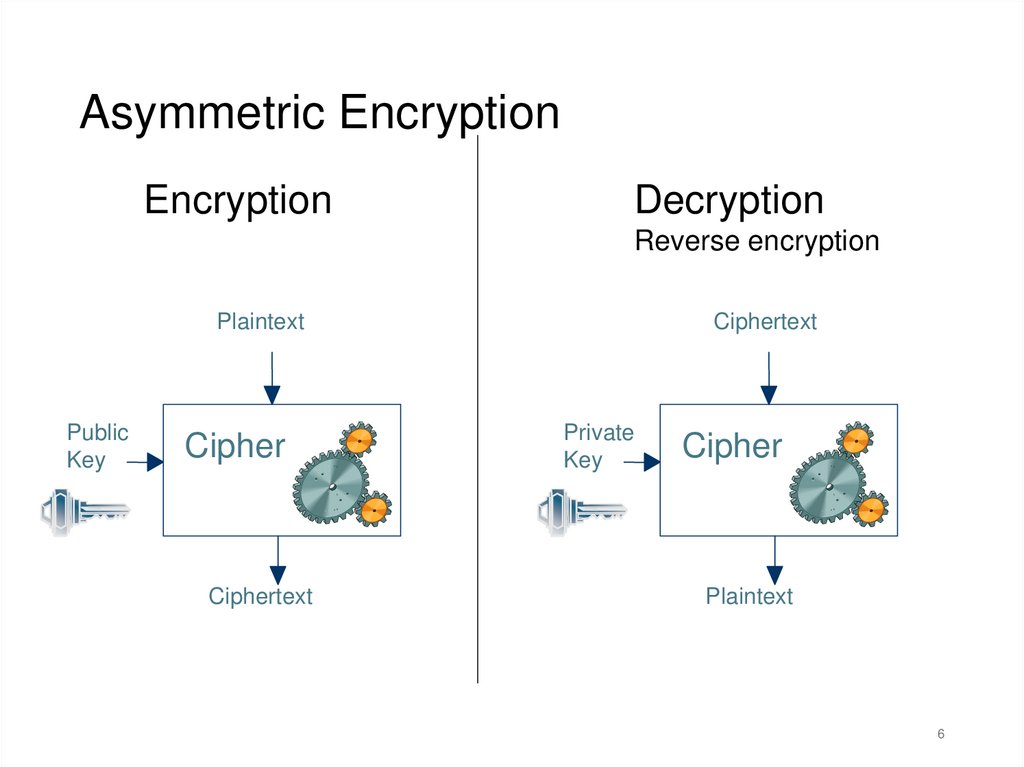
Public Key vs. Symmetric Key• Recall from last time that in a public key cryptosystem, each
participant has a key pair consisting of related keys
• Alice (or anyone) encrypts to Bob using Bob’s public key
• Bob decrypts with Bob’s private key
• Public keys are public
• They can be published in a directory, on a website, etc.
2
3.
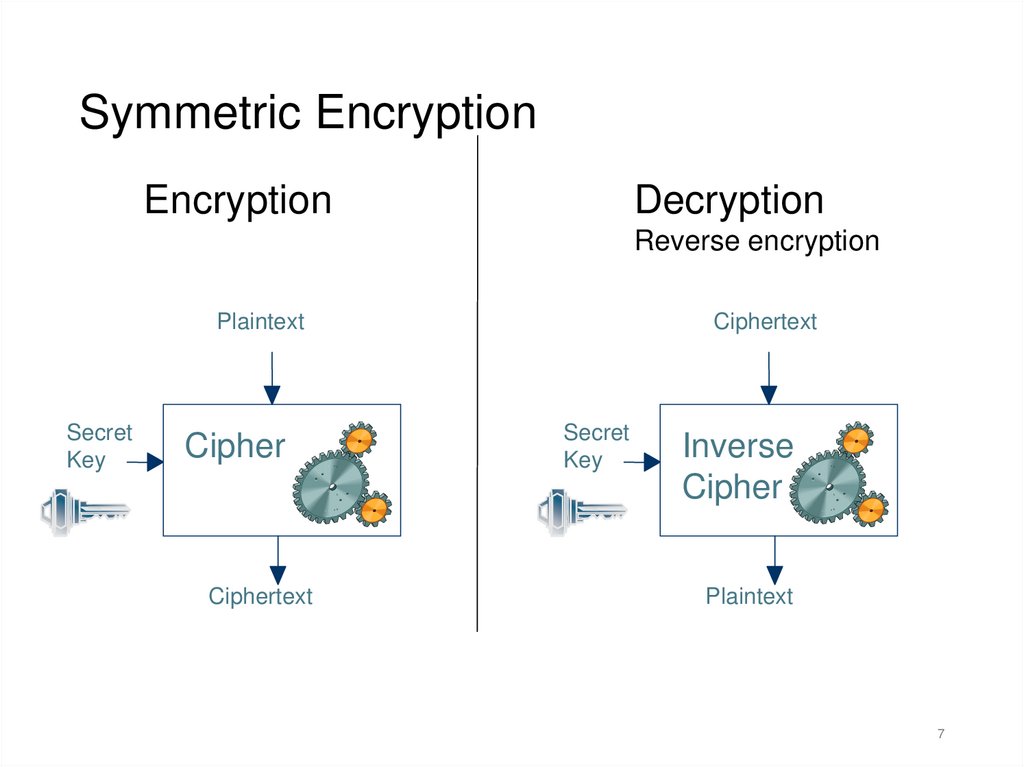
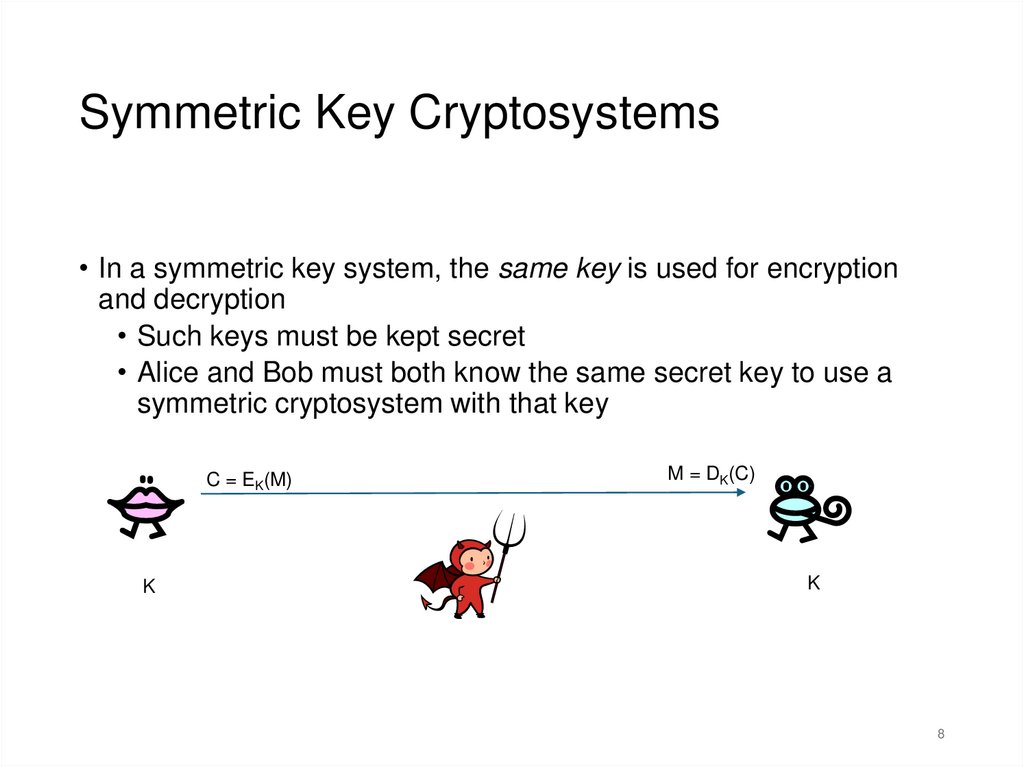
Public Key vs. Symmetric Key• In contrast, in a symmetric key system, the same key is used for
encryption and decryption
• Such keys must be kept secret
• Alice and Bob must both know the same secret key to use a
symmetric cryptosystem with that key
• Common pattern we will come back to later:
• Use a public key cryptosystem to send/negotiate a randomlygenerated secret key with the party to whom you wish to
communicate
• Then use that secret key with a symmetric key cryptosystem
3
4.
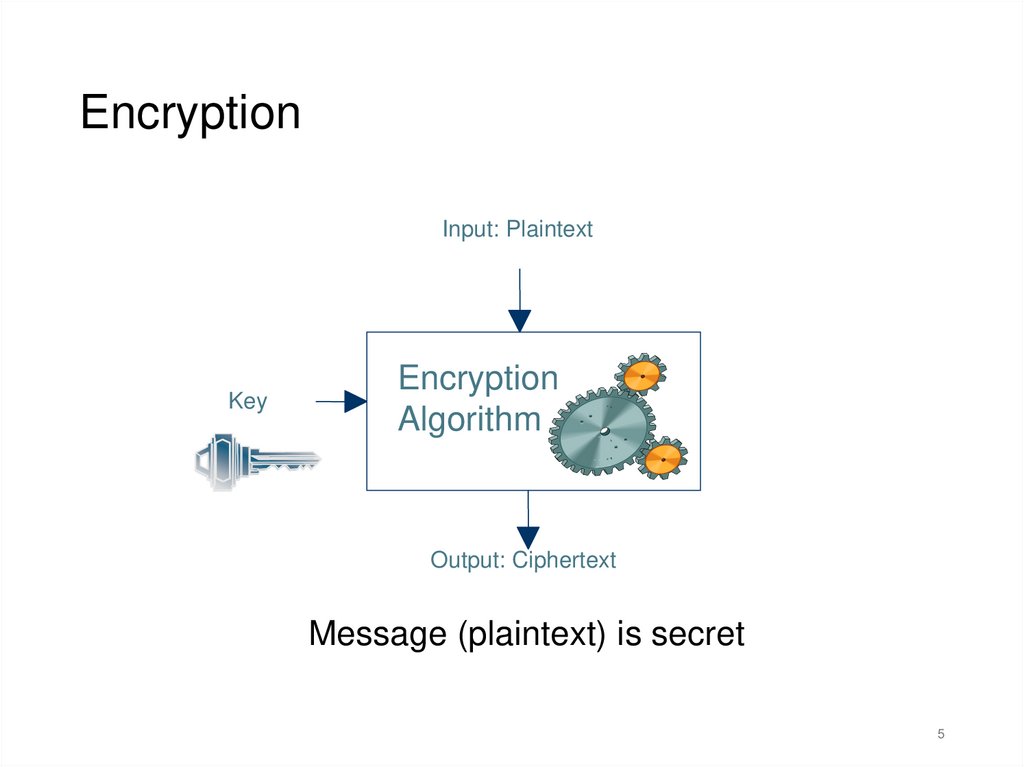
EncryptionYou’ve got some data you want to
protect.
Of course you’d encrypt
You take your key and …
4
5.
EncryptionInput: Plaintext
Key
Encryption
Algorithm
Output: Ciphertext
Message (plaintext) is secret
5
6.
Asymmetric EncryptionEncryption
Decryption
Reverse encryption
Plaintext
Public
Key
Cipher
Ciphertext
Ciphertext
Private
Key
Cipher
Plaintext
6
7.
Symmetric EncryptionEncryption
Decryption
Reverse encryption
Plaintext
Secret
Key
Cipher
Ciphertext
Ciphertext
Secret
Key
Inverse
Cipher
Plaintext
7
8.
Symmetric Key Cryptosystems• In a symmetric key system, the same key is used for encryption
and decryption
• Such keys must be kept secret
• Alice and Bob must both know the same secret key to use a
symmetric cryptosystem with that key
C = EK(M)
K
M = DK(C)
K
8
9.
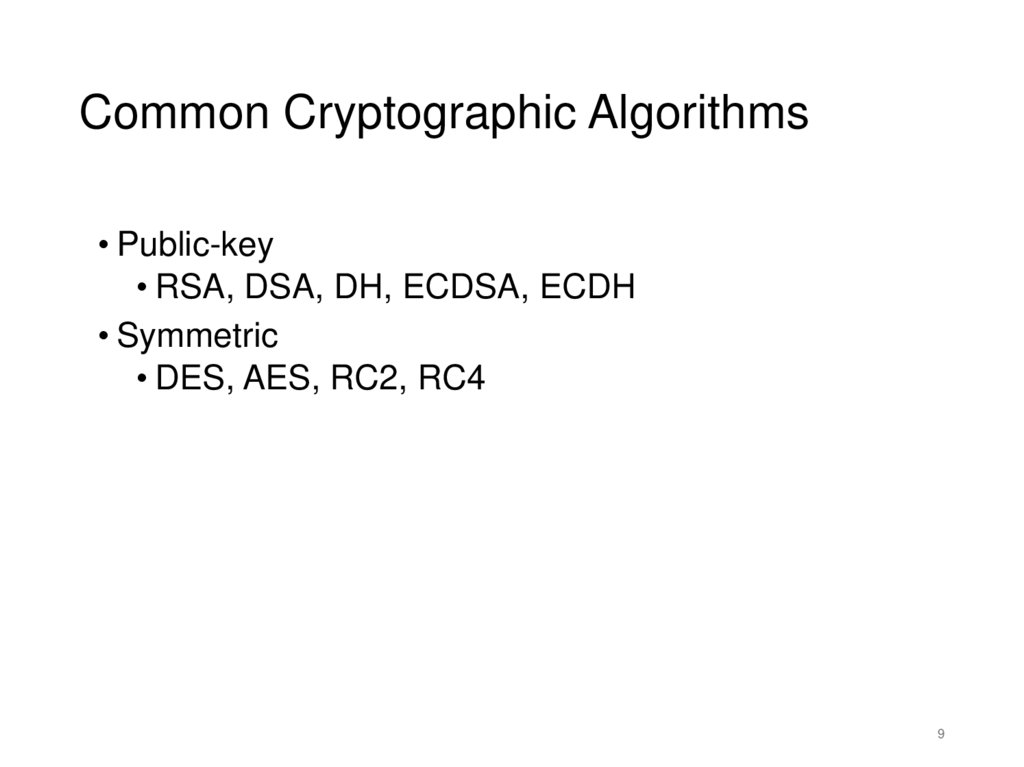
Common Cryptographic Algorithms• Public-key
• RSA, DSA, DH, ECDSA, ECDH
• Symmetric
• DES, AES, RC2, RC4
9
10.
Symmetric CiphersSecret-key (symmetric) ciphers are usually divided into
two classes:
• Stream ciphers
• Block ciphers
10
11.
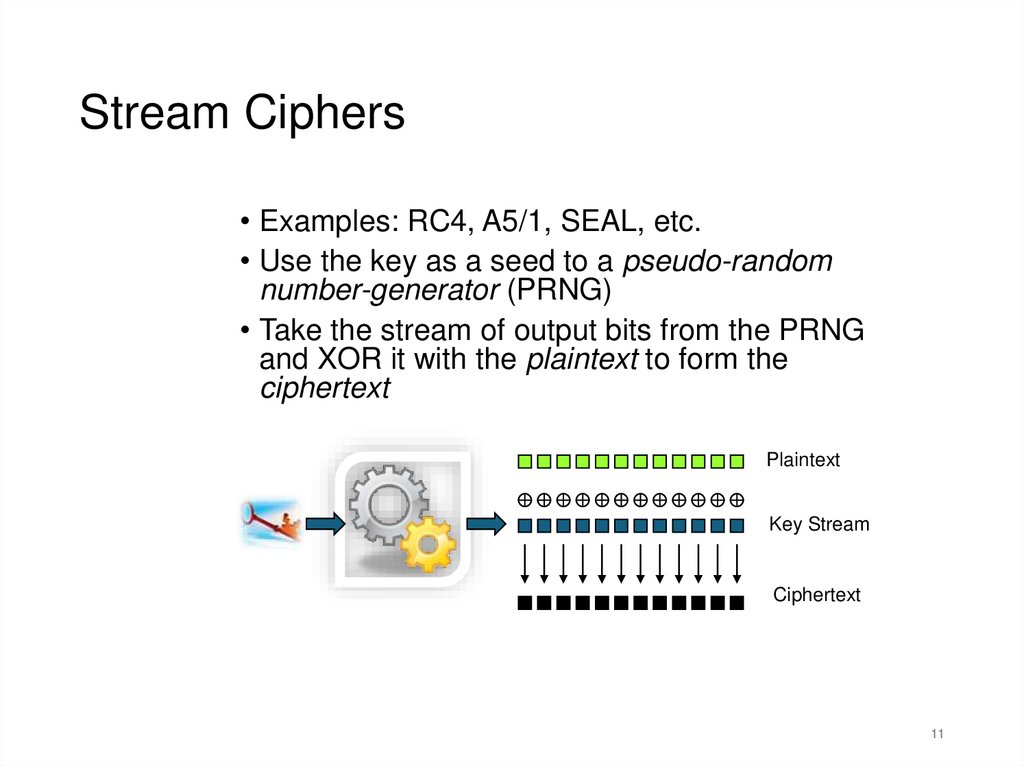
Stream Ciphers• Examples: RC4, A5/1, SEAL, etc.
• Use the key as a seed to a pseudo-random
number-generator (PRNG)
• Take the stream of output bits from the PRNG
and XOR it with the plaintext to form the
ciphertext
Plaintext
Key Stream
Ciphertext
11
12.
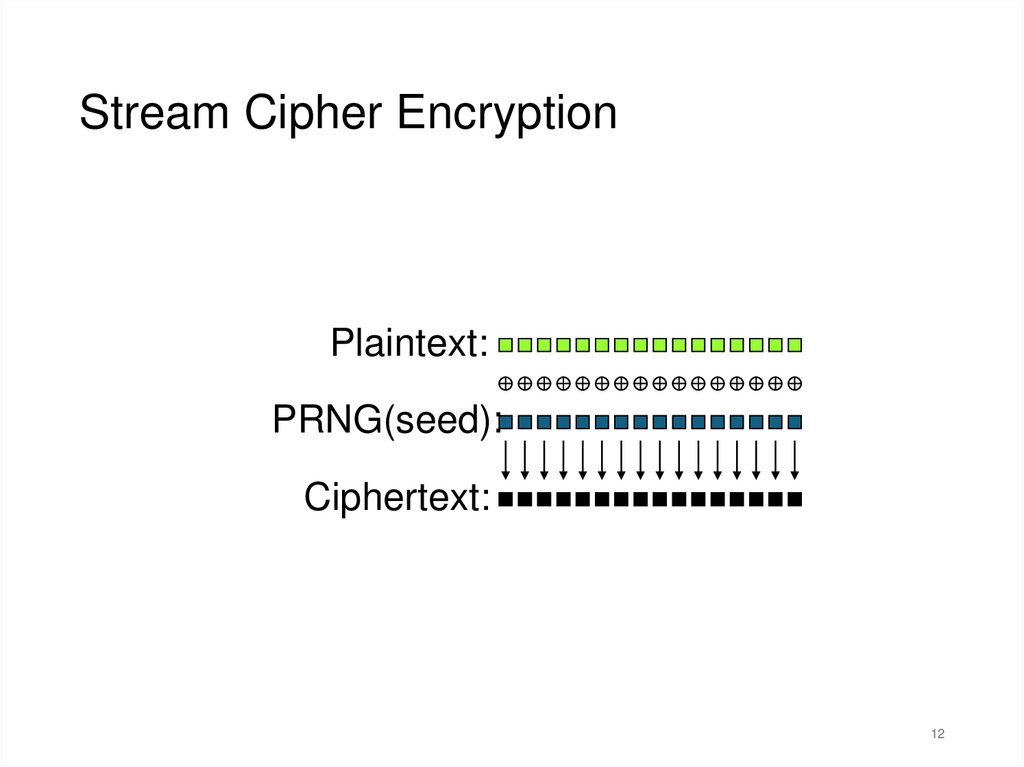
Stream Cipher EncryptionPlaintext:
PRNG(seed):
Ciphertext:
12
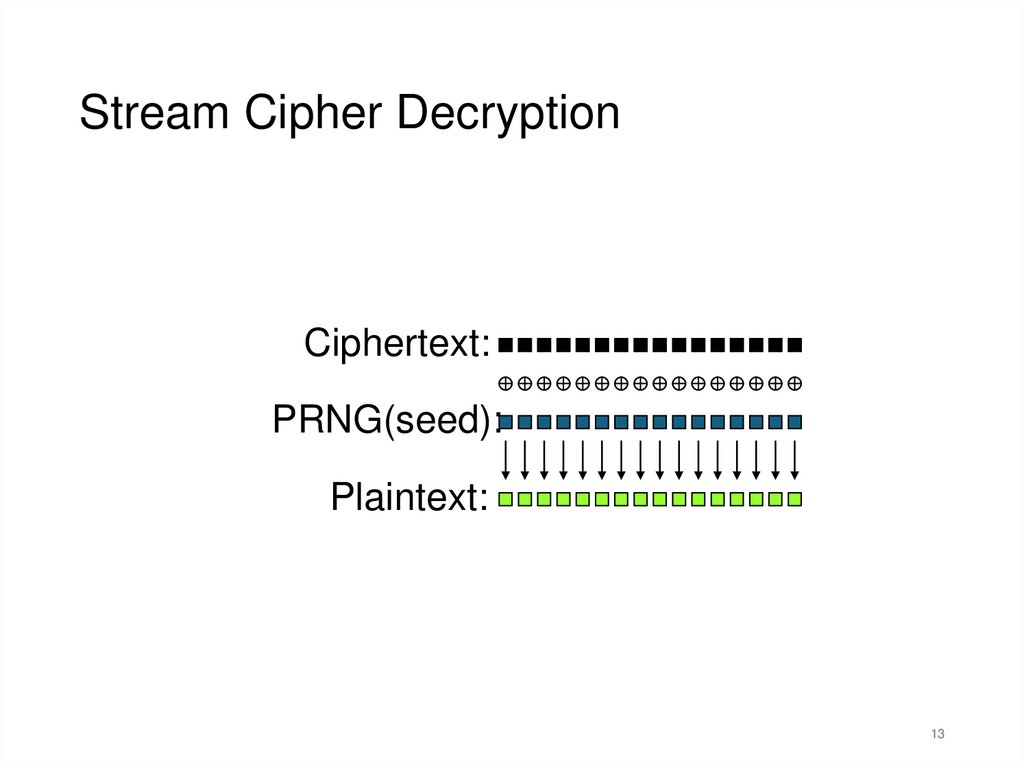
13.
Stream Cipher DecryptionCiphertext:
PRNG(seed):
Plaintext:
13
14.
Some Good Properties• Stream ciphers are typically very fast
• Stream ciphers can be very simple
• The same function is used for encryption and
decryption
14
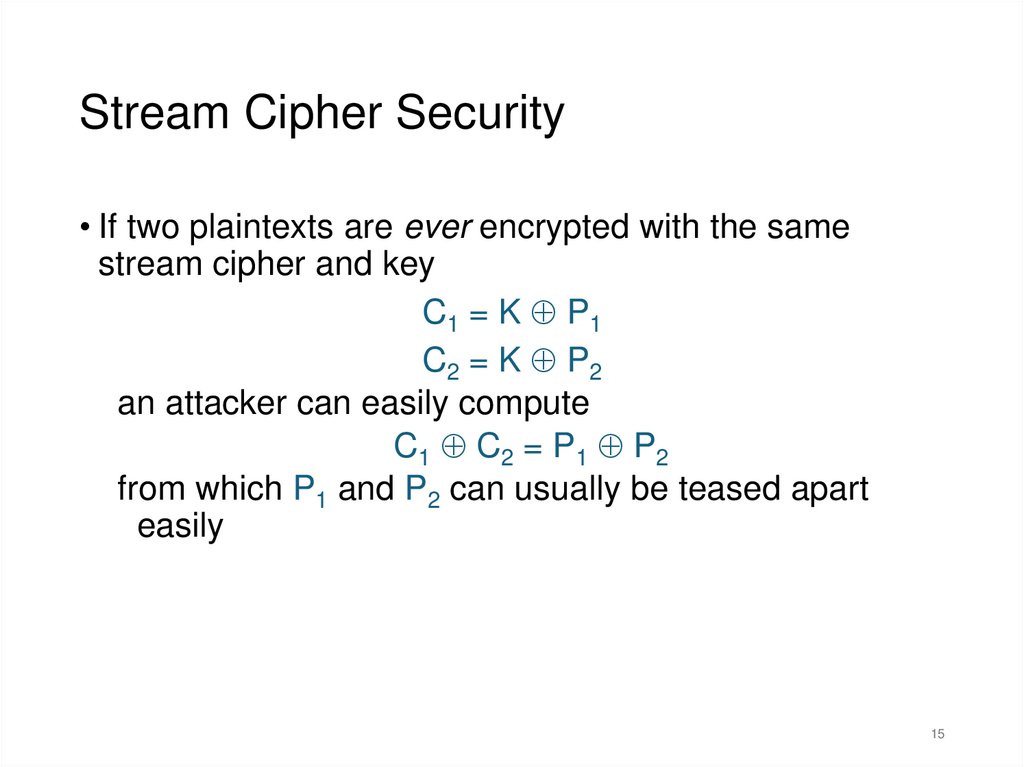
15.
Stream Cipher Security• If two plaintexts are ever encrypted with the same
stream cipher and key
C1 = K P1
C2 = K P2
an attacker can easily compute
C1 C2 = P1 P2
from which P1 and P2 can usually be teased apart
easily
15
16.
Stream Ciphers are Fragile• They are broken by key re-use
• They require integrity checking
• If you’re going to use a stream cipher
• Consider other options
• Make sure you understand the risks if you make a mistake in
use
16
17.
Symmetric CiphersSecret-key (symmetric) ciphers are usually divided into two classes:
• Stream ciphers
• Block ciphers
17
18.
Block Ciphers• Why are they called “block” ciphers?
• Because the cipher is defined as a function on a fixed-size
block of data
• This is called the “block size” and is a fundamental parameter of
the cipher
• 8- or 16-byte blocks are common
• What’s the “block size” of a stream cipher?
18
19.
Example Block Ciphers• DES
• 3DES
• AES
• RC2, RC5, TwoFish, Serpent, etc.
19
20.
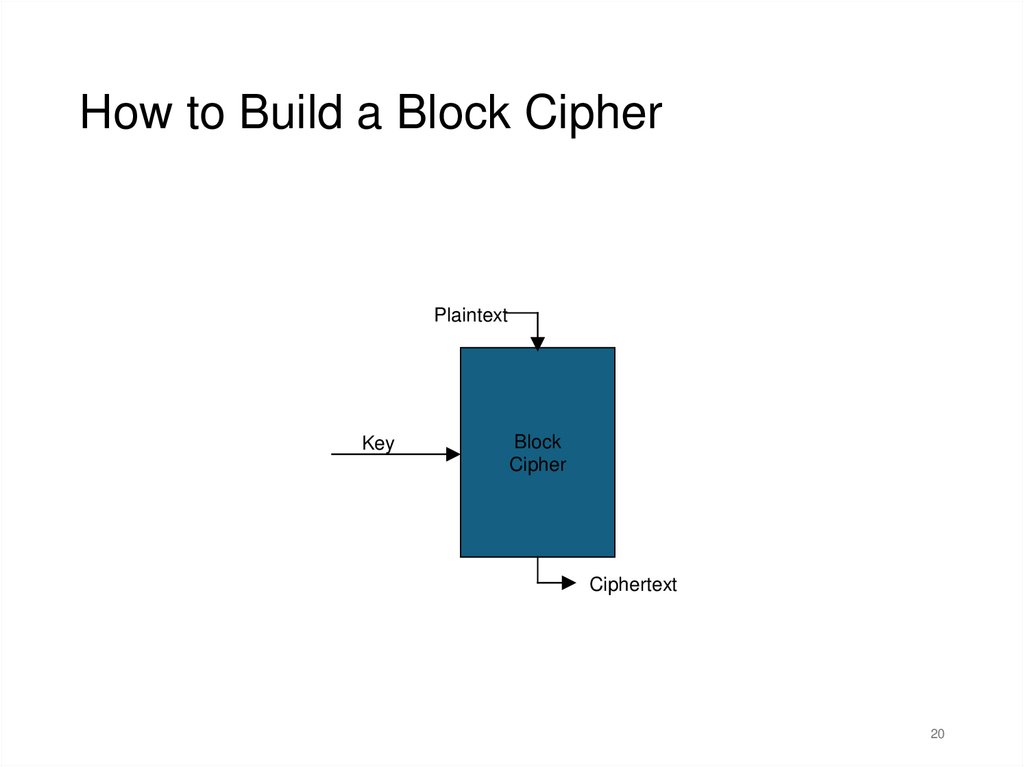
How to Build a Block CipherPlaintext
Key
Block
Cipher
Ciphertext
20
21.
Feistel CiphersUgly
21
22.
Feistel CiphersUgly
22
23.
Feistel CiphersUgly
23
24.
Feistel CiphersUgly
Ugly
24
25.
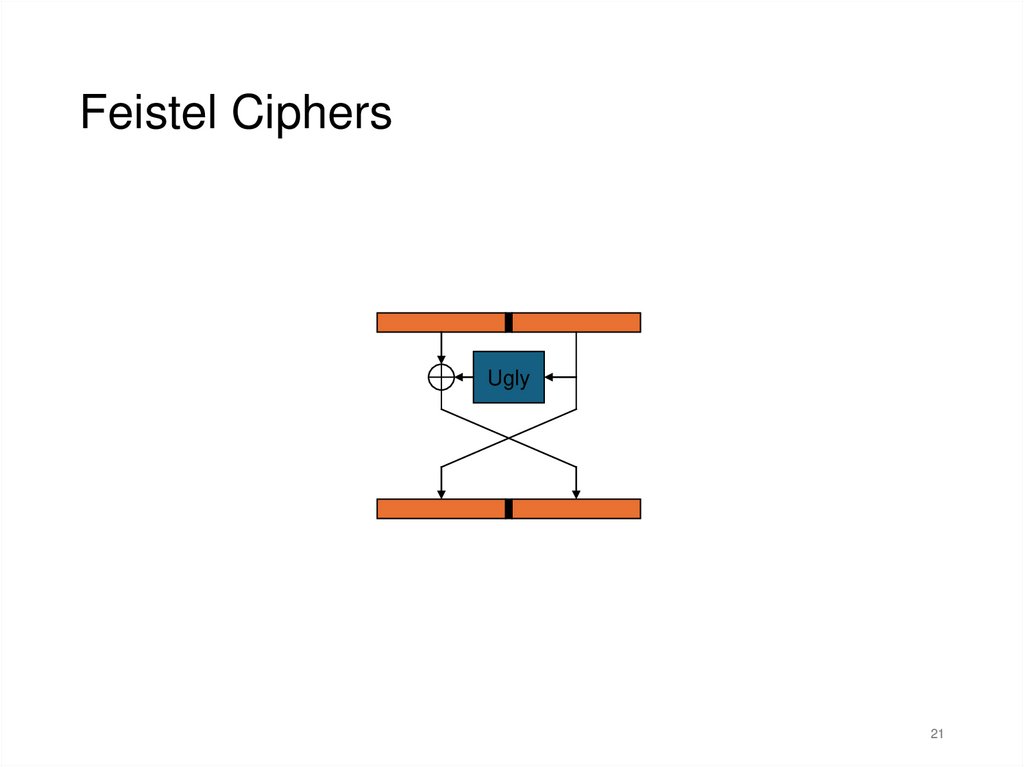
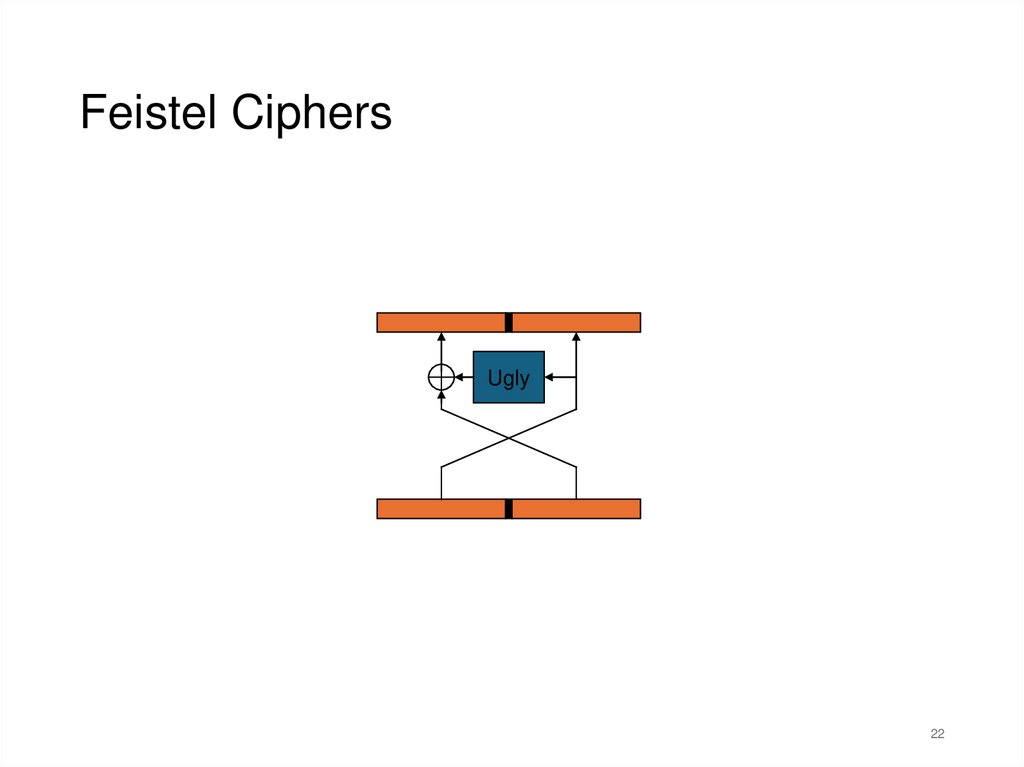
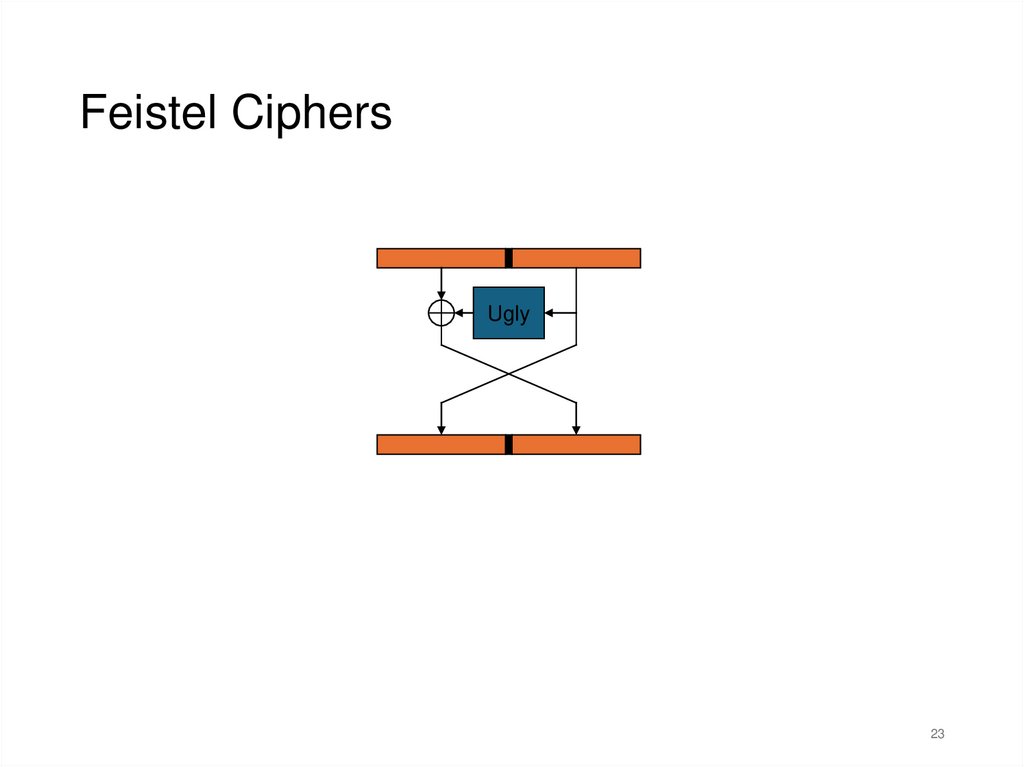
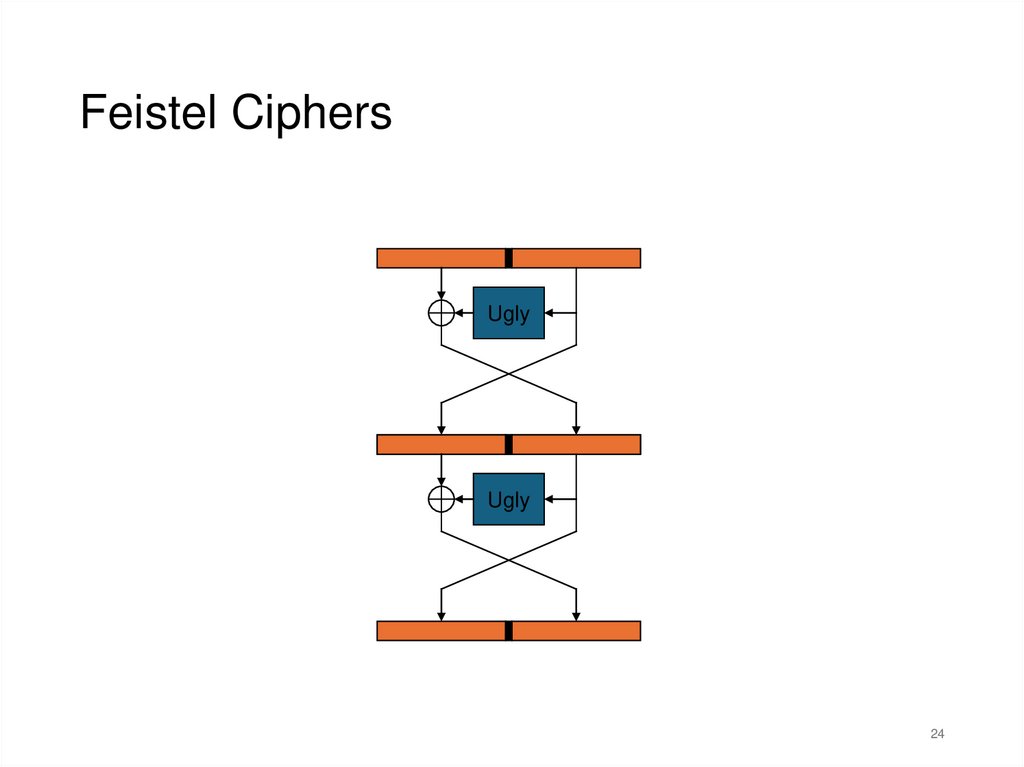
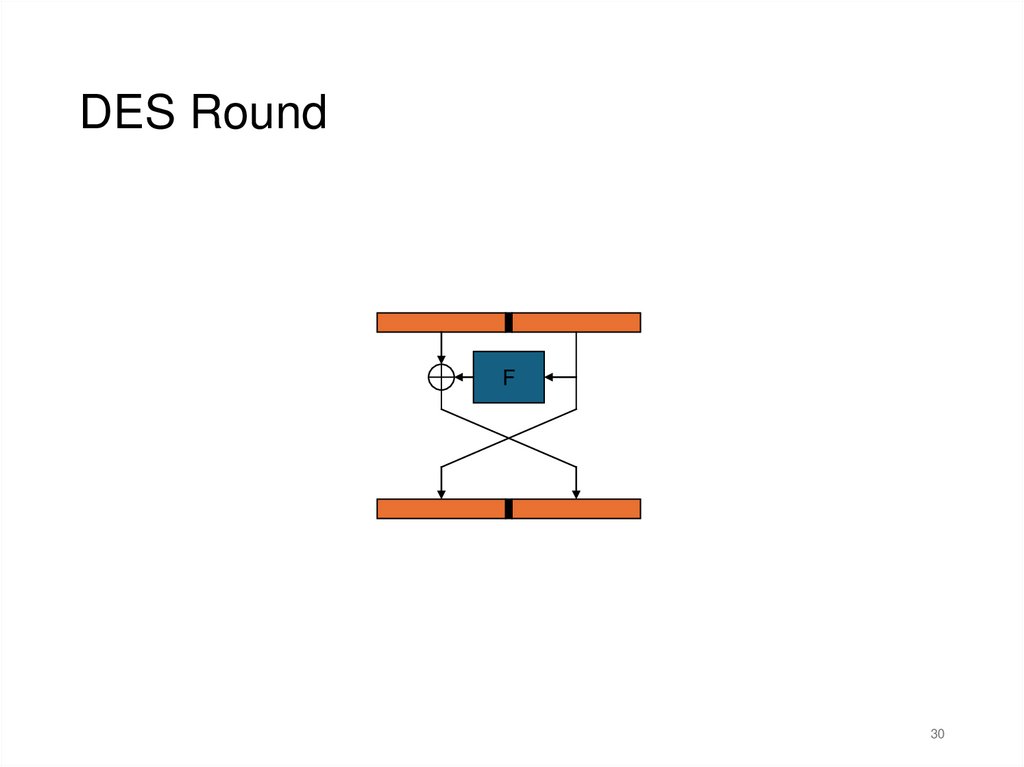
Feistel Ciphers• Typically, most Feistel ciphers are iterated for about 16
rounds.
• Different “sub-keys” are used for each round.
• Even a weak round function can yield a strong Feistel
cipher if iterated sufficiently.
25
26.
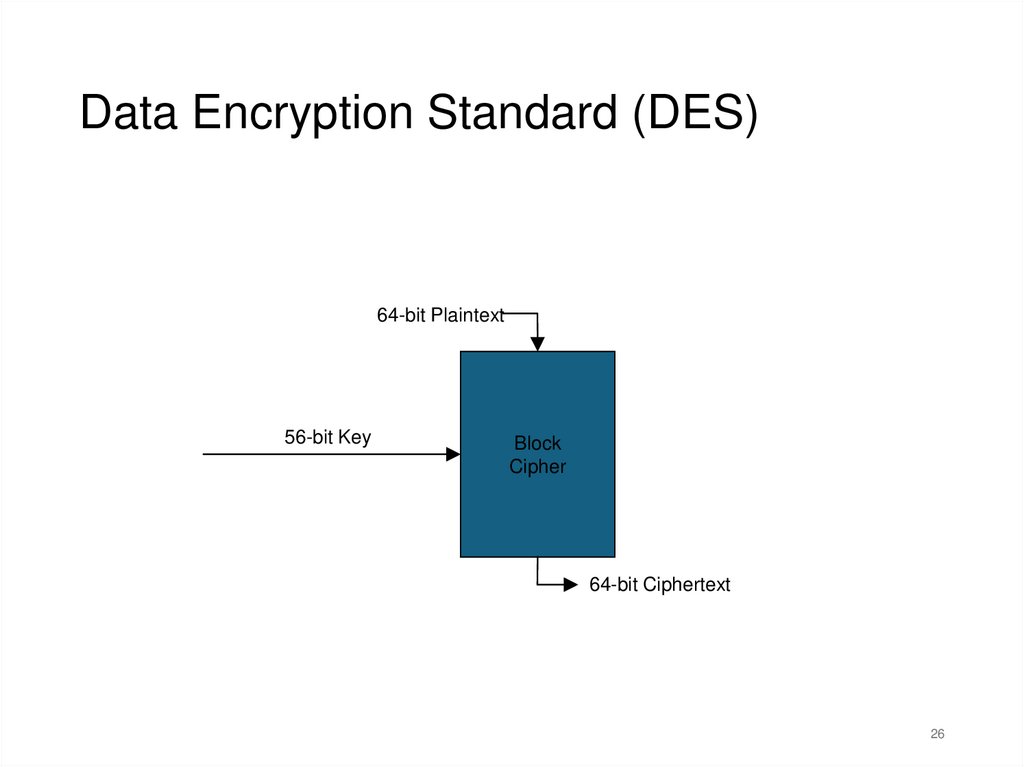
Data Encryption Standard (DES)64-bit Plaintext
56-bit Key
Block
Cipher
64-bit Ciphertext
26
27.
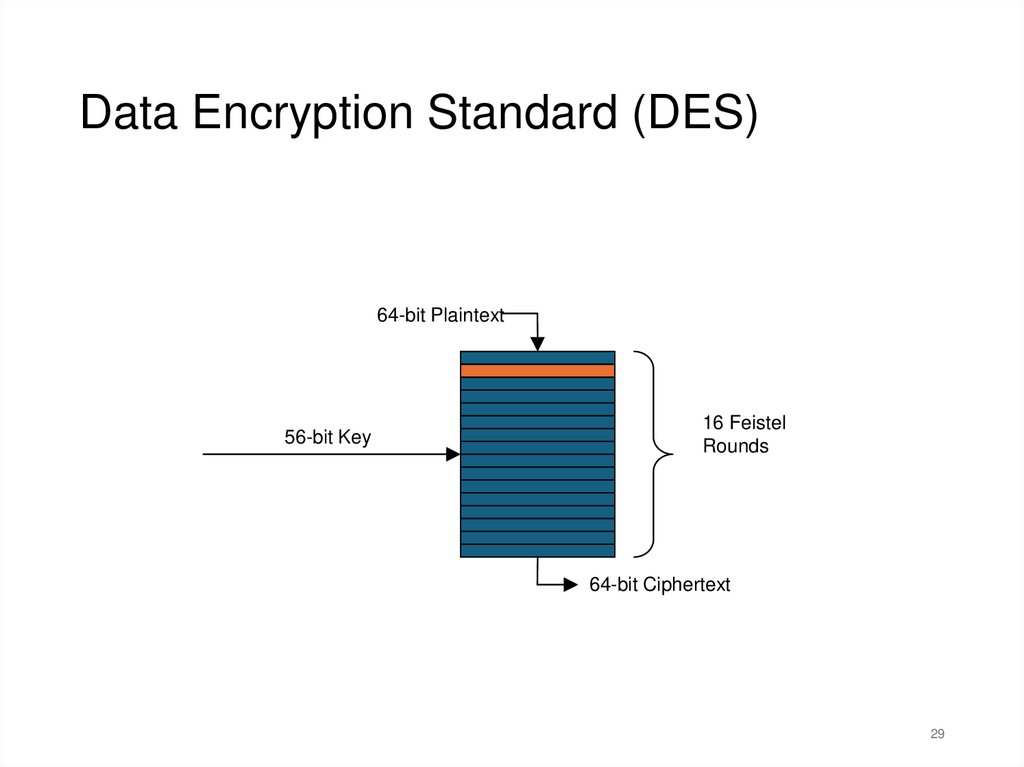
Data Encryption Standard (DES)• DES was the most popular algorithm during the 1980-1990s
• DES was published in 1975, standardized in 1977
• 64-bit block size
• 56-bit key
• US Standard (FIPS) expired in 1998, no longer an approved
algorithm
• 3DES (Triple DES) EDE is still in use (3x56 = 168 bit key)
• DES influenced many other cipher designs
27
28.
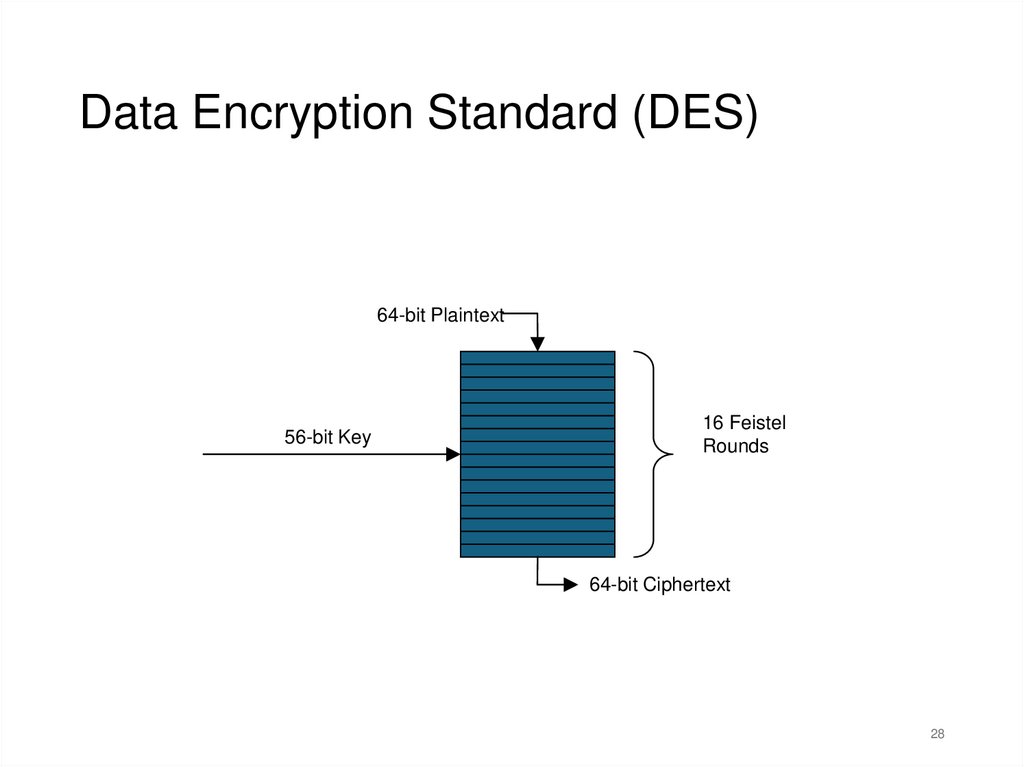
Data Encryption Standard (DES)64-bit Plaintext
56-bit Key
16 Feistel
Rounds
64-bit Ciphertext
28
29.
Data Encryption Standard (DES)64-bit Plaintext
56-bit Key
16 Feistel
Rounds
64-bit Ciphertext
29
30.
DES RoundF
30
31.
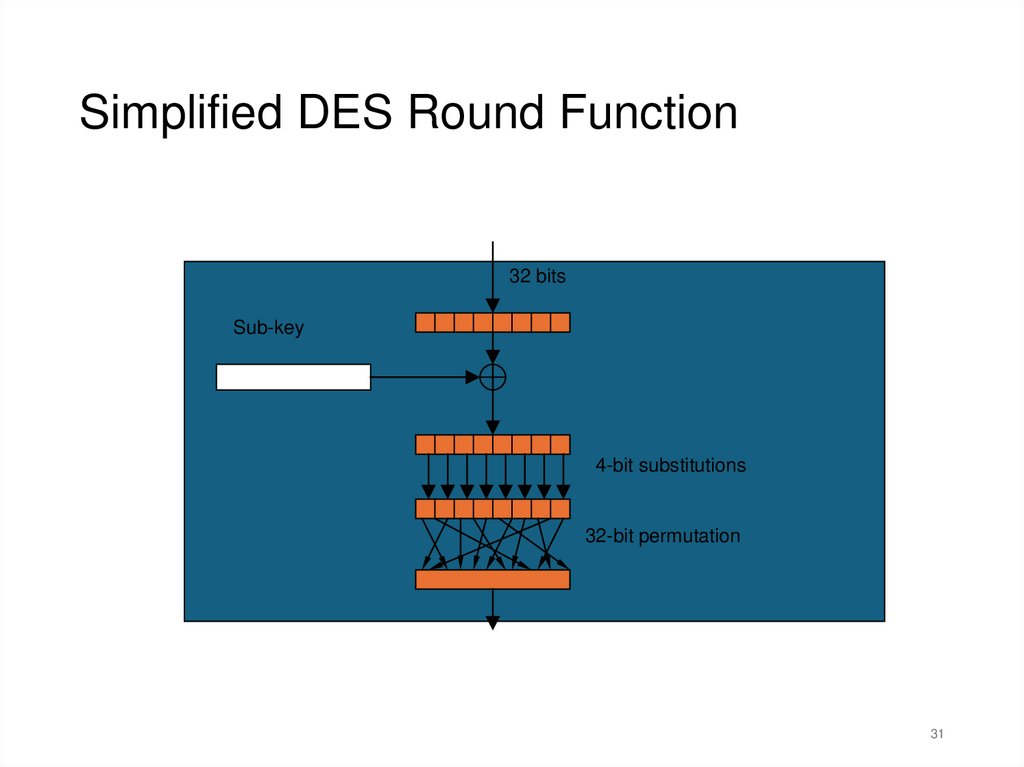
Simplified DES Round Function32 bits
Sub-key
4-bit substitutions
32-bit permutation
31
32.
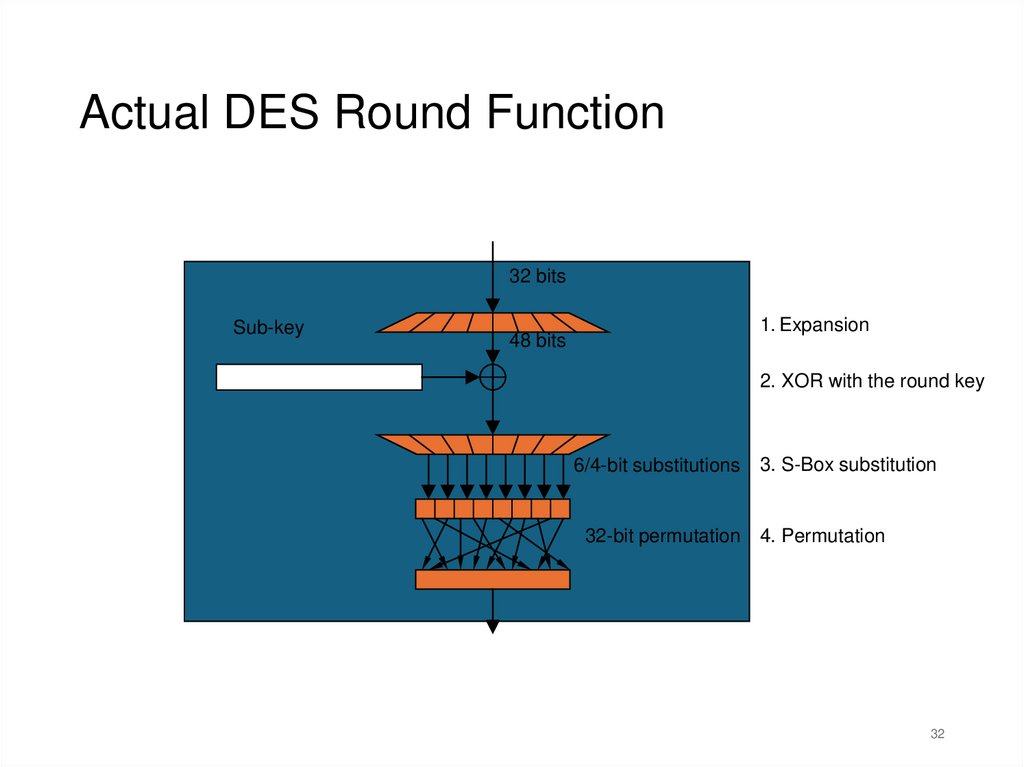
Actual DES Round Function32 bits
Sub-key
1. Expansion
48 bits
2. XOR with the round key
6/4-bit substitutions
3. S-Box substitution
32-bit permutation 4. Permutation
32
33.
DES S-Boxes• 8 different Lookup Tables (6x4) S1 .. S8
• Non-linearity in DES needed for security
• 6-bit to 4-bit substitution
• 2 bits select a substitution row
• 4 bits is the substitution look-up
S1 0
1
2
3
4
5
6
7
8
9
10 11 12 13 14 15
0
14 04 13 01 02 15 11 08 03 10 06 12 05 09 00 07
1
00 15 07 04 14 02 13 01 10 06 12 11 09 05 03 08
2
04 01 14 08 13 06 02 11 15 12 09 07 03 10 05 00
3
15 12 08 02 04 08 01 07 05 11 03 14 10 00 06 13
33