

























 business
Similar presentations:










A Comprehensive Overview of Starting a Pool Business
1.
Swimming PoolBusiness
A Comprehensive Overview of Starting a Pool Business
2.
IntroductionThis presentation outlines the concept of establishing a
swimming pool business, covering aspects like target
audience, business format, implementation, marketing,
finances, risks, and advantages.
3.
01Idea
4.
Description of the swimmingpool business
Opening a swimming pool as a business involves creating a
recreational facility that caters to various demographics,
including families, athletes, and local organizations,
fostering community engagement and promoting healthy
lifestyles.
5.
Unique sellingpoints
Unique selling points may include features like
heated pools, family areas, fitness classes, and
special events catering to community needs,
ensuring a blend of recreation and fitness.
6.
Expected benefits forthe community
The swimming pool will offer numerous benefits to the
community, including promoting physical fitness, organizing
social events, providing a safe recreational space, and
enhancing local tourism.
7.
02Audience
8.
FamiliesFamilies represent a significant segment of
the target audience, seeking a safe and
engaging environment for children, leisure
activities during the summer, and familyoriented events.
9.
Athletes and fitnessenthusiasts
Athletes and fitness enthusiasts will be attracted to facilities
offering lap swimming, water aerobics, swimming lessons,
and personal training sessions catered to their fitness goals.
10.
Local schools andorganizations
Local schools and organizations can partner with the
swimming pool for swimming lessons, sports competitions,
and community events, fostering collaboration and
engagement.
11.
03Format
12.
Outdoor pooloptions
Outdoor pools can provide vast recreational space with
options for sunbathing, family-friendly areas, and various
activities like water slides and themed events, appealing to
a wide audience.
13.
Indoor poolfeatures
Indoor pools offer benefits like year-round access and
climate control, enabling swimming regardless of weather
and accommodating additional services such as fitness
classes and events.
14.
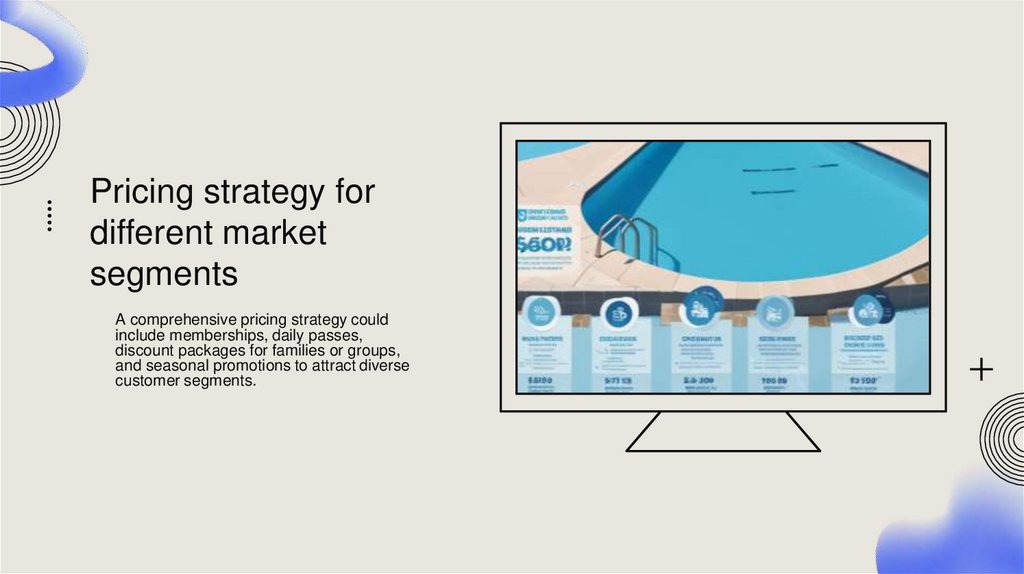
Pricing strategy fordifferent market
segments
A comprehensive pricing strategy could
include memberships, daily passes,
discount packages for families or groups,
and seasonal promotions to attract diverse
customer segments.
15.
04Plan
16.
Location selectionChoosing the right location is crucial for the success of
the swimming pool business. Consider factors such as
accessibility, visibility, and proximity to target audiences
such as families and fitness enthusiasts. Analyze local
competition and evaluate zoning regulations to ensure
compliance and suitability for recreational use.
17.
Construction or rentalconsiderations
Decide whether to construct a new swimming pool or rent
an existing facility. Constructing allows for customization but
requires higher initial investment and longer timelines.
Renting costs less initially but may limit control over the
facility's design and operations. Evaluate your budget and
strategic goals to make the best choice.
18.
Required licenses andpermits
To operate a swimming pool, acquire the necessary
licenses and permits, which may include health permits,
business licenses, and environmental permits. Research
local regulations regarding safety standards, maintenance,
and operation to ensure compliance and avoid penalties.
Consulting with legal professionals can aid this process.
19.
05Marketing
20.
Online advertisingstrategies
Utilize online advertising platforms like Google Ads and
social media ads to reach your target audience effectively.
Implement location-based targeting and demographic filters
to ensure relevant visibility. Create visually appealing ads
highlighting unique services offered, such as lessons and
family events, to attract attention.
21.
Social mediaengagement
Engage with your audience through social media platforms
like Facebook, Instagram, and TikTok. Share engaging
content, such as pool tips, promotional events, and success
stories, to build community relationships. Conduct contests
or campaigns to incentivize shares and increase visibility,
drawing in new customers.
22.
Partnership opportunities withlocal businesses
Develop partnerships with local businesses, such as
fitness centers, schools, and parks, to expand your
reach. Collaborate on events, offer incentives for
referrals, or sponsor community activities to promote
cross-engagement. Building local networks can
enhance credibility and provide mutual marketing
benefits.
23.
06Finance
24.
Initial investmentbreakdown
Detail the initial investment needed for starting the
swimming pool business, which includes costs for
construction/rental, equipment (pools, lanes, safety gear),
landscaping, and initial marketing efforts. Prepare a detailed
budget for accurate counting of the necessary funds and
identifying potential sources of financing.
25.
Monthly operationalcosts
Outline the monthly operational costs, including rent or
mortgage, utilities (water, electricity, maintenance), staff
salaries, insurance, and ongoing marketing expenses.
Understanding these monthly obligations will help manage
cash flow and ensure profitability over time.
26.
Profit expectations andpayback period
Estimate profit expectations based on projected
customer attendance, pricing strategies, and
operational costs. Analyze when the business
becomes profitable and how many months/years it
takes to recoup the initial investment. Highlighting
profitable forecasts can attract potential investors
and stakeholders.
27.
07Risks
28.
Marketcompetition
Identify potential market competition and analyze
their strengths and weaknesses. Understanding the
local competitive landscape helps in differentiating
your offerings and improving service quality to attract
and retain customers, ensuring long-term success.
29.
Regulatorychallenges
Awareness of regulatory challenges is crucial for smooth
operations. These may involve complying with health and
safety regulations, maintaining cleanliness, and achieving
licensing requirements. Regularly reviewing regulations and
adapting business practices accordingly will minimize legal
risks.
30.
Economic downturnimpact
Economic downturns can affect discretionary spending on
leisure activities like swimming. Prepare contingency plans,
such as promotional offers during slow periods, to maintain
customer engagement and mitigate potential loss in
revenue. Regularly monitor economic indicators to stay
proactive.
31.
ConclusionsThis presentation highlights the essential elements of
establishing a swimming pool business, including idea
development, target audience, marketing strategies,
financial planning, and risk management. By carefully
considering these aspects, potential entrepreneurs can
build a successful and profitable swimming pool
business.
32.
Thank you!Do you have any questions?
CREDITS: This presentation template was created by Slidesgo, and
includes icons by Flaticon, and infographics & images by Freepik