 informatics
Similar presentations:






Information risk management
1.
Module Learning Objectives▪
▪
▪
▪
▪
1
Know, comprehensively understand and operate effectively
within the context in which Information Risk Management is
conducted
Know, understand and apply the principles and philosophies
which underlie successful information risk management and
security governance
Have theoretical and practical knowledge and understanding
of the interactions between security concerns and business
objectives and organisational processes
Have knowledge, understanding and the ability to
systematically apply techniques to evaluate security risk and
ensure compliance with principles of governance
Plan and implement a risk management strategy
2.
Day 3 Learning Objectives▪
▪
▪
▪
2
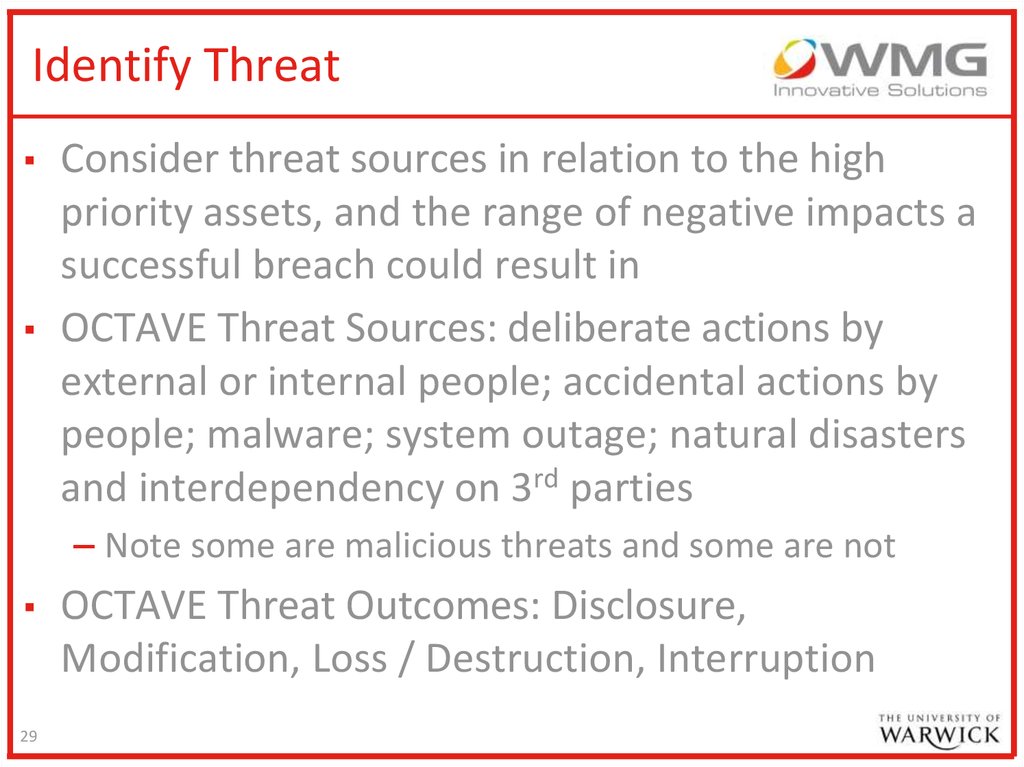
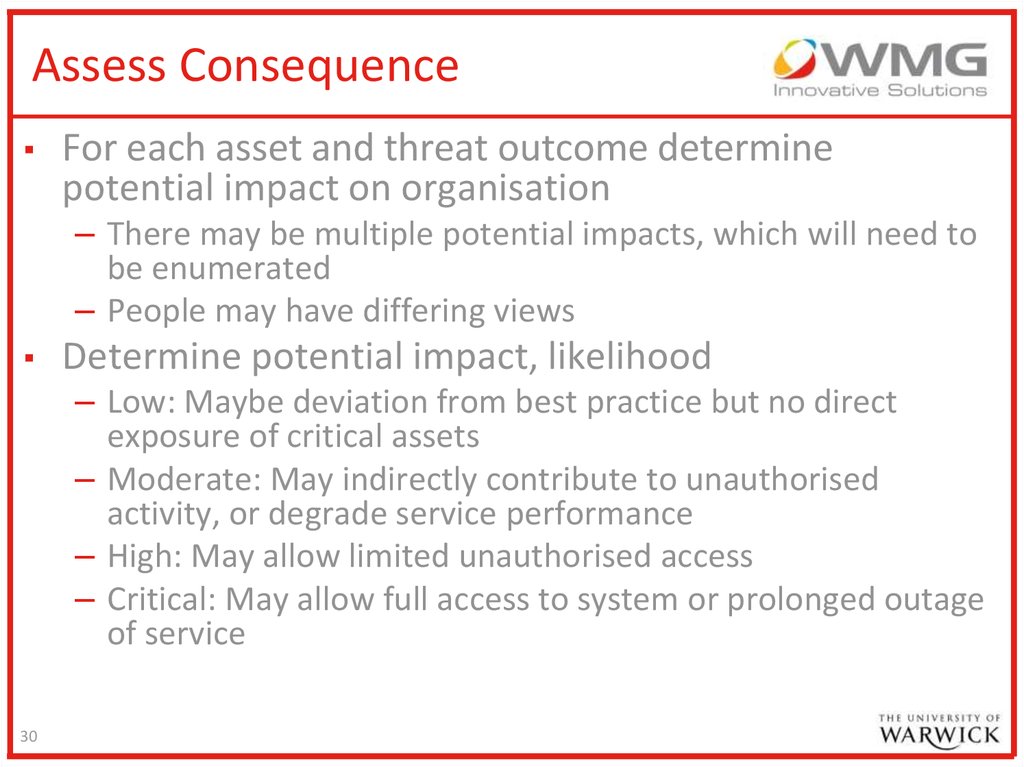
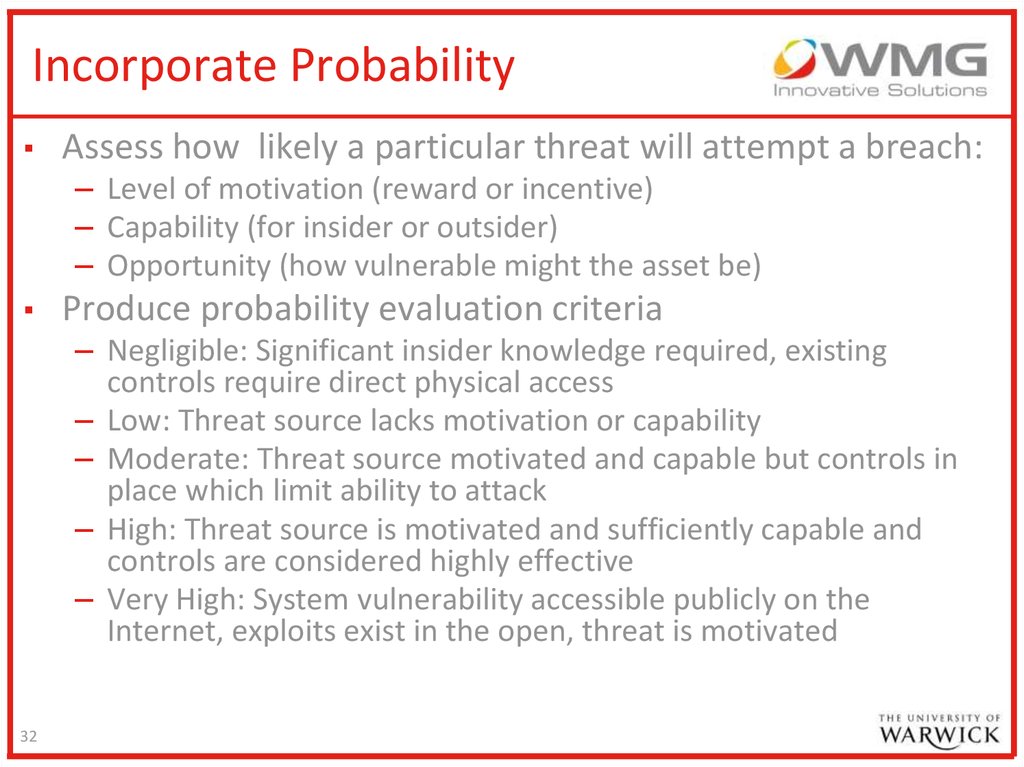
To understand the motivations for the practice of
information risk management within an
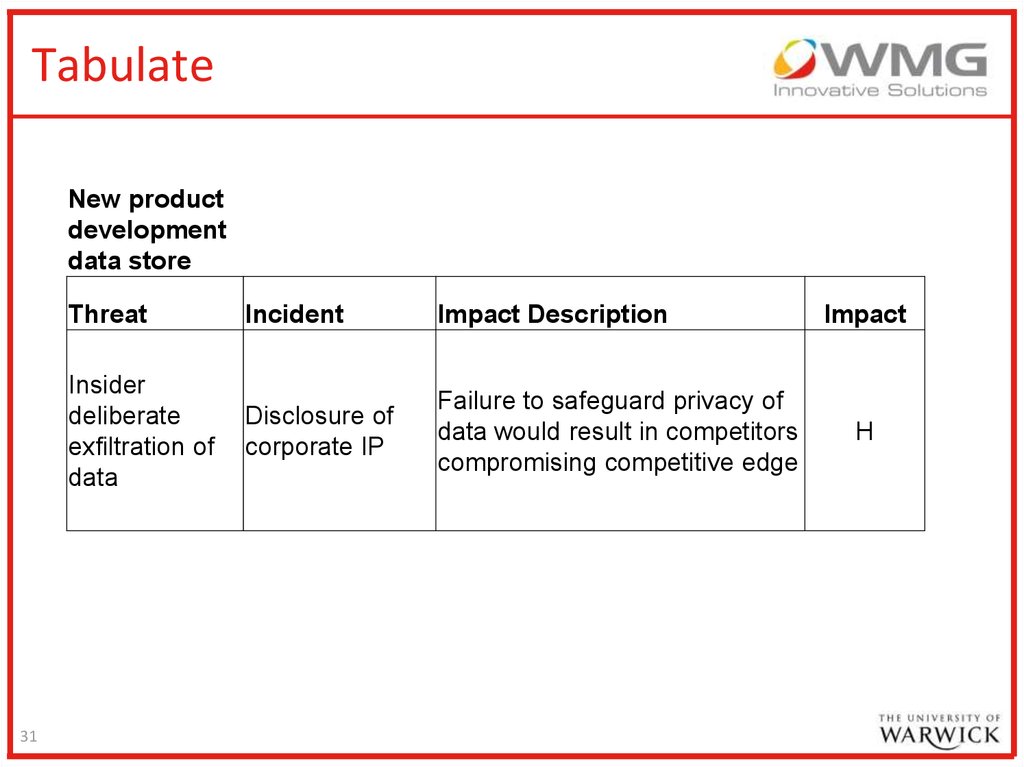
enterprise
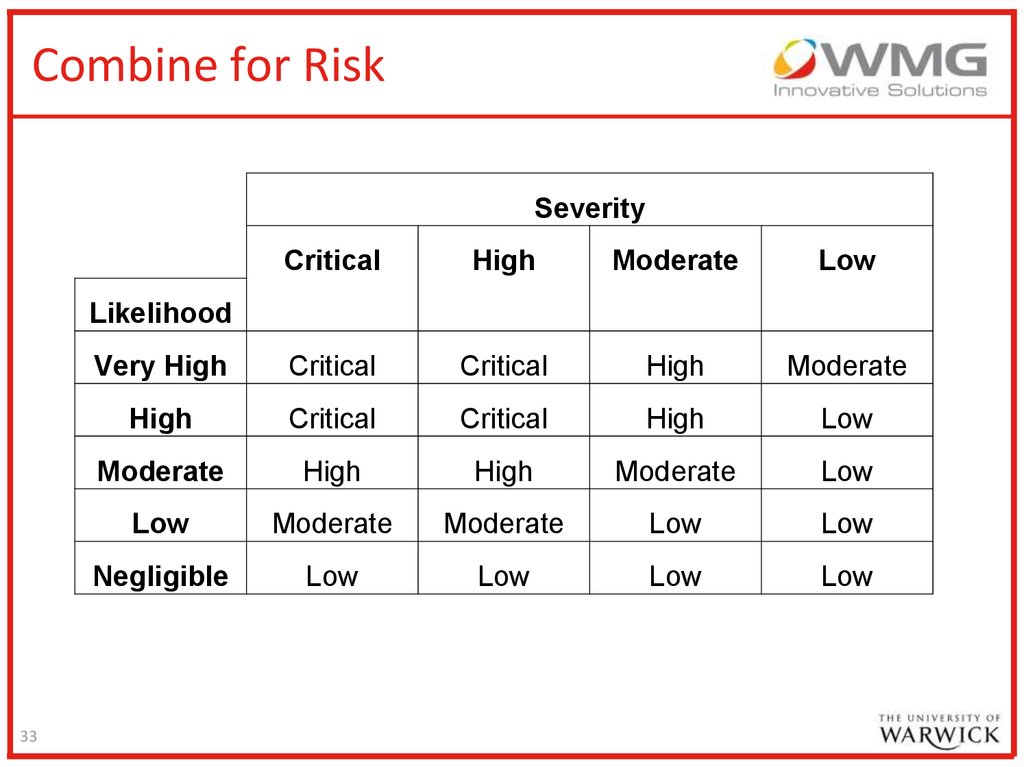
To understand key concepts and the information
risk management lifecycle
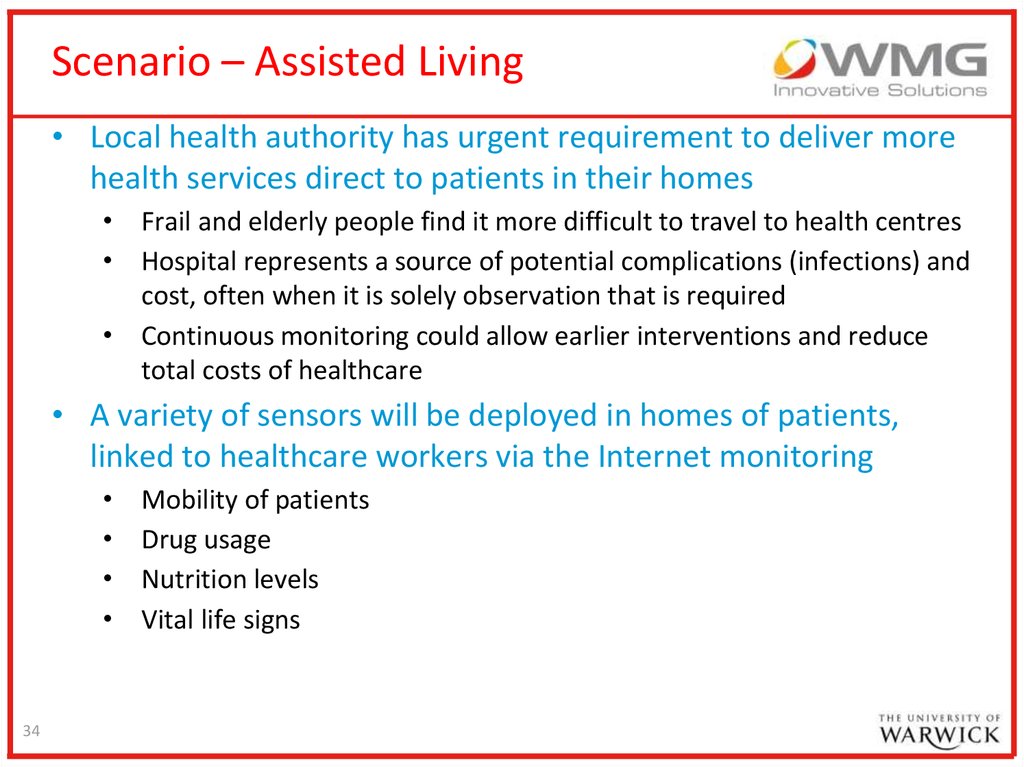
To develop an awareness of how to perform a risk
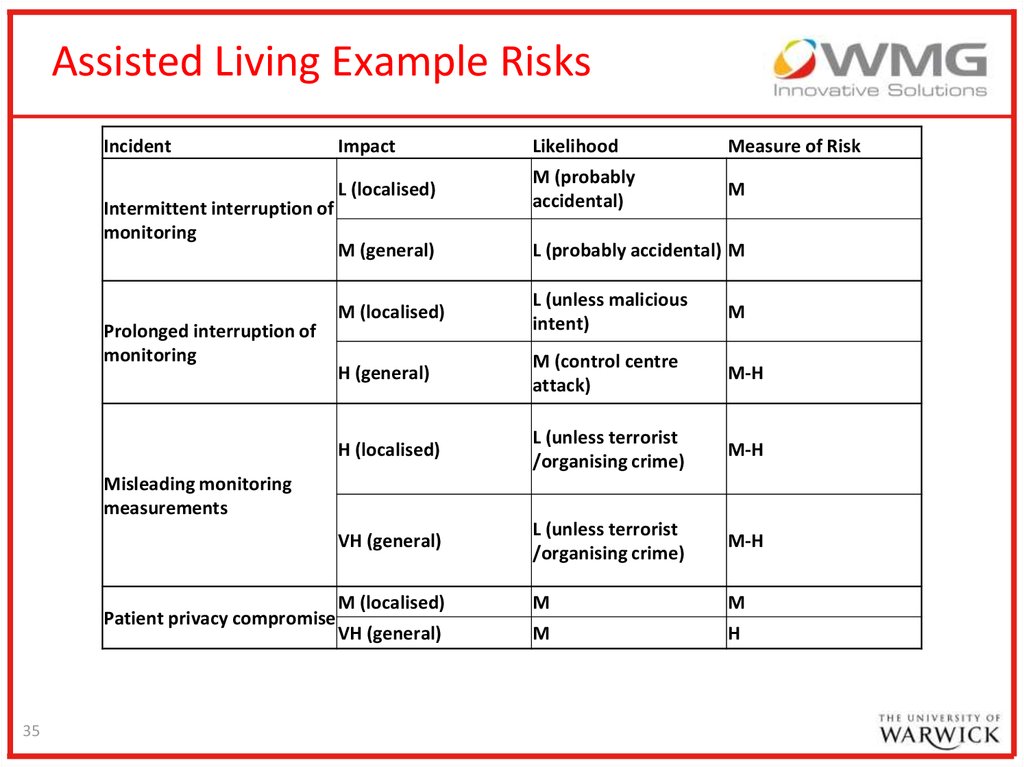
assessment
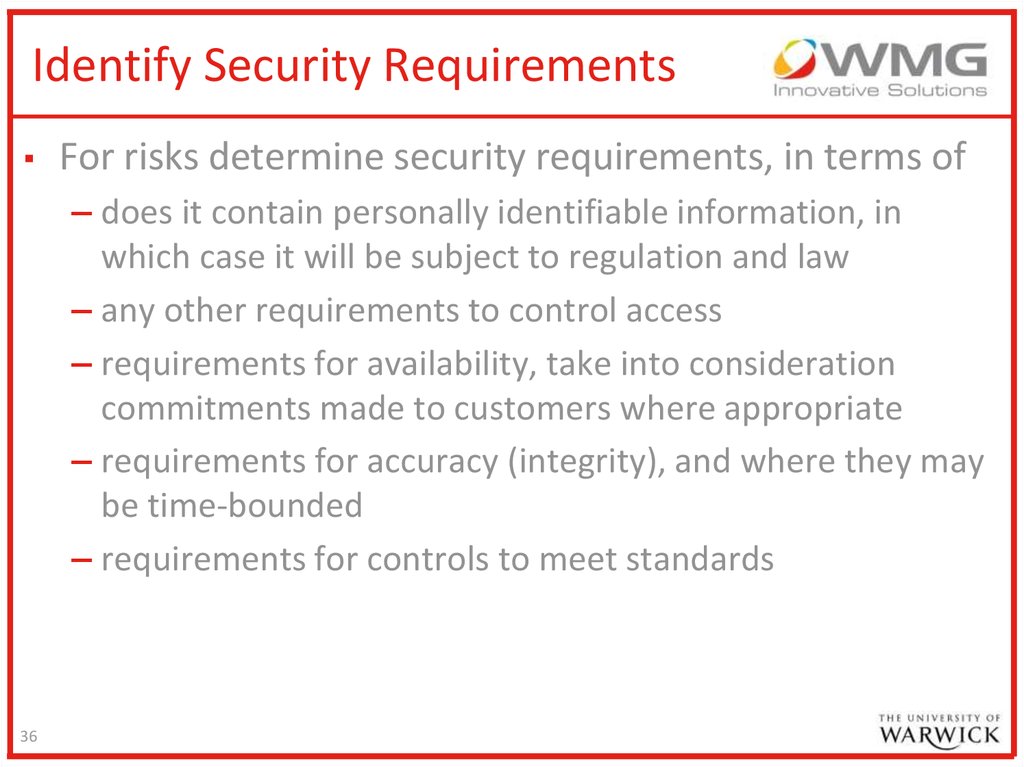
To continue to develop an awareness of the main
international standards and methodologies
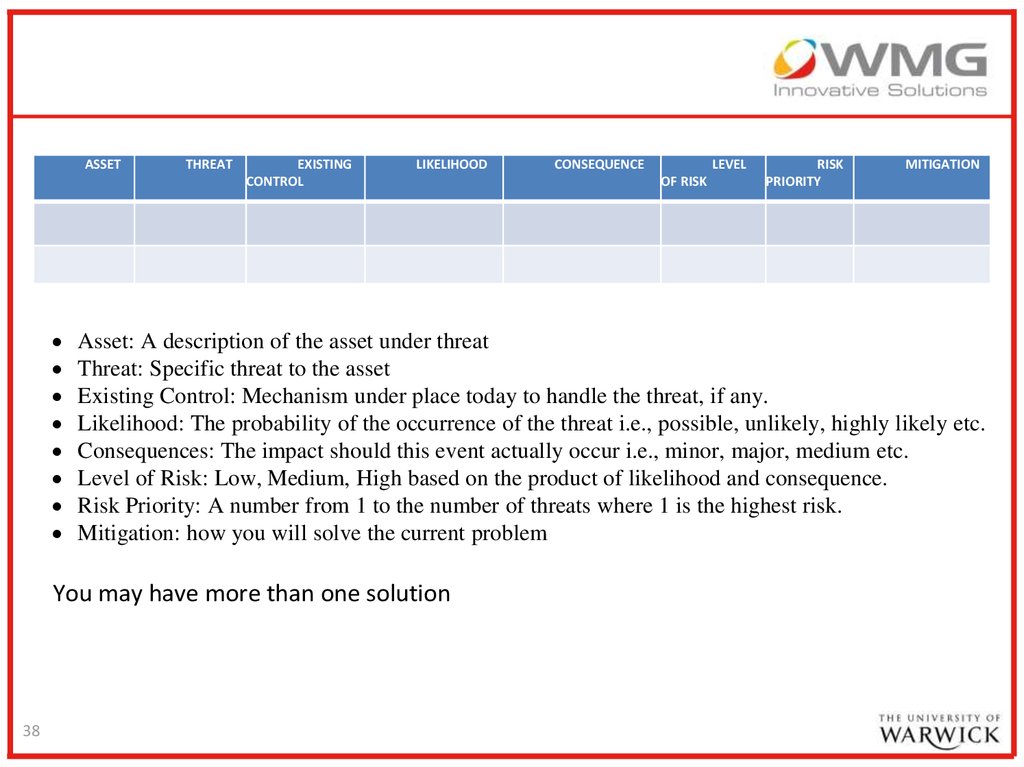
3.
Session Overview▪
▪
▪
3
Why do we have to manage information risk
What are the enterprise drivers
What is the relationship with key enterprise
business processes
4.
Why▪
Existing and growing dependency upon information
infrastructure and digital assets
– Rapidly growing with pace of technology change
▪
▪
Both the dependency and the assets have value which
is exposed to risk and so may require protecting
Protection costs, is not 100% effective, and risk varies
over time, so an understanding of the risks faced and a
plan to manage them is required
– Where manage may involve accepting and tolerating some
risks whilst attempting to remove or reduce others or even
avoiding them altogether
4
5.
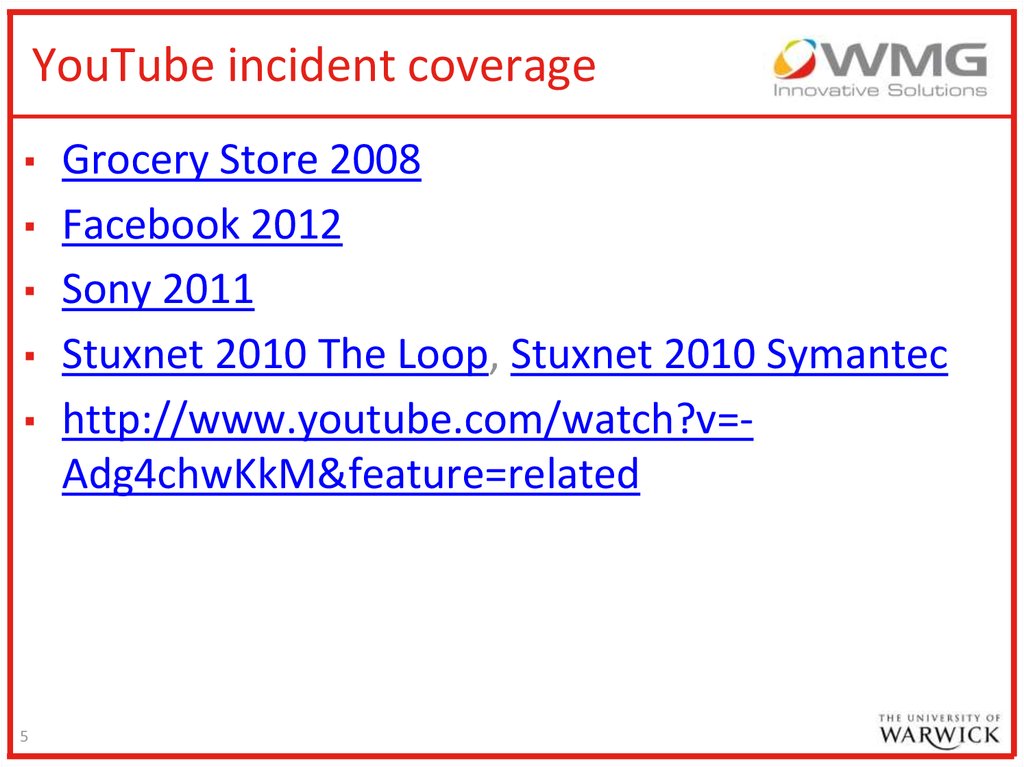
YouTube incident coverage▪
▪
▪
▪
▪
5
Grocery Store 2008
Facebook 2012
Sony 2011
Stuxnet 2010 The Loop, Stuxnet 2010 Symantec
http://www.youtube.com/watch?v=Adg4chwKkM&feature=related
6.
Enterprise Drivers▪
Maximise output in the face of risk
– Outputs include services, products, revenue
▪
Information Security can enable business
objectives which depend in some way upon
information infrastructure and assets
– E.g. customer retention, market growth and position,
efficiency, agility…
6
7.
Relationship to process▪
Information infrastructure and services likely to be
used by majority of key business processes
– Finance and Administration
– Supply Chain Management
– Customer Relationship Management
– Information and Technology Services
– Sales
– Logistics
– Communications and PR
– ….
7
8.
Syndicate Exercise 1▪
Consider the exposure of a student to
information risk day-to-day in normal life, student
life and family life.
– What are the key assets?
– How might they be of interest to a threat?
– What would be the impact to the student and their
family should access be denied to assets, or assets
loose integrity, or confidential assets become
compromised?
8
9.
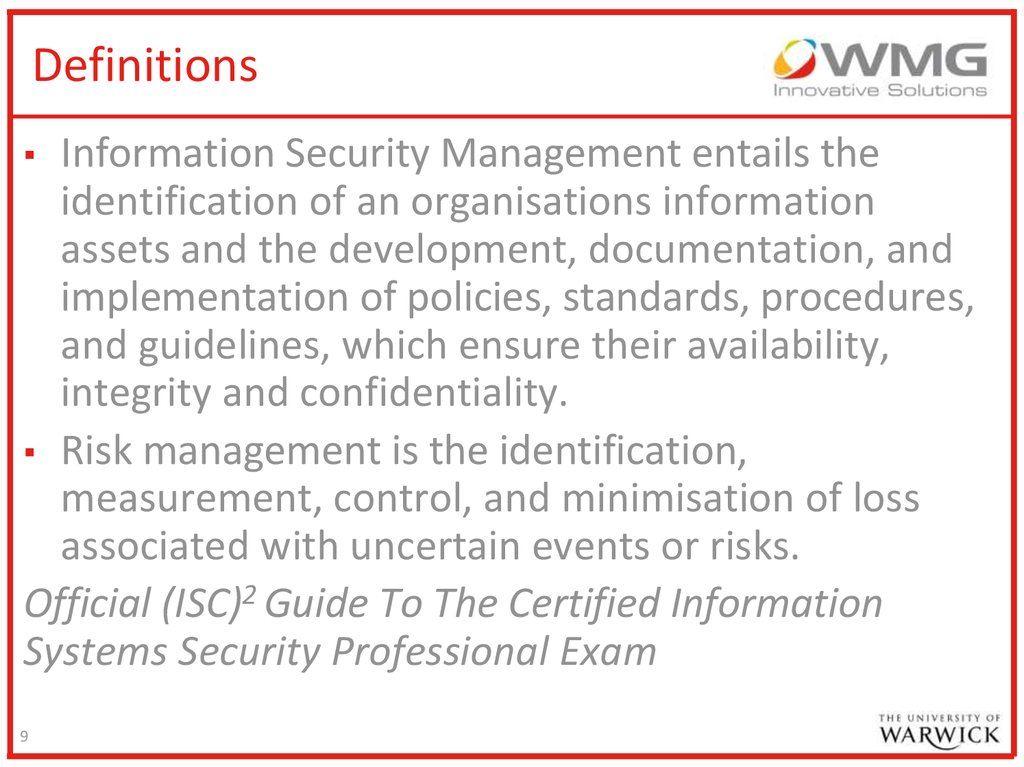
DefinitionsInformation Security Management entails the
identification of an organisations information
assets and the development, documentation, and
implementation of policies, standards, procedures,
and guidelines, which ensure their availability,
integrity and confidentiality.
▪ Risk management is the identification,
measurement, control, and minimisation of loss
associated with uncertain events or risks.
Official (ISC)2 Guide To The Certified Information
Systems Security Professional Exam
▪
9
10.
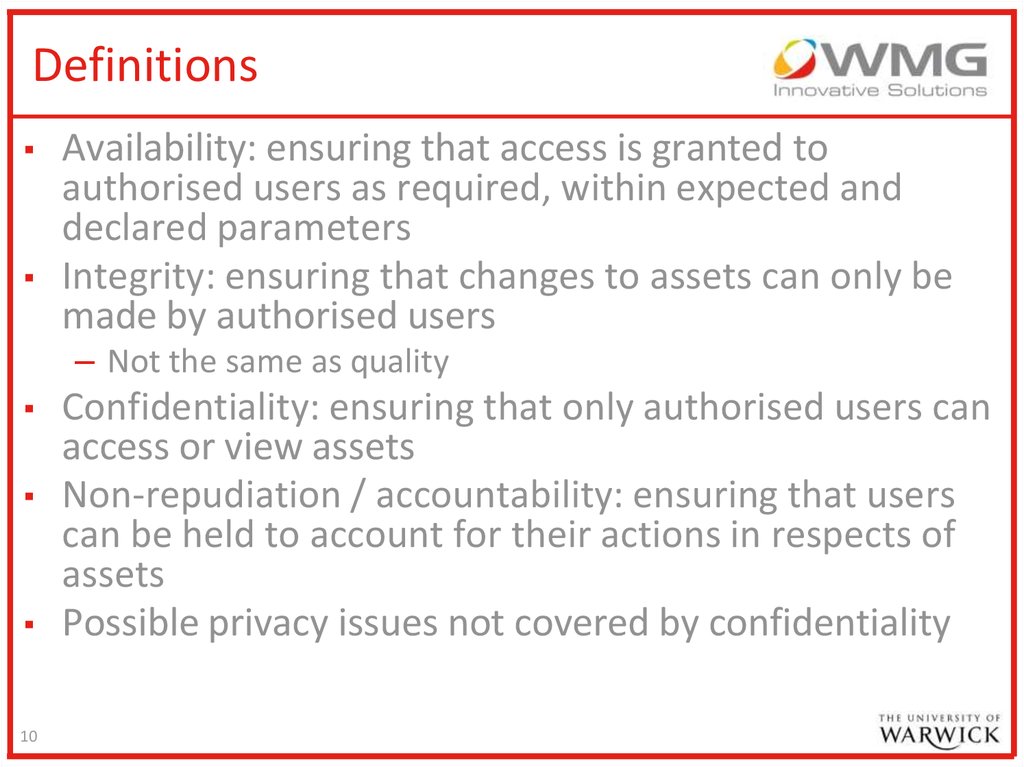
Definitions▪
▪
Availability: ensuring that access is granted to
authorised users as required, within expected and
declared parameters
Integrity: ensuring that changes to assets can only be
made by authorised users
– Not the same as quality
▪
▪
▪
10
Confidentiality: ensuring that only authorised users can
access or view assets
Non-repudiation / accountability: ensuring that users
can be held to account for their actions in respects of
assets
Possible privacy issues not covered by confidentiality
11.
Definitions▪
▪
▪
▪
▪
▪
▪
▪
11
Assets
Threats
Vulnerability
Exploits and Attack Vectors
Likelihood
Impact
Mitigation and control
Residual risk
12.
Definitions▪
▪
12
Risk Analysis: Process of analysing risk for a
particular environment (organisation, project,
business unit…) resulting in the risk assessment
Risk Management: Incorporates the risk
assessment but includes the resulting activities
associated with mitigating the risks overtime,
including detecting new ones
13.
Definitions▪
Qualitative risk analysis
– A relative scale: low, medium, high.., 1,2,3,4…
– Appropriate where no accurate data exists or when new to
discipline of risk analysis
– Highly subjective, hard to baseline, imprecise
▪
Quantitative risk analysis
– Uses numbers and calculations to determine exposure in a £
value
– Often utilises probability theory and statistical models
▪ E.g. Single Loss Expectancy X Average Annual Loss = Annualised
Loss Expectancy
– Very difficult to quantify value of loss when so much is
intangible (e.g. loss to reputation)
13
14.
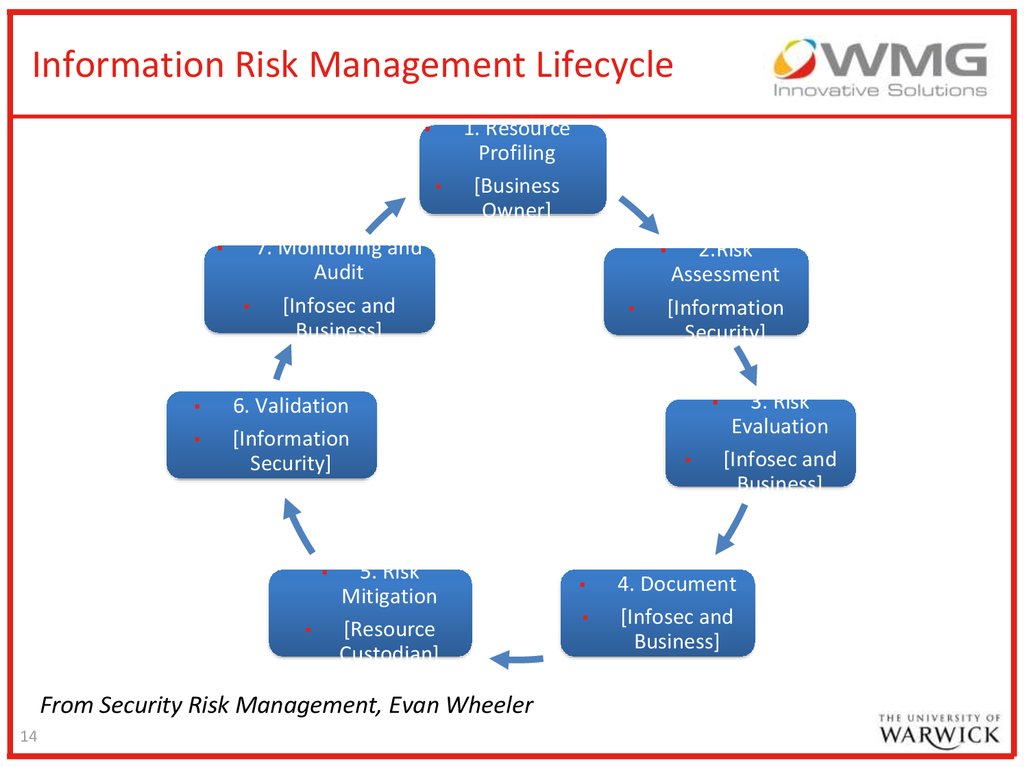
Information Risk Management Lifecycle▪
▪
▪
▪
1. Resource
Profiling
▪
[Business
Owner]
7. Monitoring and
Audit
▪
[Infosec and
Business]
▪
▪
5. Risk
Mitigation
[Resource
Custodian]
From Security Risk Management, Evan Wheeler
2.Risk
Assessment
[Information
Security]
▪
6. Validation
[Information
Security]
▪
14
▪
▪
▪
▪
3. Risk
Evaluation
[Infosec and
Business]
4. Document
[Infosec and
Business]
15.
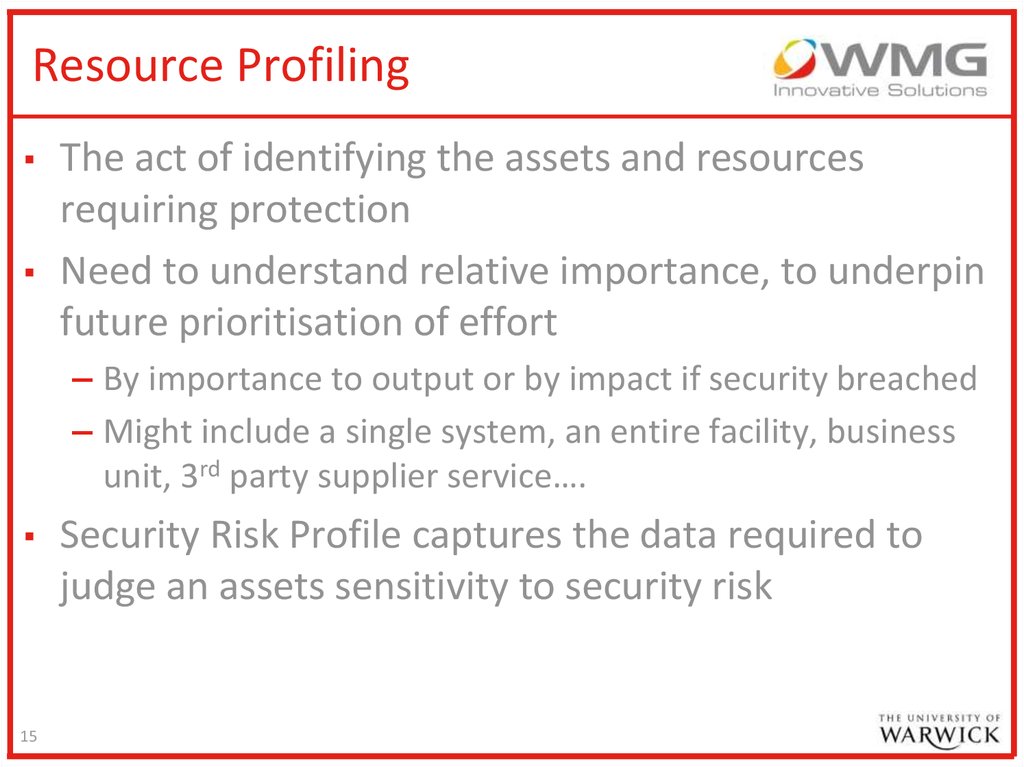
Resource Profiling▪
▪
The act of identifying the assets and resources
requiring protection
Need to understand relative importance, to underpin
future prioritisation of effort
– By importance to output or by impact if security breached
– Might include a single system, an entire facility, business
unit, 3rd party supplier service….
▪
15
Security Risk Profile captures the data required to
judge an assets sensitivity to security risk
16.
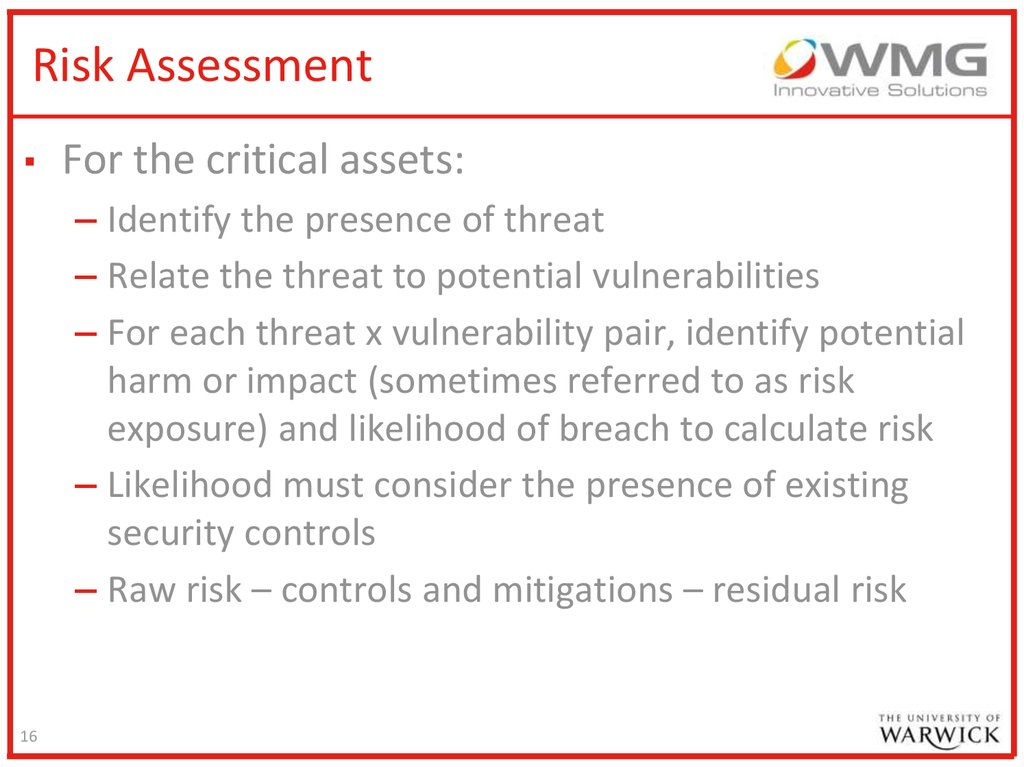
Risk Assessment▪
For the critical assets:
– Identify the presence of threat
– Relate the threat to potential vulnerabilities
– For each threat x vulnerability pair, identify potential
harm or impact (sometimes referred to as risk
exposure) and likelihood of breach to calculate risk
– Likelihood must consider the presence of existing
security controls
– Raw risk – controls and mitigations – residual risk
16
17.
Example Risk Exposure▪
“..communications could be intercepted in transit
and decrypted by a malicious party resulting in an
unauthorised disclosure of sensitive data for all
customers in the UK, which would require a
breach notification to regulators and affected
clients, costing the organisation $2 million in lost
revenue and financial sanctions.”
From Security Risk Management, Evan Wheeler
17
18.
Risk Evaluation▪
The process by which the risks output from the
assessment are balanced and prioritised, and the
response identified:
– Avoid: no longer engaging in the activity
– Mitigate: attempt to limit the impact
– Transfer: moving the responsibility to a 3rd party (and
possibly the liability)
– Accept: live with it
▪
18
As this is a cost / benefit decision some knowledge
of potential mitigations is required
19.
Document▪
The results of the risk assessment and the evaluation
along with key points of rationale
– The world changes and should you experience a breach you
need to understand where you went wrong in the analysis in
order to do better
– You may wish to demonstrate compliance to a standard,
which will require evidence
– Often you need/want to show process to a regulator,
customer, or other stakeholder
– You may need to obtain senior management approval for
the actions resulting from the evaluation (including the
‘accept’ category), which will require exposure of the
rationale and justification
19
20.
Risk Mitigation and Remediation▪
▪
Implementing the plan.
Options (for any particular risk) are:
– Limit the severity of impact on system
▪ Contain through detection and response
– Decrease the sensitivity of the resource
▪ Move the data it holds to another part of the system
– Reduce the likelihood of occurrence
▪ Control the attack surface using firewalls etc
▪
20
Risk remediation would involve removal of the
vulnerability either through patching or removal
of asset
21.
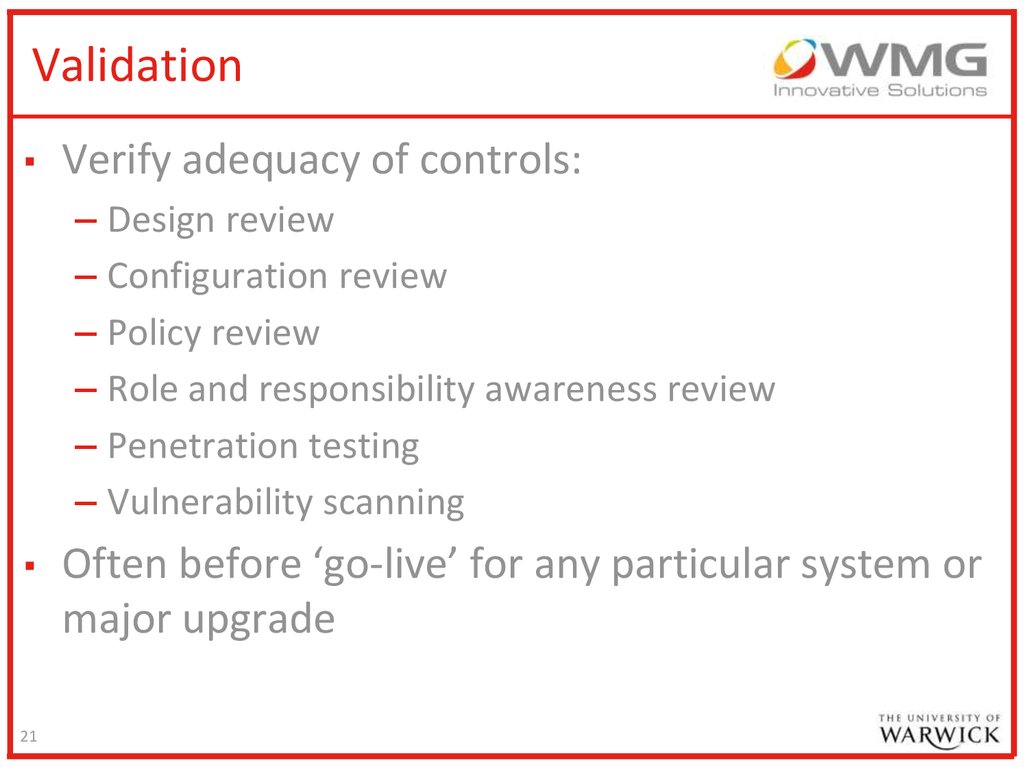
Validation▪
Verify adequacy of controls:
– Design review
– Configuration review
– Policy review
– Role and responsibility awareness review
– Penetration testing
– Vulnerability scanning
▪
21
Often before ‘go-live’ for any particular system or
major upgrade
22.
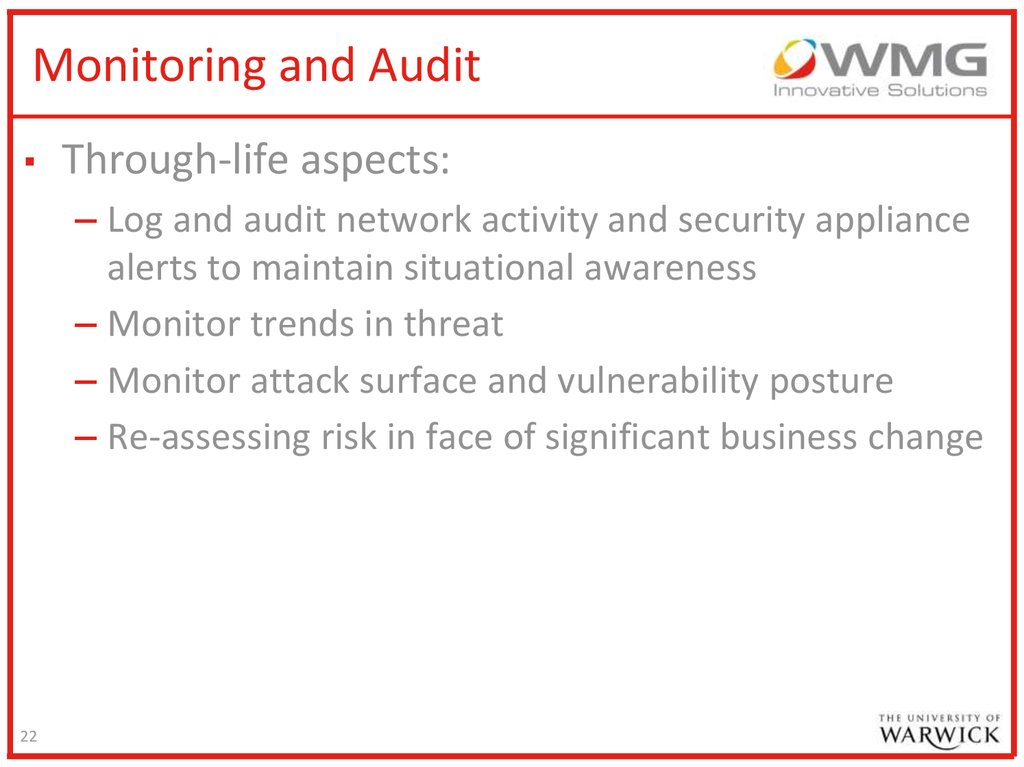
Monitoring and Audit▪
Through-life aspects:
– Log and audit network activity and security appliance
alerts to maintain situational awareness
– Monitor trends in threat
– Monitor attack surface and vulnerability posture
– Re-assessing risk in face of significant business change
22
23.
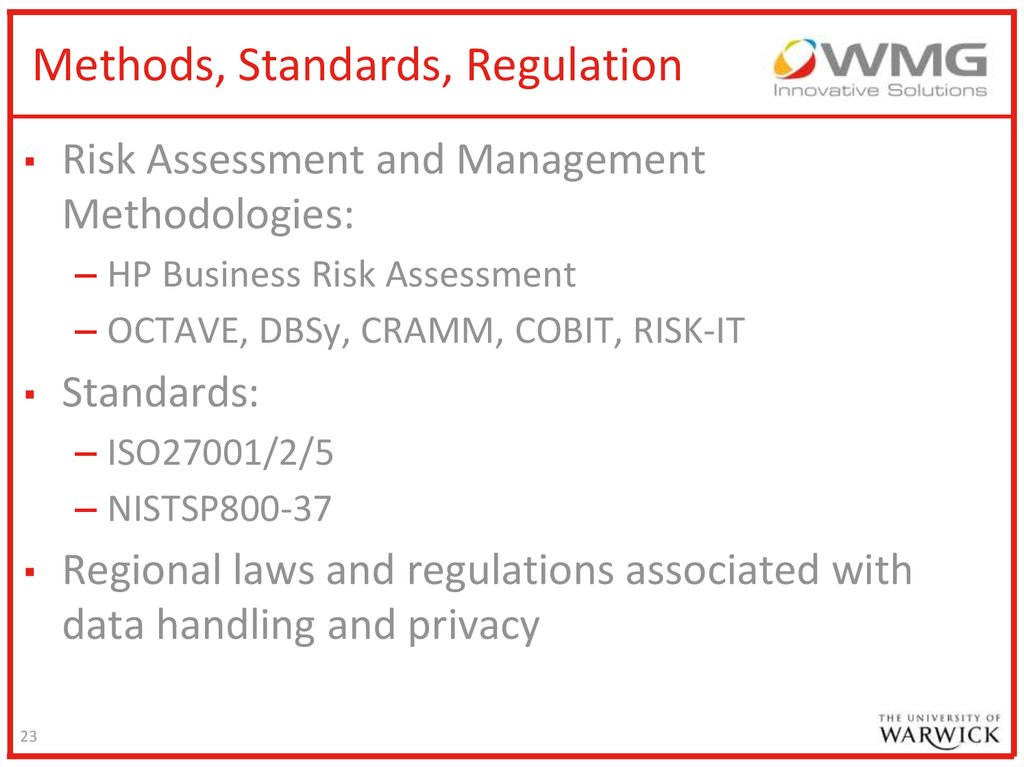
Methods, Standards, Regulation▪
Risk Assessment and Management
Methodologies:
– HP Business Risk Assessment
– OCTAVE, DBSy, CRAMM, COBIT, RISK-IT
▪
Standards:
– ISO27001/2/5
– NISTSP800-37
▪
23
Regional laws and regulations associated with
data handling and privacy
24.
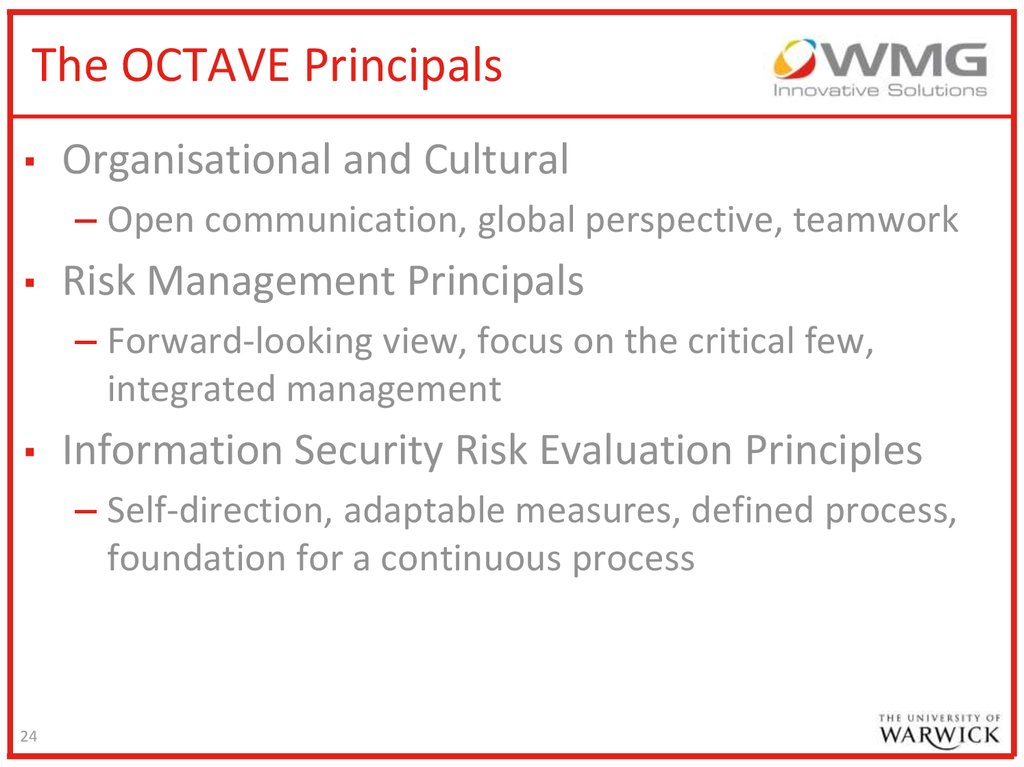
The OCTAVE Principals▪
Organisational and Cultural
– Open communication, global perspective, teamwork
▪
Risk Management Principals
– Forward-looking view, focus on the critical few,
integrated management
▪
Information Security Risk Evaluation Principles
– Self-direction, adaptable measures, defined process,
foundation for a continuous process
24
25.
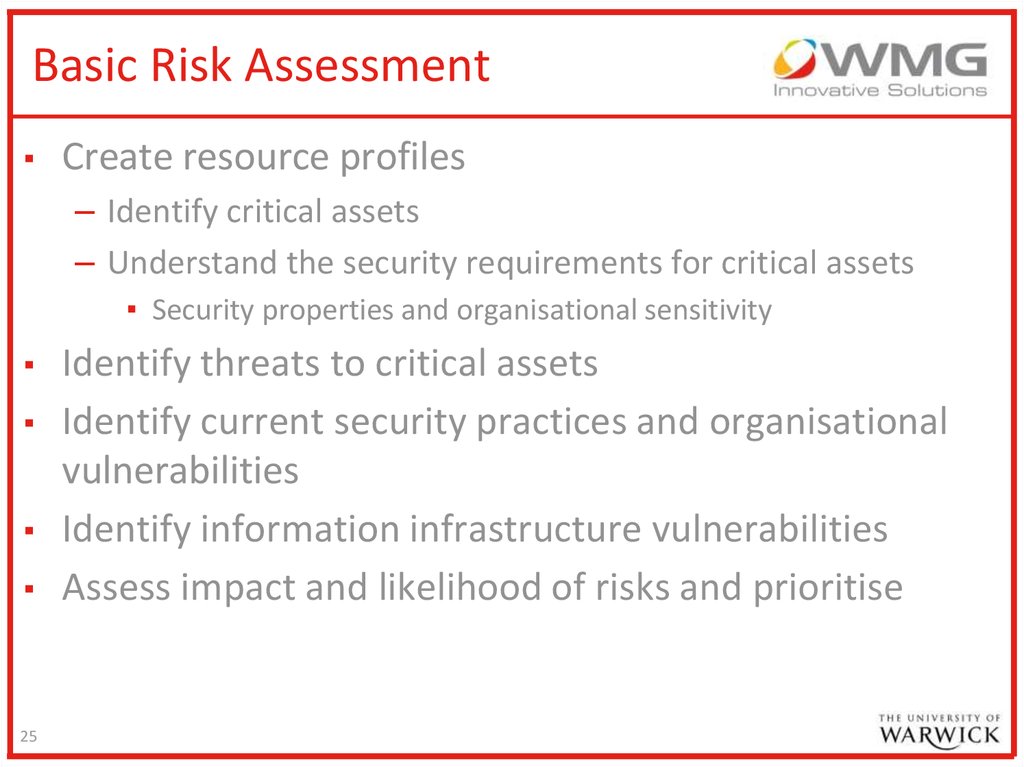
Basic Risk Assessment▪
Create resource profiles
– Identify critical assets
– Understand the security requirements for critical assets
▪ Security properties and organisational sensitivity
▪
▪
▪
▪
25
Identify threats to critical assets
Identify current security practices and organisational
vulnerabilities
Identify information infrastructure vulnerabilities
Assess impact and likelihood of risks and prioritise
26.
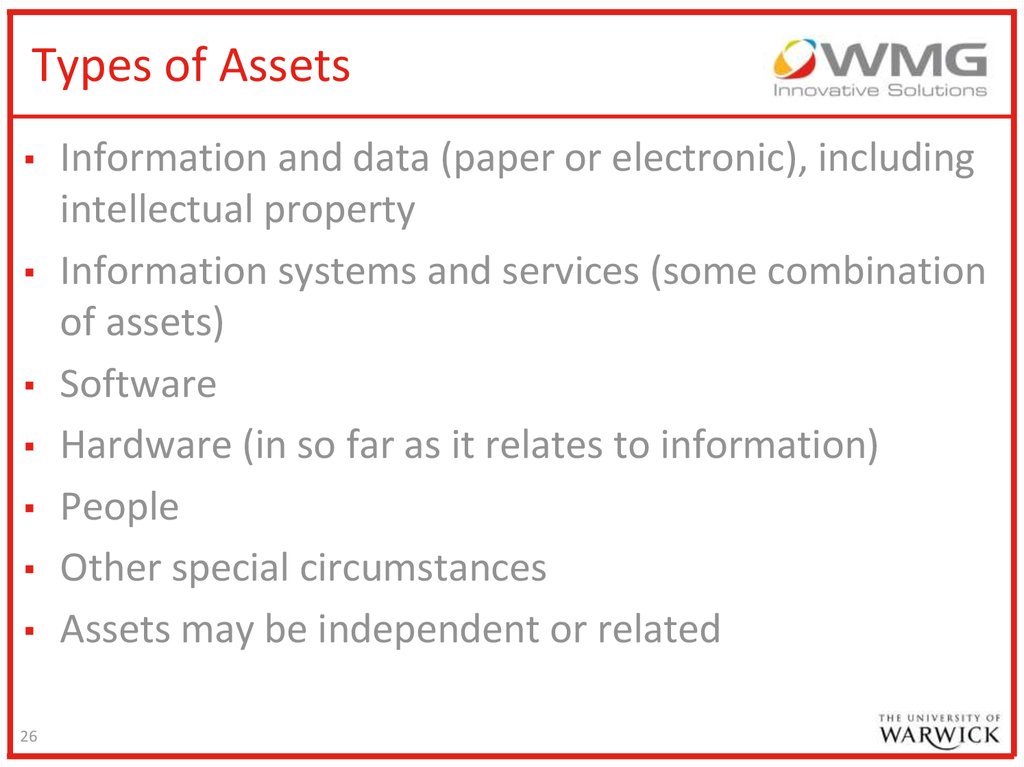
Types of AssetsInformation and data (paper or electronic), including
intellectual property
▪ Information systems and services (some combination
of assets)
▪ Software
▪ Hardware (in so far as it relates to information)
▪ People
▪ Other special circumstances
▪ Assets may be independent or related
▪
26
27.
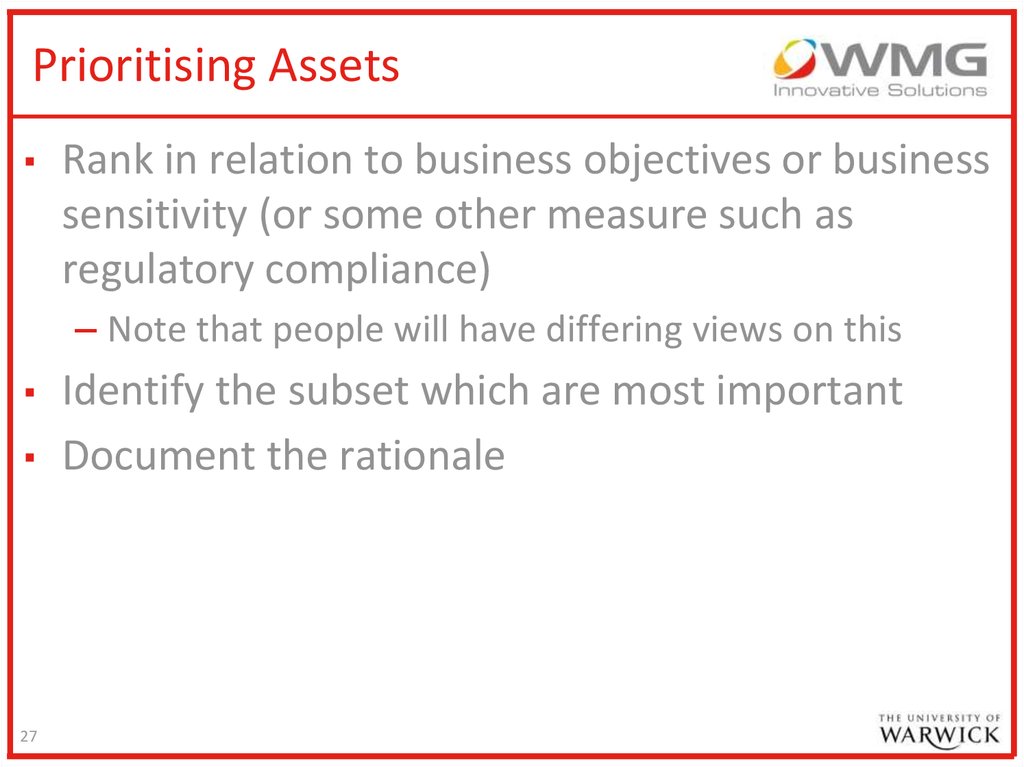
Prioritising Assets▪
Rank in relation to business objectives or business
sensitivity (or some other measure such as
regulatory compliance)
– Note that people will have differing views on this
▪
▪
27
Identify the subset which are most important
Document the rationale
28.
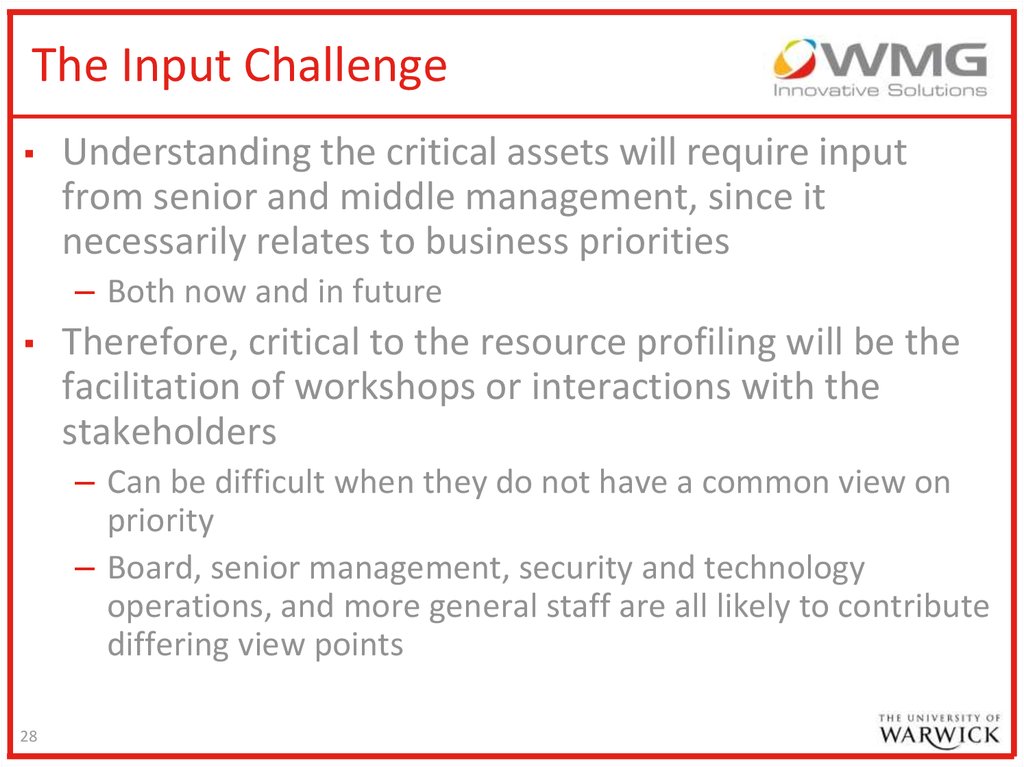
The Input Challenge▪
Understanding the critical assets will require input
from senior and middle management, since it
necessarily relates to business priorities
– Both now and in future
▪
Therefore, critical to the resource profiling will be the
facilitation of workshops or interactions with the
stakeholders
– Can be difficult when they do not have a common view on
priority
– Board, senior management, security and technology
operations, and more general staff are all likely to contribute
differing view points
28
29.
Identify ThreatConsider threat sources in relation to the high
priority assets, and the range of negative impacts a
successful breach could result in
▪ OCTAVE Threat Sources: deliberate actions by
external or internal people; accidental actions by
people; malware; system outage; natural disasters
and interdependency on 3rd parties
▪
– Note some are malicious threats and some are not
▪
29
OCTAVE Threat Outcomes: Disclosure,
Modification, Loss / Destruction, Interruption
30.
Assess Consequence▪
For each asset and threat outcome determine
potential impact on organisation
– There may be multiple potential impacts, which will need to
be enumerated
– People may have differing views
▪
Determine potential impact, likelihood
– Low: Maybe deviation from best practice but no direct
exposure of critical assets
– Moderate: May indirectly contribute to unauthorised
activity, or degrade service performance
– High: May allow limited unauthorised access
– Critical: May allow full access to system or prolonged outage
of service
30
31.
TabulateNew product
development
data store
31
Threat
Incident
Impact Description
Insider
deliberate
exfiltration of
data
Disclosure of
corporate IP
Failure to safeguard privacy of
data would result in competitors
compromising competitive edge
Impact
H
32.
Incorporate Probability▪
Assess how likely a particular threat will attempt a breach:
– Level of motivation (reward or incentive)
– Capability (for insider or outsider)
– Opportunity (how vulnerable might the asset be)
▪
Produce probability evaluation criteria
– Negligible: Significant insider knowledge required, existing
controls require direct physical access
– Low: Threat source lacks motivation or capability
– Moderate: Threat source motivated and capable but controls in
place which limit ability to attack
– High: Threat source is motivated and sufficiently capable and
controls are considered highly effective
– Very High: System vulnerability accessible publicly on the
Internet, exploits exist in the open, threat is motivated
32
33.
Combine for RiskSeverity
Critical
High
Moderate
Low
Very High
Critical
Critical
High
Moderate
High
Critical
Critical
High
Low
Moderate
High
High
Moderate
Low
Low
Moderate
Moderate
Low
Low
Negligible
Low
Low
Low
Low
Likelihood
33
34.
Scenario – Assisted Living• Local health authority has urgent requirement to deliver more
health services direct to patients in their homes
• Frail and elderly people find it more difficult to travel to health centres
• Hospital represents a source of potential complications (infections) and
cost, often when it is solely observation that is required
• Continuous monitoring could allow earlier interventions and reduce
total costs of healthcare
• A variety of sensors will be deployed in homes of patients,
linked to healthcare workers via the Internet monitoring
34
Mobility of patients
Drug usage
Nutrition levels
Vital life signs
35.
Assisted Living Example RisksIncident
Intermittent interruption of
monitoring
Prolonged interruption of
monitoring
Impact
Likelihood
Measure of Risk
L (localised)
M (probably
accidental)
M
M (general)
L (probably accidental) M
M (localised)
L (unless malicious
intent)
M
H (general)
M (control centre
attack)
M-H
H (localised)
L (unless terrorist
/organising crime)
M-H
VH (general)
L (unless terrorist
/organising crime)
M-H
M (localised)
M
M
VH (general)
M
H
Misleading monitoring
measurements
Patient privacy compromise
35
36.
Identify Security Requirements▪
For risks determine security requirements, in terms of
– does it contain personally identifiable information, in
which case it will be subject to regulation and law
– any other requirements to control access
– requirements for availability, take into consideration
commitments made to customers where appropriate
– requirements for accuracy (integrity), and where they may
be time-bounded
– requirements for controls to meet standards
36
37.
Prioritize Security Requirements▪
▪
Rank risks with critical at top
What is the relative ranking of the security
requirements (across the entire asset set)
– Or, for a subset prioritised further by business priority
▪
Often a difficult task
– ‘..they are all important…”
▪
37
Develop mitigations which reflect the needs
identified by the risk assessment
38.
ASSETTHREAT
EXISTING
CONTROL
LIKELIHOOD
LEVEL
OF RISK
RISK
PRIORITY
MITIGATION
Asset: A description of the asset under threat
Threat: Specific threat to the asset
Existing Control: Mechanism under place today to handle the threat, if any.
Likelihood: The probability of the occurrence of the threat i.e., possible, unlikely, highly likely etc.
Consequences: The impact should this event actually occur i.e., minor, major, medium etc.
Level of Risk: Low, Medium, High based on the product of likelihood and consequence.
Risk Priority: A number from 1 to the number of threats where 1 is the highest risk.
Mitigation: how you will solve the current problem
You may have more than one solution
38
CONSEQUENCE