
 law
lawSimilar presentations:






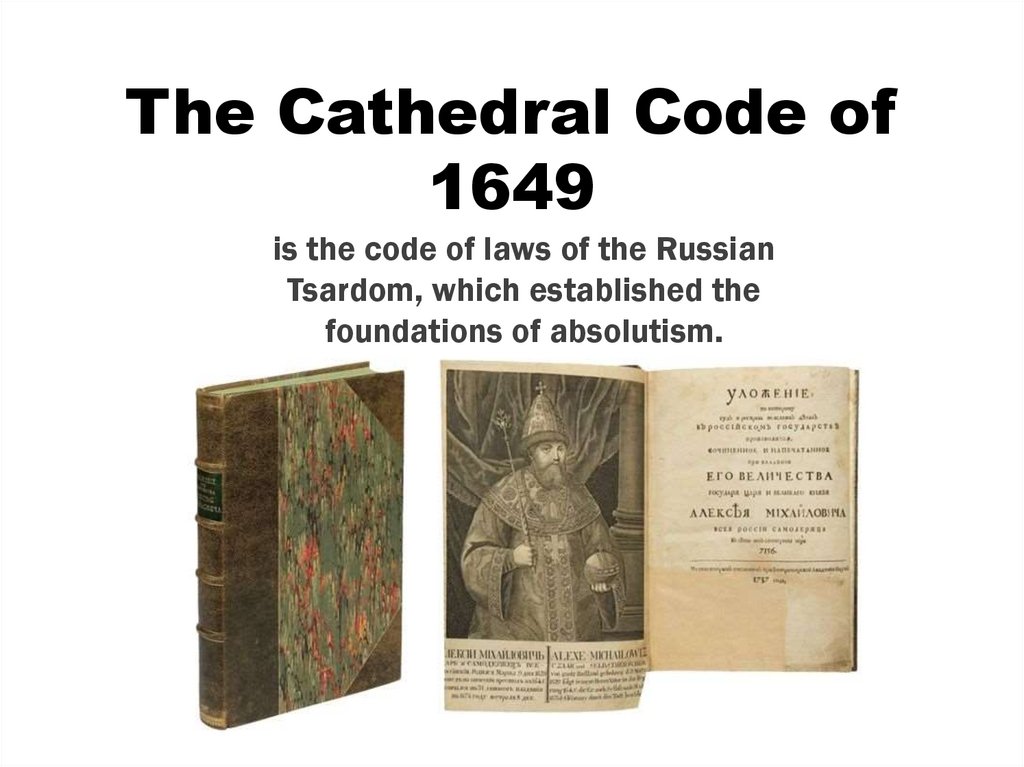
The Cathedral Code of 1649: Its Roots and Significance
1. The Cathedral Code of 1649
is the code of laws of the RussianTsardom, which established the
foundations of absolutism.
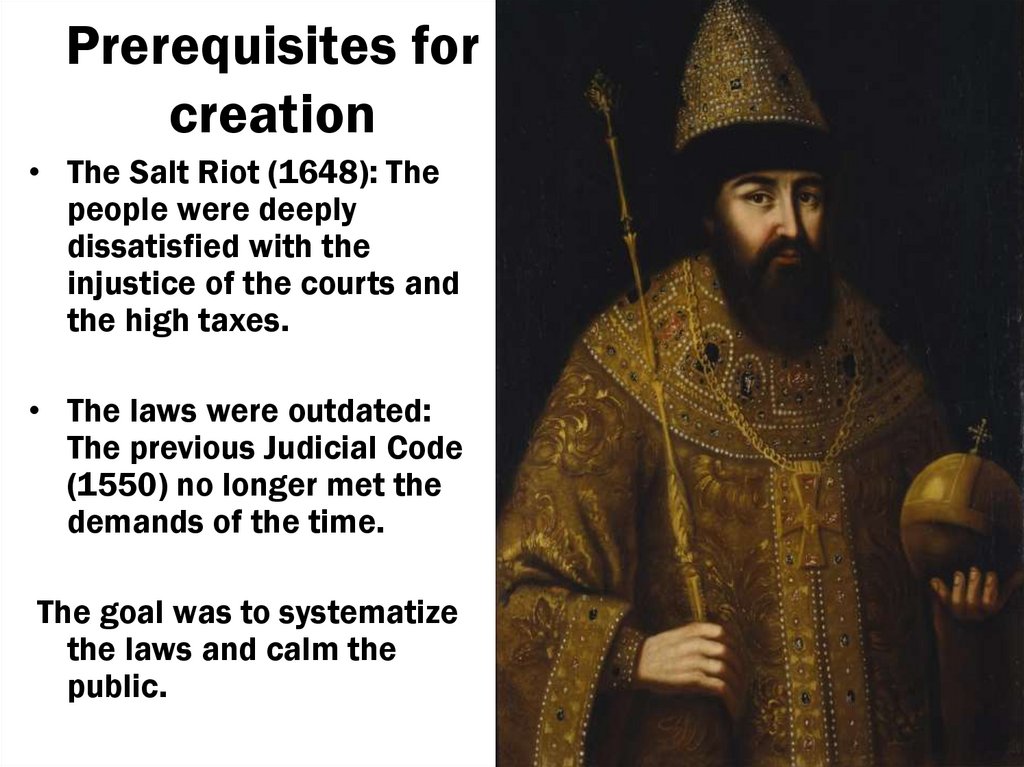
2. Prerequisites for creation
• The Salt Riot (1648): Thepeople were deeply
dissatisfied with the
injustice of the courts and
the high taxes.
• The laws were outdated:
The previous Judicial Code
(1550) no longer met the
demands of the time.
The goal was to systematize
the laws and calm the
public.
3. Document development process and structure
• The Code was adopted at a specially convened ZemskySobor.
• The document consists of 25 chapters and 967 articles.
4. The main provisions
1.The final establishment of serfdom. The Articles of theCode established an indefinite search for runaway
peasants, abolishing the "Yuriev Day," which finally
secured the peasants to their owners.
2.Regulation of property and inheritance relations.
3.Introduction of unified judicial procedures.
4.Increased responsibility for crimes against the tsarist
government and the church. For example, blasphemy and
treason were punishable by death.
5. Significance
The Cathedral Code of 1649 was the first codifiedset of laws for unified Russia. It reflected significant
changes in the country's political, social, and legal
systems. It remained in effect until 1832, when the
Code of Laws of the Russian Empire was developed as
part of the codification efforts of the Russian Empire.