
 informatics
Similar presentations:




The Five Generations of Computers
1. The Five Generations of Computers
GROSUL MAKSIM12КС
2. The Five Generations of Computers
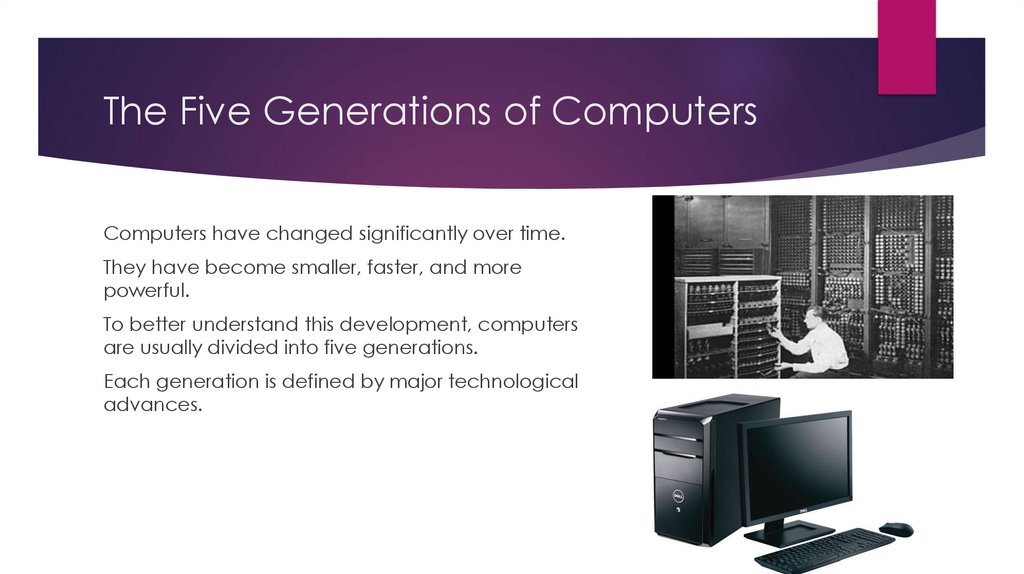
Computers have changed significantly over time.They have become smaller, faster, and more
powerful.
To better understand this development, computers
are usually divided into five generations.
Each generation is defined by major technological
advances.
3. First Generation (1940s–1950s)
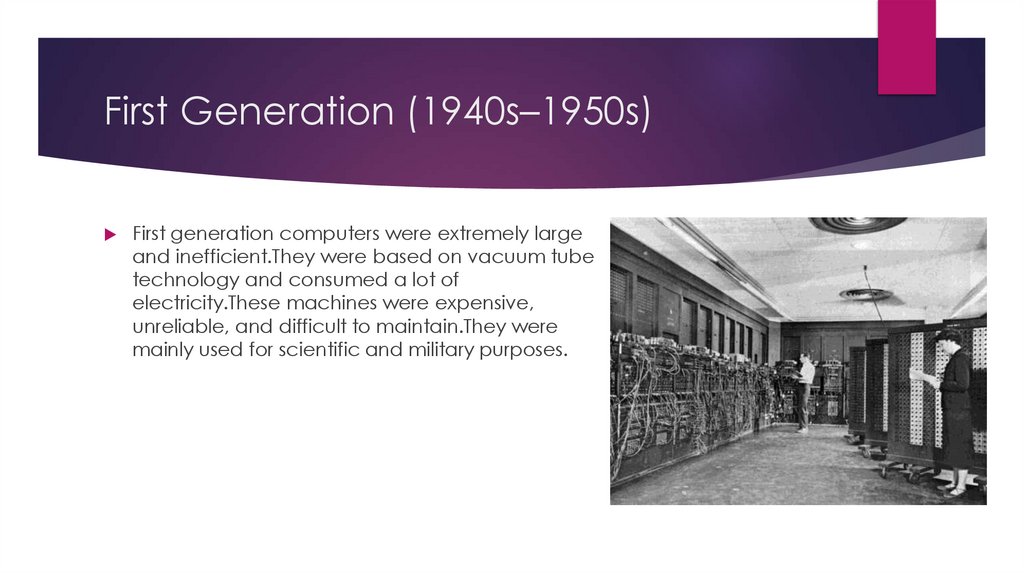
First generation computers were extremely largeand inefficient.They were based on vacuum tube
technology and consumed a lot of
electricity.These machines were expensive,
unreliable, and difficult to maintain.They were
mainly used for scientific and military purposes.
4. Second Generation (1950s–1960s)
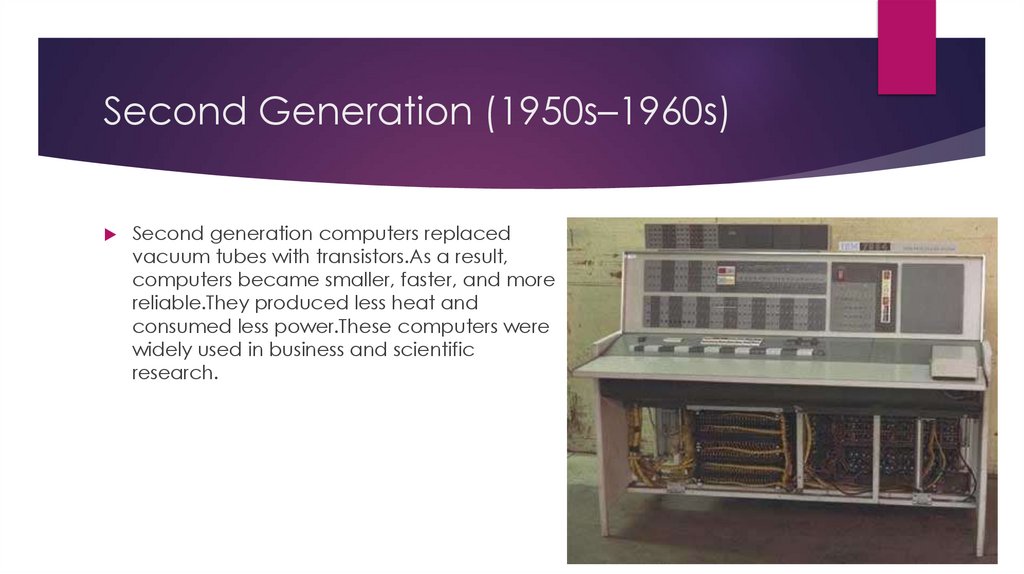
Second generation computers replacedvacuum tubes with transistors.As a result,
computers became smaller, faster, and more
reliable.They produced less heat and
consumed less power.These computers were
widely used in business and scientific
research.
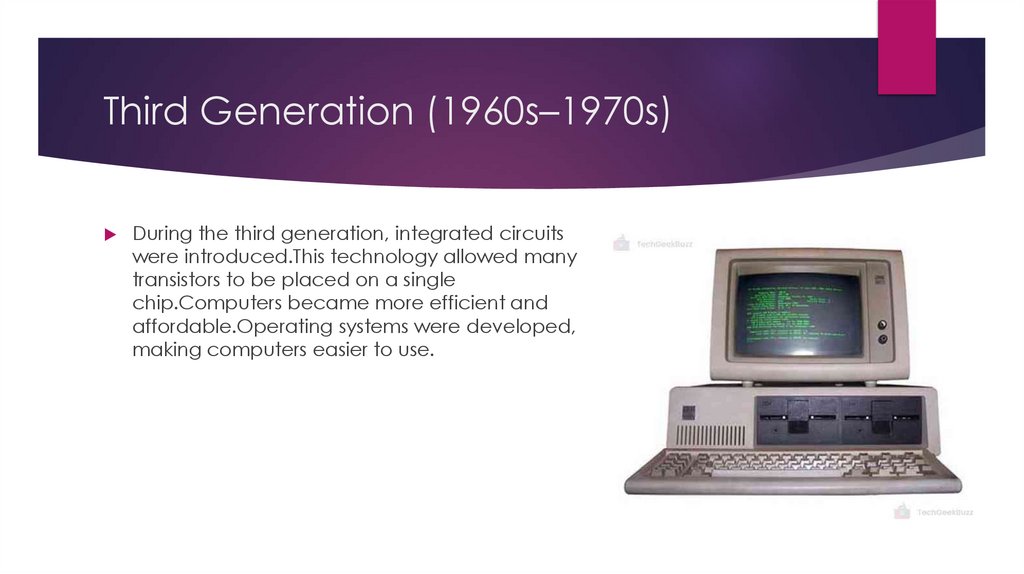
5. Third Generation (1960s–1970s)
During the third generation, integrated circuitswere introduced.This technology allowed many
transistors to be placed on a single
chip.Computers became more efficient and
affordable.Operating systems were developed,
making computers easier to use.
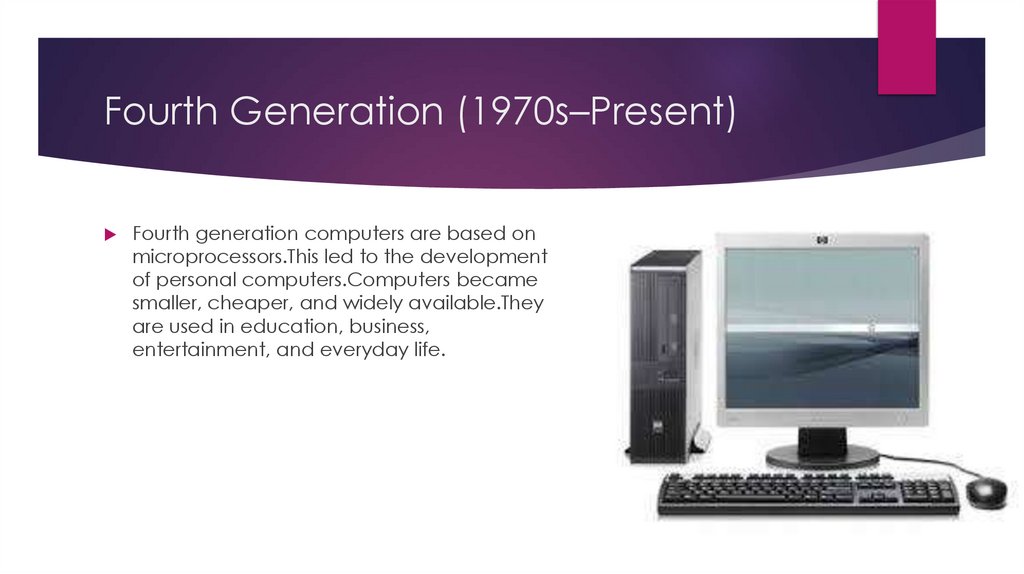
6. Fourth Generation (1970s–Present)
Fourth generation computers are based onmicroprocessors.This led to the development
of personal computers.Computers became
smaller, cheaper, and widely available.They
are used in education, business,
entertainment, and everyday life.
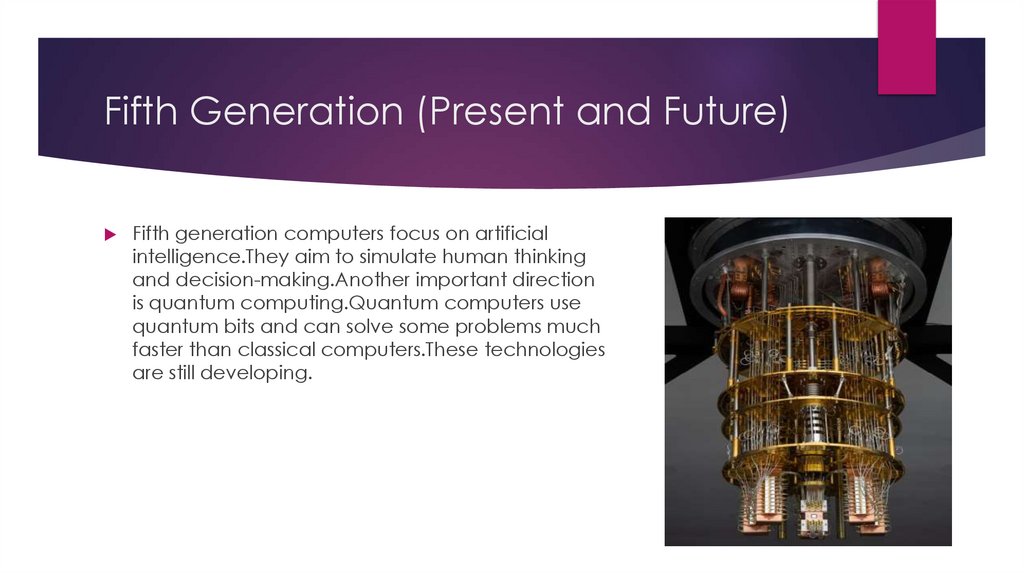
7. Fifth Generation (Present and Future)
Fifth generation computers focus on artificialintelligence.They aim to simulate human thinking
and decision-making.Another important direction
is quantum computing.Quantum computers use
quantum bits and can solve some problems much
faster than classical computers.These technologies
are still developing.
8. Conclusion
The five generations of computers show howtechnology has advanced over time.Computers
have become faster, smaller, and more
powerful.Today, they play an important role in
almost every area of human life.