

 biography
 art
artSimilar presentations:






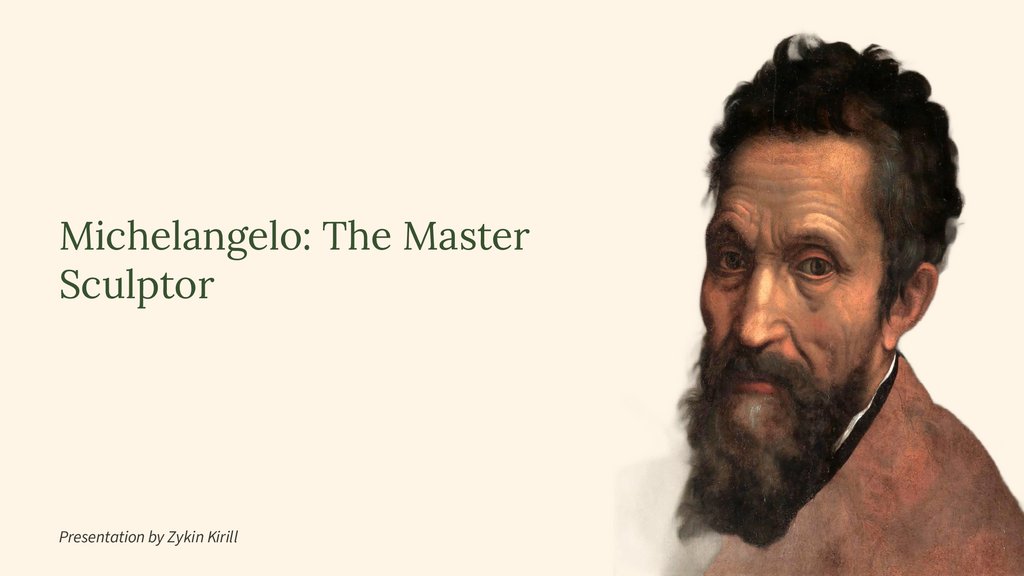
Michelangelo: the master sculptor
1.
Michelangelo: The MasterSculptor
Presentation by Zykin Kirill
preencoded.png
2.
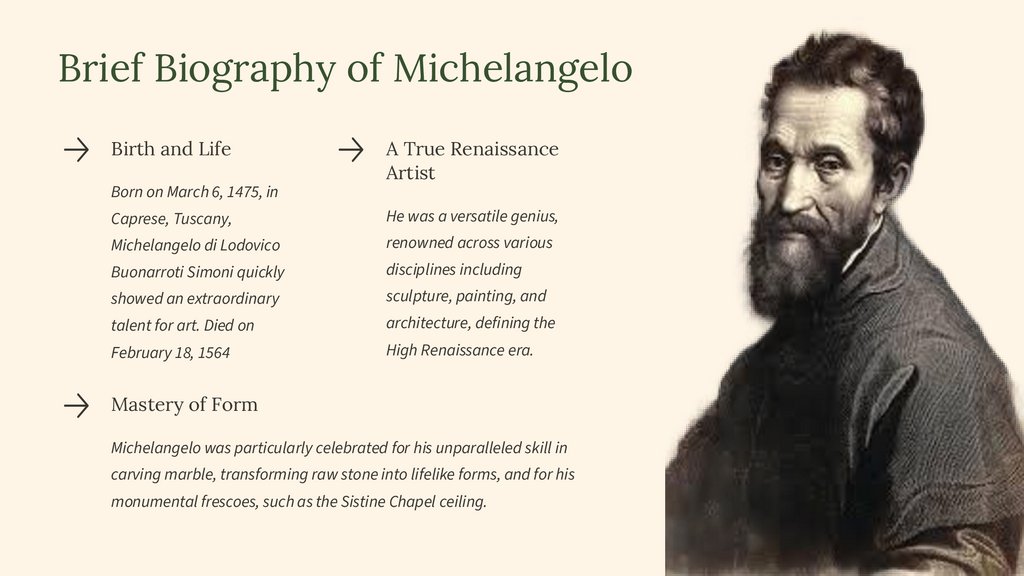
Brief Biography of MichelangeloBirth and Life
Born on March 6, 1475, in
A True Renaissance
Artist
Caprese, Tuscany,
He was a versatile genius,
Michelangelo di Lodovico
renowned across various
Buonarroti Simoni quickly
disciplines including
showed an extraordinary
sculpture, painting, and
talent for art. Died on
architecture, defining the
February 18, 1564
High Renaissance era.
Mastery of Form
Michelangelo was particularly celebrated for his unparalleled skill in
carving marble, transforming raw stone into lifelike forms, and for his
monumental frescoes, such as the Sistine Chapel ceiling.
preencoded.png
3.
Michelangelo’s Family and Early InfluencesLineage
Michelangelo hailed from a prominent Florentine banking family, the
Buonarroti, who, despite their esteemed name, had unfortunately lost much of
their fortune.
Father
His father, Ludovico Buonarroti Simoni, held a respectable position as a local
government official in Caprese and later in Florence.
The Stonecutter's family
Significantly, Michelangelo was raised for a period by a wet nurse in Settignano,
whose husband and father were stonecutters. This early exposure to the craft
profoundly influenced his lifelong passion for sculpture.
preencoded.png
4.
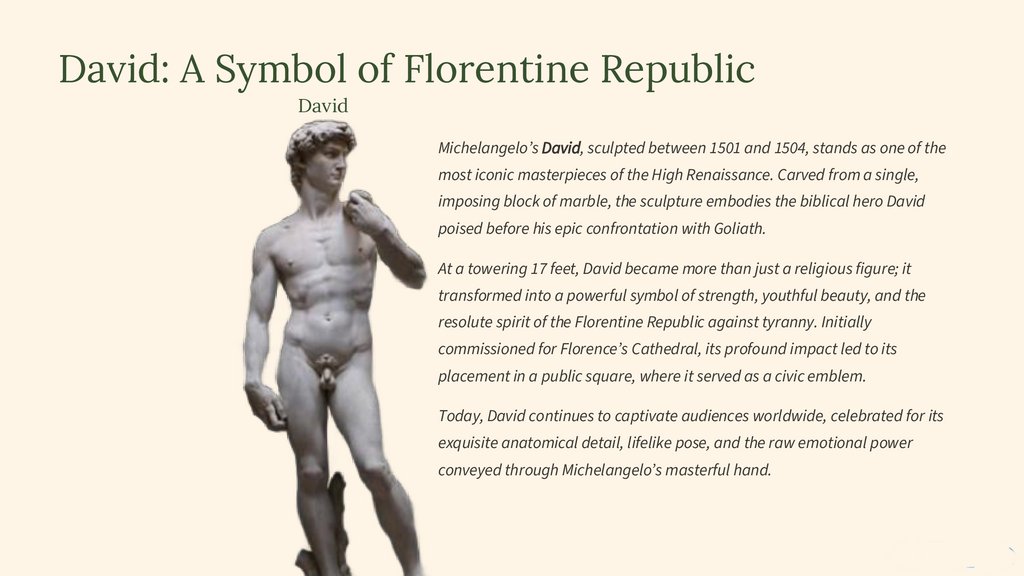
David: A Symbol of Florentine RepublicDavid
Michelangelo’s David, sculpted between 1501 and 1504, stands as one of the
most iconic masterpieces of the High Renaissance. Carved from a single,
imposing block of marble, the sculpture embodies the biblical hero David
poised before his epic confrontation with Goliath.
At a towering 17 feet, David became more than just a religious figure; it
transformed into a powerful symbol of strength, youthful beauty, and the
resolute spirit of the Florentine Republic against tyranny. Initially
commissioned for Florence’s Cathedral, its profound impact led to its
placement in a public square, where it served as a civic emblem.
Today, David continues to captivate audiences worldwide, celebrated for its
exquisite anatomical detail, lifelike pose, and the raw emotional power
conveyed through Michelangelo’s masterful hand.
preencoded.png
5.
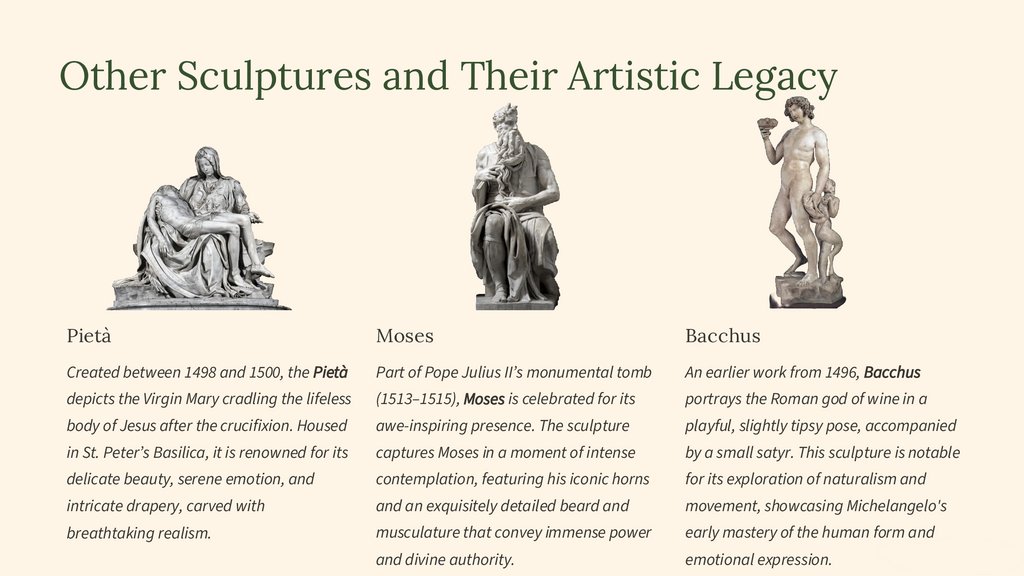
Other Sculptures and Their Artistic LegacyPietà
Moses
Bacchus
Created between 1498 and 1500, the Pietà
Part of Pope Julius II’s monumental tomb
An earlier work from 1496, Bacchus
depicts the Virgin Mary cradling the lifeless
(1513–1515), Moses is celebrated for its
portrays the Roman god of wine in a
body of Jesus after the crucifixion. Housed
awe-inspiring presence. The sculpture
playful, slightly tipsy pose, accompanied
in St. Peter’s Basilica, it is renowned for its
captures Moses in a moment of intense
by a small satyr. This sculpture is notable
delicate beauty, serene emotion, and
contemplation, featuring his iconic horns
for its exploration of naturalism and
intricate drapery, carved with
and an exquisitely detailed beard and
movement, showcasing Michelangelo's
breathtaking realism.
musculature that convey immense power
early mastery of the human form and
and divine authority.
emotional expression.
preencoded.png
6.
Thank You forYour Attention!
preencoded.png
Zykin
Kirill