Similar presentations:





Windows XP_ A Brief History and Legacy
1.
Release and Initial Success of Windows XPReleased in 2001, Windows XP was a breakthrough operating system that
merged the consumer and business lines on the stable NT kernel. Its signature
Luna interface and high reliability won global popularity. The pivotal Service
Pack 2 (2004) saved the system from widespread virus epidemics by
fundamentally strengthening its security architecture.
2.
Key Advantages of Windows XPUnmatched Stability & Compatibility: The rock-solid NT kernel ended the era of frequent crashes for home users, offering unparalleled
support for both legacy and new software and hardware. Intuitive & Cohesive User Experience: The welcoming, colorful, and consistent
Luna interface made the system highly accessible and a joy to use for millions, setting a new standard for desktop design.
Optimal Resource Efficiency: Distinguished by low hardware requirements and lean architecture, it ensured stable operation on legacy
equipment over a remarkably long period, driving its mass adoption.
3.
Key Disadvantages of Windows XPSevere Security Deficiencies in Initial Releases: The
original design, emphasizing compatibility and
convenience, contained critical vulnerabilities that led
to widespread exploitation by network worms (e.
g. , Blaster, Sasser), necessitating a major overhaul
with SP2. Technological Obsolescence: It lacked
fundamental modern security features (e. g. , UAC,
sandboxing), making it a serious liability in the post2014 landscape without security updates. Hindered
Industry Progress: Its massive success created deep
market resistance to newer operating systems like
Vista, slowing the adoption of modern technologies
and more secure architectural models.
4.
Broader Influence on the IT IndustryXP established a new benchmark for user expectations
regarding system stability and interface intuitiveness, a
standard all subsequent operating systems were
forced to meet or exceed.
Its immense popularity created an entire ecosystem of
software and hardware optimized specifically for it,
which slowed down but also guided the technological
transition of the global market for many years. This
ecosystem not only shaped the user experience but
also set the foundation for future technological
advancements in computing.
5.
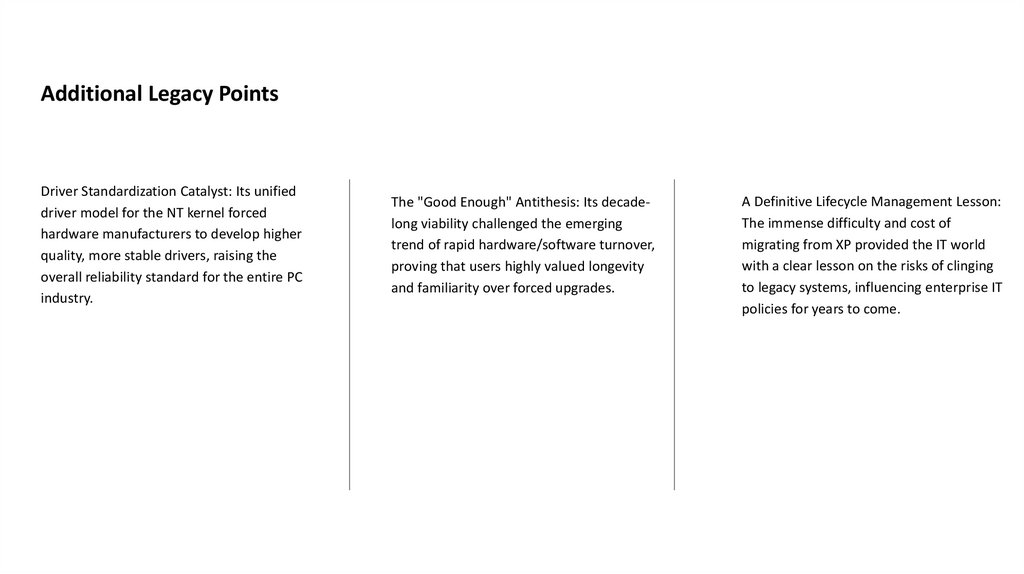
Additional Legacy PointsDriver Standardization Catalyst: Its unified
driver model for the NT kernel forced
hardware manufacturers to develop higher
quality, more stable drivers, raising the
overall reliability standard for the entire PC
industry.
The "Good Enough" Antithesis: Its decadelong viability challenged the emerging
trend of rapid hardware/software turnover,
proving that users highly valued longevity
and familiarity over forced upgrades.
A Definitive Lifecycle Management Lesson:
The immense difficulty and cost of
migrating from XP provided the IT world
with a clear lesson on the risks of clinging
to legacy systems, influencing enterprise IT
policies for years to come.