
 sociology
Similar presentations:





The population of the USA
1. The population of the USA
Made by a student of the group N/SO-SEG-23-1 Kirienkov VladislavVadimovich
2. Current Population Size
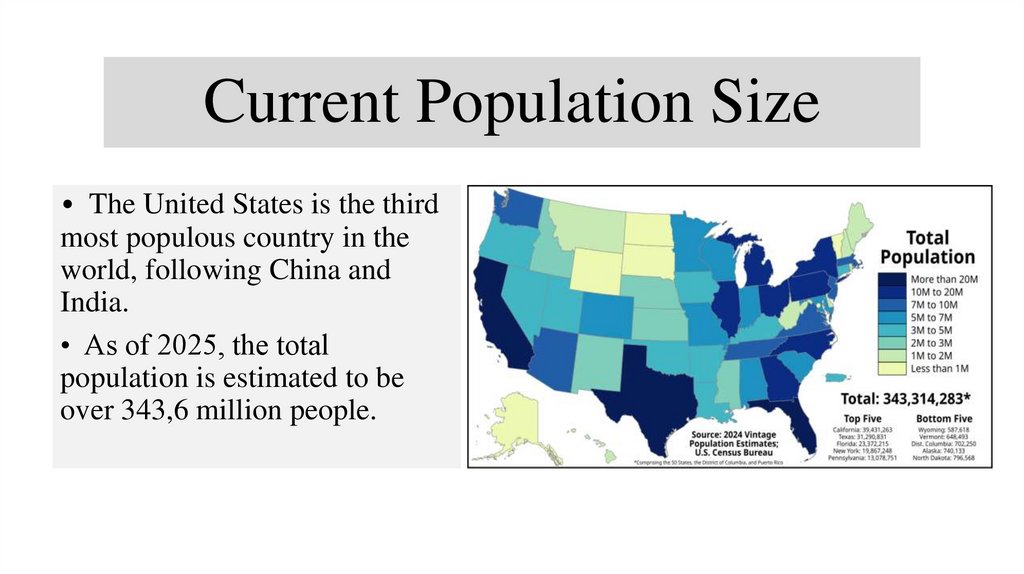
• The United States is the thirdmost populous country in the
world, following China and
India.
• As of 2025, the total
population is estimated to be
over 343,6 million people.
3. Population Growth Rate
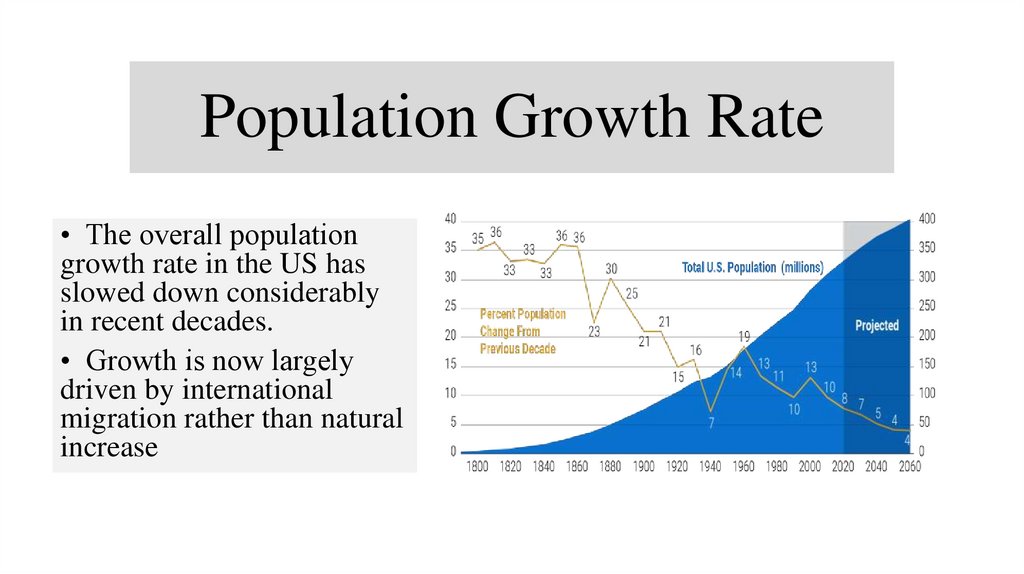
• The overall populationgrowth rate in the US has
slowed down considerably
in recent decades.
• Growth is now largely
driven by international
migration rather than natural
increase
4. Geographic Distribution
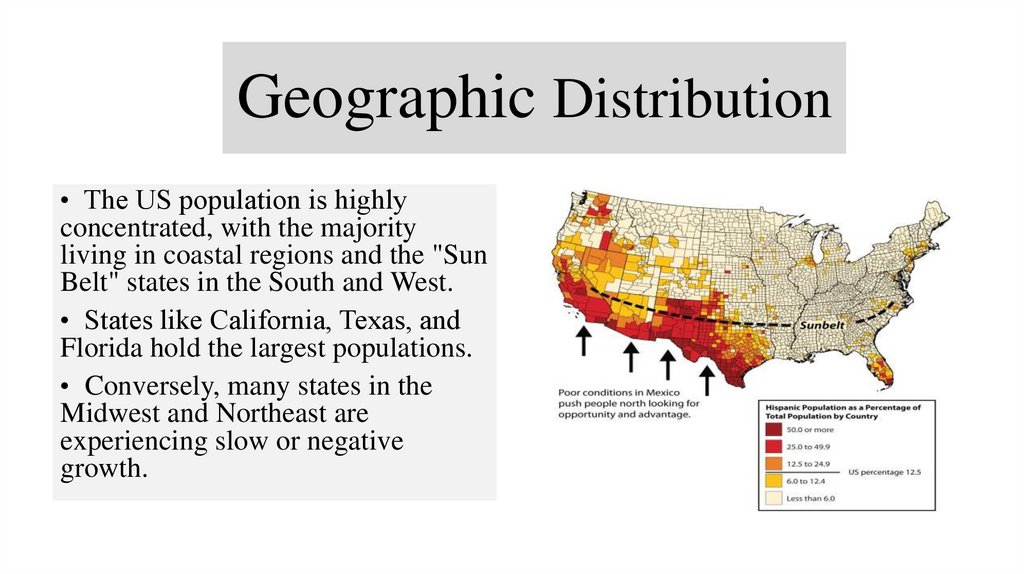
• The US population is highlyconcentrated, with the majority
living in coastal regions and the "Sun
Belt" states in the South and West.
• States like California, Texas, and
Florida hold the largest populations.
• Conversely, many states in the
Midwest and Northeast are
experiencing slow or negative
growth.
5. Urbanization
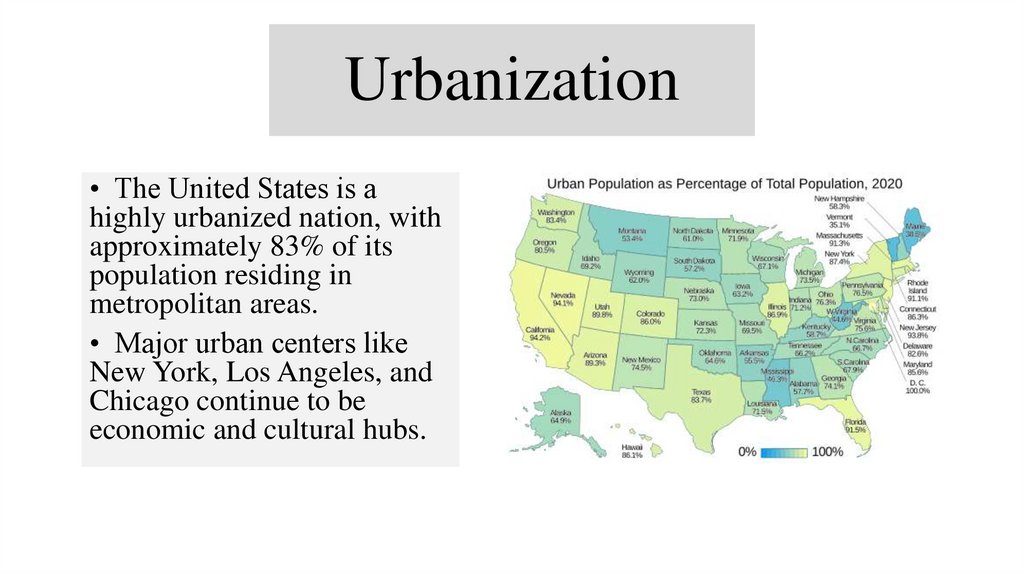
• The United States is ahighly urbanized nation, with
approximately 83% of its
population residing in
metropolitan areas.
• Major urban centers like
New York, Los Angeles, and
Chicago continue to be
economic and cultural hubs.
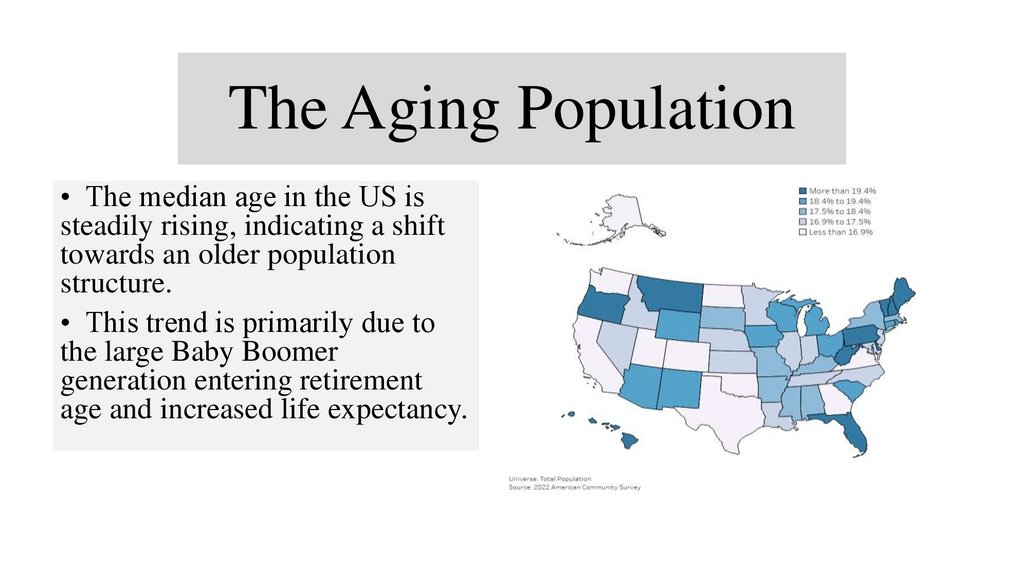
6. The Aging Population
• The median age in the US issteadily rising, indicating a shift
towards an older population
structure.
• This trend is primarily due to
the large Baby Boomer
generation entering retirement
age and increased life expectancy.
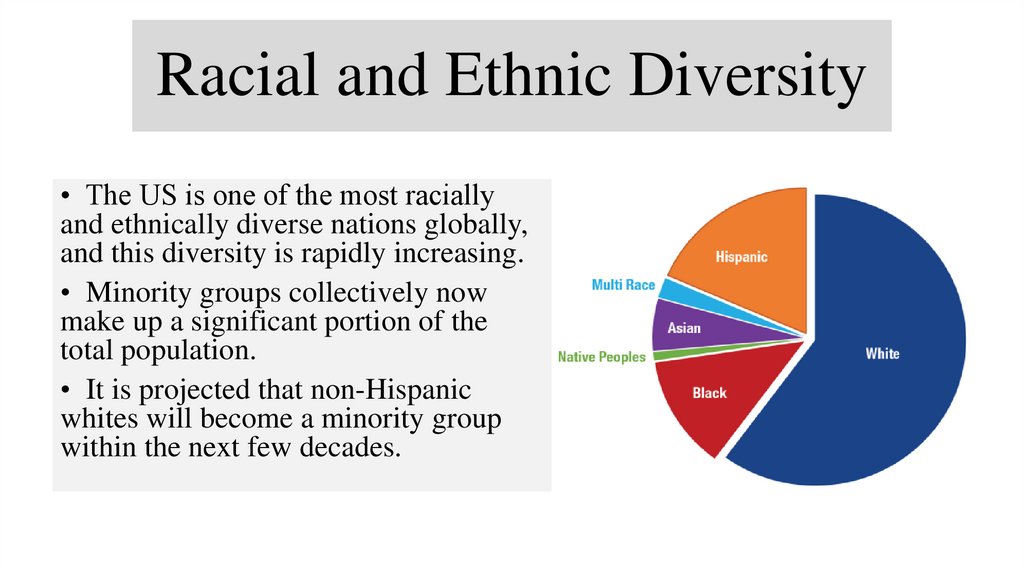
7. Racial and Ethnic Diversity
• The US is one of the most raciallyand ethnically diverse nations globally,
and this diversity is rapidly increasing.
• Minority groups collectively now
make up a significant portion of the
total population.
• It is projected that non-Hispanic
whites will become a minority group
within the next few decades.
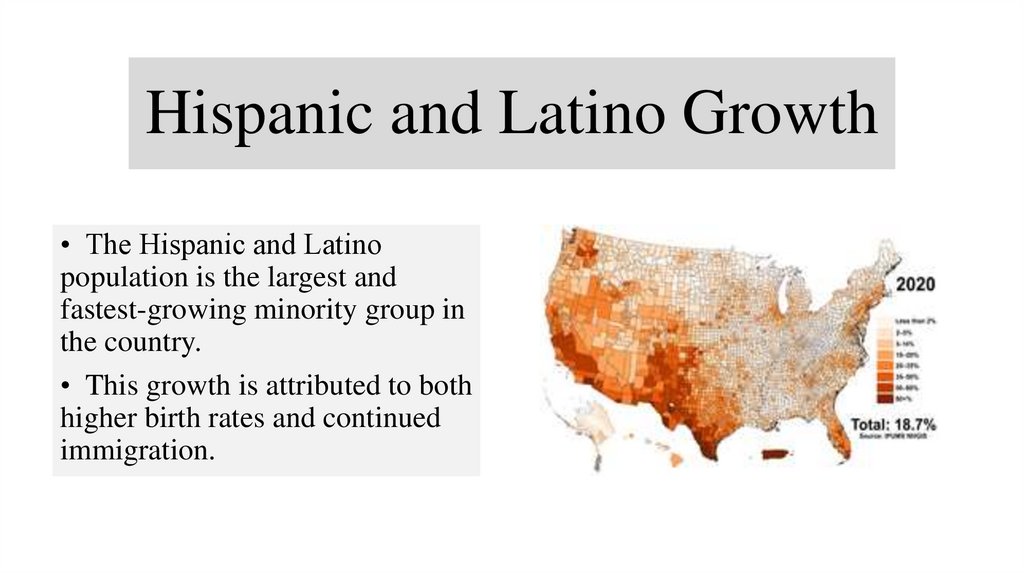
8. Hispanic and Latino Growth
• The Hispanic and Latinopopulation is the largest and
fastest-growing minority group in
the country.
• This growth is attributed to both
higher birth rates and continued
immigration.
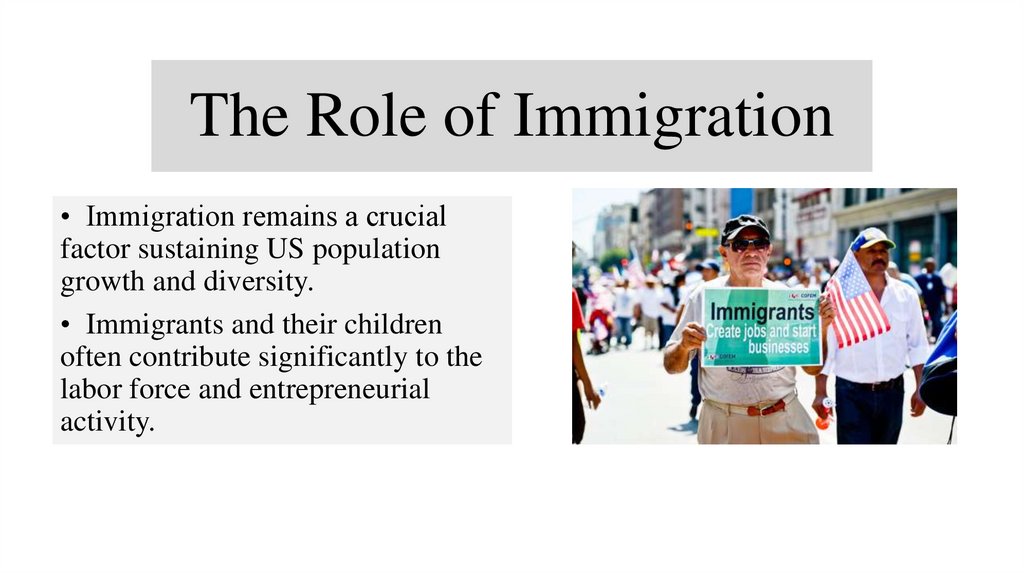
9. The Role of Immigration
• Immigration remains a crucialfactor sustaining US population
growth and diversity.
• Immigrants and their children
often contribute significantly to the
labor force and entrepreneurial
activity.
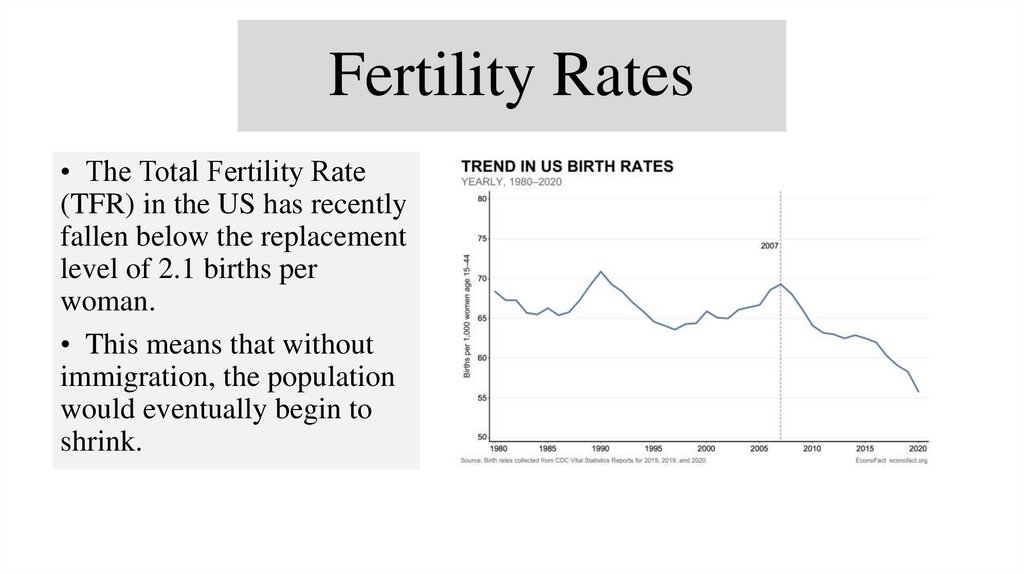
10. Fertility Rates
• The Total Fertility Rate(TFR) in the US has recently
fallen below the replacement
level of 2.1 births per
woman.
• This means that without
immigration, the population
would eventually begin to
shrink.
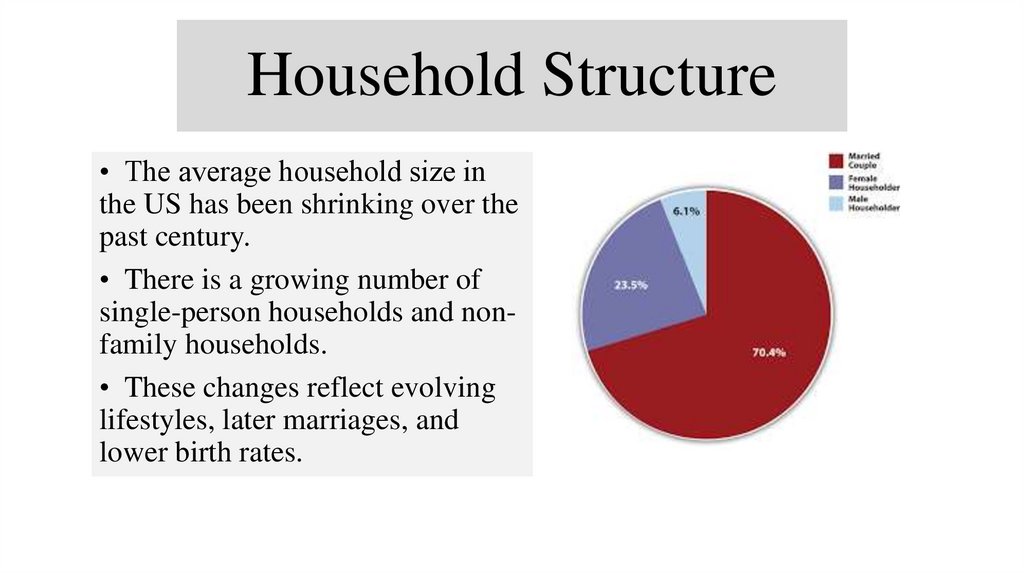
11. Household Structure
• The average household size inthe US has been shrinking over the
past century.
• There is a growing number of
single-person households and nonfamily households.
• These changes reflect evolving
lifestyles, later marriages, and
lower birth rates.
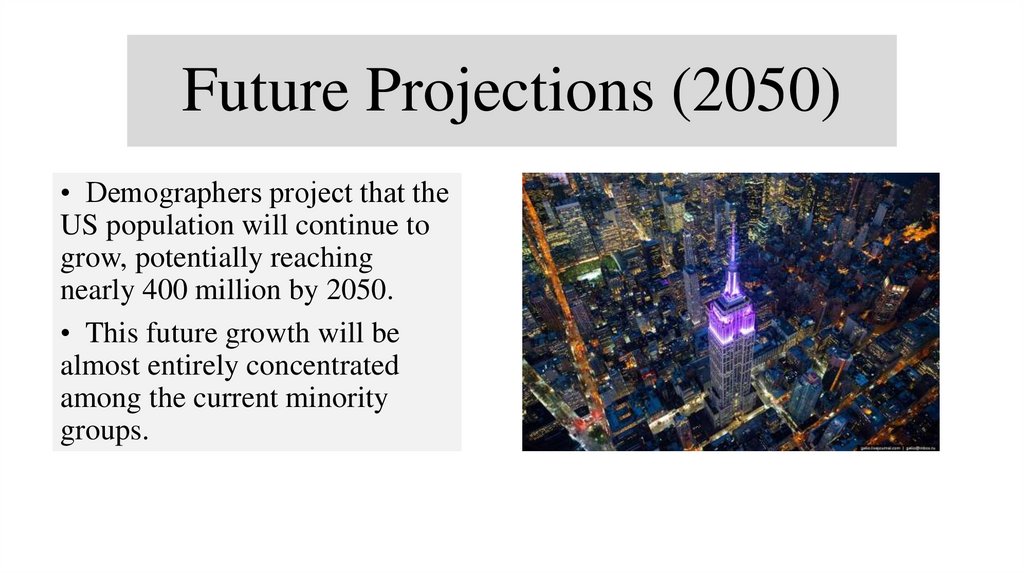
12. Future Projections (2050)
• Demographers project that theUS population will continue to
grow, potentially reaching
nearly 400 million by 2050.
• This future growth will be
almost entirely concentrated
among the current minority
groups.
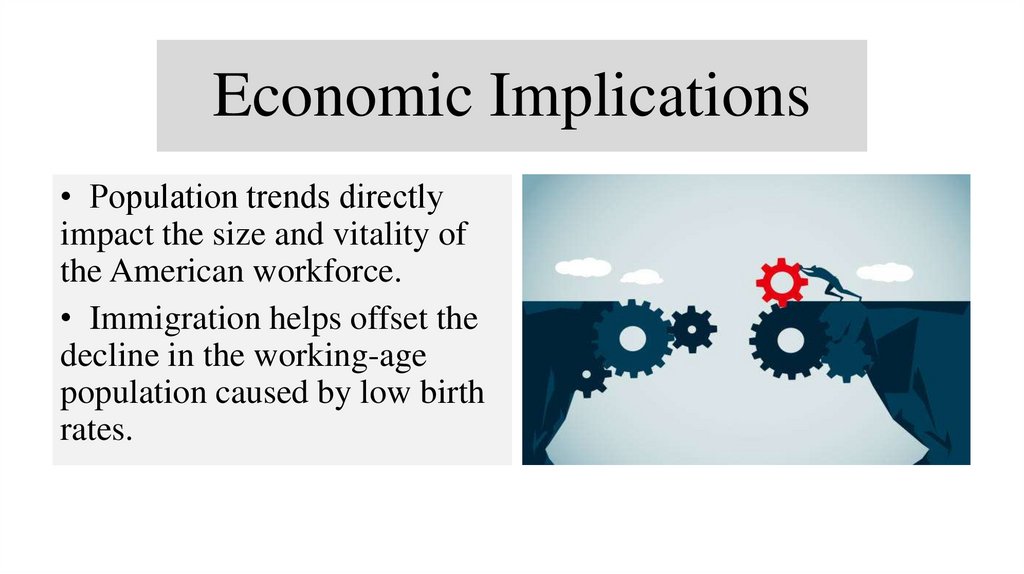
13. Economic Implications
• Population trends directlyimpact the size and vitality of
the American workforce.
• Immigration helps offset the
decline in the working-age
population caused by low birth
rates.
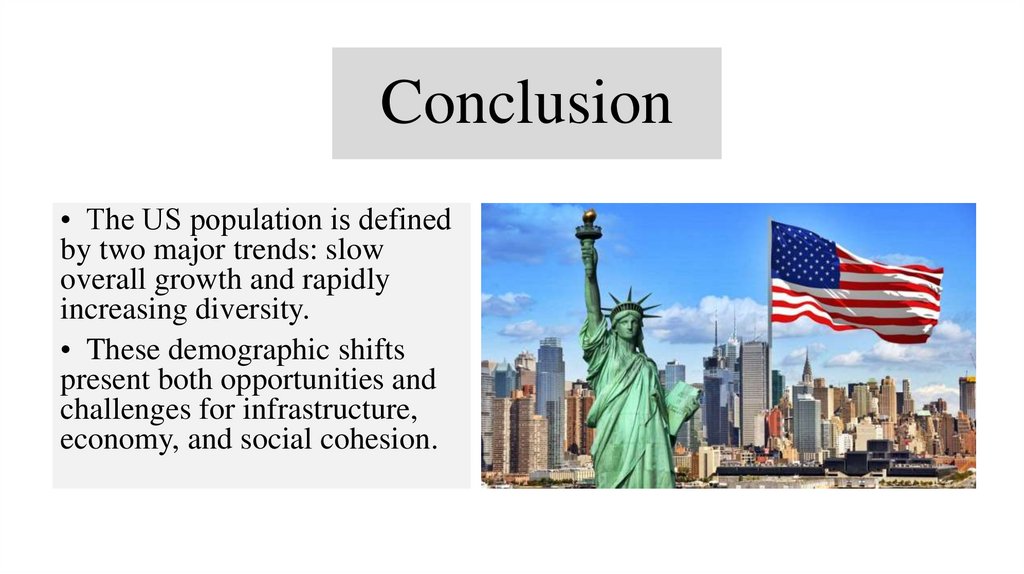
14. Conclusion
• The US population is definedby two major trends: slow
overall growth and rapidly
increasing diversity.
• These demographic shifts
present both opportunities and
challenges for infrastructure,
economy, and social cohesion.
15. Sources
• US Census Bureau• United Nations, Department of Economic and Social Affairs
• Pew Research Center
• Centers for Disease Control and Prevention
• Wikipedia