



 biology
Similar presentations:





Balamuthia mandrillaris
1.
Balamuthia mandrillarisAnohin D. A.
Faculty of General Medicine, 2nd year, Group 16
Ryazan 2025
2.
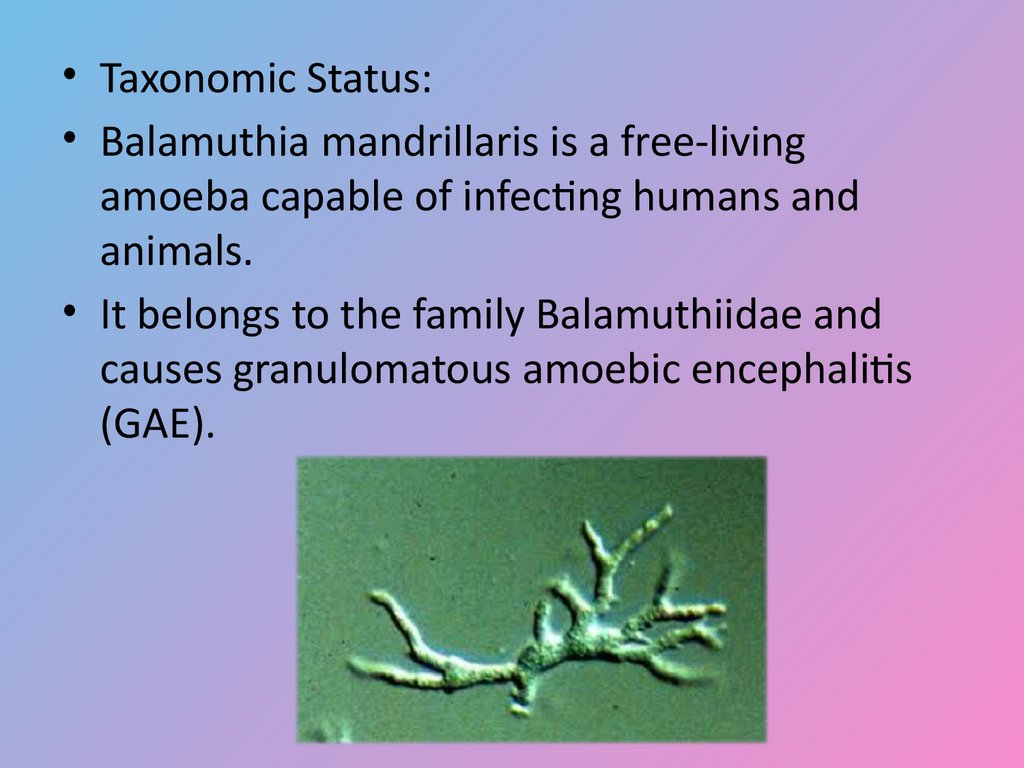
• Taxonomic Status:• Balamuthia mandrillaris is a free‑living
amoeba capable of infecting humans and
animals.
• It belongs to the family Balamuthiidae and
causes granulomatous amoebic encephalitis
(GAE).
3.
• Discovery:• First identified in 1986 in the brain of a
mandrill.
• Recognized as a human pathogen in 1990,
with cases reported worldwide.
4.
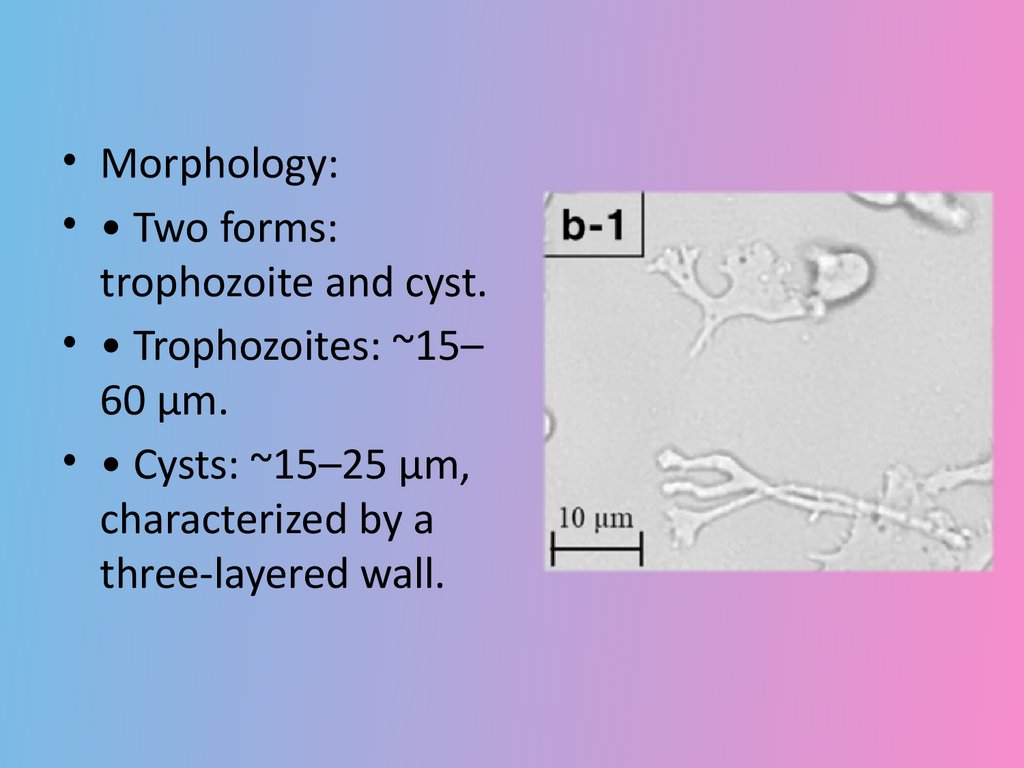
• Morphology:• • Two forms:
trophozoite and cyst.
• • Trophozoites: ~15–
60 µm.
• • Cysts: ~15–25 µm,
characterized by a
three‑layered wall.
5.
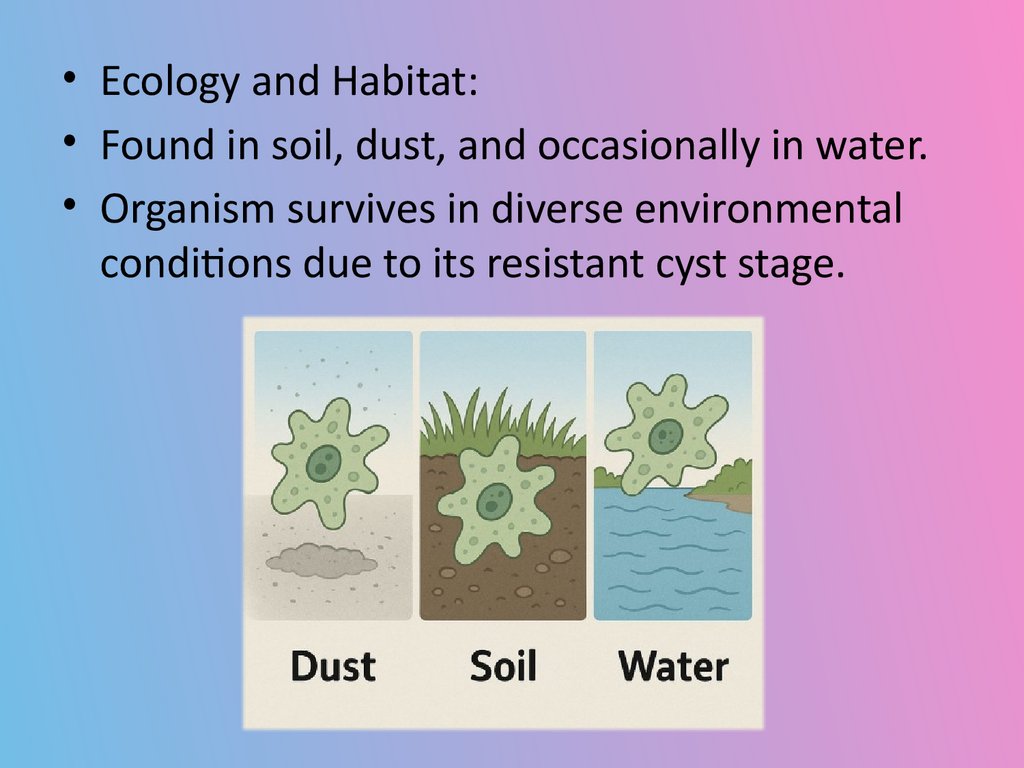
• Ecology and Habitat:• Found in soil, dust, and occasionally in water.
• Organism survives in diverse environmental
conditions due to its resistant cyst stage.
6.
• Transmission:• Likely enters the body via:
Skin wounds
contaminated with soil
or dust
Inhalation of airborne
particles
• No confirmed
human‑to‑human
transmission except rare
transplant‑associated cases.
7.
• Pathogenesis:• The amoeba can disseminate through the
bloodstream and invade the central nervous
system.
• It leads to granulomatous amoebic
encephalitis (GAE), a severe and often fatal
disease.
8.
Symptoms progress slowly and may include:Headache, fever
Behavioral changes
Seizures
Focal neurological deficits
9.
• Diagnosis:• Diagnosis is challenging and often delayed.
• Methods:
• • PCR testing
• • Immunohistochemistry
• • Microscopic examination of biopsy material
10.
• Treatment:• Treatment involves multi‑drug regimens
including antiparasitic and antimicrobial
agents.
• Survival is rare, but early diagnosis
significantly improves outcomes.
11.
• Epidemiology and Conclusion:• Cases occur globally, with slightly higher
incidence in warmer climates.
• Balamuthia mandrillaris is a rare yet highly
dangerous amoeba, requiring increased
clinical awareness and improved diagnostic
approaches.