 finance
Similar presentations:



Managerial Accounting, Fourth Edition Chapter
1.
Chapter13-1
2. CHAPTER 13
STATEMENT OF CASH FLOWSManagerial Accounting, Fourth Edition
Chapter
13-2
3.
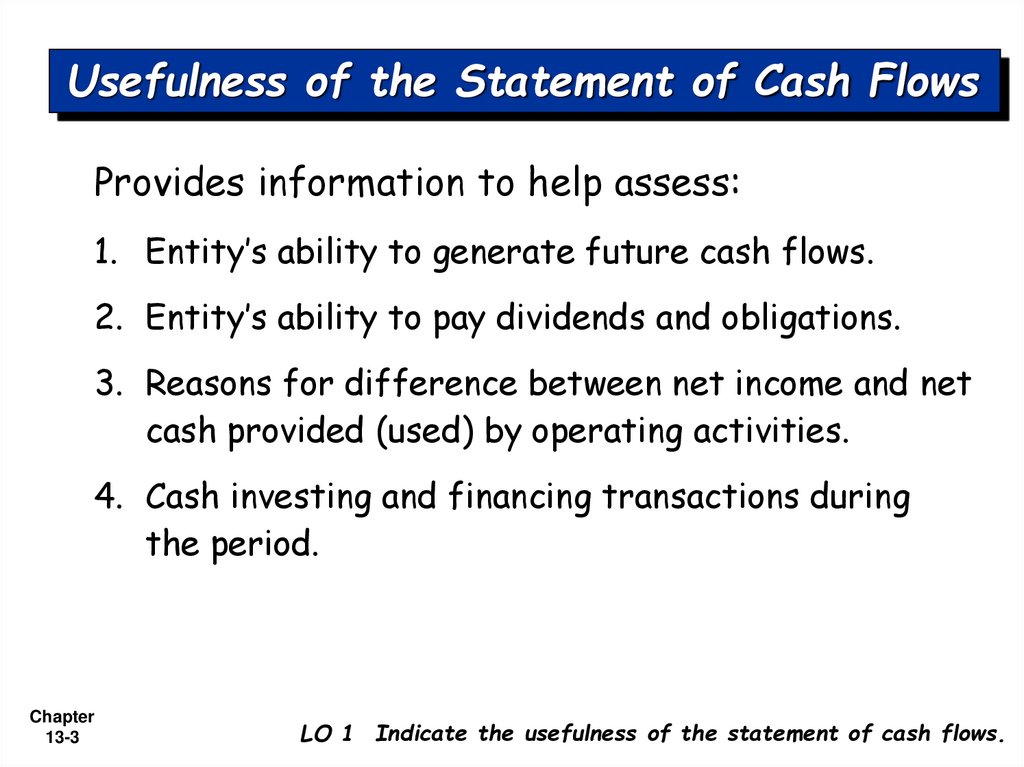
Usefulness of the Statement of Cash FlowsProvides information to help assess:
1. Entity’s ability to generate future cash flows.
2. Entity’s ability to pay dividends and obligations.
3. Reasons for difference between net income and net
cash provided (used) by operating activities.
4. Cash investing and financing transactions during
the period.
Chapter
13-3
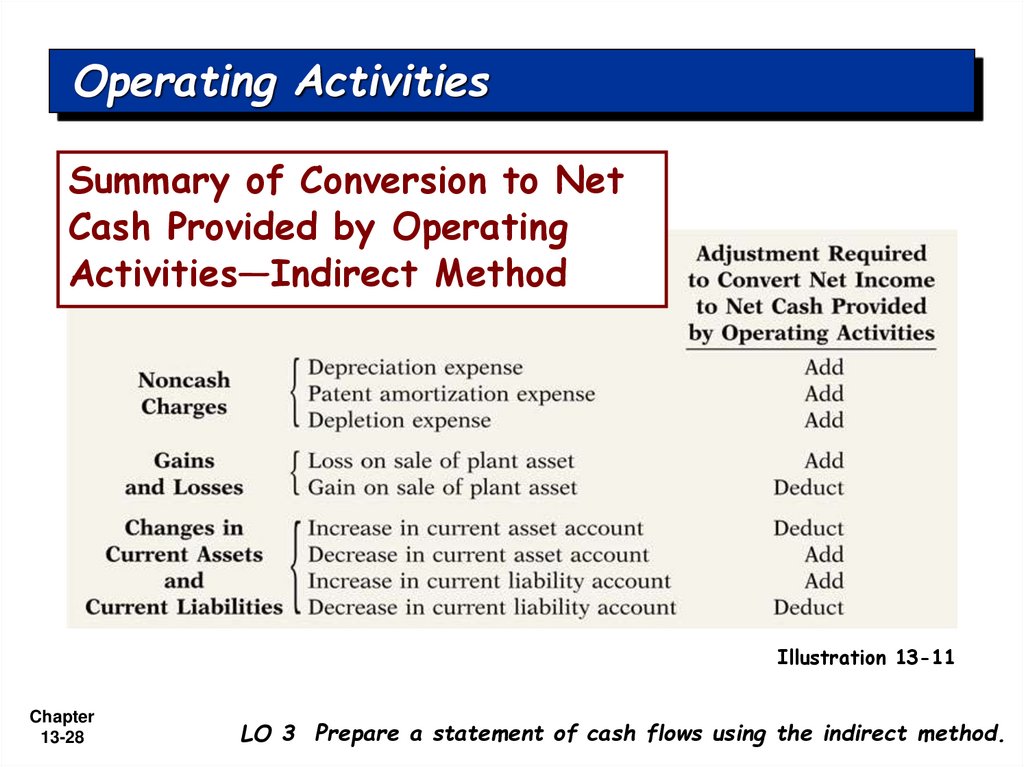
LO 1 Indicate the usefulness of the statement of cash flows.
4.
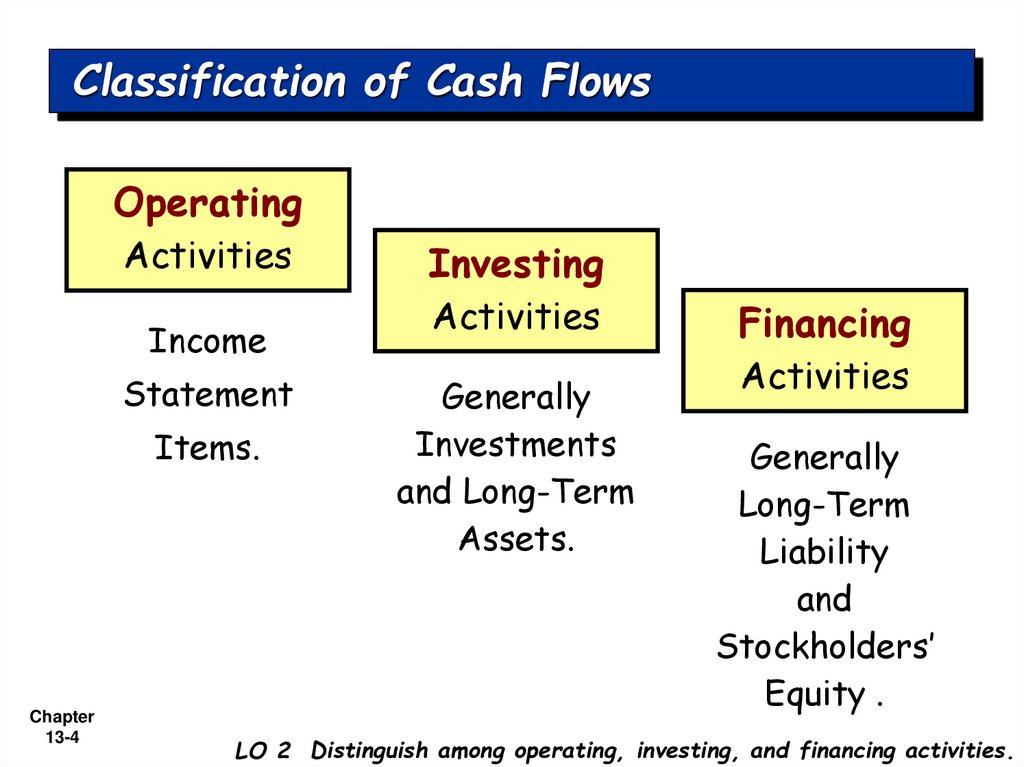
Classification of Cash FlowsOperating
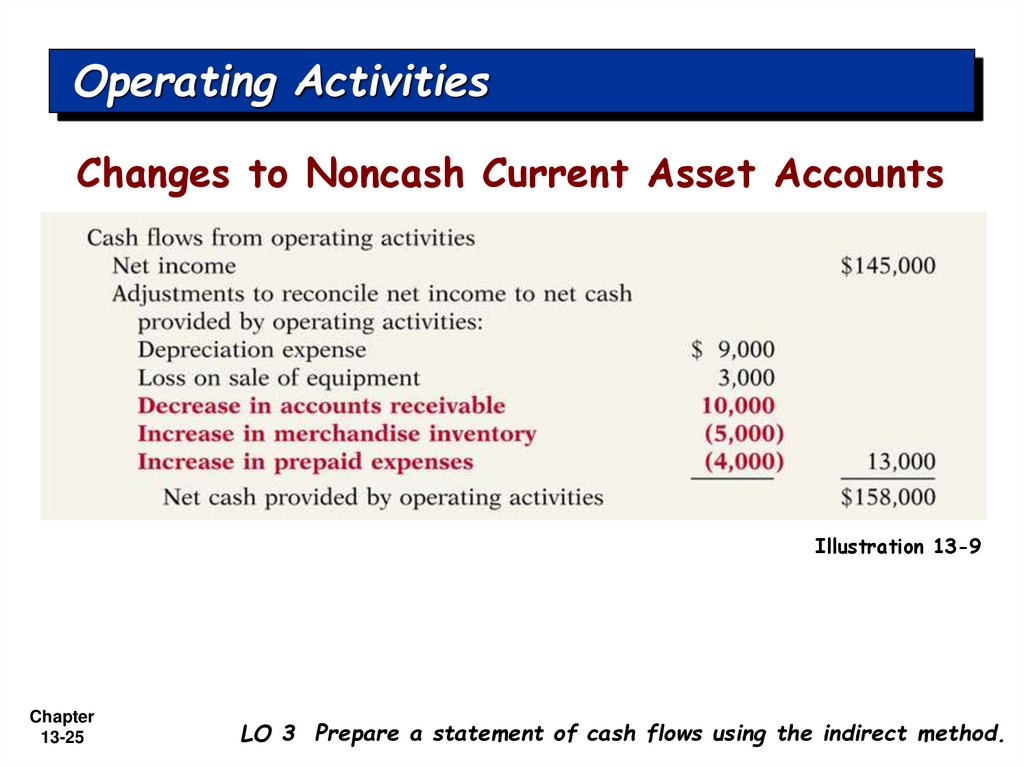
Activities
Income
Statement
Items.
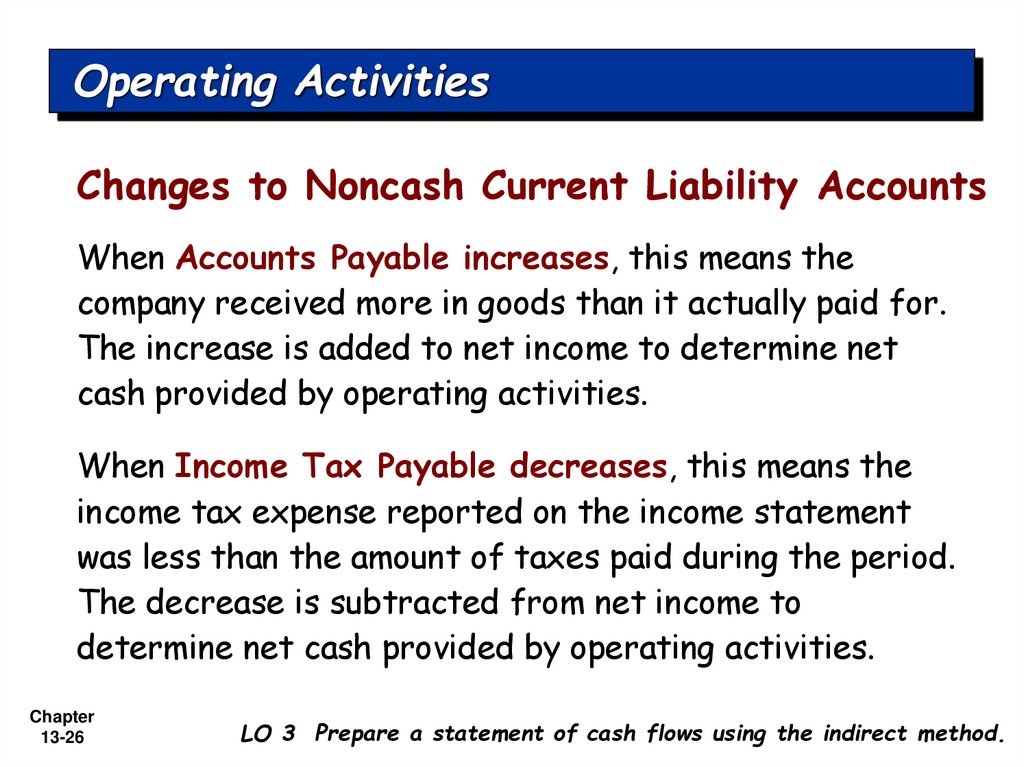
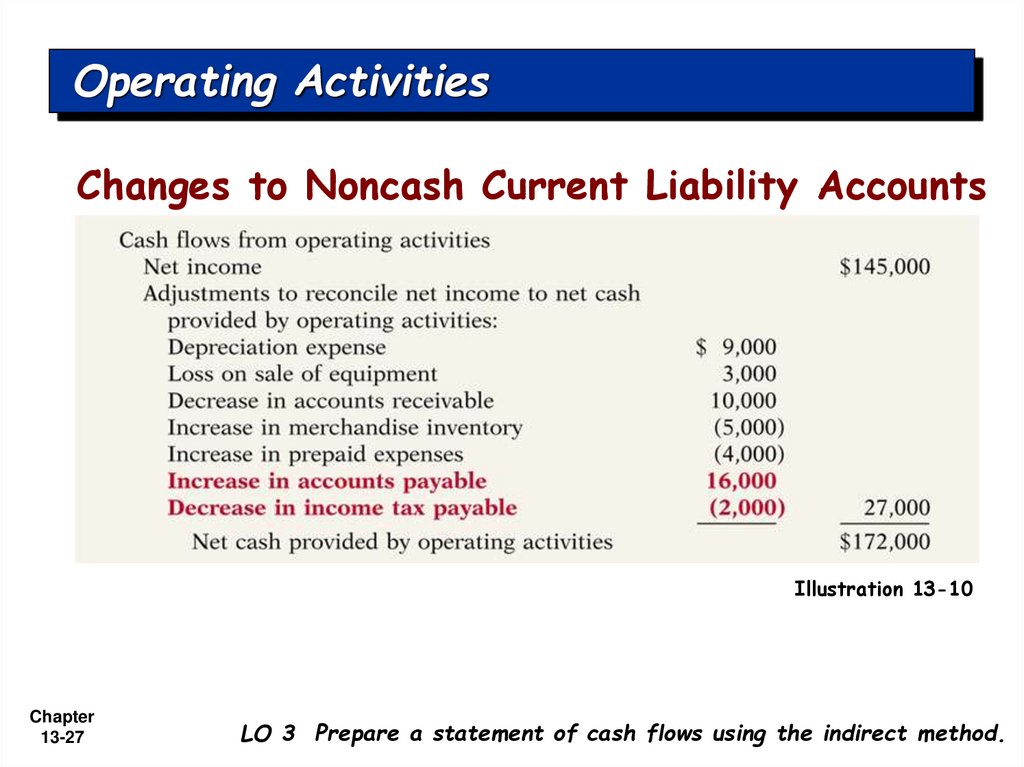
Chapter
13-4
Investing
Activities
Generally
Investments
and Long-Term
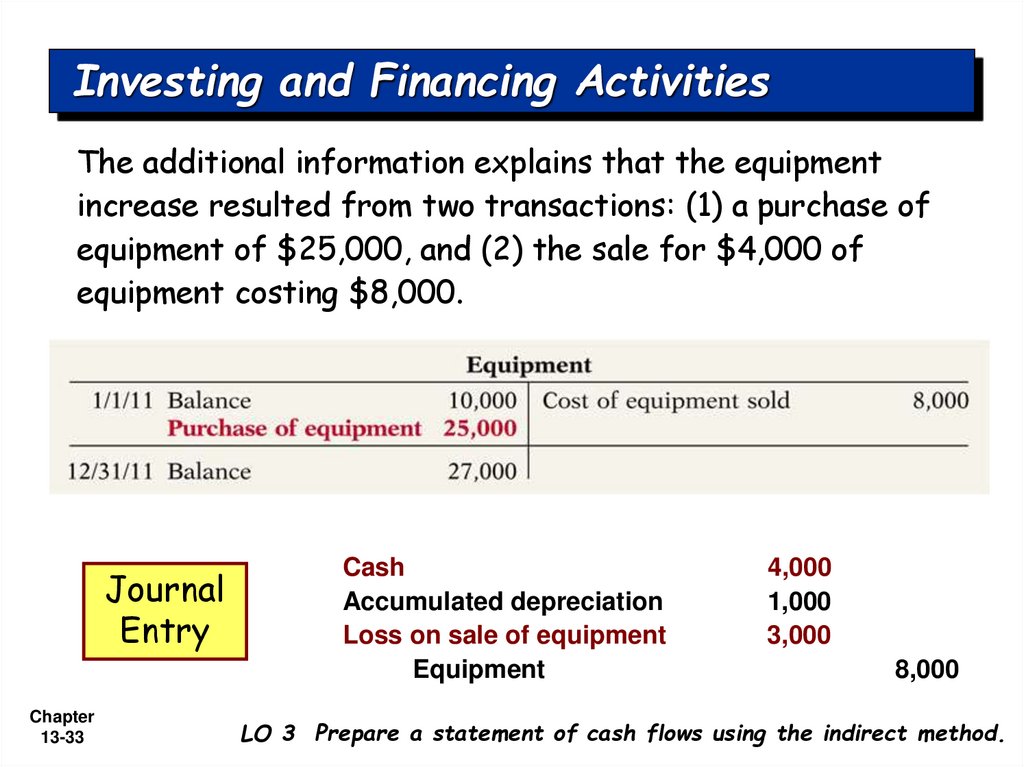
Assets.
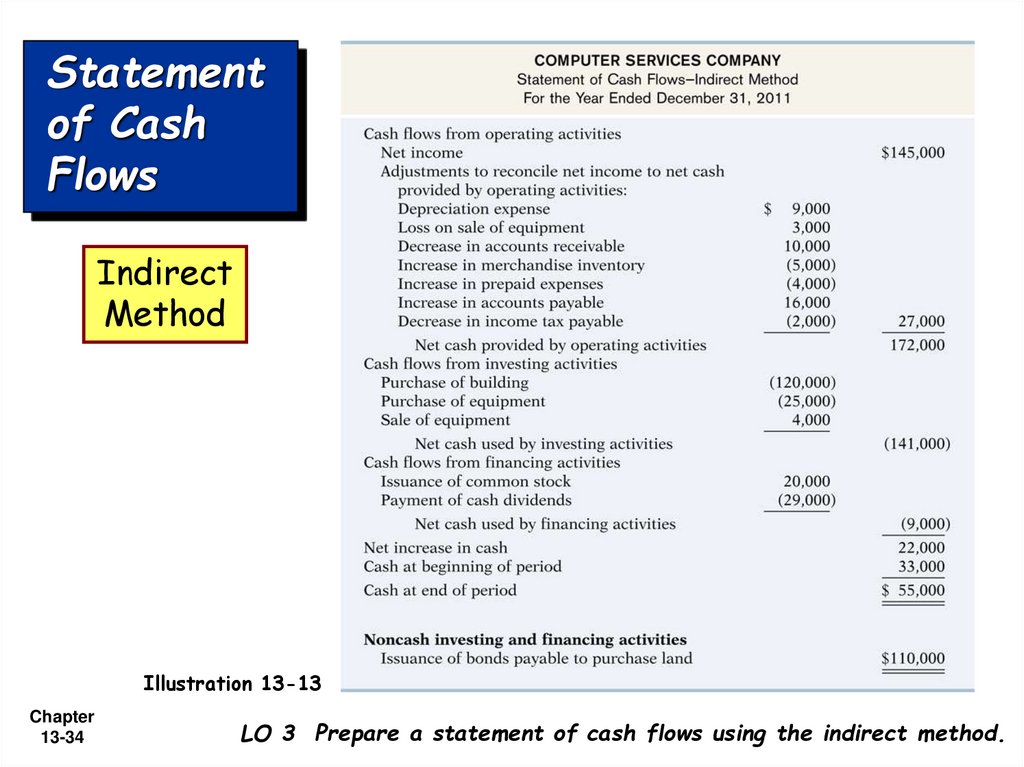
Financing
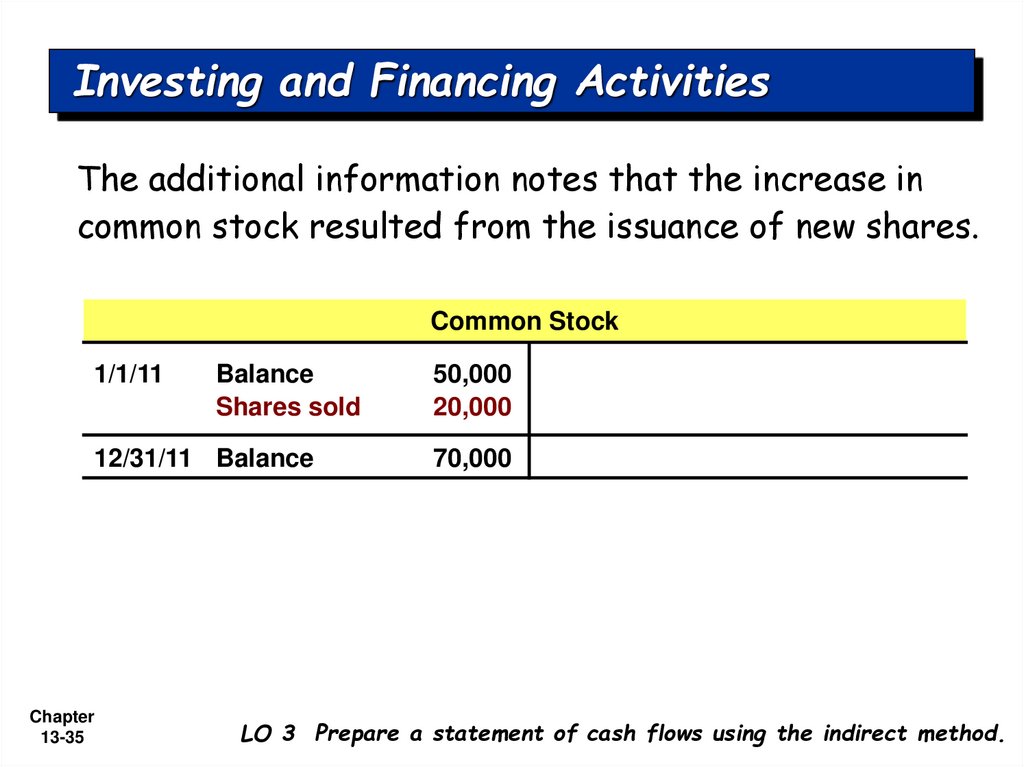
Activities
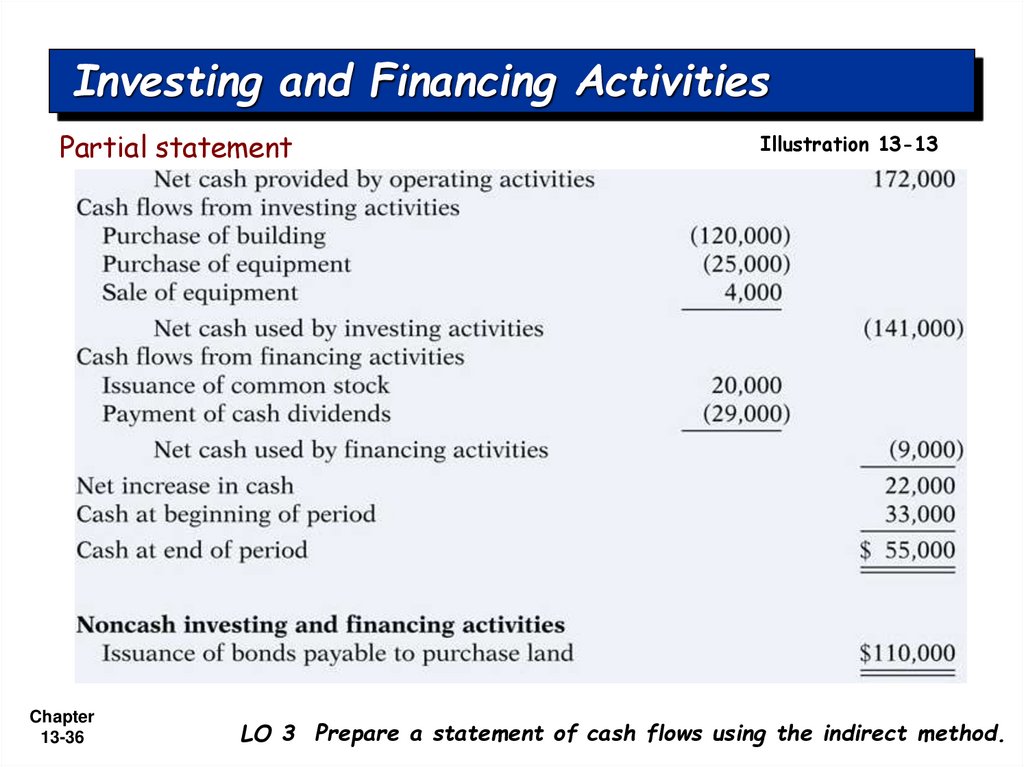
Generally
Long-Term
Liability
and
Stockholders’
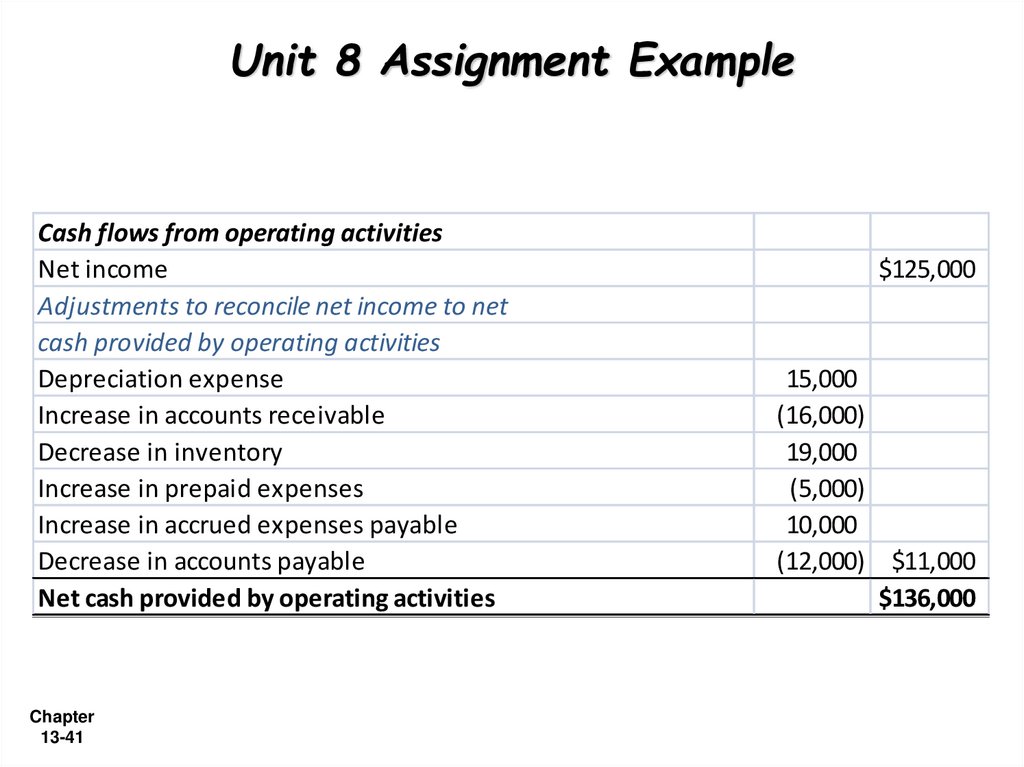
Equity .
LO 2 Distinguish among operating, investing, and financing activities.
5.
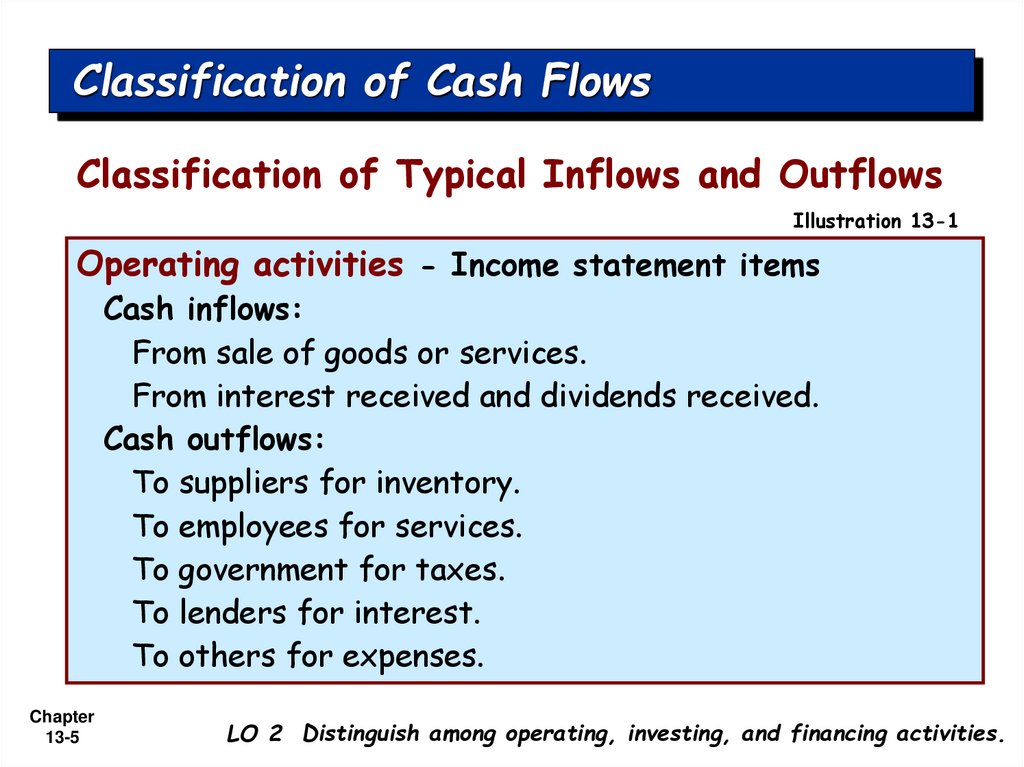
Classification of Cash FlowsClassification of Typical Inflows and Outflows
Illustration 13-1
Operating activities - Income statement items
Cash inflows:
From sale of goods or services.
From interest received and dividends received.
Cash outflows:
To suppliers for inventory.
To employees for services.
To government for taxes.
To lenders for interest.
To others for expenses.
Chapter
13-5
LO 2 Distinguish among operating, investing, and financing activities.
6.
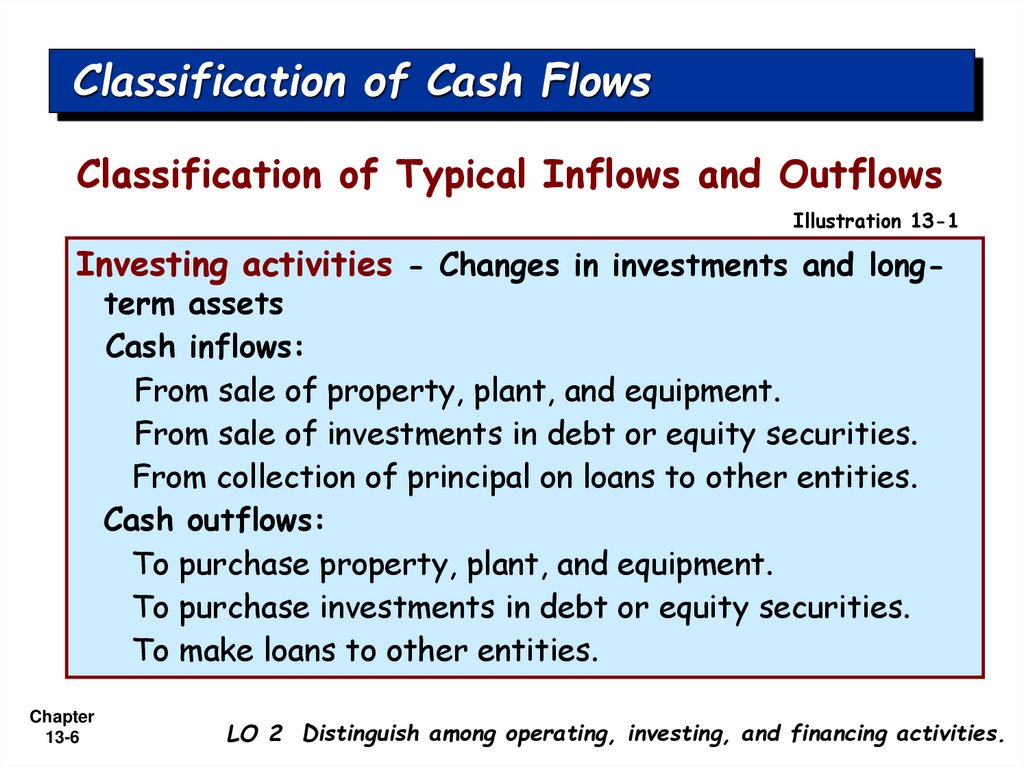
Classification of Cash FlowsClassification of Typical Inflows and Outflows
Illustration 13-1
Investing activities - Changes in investments and longterm assets
Cash inflows:
From sale of property, plant, and equipment.
From sale of investments in debt or equity securities.
From collection of principal on loans to other entities.
Cash outflows:
To purchase property, plant, and equipment.
To purchase investments in debt or equity securities.
To make loans to other entities.
Chapter
13-6
LO 2 Distinguish among operating, investing, and financing activities.
7.
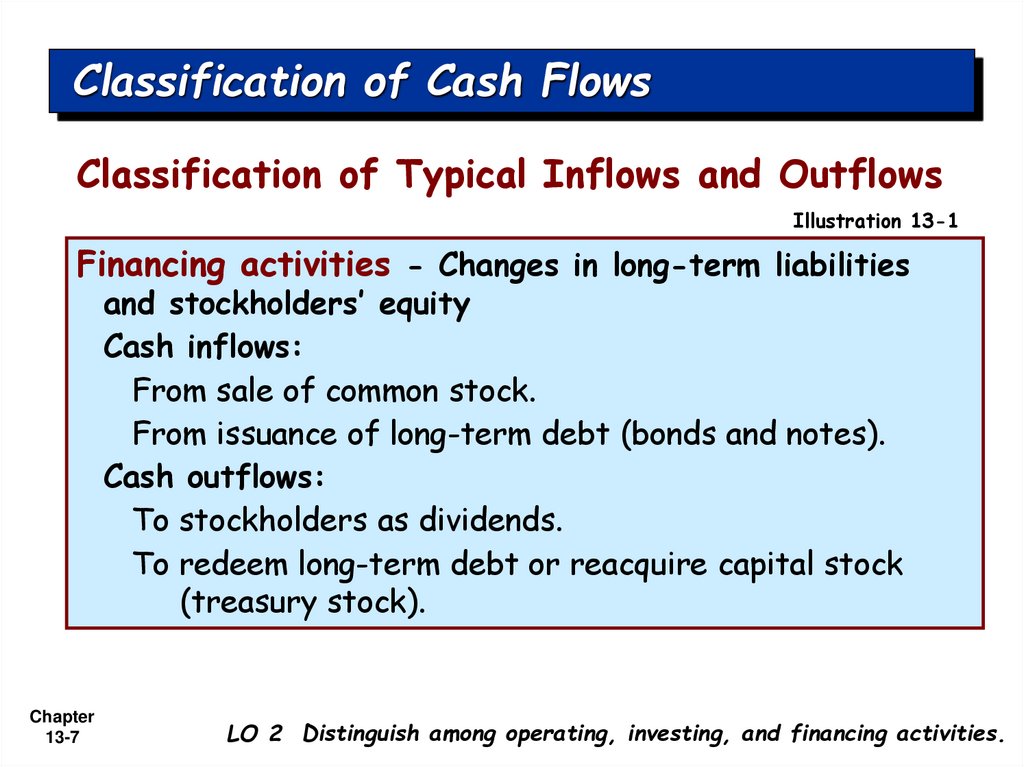
Classification of Cash FlowsClassification of Typical Inflows and Outflows
Illustration 13-1
Financing activities - Changes in long-term liabilities
and stockholders’ equity
Cash inflows:
From sale of common stock.
From issuance of long-term debt (bonds and notes).
Cash outflows:
To stockholders as dividends.
To redeem long-term debt or reacquire capital stock
(treasury stock).
Chapter
13-7
LO 2 Distinguish among operating, investing, and financing activities.
8.
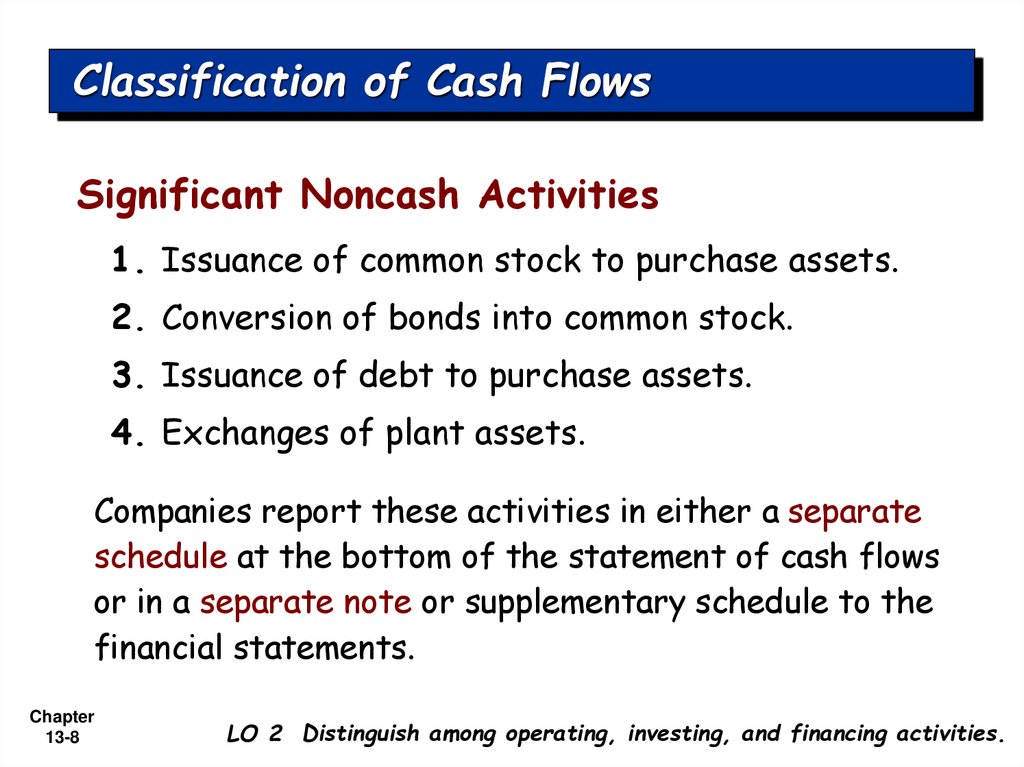
Classification of Cash FlowsSignificant Noncash Activities
1. Issuance of common stock to purchase assets.
2. Conversion of bonds into common stock.
3. Issuance of debt to purchase assets.
4. Exchanges of plant assets.
Companies report these activities in either a separate
schedule at the bottom of the statement of cash flows
or in a separate note or supplementary schedule to the
financial statements.
Chapter
13-8
LO 2 Distinguish among operating, investing, and financing activities.
9.
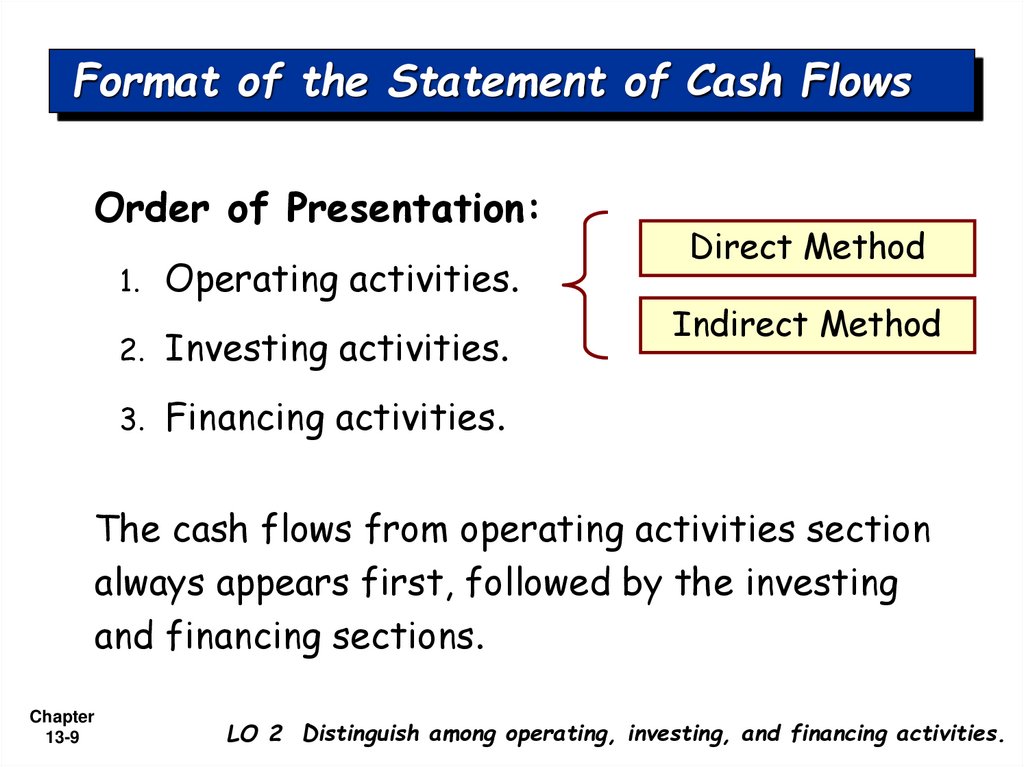
Format of the Statement of Cash FlowsOrder of Presentation:
1.
Operating activities.
2. Investing activities.
Direct Method
Indirect Method
3. Financing activities.
The cash flows from operating activities section
always appears first, followed by the investing
and financing sections.
Chapter
13-9
LO 2 Distinguish among operating, investing, and financing activities.
10.
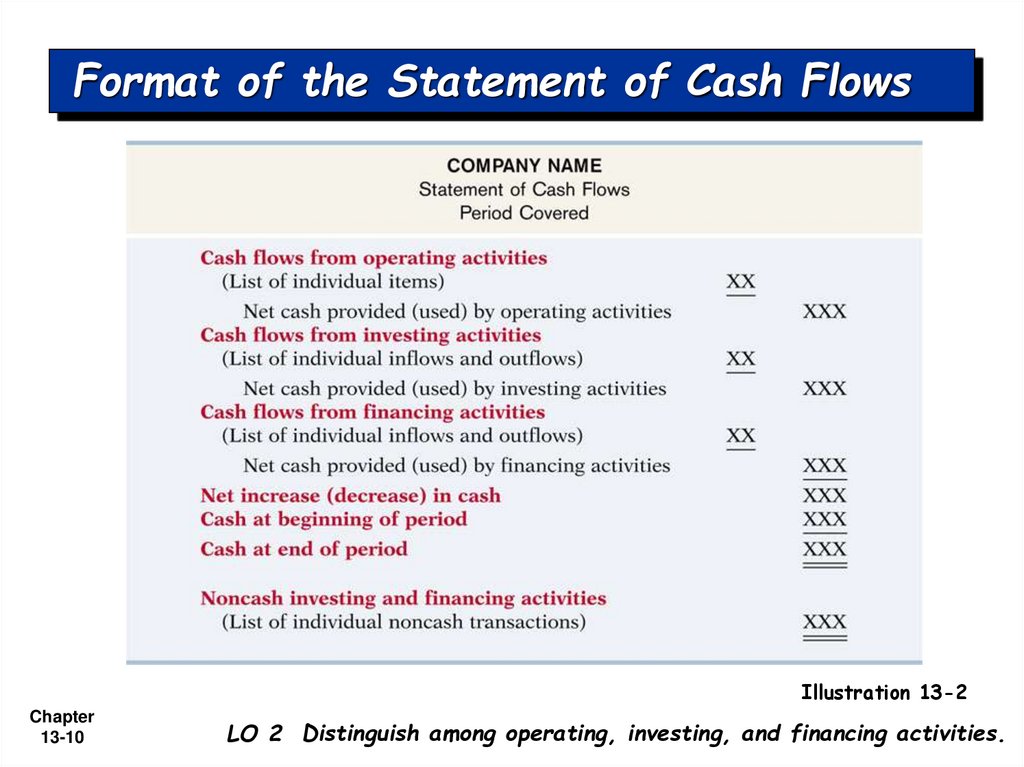
Format of the Statement of Cash FlowsIllustration 13-2
Chapter
13-10
LO 2 Distinguish among operating, investing, and financing activities.
11.
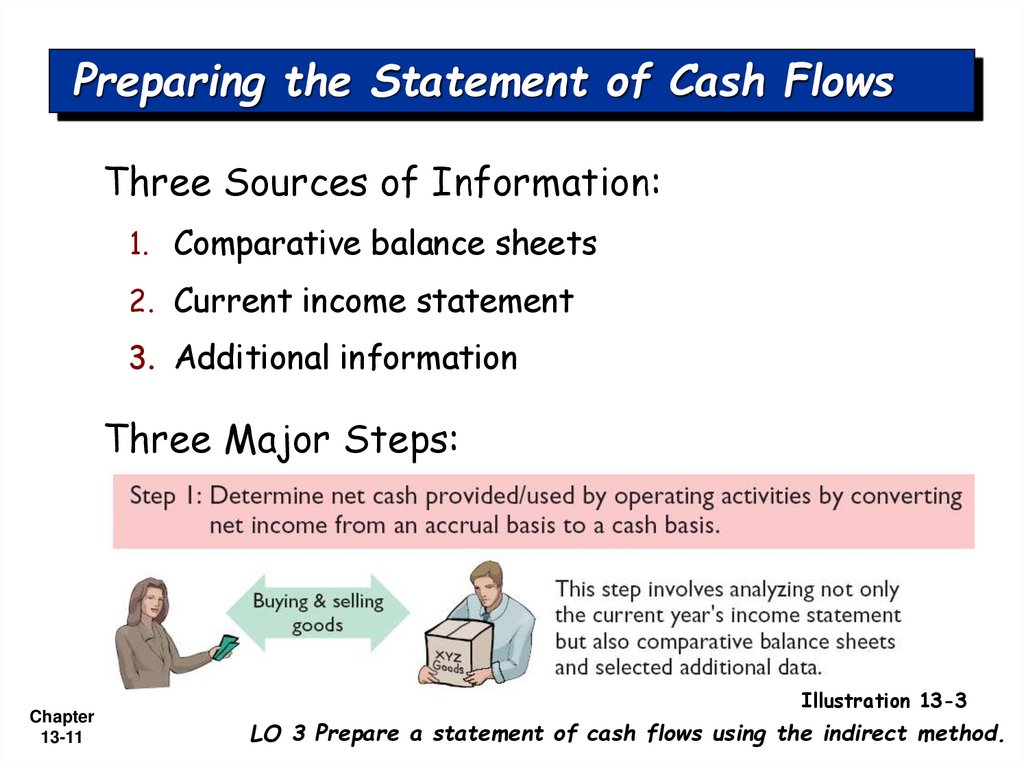
Preparing the Statement of Cash FlowsThree Sources of Information:
1. Comparative balance sheets
2. Current income statement
3. Additional information
Three Major Steps:
Chapter
13-11
Illustration 13-3
LO 3 Prepare a statement of cash flows using the indirect method.
12.
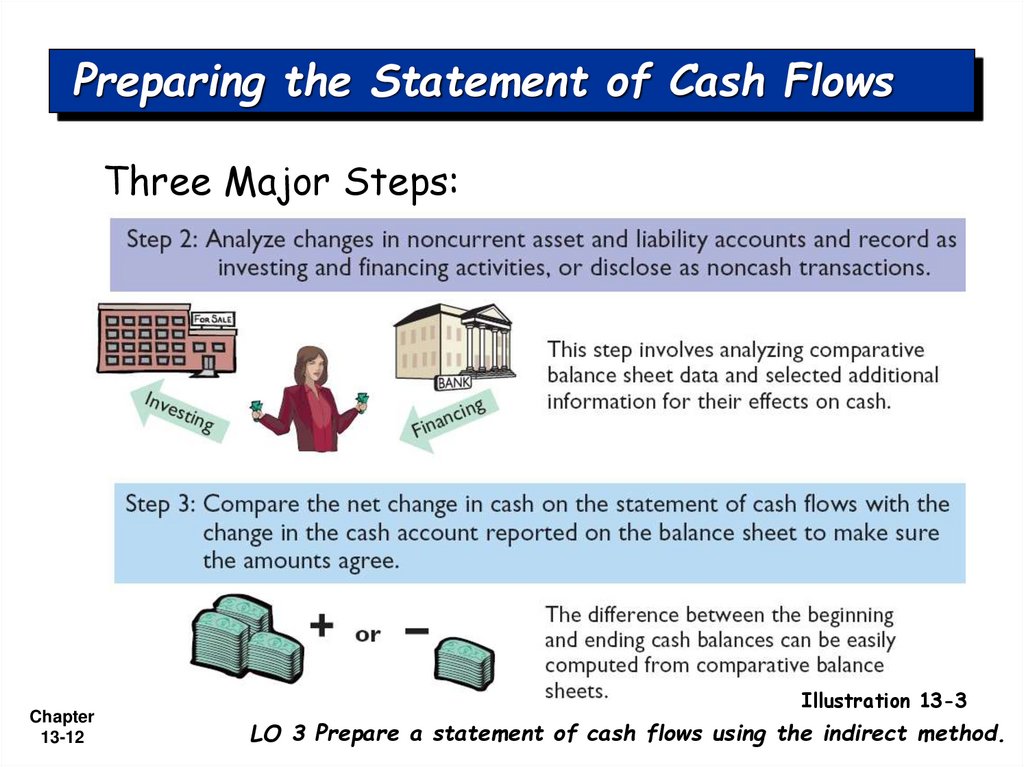
Preparing the Statement of Cash FlowsThree Major Steps:
Chapter
13-12
Illustration 13-3
LO 3 Prepare a statement of cash flows using the indirect method.
13.
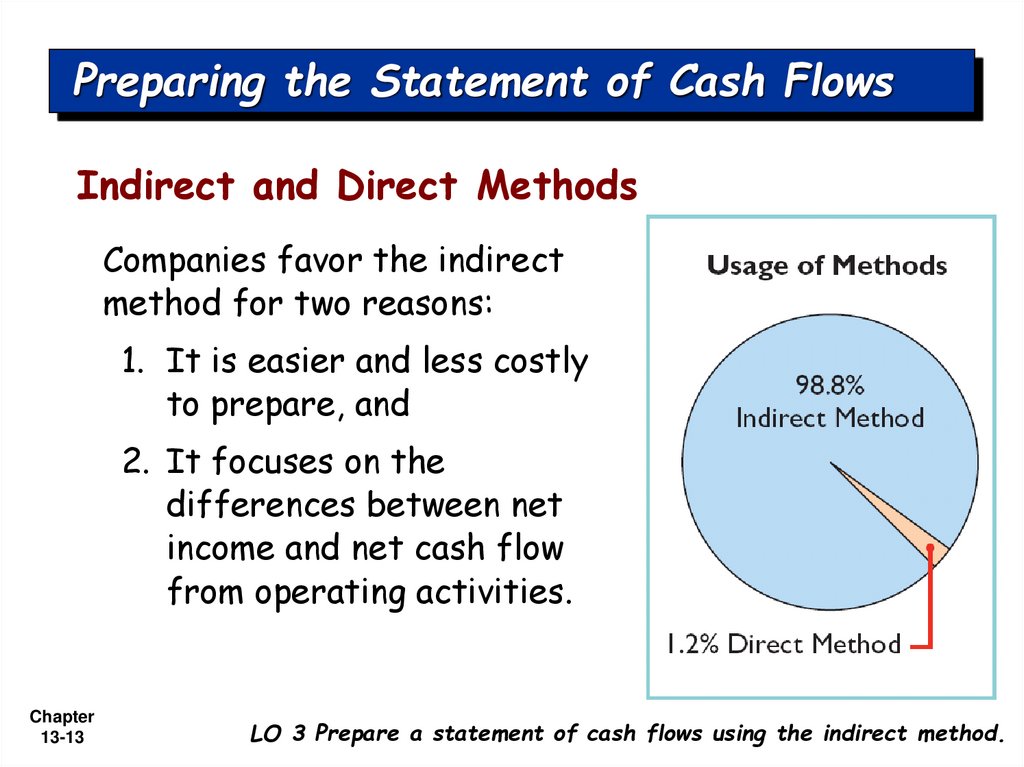
Preparing the Statement of Cash FlowsIndirect and Direct Methods
Companies favor the indirect
method for two reasons:
1. It is easier and less costly
to prepare, and
2. It focuses on the
differences between net
income and net cash flow
from operating activities.
Chapter
13-13
LO 3 Prepare a statement of cash flows using the indirect method.
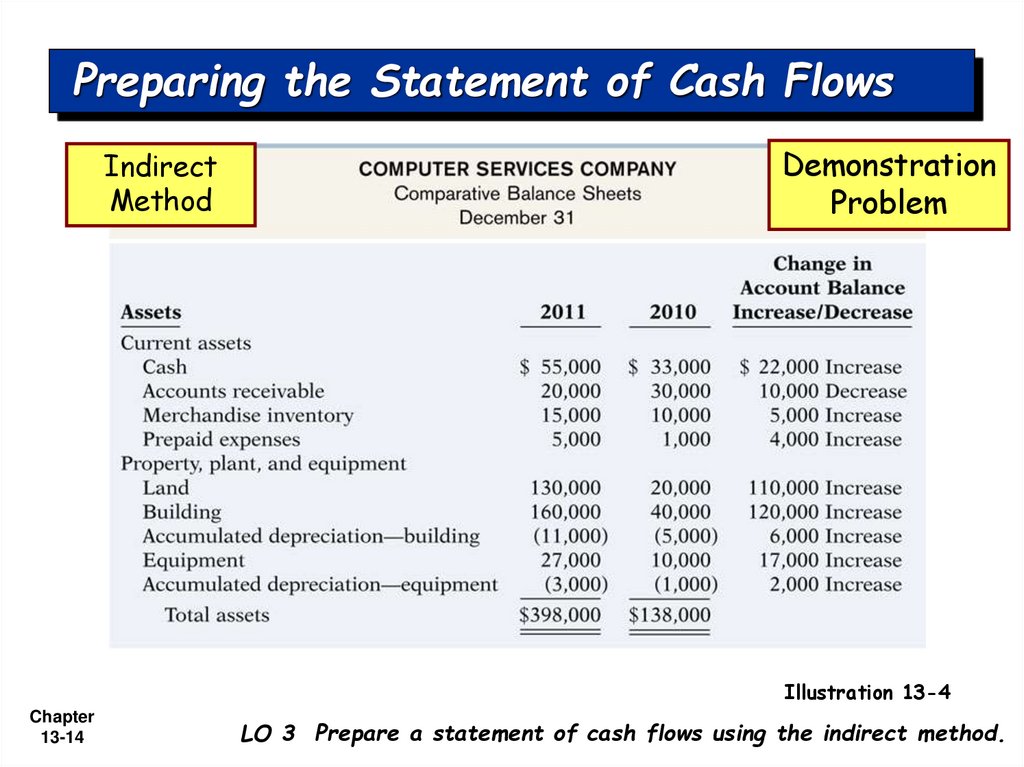
14.
Preparing the Statement of Cash FlowsIndirect
Method
Demonstration
Problem
Illustration 13-4
Chapter
13-14
LO 3 Prepare a statement of cash flows using the indirect method.
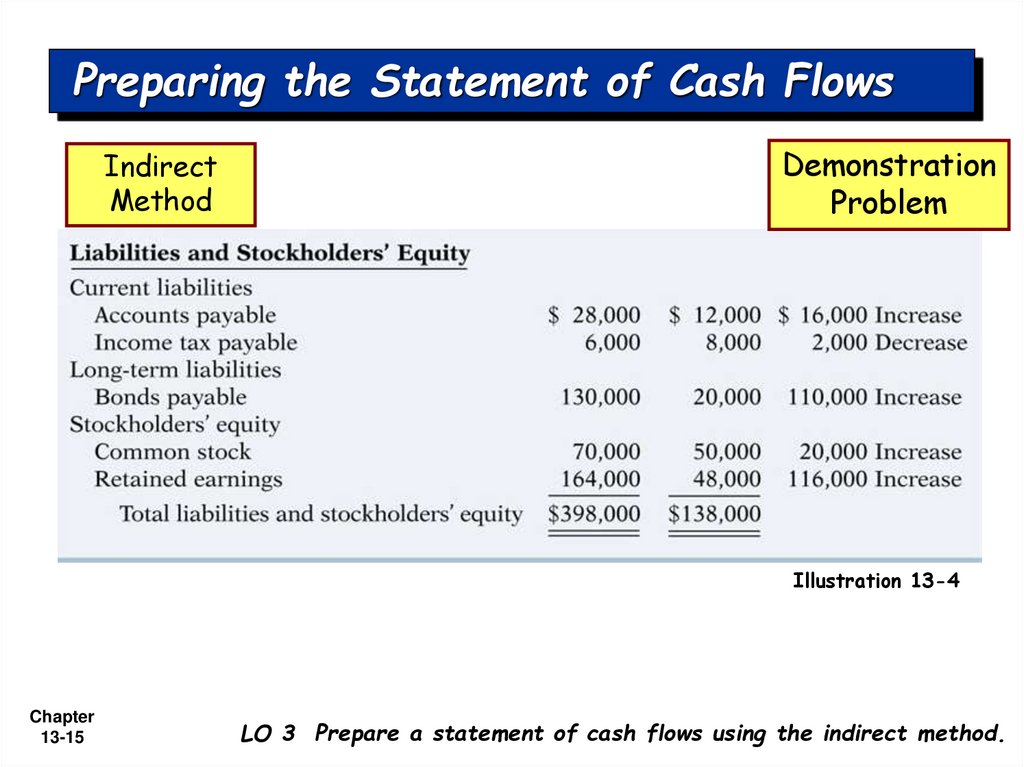
15.
Preparing the Statement of Cash FlowsIndirect
Method
Demonstration
Problem
Illustration 13-4
Chapter
13-15
LO 3 Prepare a statement of cash flows using the indirect method.
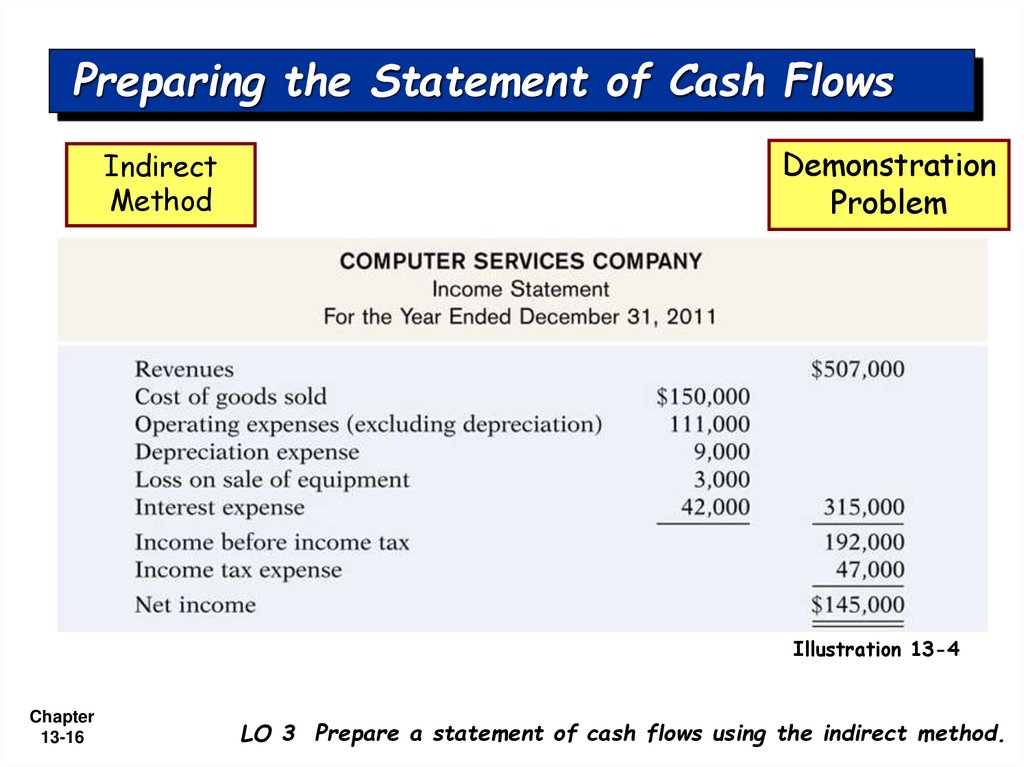
16.
Preparing the Statement of Cash FlowsIndirect
Method
Demonstration
Problem
Illustration 13-4
Chapter
13-16
LO 3 Prepare a statement of cash flows using the indirect method.
17.
Preparing the Statement of Cash FlowsIndirect
Method
Demonstration
Problem
Illustration 13-4
Chapter
13-17
LO 3 Prepare a statement of cash flows using the indirect method.
18.
Preparing the Statement of Cash Flows –Indirect Method
Step 1: Operating Activities
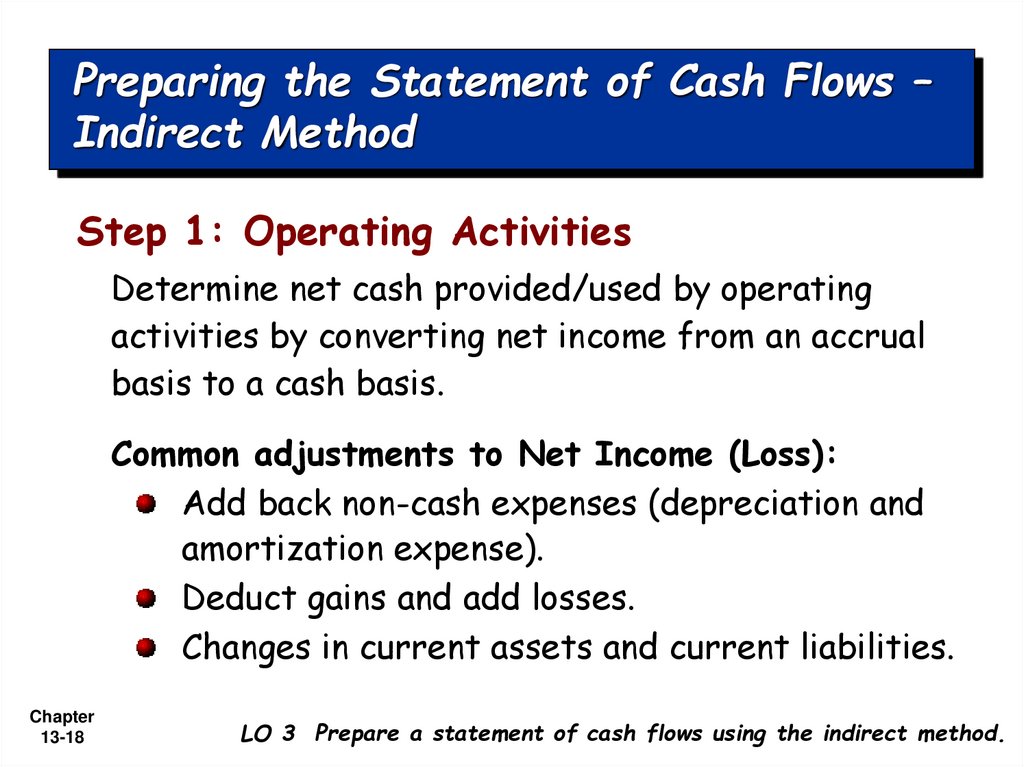
Determine net cash provided/used by operating
activities by converting net income from an accrual
basis to a cash basis.
Common adjustments to Net Income (Loss):
Add back non-cash expenses (depreciation and
amortization expense).
Deduct gains and add losses.
Changes in current assets and current liabilities.
Chapter
13-18
LO 3 Prepare a statement of cash flows using the indirect method.
19. Step 1: Operating Activities
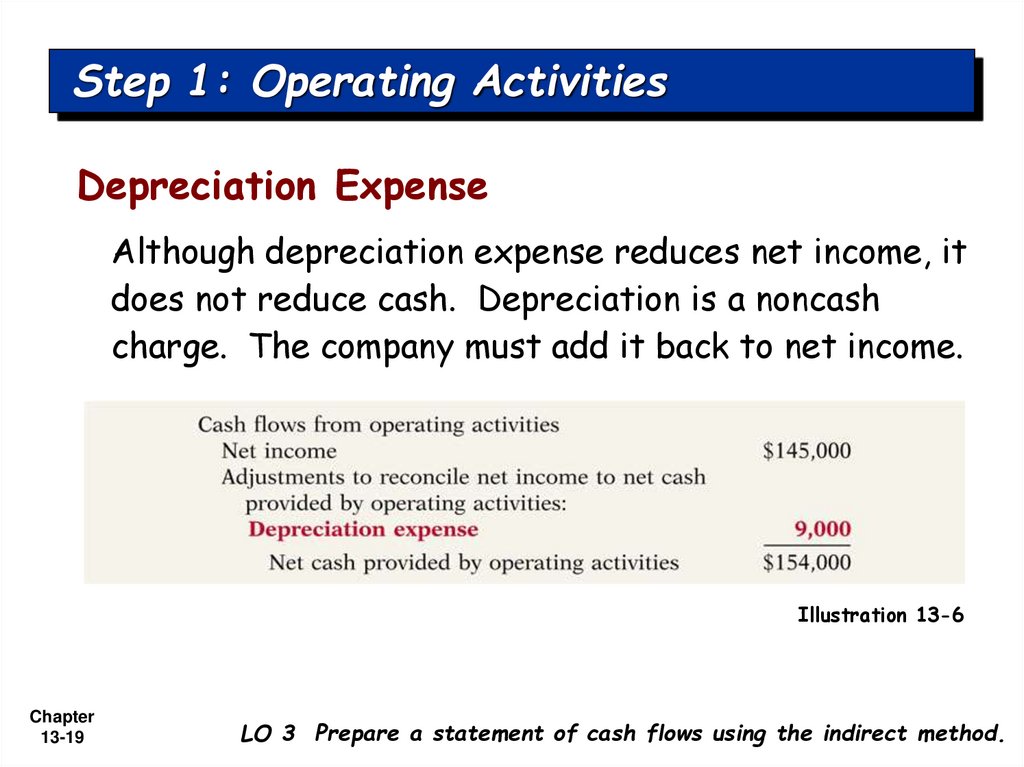
Depreciation ExpenseAlthough depreciation expense reduces net income, it
does not reduce cash. Depreciation is a noncash
charge. The company must add it back to net income.
Illustration 13-6
Chapter
13-19
LO 3 Prepare a statement of cash flows using the indirect method.
20. Operating Activities
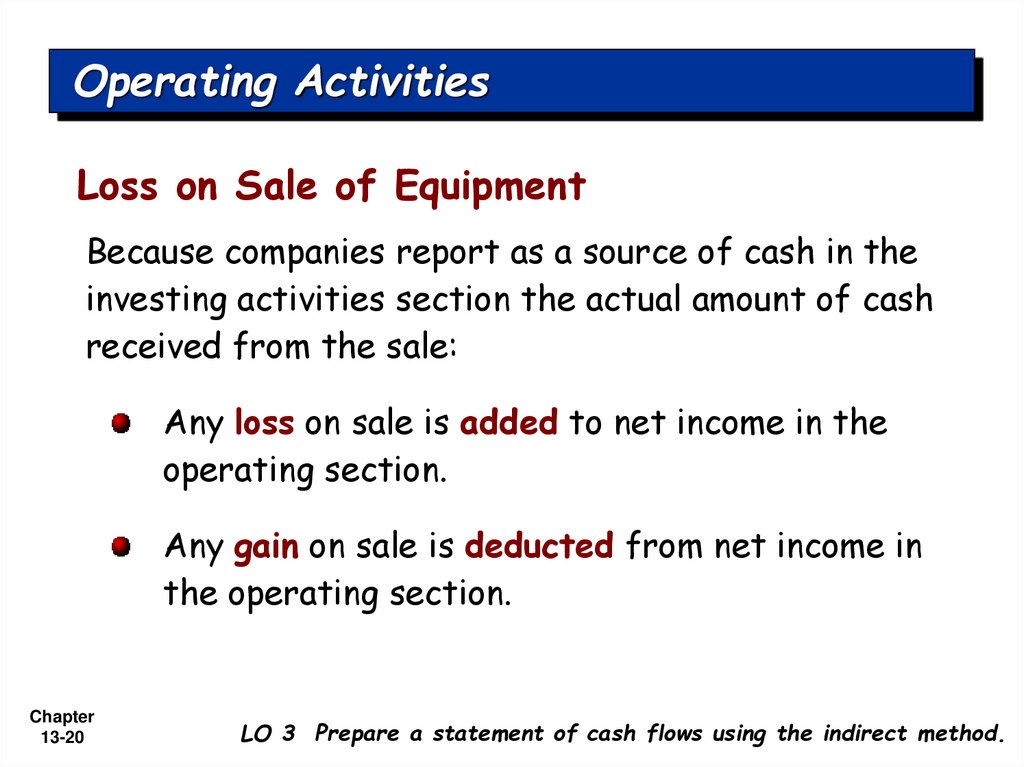
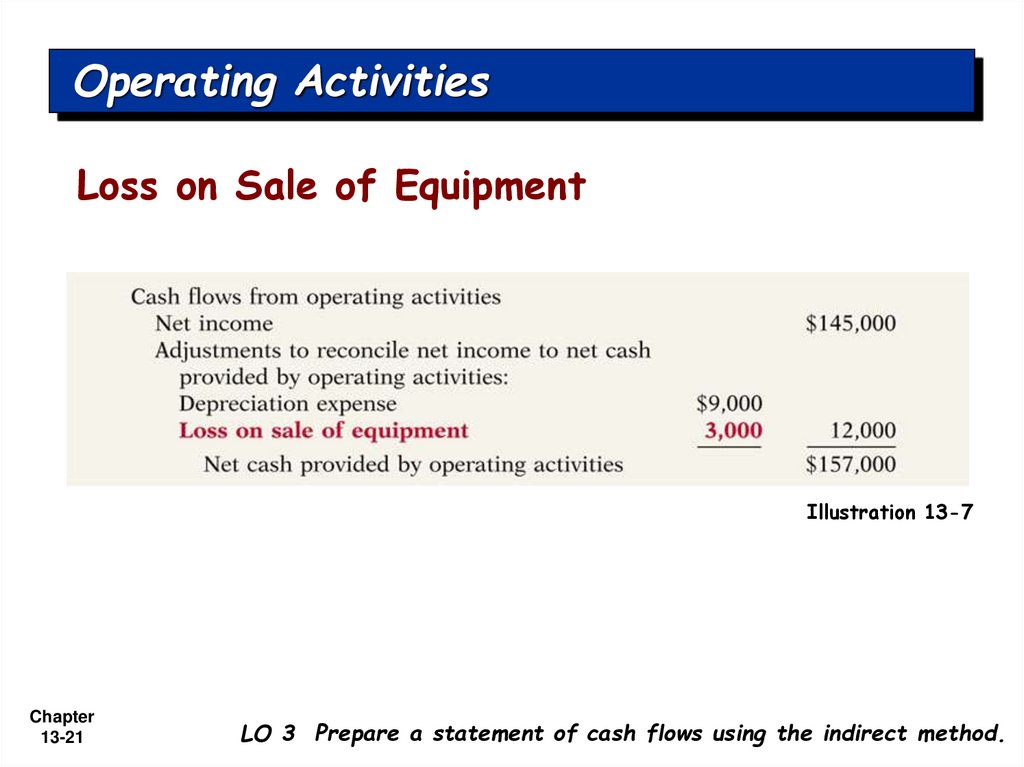
Loss on Sale of EquipmentBecause companies report as a source of cash in the
investing activities section the actual amount of cash
received from the sale:
Any loss on sale is added to net income in the
operating section.
Any gain on sale is deducted from net income in
the operating section.
Chapter
13-20
LO 3 Prepare a statement of cash flows using the indirect method.
21. Operating Activities
Loss on Sale of EquipmentIllustration 13-7
Chapter
13-21
LO 3 Prepare a statement of cash flows using the indirect method.
22. Operating Activities
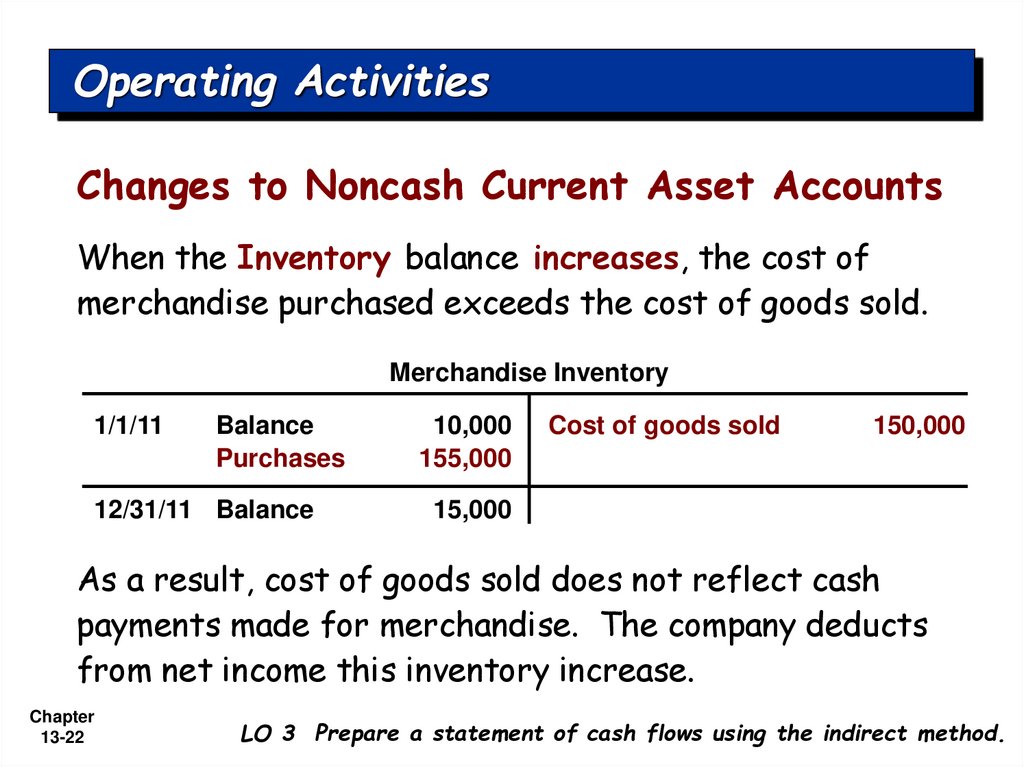
Changes to Noncash Current Asset AccountsWhen the Inventory balance increases, the cost of
merchandise purchased exceeds the cost of goods sold.
Merchandise Inventory
1/1/11
Balance
Purchases
12/31/11 Balance
10,000
155,000
Cost of goods sold
150,000
15,000
As a result, cost of goods sold does not reflect cash
payments made for merchandise. The company deducts
from net income this inventory increase.
Chapter
13-22
LO 3 Prepare a statement of cash flows using the indirect method.
23. Operating Activities
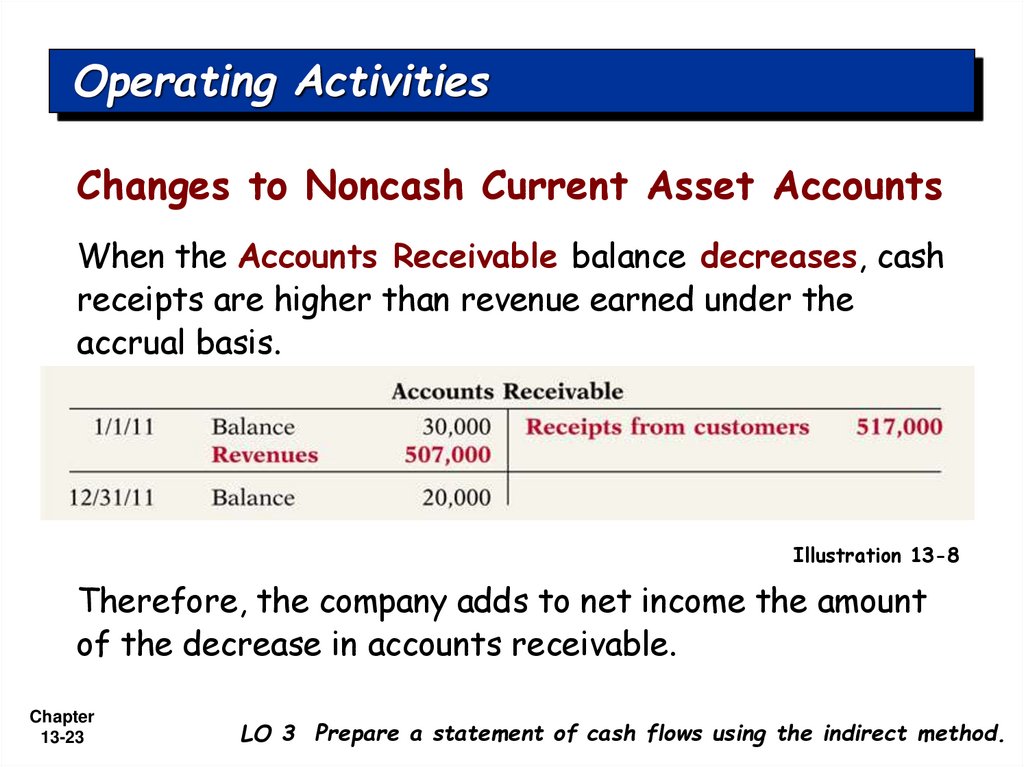
Changes to Noncash Current Asset AccountsWhen the Accounts Receivable balance decreases, cash
receipts are higher than revenue earned under the
accrual basis.
Illustration 13-8
Therefore, the company adds to net income the amount
of the decrease in accounts receivable.
Chapter
13-23
LO 3 Prepare a statement of cash flows using the indirect method.
24. Operating Activities
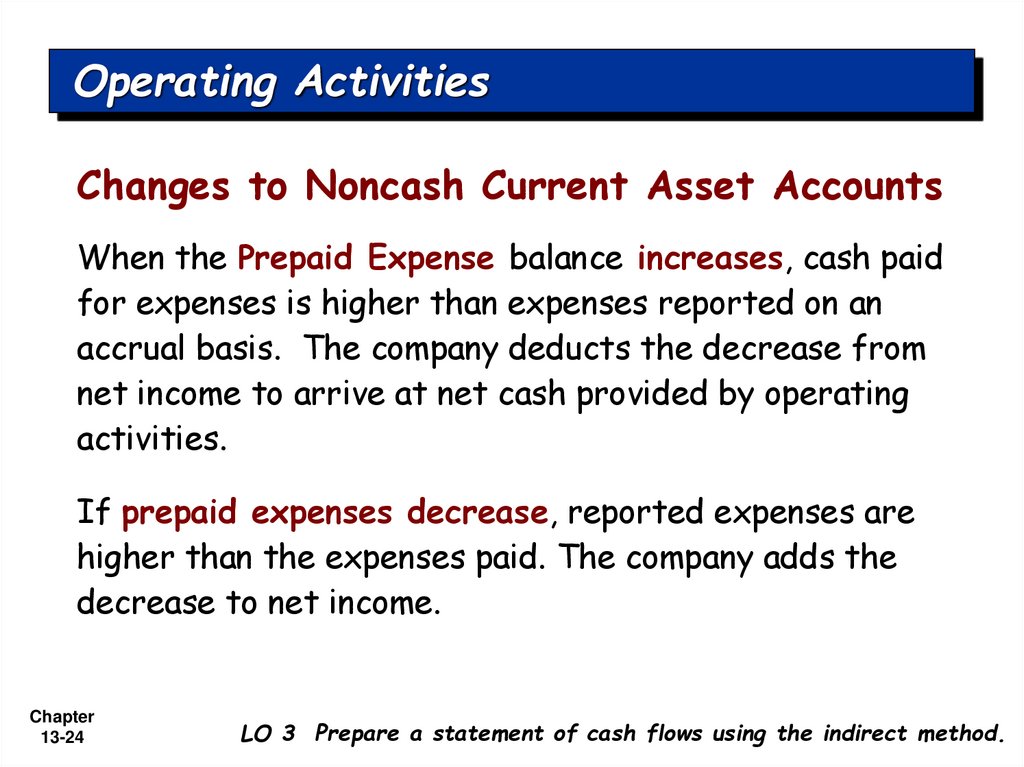
Changes to Noncash Current Asset AccountsWhen the Prepaid Expense balance increases, cash paid
for expenses is higher than expenses reported on an
accrual basis. The company deducts the decrease from
net income to arrive at net cash provided by operating
activities.
If prepaid expenses decrease, reported expenses are
higher than the expenses paid. The company adds the
decrease to net income.
Chapter
13-24
LO 3 Prepare a statement of cash flows using the indirect method.
25. Operating Activities
Changes to Noncash Current Asset AccountsIllustration 13-9
Chapter
13-25
LO 3 Prepare a statement of cash flows using the indirect method.
26. Operating Activities
Changes to Noncash Current Liability AccountsWhen Accounts Payable increases, this means the
company received more in goods than it actually paid for.
The increase is added to net income to determine net
cash provided by operating activities.
When Income Tax Payable decreases, this means the
income tax expense reported on the income statement
was less than the amount of taxes paid during the period.
The decrease is subtracted from net income to
determine net cash provided by operating activities.
Chapter
13-26
LO 3 Prepare a statement of cash flows using the indirect method.
27. Operating Activities
Changes to Noncash Current Liability AccountsIllustration 13-10
Chapter
13-27
LO 3 Prepare a statement of cash flows using the indirect method.
28. Operating Activities
Summary of Conversion to NetCash Provided by Operating
Activities—Indirect Method
Illustration 13-11
Chapter
13-28
LO 3 Prepare a statement of cash flows using the indirect method.
29. Step 2: Investing and Financing Activities
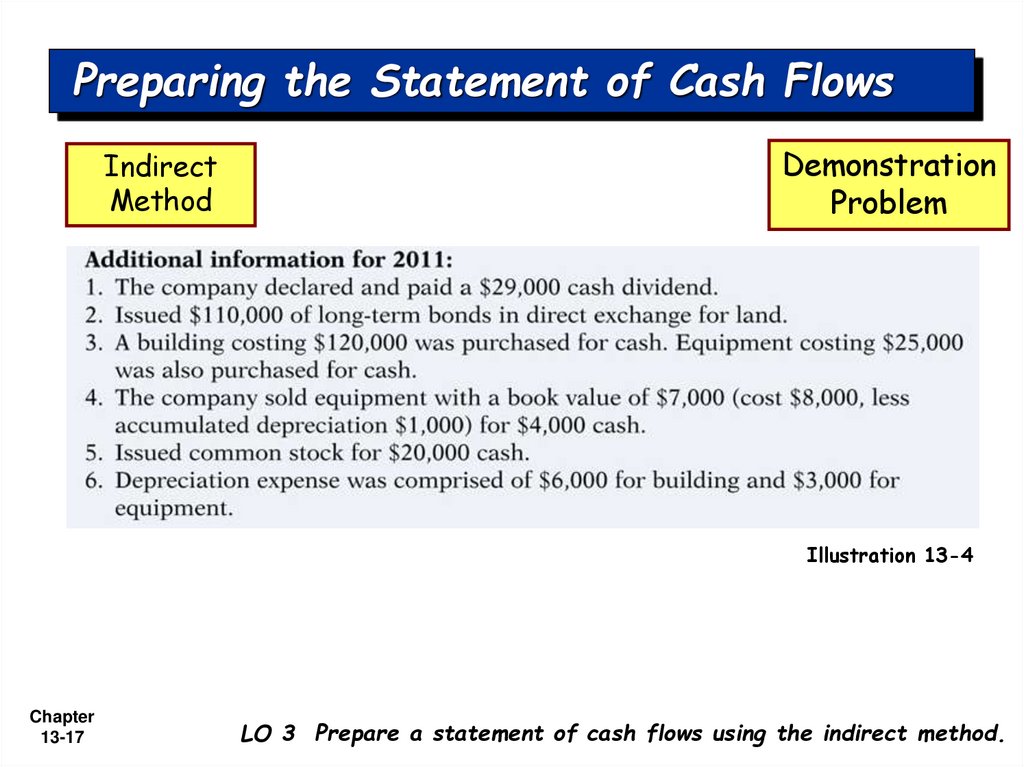
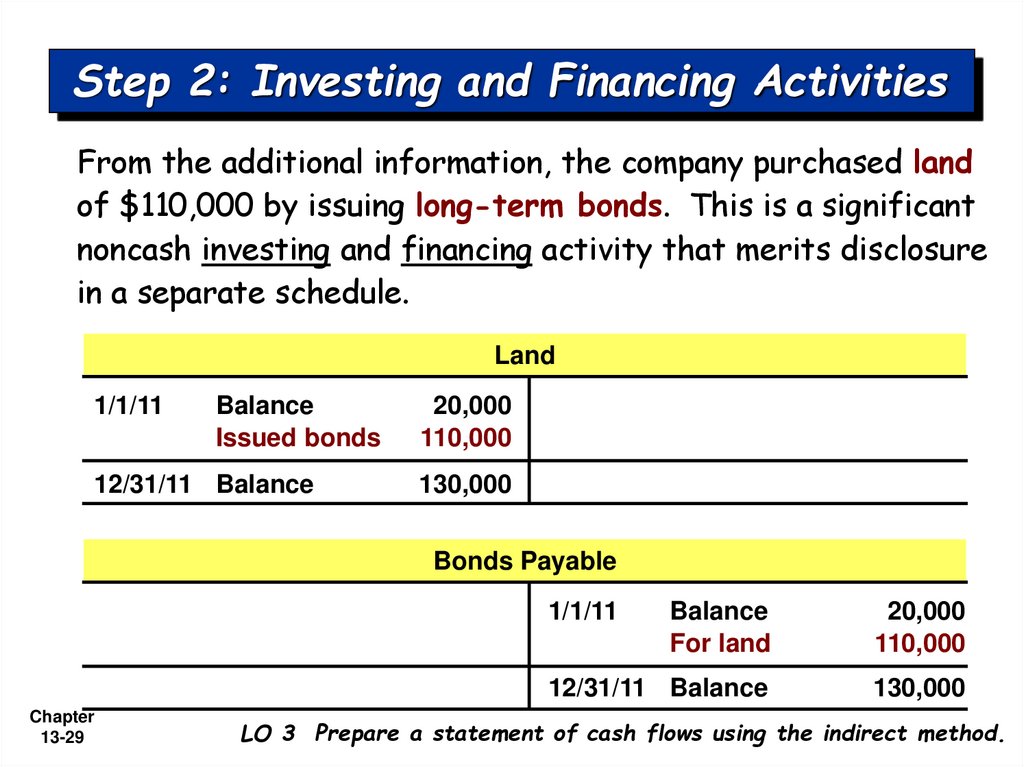
From the additional information, the company purchased landof $110,000 by issuing long-term bonds. This is a significant
noncash investing and financing activity that merits disclosure
in a separate schedule.
Land
1/1/11
Balance
Issued bonds
12/31/11 Balance
20,000
110,000
130,000
Bonds Payable
1/1/11
Chapter
13-29
Balance
For land
20,000
110,000
12/31/11 Balance
130,000
LO 3 Prepare a statement of cash flows using the indirect method.
30. Investing and Financing Activities
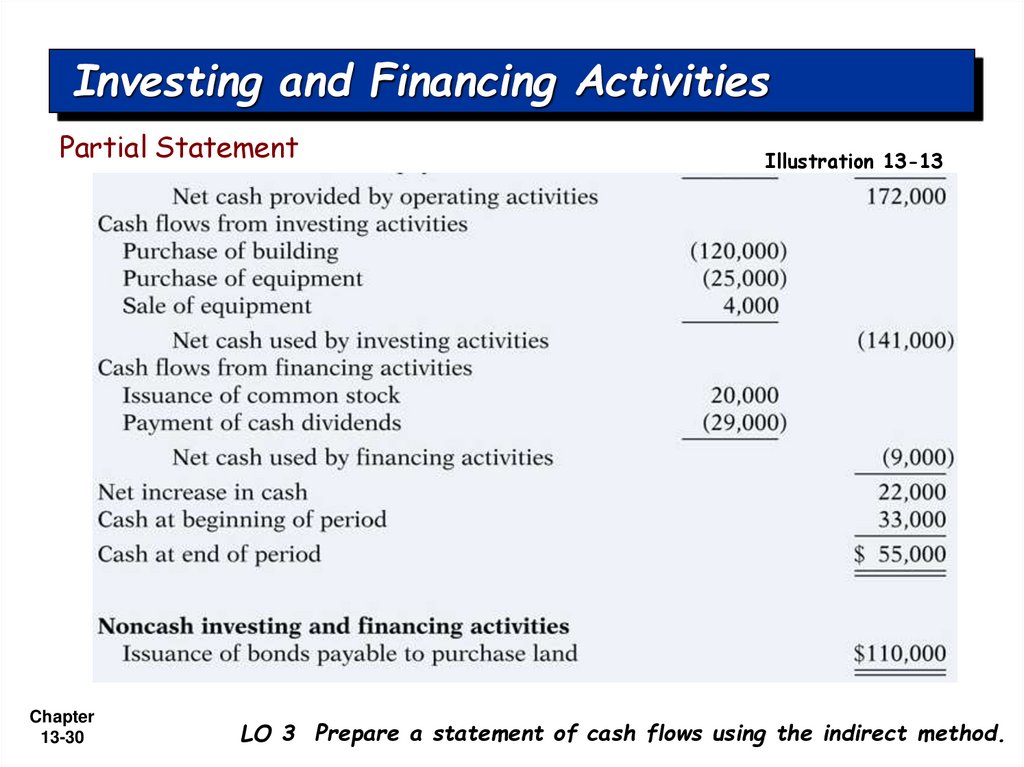
Partial StatementChapter
13-30
Illustration 13-13
LO 3 Prepare a statement of cash flows using the indirect method.
31. Investing and Financing Activities
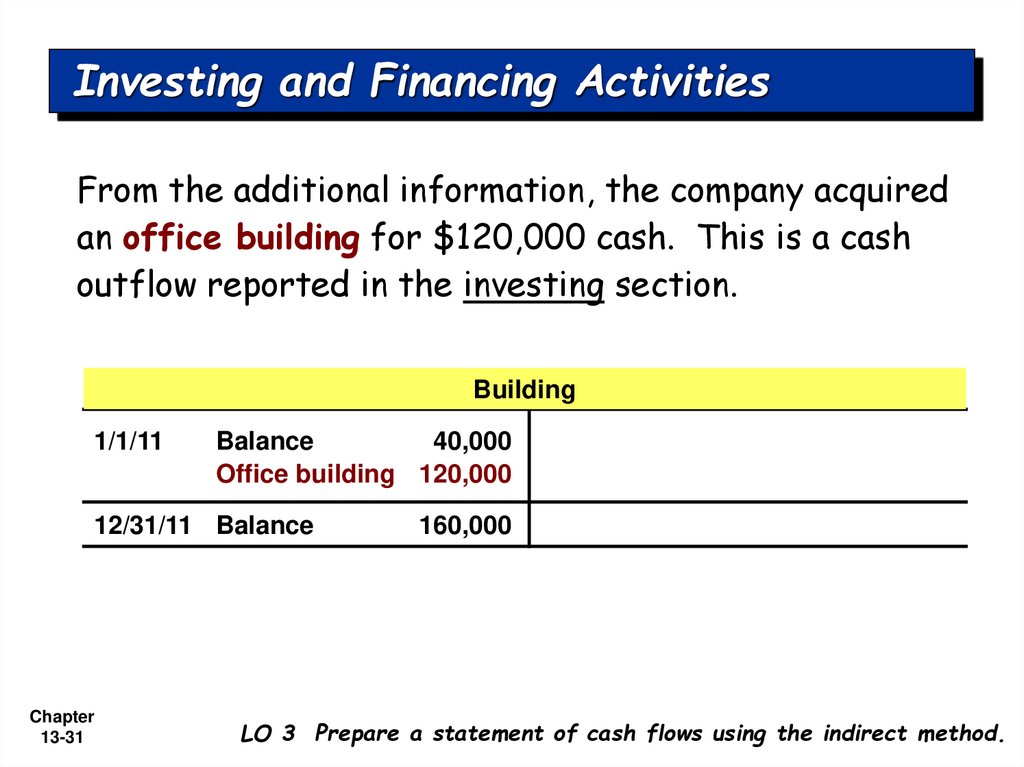
From the additional information, the company acquiredan office building for $120,000 cash. This is a cash
outflow reported in the investing section.
Building
1/1/11
Balance
40,000
Office building 120,000
12/31/11 Balance
Chapter
13-31
160,000
LO 3 Prepare a statement of cash flows using the indirect method.
32. Investing and Financing Activities
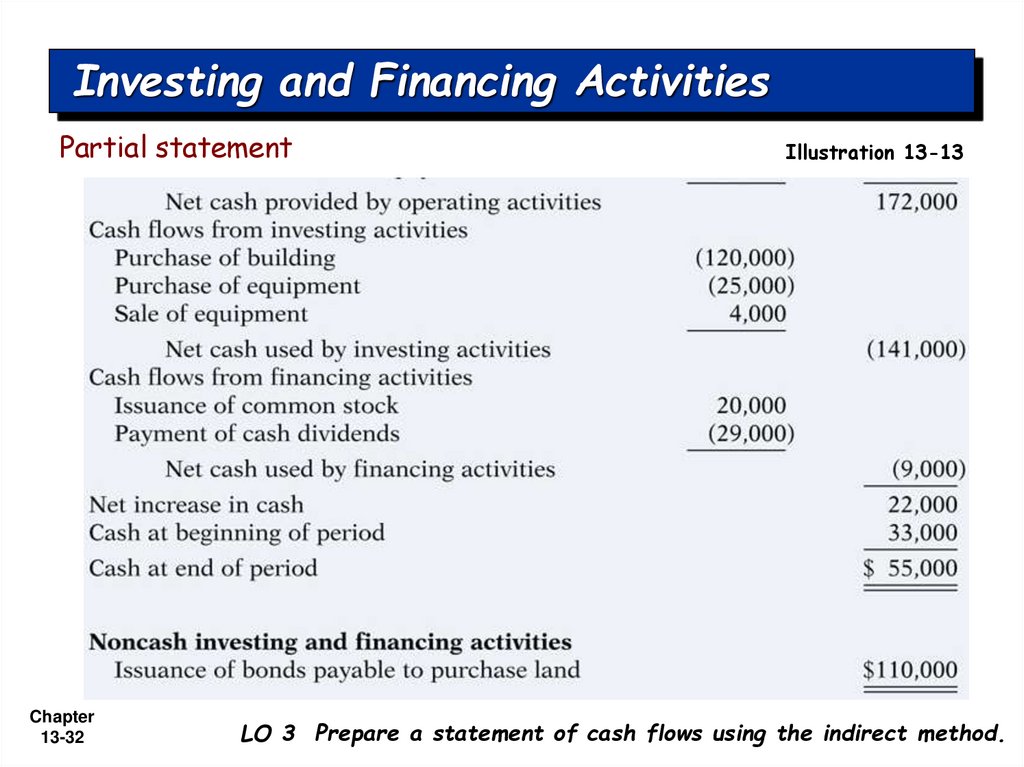
Partial statementChapter
13-32
Illustration 13-13
LO 3 Prepare a statement of cash flows using the indirect method.
33. Investing and Financing Activities
The additional information explains that the equipmentincrease resulted from two transactions: (1) a purchase of
equipment of $25,000, and (2) the sale for $4,000 of
equipment costing $8,000.
Journal
Entry
Chapter
13-33
Cash
Accumulated depreciation
Loss on sale of equipment
Equipment
4,000
1,000
3,000
8,000
LO 3 Prepare a statement of cash flows using the indirect method.
34. Statement of Cash Flows
IndirectMethod
Illustration 13-13
Chapter
13-34
LO 3 Prepare a statement of cash flows using the indirect method.
35. Investing and Financing Activities
The additional information notes that the increase incommon stock resulted from the issuance of new shares.
Common Stock
1/1/11
Balance
Shares sold
12/31/11 Balance
Chapter
13-35
50,000
20,000
70,000
LO 3 Prepare a statement of cash flows using the indirect method.
36. Investing and Financing Activities
Partial statementChapter
13-36
Illustration 13-13
LO 3 Prepare a statement of cash flows using the indirect method.
37. Investing and Financing Activities
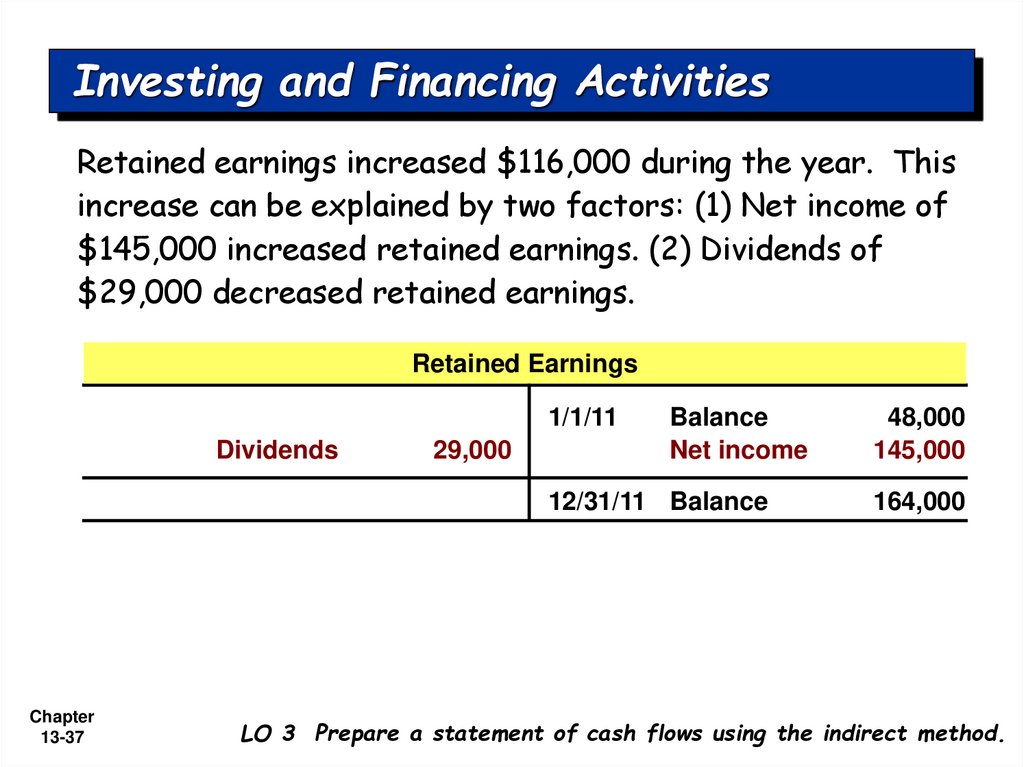
Retained earnings increased $116,000 during the year. Thisincrease can be explained by two factors: (1) Net income of
$145,000 increased retained earnings. (2) Dividends of
$29,000 decreased retained earnings.
Retained Earnings
1/1/11
Dividends
29,000
Balance
Net income
12/31/11 Balance
Chapter
13-37
48,000
145,000
164,000
LO 3 Prepare a statement of cash flows using the indirect method.
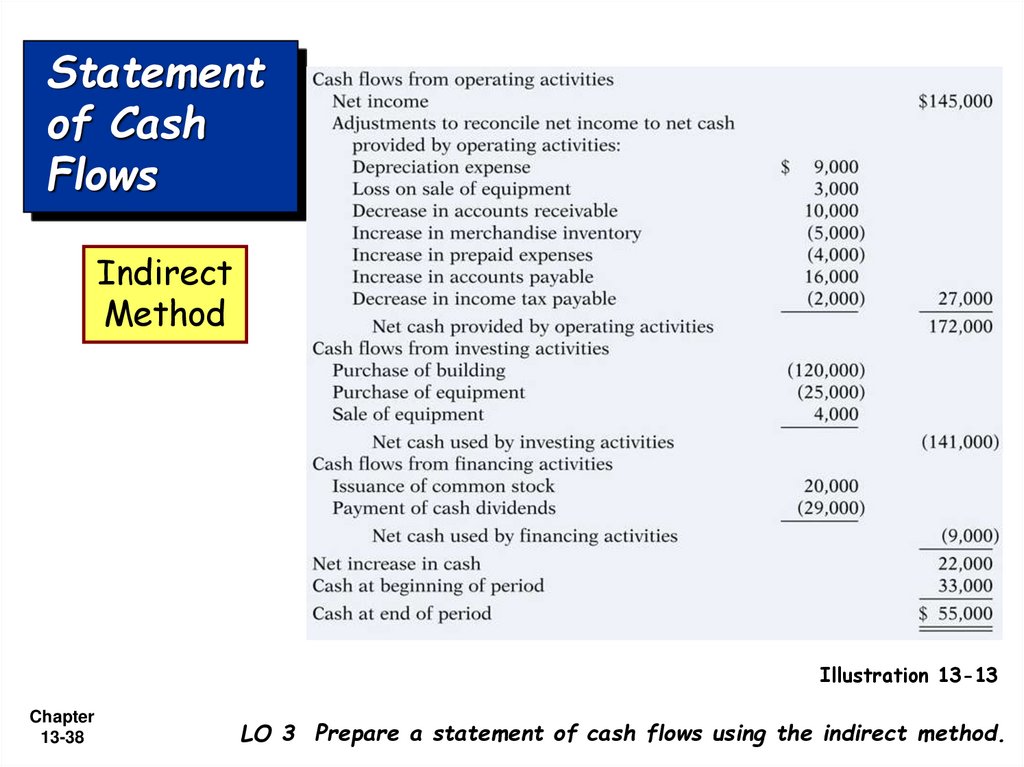
38. Statement of Cash Flows
IndirectMethod
Illustration 13-13
Chapter
13-38
LO 3 Prepare a statement of cash flows using the indirect method.
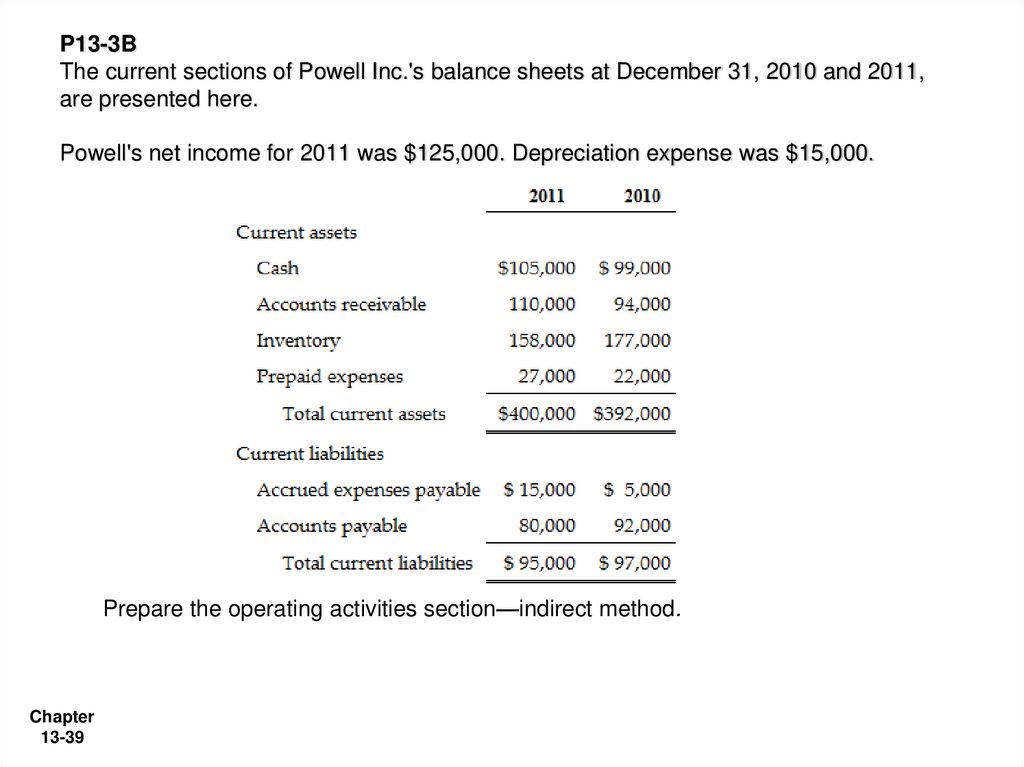
39. P13-3B The current sections of Powell Inc.'s balance sheets at December 31, 2010 and 2011, are presented here. Powell's net
P13-3BThe current sections of Powell Inc.'s balance sheets at December 31, 2010 and 2011,
are presented here.
Powell's net income for 2011 was $125,000. Depreciation expense was $15,000.
Prepare the operating activities section—indirect method.
Chapter
13-39
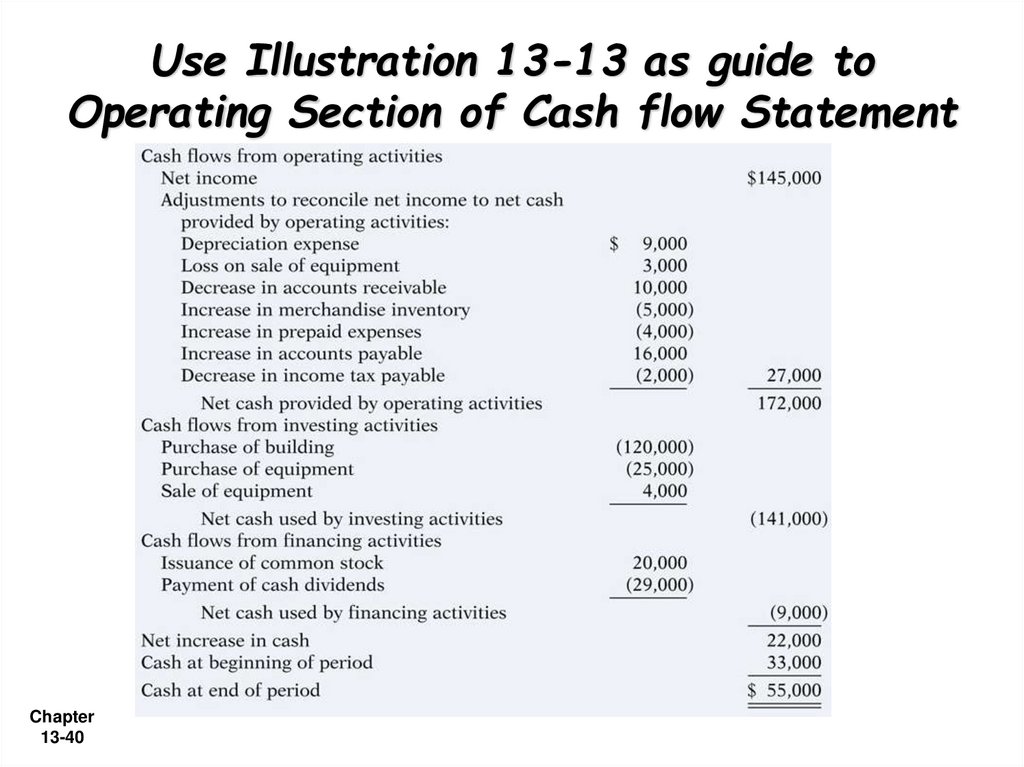
40. Use Illustration 13-13 as guide to Operating Section of Cash flow Statement
Chapter13-40
41. Unit 8 Assignment Example
Cash flows from operating activitiesNet income
Adjustments to reconcile net income to net
cash provided by operating activities
Depreciation expense
Increase in accounts receivable
Decrease in inventory
Increase in prepaid expenses
Increase in accrued expenses payable
Decrease in accounts payable
Net cash provided by operating activities
Chapter
13-41
$125,000
15,000
(16,000)
19,000
(5,000)
10,000
(12,000) $11,000
$136,000
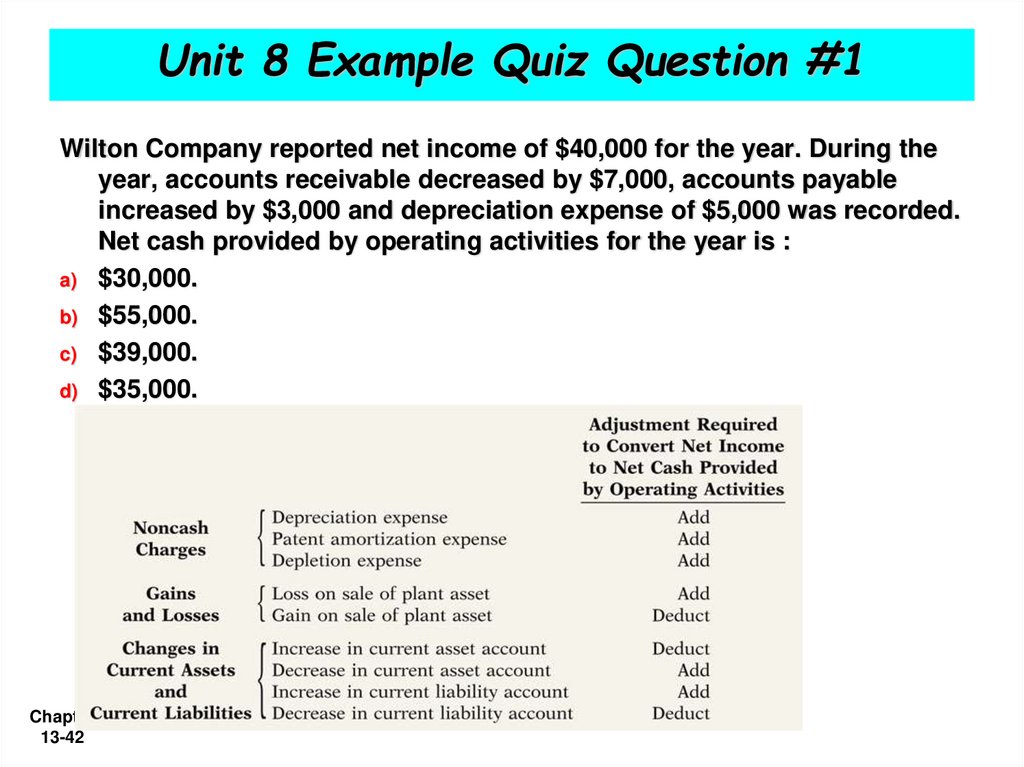
42. Unit 8 Example Quiz Question #1
Wilton Company reported net income of $40,000 for the year. During theyear, accounts receivable decreased by $7,000, accounts payable
increased by $3,000 and depreciation expense of $5,000 was recorded.
Net cash provided by operating activities for the year is :
a) $30,000.
b) $55,000.
c) $39,000.
d) $35,000.
Chapter
13-42
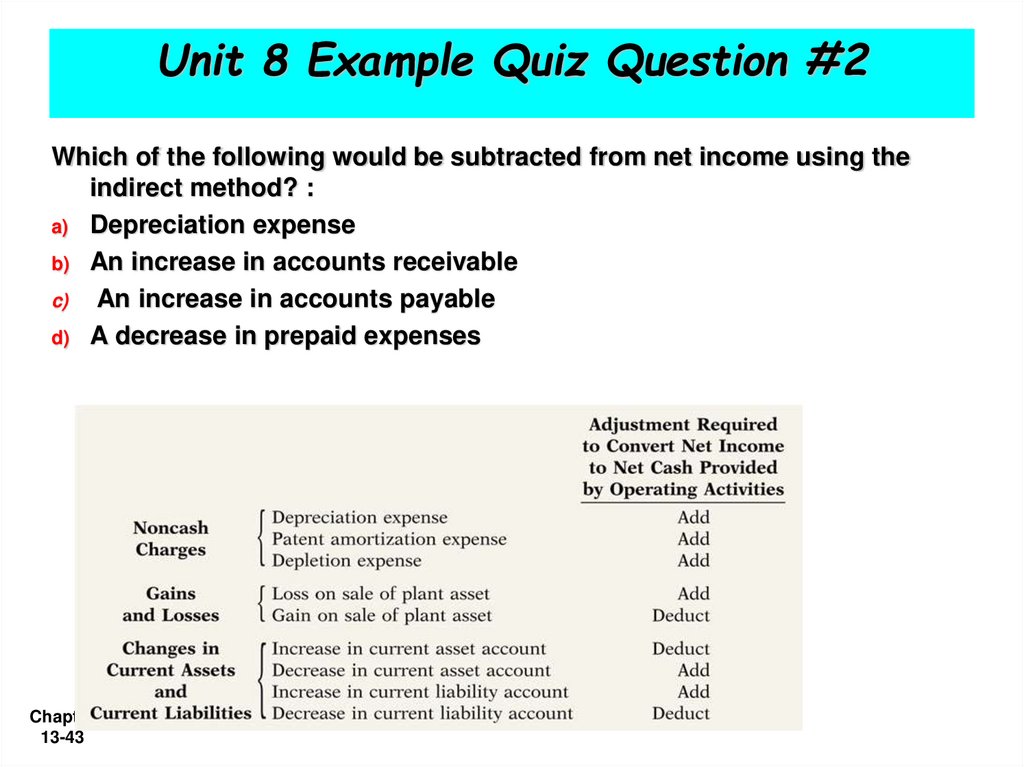
43. Unit 8 Example Quiz Question #2
Which of the following would be subtracted from net income using theindirect method? :
a) Depreciation expense
b) An increase in accounts receivable
c) An increase in accounts payable
d) A decrease in prepaid expenses
Chapter
13-43