 industry
Similar presentations:







Comparison of different types of aircraft tail units
1. Comparison of different types of aircraft tail units
2. Objective and Tasks:
• Objective – To study andexperimentally compare different
types of aircraft tail units
• Tasks:
• 1.Study of information on types of
empennage
• 2.Construction of experimental
models for flight testing
• 3.Data analysis
• 4.Conclusion
3. Introduction
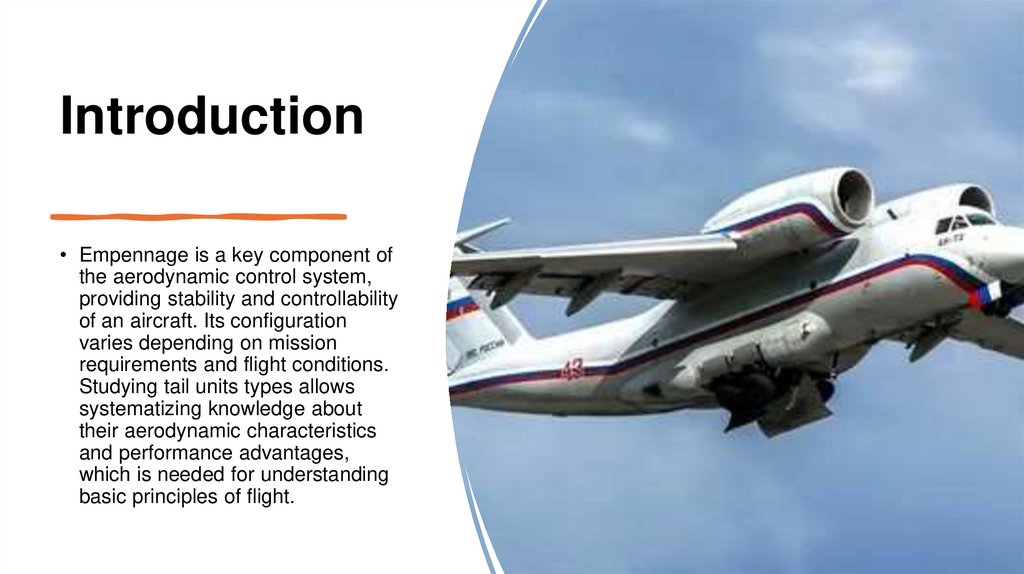
• Empennage is a key component ofthe aerodynamic control system,
providing stability and controllability
of an aircraft. Its configuration
varies depending on mission
requirements and flight conditions.
Studying tail units types allows
systematizing knowledge about
their aerodynamic characteristics
and performance advantages,
which is needed for understanding
basic principles of flight.
4. Main Components of the Empennage
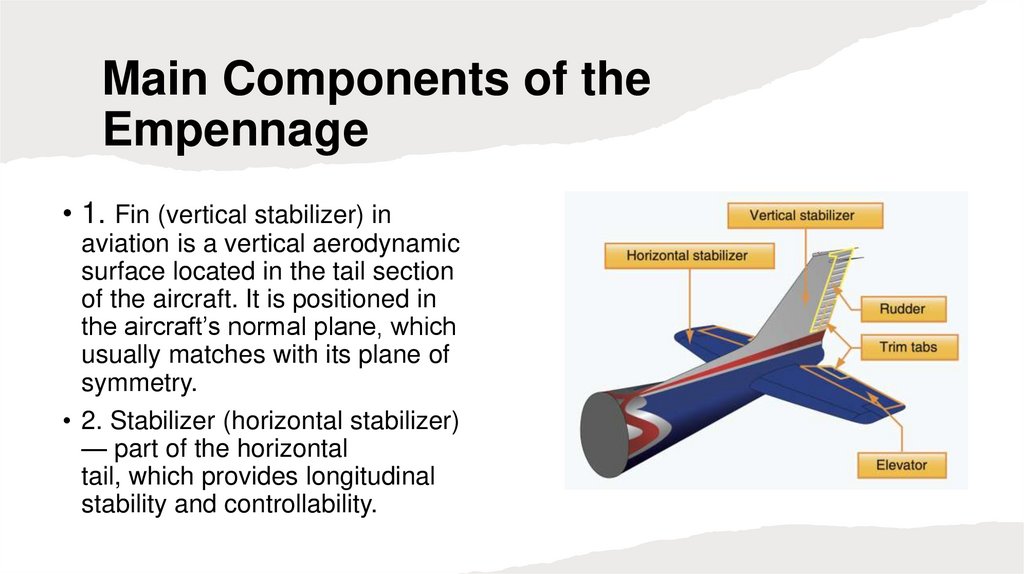
• 1. Fin (vertical stabilizer) inaviation is a vertical aerodynamic
surface located in the tail section
of the aircraft. It is positioned in
the aircraft’s normal plane, which
usually matches with its plane of
symmetry.
• 2. Stabilizer (horizontal stabilizer)
— part of the horizontal
tail, which provides longitudinal
stability and controllability.
5. Types of Empennage
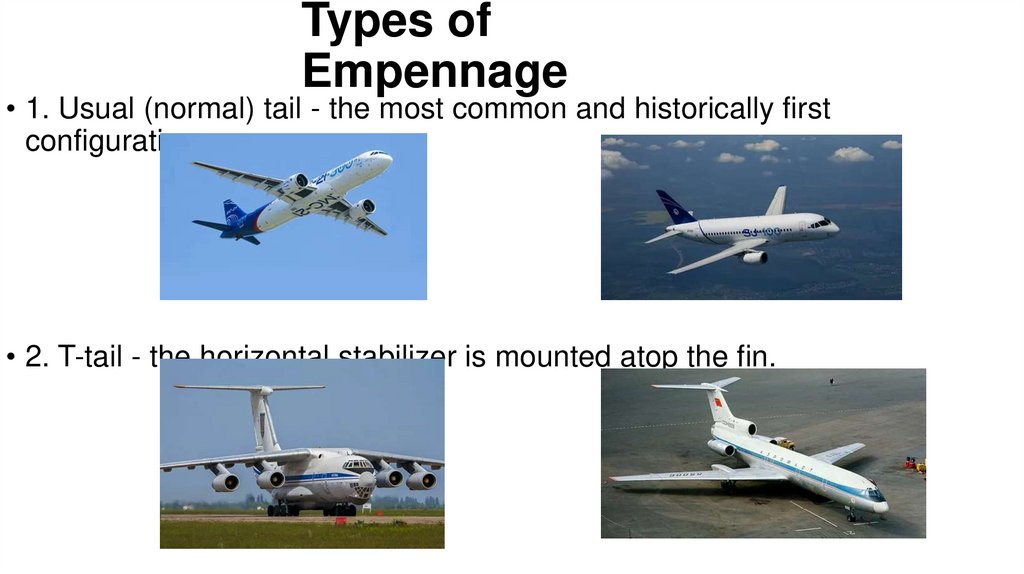
• 1. Usual (normal) tail - the most common and historically firstconfiguration.
• 2. T-tail - the horizontal stabilizer is mounted atop the fin.
6.
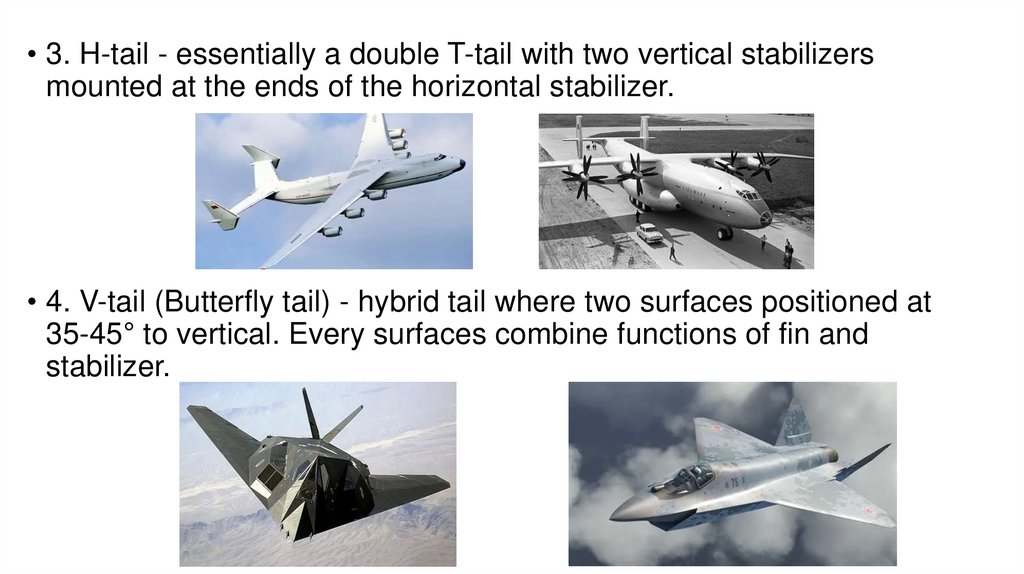
• 3. H-tail - essentially a double T-tail with two vertical stabilizersmounted at the ends of the horizontal stabilizer.
• 4. V-tail (Butterfly tail) - hybrid tail where two surfaces positioned at
35-45° to vertical. Every surfaces combine functions of fin and
stabilizer.
7.
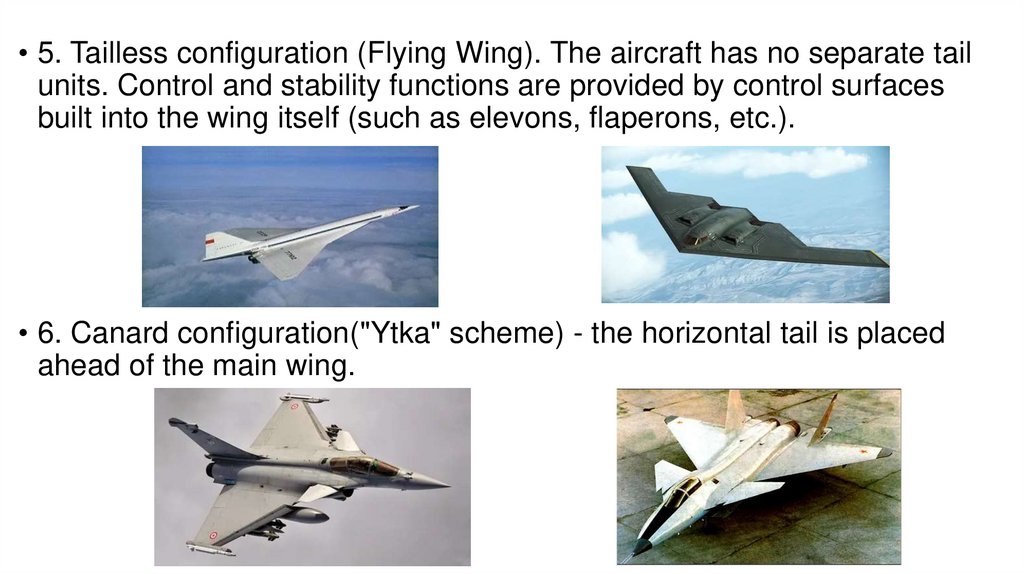
• 5. Tailless configuration (Flying Wing). The aircraft has no separate tailunits. Control and stability functions are provided by control surfaces
built into the wing itself (such as elevons, flaperons, etc.).
• 6. Canard configuration("Ytka" scheme) - the horizontal tail is placed
ahead of the main wing.
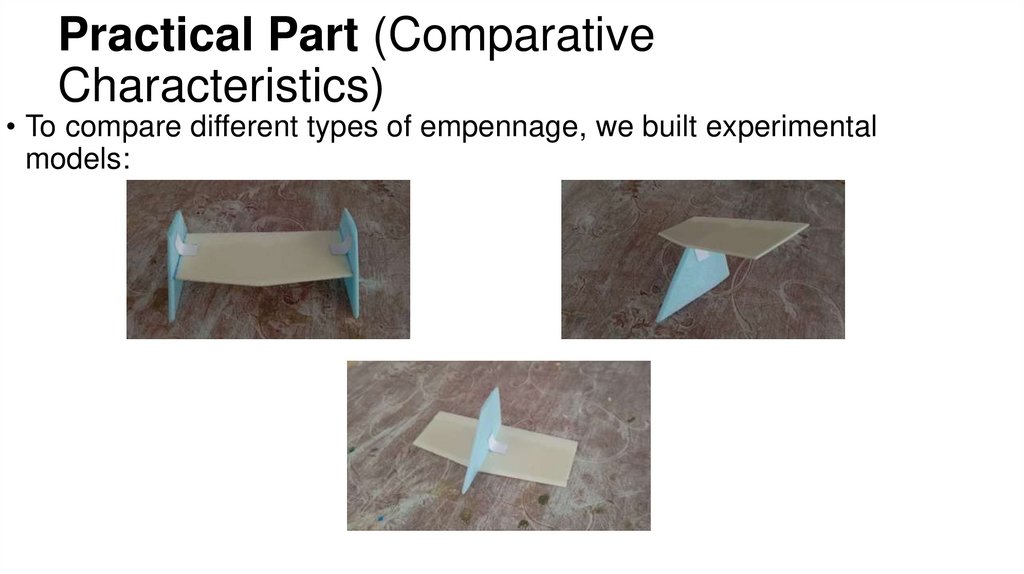
8. Practical Part (Comparative Characteristics)
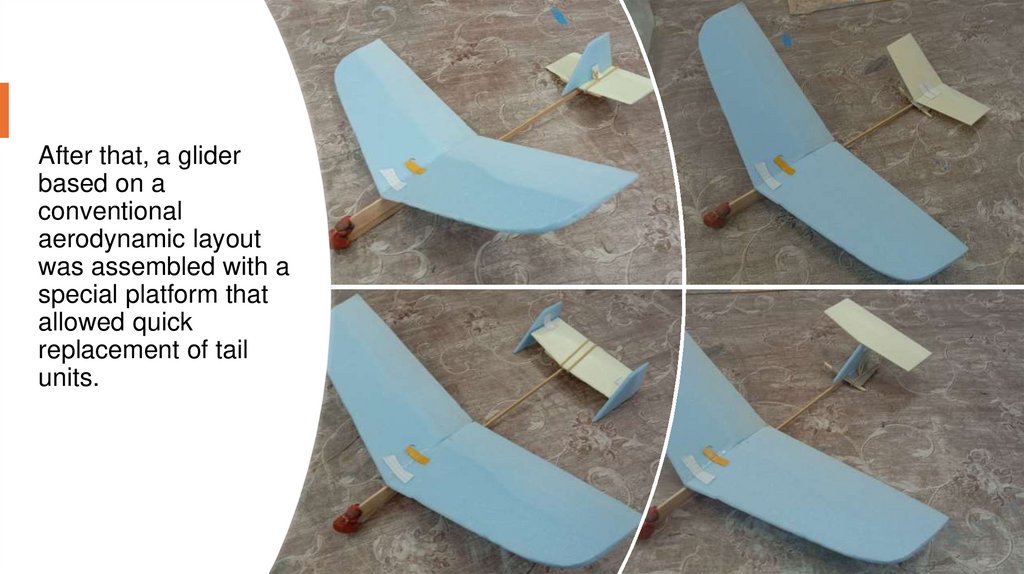
• To compare different types of empennage, we built experimentalmodels:
9.
After that, a gliderbased on a
conventional
aerodynamic layout
was assembled with a
special platform that
allowed quick
replacement of tail
units.
10.
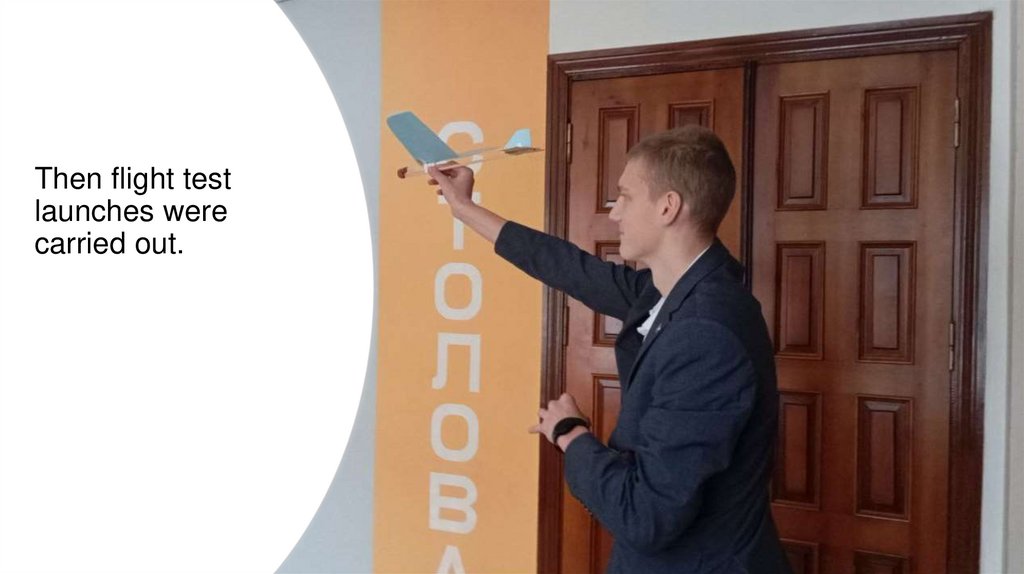
Then flight testlaunches were
carried out.
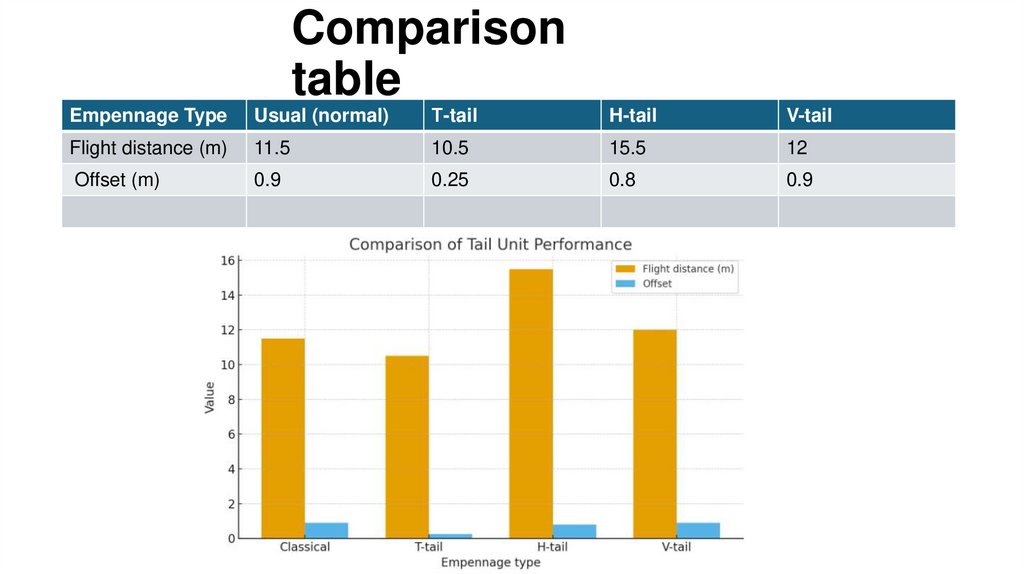
11. Comparison table
Empennage TypeUsual (normal)
Т-tail
H-tail
V-tail
Flight distance (m)
11.5
10.5
15.5
12
Offset (m)
0.9
0.25
0.8
0.9
12. Conclusion
The flight tests showed clear differences between the empennageConclusion
types:
1. The H-tail performed the best.
It reached the longest flight distance (15.5 m), which means it had
better aerodynamic efficiency and a smoother, more stable glide.
2. The T-tail had the shortest flight distance.
This may be because its shape creates more drag and makes the
aircraft more sensitive to pitch movements.
3. The Normal and V-tail configurations showed average results,
which matches their typical behavior in real aircraft: stable, predictable,
and easy to control.
4. The T-tail had the smallest lateral offset, meaning it kept the best
13. Conclusion
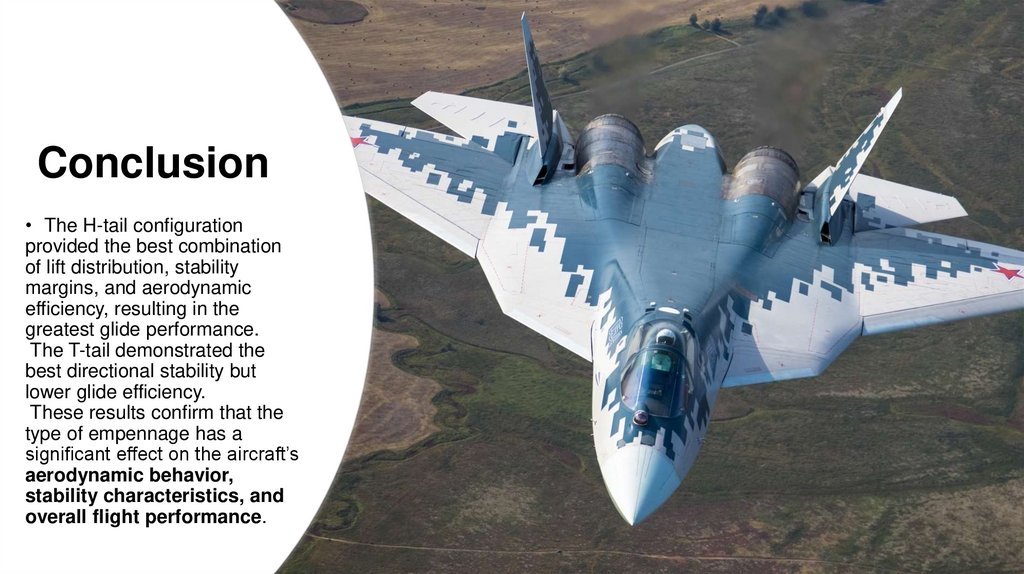
• The H-tail configurationprovided the best combination
of lift distribution, stability
margins, and aerodynamic
efficiency, resulting in the
greatest glide performance.
The T-tail demonstrated the
best directional stability but
lower glide efficiency.
These results confirm that the
type of empennage has a
significant effect on the aircraft’s
aerodynamic behavior,
stability characteristics, and
overall flight performance.