



 economics
Similar presentations:






Demand and supply
1. UNIT 2: DEMAND AND SUPPLY
Teach a parrot to saydemand and supply and
you have made an
economist.
2. Learning Objectives
• To determine a definition and to explainthe laws of demand and supply.
• To analyse the reasons of changes in
demand.
• To develop the concepts of demand and
supply.
3. What is Demand?
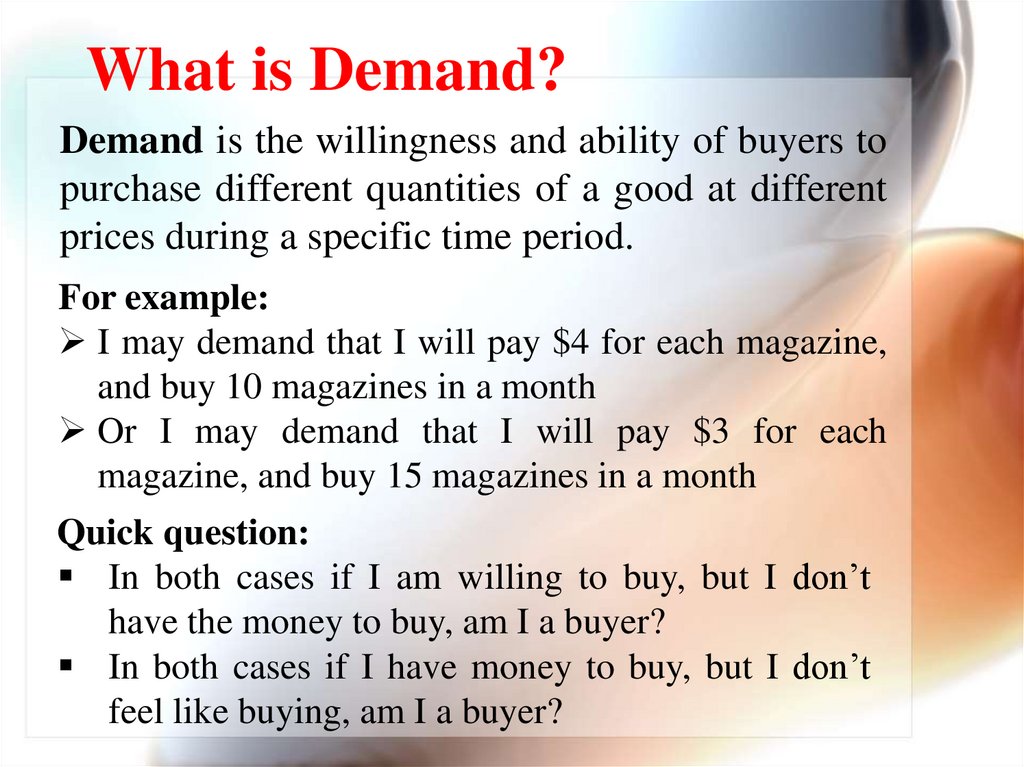
Demand is the willingness and ability of buyers topurchase different quantities of a good at different
prices during a specific time period.
For example:
I may demand that I will pay $4 for each magazine,
and buy 10 magazines in a month
Or I may demand that I will pay $3 for each
magazine, and buy 15 magazines in a month
Quick question:
In both cases if I am willing to buy, but I don’t
have the money to buy, am I a buyer?
In both cases if I have money to buy, but I don’t
feel like buying, am I a buyer?
4. The Law of Demand
According to the law of demand, there is anegative causal relationship between the
price of a good and its quantity demanded
over a particular time period, ceteris
paribus: as the price of the good increases,
quantity demanded falls; as the price falls,
quantity demanded increases, ceteris
paribus.
What does this imply about the slope of
the demand curve?
5. The Law of Demand
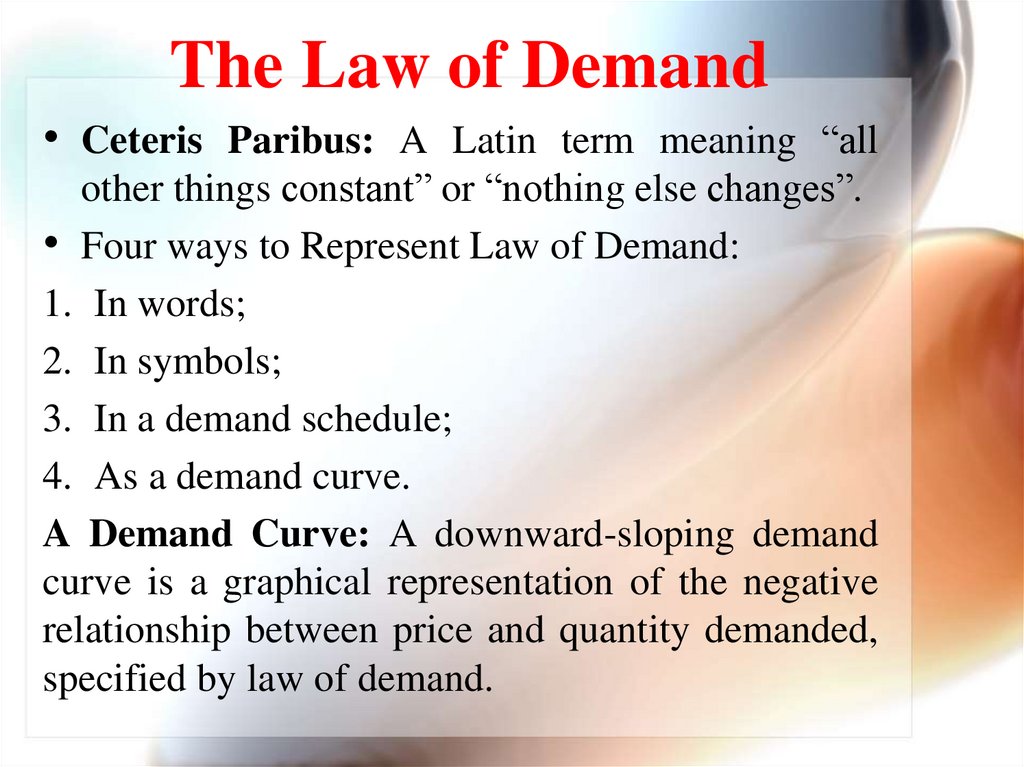
• Ceteris Paribus: A Latin term meaning “allother things constant” or “nothing else changes”.
• Four ways to Represent Law of Demand:
1. In words;
2. In symbols;
3. In a demand schedule;
4. As a demand curve.
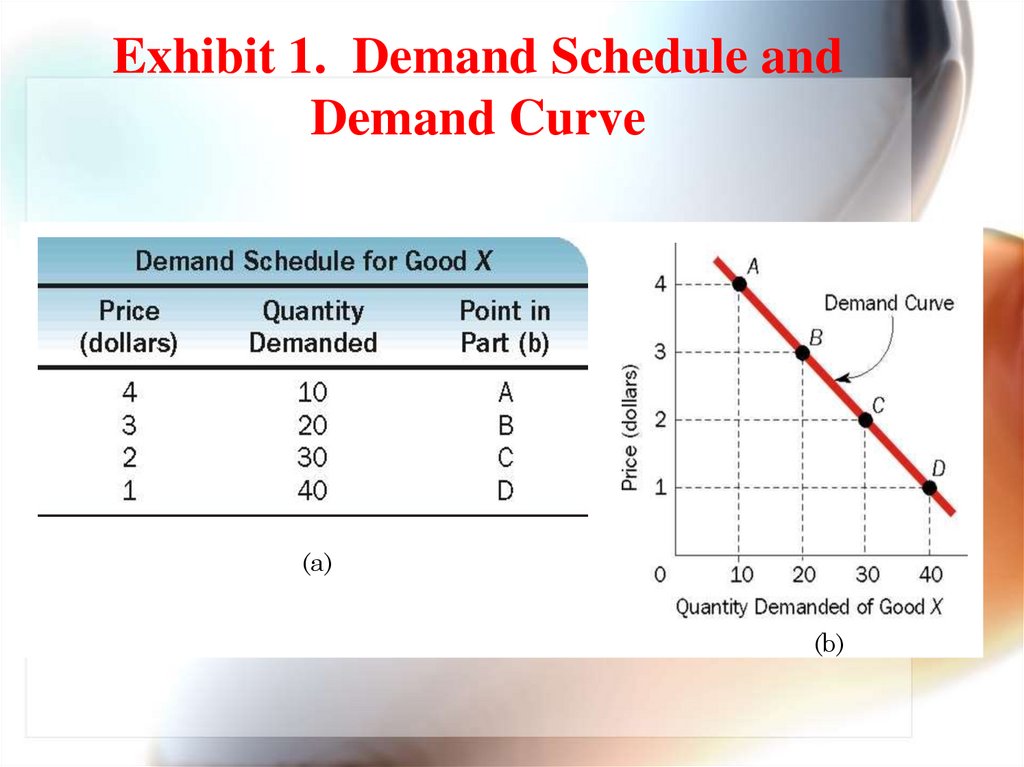
A Demand Curve: A downward-sloping demand
curve is a graphical representation of the negative
relationship between price and quantity demanded,
specified by law of demand.
6. The Demand Curve
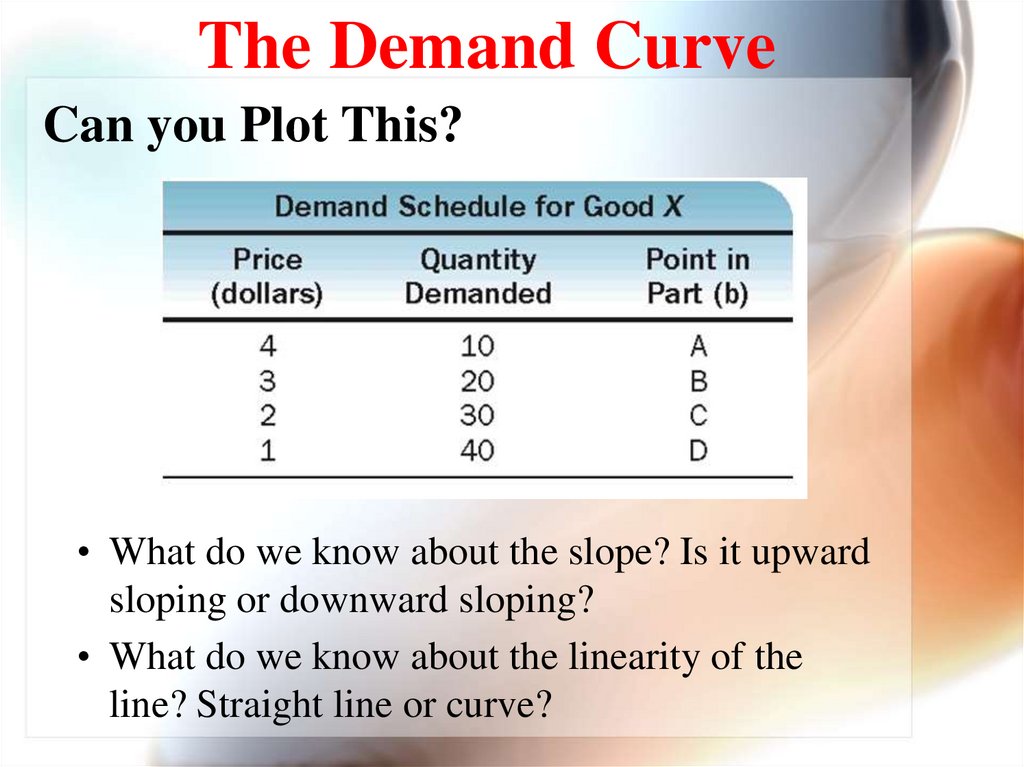
Can you Plot This?• What do we know about the slope? Is it upward
sloping or downward sloping?
• What do we know about the linearity of the
line? Straight line or curve?
7. Exhibit 1. Demand Schedule and Demand Curve
(a)(b)
8. Individual Demand Curve and Market Demand Curve
• Individual Demand Curve: It representsthe price-quantity combinations of a
particular good for a SINGLE buyer.
• Market Demand Curve: It represents the
price-quantity combinations of a particular
good for ALL buyers.
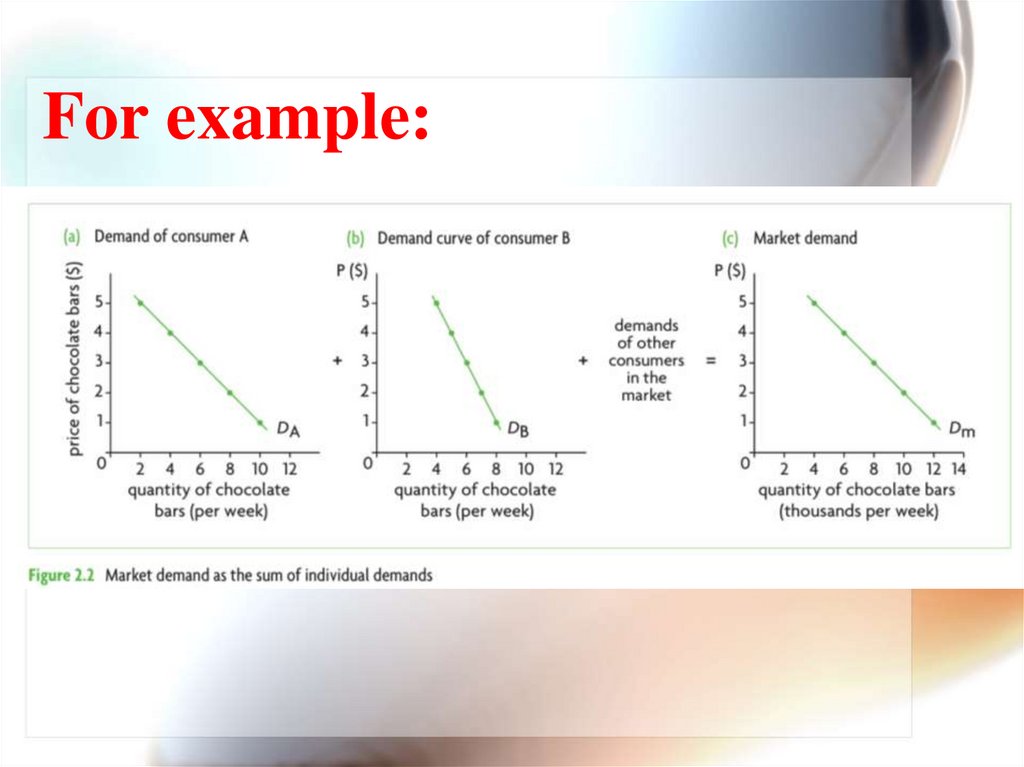
• A Market demand curve is derived by
“adding up” individual demand curves.
9. For example:
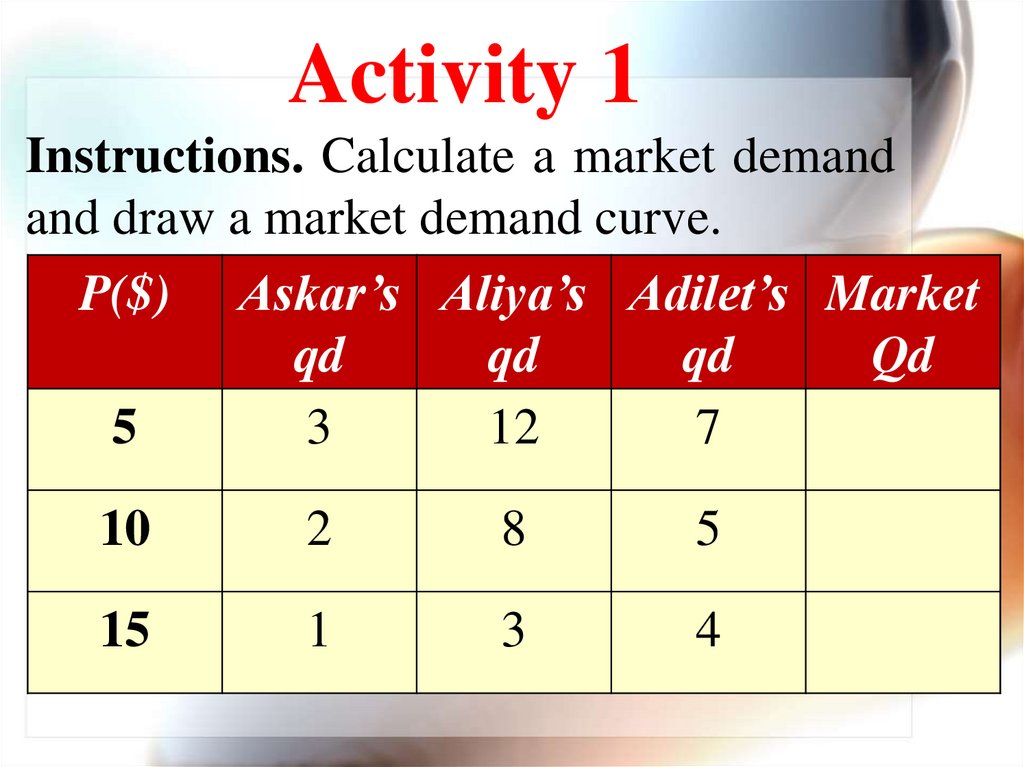
10. Activity 1
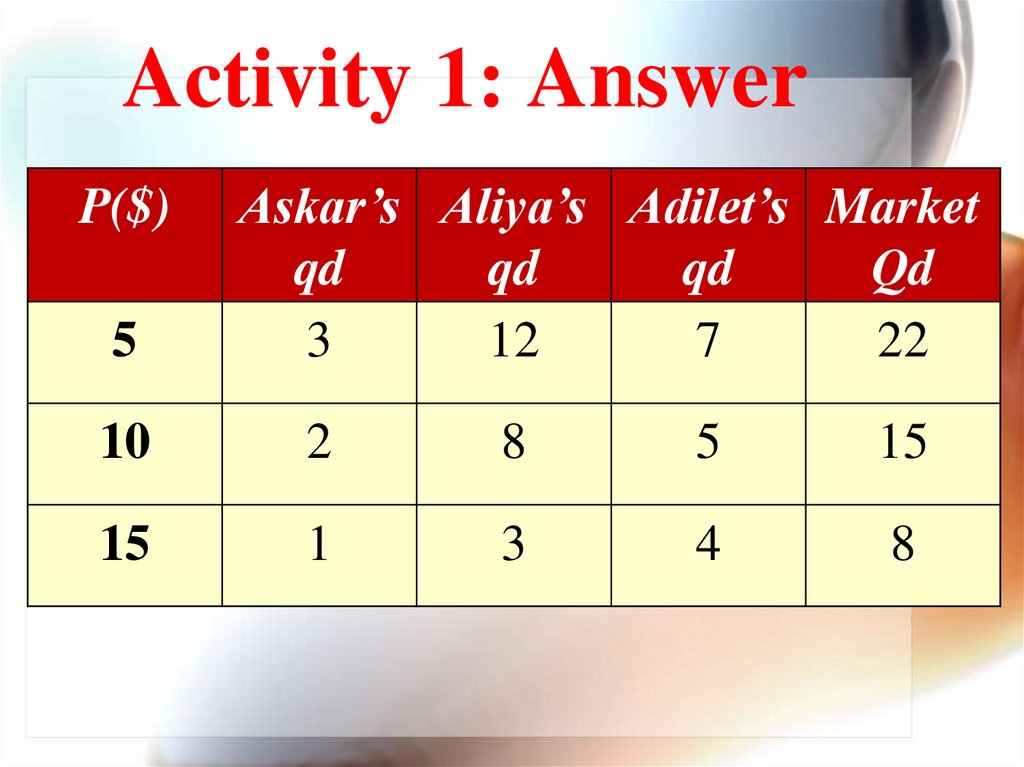
Instructions. Calculate a market demandand draw a market demand curve.
P($) Askar’s Aliya’s Adilet’s Market
qd
qd
qd
Qd
5
3
12
7
10
2
8
5
15
1
3
4
11. Activity 1: Answer
P($)5
Askar’s Aliya’s Adilet’s Market
qd
qd
qd
Qd
3
12
7
22
10
2
8
5
15
15
1
3
4
8
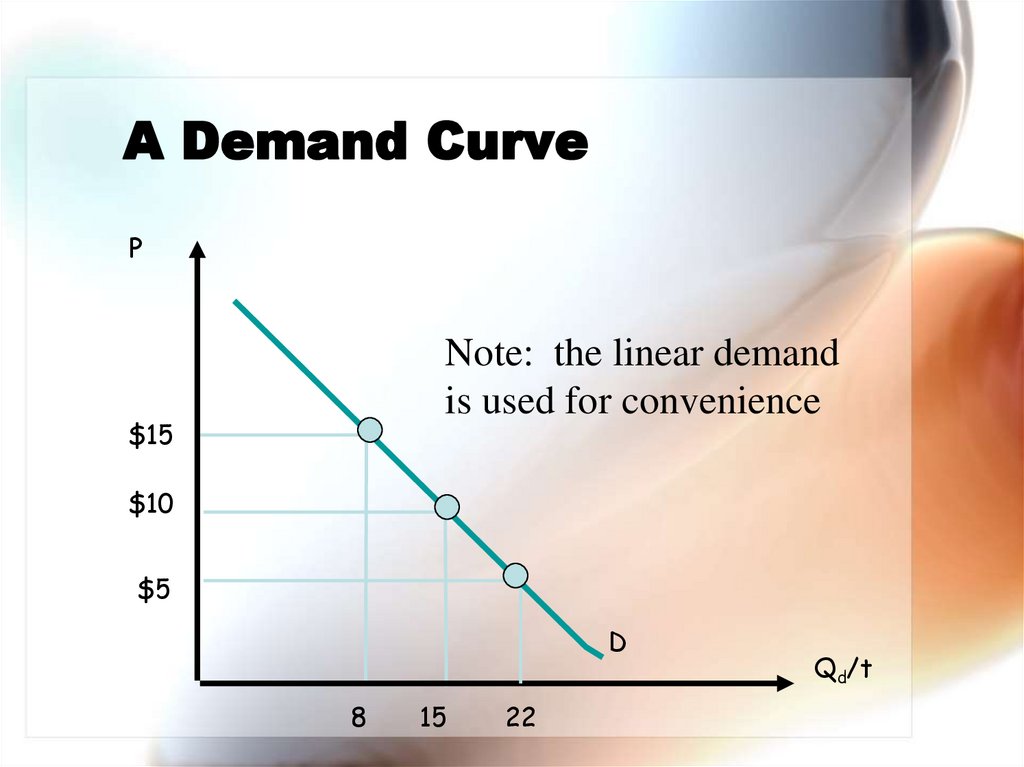
12. A Demand Curve
PNote: the linear demand
is used for convenience
$15
$10
$5
D
8
15
22
Qd/t
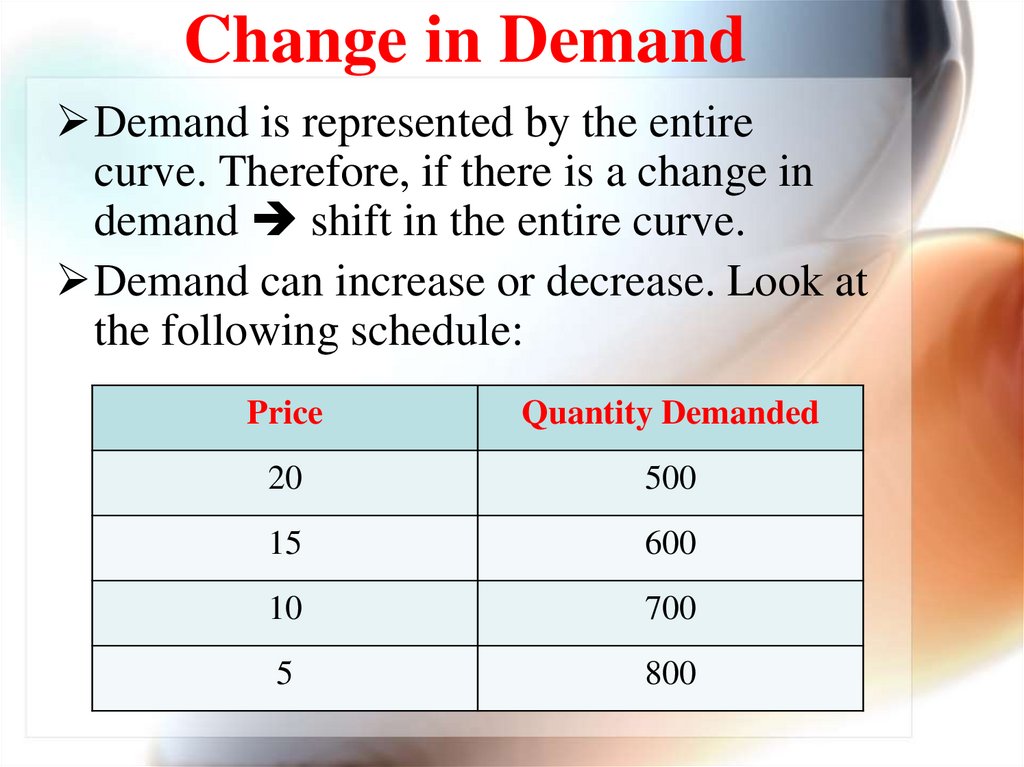
13. Change in Demand
Demand is represented by the entirecurve. Therefore, if there is a change in
demand shift in the entire curve.
Demand can increase or decrease. Look at
the following schedule:
Price
Quantity Demanded
20
500
15
600
10
700
5
800
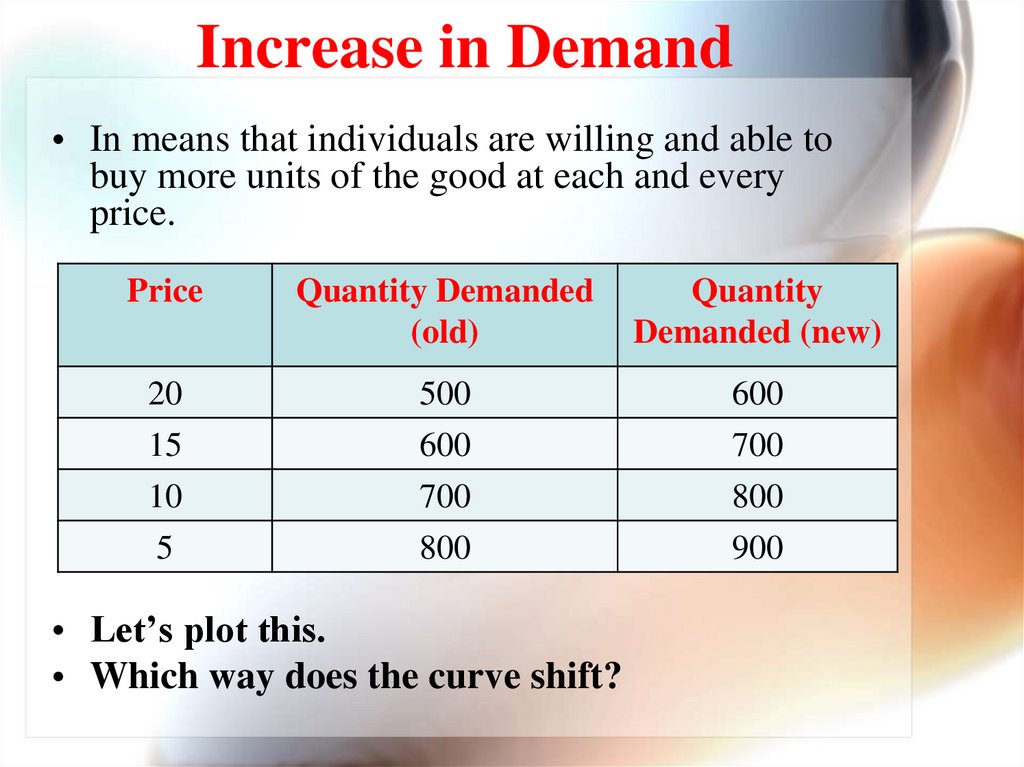
14. Increase in Demand
• In means that individuals are willing and able tobuy more units of the good at each and every
price.
Price
Quantity Demanded
(old)
Quantity
Demanded (new)
20
500
600
15
10
600
700
700
800
5
800
900
• Let’s plot this.
• Which way does the curve shift?
15. Decrease in Demand
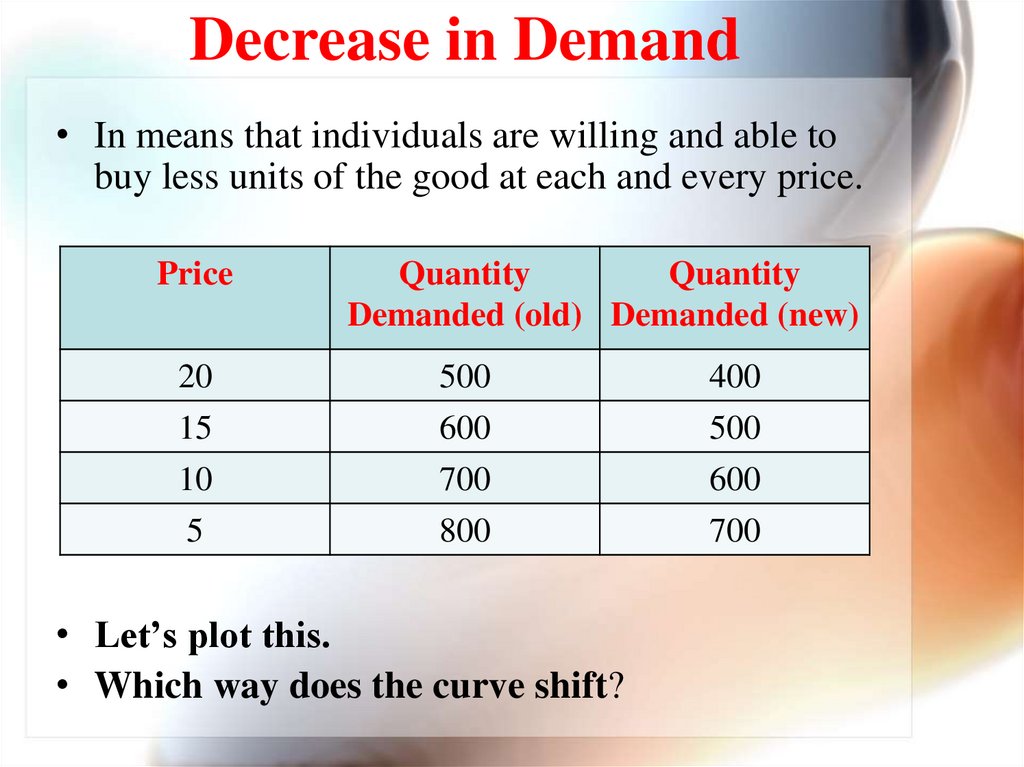
• In means that individuals are willing and able tobuy less units of the good at each and every price.
Price
Quantity
Quantity
Demanded (old) Demanded (new)
20
500
400
15
10
5
600
700
800
500
600
700
• Let’s plot this.
• Which way does the curve shift?
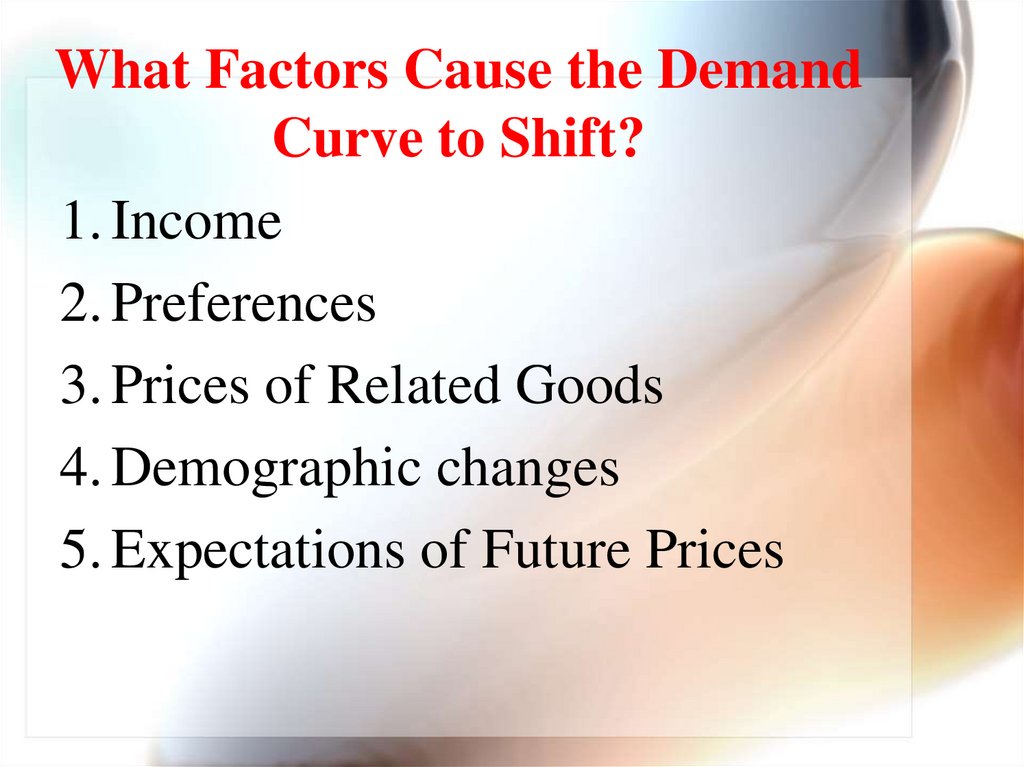
16. What Factors Cause the Demand Curve to Shift?
1. Income2. Preferences
3. Prices of Related Goods
4. Demographic changes
5. Expectations of Future Prices
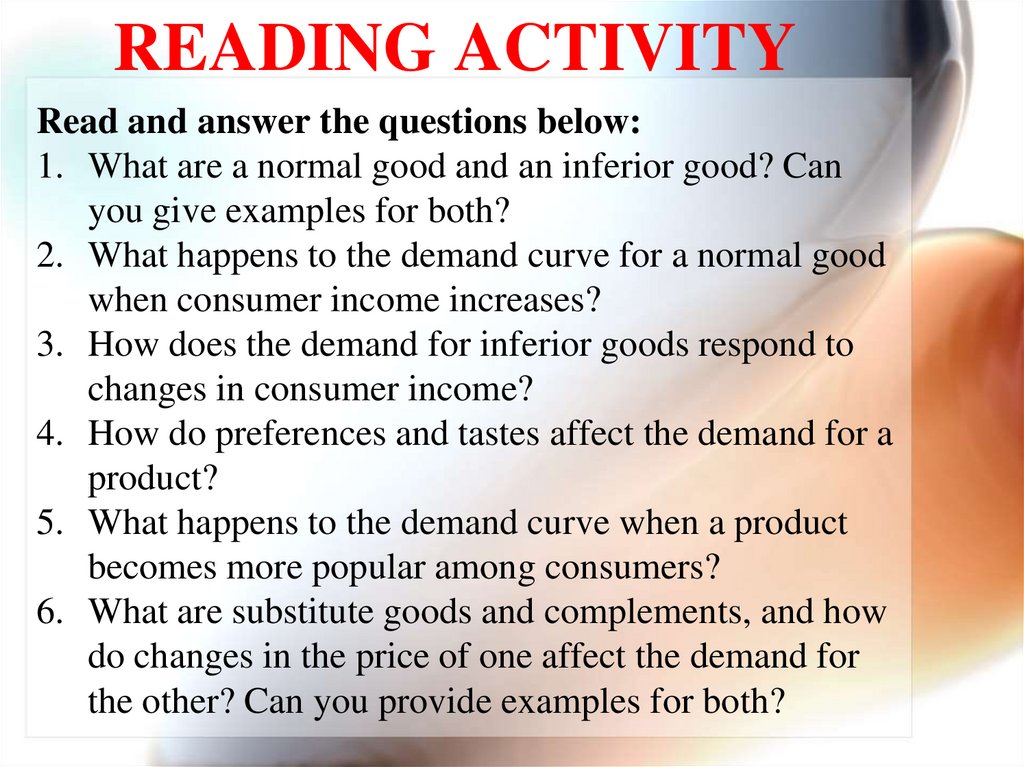
17. READING ACTIVITY
Read and answer the questions below:1. What are a normal good and an inferior good? Can
you give examples for both?
2. What happens to the demand curve for a normal good
when consumer income increases?
3. How does the demand for inferior goods respond to
changes in consumer income?
4. How do preferences and tastes affect the demand for a
product?
5. What happens to the demand curve when a product
becomes more popular among consumers?
6. What are substitute goods and complements, and how
do changes in the price of one affect the demand for
the other? Can you provide examples for both?
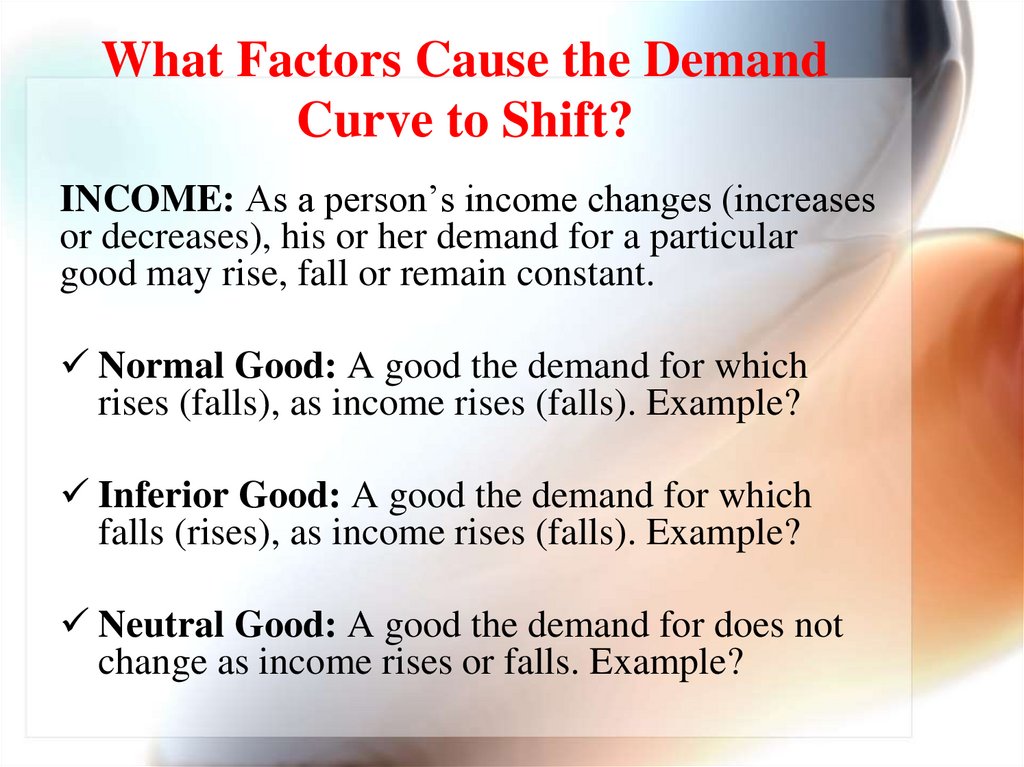
18. What Factors Cause the Demand Curve to Shift?
INCOME: As a person’s income changes (increasesor decreases), his or her demand for a particular
good may rise, fall or remain constant.
Normal Good: A good the demand for which
rises (falls), as income rises (falls). Example?
Inferior Good: A good the demand for which
falls (rises), as income rises (falls). Example?
Neutral Good: A good the demand for does not
change as income rises or falls. Example?
19. What Factors Cause the Demand Curve to Shift?
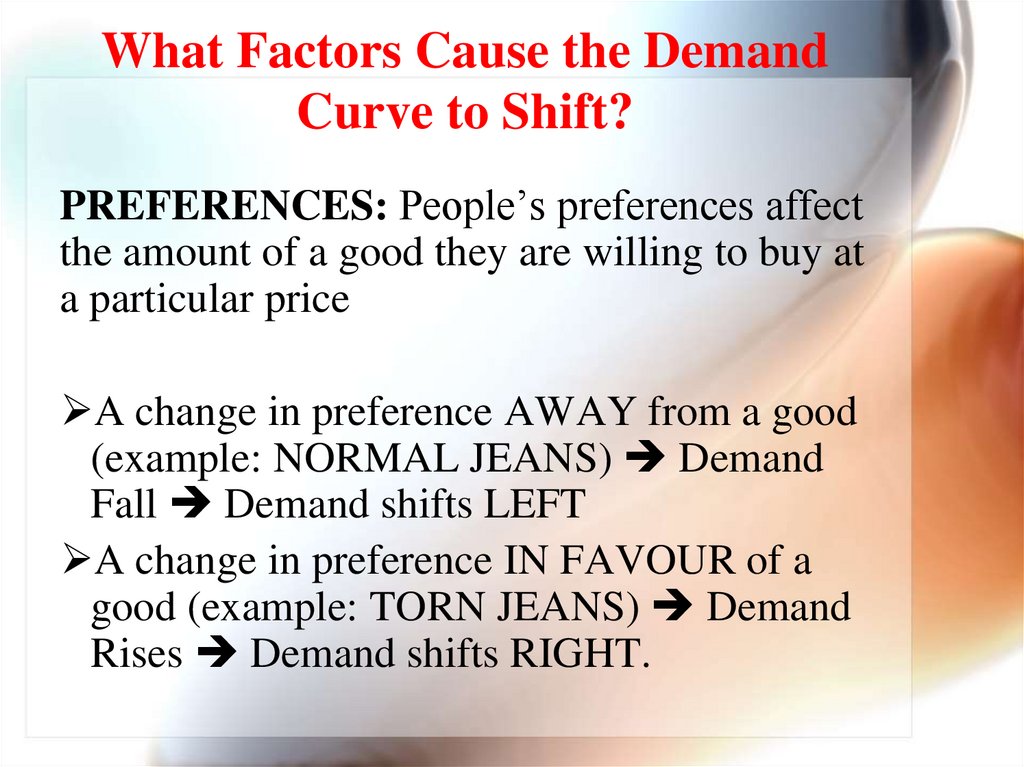
PREFERENCES: People’s preferences affectthe amount of a good they are willing to buy at
a particular price
A change in preference AWAY from a good
(example: NORMAL JEANS) Demand
Fall Demand shifts LEFT
A change in preference IN FAVOUR of a
good (example: TORN JEANS) Demand
Rises Demand shifts RIGHT.
20. What Factors Cause the Demand Curve to Shift?
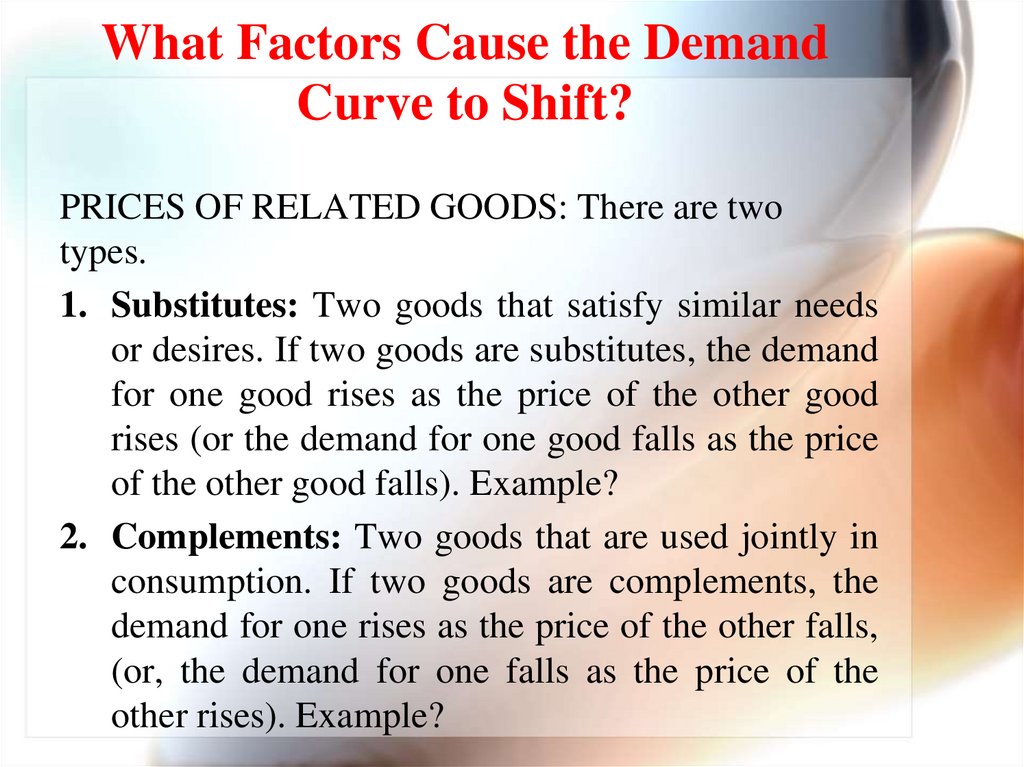
PRICES OF RELATED GOODS: There are twotypes.
1. Substitutes: Two goods that satisfy similar needs
or desires. If two goods are substitutes, the demand
for one good rises as the price of the other good
rises (or the demand for one good falls as the price
of the other good falls). Example?
2. Complements: Two goods that are used jointly in
consumption. If two goods are complements, the
demand for one rises as the price of the other falls,
(or, the demand for one falls as the price of the
other rises). Example?
21. QUIZIZ
• https://wayground.com/join/game/U2FsdGVkX1%252B%252BrVraX1tq0EuBhkx1YaRP1E%252BgnmDO4
sY%252Fbb5RwCnZ%252B6sqVZIGlkq9vlIE%252F
O8KYI69dFLjPJ0ERw%253D%253D
22. Simulation Activity
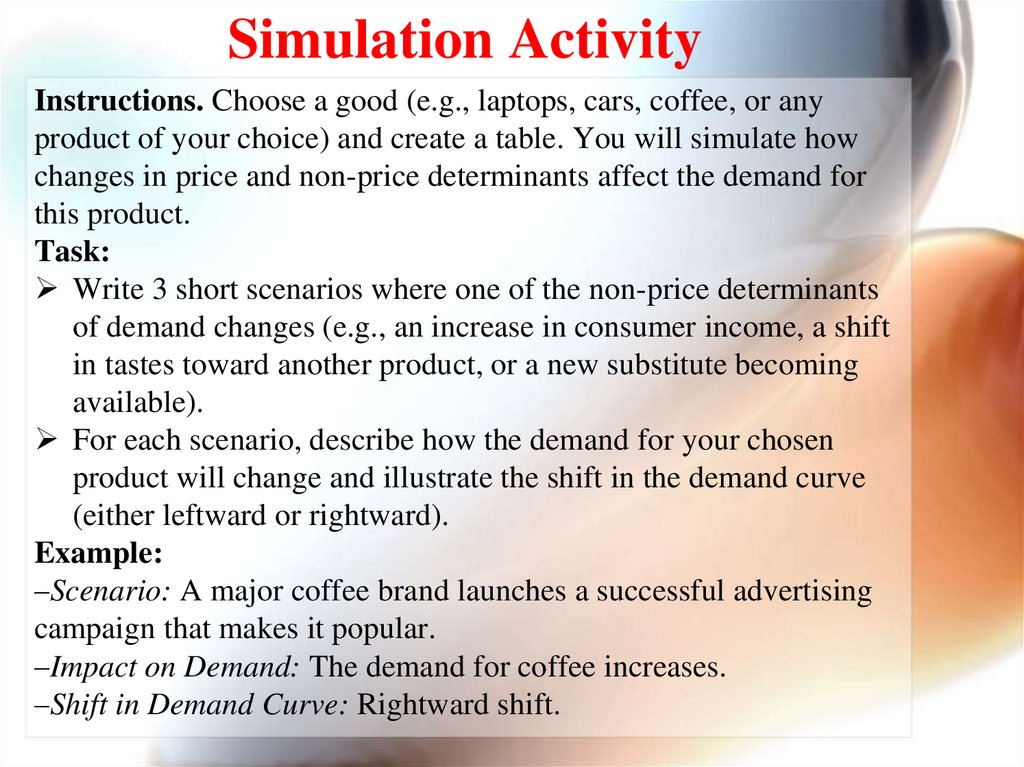
Instructions. Choose a good (e.g., laptops, cars, coffee, or anyproduct of your choice) and create a table. You will simulate how
changes in price and non-price determinants affect the demand for
this product.
Task:
Write 3 short scenarios where one of the non-price determinants
of demand changes (e.g., an increase in consumer income, a shift
in tastes toward another product, or a new substitute becoming
available).
For each scenario, describe how the demand for your chosen
product will change and illustrate the shift in the demand curve
(either leftward or rightward).
Example:
–Scenario: A major coffee brand launches a successful advertising
campaign that makes it popular.
–Impact on Demand: The demand for coffee increases.
–Shift in Demand Curve: Rightward shift.
23. Simulation Activity
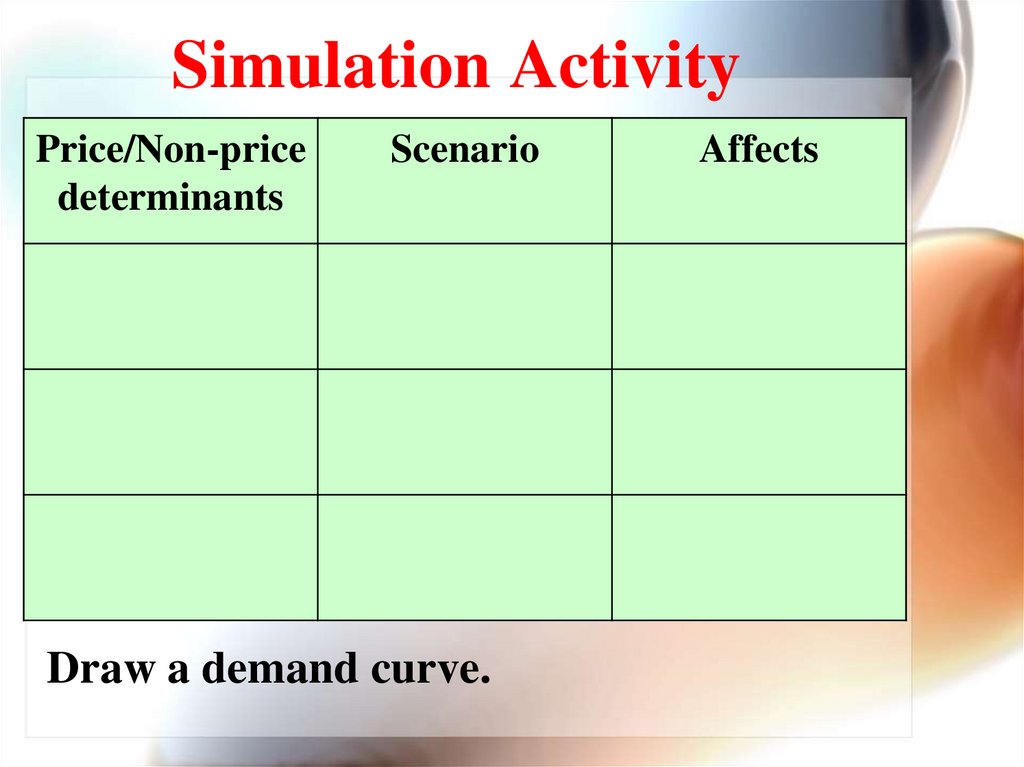
Price/Non-pricedeterminants
Scenario
Draw a demand curve.
Affects
24. Reflection
I feel I know………I feel I am not too sure about…….
I feel I do not know………