 history
Similar presentations:
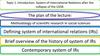








Key Terms Related to Postcolonial Theory (in English and Kazakh)
1. Key Terms Related to Postcolonial Theory (in English and Kazakh)
Department of Kazakh Language and Turkic StudiesKAZ 300—Week 1-Wednesday
2. national identity - ұлттық бірегейлік
national identity ұлттық бірегейлікA person’s sense of belonging to a
national, encompassing shared
traditions, culture, and language.
3. nationalism - ұлтшылдық
nationalism ұлтшылдықAn ideology that emphasized loyalty
and devotion to a nation, often
prioritizing national interests, culture,
and sovereigny above other
considerations.
4. postcolonialism - постколониализм, постотаршылдық
postcolonialism постколониализм,постотаршылдық
A field of study exploring the
enduring impacts of colonialism on
cultures, identities, and power
structures.
5. colonialism - колониализм, отаршылдық
colonialism колониализм,отаршылдық
A policy involvıng direct control and
settlement of a terrıtory by a foreign
power, often wıth the intent to
exploit resources and labor.
6. imperialism - империализм
imperialism империализмA policy of extending a country's
power and influence through
colonization, use of military force, or
other means.
7. hybridity - гибридтілік
hybridity гибридтілікIn postcolonial theory, hybridity refers
to the creation of new cultural forms,
particularly in the “contact zone”
where colonized and colonizing
cultures interact.
8. Orientalism - Ориентализм
Orientalism ОриентализмIn the view of Edward Said, it is a way of seeing the
East that is constructed by the West to justify
Western dominance and power over Eastern
societies. This constructed view, often based on
stereotypes and inaccurate representations, served
as an ideological justification for colonial expansion
and continued influence.
9. hegemony - гегемония
hegemony гегемонияA more subtle form of influence,
achieved through cultural,
economic, or ideological
dominance, often without direct
political rule (in contrast to
colonialism).
10. diaspora - диаспора
diaspora диаспораA population scattered outsider their
original homeland, often maintaining
cultural, emotional, or economic ties
to their place of origin.
11. national allegory - Ұлттық аллегория
national allegory Ұлттық аллегорияA literary device where a narrative’s
characters, events and settings
symbolize broader national issues,
identity, and cultural concerns
12. subalternity - қосалқылық
subalternity қосалқылықRefers to the social, political, and cultural condition
of groups or individuals who are marginalized and
excluded from dominant power structures. It is a
concept used in postcolonial studies highlighting
the experiences of those who lack a voice or
representation within mainstream narratives.