



 psychology
Similar presentations:



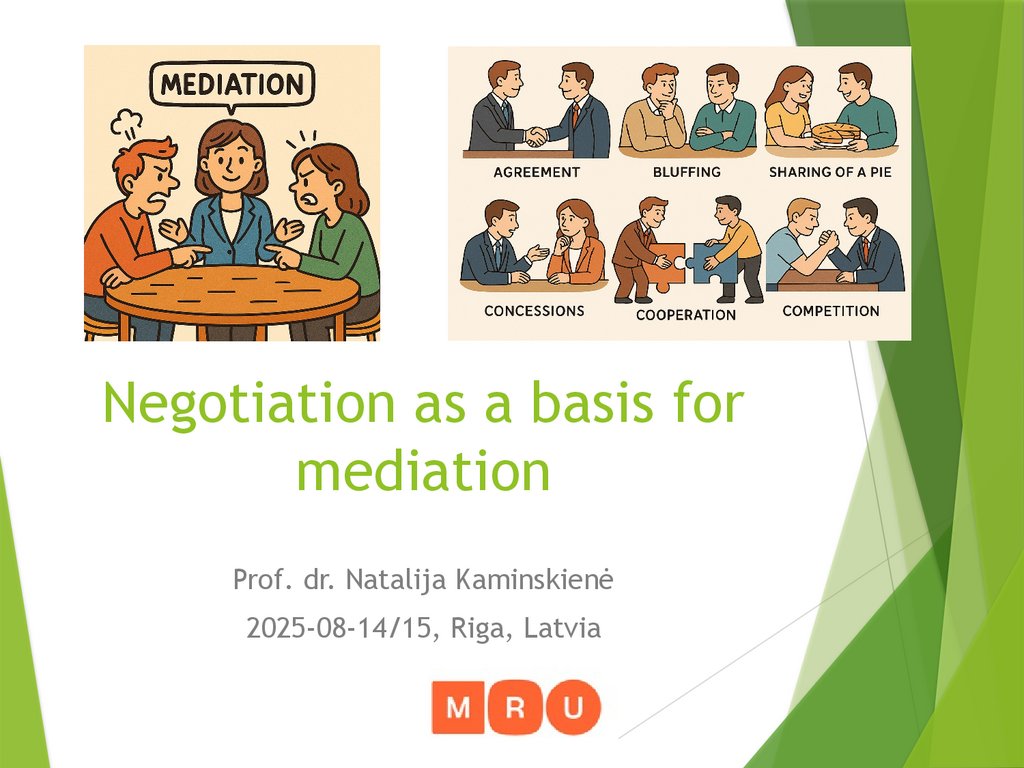
Negotiation as a basis for mediation
1. Negotiation as a basis for mediation
Prof. dr. Natalija Kaminskienė2025-08-14/15, Riga, Latvia
2. Hello, I am Natalija Kaminskienė natalijak@mruni.eu
Present:Law Professor
PhD „Alternative dispute resolution“
Vice-rector for studies
Former:
Director of the National Courts
adminsitration
Attorney at law
Mediator
Negotiator
Arbitrator
3. 3 words about yourself?
NameCountry of origin
Study program
4. Lithuania Lietuva
Let‘s warm up!Warm up questions on
negotiation
5. Let‘s warm up!
What is your attitude towardsnegotiation?
-
Confused;
- Pleasant;
-
Terrified;
- Delightful;
-
Afraid;
- Thrilled;
-
Uncomfortable;
- Happy;
-
Weird.
- Excited.
6. What is your attitude towards negotiation?
Do you think you are successfulnegotiator in an everyday life?
7.
How much do you think formediators negotiation skills are
important?
8.
Basic statements onnegotiation and mediation
Negotiation is a basis for mediation.
Mediation is an advanced form of negotiation.
Parties in mediation are negotiating. For them it is
negotiation with a help of the 3rd person
(mediator).
9. Basic statements on negotiation and mediation
Are negotiation skills in yourview inborn or achieved?
10.
Are you a goodnegotiator?
Practical situation:
Our opponents suggested we meet on Monday
at 8 o.k. in the morning at their hotel for the
negotiations and we had agreed. Then the next
day we arrived before 8 am. They kindly
offered us wine and cheese. We talked about
basketball game, which took place yesterday
evening. After about half an hour of
conversation the negotiations started.
11. Are you a good negotiator?
Your task is:Evaluate the start of negotiation. Is it proper?
If so, why is this situation favorable for the further
conduct of the negotiations and their outcome?
If not, why this situation is unfavorable for the further
conduct of the negotiation and the outcome?
12. Are you a good negotiator?
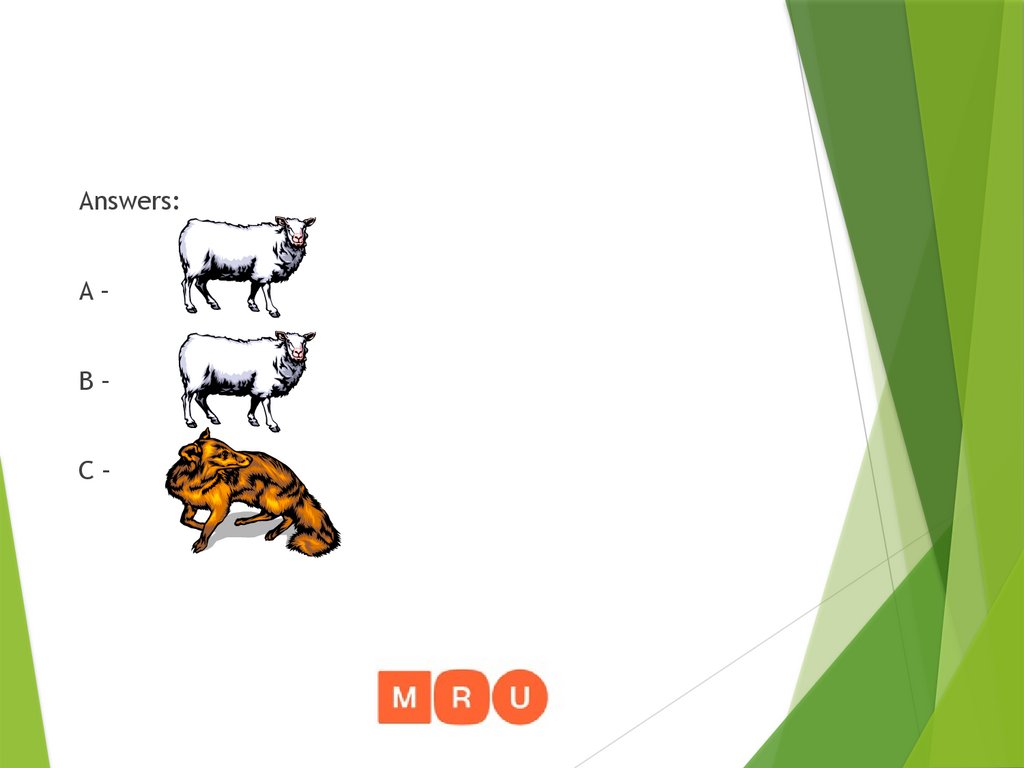
How would you describe negotiation?A.
A fair and equal transaction?
B.
Compromising?
C.
Making a joint decision in which you get some of what
you want and they get some of what they want?
13.
Answers:A–
B–
C–
14.
Negotiation –Process
Two or more parties
Communication
Competing interests
The desire to reach an agreement
15. Negotiation –
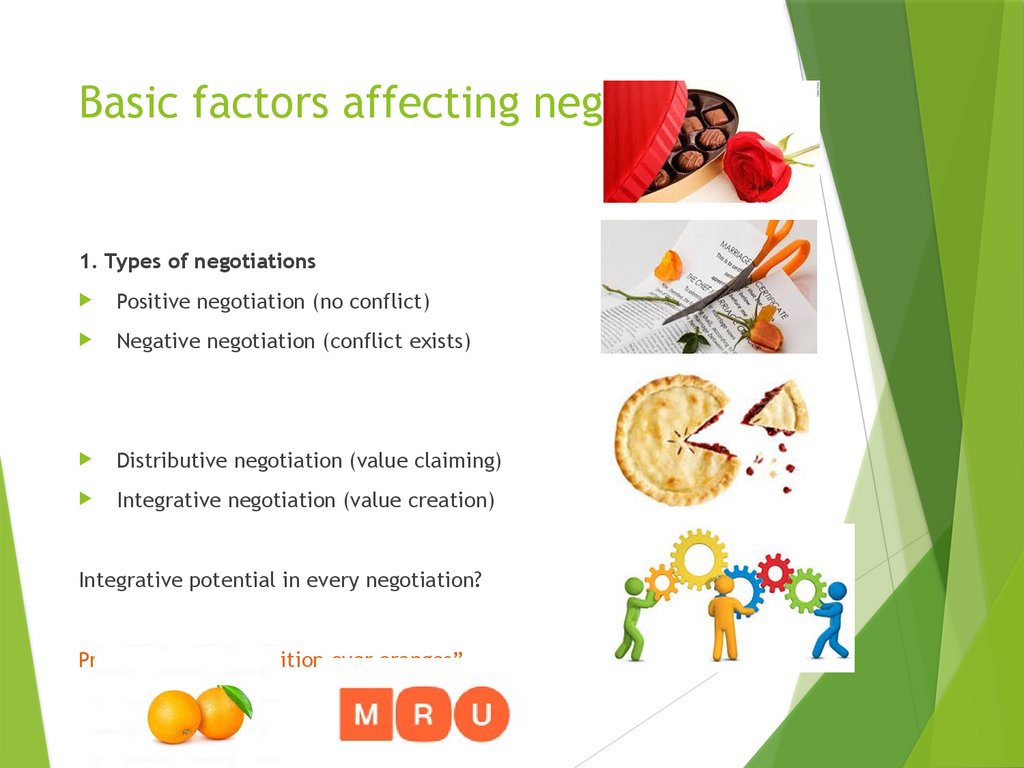
Basic factors affecting negotiation1. Types of negotiations
Positive negotiation (no conflict)
Negative negotiation (conflict exists)
Distributive negotiation (value claiming)
Integrative negotiation (value creation)
Integrative potential in every negotiation?
Practical task “Negotition over oranges”
16. Basic factors affecting negotiation
2. Personal needs of participantsSpoken and unspoken parties needs
Needs of counsel
17. Basic factors affecting negotiation
3. Negotiating styles ofparticipants
Task for a group work (4 groups):
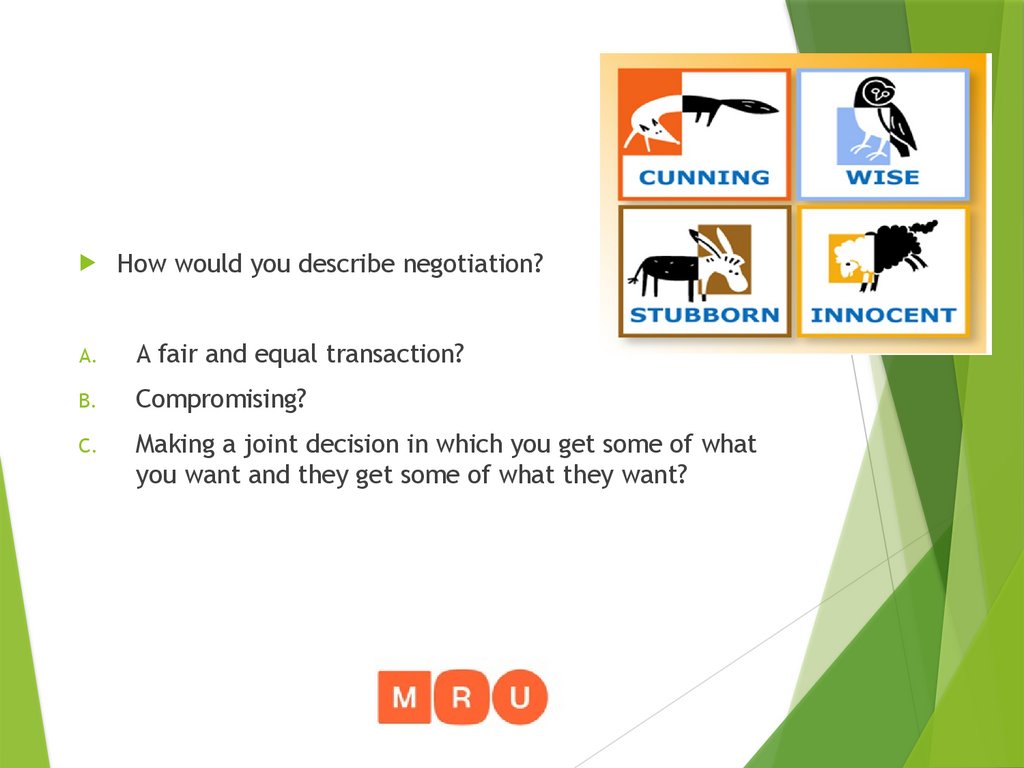
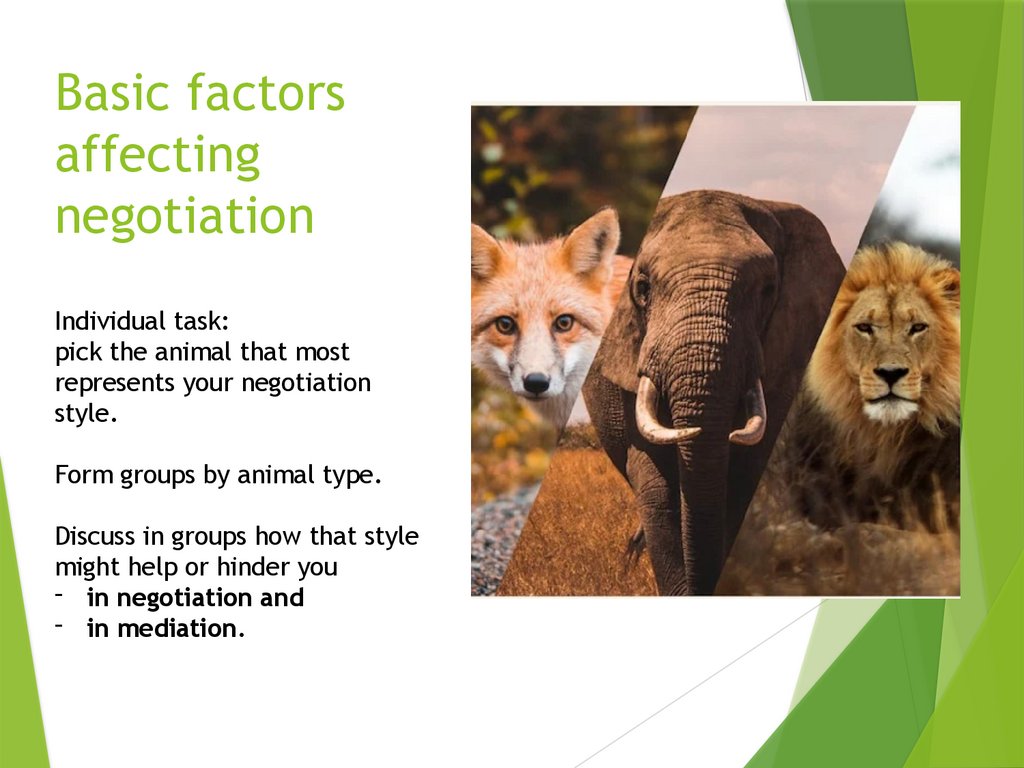
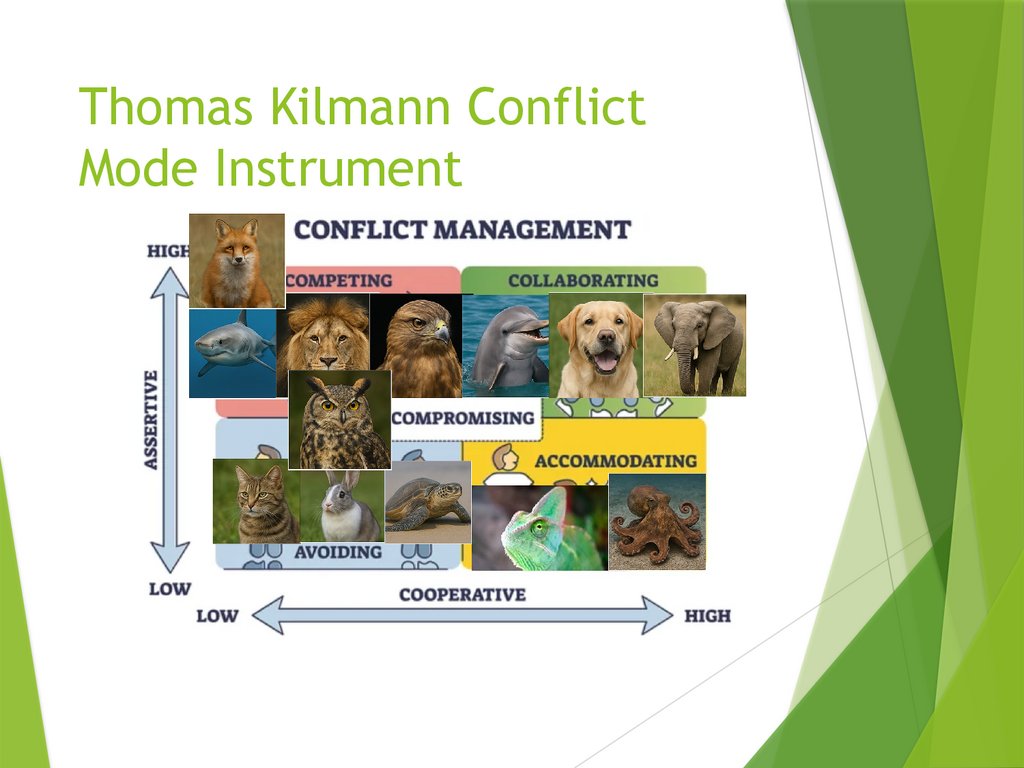
Guess which animal might
represent which trait important
for negotiation.
18.
Basic factorsaffecting
negotiation
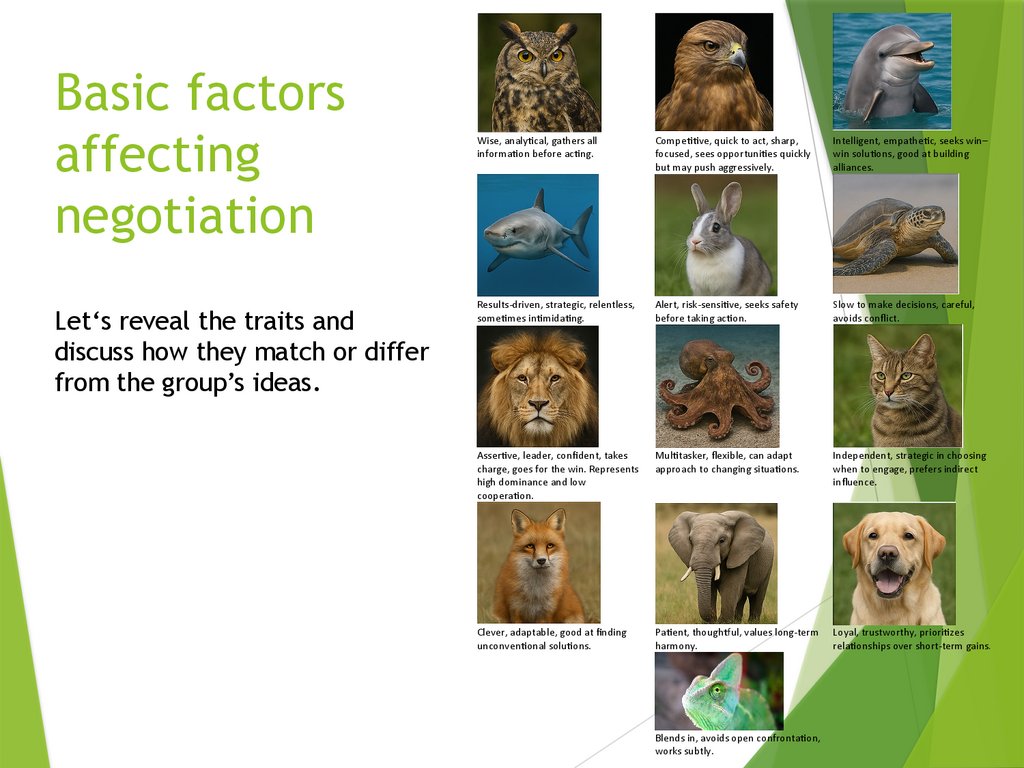
Let‘s reveal the traits and
discuss how they match or differ
from the group’s ideas.
Wise, analytical, gathers all
information before acting.
Competitive, quick to act, sharp,
focused, sees opportunities quickly
but may push aggressively.
Intelligent, empathetic, seeks win–
win solutions, good at building
alliances.
Results-driven, strategic, relentless,
sometimes intimidating.
Alert, risk-sensitive, seeks safety
before taking action.
Slow to make decisions, careful,
avoids conflict.
Assertive, leader, confident, takes
charge, goes for the win. Represents
high dominance and low
cooperation.
Multitasker, flexible, can adapt
approach to changing situations.
Independent, strategic in choosing
when to engage, prefers indirect
influence.
Clever, adaptable, good at finding
unconventional solutions.
Patient, thoughtful, values long-term
harmony.
Loyal, trustworthy, prioritizes
relationships over short-term gains.
Blends in, avoids open confrontation,
works subtly.
19.
Basic factorsaffecting
negotiation
Individual task:
pick the animal that most
represents your negotiation
style.
Form groups by animal type.
Discuss in groups how that style
might help or hinder you
- in negotiation and
- in mediation.
20.
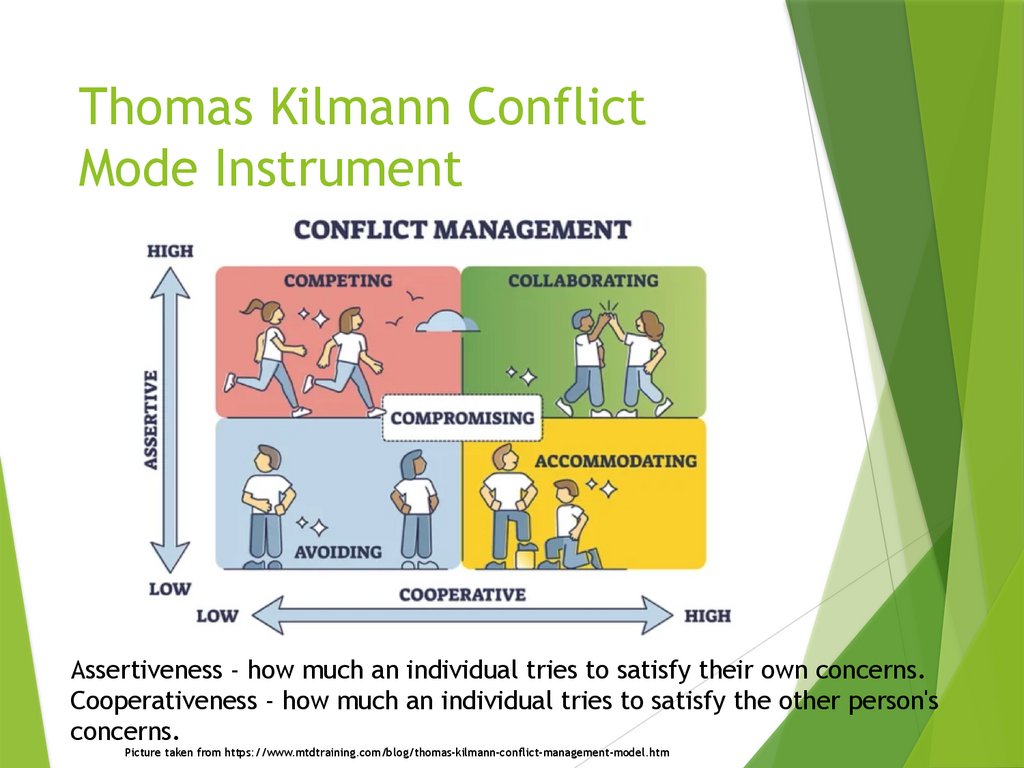
Thomas Kilmann ConflictMode Instrument
Assertiveness - how much an individual tries to satisfy their own concerns.
Cooperativeness - how much an individual tries to satisfy the other person's
concerns.
Picture taken from https://www.mtdtraining.com/blog/thomas-kilmann-conflict-management-model.htm
21. Thomas Kilmann Conflict Mode Instrument
22. Thomas Kilmann Conflict Mode Instrument
Basic factors affectingnegotiation
3. Negotiating styles of participants
Cooperative
Competitive/Adversarial
Blended/Problem solving
23. Basic factors affecting negotiation
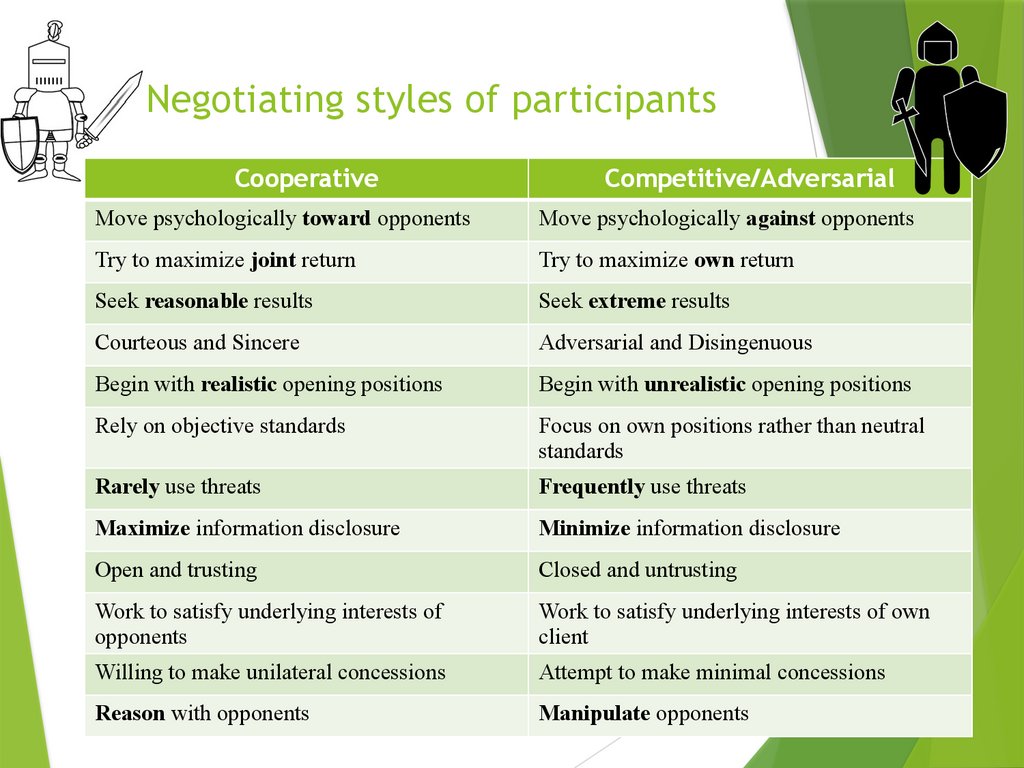
Negotiating styles of participantsCooperative
Competitive/Adversarial
Move psychologically toward opponents
Move psychologically against opponents
Try to maximize joint return
Try to maximize own return
Seek reasonable results
Seek extreme results
Courteous and Sincere
Adversarial and Disingenuous
Begin with realistic opening positions
Begin with unrealistic opening positions
Rely on objective standards
Focus on own positions rather than neutral
standards
Rarely use threats
Frequently use threats
Maximize information disclosure
Minimize information disclosure
Open and trusting
Closed and untrusting
Work to satisfy underlying interests of
opponents
Work to satisfy underlying interests of own
client
Willing to make unilateral concessions
Attempt to make minimal concessions
Reason with opponents
Manipulate opponents
24. Negotiating styles of participants
Which negotiation style is more effective?25. Negotiating styles of participants
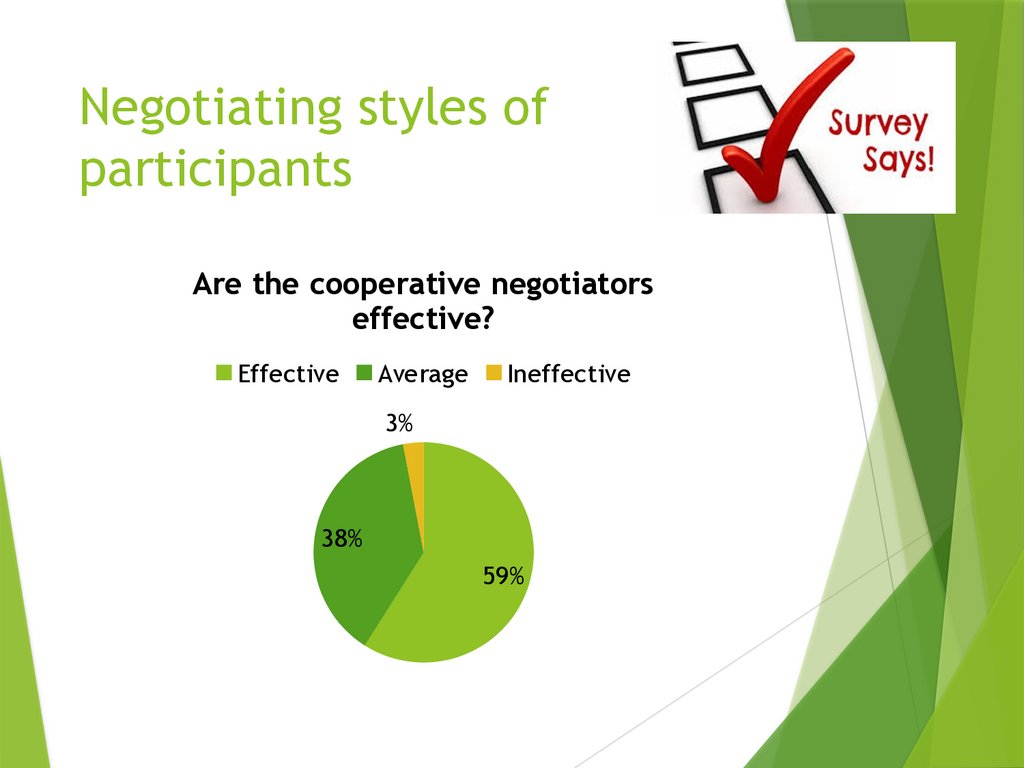
Are the cooperative negotiatorseffective?
Effective
Average
Ineffective
3%
38%
59%
26. Negotiating styles of participants
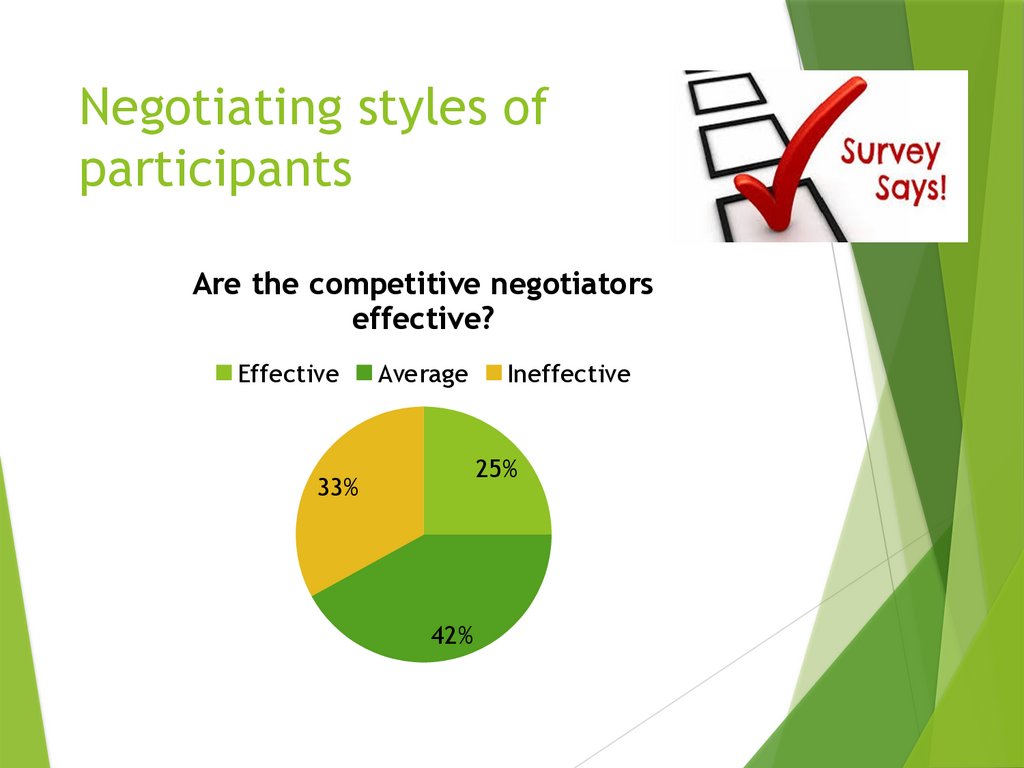
Are the competitive negotiatorseffective?
Effective
Average
Ineffective
25%
33%
42%
27. Negotiating styles of participants
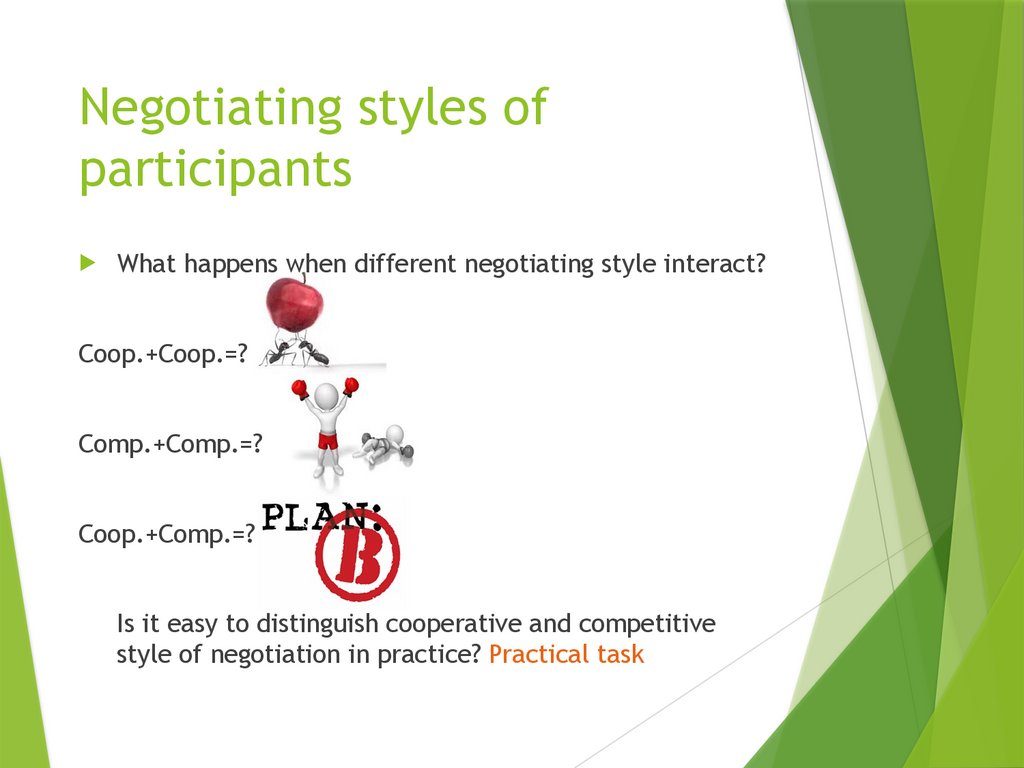
What happens when different negotiating style interact?Coop.+Coop.=?
Comp.+Comp.=?
Coop.+Comp.=?
Is it easy to distinguish cooperative and competitive
style of negotiation in practice? Practical task
28. Negotiating styles of participants
Drama time!Lead poisoning story
Situation: Ms. Tamiqua Lewis asserts that Piccolo Property
Management failed to properly maintain surfaces painted with lead
paint within the apartment where the Lewises resided during
Tamiqua‘s pregancy and during first 4 years of Malik‘s life until his
lead poisoning was diagnosed. She asserts that Piccolo‘s negligence
caused Malik‘s lead poisoning. Complaint was filed 3 months ago to
the insurer, who responded with the usual asnwer denying
everything.
29. Drama time!
Negotiation (first meeting) between:Michelle Chang – recent law school graduate. Represents Ms.
Tamiqua Lewis – mother of a lead-poisoned child Malik. Complaint
was filed against Piccolo Property Management – a property holding
company. Works at the Public Justice Project.
Patrick Quinn – insurance defense attorney in his 60’s. Has a wellearned reputation as a hard-nosed litigator. Represents the insurer,
who sold Piccolo Property Management an insurance that covers
Piccolo‘s liability to third-persons such as Malik and his family.
30. Drama time!
Lead poisoning storyQuestions:
1.
What is very different in each negotiation?
2.
What negotiation style does Patrick use in each
negotiation?
Cooperative
Competitive/Adversarial
Blended/Problem solving
31. Drama time!
Lead poisoning storyScenario 1
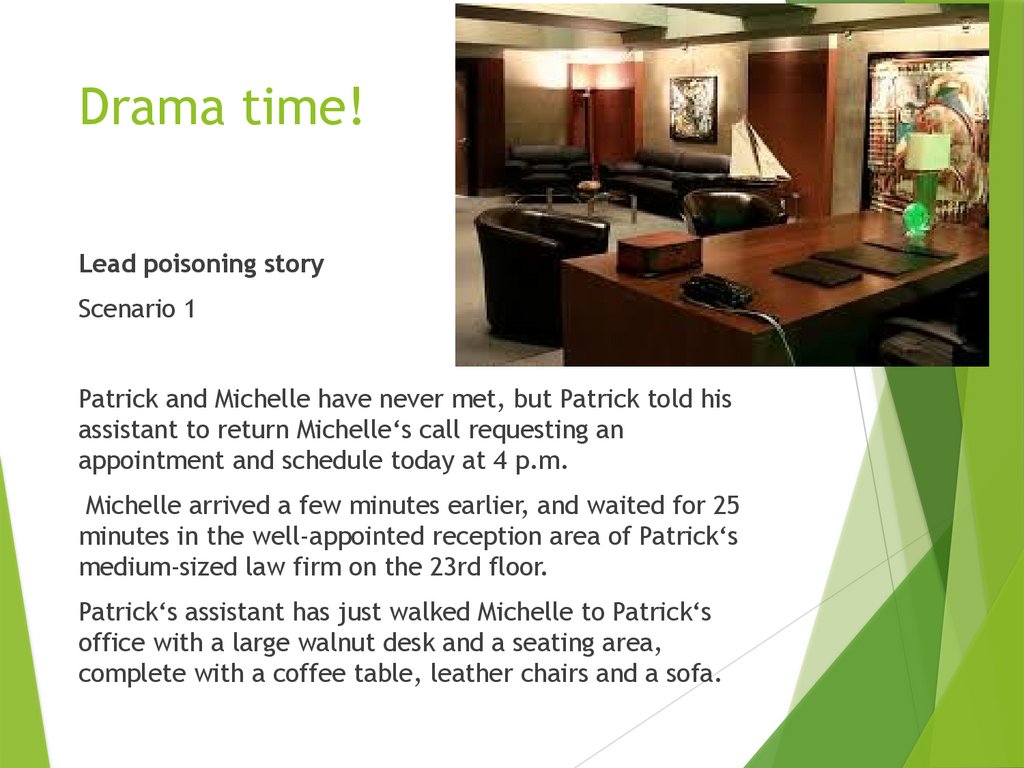
Patrick and Michelle have never met, but Patrick told his
assistant to return Michelle‘s call requesting an
appointment and schedule today at 4 p.m.
Michelle arrived a few minutes earlier, and waited for 25
minutes in the well-appointed reception area of Patrick‘s
medium-sized law firm on the 23rd floor.
Patrick‘s assistant has just walked Michelle to Patrick‘s
office with a large walnut desk and a seating area,
complete with a coffee table, leather chairs and a sofa.
32. Drama time!
Lead poisoning storyScenario 1
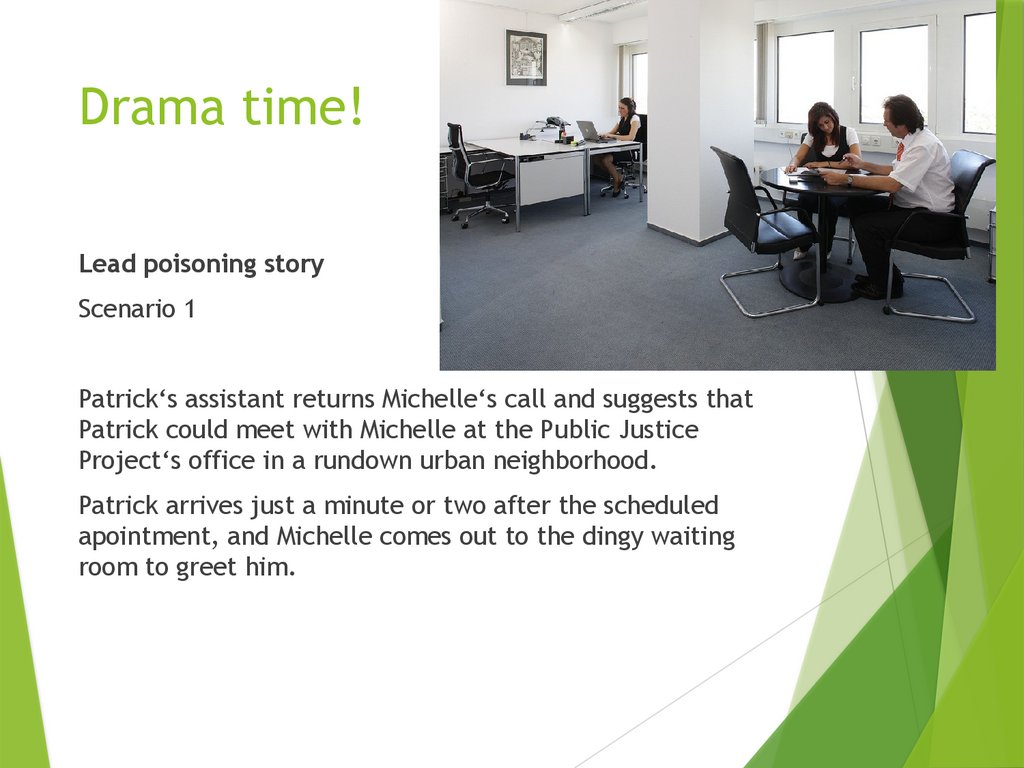
Patrick‘s assistant returns Michelle‘s call and suggests that
Patrick could meet with Michelle at the Public Justice
Project‘s office in a rundown urban neighborhood.
Patrick arrives just a minute or two after the scheduled
apointment, and Michelle comes out to the dingy waiting
room to greet him.
33. Drama time!
Negotiating styles ofparticipants
Blended/Problem-solving approach (a wolf in sheep's clothing)
They seek competitive goals (maximum client returns), but endeavor to accomplish
those objectives through “problem-solving” strategies
Endeavor to maximize client returns
Maximize the fixed pie (look for areas of joint gain)
Disclose information
Rarely uses deceptive tactics
Does not require unreasonable concessions making
The goal is to achieve the result, but not to win negotiations
Causing a feeling of gratitude
Usually looks like a fair negotiation process
Aims to be liked by the opponent (Nothing personal, just business!)
34. Negotiating styles of participants
Basic factors affecting negotiation4. Place of negotiation
Negotiations in one’s own territory
Negotiations in the opponent’s territory
Negotiations in a neutral setting
5. Time of negotiation
Monday or Friday? Morning or evening?
6. Form of negotiation
Remote negotiations
Negotiations by phone
Negotiations by email
35. Basic factors affecting negotiation
Verbal and nonverbalcommunication in negotiation
(and mediation)
36.
Verbal and nonverbalcommunication
Communication
Verbal and nonverbal
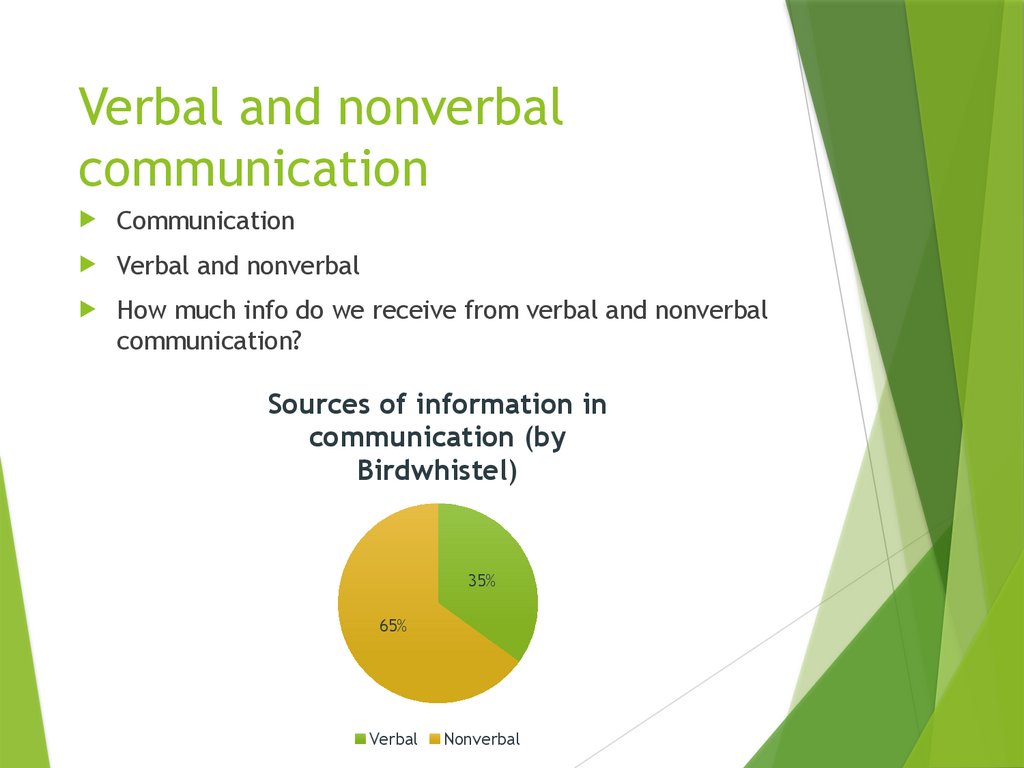
How much info do we receive from verbal and nonverbal
communication?
Sources of information in
communication (by
Birdwhistel)
35%
65%
Verbal
Nonverbal
37. Verbal and nonverbal communication
Verbal communicationClarity of information
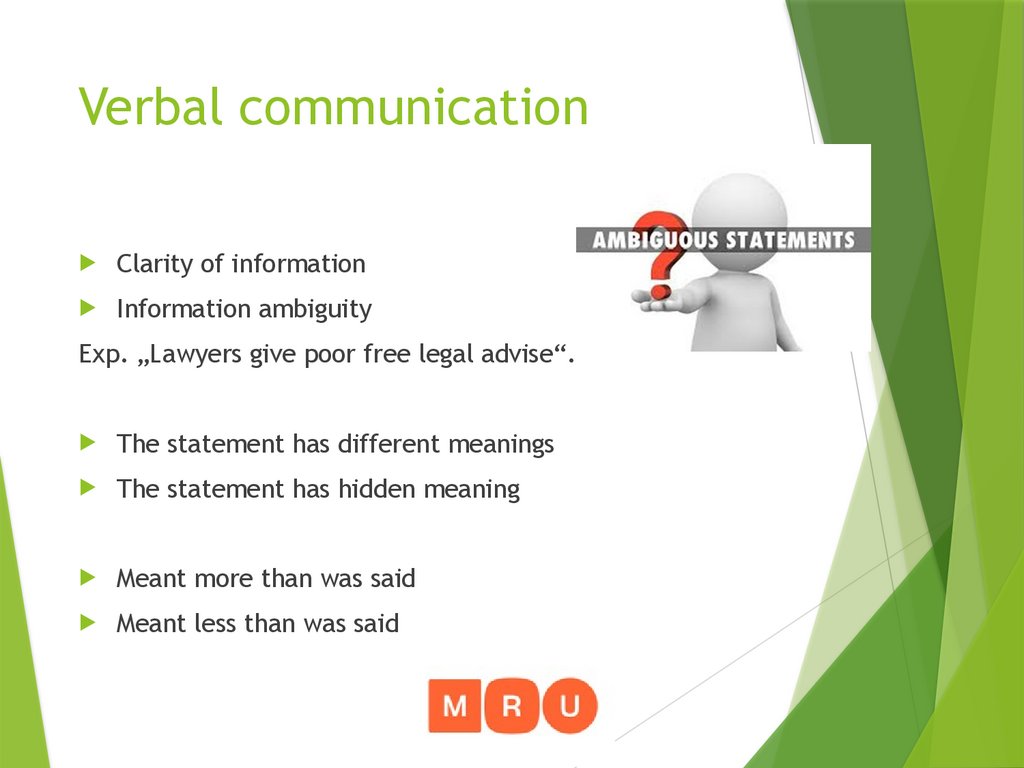
Information ambiguity
Exp. „Lawyers give poor free legal advise“.
The statement has different meanings
The statement has hidden meaning
Meant more than was said
Meant less than was said
38. Verbal communication
1. Verbal leaksA.
„I cannot offer you any more!“
B.
„I am not authorized to offer you any more“.
C.
„I am not able to offer you any more at this time“.
D.
„I do not believe that I can offer you any more“.
E.
„My client is not inclined/does not wish to offer any
more“.
F.
„That’s about as far as I can go/I don’t have much more
room“.
G.
„I must have item 1, I really want item 2, and I would
like to have item 3“.
39. Verbal communication
2. Signal wordsA.
„To be perfectly candid, this is the most I can offer
you“.
B.
„In my humble opinion, I think that my proposal
would satisfy the needs of both of our clients“.
C.
„Do you mind if I suggest…; How about…; Have you
ever considered…“.
D.
„You probably lack the authority to accept the
generous offer I am proposing“.
E.
„I understand how you feel; I see.“.
40. Verbal communication
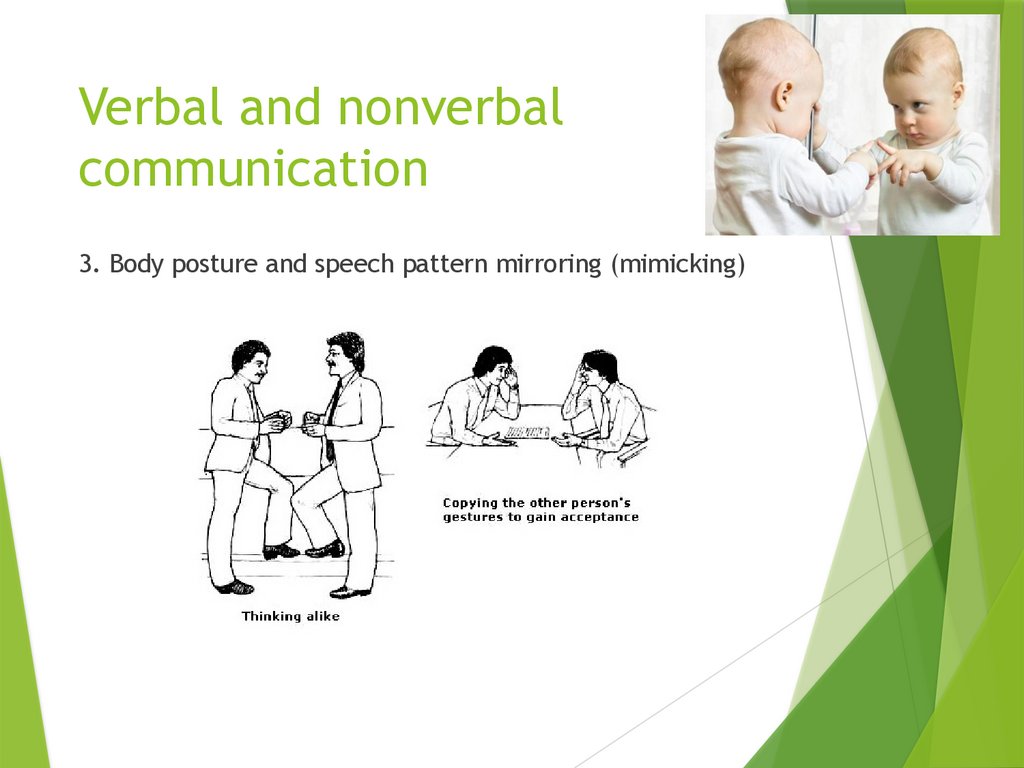
Verbal and nonverbalcommunication
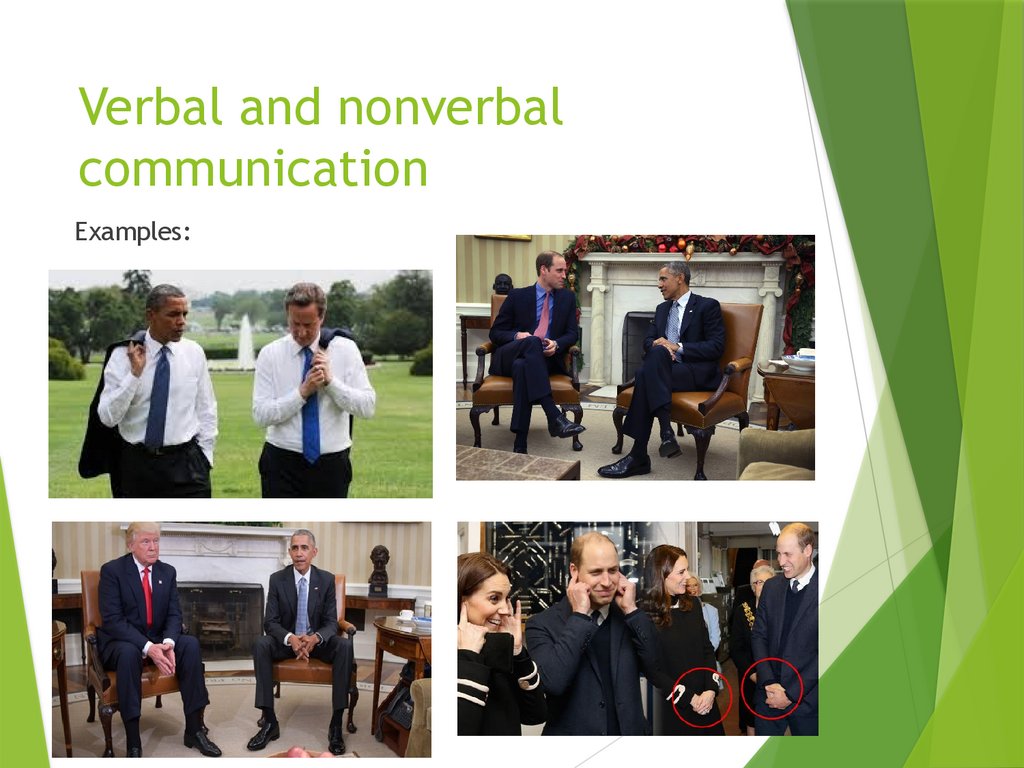
3. Body posture and speech pattern mirroring (mimicking)
41. Verbal and nonverbal communication
Examples:42. Verbal and nonverbal communication
4. Sensory preference reflectionVisual orientation
Auditory orientation
Kinesthetic (touch) orientation
43. Verbal and nonverbal communication
Nonverbal communication1.
Reading and interpreting nonverbal communication
Body language of opponent
Self body language
Question:
Is it possible to fake non-verbal signals to confuse your
opponent? (PT)
44. Nonverbal communication
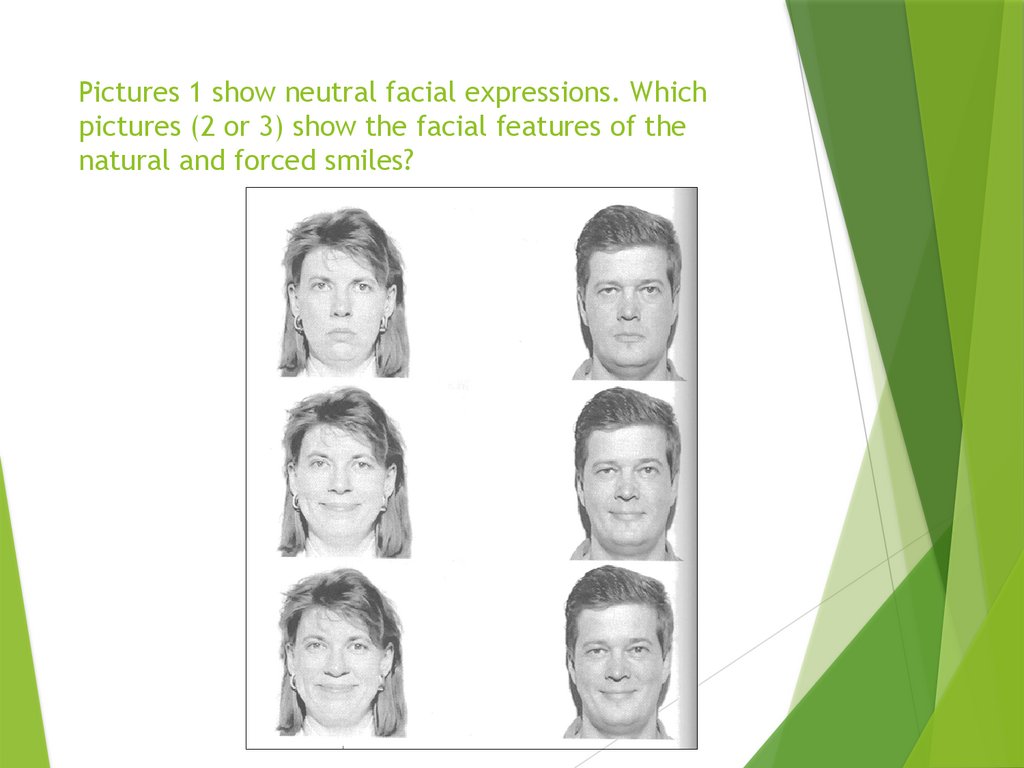
Pictures 1 show neutral facial expressions. Whichpictures (2 or 3) show the facial features of the
natural and forced smiles?
45. Pictures 1 show neutral facial expressions. Which pictures (2 or 3) show the facial features of the natural and forced smiles?
Nonverbal communicationGolden rule of the negotiator:
NOT SEPARATE BODY MOVEMENTS MUST BE
INTERPRETED, BUT
1) ALL BODY IN COMPLEX,
2) CHANGES IN BEHAVIOR.
46. Nonverbal communication
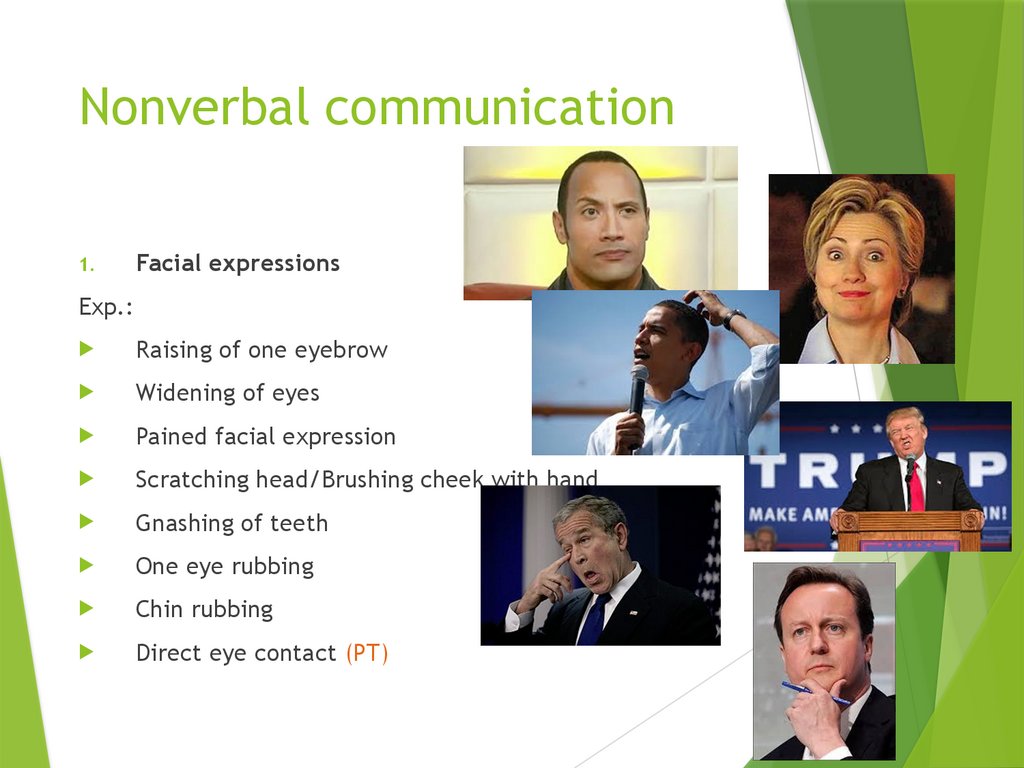
1.Facial expressions
Exp.:
Raising of one eyebrow
Widening of eyes
Pained facial expression
Scratching head/Brushing cheek with hand
Gnashing of teeth
One eye rubbing
Chin rubbing
Direct eye contact (PT)
47. Nonverbal communication
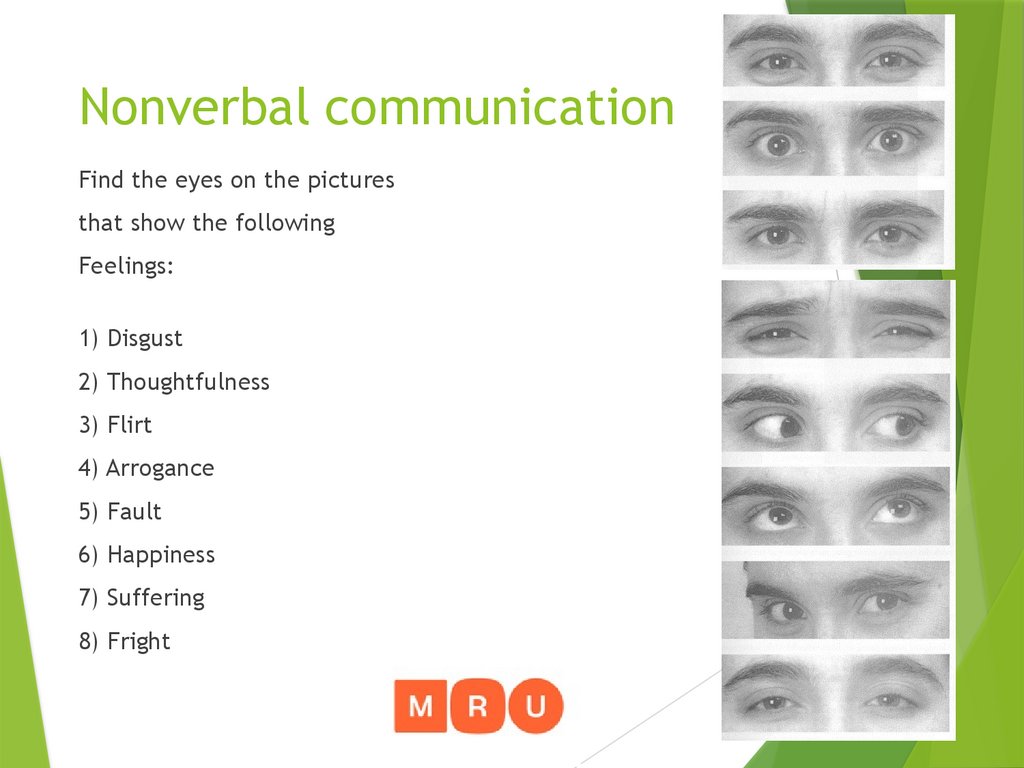
Find the eyes on the picturesthat show the following
Feelings:
1) Disgust
2) Thoughtfulness
3) Flirt
4) Arrogance
5) Fault
6) Happiness
7) Suffering
8) Fright
48. Nonverbal communication
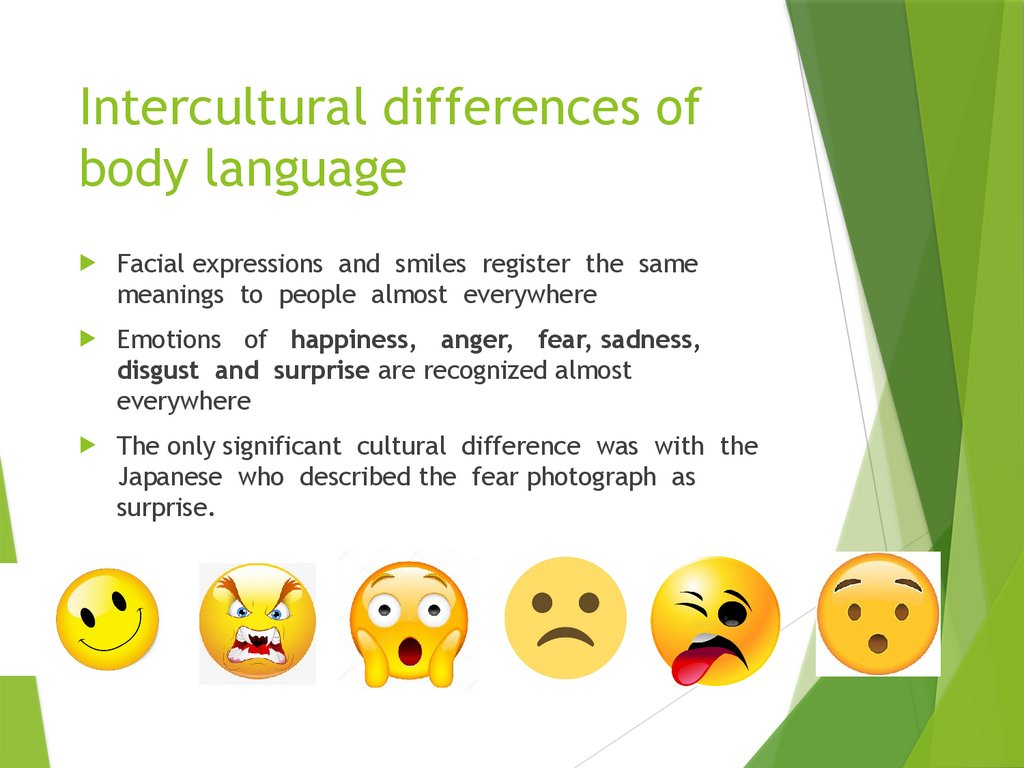
Intercultural differences ofbody language
Facial expressions and smiles register the same
meanings to people almost everywhere
Emotions of happiness, anger, fear, sadness,
disgust and surprise are recognized almost
everywhere
The only significant cultural difference was with the
Japanese who described the fear photograph as
surprise.
49. Intercultural differences of body language
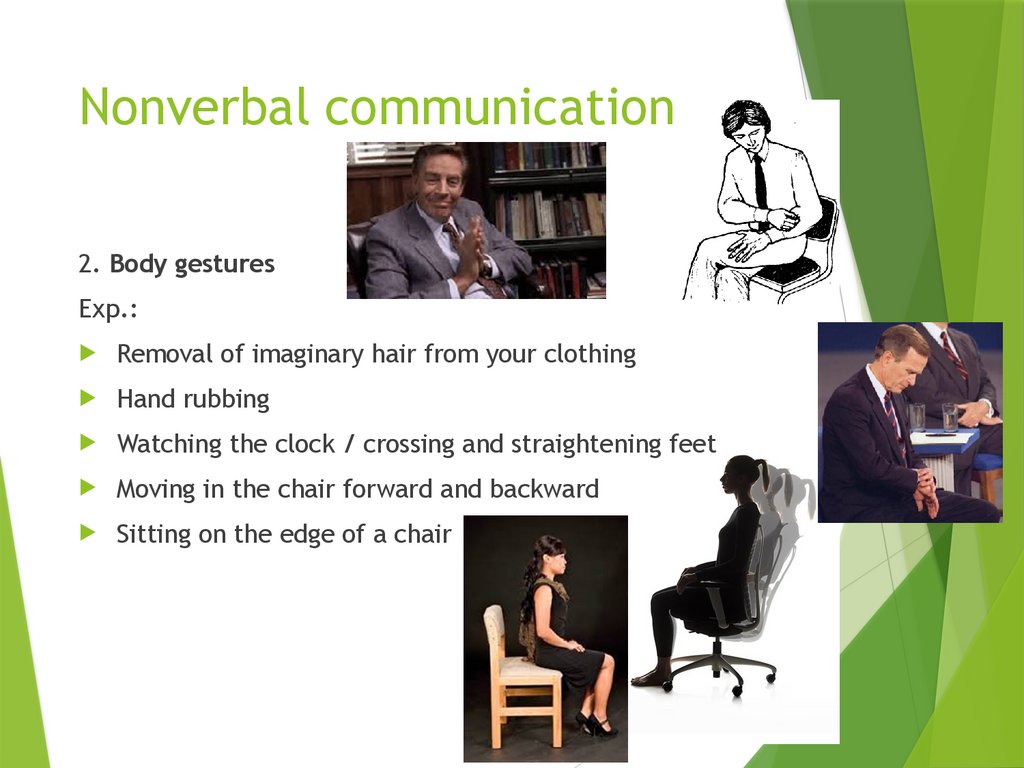
Nonverbal communication2. Body gestures
Exp.:
Removal of imaginary hair from your clothing
Hand rubbing
Watching the clock / crossing and straightening feet
Moving in the chair forward and backward
Sitting on the edge of a chair
50. Nonverbal communication
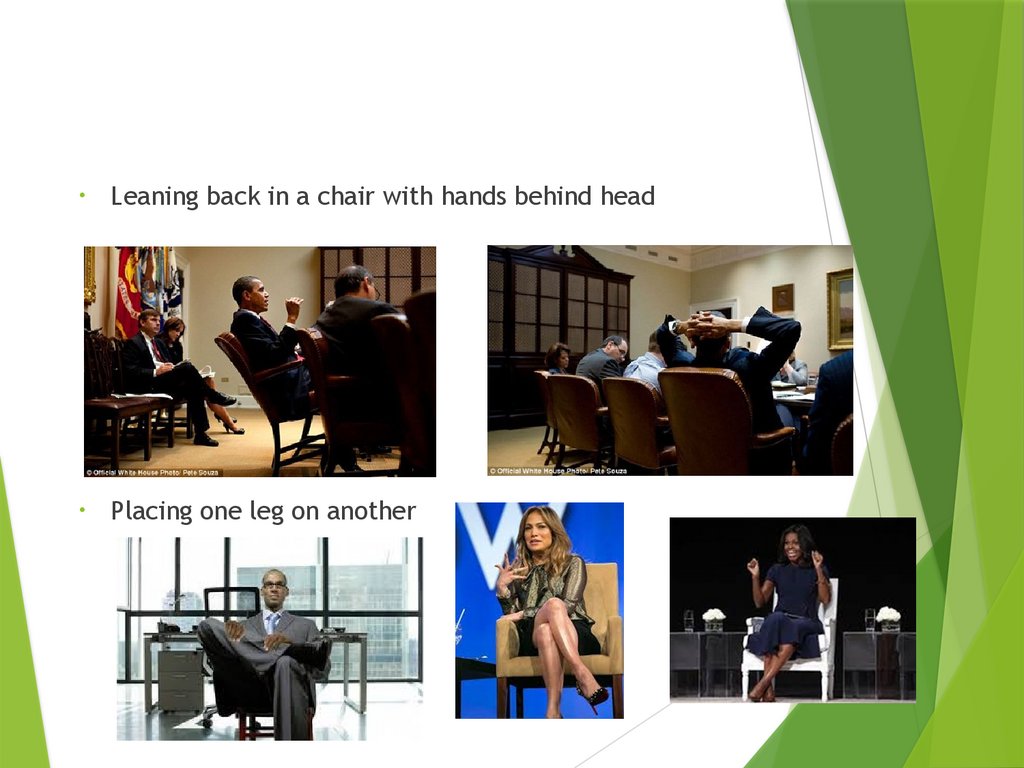
Leaning back in a chair with hands behind head
Placing one leg on another
51.
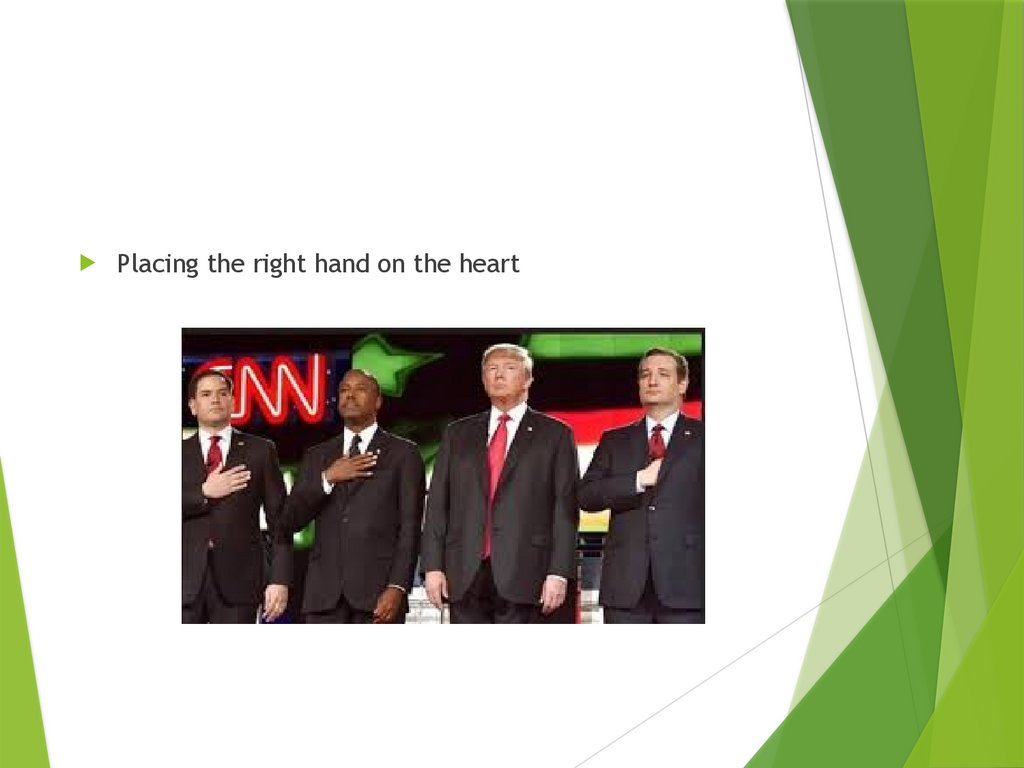
Placing the right hand on the heart52.
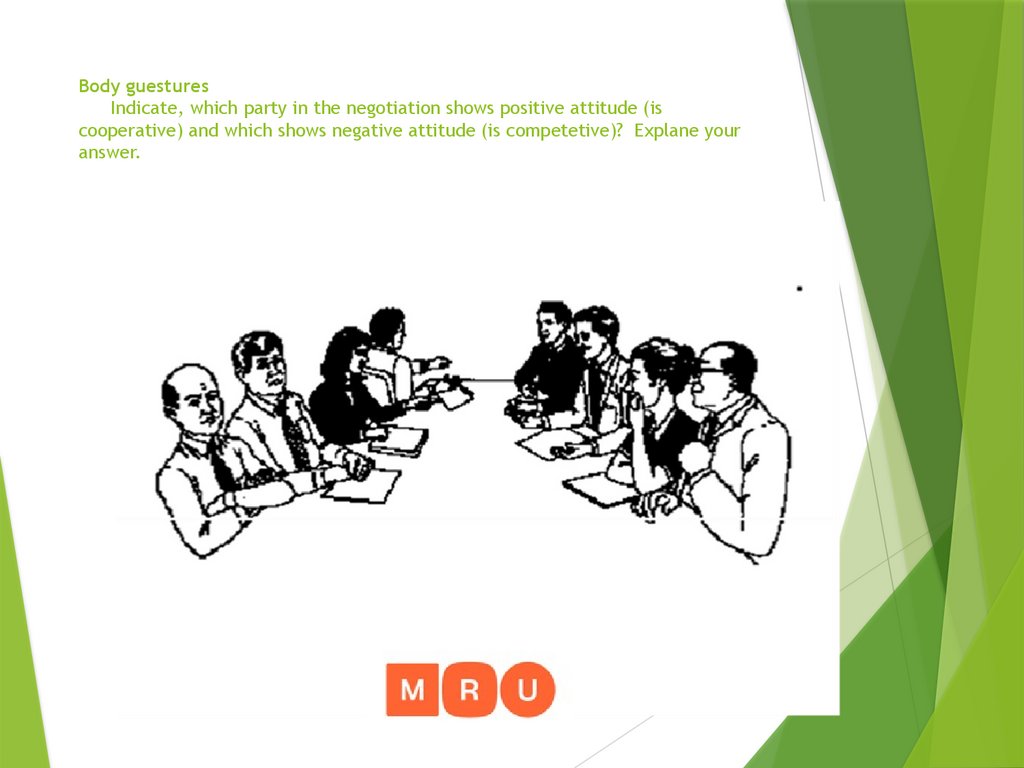
Body guesturesIndicate, which party in the negotiation shows positive attitude (is
cooperative) and which shows negative attitude (is competetive)? Explane your
answer.
53. Body guestures Indicate, which party in the negotiation shows positive attitude (is cooperative) and which shows negative
Nonverbal communicationFlirt
Lack of body language
Body language while negotiating in a team
54. Nonverbal communication
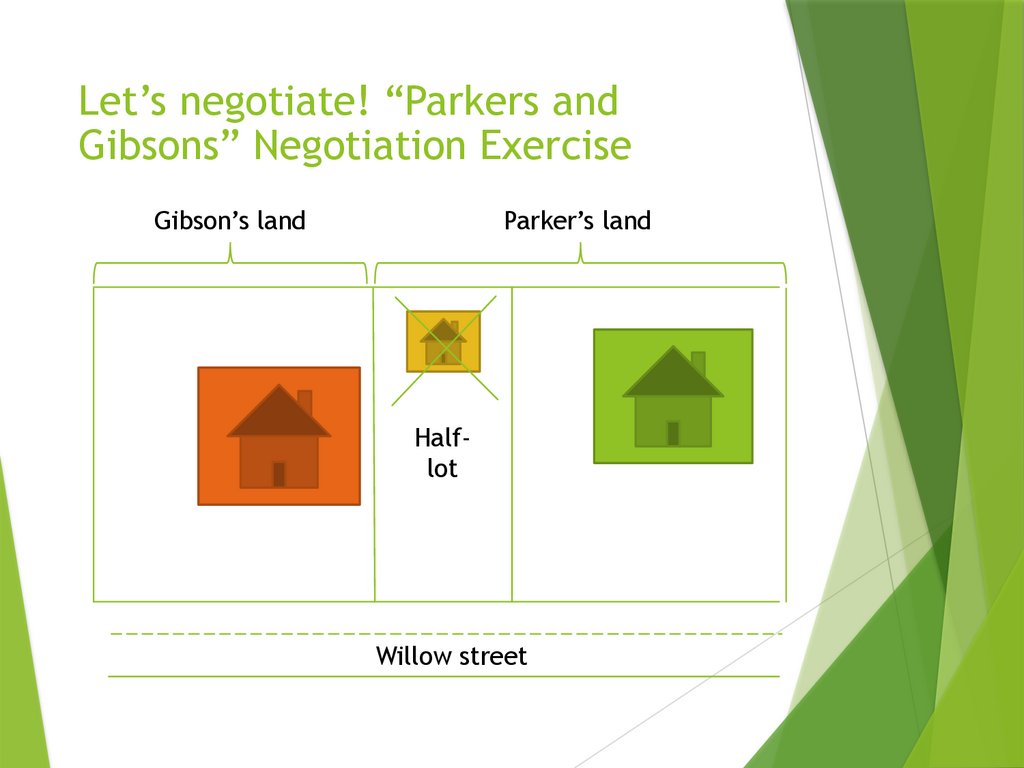
Let’s negotiate! “Parkers andGibsons” Negotiation Exercise
Gibson’s land
Parker’s land
Halflot
Willow street
55. Let’s negotiate! “Parkers and Gibsons” Negotiation Exercise
Negotiating techniquesNegotiation
technique – the behavior of a
negotiator aimed at forcing the opponent to act
in a manner favorable to the negotiator.
Recognize and counteract
Isolated or combined techniques
56.
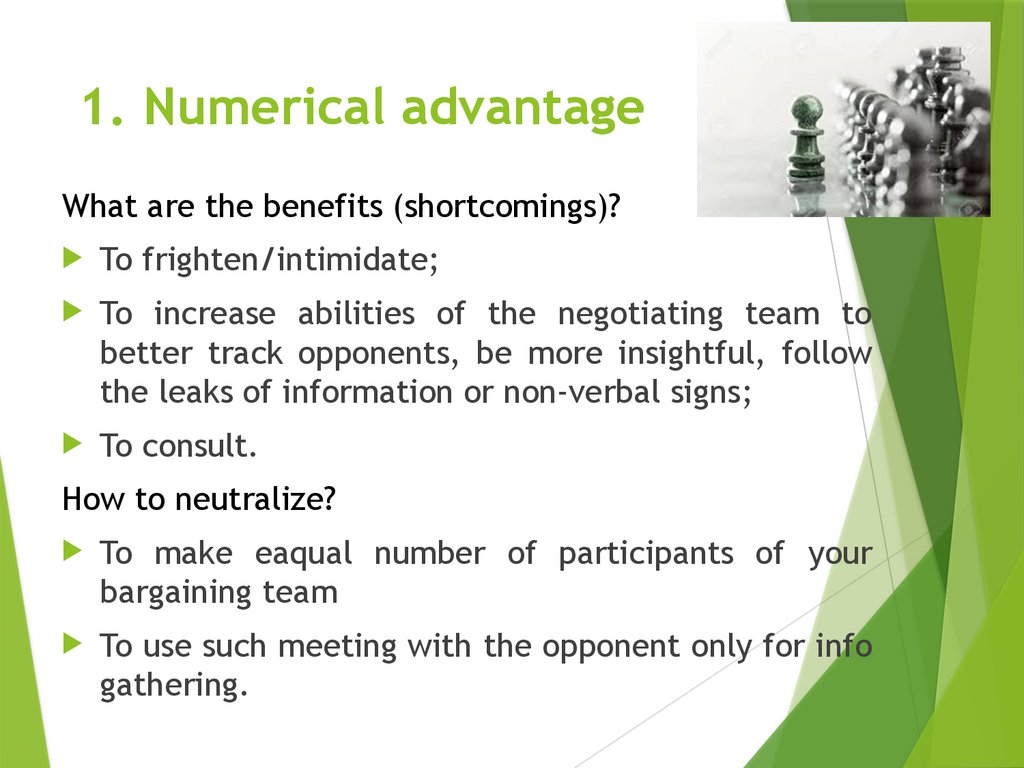
1. Numerical advantageWhat are the benefits (shortcomings)?
To frighten/intimidate;
To
increase abilities of the negotiating team to
better track opponents, be more insightful, follow
the leaks of information or non-verbal signs;
To consult.
How to neutralize?
To
make eaqual number of participants of your
bargaining team
To use such meeting with the opponent only for info
gathering.
57. 1. Numerical advantage
2. Use of time pressureWhat are the benefits (shortcomings)?
Negotiators
whose
„terms
are
burning"
often
conceed.
How to neutralize?
Whenever possible, try to withhold information that
might suggest the existence of time constraint
Perform
preventive actions to make time factor
neutralized.
58. 2. Use of time pressure
3. Unspecific offer/demand“We would like to receive 10,000-15,000 euros in
damages”
“The discount could be about 500 euros, no more”
The goal is to show the ability to negotiate, the
willingness to agree.
But! When using this technique, be aware that the offer
sounds unconvincing. The negotiator looks unprepared.
59. 3. Unspecific offer/demand
4. Use of probing questionsWhat are the benefits (shortcomings)?
„Unrealistic" proposal is asked to split into smaller
components. In this way, opponents can be forced to
rationally justify their position or to acknowledge
that certain components of the proposal has been
overestimated.
Then the negotiator submits a series of questions
about each component of the proposal, forcing
opponents to rethink every aspect of their proposal
and each of them to re-evaluate.
How to neutralize?
Have justification for any of your proposal
component.
60. 4. Use of probing questions
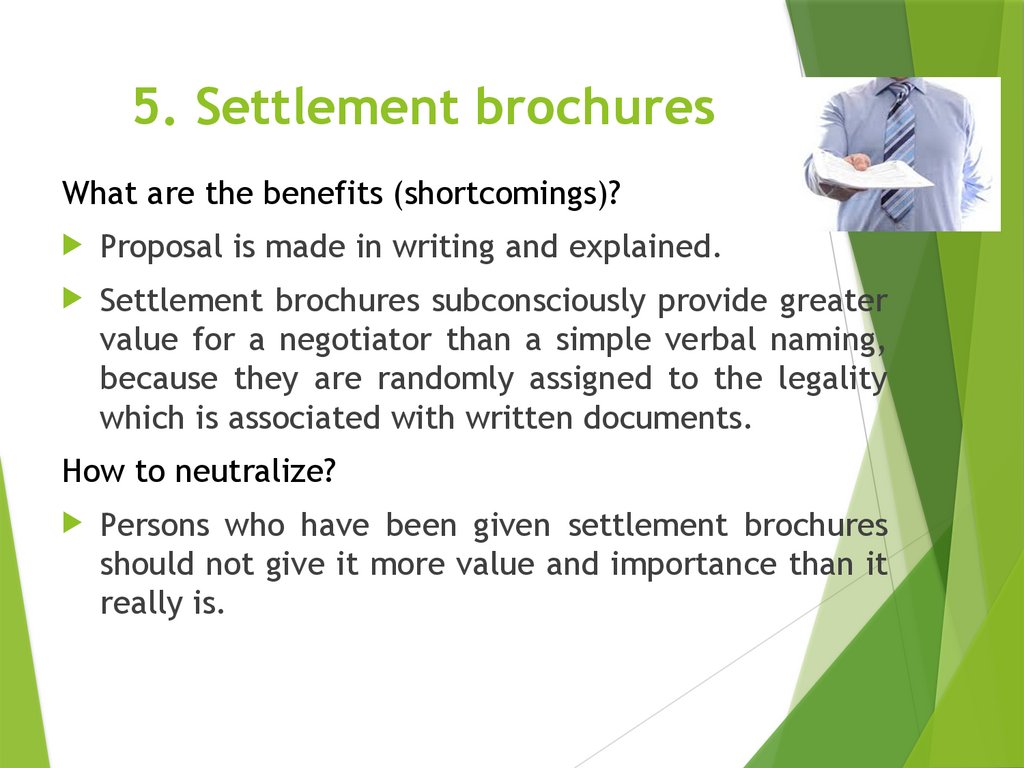
5. Settlement brochuresWhat are the benefits (shortcomings)?
Proposal is made in writing and explained.
Settlement brochures subconsciously provide greater
value for a negotiator than a simple verbal naming,
because they are randomly assigned to the legality
which is associated with written documents.
How to neutralize?
Persons who have been given settlement brochures
should not give it more value and importance than it
really is.
61. 5. Settlement brochures
6. Setting limitsLimits (or boundaries) in negotiations can be set by
appealing to company rules or policies; defining what is
and is not negotiable.
Neutralization:
Ask why?
Don’t attack the limit right away. Try to reach an
agreement on other negotiation issues. This will make
the opponent less likely to lose the progress they have
already made and more likely to lower the previously
set limit.
62. 6. Setting limits
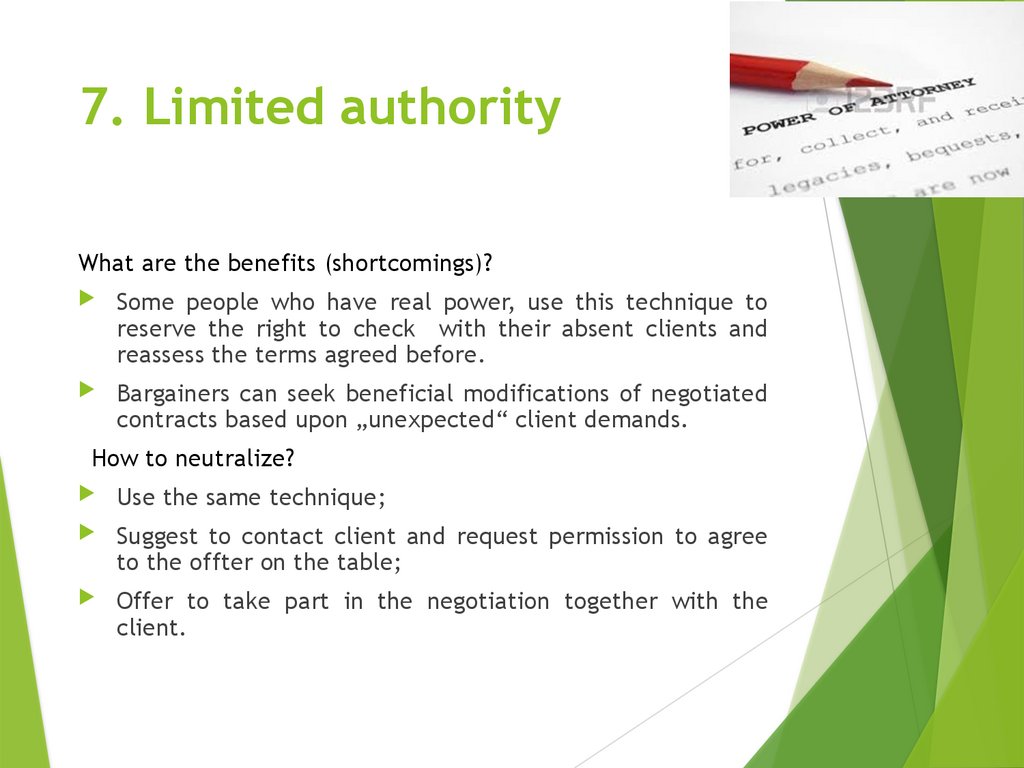
7. Limited authorityWhat are the benefits (shortcomings)?
Some people who have real power, use this technique to
reserve the right to check with their absent clients and
reassess the terms agreed before.
Bargainers can seek beneficial modifications of negotiated
contracts based upon „unexpected“ client demands.
How to neutralize?
Use the same technique;
Suggest to contact client and request permission to agree
to the offter on the table;
Offer to take part in the negotiation together with the
client.
63. 7. Limited authority
8. Conditional concessionsIf you..., then we...
„If you agree to a longer contract term, then we can offer a lower
monthly rate“.
„We're willing to go up to 120,000 Eur for the house, but only if
you can accept a closing date of September 15th“.
What are the benefits (shortcomings)?
Used when each side is reluctant to make concessions because of
the fear that the other party will not make concession from their
own side.
Conditional concessions provide an opportunity for the parties who
are temporarily resisting to move together.
The risk is that conditional position change may be rejected and
this technique understood as a clear signal to the other side of your
willingness to change your position and make concession.
64. 8. Conditional concessions
9. If it weren‘t for you (oryour client)
"If you hadn't been late for this meeting...“
"If you had cooperated earlier..."
What are the benefits (shortcomings)?
This technique is designed to generate inappropriate
guilt or embarrassment.
Manipulative
opponents may endeavor to create
feelings of guilt or embarrassment by focusing upon
ingisnifficant personal transgressions.
65. 9. If it weren‘t for you (or your client)
10. Alleged expertiseWhat are the benefits (shortcomings)?
Negotiators
attempt to overwhelm bargaining
opponents with factual and/or legal details that are
not particularly relevant to the basic interacion.
How to neutralize?
Praise the opponent for the careful preparation and
ask if he could concentrate on the main subjects of
negotiation.
By your real expertise knowledge on the subject you
can force opponents to abandon „know-all“ position
66. 10. Alleged expertise
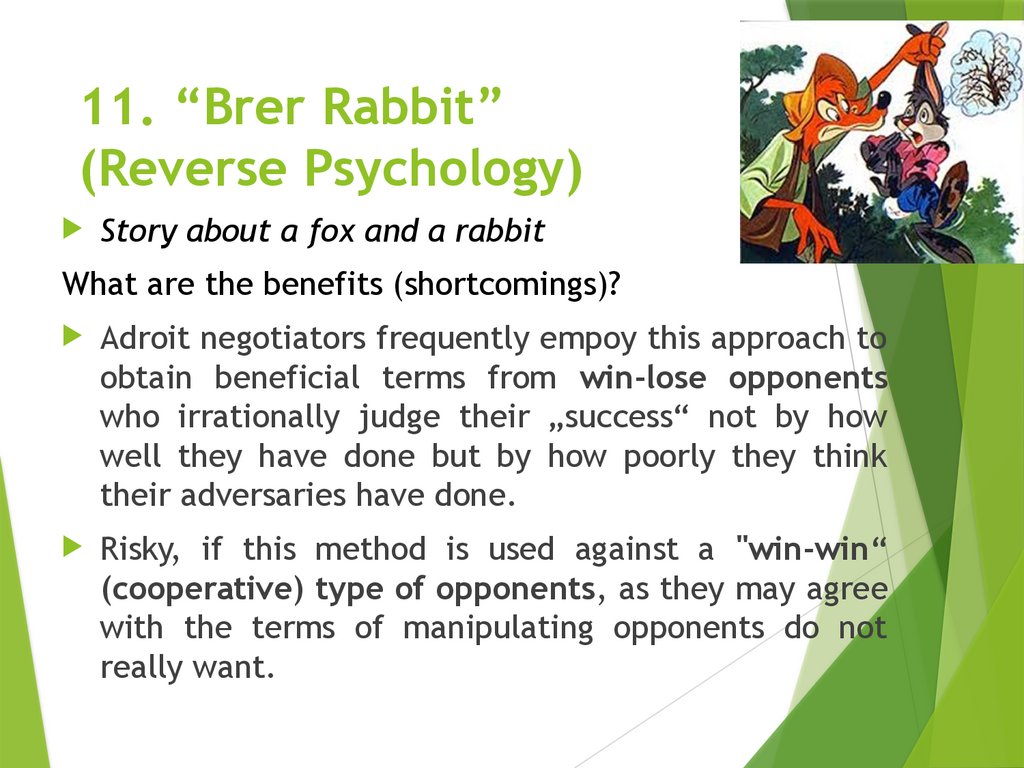
11. “Brer Rabbit”(Reverse Psychology)
Story about a fox and a rabbit
What are the benefits (shortcomings)?
Adroit negotiators frequently empoy this approach to
obtain beneficial terms from win-lose opponents
who irrationally judge their „success“ not by how
well they have done but by how poorly they think
their adversaries have done.
Risky,
if this method is used against a "win-win“
(cooperative) type of opponents, as they may agree
with the terms of manipulating opponents do not
really want.
67. 11. “Brer Rabbit” (Reverse Psychology)
12. Diminishing ofopponent‘s concessions
What are the benefits (shortcomings)?
Some people try to avoid commitment to make
reciprocal
concessions
undermining
the
significance of the concessions made by the other
party. They behave as if the things that were
given to them are irrelevant or little value to
them.
How to neutralize?
To say that if something that was just promissed is
not necessary for the other party, you may take it
back.
68. 12. Diminishing of opponent‘s concessions
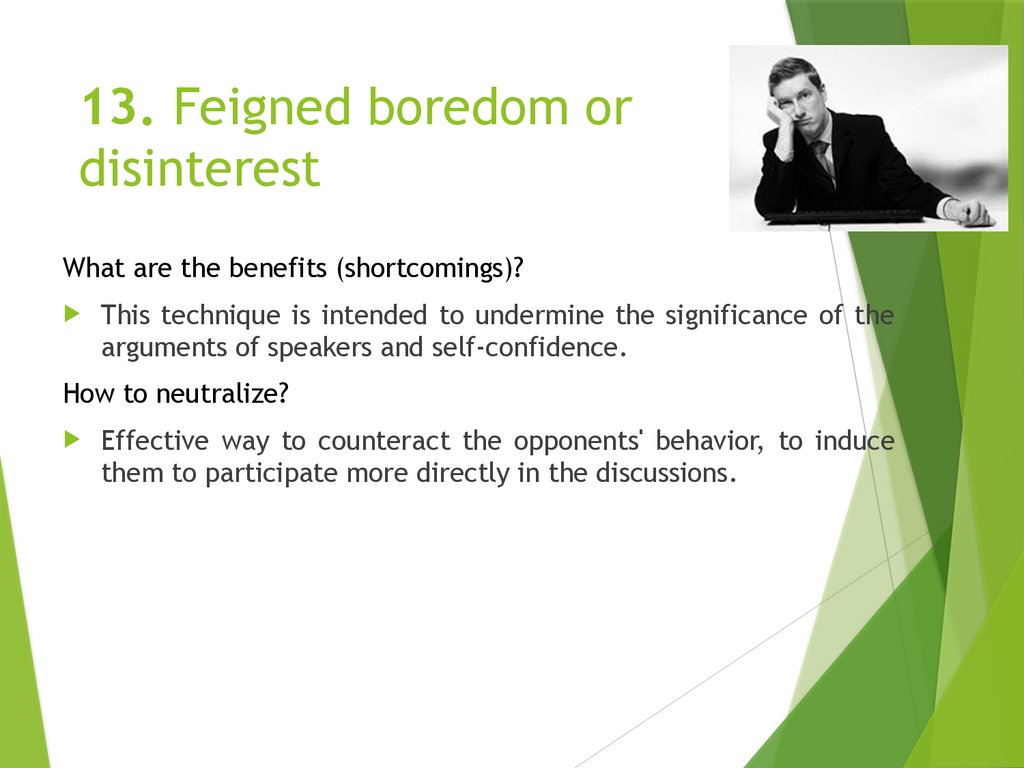
13. Feigned boredom ordisinterest
What are the benefits (shortcomings)?
This technique is intended to undermine the significance of the
arguments of speakers and self-confidence.
How to neutralize?
Effective way to counteract the opponents' behavior, to induce
them to participate more directly in the discussions.
69. 13. Feigned boredom or disinterest
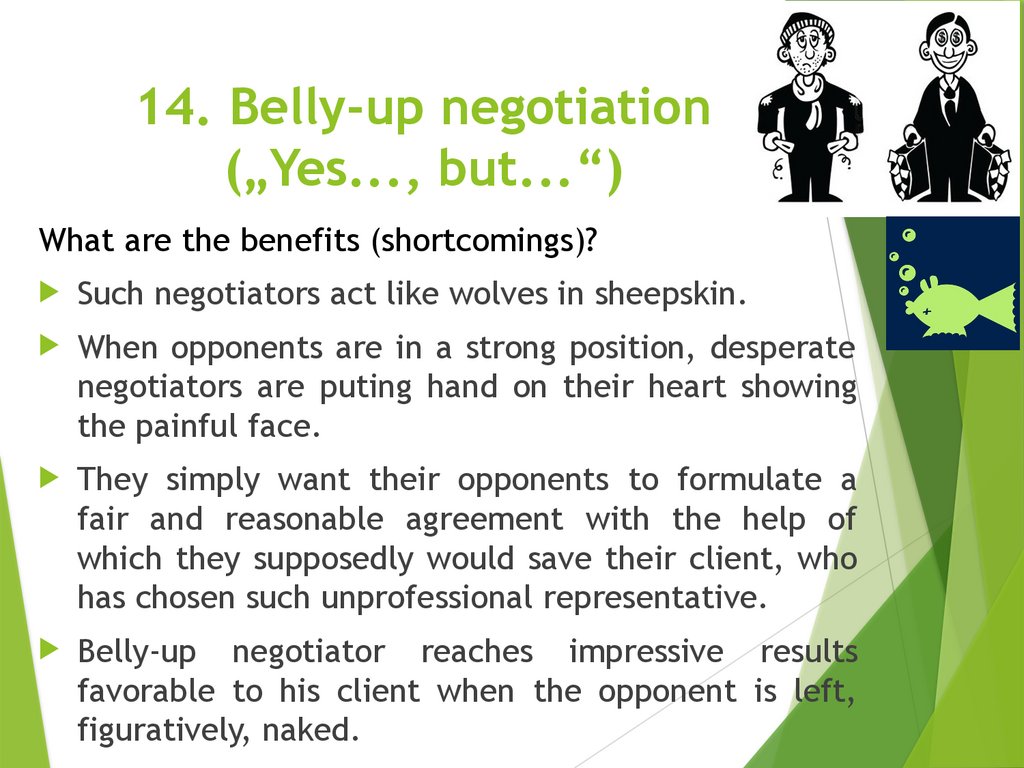
14. Belly-up negotiation(„Yes..., but...“)
What are the benefits (shortcomings)?
Such negotiators act like wolves in sheepskin.
When opponents are in a strong position, desperate
negotiators are puting hand on their heart showing
the painful face.
They simply want
their opponents to formulate a
fair and reasonable agreement with the help of
which they supposedly would save their client, who
has chosen such unprofessional representative.
Belly-up
negotiator reaches impressive results
favorable to his client when the opponent is left,
figuratively, naked.
70. 14. Belly-up negotiation („Yes..., but...“)
15. Splitting the differenceWhat are the benefits (shortcomings)?
This is one of the most common techniques used to
achive the final agreement - offering to split the
rest of the negotiating gap by 50/50.
How to neutralize?
Review prior concessions
Refuse
to assume responsibility for the remaining
difference or offer more favorable ratio (eg., 75/25)
Sometimes it is useful to allow opponents to offer to
split the difference first.
71. 15. Splitting the difference
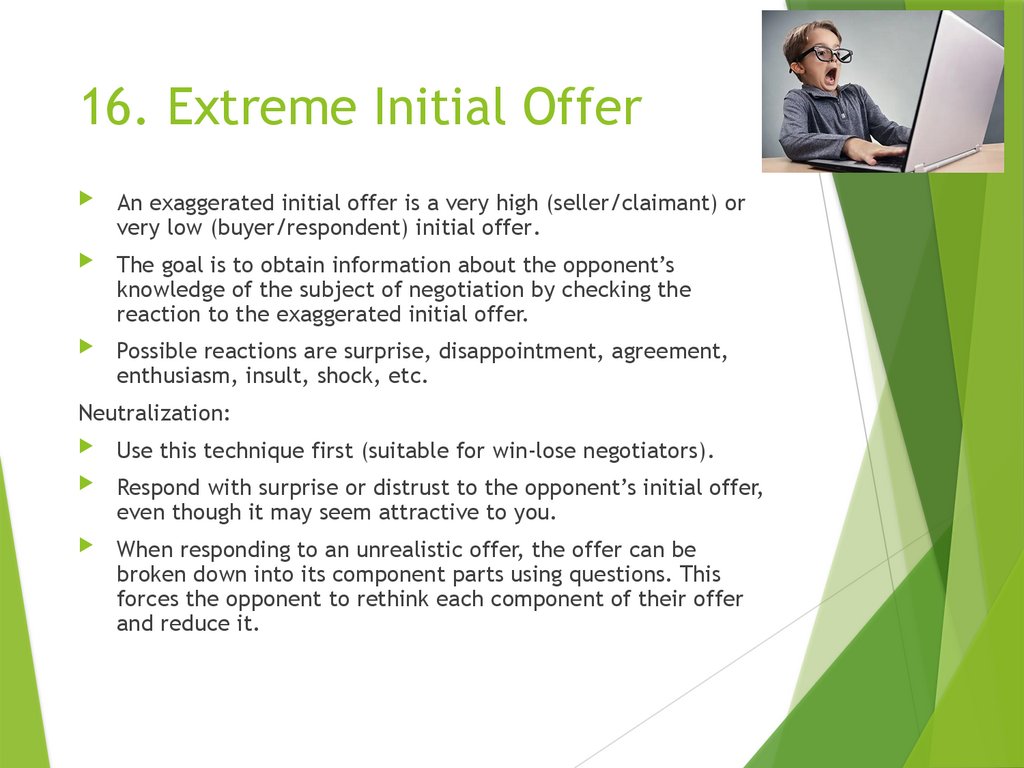
16. Extreme Initial OfferAn exaggerated initial offer is a very high (seller/claimant) or
very low (buyer/respondent) initial offer.
The goal is to obtain information about the opponent’s
knowledge of the subject of negotiation by checking the
reaction to the exaggerated initial offer.
Possible reactions are surprise, disappointment, agreement,
enthusiasm, insult, shock, etc.
Neutralization:
Use this technique first (suitable for win-lose negotiators).
Respond with surprise or distrust to the opponent’s initial offer,
even though it may seem attractive to you.
When responding to an unrealistic offer, the offer can be
broken down into its component parts using questions. This
forces the opponent to rethink each component of their offer
and reduce it.
72. 16. Extreme Initial Offer
18. Fake concessionsBecause we like to think that we have negotiated something, opponents
often use discounts in combination with an inflated initial offer.
In some cases, bonuses offered together with the negotiation object
seem even more valuable than the negotiation object itself.
Neutralization:
Pay attention to the time of making discounts. Do you already hear the
discount in the initial offer? (“This product costs 50 Eur, but how about
we sell it to you for 40 Eur”)?
Evaluate the size of the concessions. If several concessions of the same
amount are made in a row, they are fake.
For example, 100 Eur initial price
90 Eur – 10 Eur discount (10 percent)
80 Eur – 10 Eur discount (20 percent)
70 Eur – 10 Eur discount (30 percent)
73. 18. Fake concessions
19. Aggressive behaviorWell-acted anger. Professional negotiators always control
themselves.
The goal is to convince the opponent of the strength of their
position.
Studies have shown that when faced with aggressive
opponents, negotiators tend to lower their expectations and
make more generous concessions.
Neutralization:
Do not behave in the same way.
Remind the purpose of the meeting.
Communication at a distance (on-line, by phone, e-mail).
Never make a concession after the opponent's aggressive
outburst (throwing the phone, slamming the door, etc.).
74. 19. Aggressive behavior
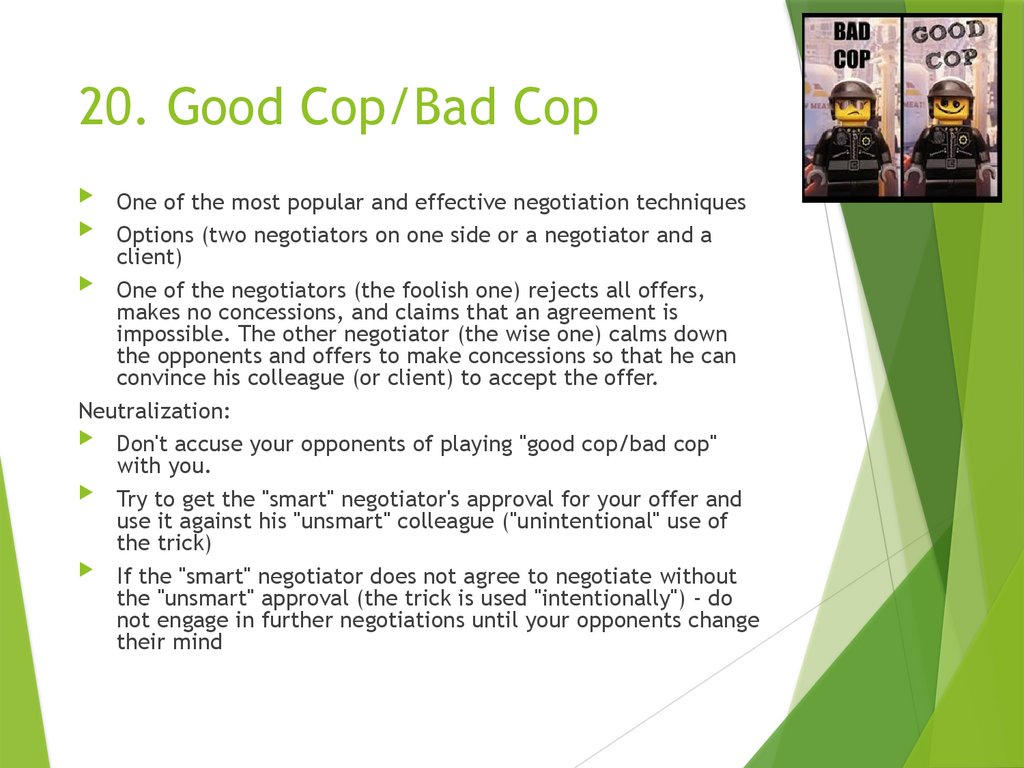
20. Good Cop/Bad CopOne of the most popular and effective negotiation techniques
Options (two negotiators on one side or a negotiator and a
client)
One of the negotiators (the foolish one) rejects all offers,
makes no concessions, and claims that an agreement is
impossible. The other negotiator (the wise one) calms down
the opponents and offers to make concessions so that he can
convince his colleague (or client) to accept the offer.
Neutralization:
Don't accuse your opponents of playing "good cop/bad cop"
with you.
Try to get the "smart" negotiator's approval for your offer and
use it against his "unsmart" colleague ("unintentional" use of
the trick)
If the "smart" negotiator does not agree to negotiate without
the "unsmart" approval (the trick is used "intentionally") - do
not engage in further negotiations until your opponents change
their mind
75. 20. Good Cop/Bad Cop
Evaluate yourselfGroup work (3 groups).
Is that negotiation? Who are the parties? Evaluate negotiation styles, verbal and
nonverbal communication of negotiators.
Any negotiation tricks?
Intolerable cruelty Negotiation scene
https://www.youtube.com/watch?v=MTYwvD9gOlA
Erin Brockovich Negotiation scene
https://www.youtube.com/watch?v=5Jdk3riKKwo
Arbitrage Negotiation scene
https://www.youtube.com/watch?v=neP_2kZlcb0
76. Evaluate yourself
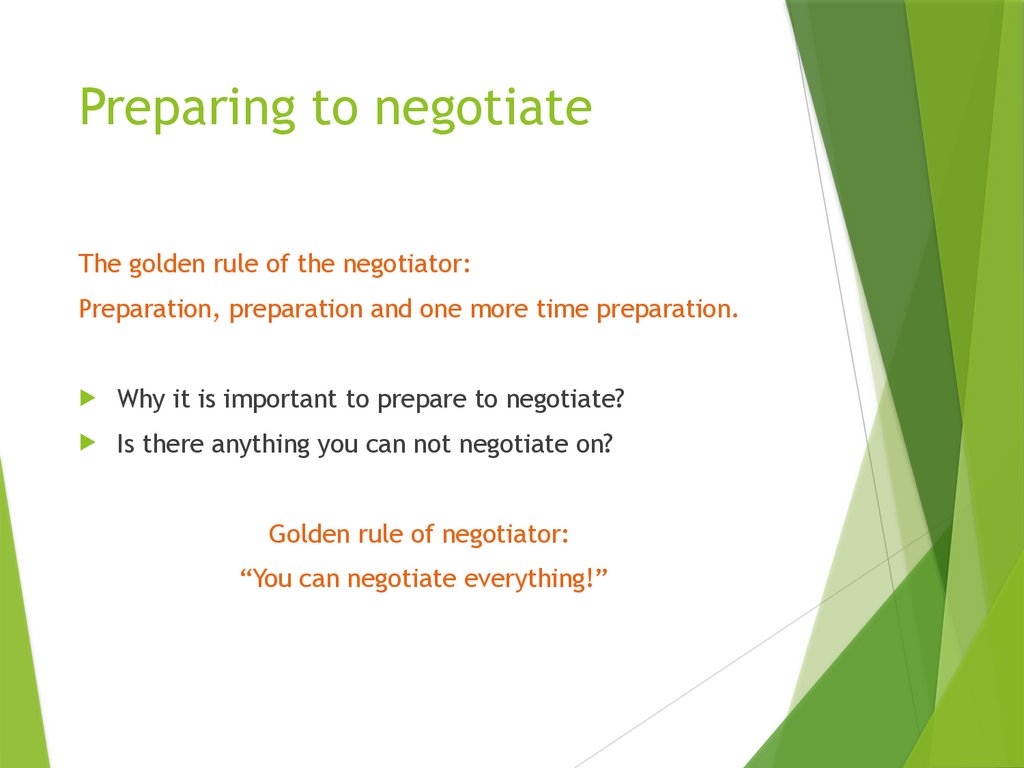
Preparing to negotiateThe golden rule of the negotiator:
Preparation, preparation and one more time preparation.
Why it is important to prepare to negotiate?
Is there anything you can not negotiate on?
Golden rule of negotiator:
“You can negotiate everything!”
77. Preparing to negotiate
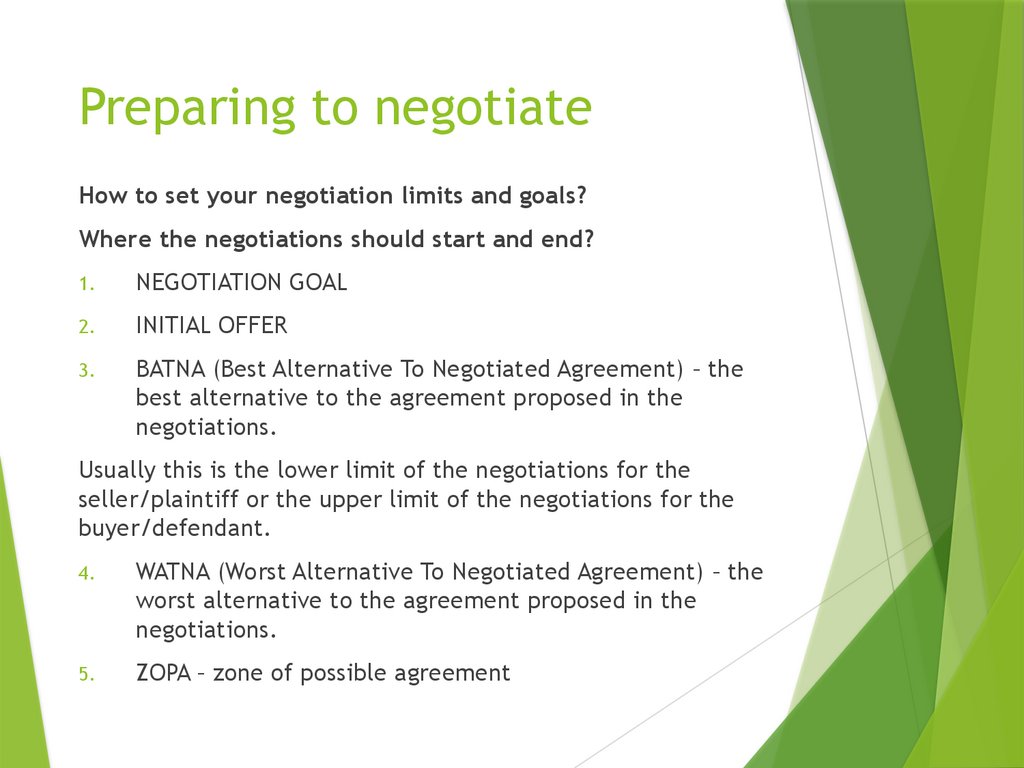
How to set your negotiation limits and goals?Where the negotiations should start and end?
1.
NEGOTIATION GOAL
2.
INITIAL OFFER
3.
BATNA (Best Alternative To Negotiated Agreement) – the
best alternative to the agreement proposed in the
negotiations.
Usually this is the lower limit of the negotiations for the
seller/plaintiff or the upper limit of the negotiations for the
buyer/defendant.
4.
WATNA (Worst Alternative To Negotiated Agreement) – the
worst alternative to the agreement proposed in the
negotiations.
5.
ZOPA – zone of possible agreement
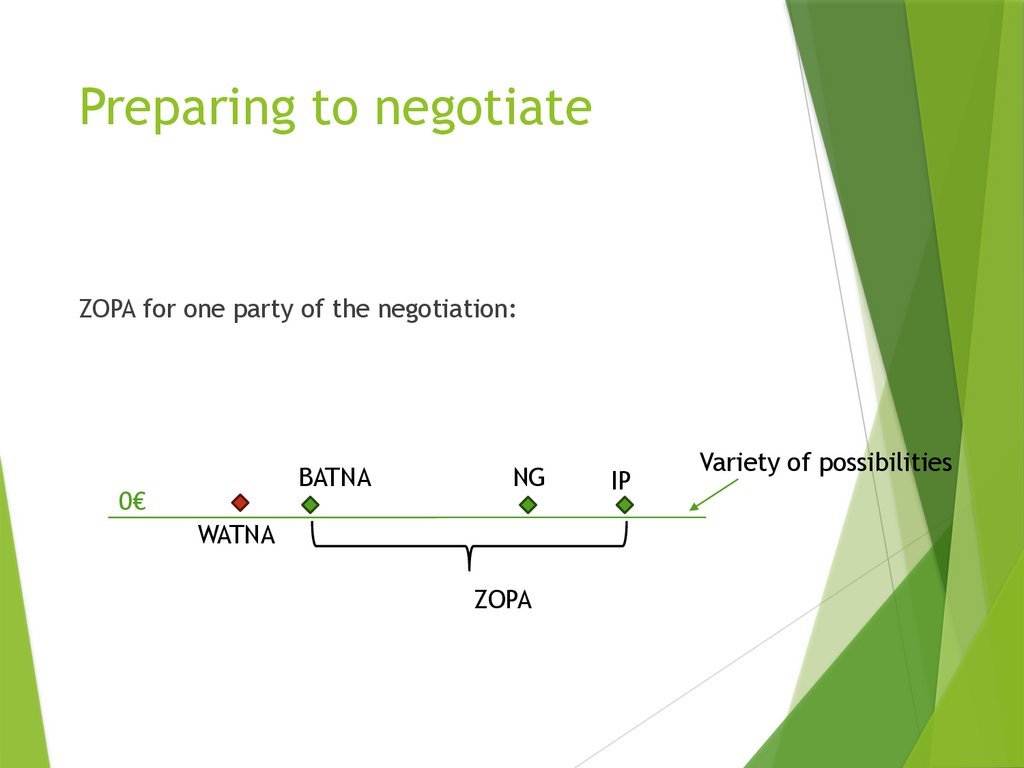
78. Preparing to negotiate
ZOPA for one party of the negotiation:BATNA
0€
NG
WATNA
ZOPA
IP
Variety of possibilities
79. Preparing to negotiate
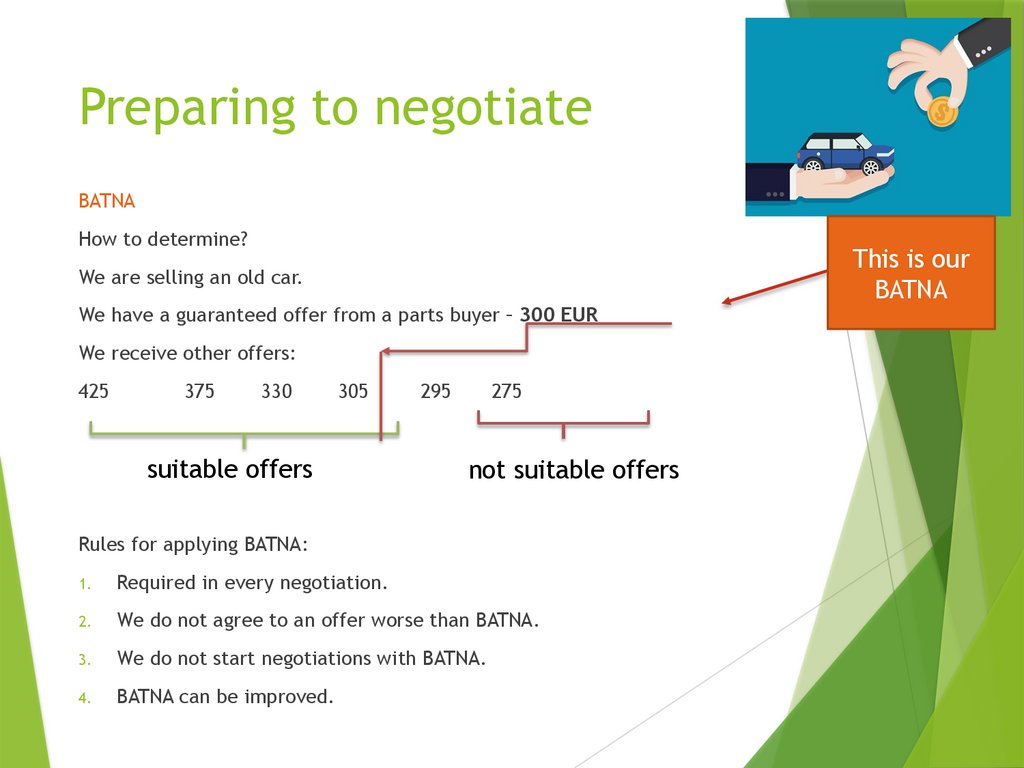
BATNAHow to determine?
We are selling an old car.
We have a guaranteed offer from a parts buyer – 300 EUR
We receive other offers:
425
375
330
305
suitable offers
295
275
not suitable offers
Rules for applying BATNA:
1.
Required in every negotiation.
2.
We do not agree to an offer worse than BATNA.
3.
We do not start negotiations with BATNA.
4.
BATNA can be improved.
This is our
BATNA
80. Preparing to negotiate
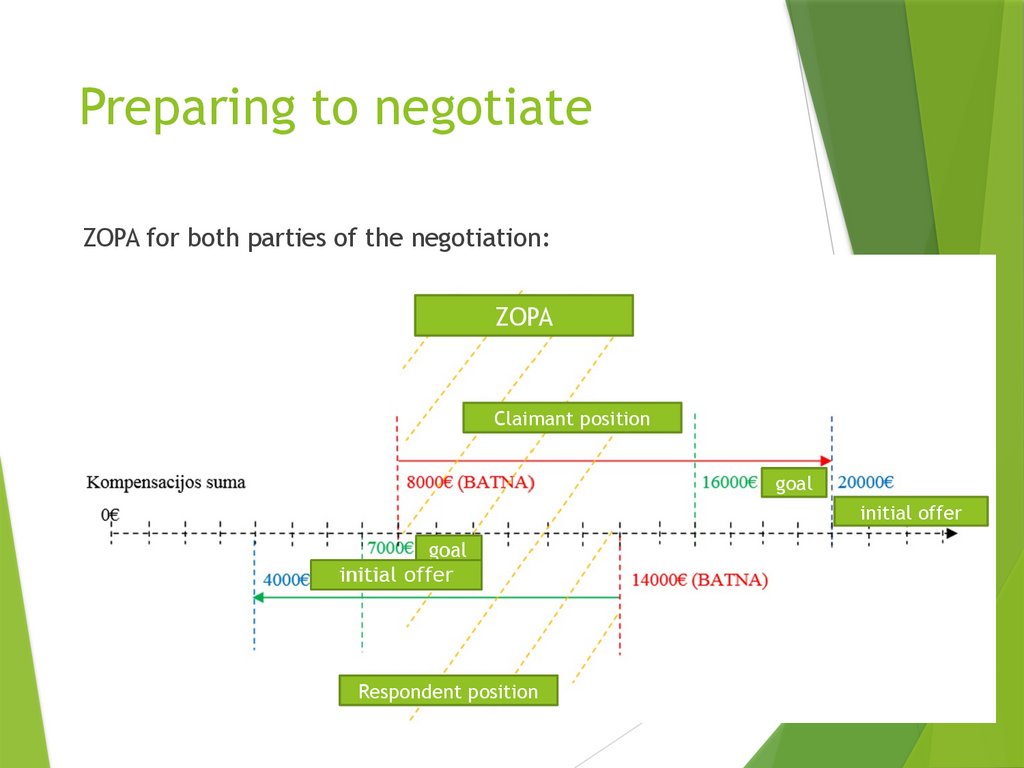
ZOPA for both parties of the negotiation:ZOPA
Claimant position
goal
initial offer
Respondent position
81. Preparing to negotiate
Practical task:A young talented actor wants to get into the ‘big time’ and she meets a
television producer who is desirous of securing her services for an
important part in a detective film. He tells her that she cannot get top
rates until she is ‘known’ but if she does this one ‘cheap’ and gets famous,
she will see ‘train loads of money’ coming her way for her future work.
Should she:
A.
Tell the producer to ‘offski’?
B.
Agree, as she has to start somewhere?
C.
Demand top rates if she is to do a top job?
82. Preparing to negotiate
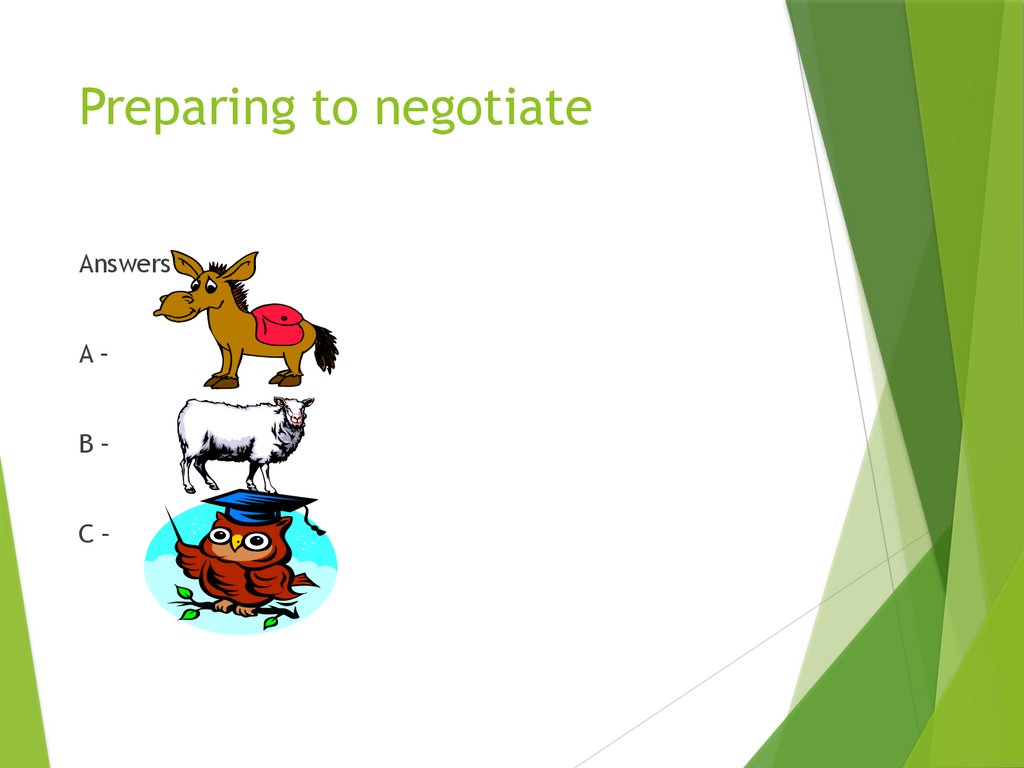
AnswersA–
B–
C–
83. Preparing to negotiate
Practical task:You have been working only three weeks in a new job in big company.
You had planned to get married on Friday 18 August (which you did not
disclose at the job interview). Your ‘intended’ spouse expects a proper
honeymoon vacation of at least a week in Bali. It's now 16 August and
you ask your boss for leave for the wedding day and for the vacation.
She is visibly not happy with your request and asks stiffly how long you
were ‘thinking of being absent’. Do you reply:
A.
The wedding day only?
B.
Two weeks?
C.
Three days?
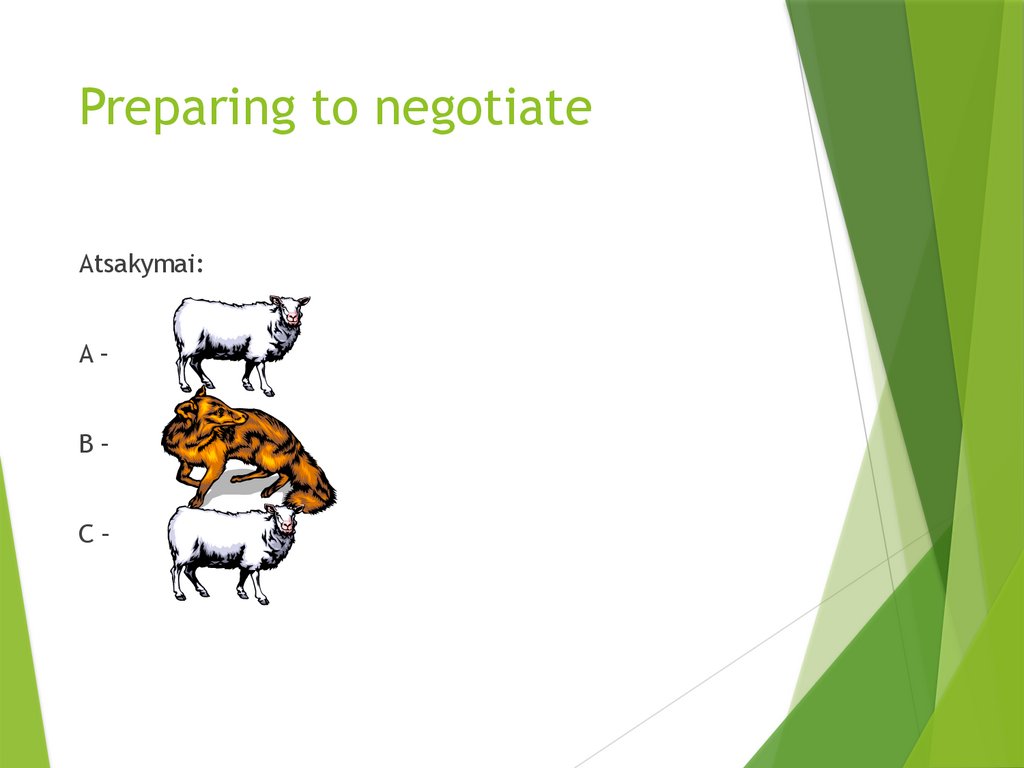
84. Preparing to negotiate
Atsakymai:A–
B–
C–
85. Preparing to negotiate
What are “high” goals in the negotiations?Exp.:
You are a judge.
The claimant claims 100,000 Eur for moral damages.
How much damages would you award him?
The claimant claims 50,000 Eur for moral damages. How
much damages would you award him?
86. Preparing to negotiate
How to set a high enough but not too much goal fornegotiations?
Advise:
Identify truly favorable to you outcome of the
negotiation
+ Enlarge it
+ Explain the proposal (give logical assertions)
87. Preparing to negotiate
Golden rule of the negotiator:Good, negotiators begin negotiations from the most extreme
position which they can justifiably defend
Prepare explicable rationale for your proposal
Why motivation is needed?
Preparation to work in multi-party negotiating teams (coordinating
strategy, appointing roles)
88. Preparing to negotiate
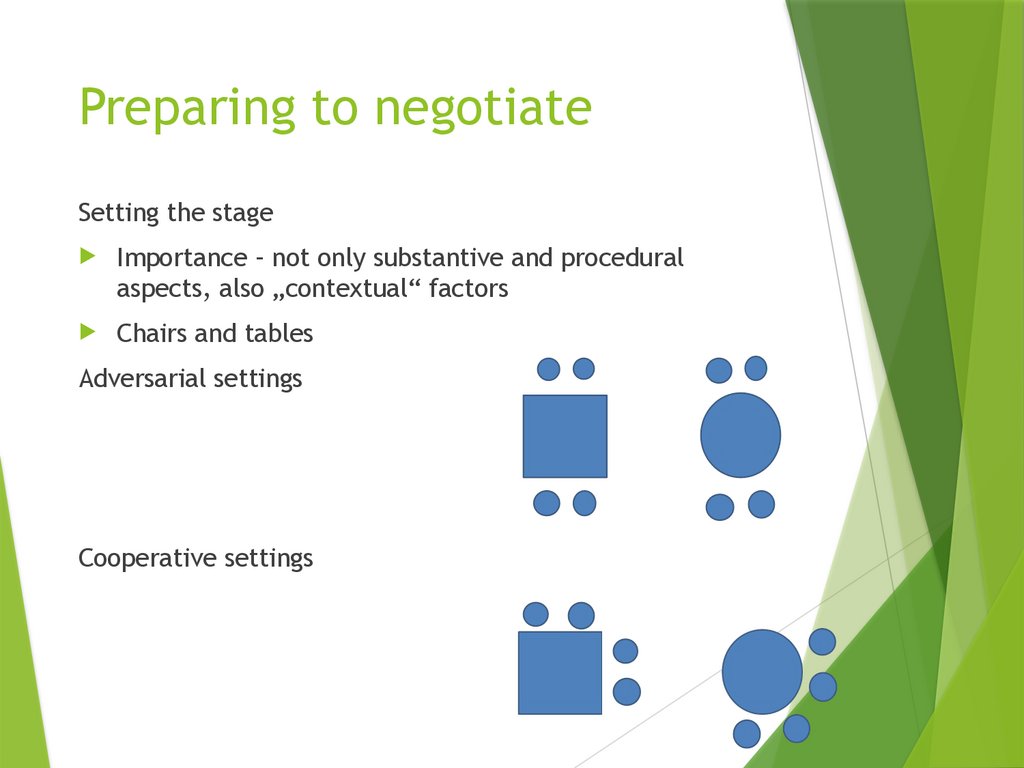
Setting the stageImportance – not only substantive and procedural
aspects, also „contextual“ factors
Chairs and tables
Adversarial settings
Cooperative settings
89. Preparing to negotiate
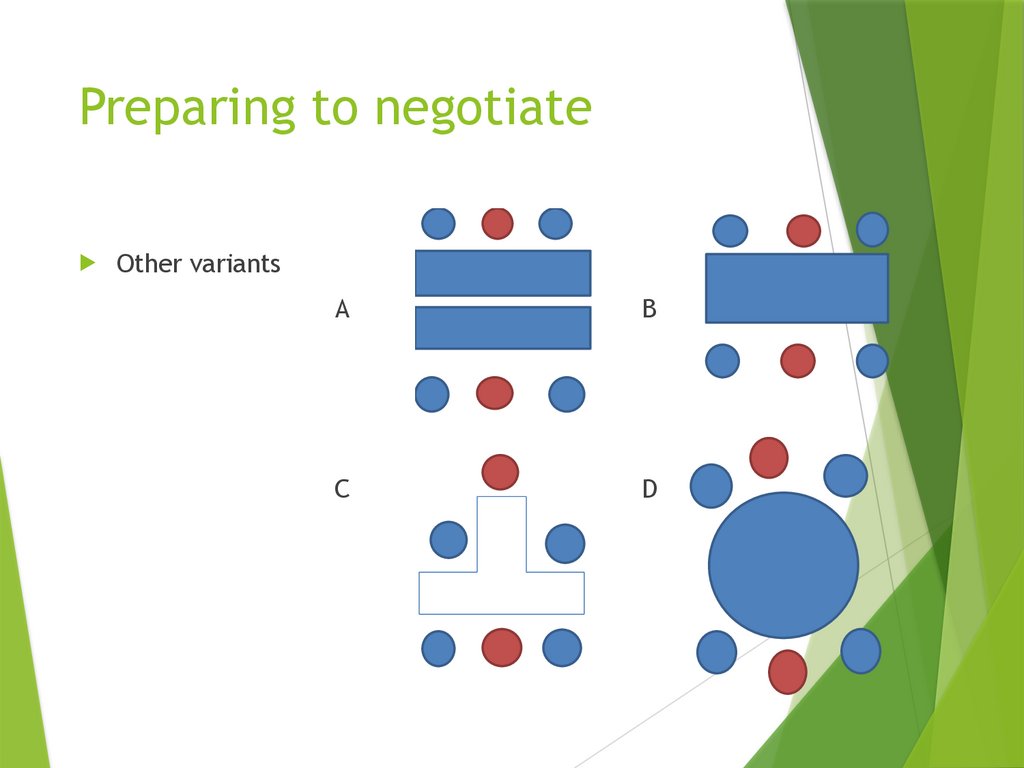
Other variantsA
B
C
D
90. Preparing to negotiate
Dirty tricks:- Higher chairs
- Removal of ashtrays for chain-smokers
- Bright sunlight in the eyes of opponents
How to react to such dirty tricks?
91. Preparing to negotiate
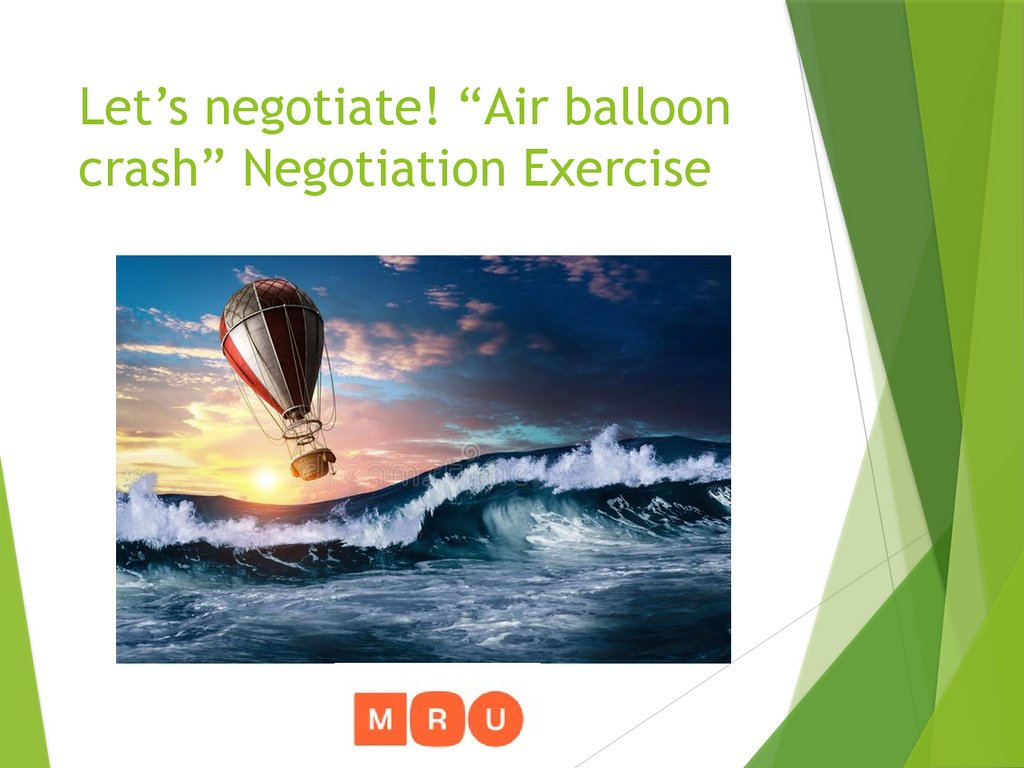
Let’s negotiate! “Air ballooncrash” Negotiation Exercise
92. Let’s negotiate! “Air balloon crash” Negotiation Exercise
Let’s negotiate! “Sexualharassment” Negotiation
Exercise