


 management
Similar presentations:










Jobs That Are Disappearing in the 21st Century
1.
Jobs That Are Disappearing in the 21st CenturyMany routine jobs in manufacturing and administrative sectors are being automated or outsourced due to technological
advancements. Roles such as telemarketers and data entry clerks are particularly vulnerable to these changes. The rise of AI and
machine learning is reshaping the job market, impacting various industries and job functions.
Фото Campaign Creators на Unsplash
2.
Automation ImpactAutomation is transforming the job market by replacing repetitive tasks previously performed by humans. This shift
is leading to the disappearance of certain job roles, particularly in manufacturing and administrative sectors. As a
result, workers are being encouraged to upskill and adapt to new technological demands.
3.
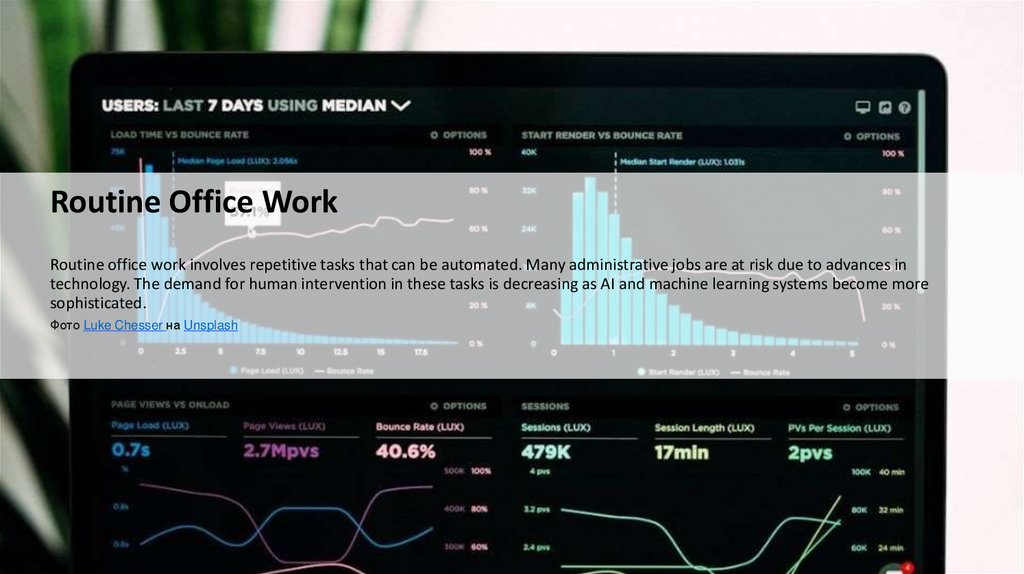
Routine Office WorkRoutine office work involves repetitive tasks that can be automated. Many administrative jobs are at risk due to advances in
technology. The demand for human intervention in these tasks is decreasing as AI and machine learning systems become more
sophisticated.
Фото Luke Chesser на Unsplash
4.
Manufacturing JobsManufacturing jobs have been significantly impacted by automation and robotics, leading to a decline in traditional
factory roles. While new opportunities in advanced manufacturing and automation are emerging, many workers
find it challenging to adapt to these changes. The shift towards automation is reshaping the manufacturing
landscape, requiring upskilling and reskilling of the workforce.
5.
Courier ServicesCourier services have faced significant changes due to the rise of e-commerce and digital delivery options. Many traditional
courier jobs are being replaced by automated systems and online platforms. As a result, the demand for human couriers is
decreasing, impacting the job market in this sector.
Фото Ismail Salad Osman Hajji dirir на Unsplash
6.
Taxi DriversTaxi drivers face increasing competition from ride-hailing apps and autonomous vehicles. Technological
advancements are changing the landscape of the industry, requiring drivers to adapt to new tools and regulations.
Some traditional taxi services are struggling to remain relevant in the evolving market.
7.
Travel AgentsTravel agents once played a crucial role in organizing
trips by providing personalized itineraries and
handling bookings. However, with the rise of online
travel platforms and booking websites, their job has
become less necessary. Many travel agencies have
closed, and those that remain are adapting to new
models to stay relevant in the digital age.
Фото Steinar Engeland на Unsplash
8.
Customer ServiceCustomer service roles are evolving due to automation and AI technologies. While traditional customer service jobs
may decline, new opportunities arise in managing and overseeing these technologies. Emphasis shifts towards
strategic customer engagement and data analysis rather than routine inquiries.
9.
Data EntryData entry involves the input of data into computer systems, which was
once a common job requiring manual data input. However, automation and
AI technologies are increasingly handling this task, reducing the need for
human data entry operators. As a result, the role of data entry is
diminishing, reflecting broader changes in the job market due to
technological advancements.
Фото Carlos Muza на Unsplash
10.
Repetitive Manual LaborRepetitive manual labor tasks are increasingly being automated and replaced by machines and robots. This trend is
particularly evident in manufacturing and logistics, where efficiency and precision are paramount. As a result, many
jobs that once required human intervention are now performed by technology, altering the landscape of traditional
work.