
 english
Similar presentations:








Direct and Reported Speech Прямая и косвенная речь
1.
Direct and Reported SpeechПрямая и косвенная речь
2.
Автор-составитель: Смоленцева Н.К., учительанглийского языка школы-гимназии № 1
г.Щучинска
Данная презентация предназначена для учителей
английского языка и учащихся общеобразовательных школ как
для использования на уроках, так и для самостоятельно
изучения, закрепления знаний английской грамматики.
3. Contents Содержание
DefinitionsОпределения
Reported (indirect) Affirmatives
Утверждения в косвенной речи
Reported (indirect) Questions
Вопросы в косвенной речи
Reported (indirect) Commands
Повелительные предложения в
косвенной речи
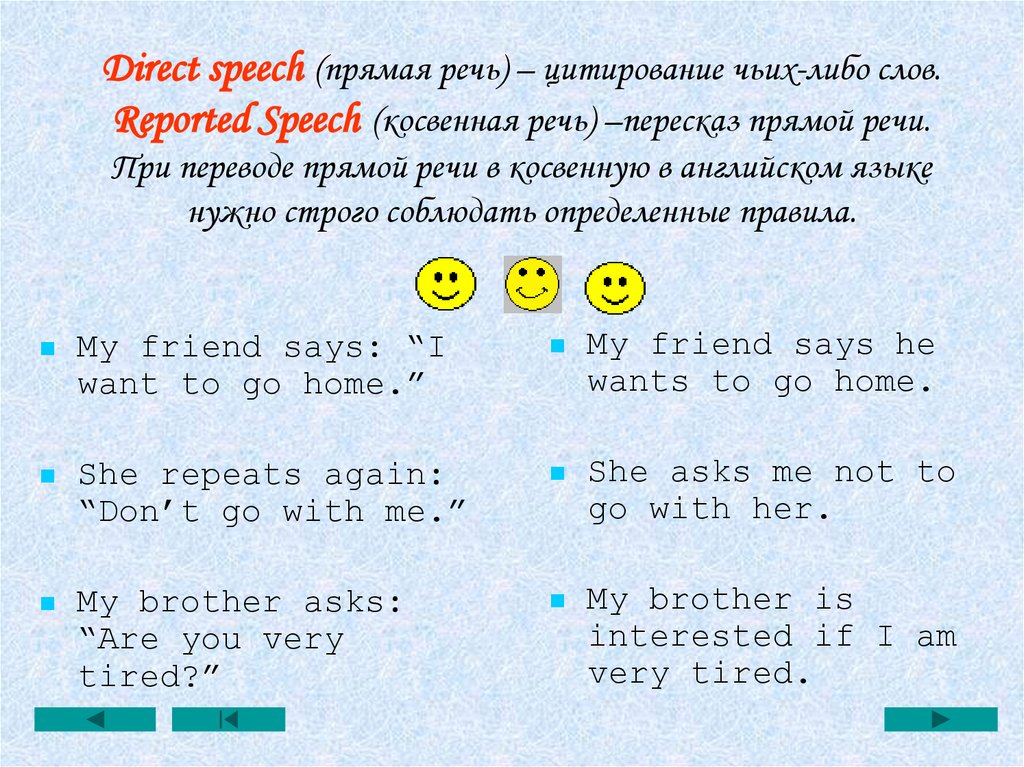
4. Direct speech (прямая речь) – цитирование чьих-либо слов. Reported Speech (косвенная речь) –пересказ прямой речи. При переводе
прямой речи в косвенную в английском языкенужно строго соблюдать определенные правила.
My friend says: “I
want to go home.”
My friend says he
wants to go home.
She repeats again:
“Don’t go with me.”
She asks me not to
go with her.
My brother asks:
“Are you very
tired?”
My brother is
interested if I am
very tired.
5. Reported Affirmatives Косвенные утверждения
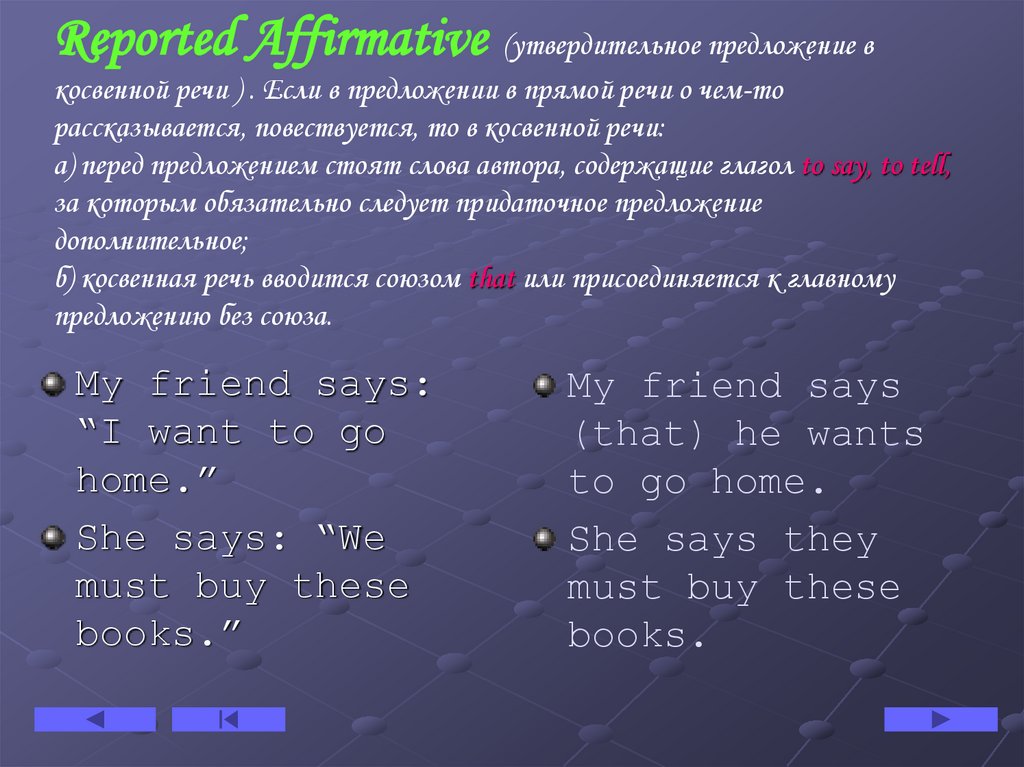
6. Reported Affirmative (утвердительное предложение в косвенной речи ) . Если в предложении в прямой речи о чем-то рассказывается,
повествуется, то в косвенной речи:а) перед предложением стоят слова автора, содержащие глагол to say, to tell,
за которым обязательно следует придаточное предложение
дополнительное;
б) косвенная речь вводится союзом that или присоединяется к главному
предложению без союза.
My friend says:
“I want to go
home.”
She says: “We
must buy these
books.”
My friend says
(that) he wants
to go home.
She says they
must buy these
books.
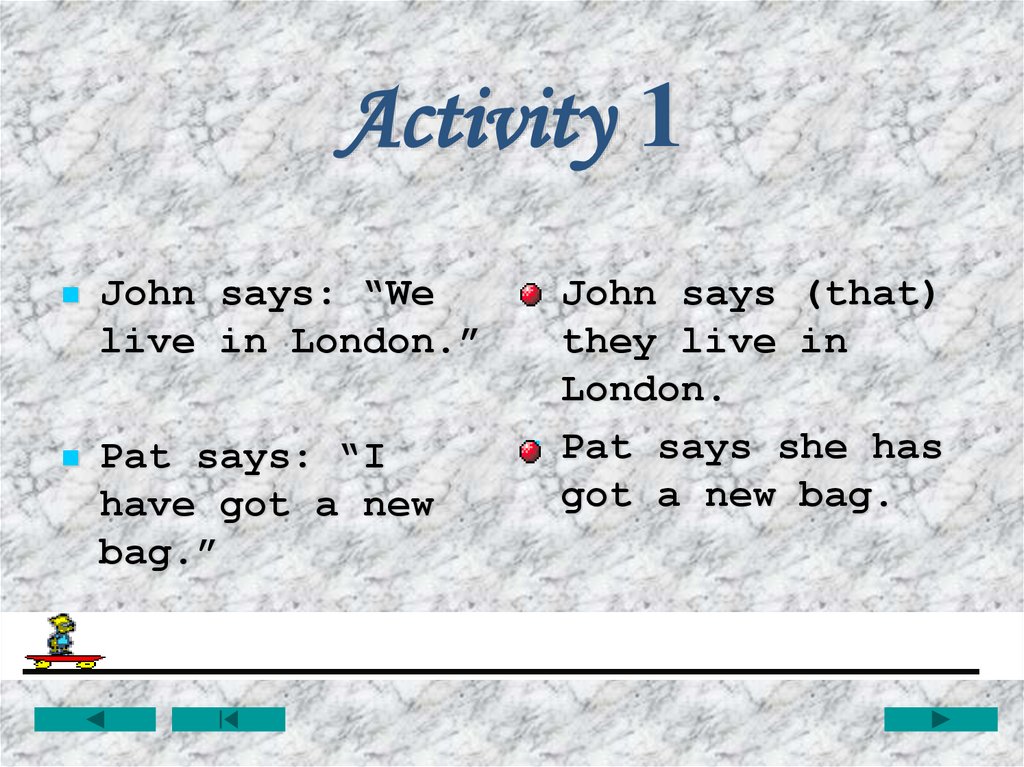
7. Activity 1
John says: “Welive in London.”
Pat says: “I
have got a new
bag.”
John says (that)
they live in
London.
Pat says she has
got a new bag.
8. Reported (indirect) commands Повелительное наклонение в косвенной речи
9.
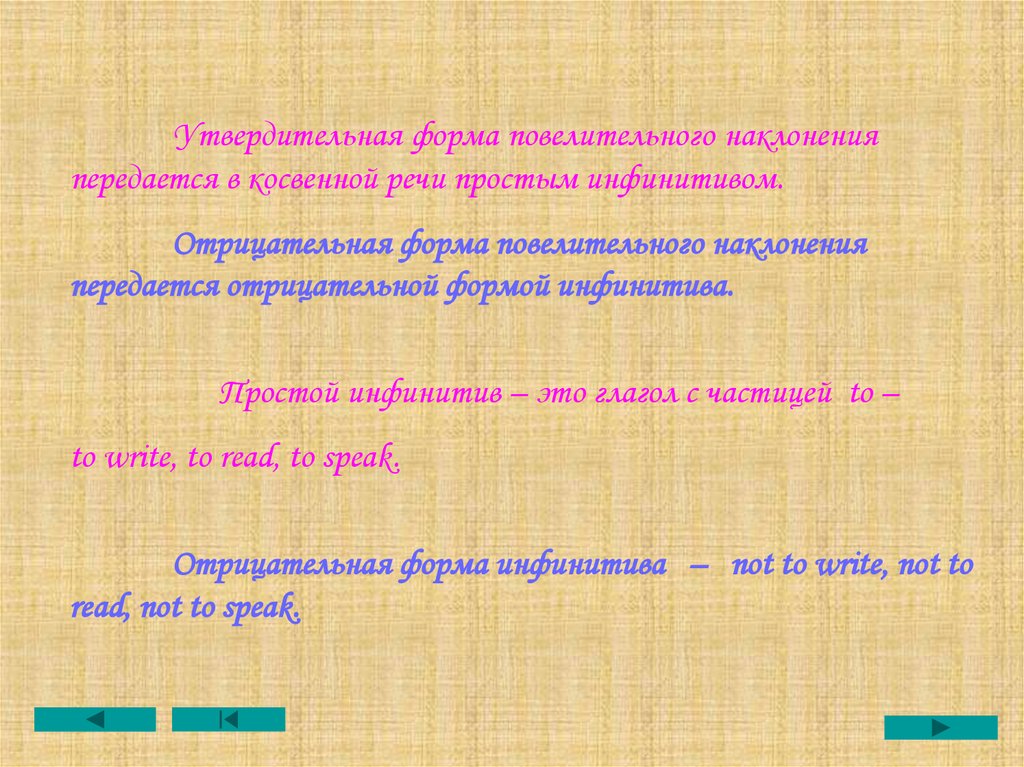
Утвердительная форма повелительного наклоненияпередается в косвенной речи простым инфинитивом.
Отрицательная форма повелительного наклонения
передается отрицательной формой инфинитива.
Простой инфинитив – это глагол с частицей to –
to write, to read, to speak.
Отрицательная форма инфинитива – not to write, not to
read, not to speak.
10.
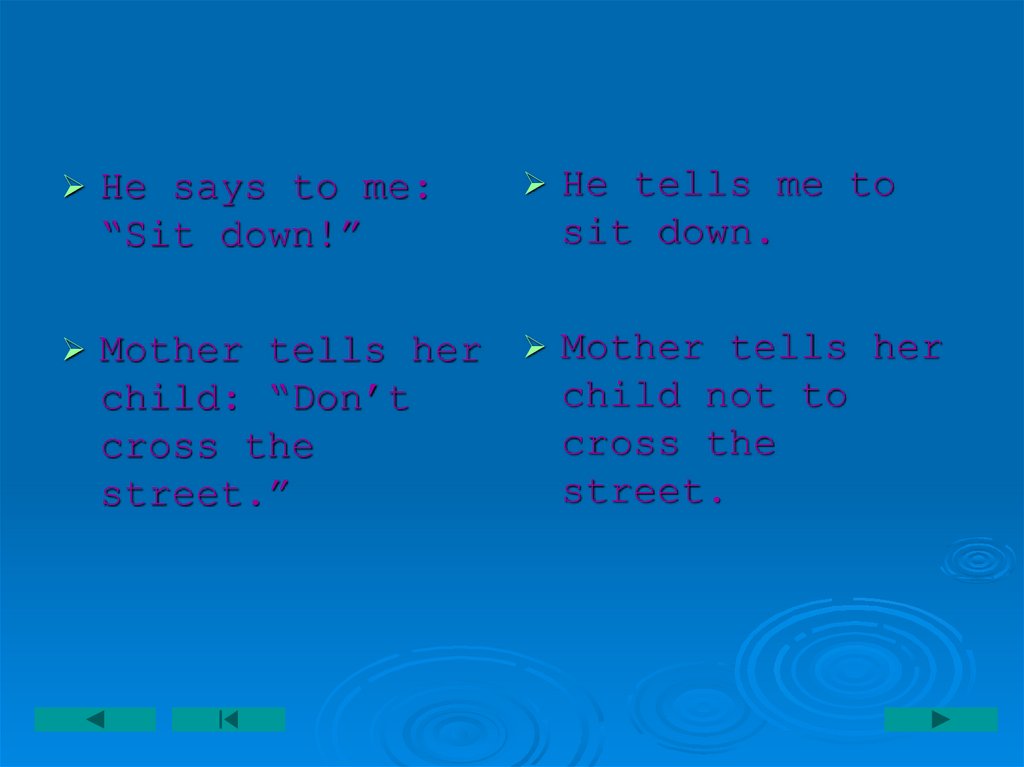
HeHe
Mother
Mother
says to me:
“Sit down!”
tells her
child: “Don’t
cross the
street.”
tells me to
sit down.
tells her
child not to
cross the
street.
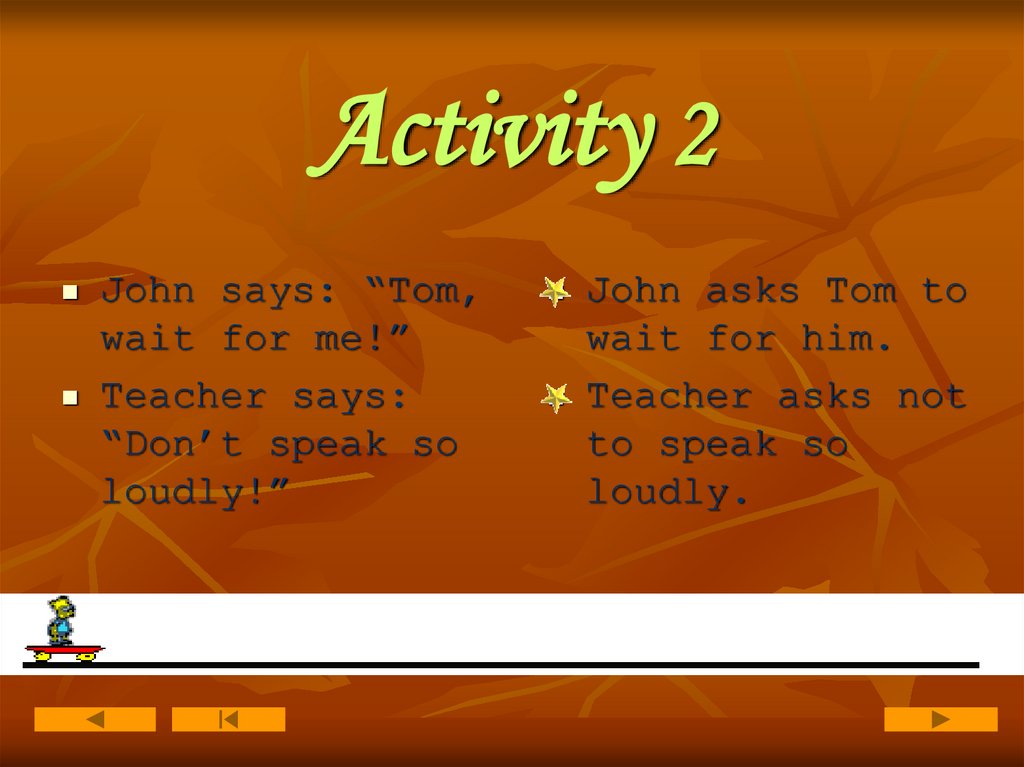
11. Activity 2
John says: “Tom,wait for me!”
Teacher says:
“Don’t speak so
loudly!”
John asks Tom to
wait for him.
Teacher asks not
to speak so
loudly.
12. Reported (indirect) questions Вопросы в косвенной речи
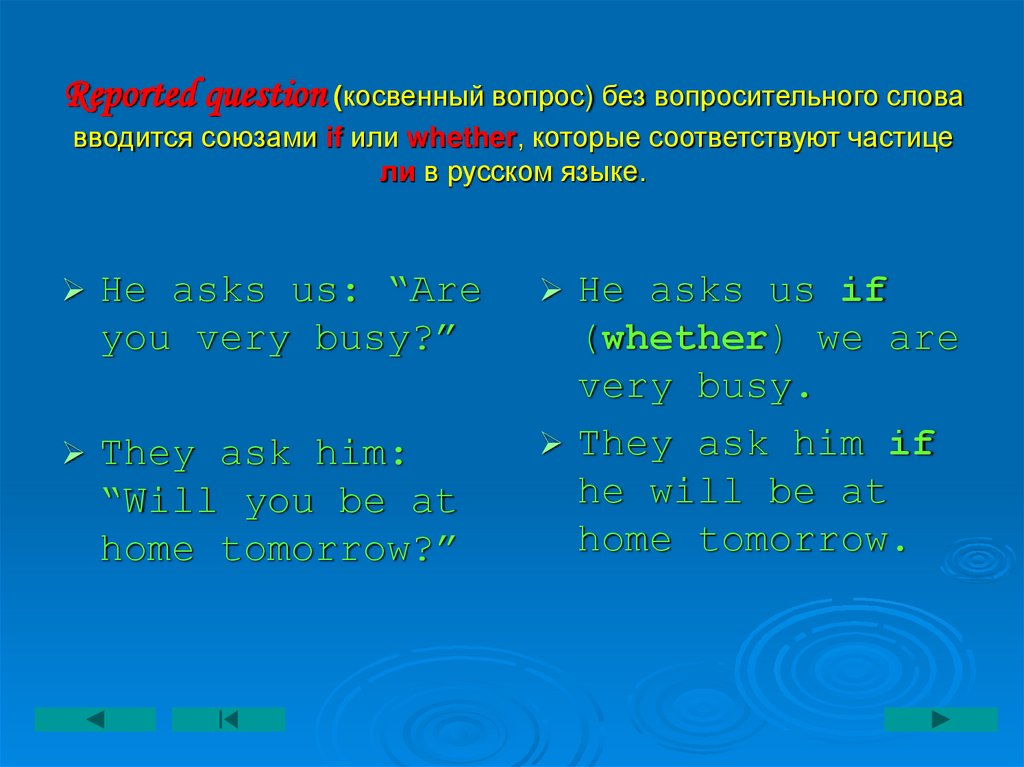
13. Reported question (косвенный вопрос) без вопросительного слова вводится союзами if или whether, которые соответствуют частице
ли в русском языке.He
asks us: “Are
you very busy?”
They
ask him:
“Will you be at
home tomorrow?”
He
asks us if
(whether) we are
very busy.
They ask him if
he will be at
home tomorrow.
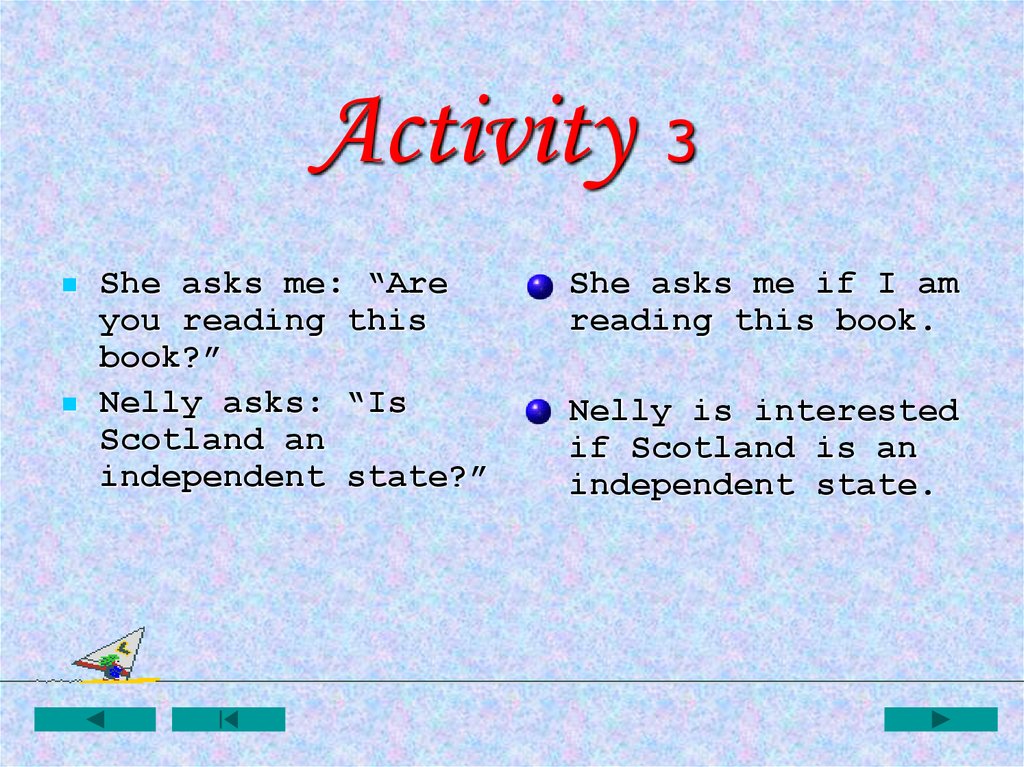
14. Activity 3
She asks me: “Areyou reading this
book?”
Nelly asks: “Is
Scotland an
independent state?”
She asks me if I am
reading this book.
Nelly is interested
if Scotland is an
independent state.
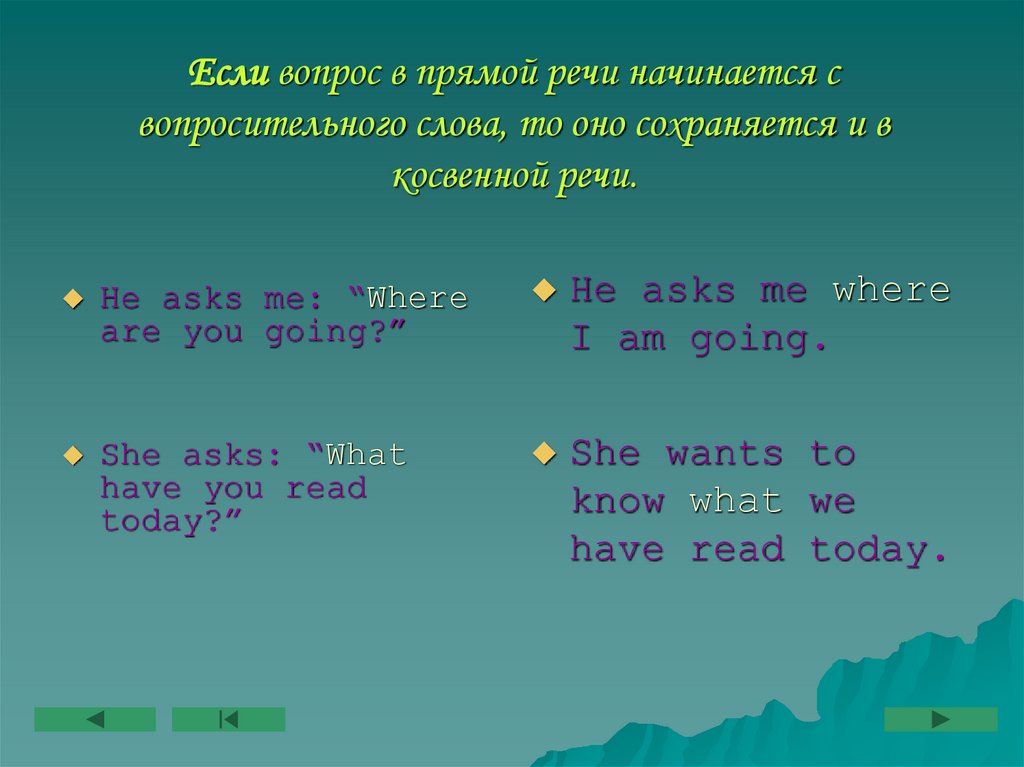
15. Если вопрос в прямой речи начинается с вопросительного слова, то оно сохраняется и в косвенной речи.
HeHe
She
She
asks me: “Where
are you going?”
asks: “What
have you read
today?”
asks me where
I am going.
wants to
know what we
have read today.
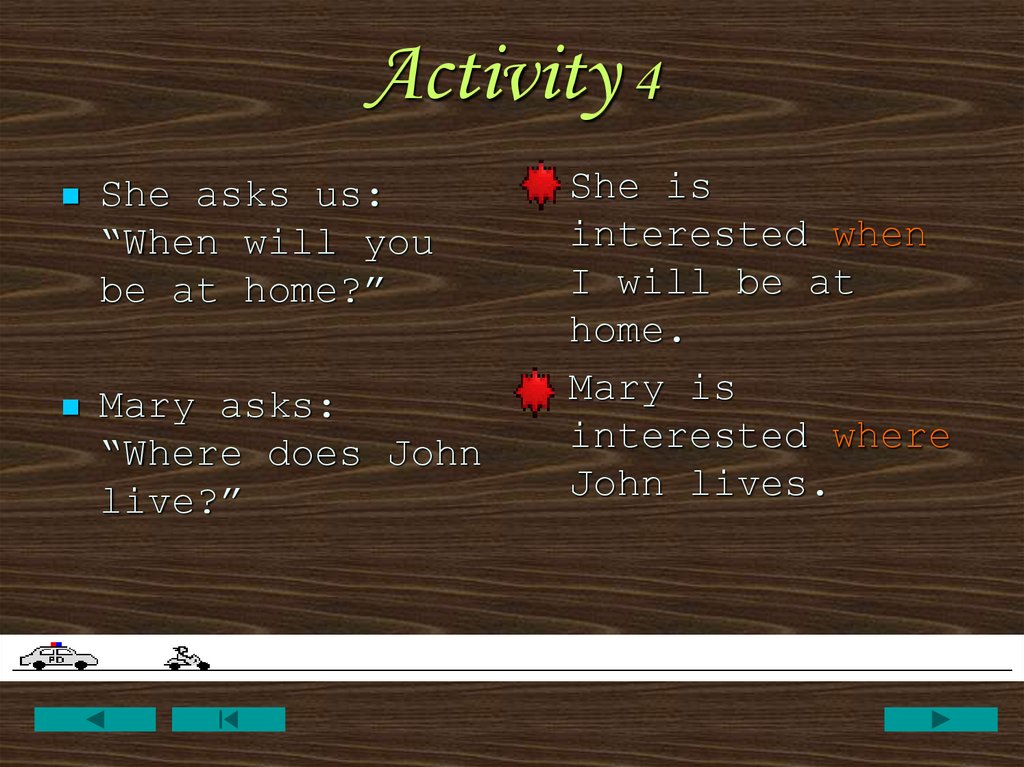
16. Activity 4
She asks us:“When will you
be at home?”
Mary asks:
“Where does John
live?”
She is
interested when
I will be at
home.
Mary is
interested where
John lives.
17. Check yourself
18.
1.2.
3.
4.
5.
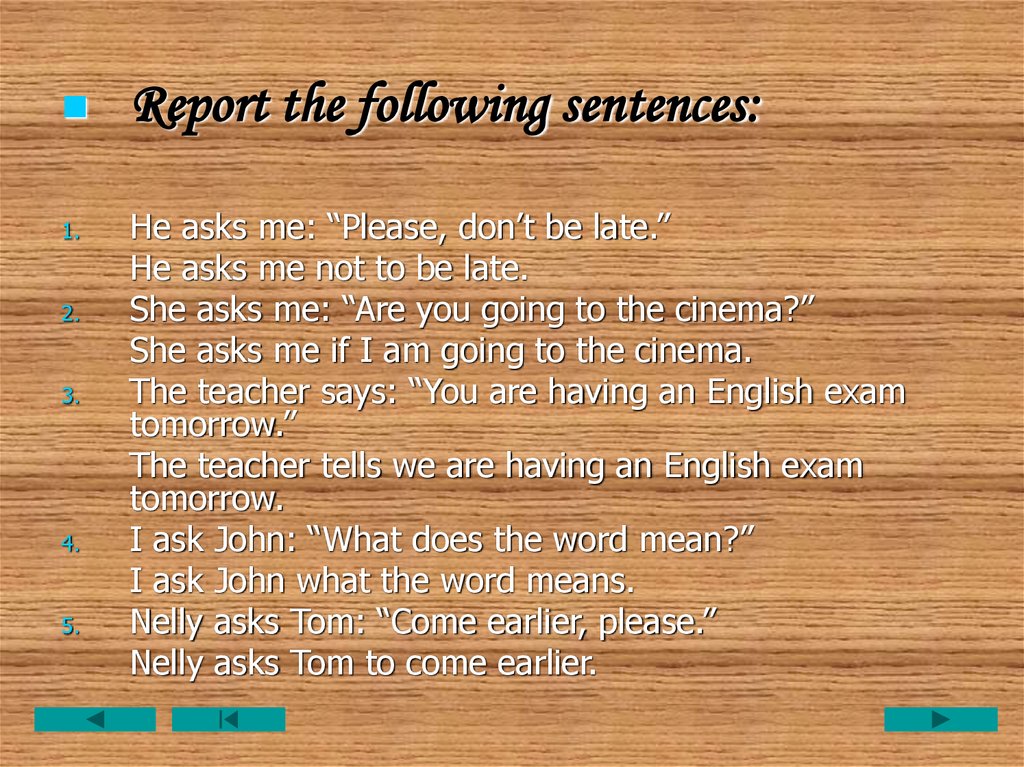
Report the following sentences:
He asks me: “Please, don’t be late.”
He asks me not to be late.
She asks me: “Are you going to the cinema?”
She asks me if I am going to the cinema.
The teacher says: “You are having an English exam
tomorrow.”
The teacher tells we are having an English exam
tomorrow.
I ask John: “What does the word mean?”
I ask John what the word means.
Nelly asks Tom: “Come earlier, please.”
Nelly asks Tom to come earlier.
19.
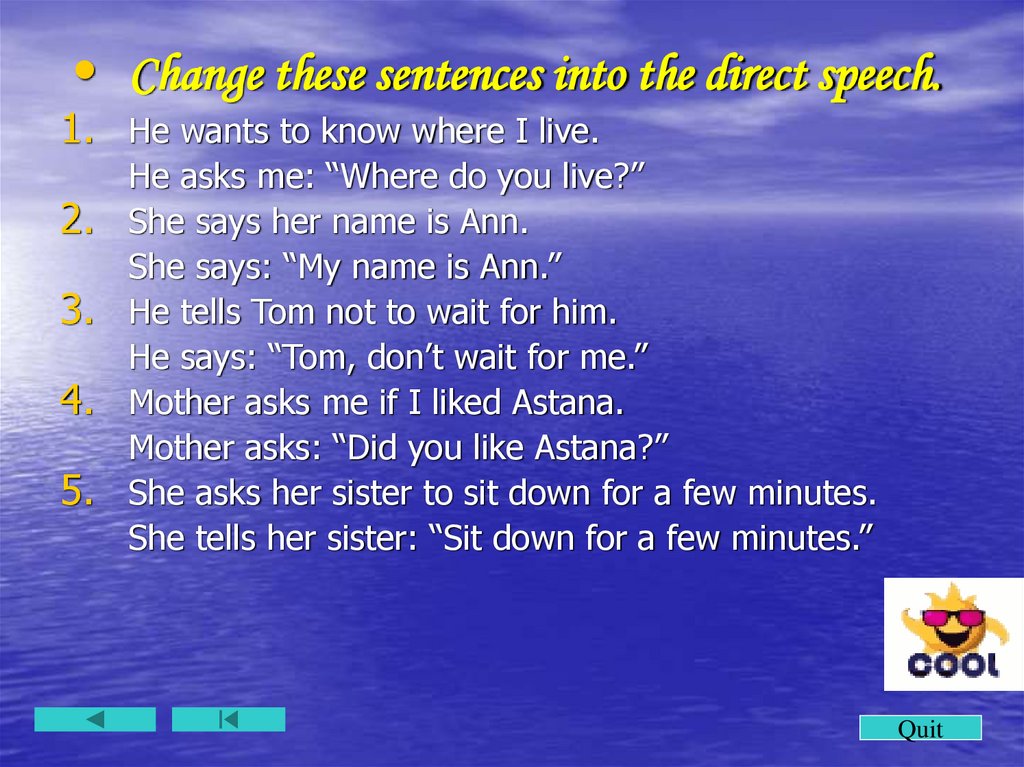
• Change these sentences into the direct speech.1. He wants to know where I live.
2.
3.
4.
5.
He asks me: “Where do you live?”
She says her name is Ann.
She says: “My name is Ann.”
He tells Tom not to wait for him.
He says: “Tom, don’t wait for me.”
Mother asks me if I liked Astana.
Mother asks: “Did you like Astana?”
She asks her sister to sit down for a few minutes.
She tells her sister: “Sit down for a few minutes.”
Quit