

 english
Similar presentations:








Reported Speech Косвенная речь Part 2
1. Reported Speech Косвенная речь Part 2
2.
Автор-составитель: Смоленцева Н.К., учительАнглийского языка школы-гимназии № 1 г.Щучинска
Данная презентация предназначена для учителей английского
языка и учащихся общеобразовательных школ и может использоваться
в качестве электронного учебника по английскому языку для изучения
грамматики как на уроках под руководством учителя, так
и для самостоятельной работы дома.
3. Sequence of Tenses Согласование времен
• Если слова автора стоят впрошедшем времени, то при
переводе предложения из прямой
речи в косвенную, в косвенной
речи употребляются только формы
прошедшего времени в
соответствии с правилом
согласования времен.
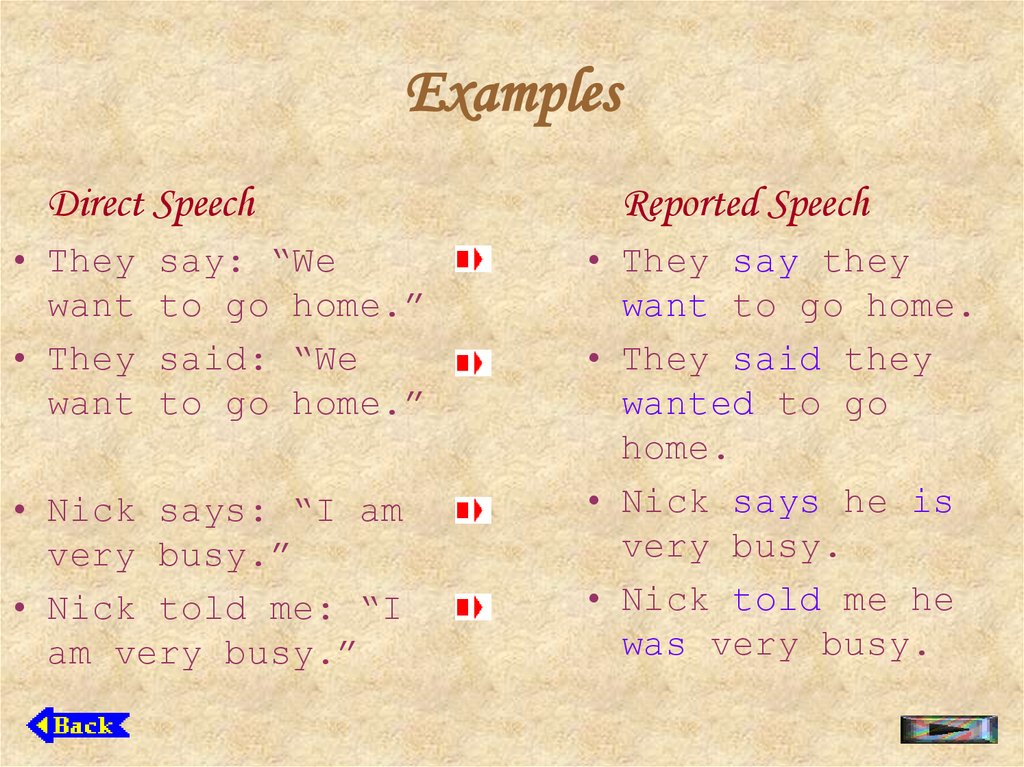
4. Examples
Direct Speech• They say: “We
want to go home.”
• They said: “We
want to go home.”
• Nick says: “I am
very busy.”
• Nick told me: “I
am very busy.”
Reported Speech
• They say they
want to go home.
• They said they
wanted to go
home.
• Nick says he is
very busy.
• Nick told me he
was very busy.
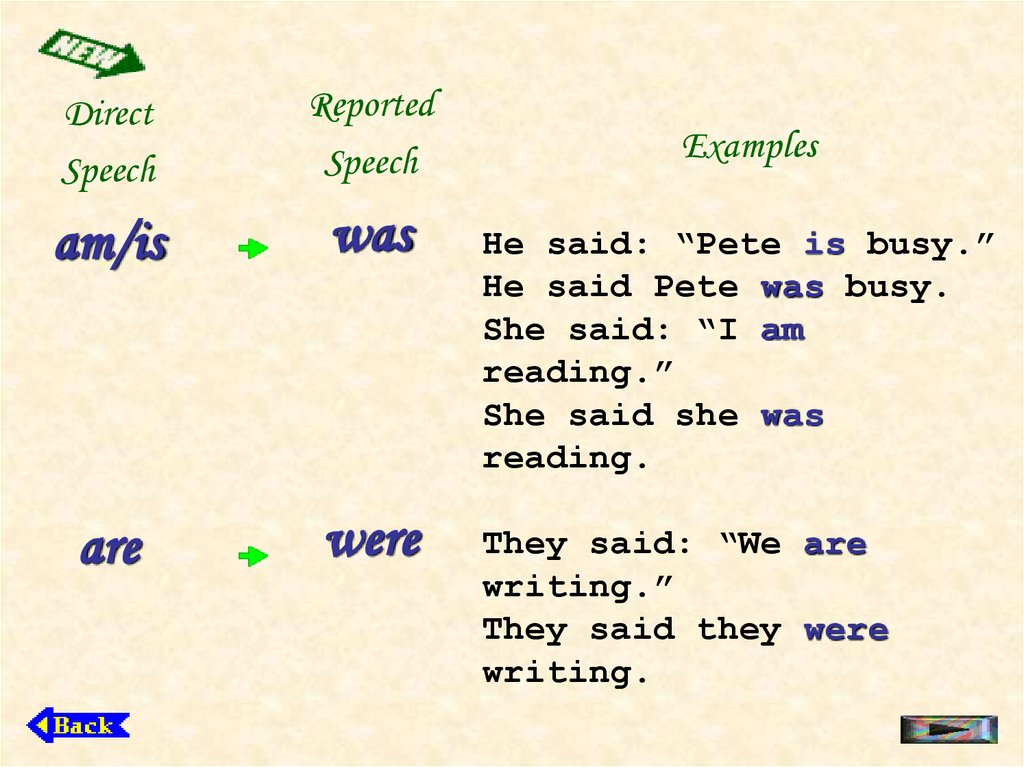
5.
DirectSpeech
Reported
Speech
am/is
was
are
were
Examples
He said: “Pete is busy.”
He said Pete was busy.
She said: “I am
reading.”
She said she was
reading.
They said: “We are
writing.”
They said they were
writing.
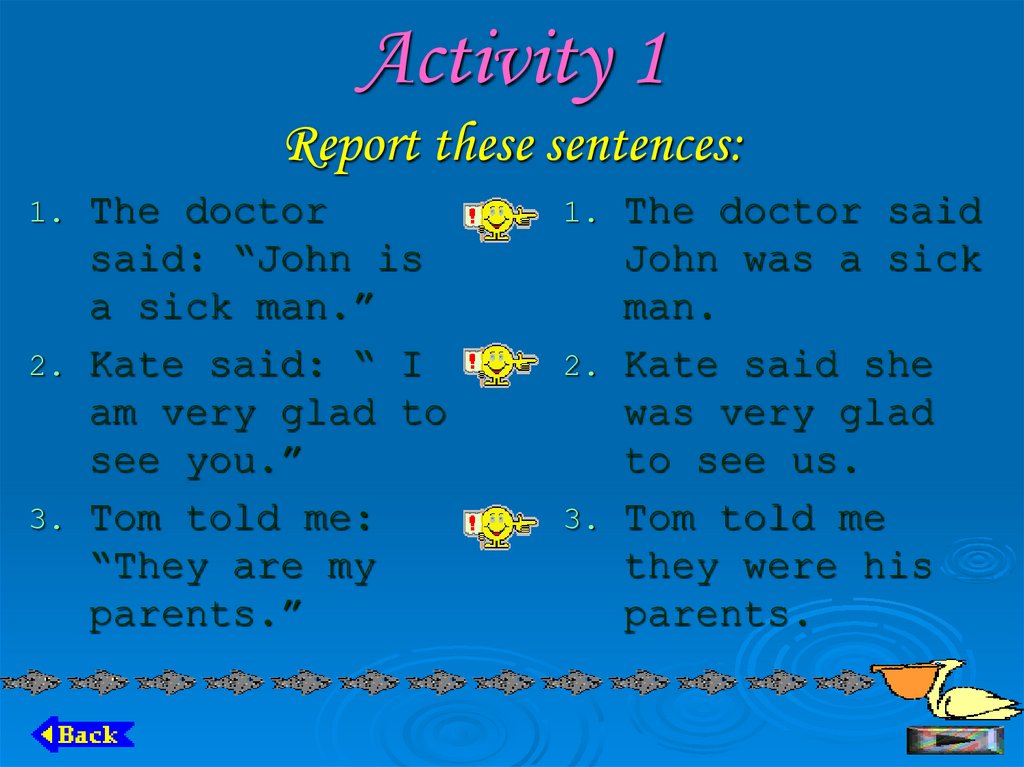
6. Activity 1 Report these sentences:
1. Thedoctor
said: “John is
a sick man.”
2. Kate said: “ I
am very glad to
see you.”
3. Tom told me:
“They are my
parents.”
1. The
doctor said
John was a sick
man.
2. Kate said she
was very glad
to see us.
3. Tom told me
they were his
parents.
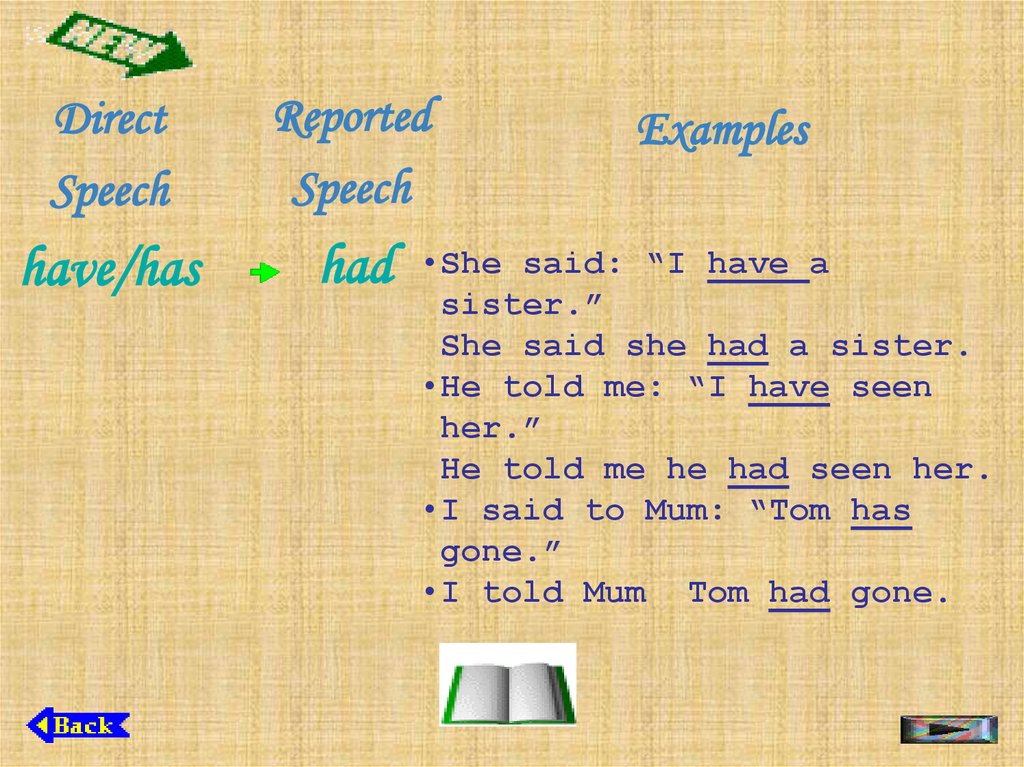
7.
DirectSpeech
have/has
Reported
Speech
Examples
had •She said: “I have a
sister.”
She said she had a sister.
•He told me: “I have seen
her.”
He told me he had seen her.
•I said to Mum: “Tom has
gone.”
•I told Mum Tom had gone.
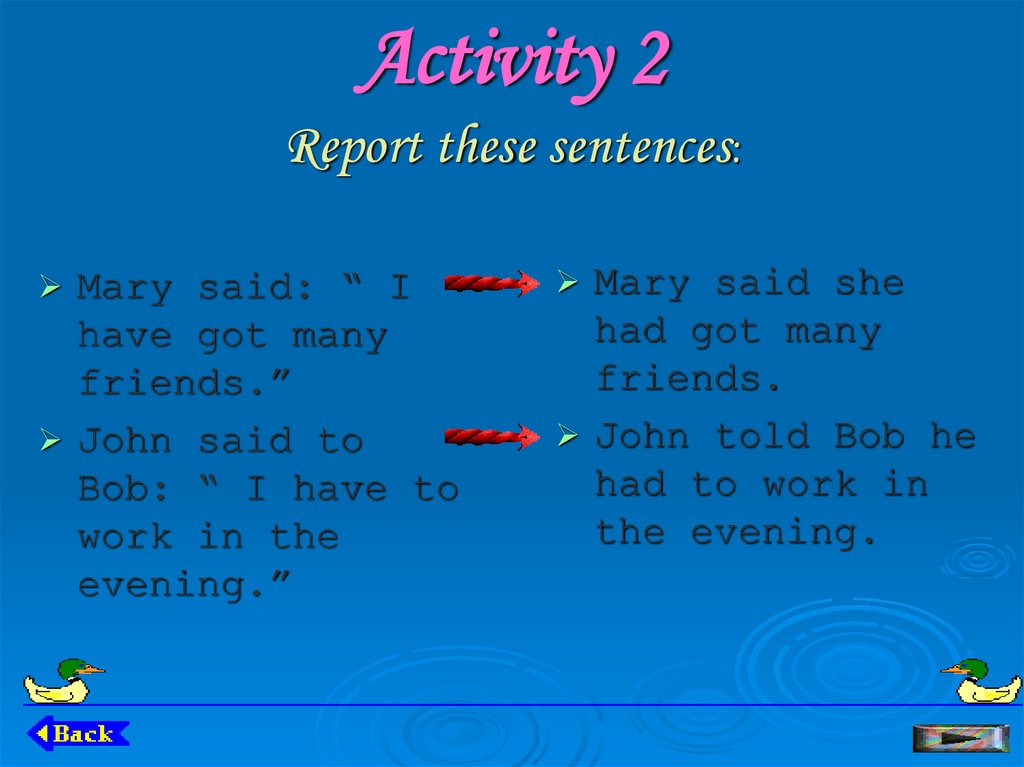
8. Activity 2 Report these sentences:
Marysaid: “ I
have got many
friends.”
John said to
Bob: “ I have to
work in the
evening.”
Mary
said she
had got many
friends.
John told Bob he
had to work in
the evening.
9.
Directspeech
Reported
speech
can
could • He said: "I can’t meet you.”
Examples
He said he couldn’t meet us.
Pete told me: “I can play golf.”
Pete told me he could play golf.
• They said: “We can go there
together.”
They said they could go there
together.
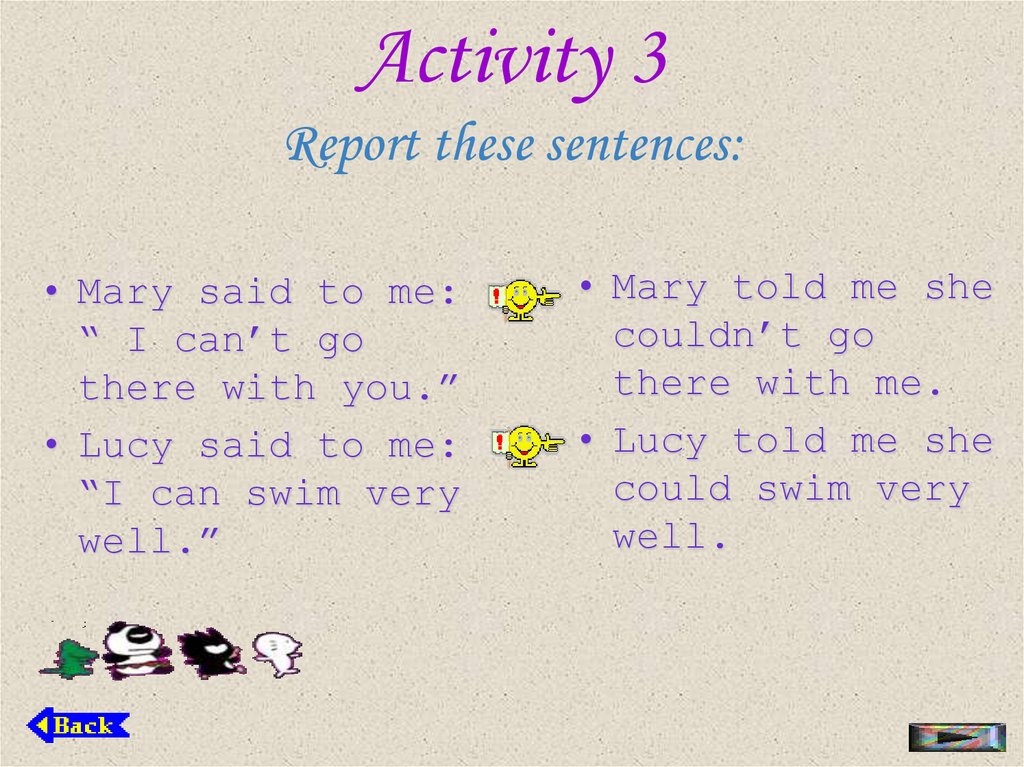
10. Activity 3 Report these sentences:
• Mary said to me:“ I can’t go
there with you.”
• Lucy said to me:
“I can swim very
well.”
• Mary told me she
couldn’t go
there with me.
• Lucy told me she
could swim very
well.
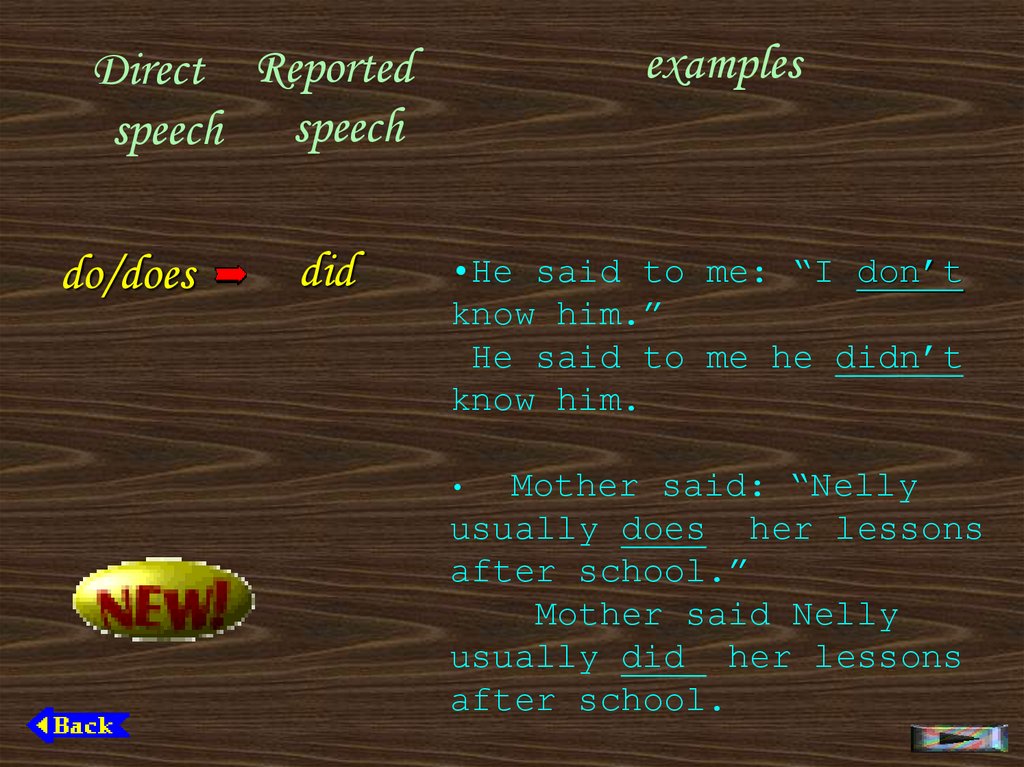
11.
examplesDirect Reported
speech speech
do/does
did
•He said to me: “I don’t
know him.”
He said to me he didn’t
know him.
Mother said: “Nelly
usually does her lessons
after school.”
Mother said Nelly
usually did her lessons
after school.
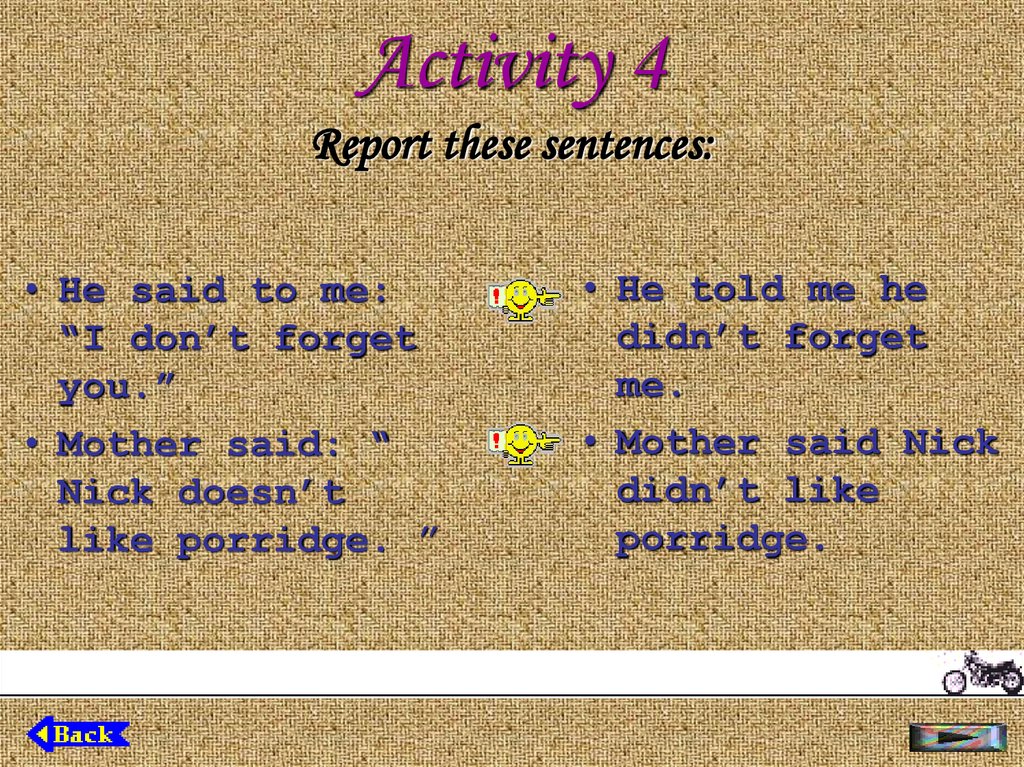
12. Activity 4 Report these sentences:
• He said to me:“I don’t forget
you.”
• Mother said: “
Nick doesn’t
like porridge. ”
• He told me he
didn’t forget
me.
• Mother said Nick
didn’t like
porridge.
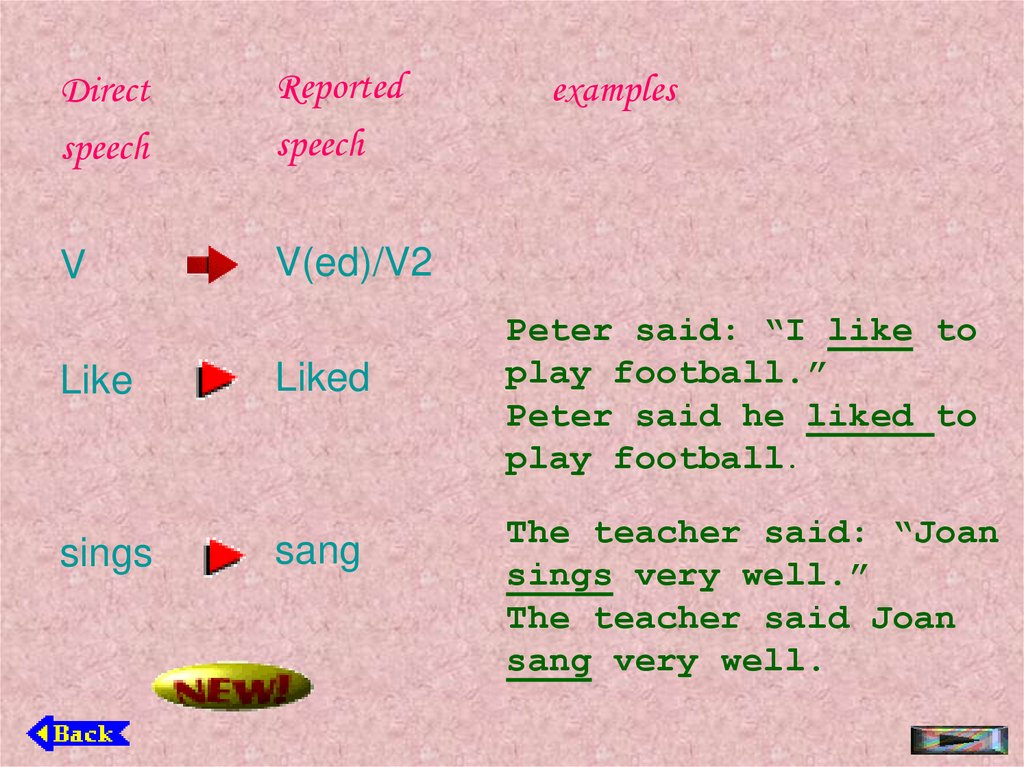
13.
Directspeech
Reported
speech
V
V(ed)/V2
Like
Liked
sings
sang
examples
Peter said: “I like to
play football.”
Peter said he liked to
play football.
The teacher said: “Joan
sings very well.”
The teacher said Joan
sang very well.
14. Check yourself
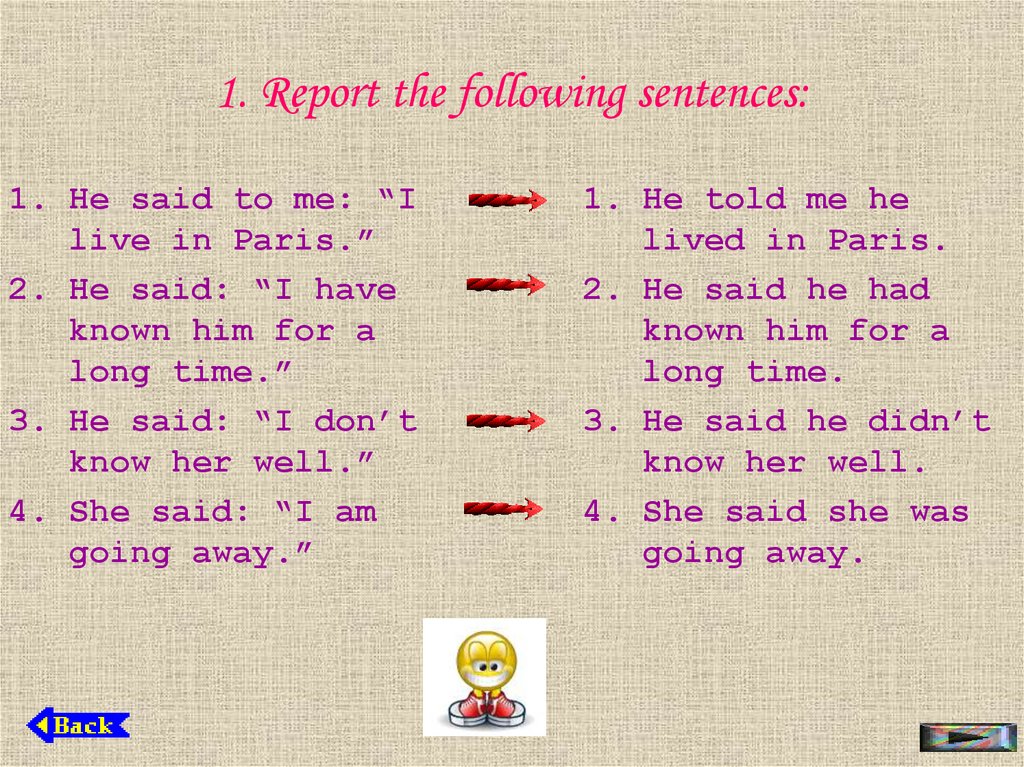
15. 1. Report the following sentences:
1. He said to me: “Ilive in Paris.”
2. He said: “I have
known him for a
long time.”
3. He said: “I don’t
know her well.”
4. She said: “I am
going away.”
1. He told me he
lived in Paris.
2. He said he had
known him for a
long time.
3. He said he didn’t
know her well.
4. She said she was
going away.
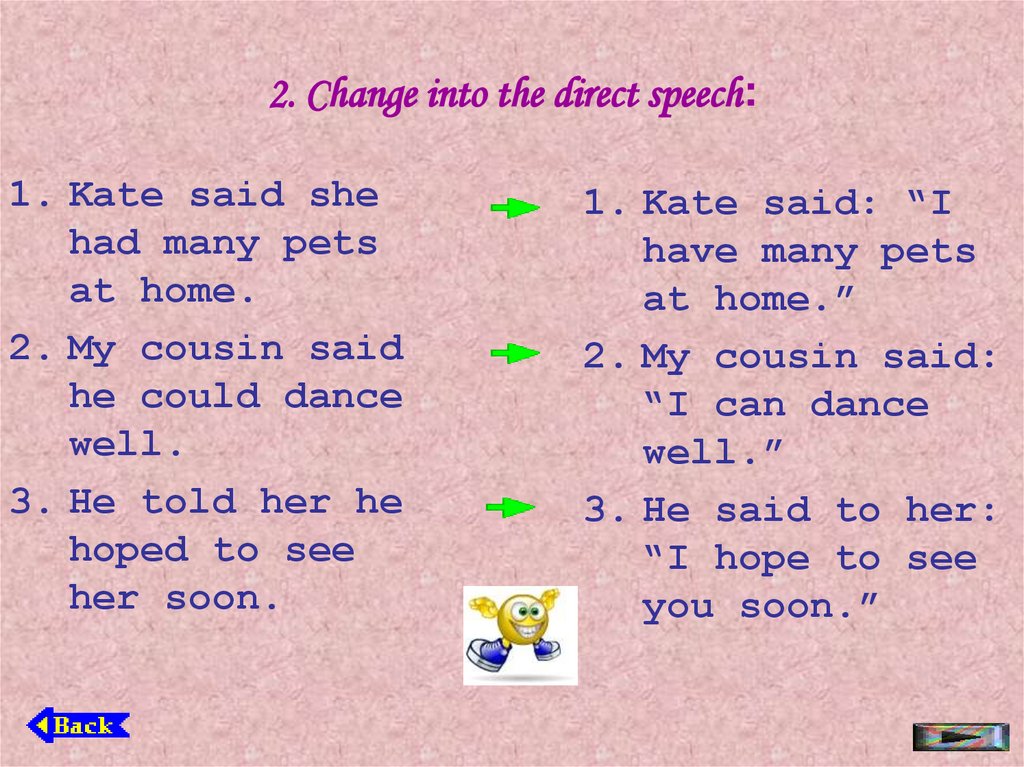
16. 2. Change into the direct speech:
1. Kate said shehad many pets
at home.
2. My cousin said
he could dance
well.
3. He told her he
hoped to see
her soon.
1. Kate said: “I
have many pets
at home.”
2. My cousin said:
“I can dance
well.”
3. He said to her:
“I hope to see
you soon.”
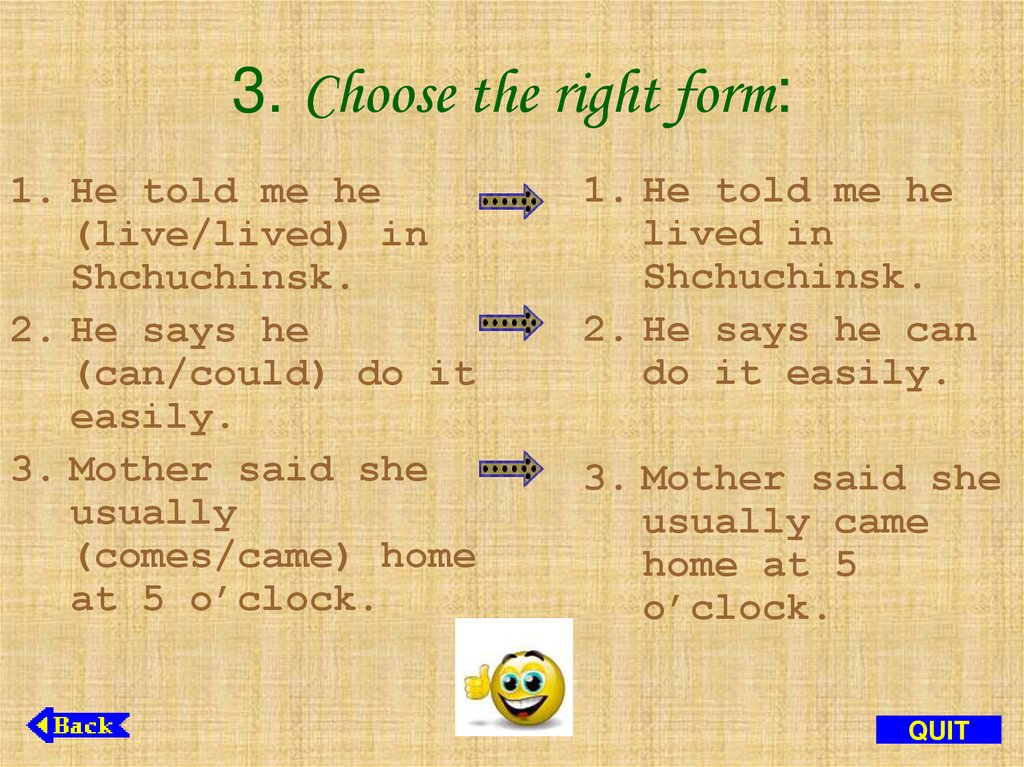
17. 3. Choose the right form:
1. He told me he(live/lived) in
Shchuchinsk.
2. He says he
(can/could) do it
easily.
3. Mother said she
usually
(comes/came) home
at 5 o’clock.
1. He told me he
lived in
Shchuchinsk.
2. He says he can
do it easily.
3. Mother said she
usually came
home at 5
o’clock.
QUIT