
 software
Similar presentations:



Operating systems
1.
Operating systemsDone by: Anastasia Pivovarova
Teacher: Yulia Provotorova
2.
An operating system is aset of programs that
enable a computer or
other device to operate
and the user to interact
with it. Any computer
consists of two groups of
components: hardware
and software
3.
The OS performs many functions:creates a user-friendly interface; standardises
access to input and output devicescoordinates
resource allocation between running software;
fixes errors and debugs them; provides
multitasking of programs;
4.
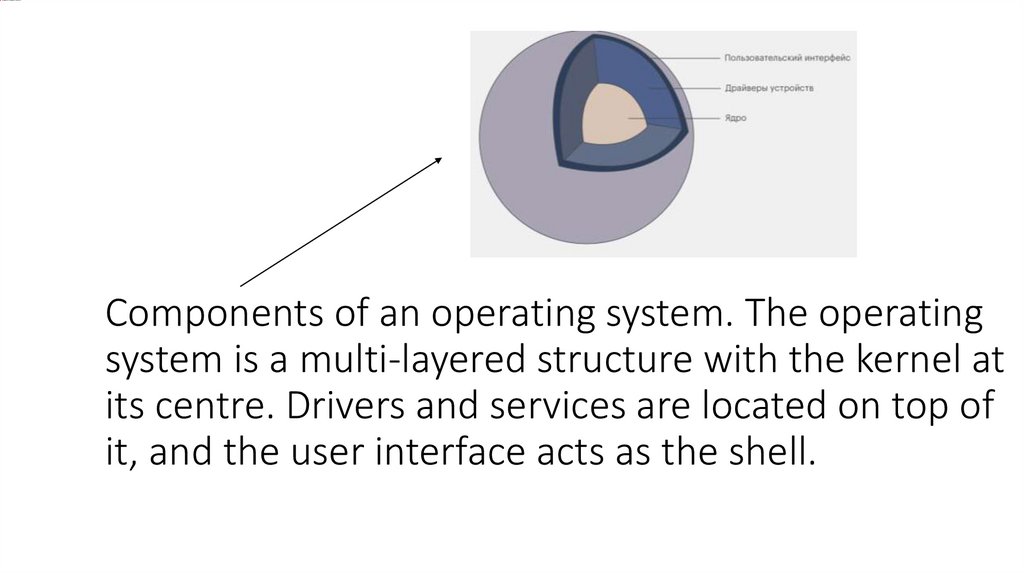
Components of an operating system. The operatingsystem is a multi-layered structure with the kernel at
its centre. Drivers and services are located on top of
it, and the user interface acts as the shell.
5.
Types of Operating Systems By Bitness.32-bit and 64-bitBy type of licence:
Commercial - these are paid operating
systems that are licensed for money;
freeware - free for users, but may
include paid support. By application
Server operating systems are used on
servers.
Client - systems for use on standalone
computers
Mobile - operating systems designed
for smartphones and tablets
6.
The most popular operatingsystems are: MacOS; Windows;
MS DOS; Unix; Linux.
7.
WindowsWindows has Availability Quantity of software.
Thousands of interesting and useful applications
and games are created for the platform every
year. Quality support for entertainment software.
Support for specific software. But Windows is
not distinguished by the security system - the OS
of this family is often affected by viruses and
spies. They work unstably, but are regularly
updated. But the graphical component here is at
the height. It is a great option for beginners.
8.
MacOSTabile and secure; has an impressive
package of unique software; is part of
the Apple ecosystem; has iCloud.
In order to use macOS, you'll have to
splurge. It's an operating system aimed
primarily at work - there are critically
few games for it. Another disadvantage
is that it has little business use.
9.
LinuxThe advantages of Linux include:- community
support;- versatility;- accessibility;- speed of
operation;- level of security.It is not compatible with
Windows. And in order to use Linux, you need to
master the terminal - only in this way you will be able
to provide full control. There is a graphical interface
here, but it does not allow you to unlock the full
potential. It is also noted that most equipment
(especially old equipment) is not compatible with
Linux.