

 english
Similar presentations:



Participle. Indefinite (Participle I)
1.
Participle2.
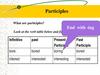
Indefinite(Participle I)
Active
Passive
asking
being asked
Past
Participle
(Participle II)
Perfect
asked
having written having been written
3.
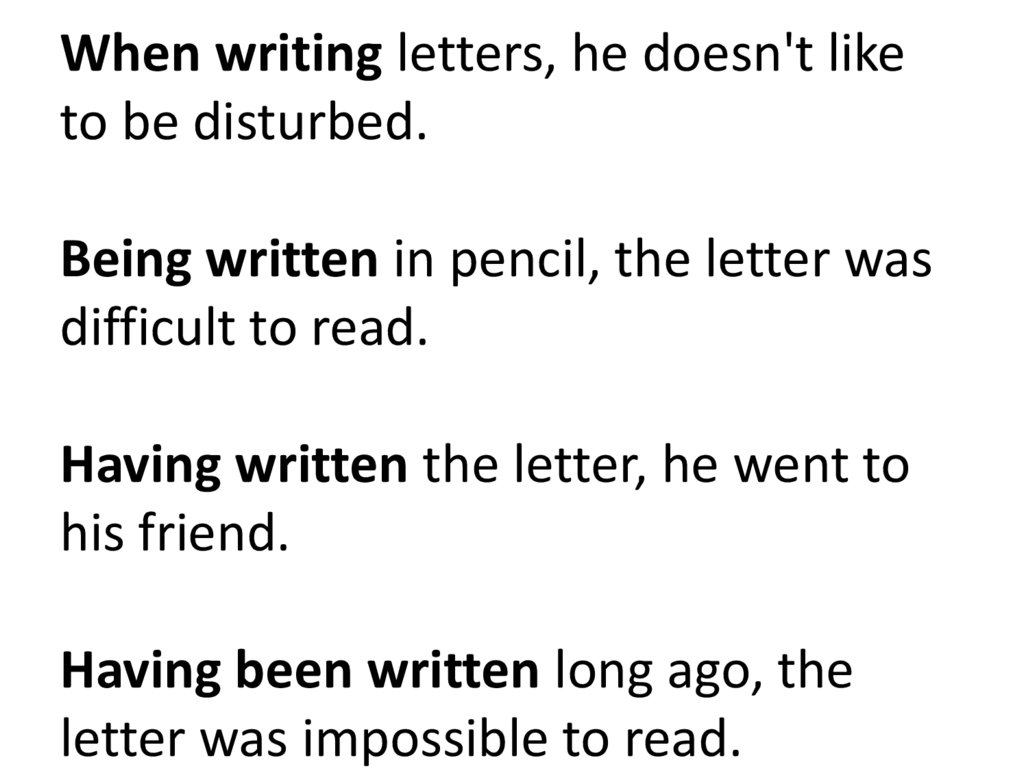
When writing letters, he doesn't liketo be disturbed.
Being written in pencil, the letter was
difficult to read.
Having written the letter, he went to
his friend.
Having been written long ago, the
letter was impossible to read.
4.
1.Indefinite participle (Active andPassive) denote simultaneous
action in the present, past or
future:
Did you see the child waving the
flag?
5.
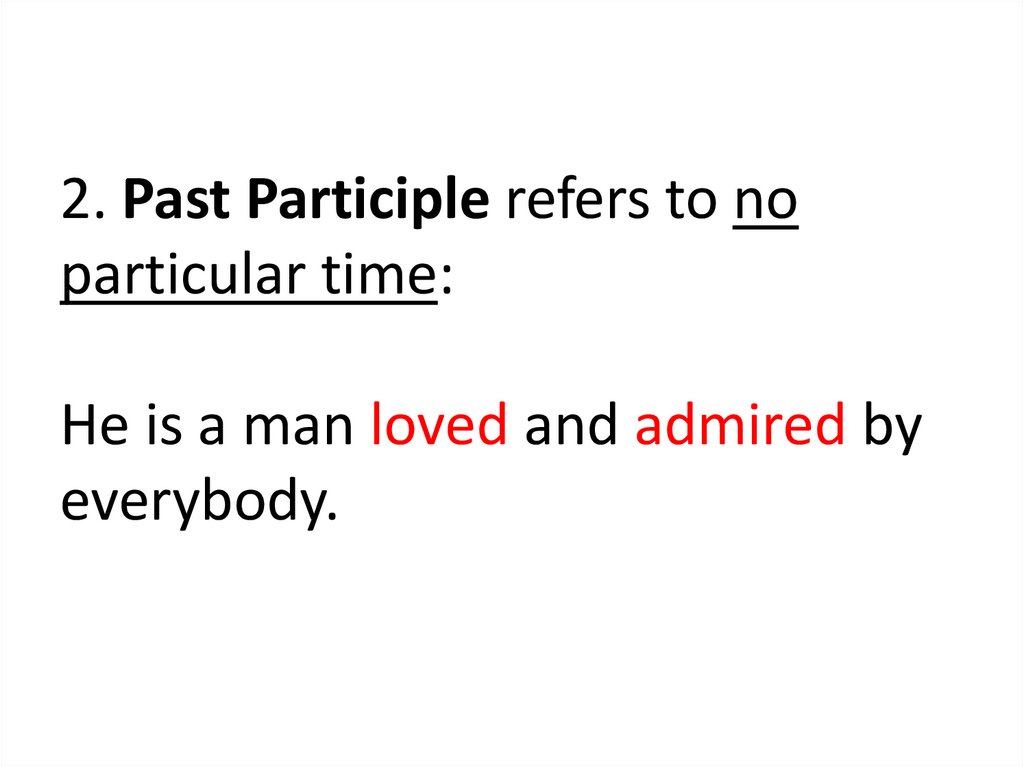
2. Past Participle refers to noparticular time:
He is a man loved and admired by
everybody.
6.
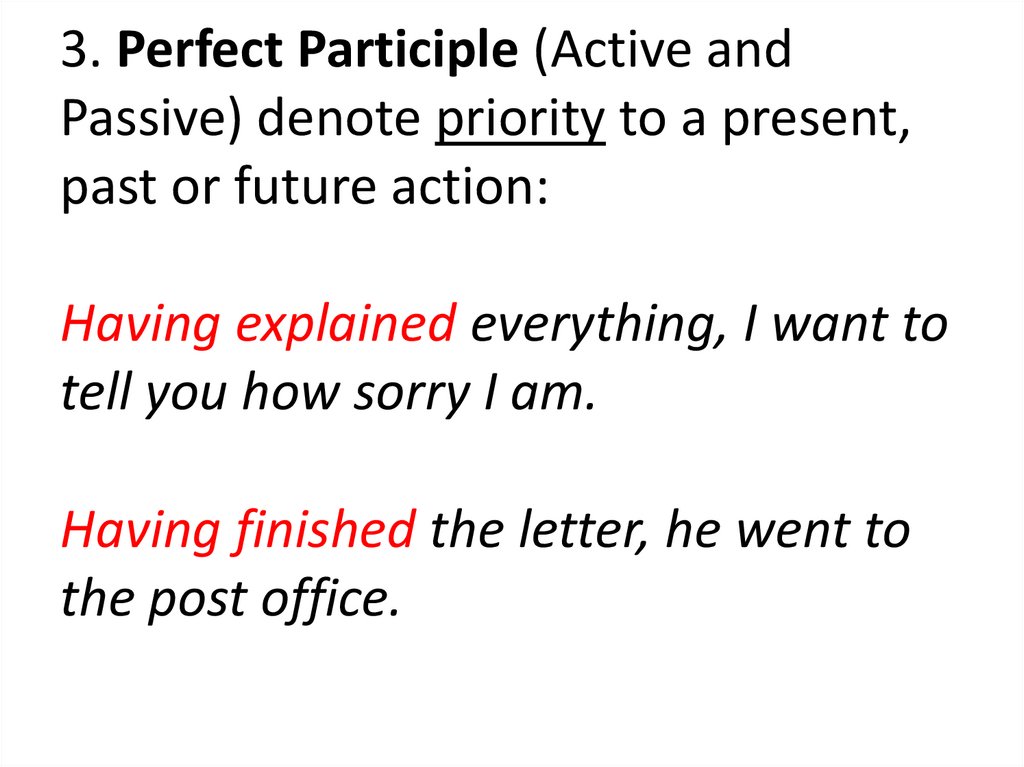
3. Perfect Participle (Active andPassive) denote priority to a present,
past or future action:
Having explained everything, I want to
tell you how sorry I am.
Having finished the letter, he went to
the post office.
7.
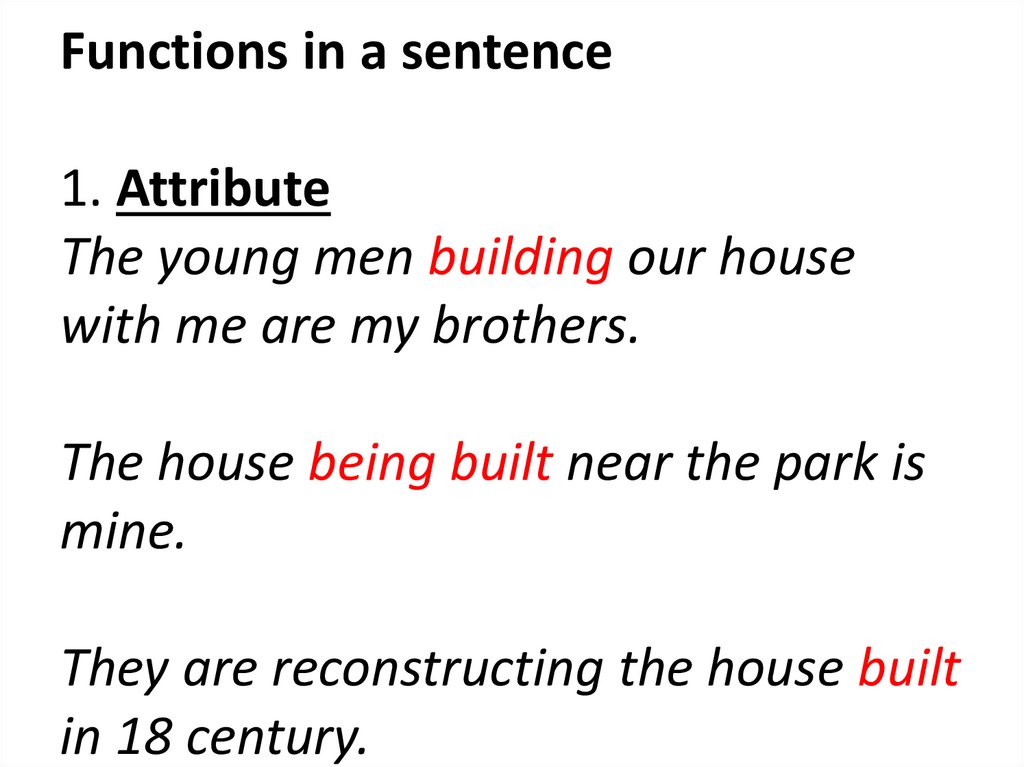
Functions in a sentence1. Attribute
The young men building our house
with me are my brothers.
The house being built near the park is
mine.
They are reconstructing the house built
in 18 century.
8.
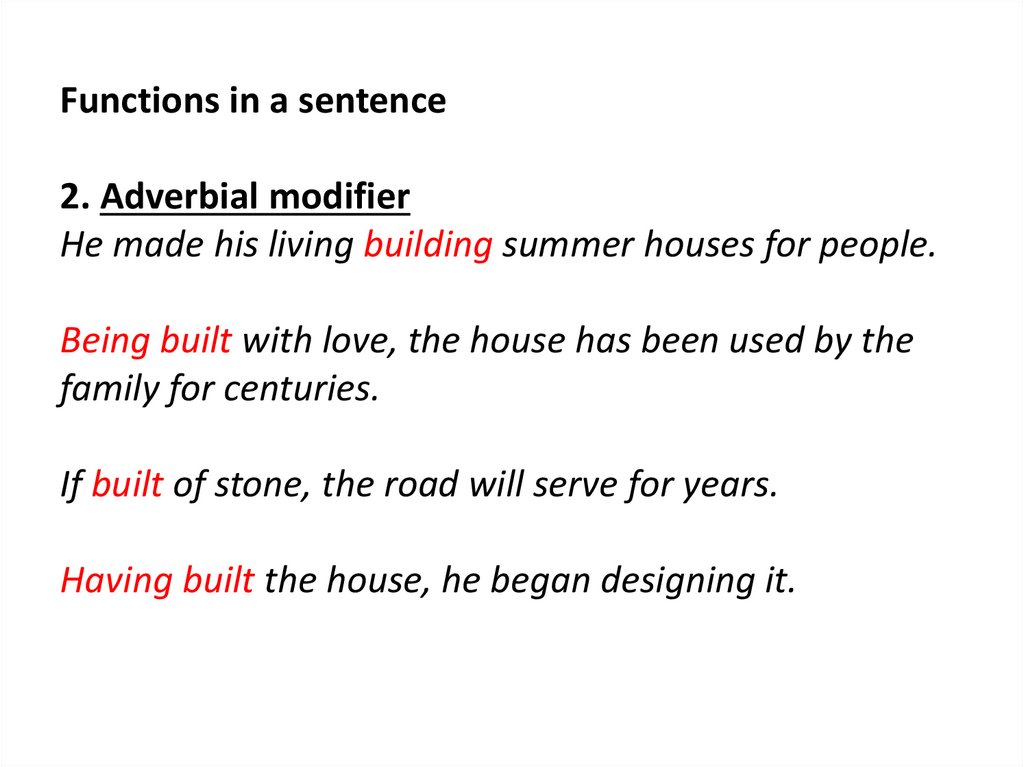
Functions in a sentence2. Adverbial modifier
He made his living building summer houses for people.
Being built with love, the house has been used by the
family for centuries.
If built of stone, the road will serve for years.
Having built the house, he began designing it.
9.
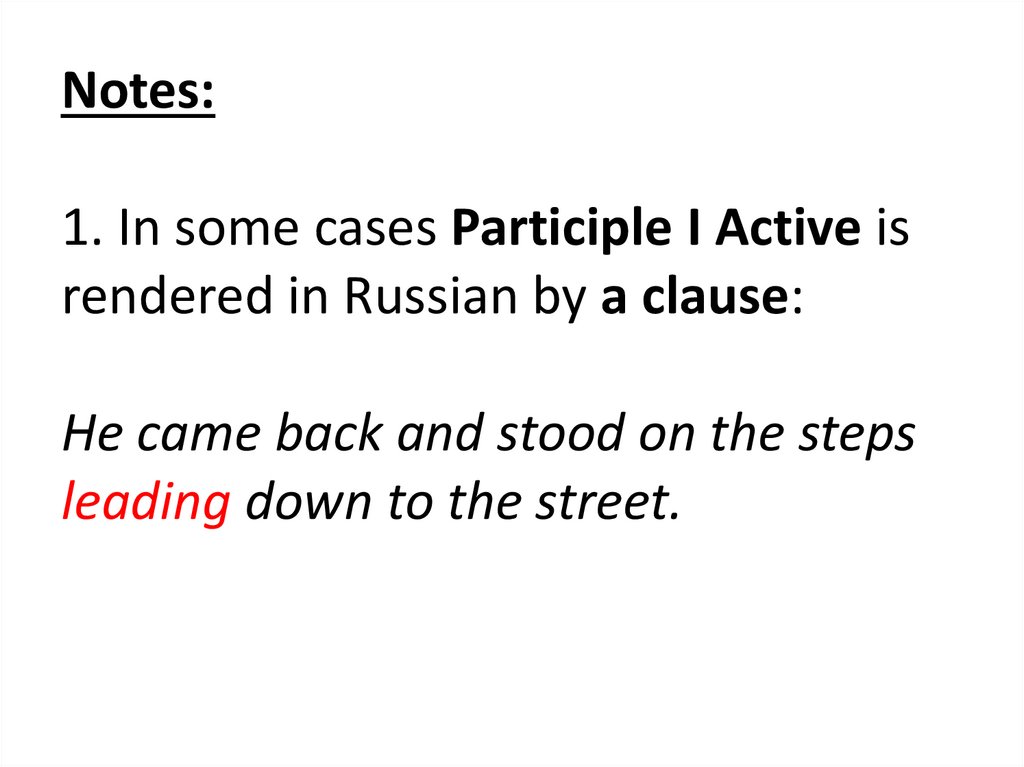
Notes:1. In some cases Participle I Active is
rendered in Russian by a clause:
He came back and stood on the steps
leading down to the street.
10.
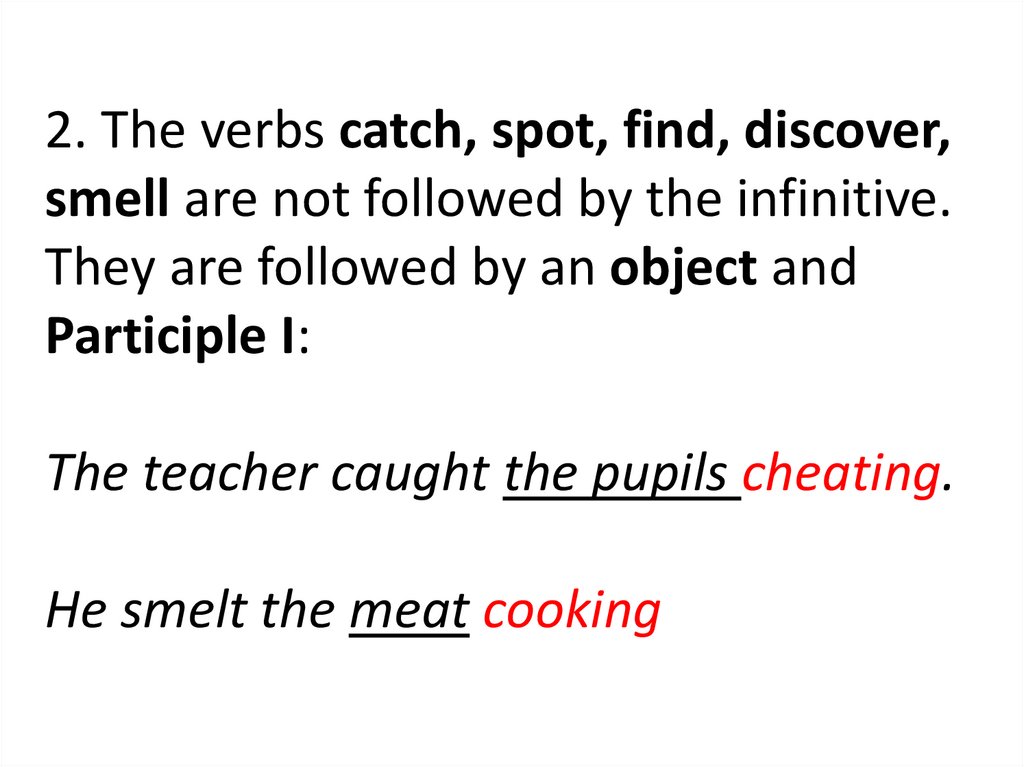
2. The verbs catch, spot, find, discover,smell are not followed by the infinitive.
They are followed by an object and
Participle I:
The teacher caught the pupils cheating.
He smelt the meat cooking
11.
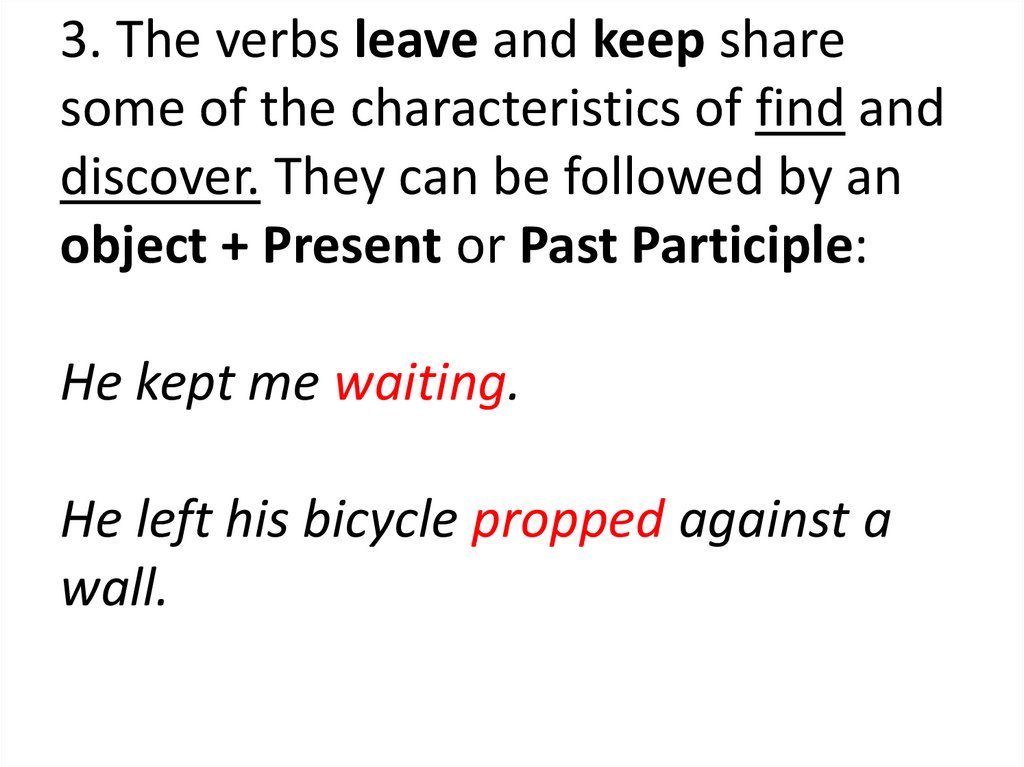
3. The verbs leave and keep sharesome of the characteristics of find and
discover. They can be followed by an
object + Present or Past Participle:
He kept me waiting.
He left his bicycle propped against a
wall.
12.
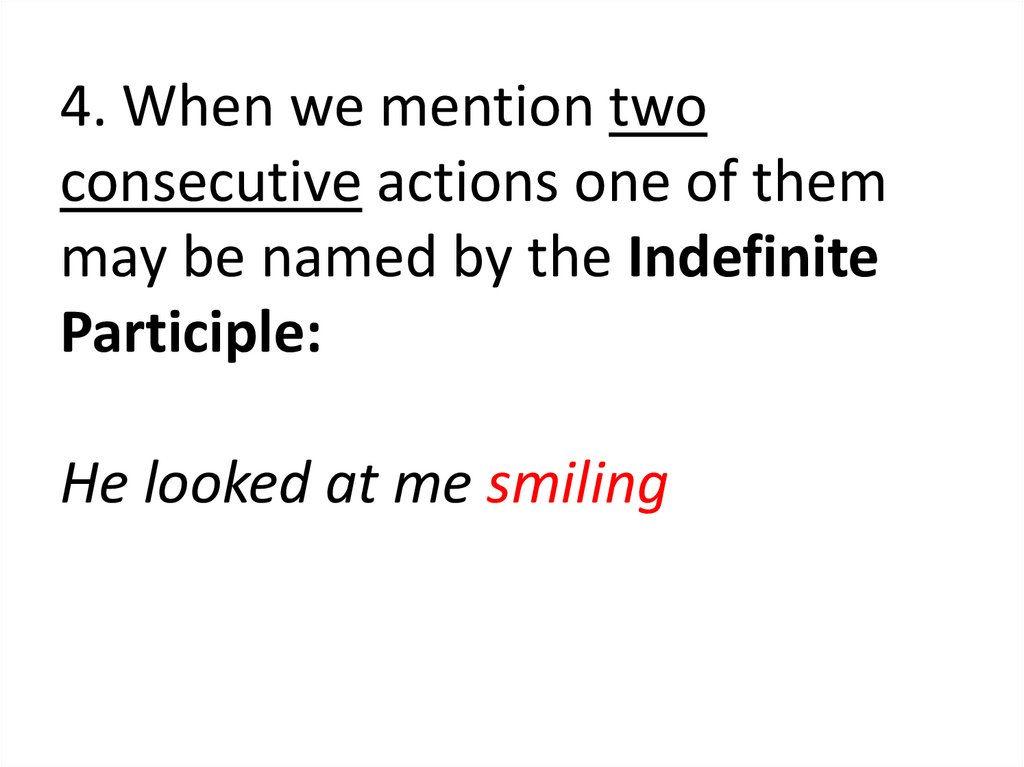
4. When we mention twoconsecutive actions one of them
may be named by the Indefinite
Participle:
He looked at me smiling
13.
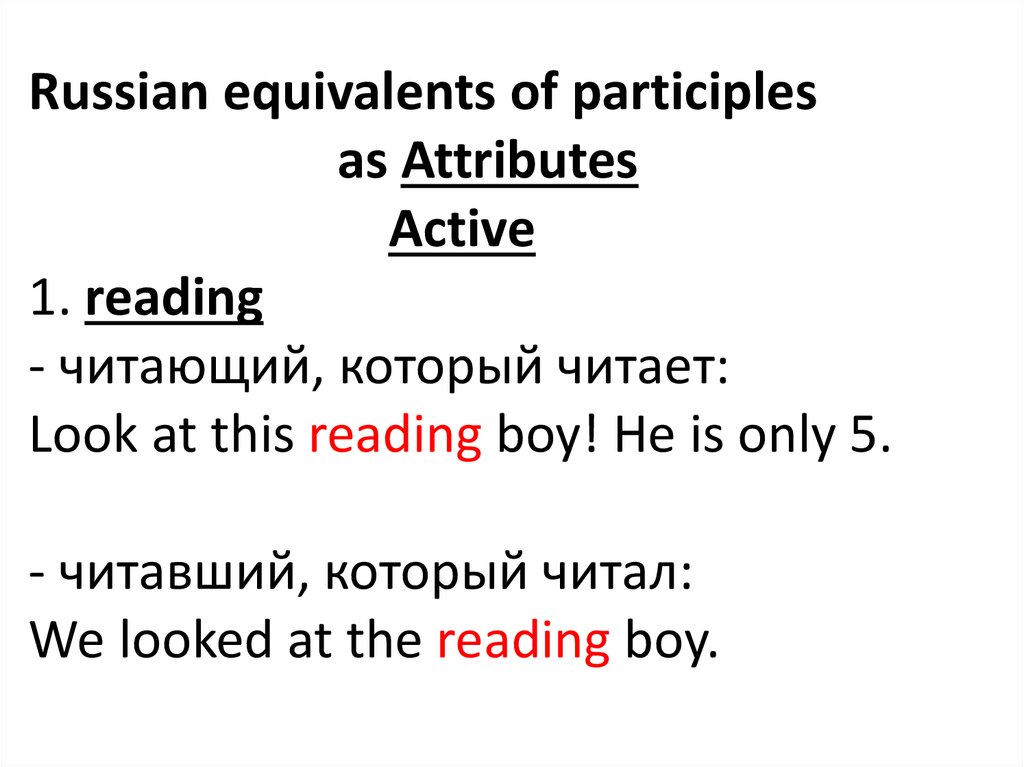
Russian equivalents of participlesas Attributes
Active
1. reading
- читающий, который читает:
Look at this reading boy! He is only 5.
- читавший, который читал:
We looked at the reading boy.
14.
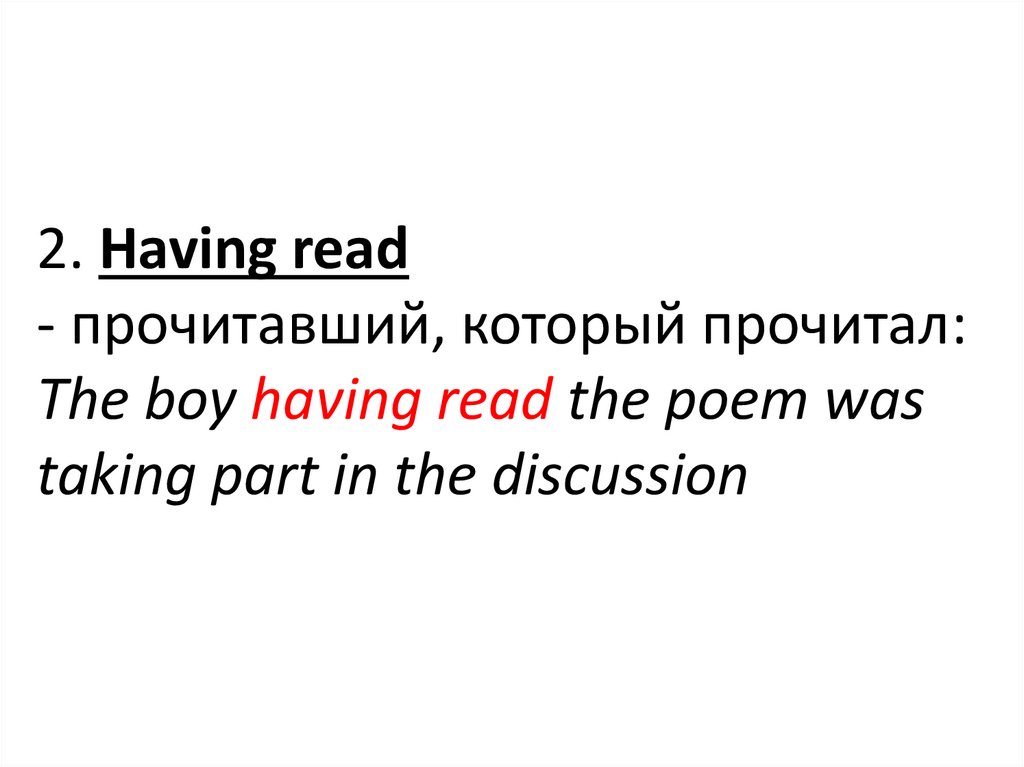
2. Having read- прочитавший, который прочитал:
The boy having read the poem was
taking part in the discussion
15.
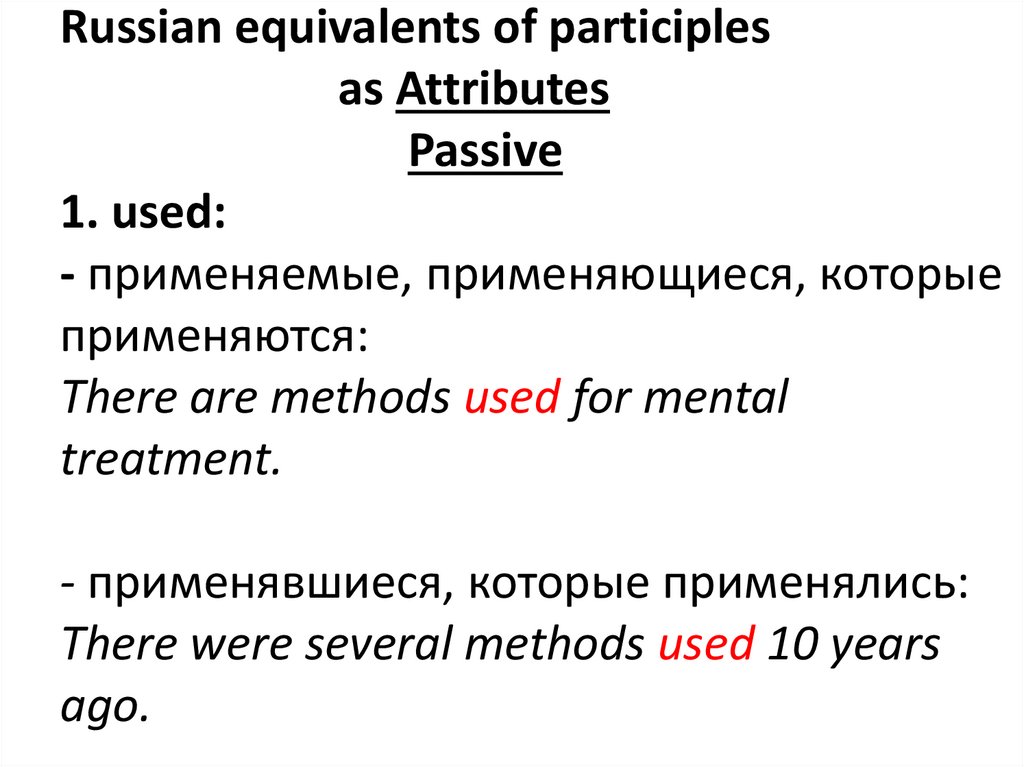
Russian equivalents of participlesas Attributes
Passive
1. used:
- применяемые, применяющиеся, которые
применяются:
There are methods used for mental
treatment.
- применявшиеся, которые применялись:
There were several methods used 10 years
ago.
16.
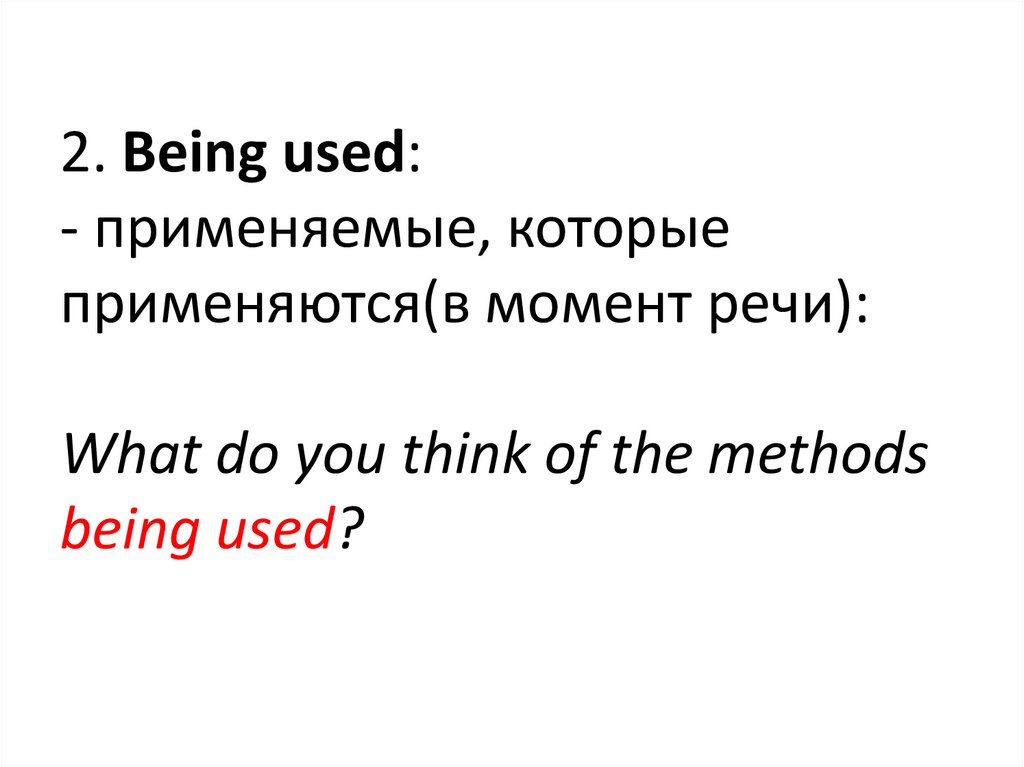
2. Being used:- применяемые, которые
применяются(в момент речи):
What do you think of the methods
being used?
17.
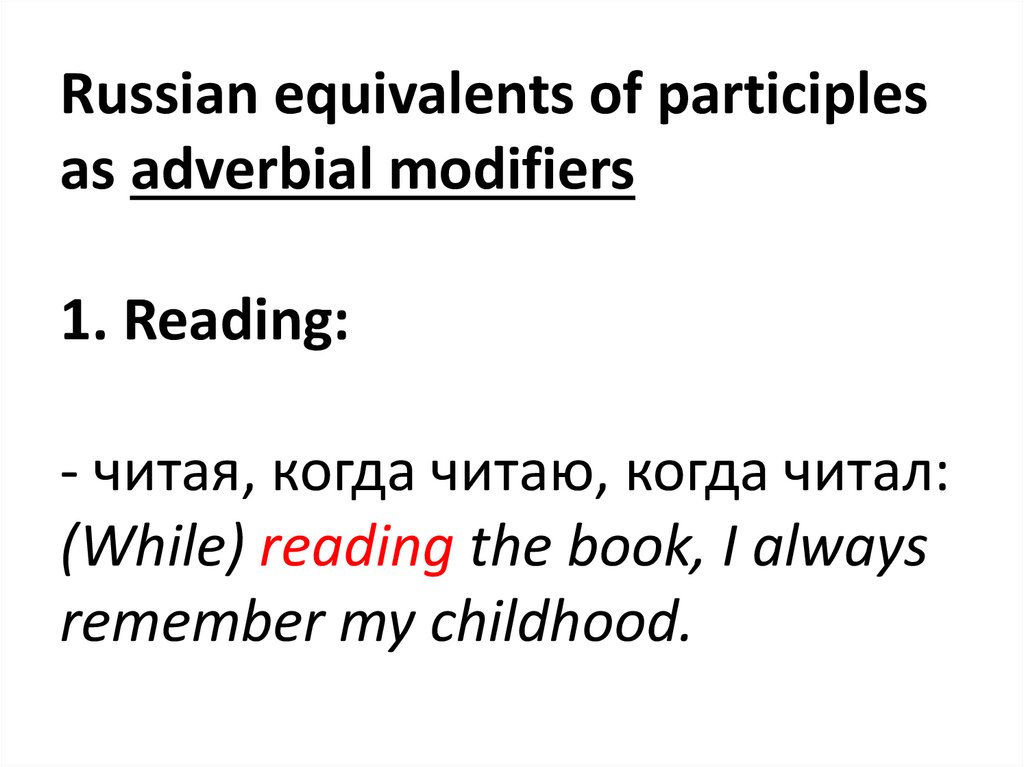
Russian equivalents of participlesas adverbial modifiers
1. Reading:
- читая, когда читаю, когда читал:
(While) reading the book, I always
remember my childhood.
18.
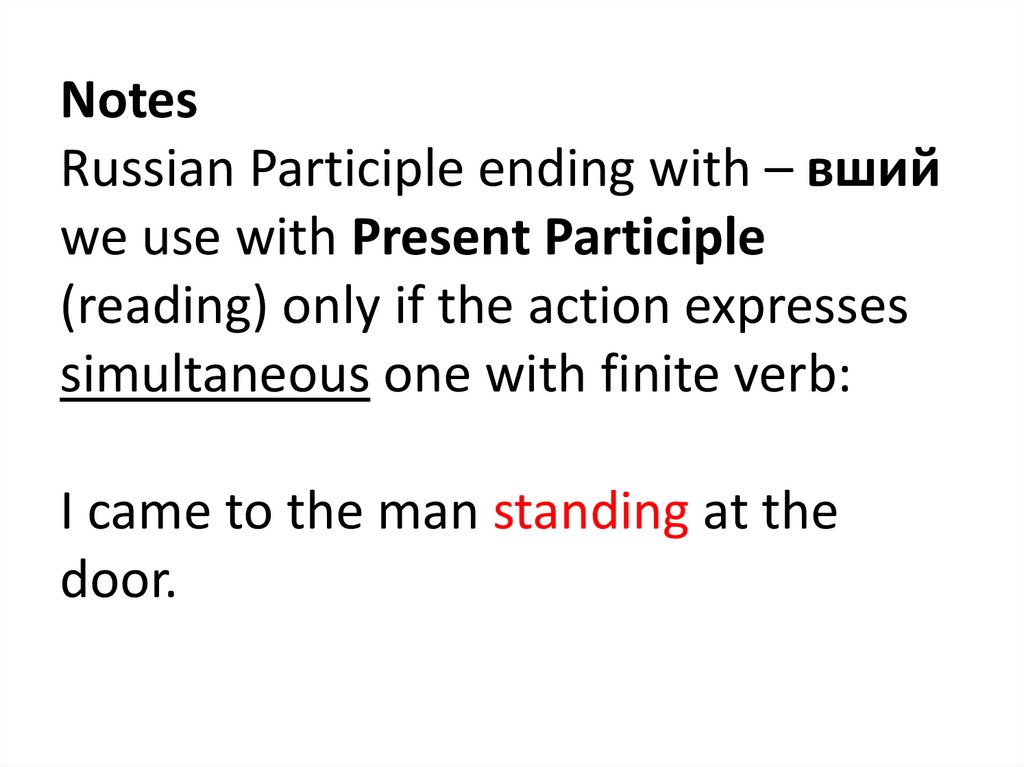
NotesRussian Participle ending with – вший
we use with Present Participle
(reading) only if the action expresses
simultaneous one with finite verb:
I came to the man standing at the
door.
19.
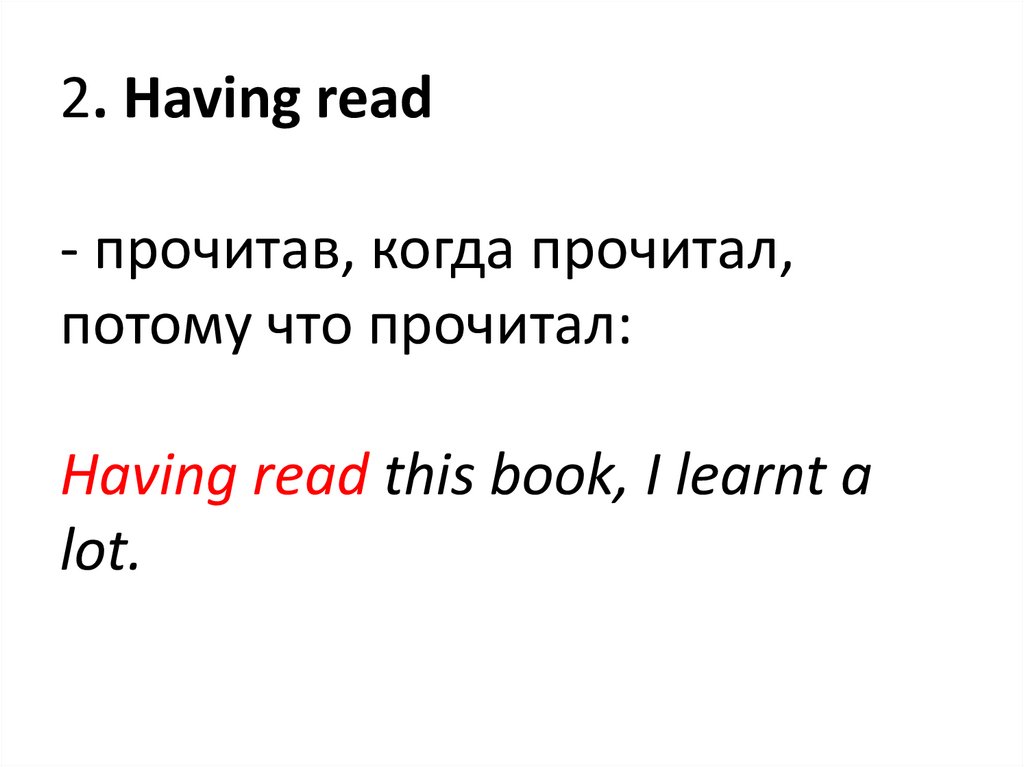
2. Having read- прочитав, когда прочитал,
потому что прочитал:
Having read this book, I learnt a
lot.