 biology
Similar presentations:








The Siberian Ibex
1.
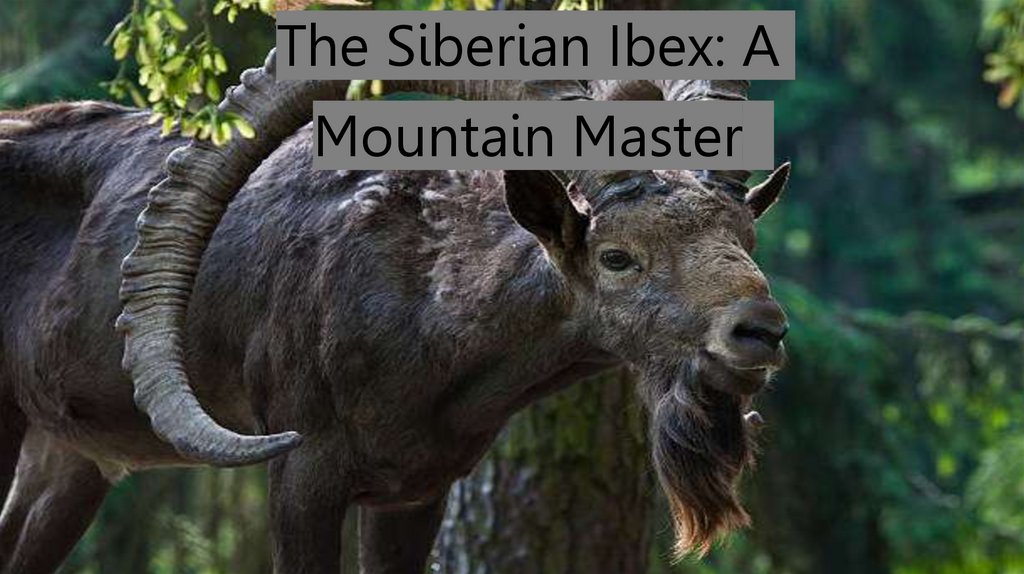
The Siberian Ibex: AMountain Master
2.
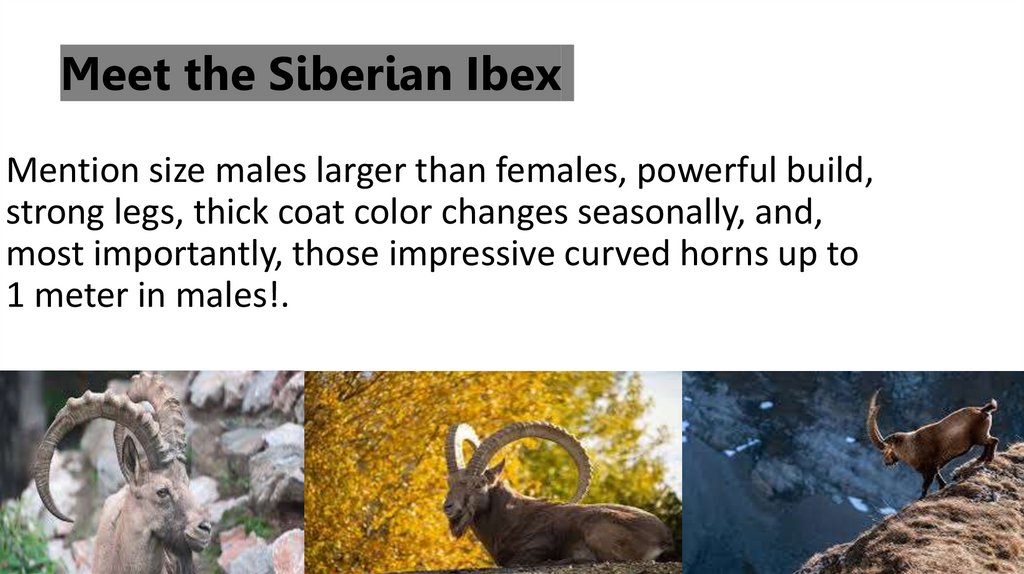
Meet the Siberian IbexMention size males larger than females, powerful build,
strong legs, thick coat color changes seasonally, and,
most importantly, those impressive curved horns up to
1 meter in males!.
3.
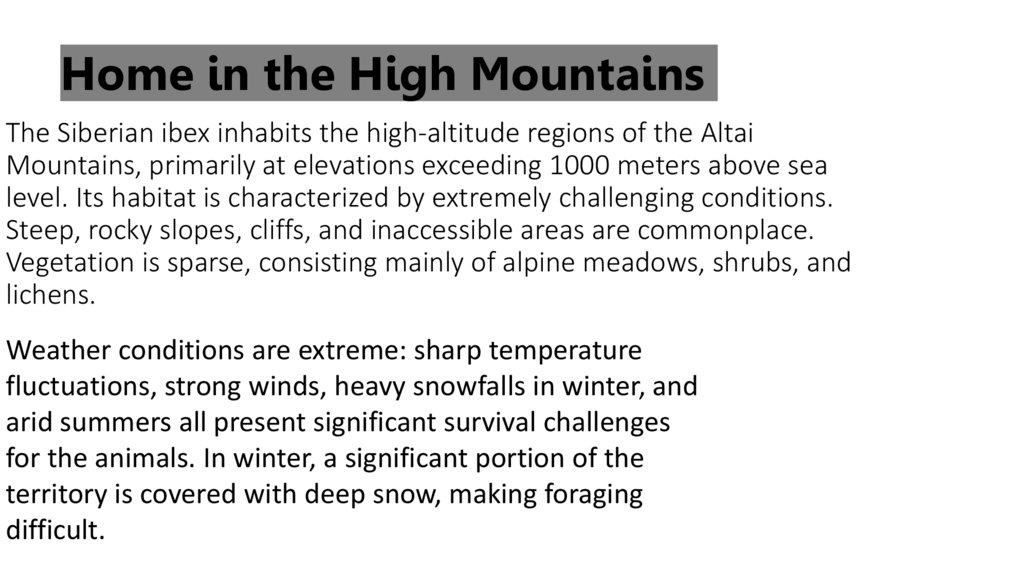
Home in the High MountainsThe Siberian ibex inhabits the high-altitude regions of the Altai
Mountains, primarily at elevations exceeding 1000 meters above sea
level. Its habitat is characterized by extremely challenging conditions.
Steep, rocky slopes, cliffs, and inaccessible areas are commonplace.
Vegetation is sparse, consisting mainly of alpine meadows, shrubs, and
lichens.
Weather conditions are extreme: sharp temperature
fluctuations, strong winds, heavy snowfalls in winter, and
arid summers all present significant survival challenges
for the animals. In winter, a significant portion of the
territory is covered with deep snow, making foraging
difficult.
4.
Diet & ForagingThe Siberian goat, which inhabits the forests and mountainous
regions of Siberia, has a herbivorous diet that includes a variety
of grasses, shrubs, mosses, and lichens. During the warm
months, it prefers fresh greenery, such as young grasses and
leaves of shrubs. These plants are rich in nutrients and help the
goat maintain its health and energy.
With the onset of winter, the diet of the Siberian goat changes
significantly. During this season, it adapts to the conditions by
switching to coarser food. In winter, the goat feeds on tree bark,
young shoots, and the branches of shrubs. These food sources
provide it with the necessary nutrients in an environment with
limited access to fresh vegetation
5.
Conservation Status & ThreatsThe Siberian ibex (Capra sibirica) is currently classified as "Least Concern"
on the IUCN Red List; however, it faces several threats that could impact its
population in the future. Key concerns include habitat loss due to human
encroachment, mining, and agricultural expansion, which diminish the
natural environments where ibex thrive.
Additionally, poaching poses a significant threat as the ibex is hunted for its
meat, horns, and skin. This illegal activity can lead to population declines,
especially in regions where enforcement of wildlife protection laws is
weak. Climate change also affects the Siberian ibex by altering its habitat,
impacting food availability, and increasing competition with other species.