Similar presentations:




The History and Scope of Psychology Module
1. The History and Scope of Psychology Module 1
12.
23. The History and Scope of Psychology Overview
What is Psychology?Psychology’s Roots
Contemporary Psychology
Psychological Perspectives
3
4. Psychology’s Roots
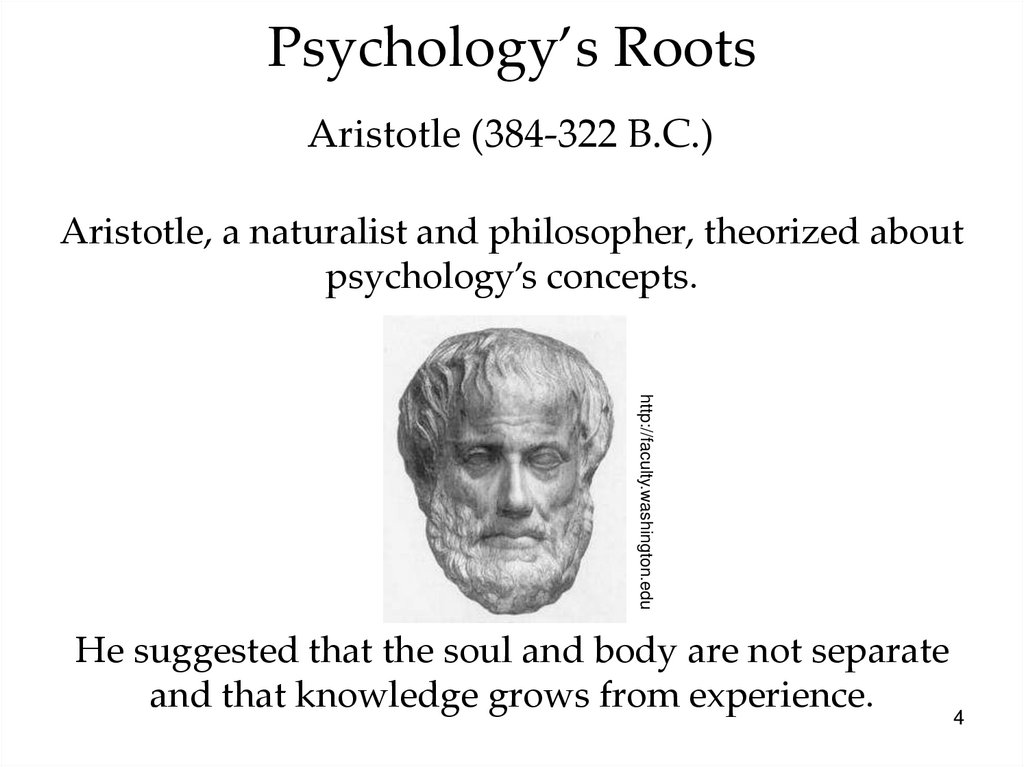
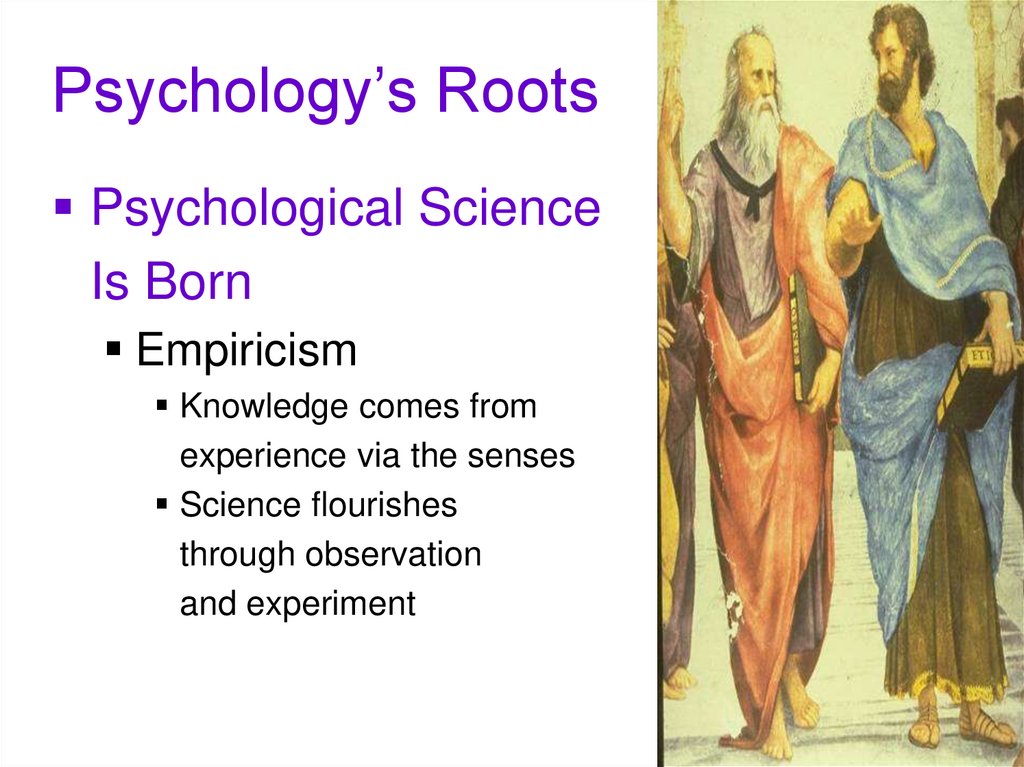
Aristotle (384-322 B.C.)Aristotle, a naturalist and philosopher, theorized about
psychology’s concepts.
http://faculty.washington.edu
He suggested that the soul and body are not separate
and that knowledge grows from experience.
4
5. Psychology’s Roots
Psychological ScienceIs Born
Empiricism
Knowledge comes from
experience via the senses
Science flourishes
through observation
and experiment
5
6. Wave One
•Introspection6
7. Psychological Science is Born
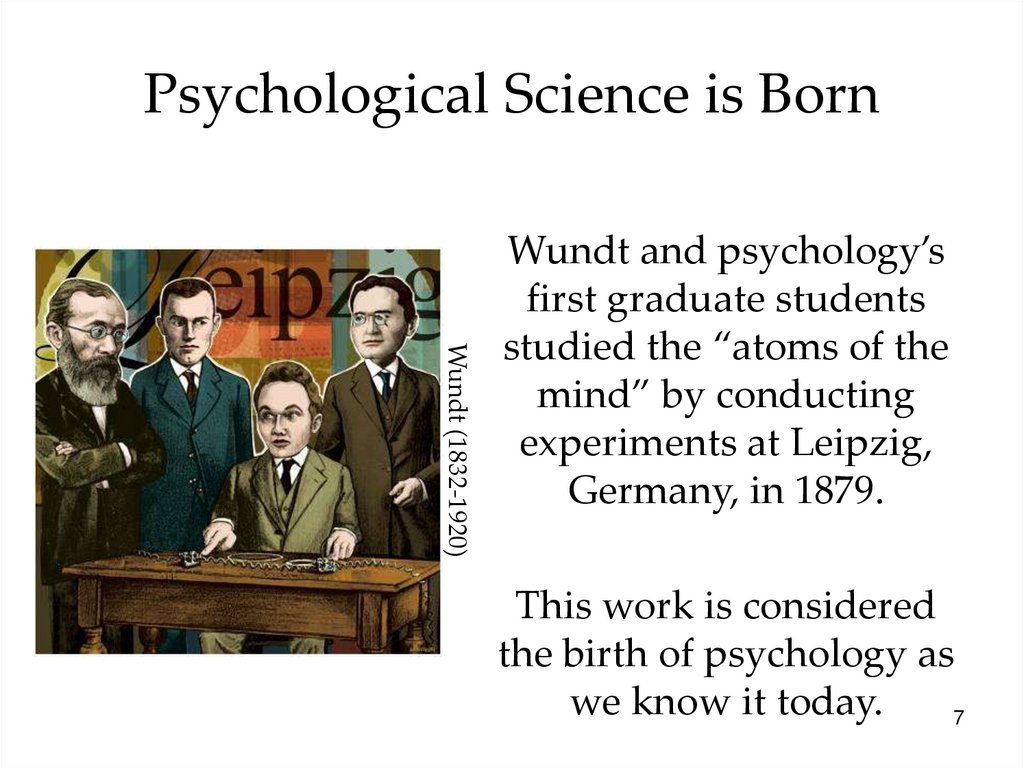
Wundt (1832-1920)Wundt and psychology’s
first graduate students
studied the “atoms of the
mind” by conducting
experiments at Leipzig,
Germany, in 1879.
This work is considered
the birth of psychology as
we know it today.
7
8. Psychological Science is Born
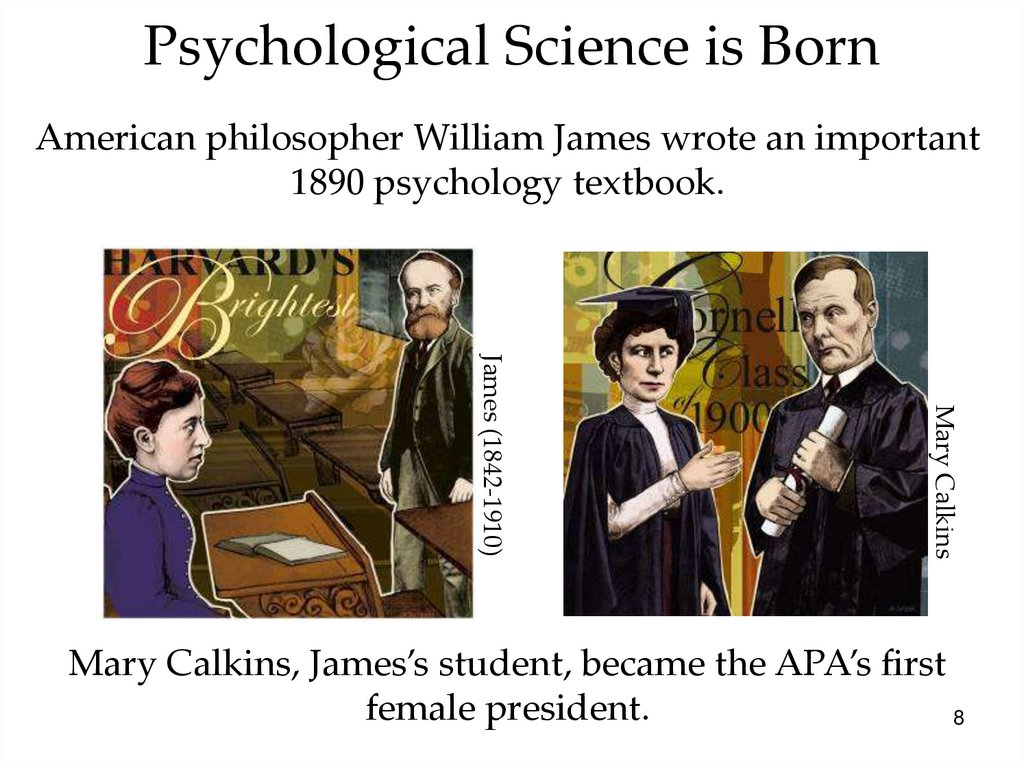
American philosopher William James wrote an important1890 psychology textbook.
Mary Calkins
James (1842-1910)
Mary Calkins, James’s student, became the APA’s first
female president.
8
9. Psychological Science is Born
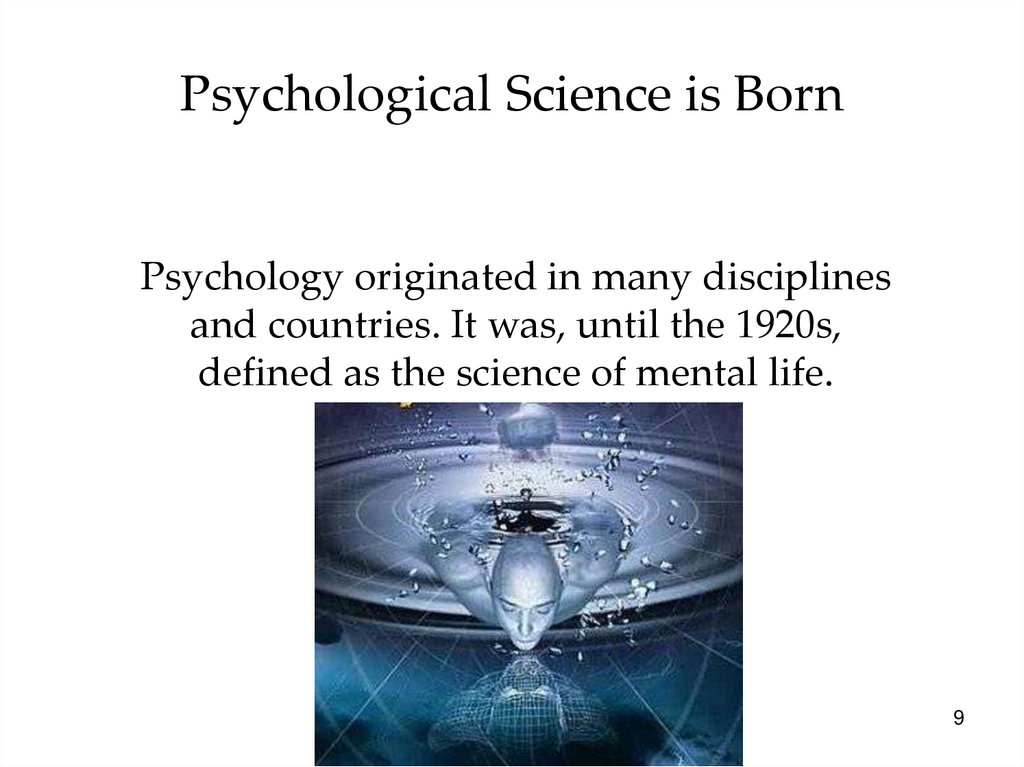
Psychology originated in many disciplinesand countries. It was, until the 1920s,
defined as the science of mental life.
9
10. Wave Two Gestalt Psychology Max Wertheimer
1011. Wave three
Psychoanalysis11
12. Psychological Science is Born
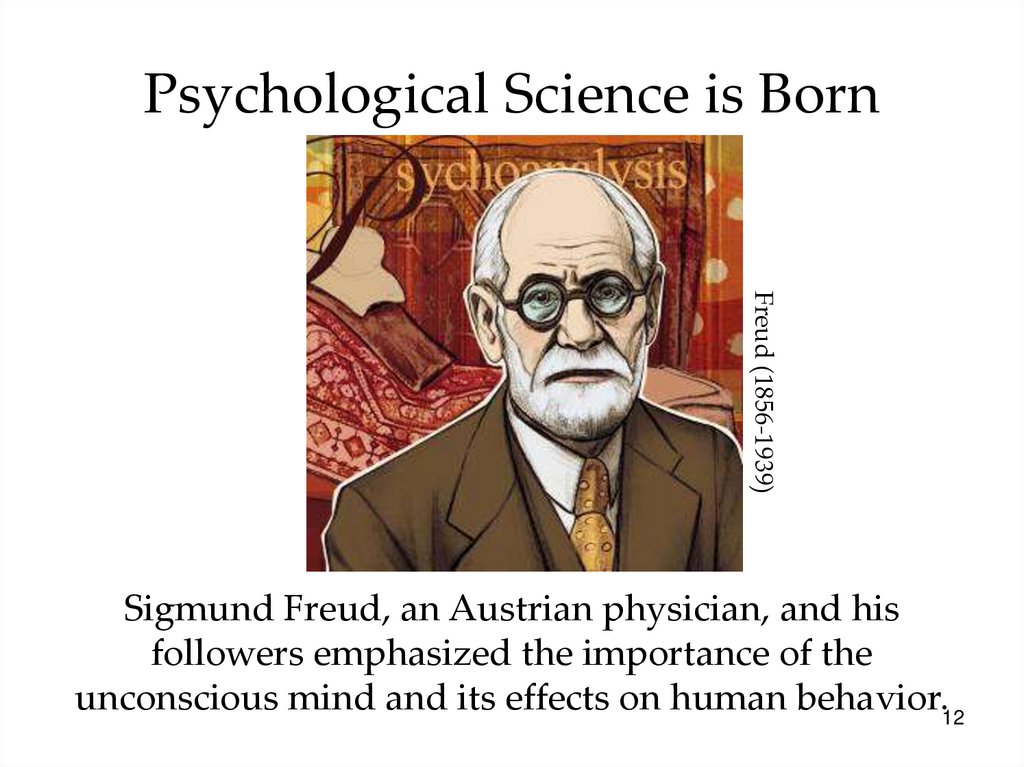
Freud (1856-1939)Sigmund Freud, an Austrian physician, and his
followers emphasized the importance of the
unconscious mind and its effects on human behavior.12
13. Wave Four
• Behaviorism13
14. Psychological Science Develops
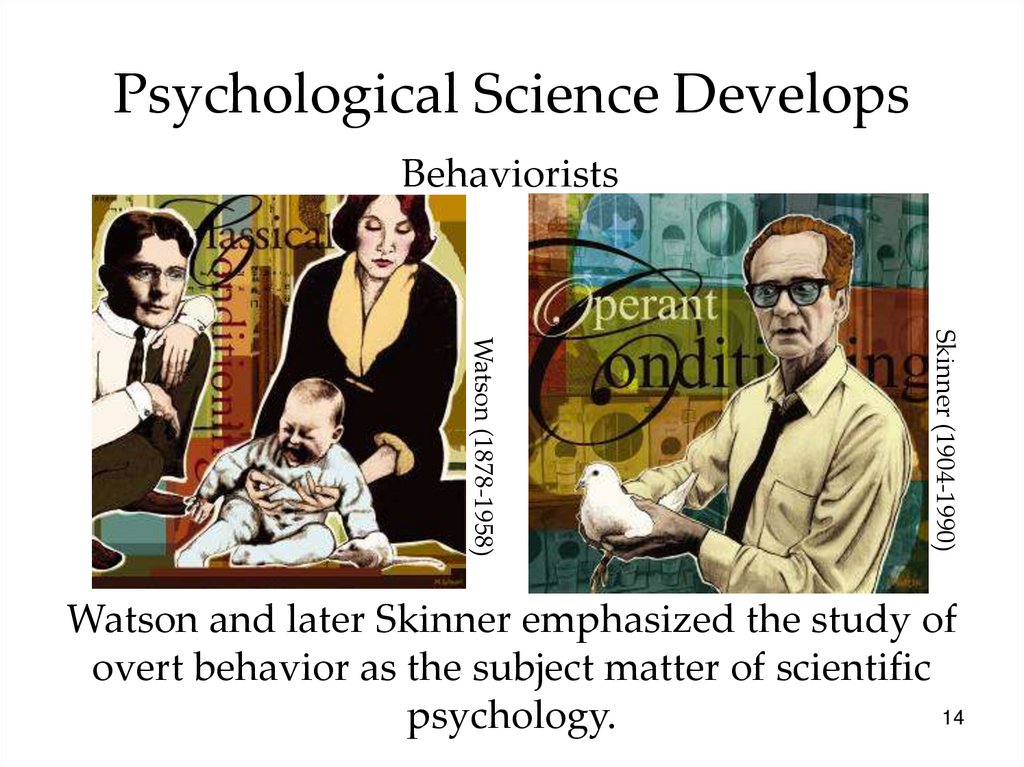
BehavioristsSkinner (1904-1990)
Watson (1878-1958)
Watson and later Skinner emphasized the study of
overt behavior as the subject matter of scientific
14
psychology.
15. Wave Five
• Multiple Perspectives15
16. Psychological Science Develops
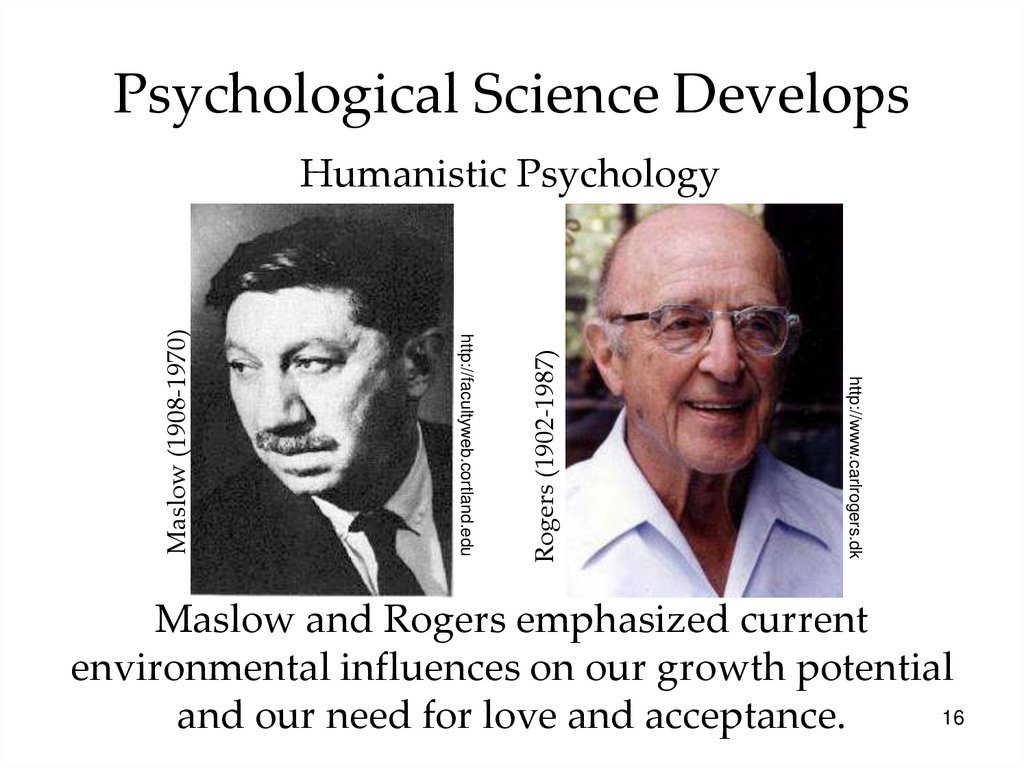
Rogers (1902-1987)http://www.carlrogers.dk
http://facultyweb.cortland.edu
Maslow (1908-1970)
Humanistic Psychology
Maslow and Rogers emphasized current
environmental influences on our growth potential
16
and our need for love and acceptance.
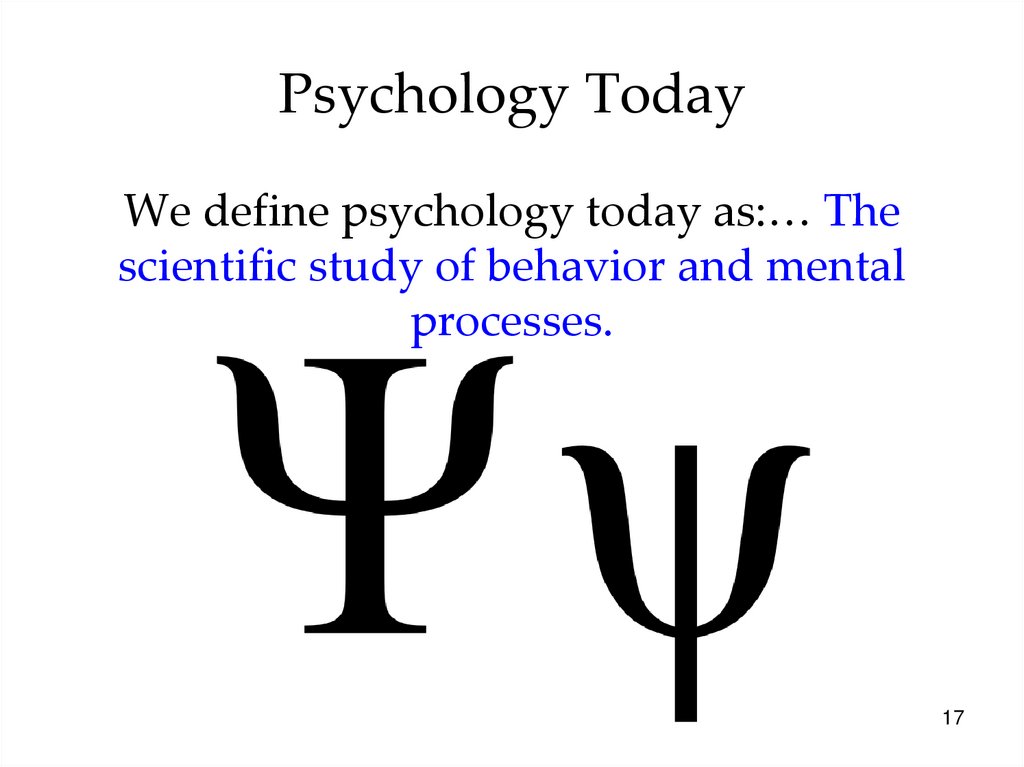
17. Psychology Today
We define psychology today as:… Thescientific study of behavior and mental
processes.
17
18. Psychological Associations & Societies
Psychological Associations &Societies
The American Psychological Association is the
largest organization of psychology, followed by the
British Psychological Society.
18
19. Psychology’s Big Question
Nature versus NurtureThe controversy over the relative contributions of
biology and experience.
Nurture works on what nature endows.
19
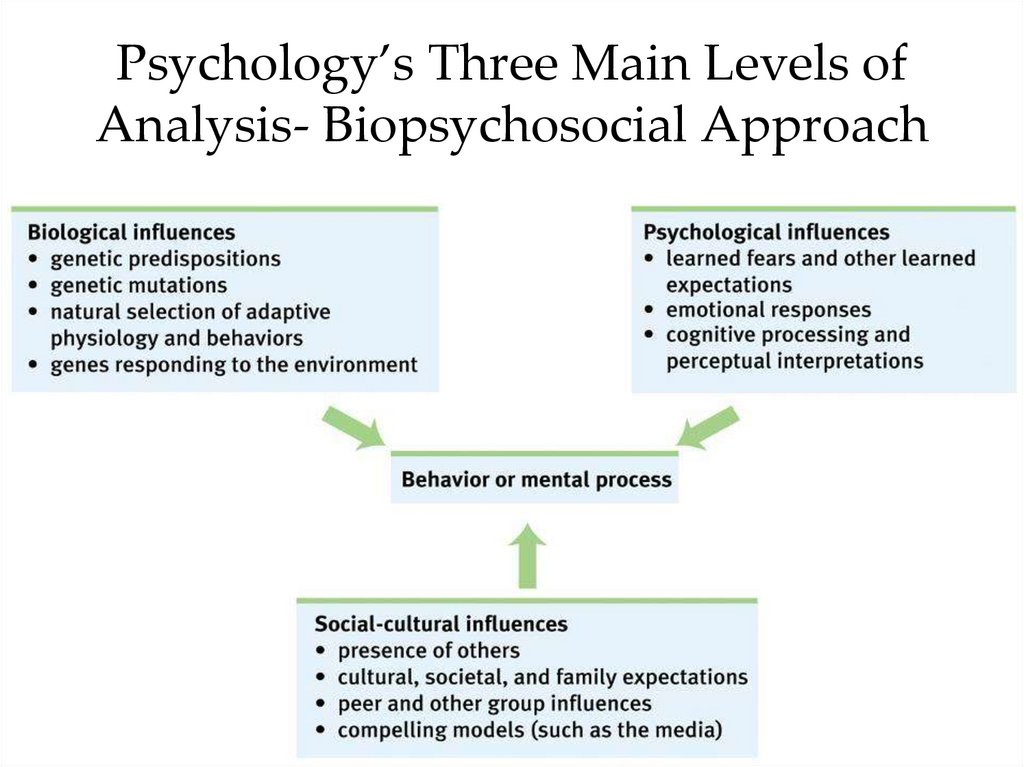
20. Psychology’s Three Main Levels of Analysis- Biopsychosocial Approach
2021. Psychology’s Current Perspectives
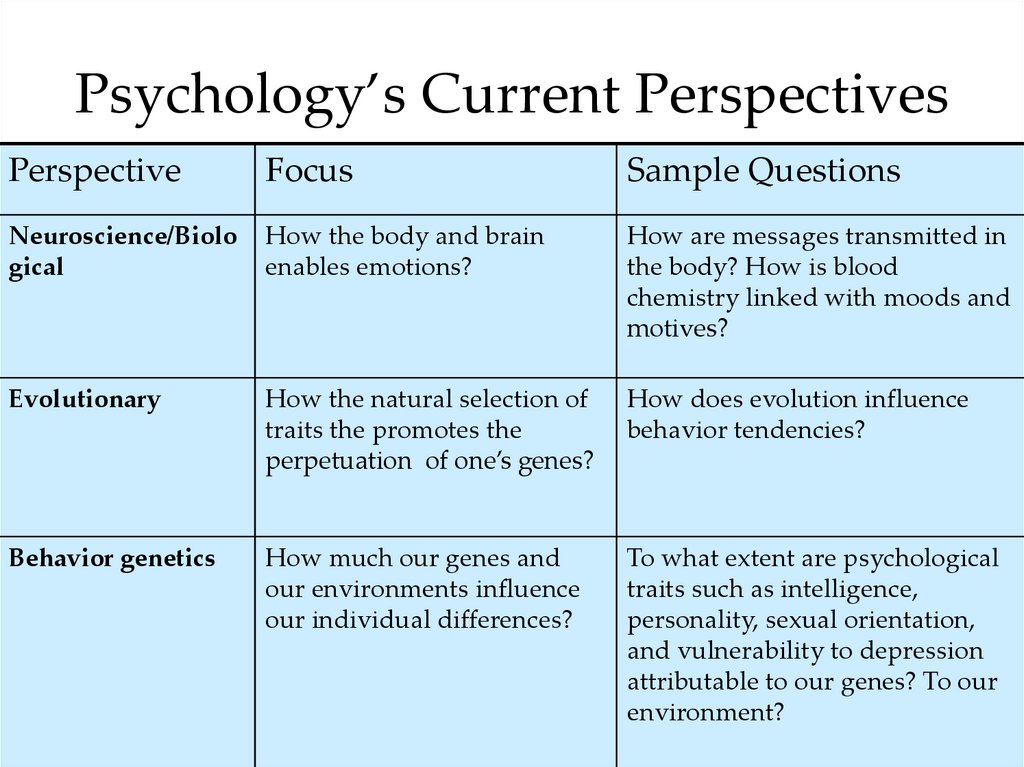
PerspectiveFocus
Sample Questions
Neuroscience/Biolo
gical
How the body and brain
enables emotions?
How are messages transmitted in
the body? How is blood
chemistry linked with moods and
motives?
Evolutionary
How the natural selection of
traits the promotes the
perpetuation of one’s genes?
How does evolution influence
behavior tendencies?
Behavior genetics
How much our genes and
our environments influence
our individual differences?
To what extent are psychological
traits such as intelligence,
personality, sexual orientation,
and vulnerability to depression
attributable to our genes? To our
environment?
21
22. Psychology’s Current Perspectives
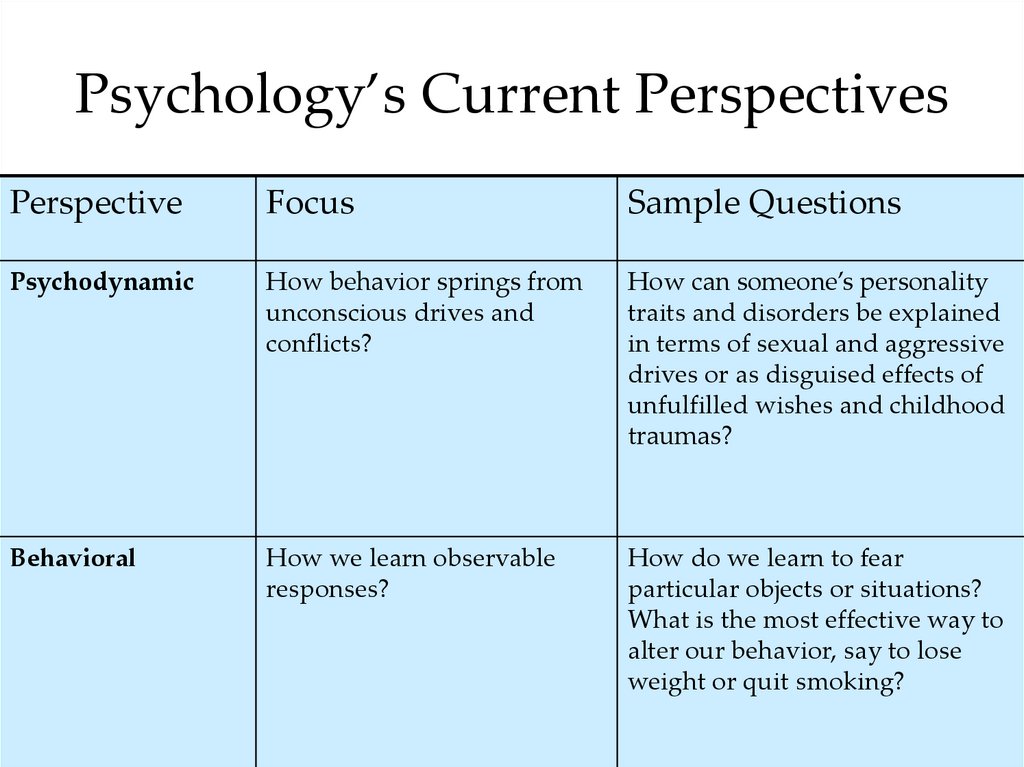
PerspectiveFocus
Sample Questions
Psychodynamic
How behavior springs from
unconscious drives and
conflicts?
How can someone’s personality
traits and disorders be explained
in terms of sexual and aggressive
drives or as disguised effects of
unfulfilled wishes and childhood
traumas?
Behavioral
How we learn observable
responses?
How do we learn to fear
particular objects or situations?
What is the most effective way to
alter our behavior, say to lose
weight or quit smoking?
22
23. Psychology’s Current Perspectives
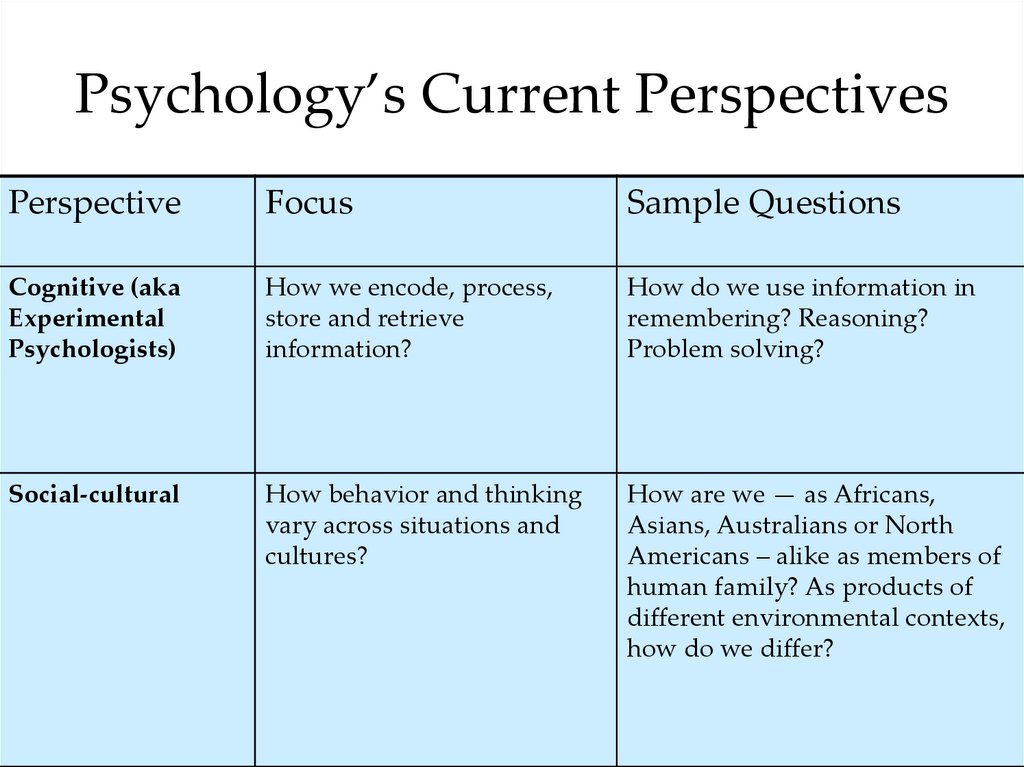
PerspectiveFocus
Sample Questions
Cognitive (aka
Experimental
Psychologists)
How we encode, process,
store and retrieve
information?
How do we use information in
remembering? Reasoning?
Problem solving?
Social-cultural
How behavior and thinking
vary across situations and
cultures?
How are we — as Africans,
Asians, Australians or North
Americans – alike as members of
human family? As products of
different environmental contexts,
how do we differ?
23
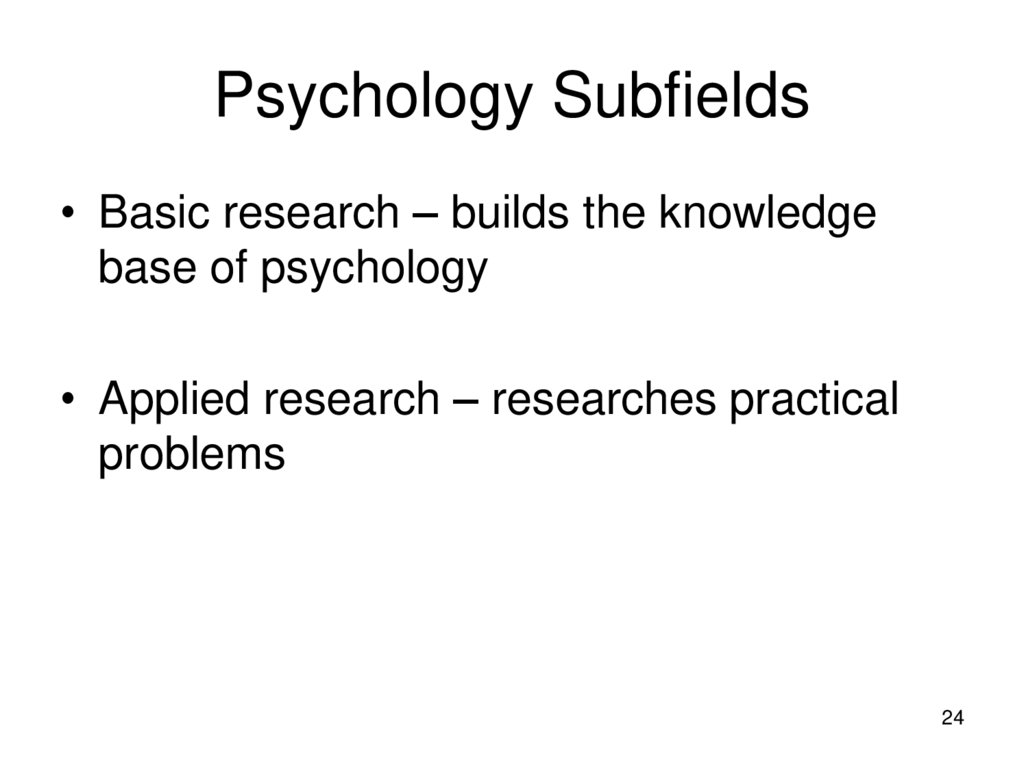
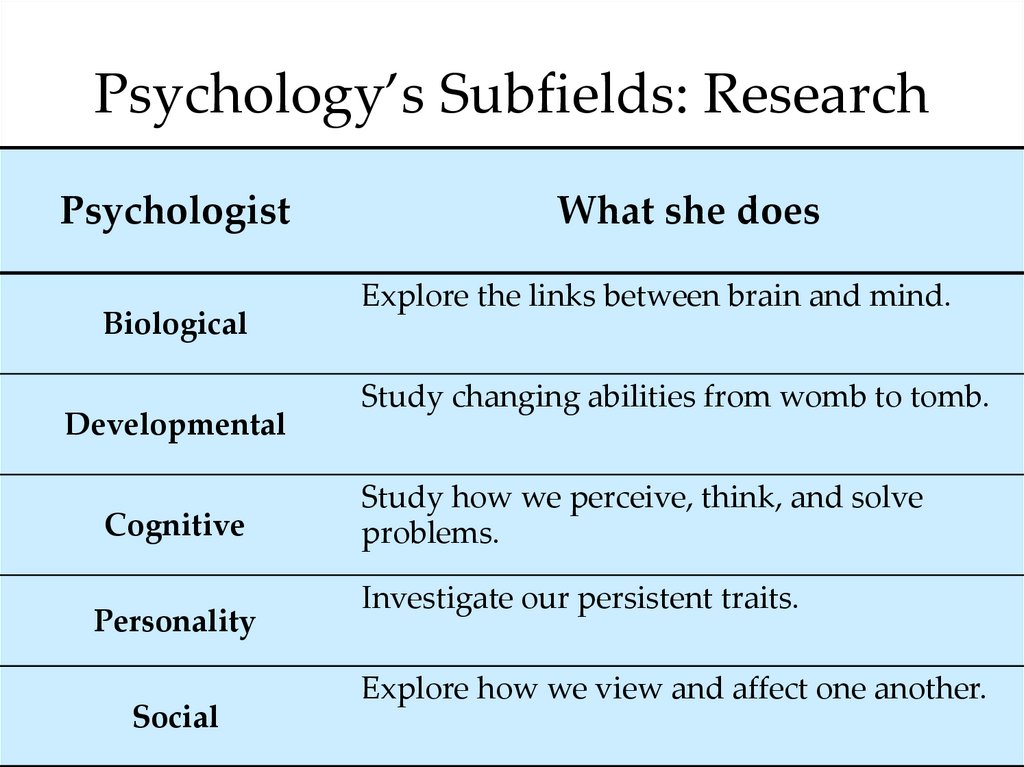
24. Psychology Subfields
• Basic research – builds the knowledgebase of psychology
• Applied research – researches practical
problems
24
25. Psychology’s Subfields: Research
PsychologistBiological
Developmental
Cognitive
Personality
Social
What she does
Explore the links between brain and mind.
Study changing abilities from womb to tomb.
Study how we perceive, think, and solve
problems.
Investigate our persistent traits.
Explore how we view and affect one another.
25
26. Psychology’s Subfields: Research
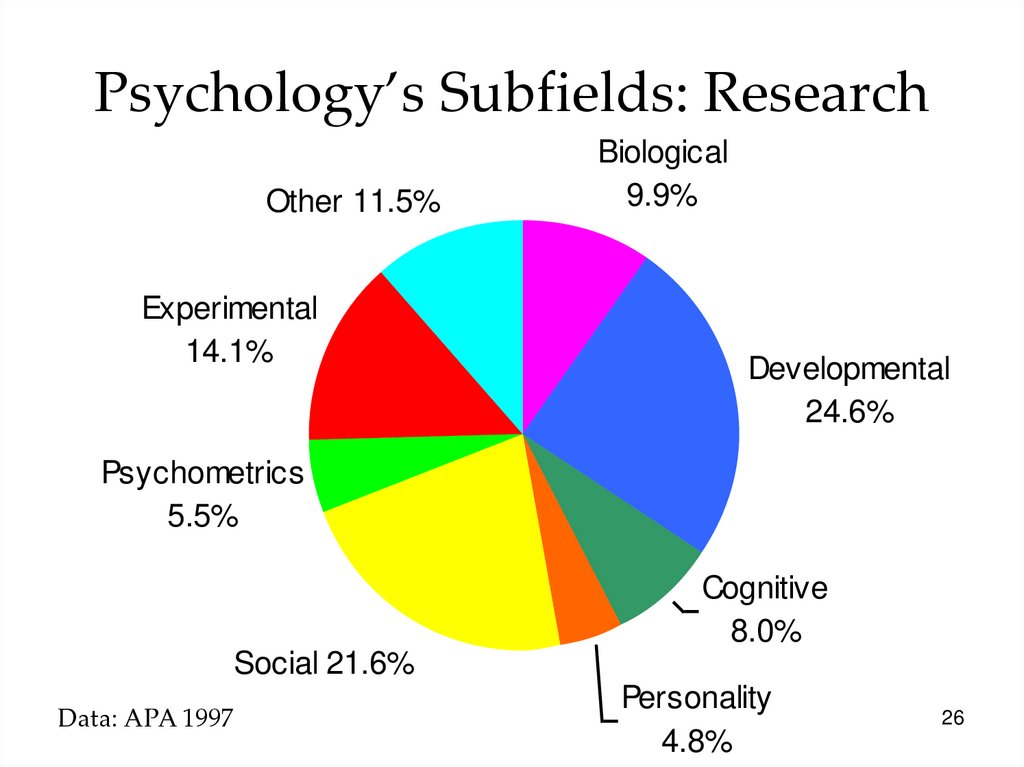
Other 11.5%Experimental
14.1%
Biological
9.9%
Developmental
24.6%
Psychometrics
5.5%
Cognitive
8.0%
Social 21.6%
Data: APA 1997
Personality
4.8%
26
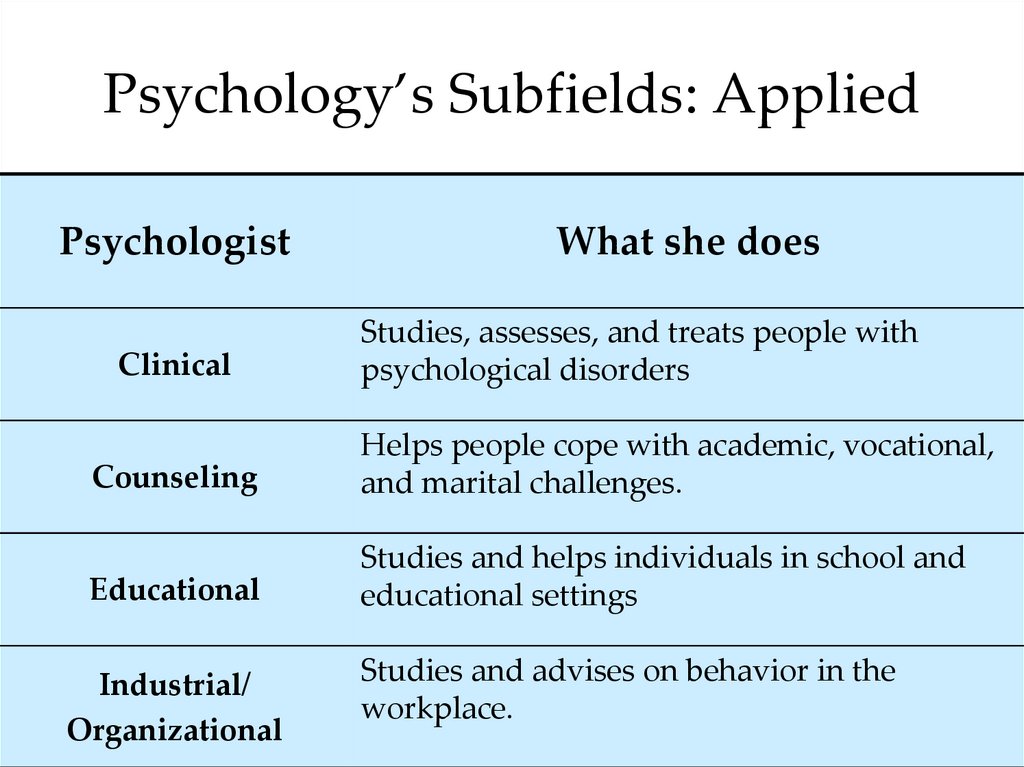
27. Psychology’s Subfields: Applied
PsychologistClinical
What she does
Studies, assesses, and treats people with
psychological disorders
Counseling
Helps people cope with academic, vocational,
and marital challenges.
Educational
Studies and helps individuals in school and
educational settings
Industrial/
Organizational
Studies and advises on behavior in the
workplace.
27
28. Psychology’s Subfields: Applied
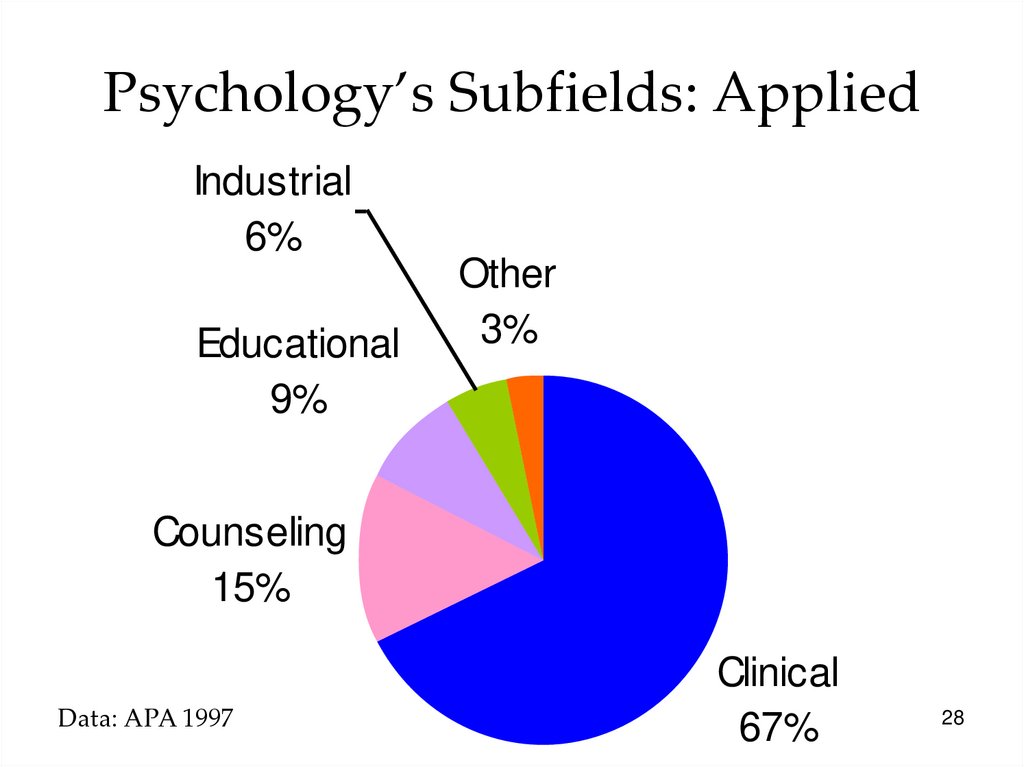
Industrial6%
Educational
9%
Other
3%
Counseling
15%
Data: APA 1997
Clinical
67%
28
29. Clinical Psychology vs. Psychiatry
A clinical psychologist (Ph.D.) studies, assesses,and treats troubled people with psychotherapy.
Psychiatrists on the other hand are medical
professionals (M.D.) who use treatments like drugs
and psychotherapy to treat psychologically
diseased patients.
29
30. How to write operational definitions
• Measurable• Quantitative definition of a term
30
31. Loyalty of a Pet
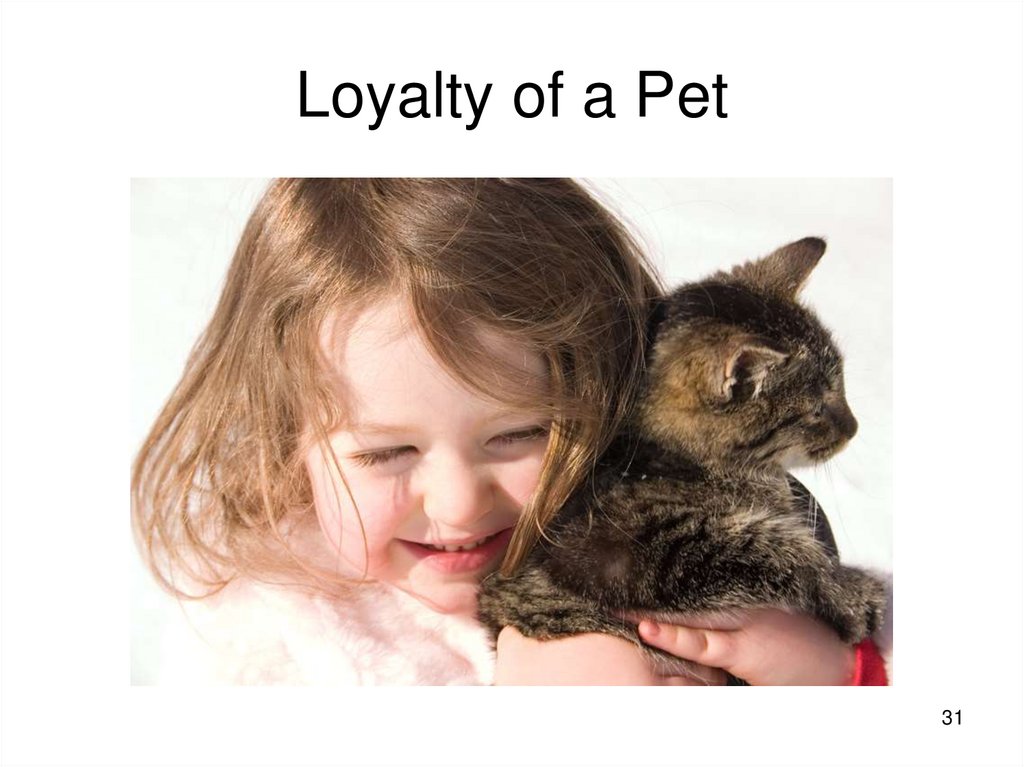
3132. Identify the variables
• Loyalty measured• Pet is the population variable
32
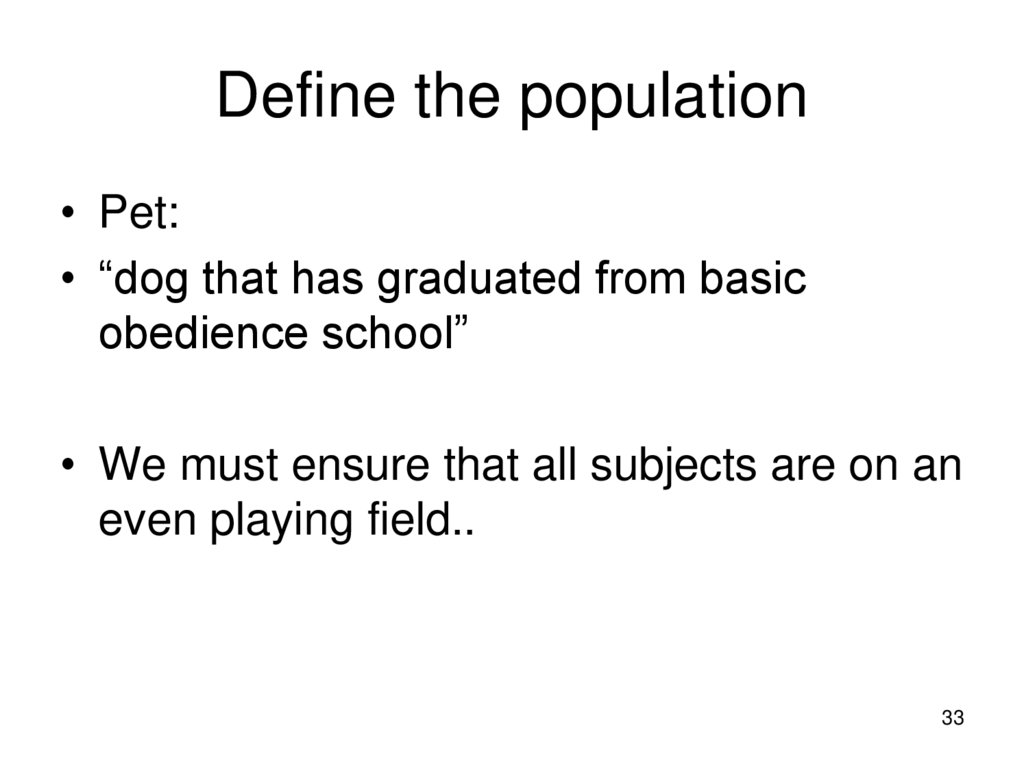
33. Define the population
• Pet:• “dog that has graduated from basic
obedience school”
• We must ensure that all subjects are on an
even playing field..
33
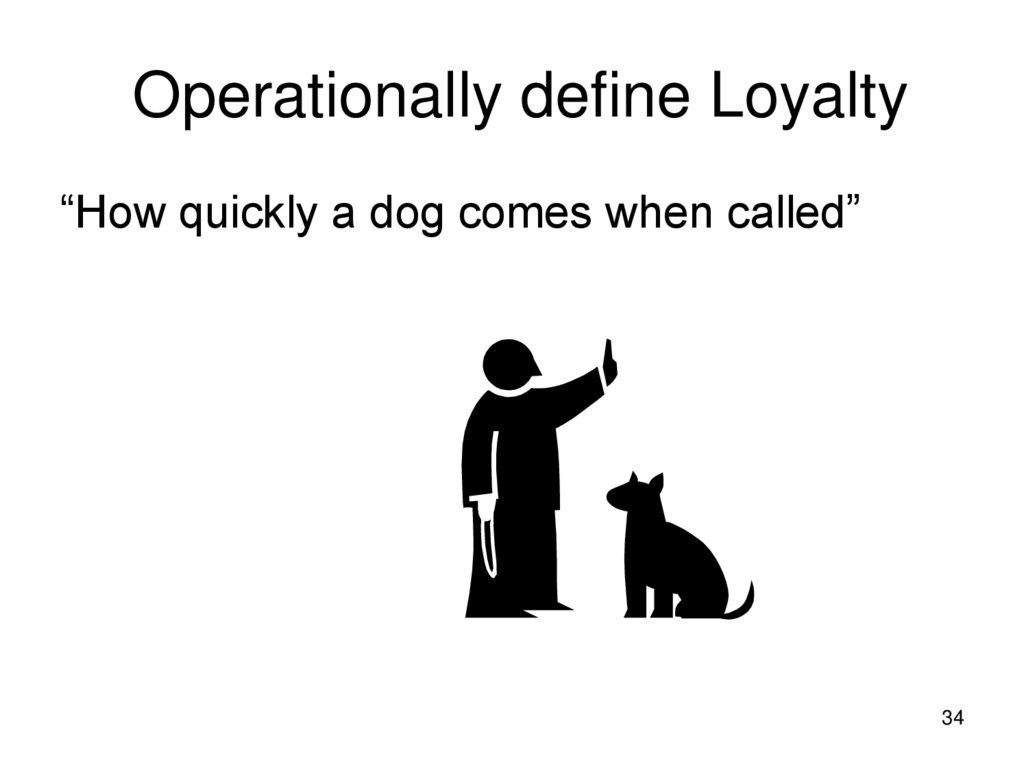
34. Operationally define Loyalty
“How quickly a dog comes when called”34
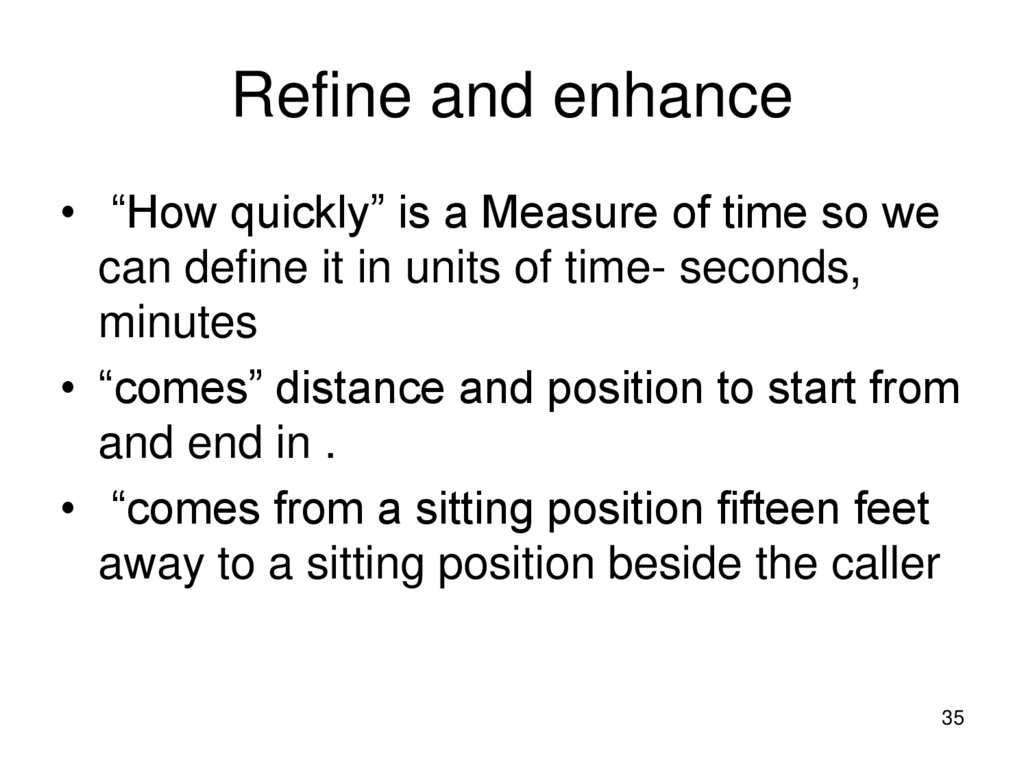
35. Refine and enhance
• “How quickly” is a Measure of time so wecan define it in units of time- seconds,
minutes
• “comes” distance and position to start from
and end in .
• “comes from a sitting position fifteen feet
away to a sitting position beside the caller
35
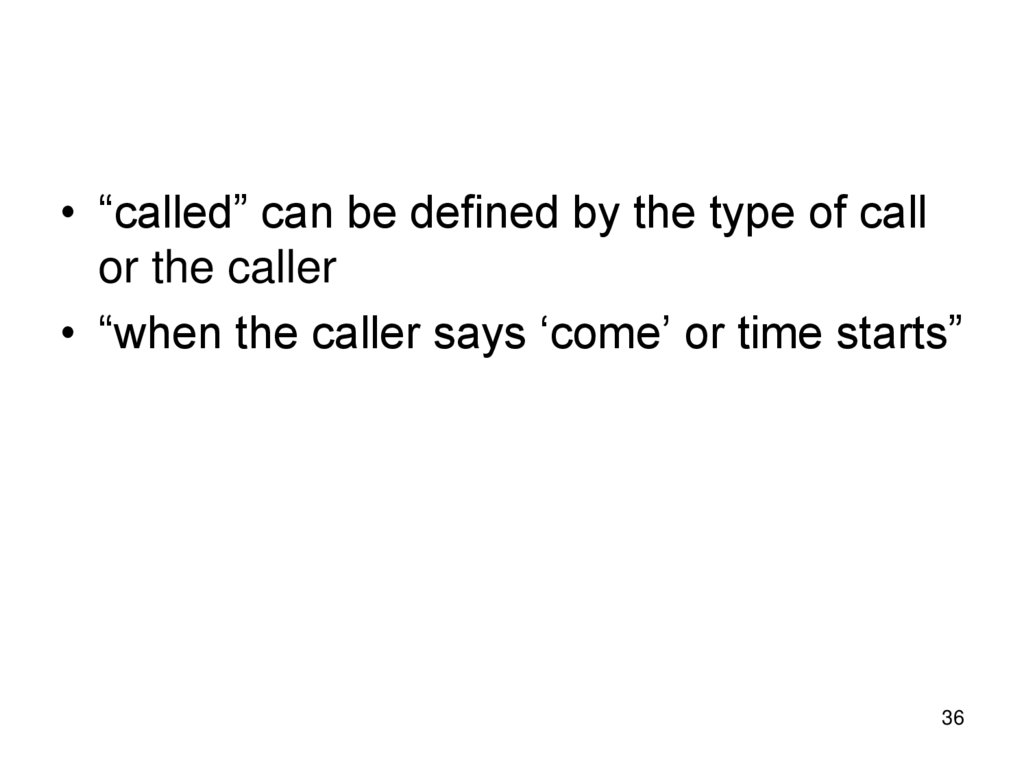
36.
• “called” can be defined by the type of callor the caller
• “when the caller says ‘come’ or time starts”
36
37. The loyalty of a pet
“How many seconds it takes a dog whichgraduated from obedience school to come
from a sitting position fifteen feet from the
caller to a sitting positionb besider the
caller after the caller says ‘come’. “
37
38. Your turn!
identify and operationally define thefollowing:
The loyalty of a friend
38