Similar presentations:








Congenital syphilis
1.
Medical Academy Named after S. I. Georgievsky of Crimea FederalUniversity
Department of Dermatovenerology and Cosmetology
PhD. in Medical Sciences, Department of
Dermatovenerology and Cosmetology
Maraqa Мarwan Y.N
Мараках Марван Якин Нажи
1
2. Congenital syphilis. Getting infection.
There are two routs of getting infection through the placenta:• Treponema pallidum enters the foetus in the form of an
embole through the umbilical vein;
• Treponema pallidum enters the foetus along the lymph slits
of the umbilical cord.
Syphilitic infection as a rule causes definite changes in placenta:
the increase in size, mass, changes in their correlation to 1:31:4, with normal 1:5-1:6.
Tertiary syphilis
2
3. Histopathotology
There are lesions of vessels and villi, especially in the embryonalpart of the placenta, mainly in its central part. Proliferation of
granulation tissue near the villi, the formation of microabscesses, and also endo-, meso- and perivasculitis of the
vessels are characteristic for the congenital syphilis. It leads to
the narrowing of vessels and complete obliteration, as the result
of that the nutrition, trophic systems and metabolism are
disturbed, what at the end becomes the reason of its death.
Tertiary syphilis
3
4. Classification of Congenital Syphilis
A. WHO classification:1. Embryonal syphilis;
2. Early congenital syphilis (up to 2 years);
-active;
-latent;
3. Late congenital syphilis (after 2 years);
-active;
-latent;
Tertiary syphilis
4
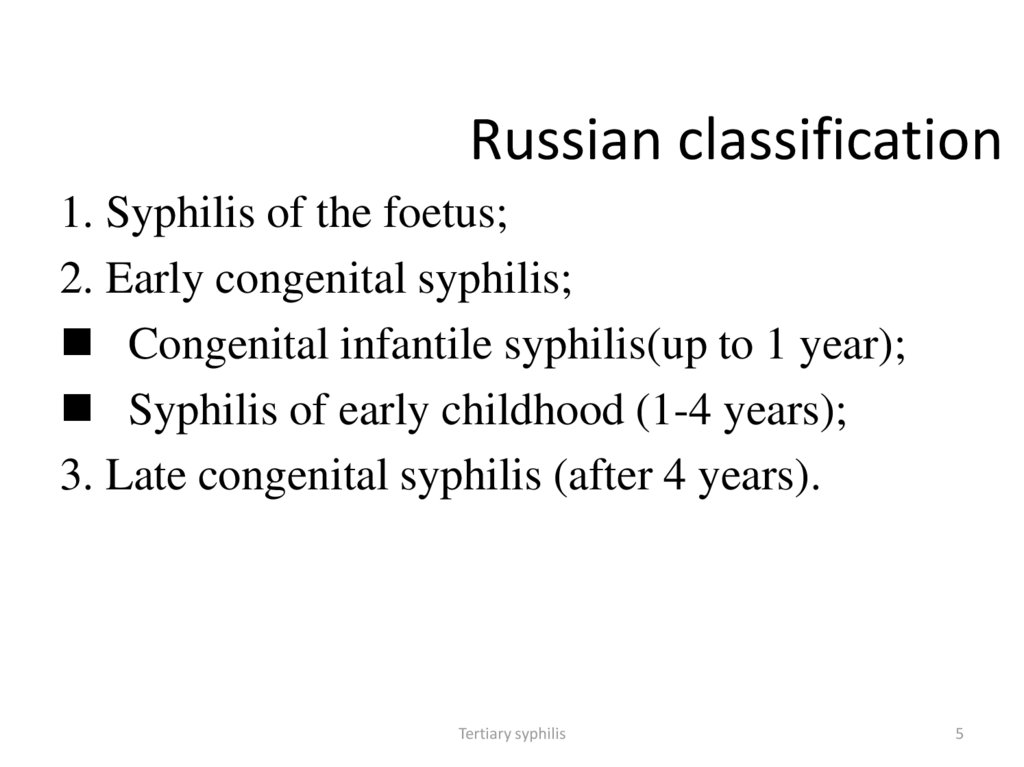
5. Russian classification
1. Syphilis of the foetus;2. Early congenital syphilis;
n Congenital infantile syphilis(up to 1 year);
n Syphilis of early childhood (1-4 years);
3. Late congenital syphilis (after 4 years).
Tertiary syphilis
5
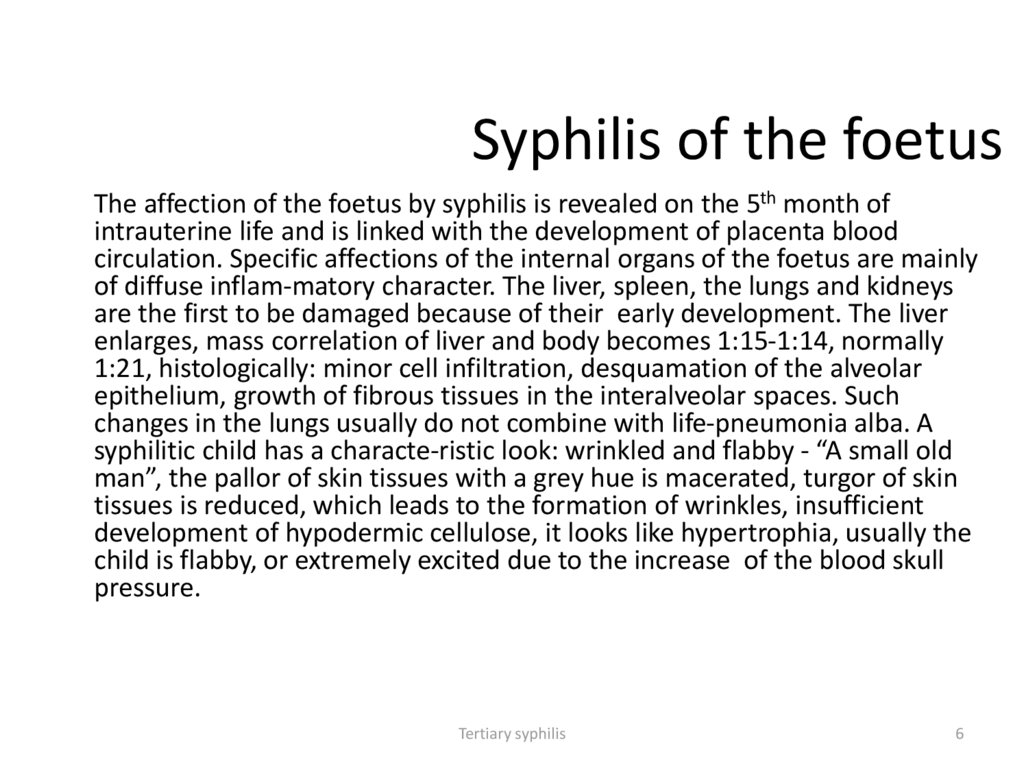
6. Syphilis of the foetus
The affection of the foetus by syphilis is revealed on the 5th month ofintrauterine life and is linked with the development of placenta blood
circulation. Specific affections of the internal organs of the foetus are mainly
of diffuse inflam-matory character. The liver, spleen, the lungs and kidneys
are the first to be damaged because of their early development. The liver
enlarges, mass correlation of liver and body becomes 1:15-1:14, normally
1:21, histologically: minor cell infiltration, desquamation of the alveolar
epithelium, growth of fibrous tissues in the interalveolar spaces. Such
changes in the lungs usually do not combine with life-pneumonia alba. A
syphilitic child has a characte-ristic look: wrinkled and flabby - “A small old
man”, the pallor of skin tissues with a grey hue is macerated, turgor of skin
tissues is reduced, which leads to the formation of wrinkles, insufficient
development of hypodermic cellulose, it looks like hypertrophia, usually the
child is flabby, or extremely excited due to the increase of the blood skull
pressure.
Tertiary syphilis
6
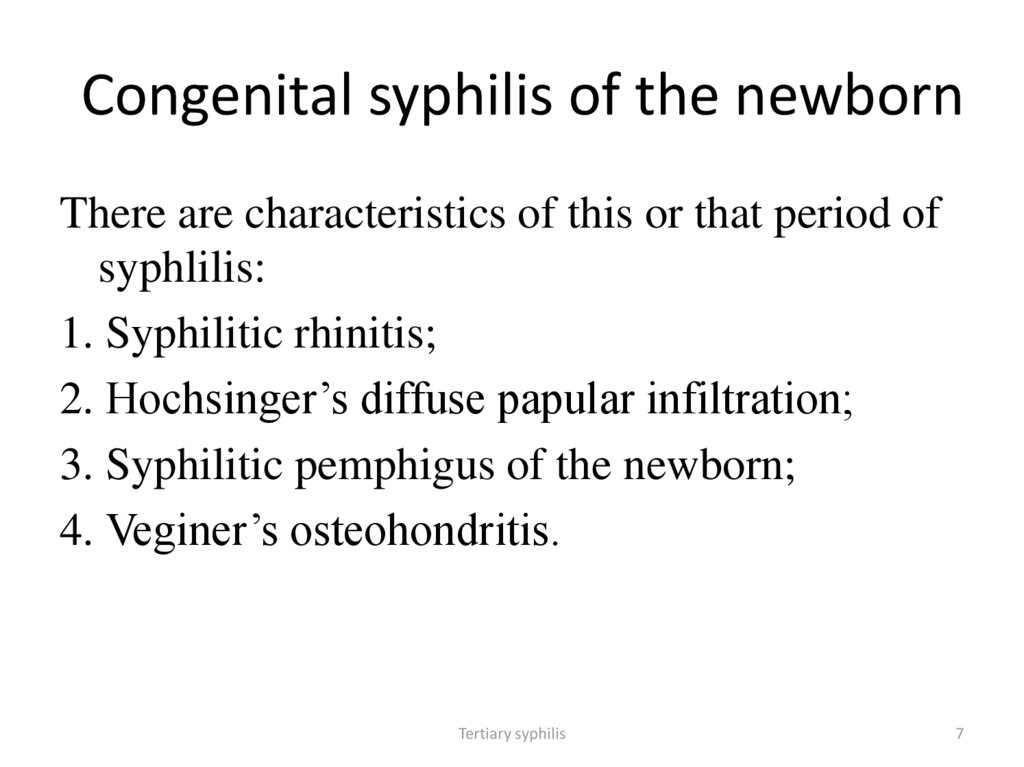
7. Congenital syphilis of the newborn
There are characteristics of this or that period ofsyphlilis:
1. Syphilitic rhinitis;
2. Hochsinger’s diffuse papular infiltration;
3. Syphilitic pemphigus of the newborn;
4. Veginer’s osteohondritis.
Tertiary syphilis
7
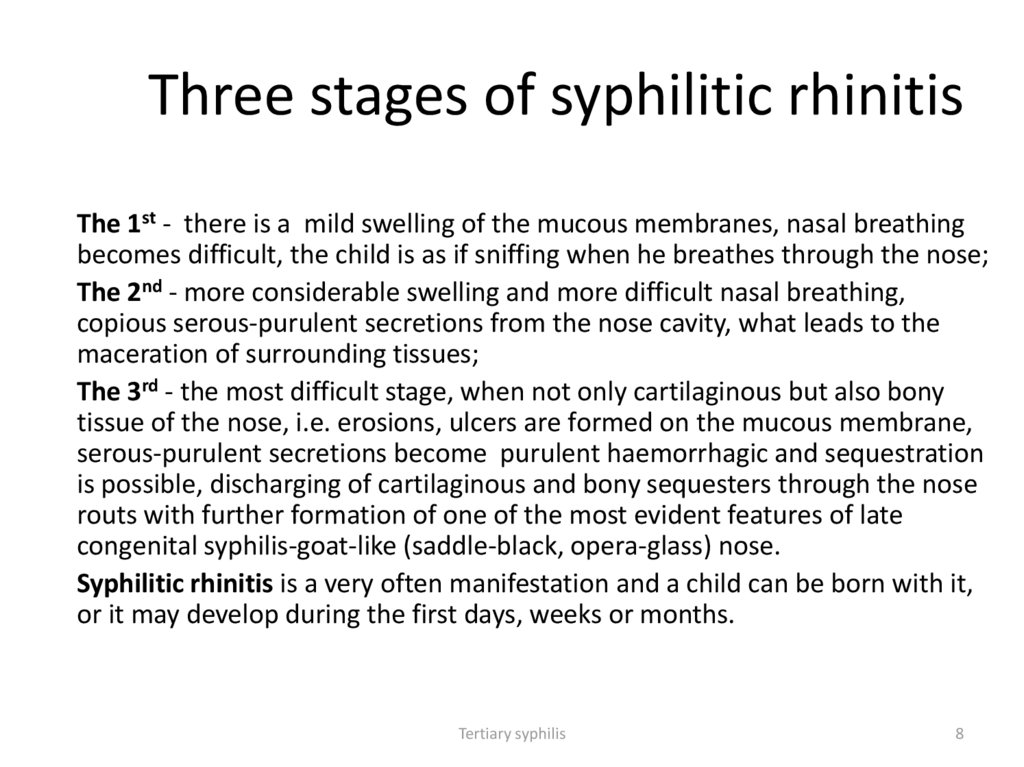
8. Three stages of syphilitic rhinitis
The 1st - there is a mild swelling of the mucous membranes, nasal breathingbecomes difficult, the child is as if sniffing when he breathes through the nose;
The 2nd - more considerable swelling and more difficult nasal breathing,
copious serous-purulent secretions from the nose cavity, what leads to the
maceration of surrounding tissues;
The 3rd - the most difficult stage, when not only cartilaginous but also bony
tissue of the nose, i.e. erosions, ulcers are formed on the mucous membrane,
serous-purulent secretions become purulent haemorrhagic and sequestration
is possible, discharging of cartilaginous and bony sequesters through the nose
routs with further formation of one of the most evident features of late
congenital syphilis-goat-like (saddle-black, opera-glass) nose.
Syphilitic rhinitis is a very often manifestation and a child can be born with it,
or it may develop during the first days, weeks or months.
Tertiary syphilis
8
9. Hochsinger’s diffuse papular infiltration
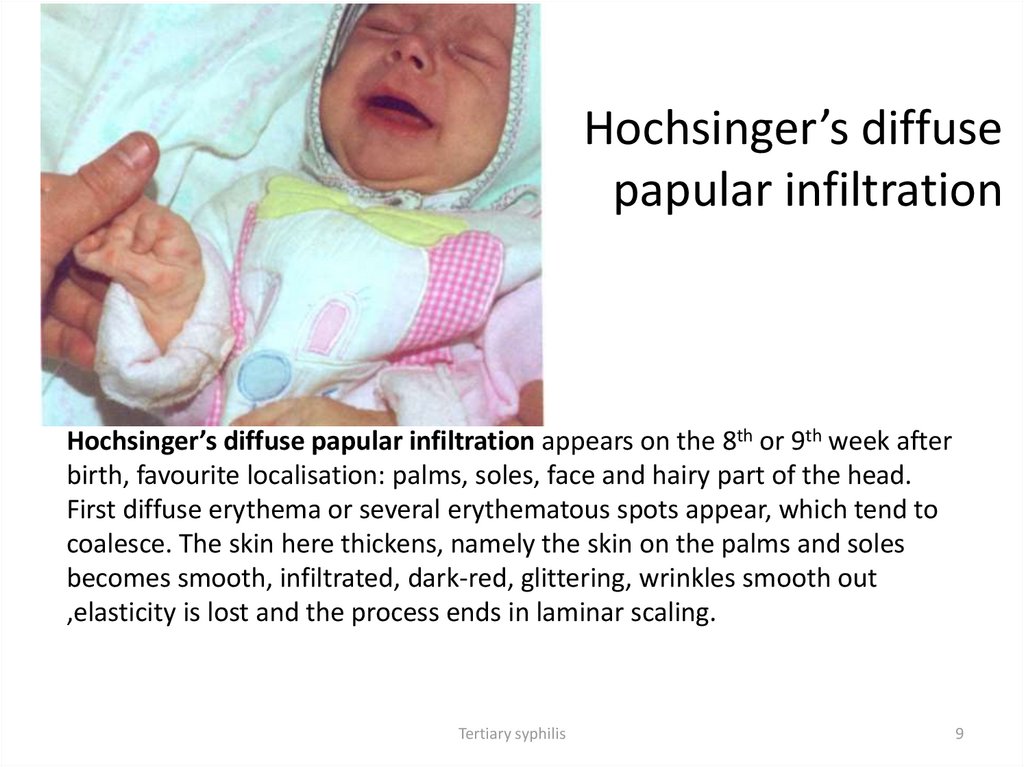
Hochsinger’s diffuse papular infiltration appears on the 8th or 9th week afterbirth, favourite localisation: palms, soles, face and hairy part of the head.
First diffuse erythema or several erythematous spots appear, which tend to
coalesce. The skin here thickens, namely the skin on the palms and soles
becomes smooth, infiltrated, dark-red, glittering, wrinkles smooth out
,elasticity is lost and the process ends in laminar scaling.
Tertiary syphilis
9
10. Hochsinger’s diffuse papular infiltration
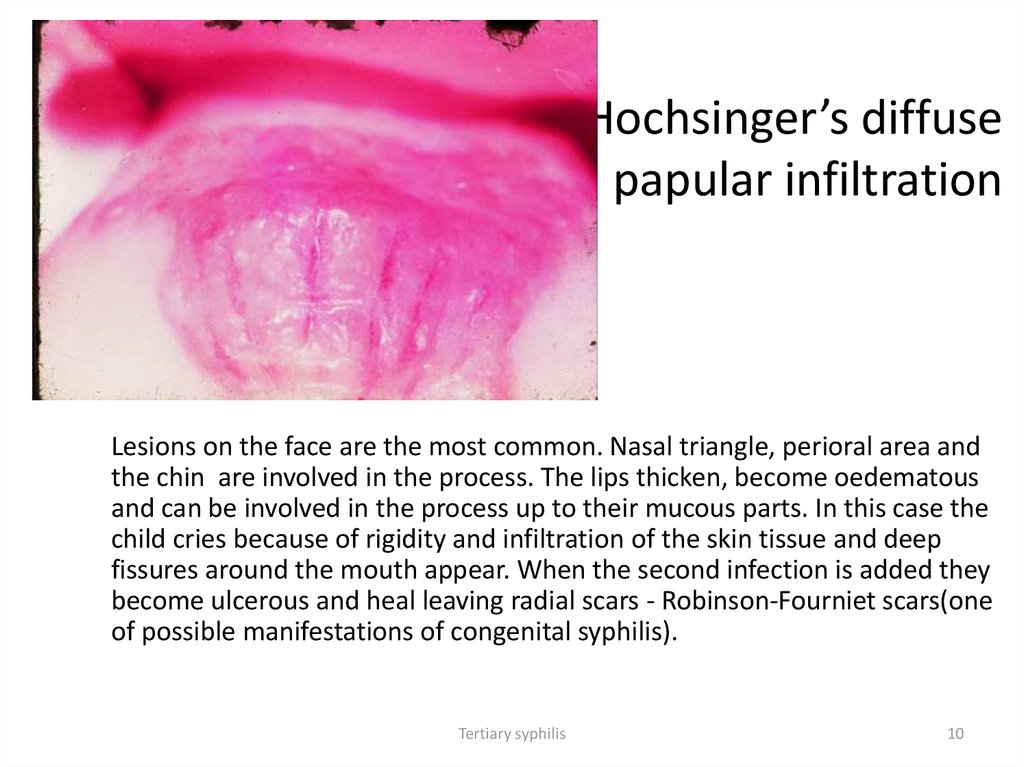
Lesions on the face are the most common. Nasal triangle, perioral area andthe chin are involved in the process. The lips thicken, become oedematous
and can be involved in the process up to their mucous parts. In this case the
child cries because of rigidity and infiltration of the skin tissue and deep
fissures around the mouth appear. When the second infection is added they
become ulcerous and heal leaving radial scars - Robinson-Fourniet scars(one
of possible manifestations of congenital syphilis).
Tertiary syphilis
10
11. Syphilitic pemphigus of the newborn
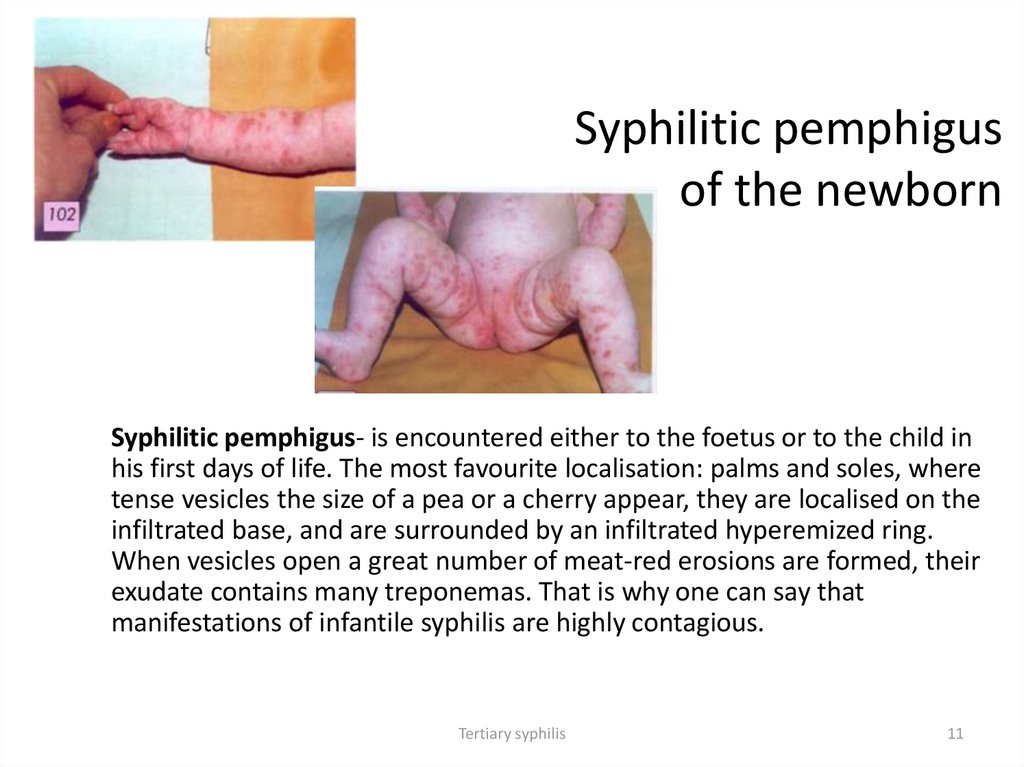
Syphilitic pemphigus- is encountered either to the foetus or to the child inhis first days of life. The most favourite localisation: palms and soles, where
tense vesicles the size of a pea or a cherry appear, they are localised on the
infiltrated base, and are surrounded by an infiltrated hyperemized ring.
When vesicles open a great number of meat-red erosions are formed, their
exudate contains many treponemas. That is why one can say that
manifestations of infantile syphilis are highly contagious.
Tertiary syphilis
11
12.
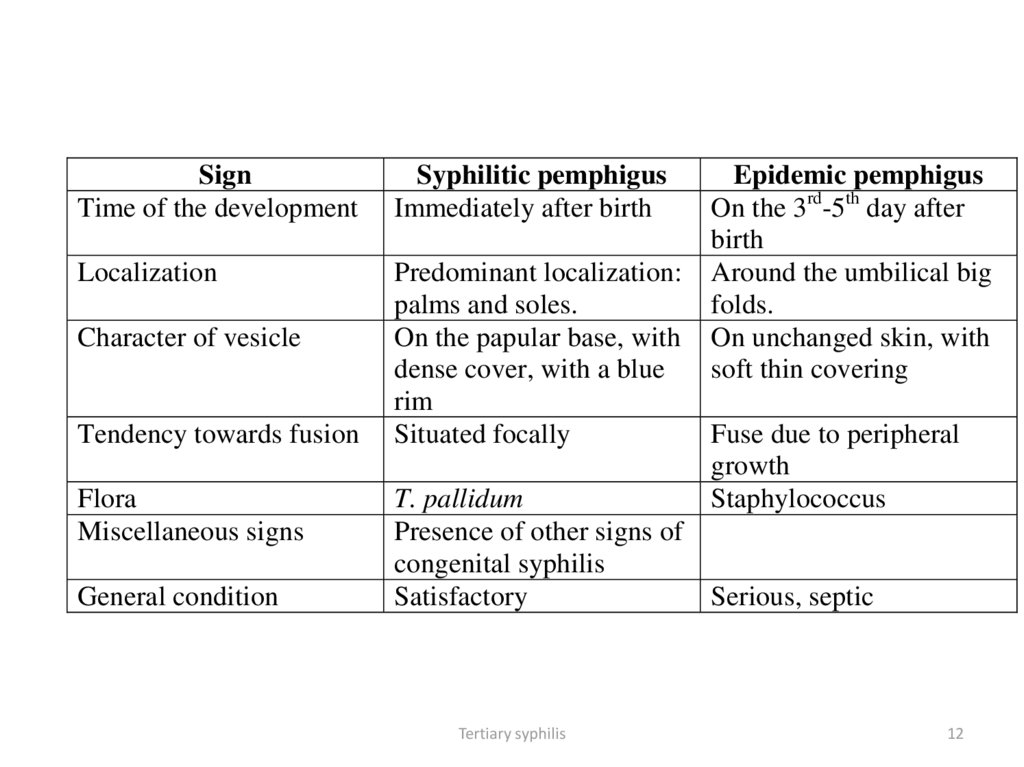
SignTime of the development
Syphilitic pemphigus
Immediately after birth
Localization
Predominant localization:
palms and soles.
On the papular base, with
dense cover, with a blue
rim
Situated focally
Character of vesicle
Tendency towards fusion
Flora
Miscellaneous signs
General condition
T. pallidum
Presence of other signs of
congenital syphilis
Satisfactory
Tertiary syphilis
Epidemic pemphigus
On the 3rd-5th day after
birth
Around the umbilical big
folds.
On unchanged skin, with
soft thin covering
Fuse due to peripheral
growth
Staphylococcus
Serious, septic
12
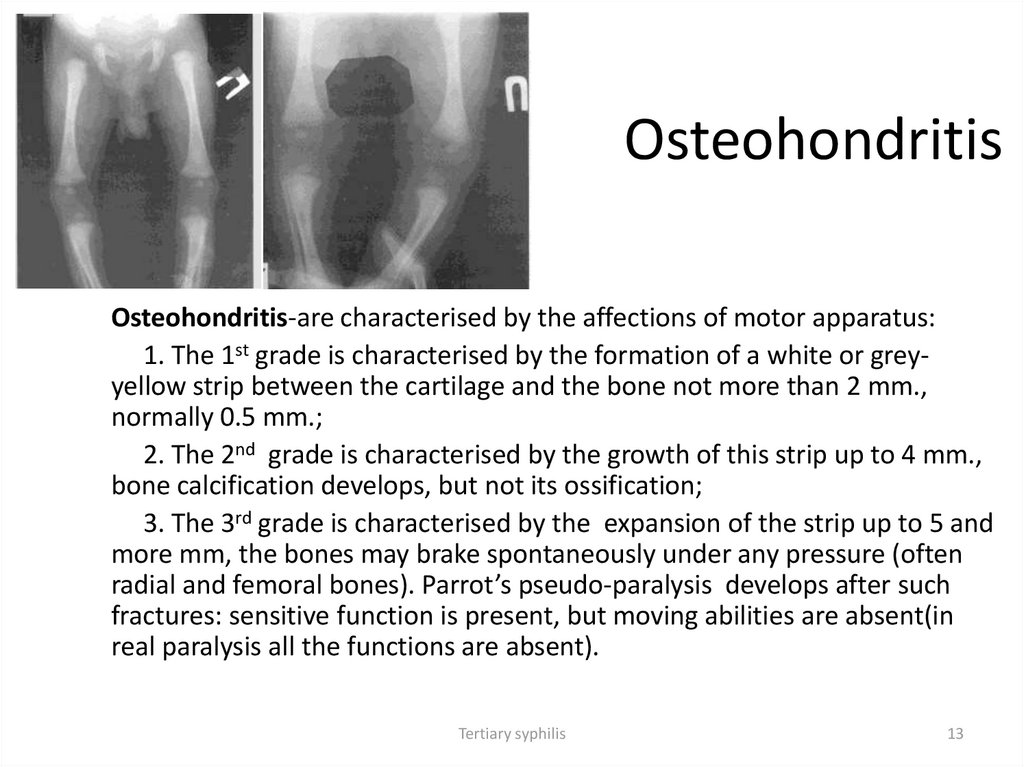
13. Osteohondritis
Osteohondritis-are characterised by the affections of motor apparatus:1. The 1st grade is characterised by the formation of a white or greyyellow strip between the cartilage and the bone not more than 2 mm.,
normally 0.5 mm.;
2. The 2nd grade is characterised by the growth of this strip up to 4 mm.,
bone calcification develops, but not its ossification;
3. The 3rd grade is characterised by the expansion of the strip up to 5 and
more mm, the bones may brake spontaneously under any pressure (often
radial and femoral bones). Parrot’s pseudo-paralysis develops after such
fractures: sensitive function is present, but moving abilities are absent(in
real paralysis all the functions are absent).
Tertiary syphilis
13
14. Early syphilis
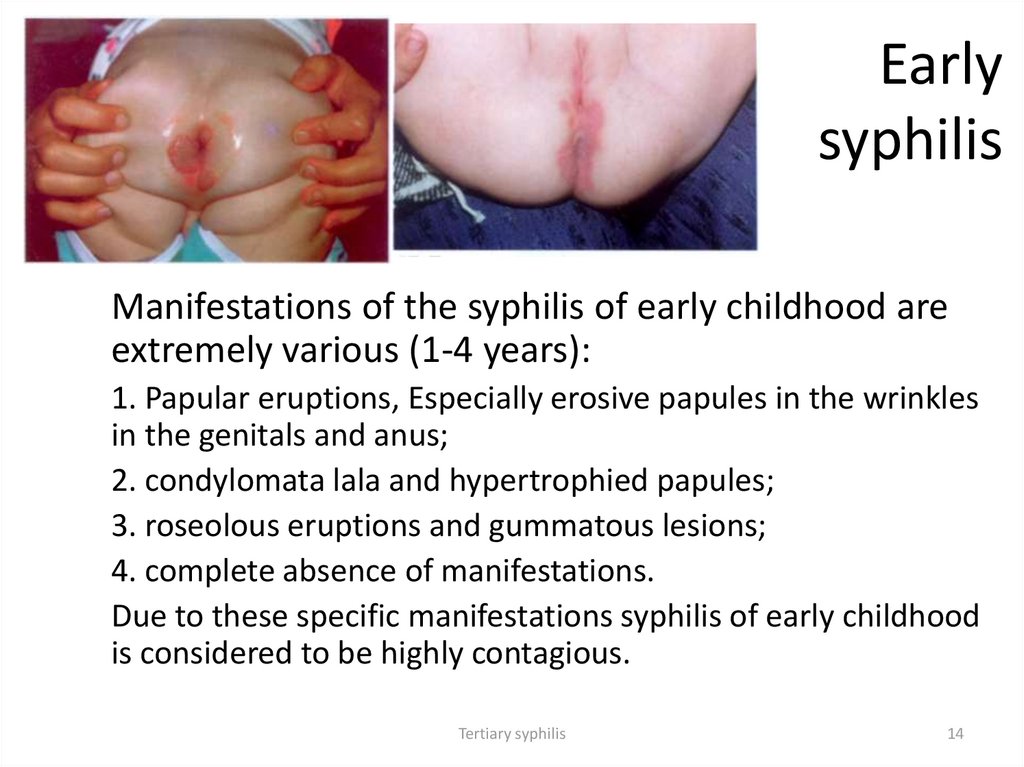
Manifestations of the syphilis of early childhood areextremely various (1-4 years):
1. Papular eruptions, Especially erosive papules in the wrinkles
in the genitals and anus;
2. condylomata lala and hypertrophied papules;
3. roseolous eruptions and gummatous lesions;
4. complete absence of manifestations.
Due to these specific manifestations syphilis of early childhood
is considered to be highly contagious.
Tertiary syphilis
14
15. Late syphilis
Late congenital syphilis is diagnosed in children at theage of 15-17 years, though it should be mentioned
that manifestations of late congenital syphilis can be
traced much later(25-30 years). Symptoms of late
congenital syphilis are various and they all are divided
into different groups:
Tertiary syphilis
15
16. Late congenital syphilis
1. Authentic(unconditional):Hutchinson’ triad:
• Hutchinson’s teeth- hypoplasia of masticating surface of upper median
incisors, as the result of which tooth neck becomes thicker than its notched
cutting edge, where often a crescent hole is formed;
• Interstitial keratitis- even milk-white opacification of the cornea, mainly in the
centre, followed by photophobia, lacrimination, blepharism and stable
impairment of visual acuity;
• Syphilitic labyrinthitis-labyrinthine deafness, is diagnosed at the age of 6-15
years and as a rule develops unexpectedly, pathologiccal process occurs in the
labyrinth with degeneration of the acoustic nerve, sencitive receptors, nerveterminations are involved in it, as the result of which deafness develops(if it
develops before the child learns to speak, it is manifested as deaf-anddumbness).
Tertiary syphilis
16
17. Accessory:
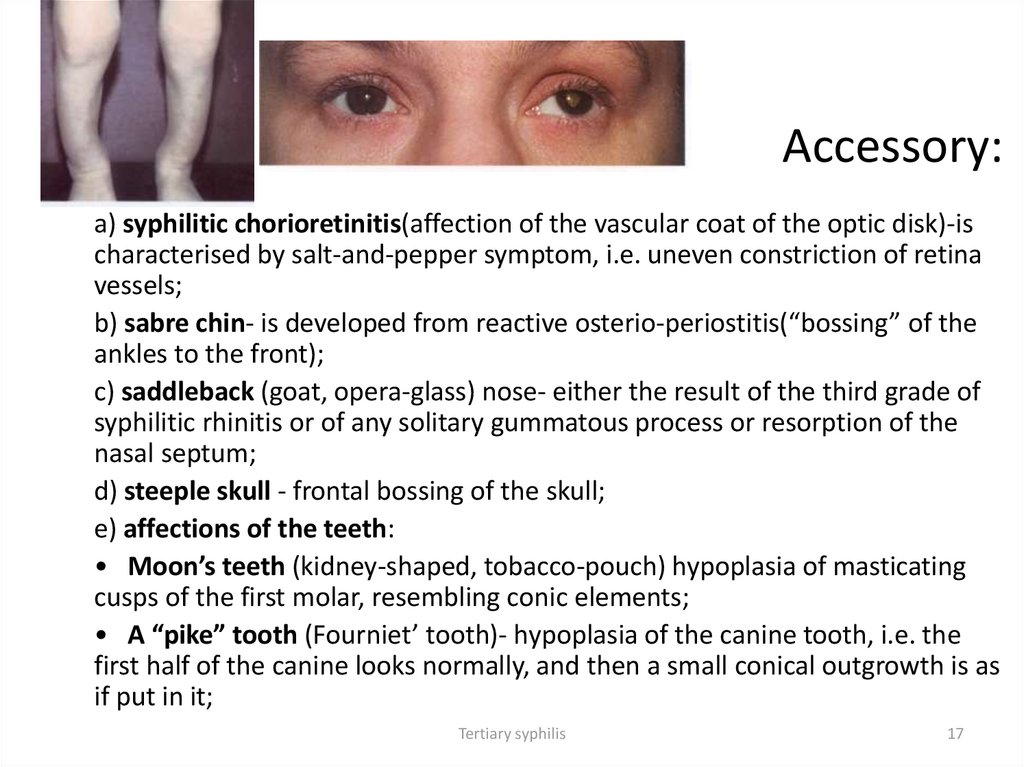
a) syphilitic chorioretinitis(affection of the vascular coat of the optic disk)-ischaracterised by salt-and-pepper symptom, i.e. uneven constriction of retina
vessels;
b) sabre chin- is developed from reactive osterio-periostitis(“bossing” of the
ankles to the front);
c) saddleback (goat, opera-glass) nose- either the result of the third grade of
syphilitic rhinitis or of any solitary gummatous process or resorption of the
nasal septum;
d) steeple skull - frontal bossing of the skull;
e) affections of the teeth:
• Moon’s teeth (kidney-shaped, tobacco-pouch) hypoplasia of masticating
cusps of the first molar, resembling conic elements;
• A “pike” tooth (Fourniet’ tooth)- hypoplasia of the canine tooth, i.e. the
first half of the canine looks normally, and then a small conical outgrowth is as
if put in it;
Tertiary syphilis
17
18. Stigmata (dystrophies):
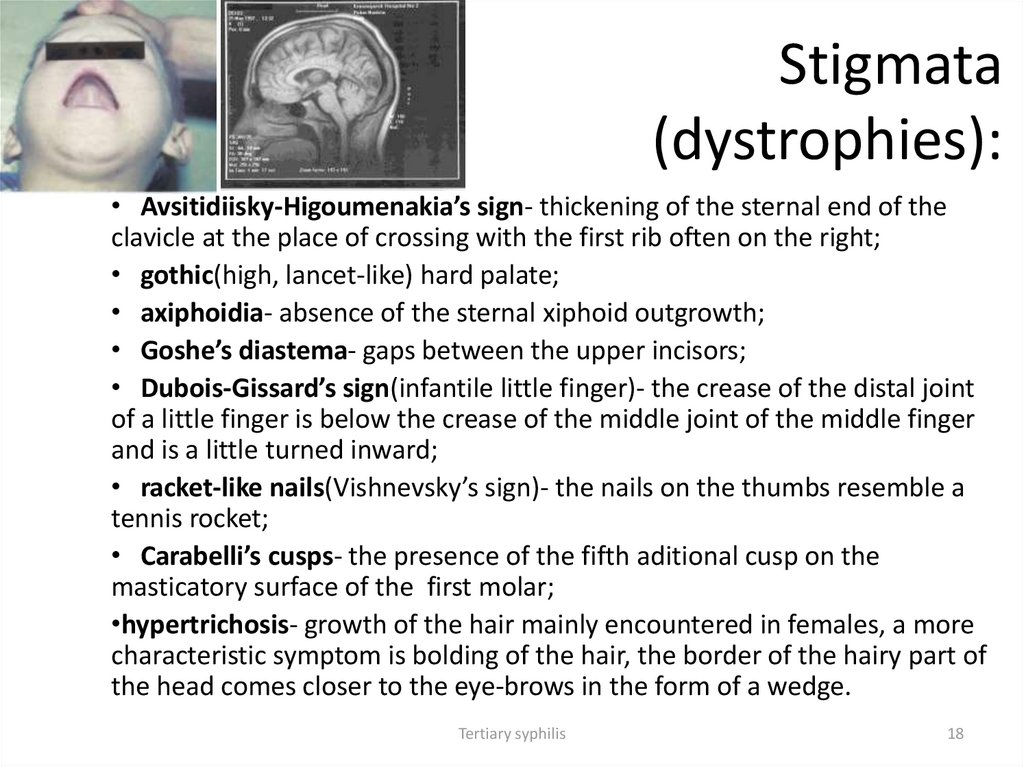
• Avsitidiisky-Higoumenakia’s sign- thickening of the sternal end of theclavicle at the place of crossing with the first rib often on the right;
• gothic(high, lancet-like) hard palate;
• axiphoidia- absence of the sternal xiphoid outgrowth;
• Goshe’s diastema- gaps between the upper incisors;
• Dubois-Gissard’s sign(infantile little finger)- the crease of the distal joint
of a little finger is below the crease of the middle joint of the middle finger
and is a little turned inward;
• racket-like nails(Vishnevsky’s sign)- the nails on the thumbs resemble a
tennis rocket;
• Carabelli’s cusps- the presence of the fifth aditional cusp on the
masticatory surface of the first molar;
•hypertrichosis- growth of the hair mainly encountered in females, a more
characteristic symptom is bolding of the hair, the border of the hairy part of
the head comes closer to the eye-brows in the form of a wedge.
Tertiary syphilis
18