
 culturology
Similar presentations:






Halloween
1.
Halloween2.
3.
• The history of its origin. The roots ofHalloween go back many centuries. Its prototype
is the ancient pagan holiday of the Celts
Samhain. The peoples who inhabited Scotland
and Ireland divided the year into 2 parts: dark
and light. The day of the transition was chosen
according to the lunar calendar and was floating,
approximately it happened on the border of
October and November, and then in March.
4.
• The holiday symbolized the end of summer and harvest. We celebrated it on agrand scale, as much as 7 days. And the first mention of it is found in the
writings of the X century.
• However, the beginnings of mysticism existed even then. For several days
people jumped over bonfires and passed between them. It was believed that by
the power of fire a person cleanses himself.
5.
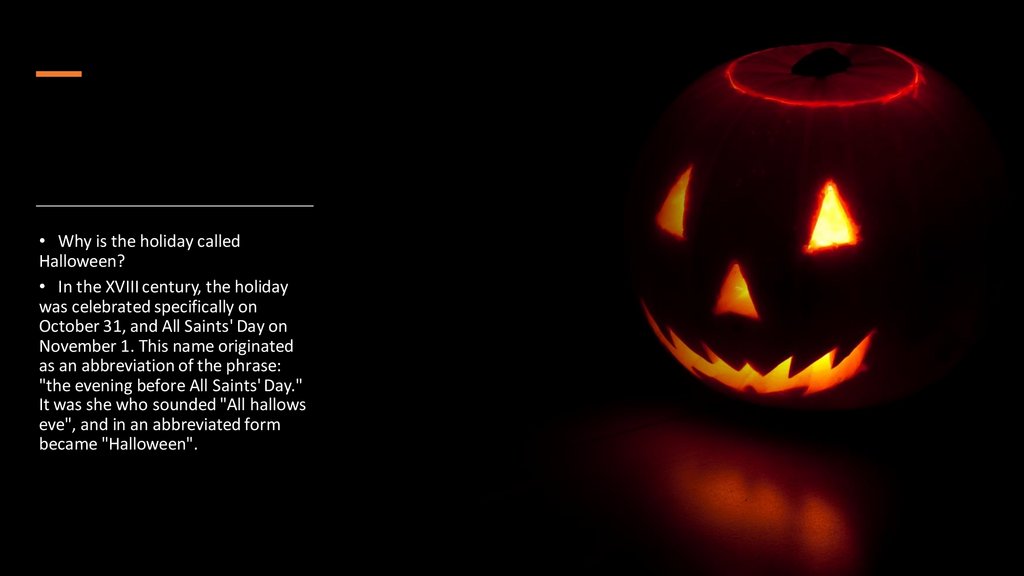
• Why is the holiday calledHalloween?
• In the XVIII century, the holiday
was celebrated specifically on
October 31, and All Saints' Day on
November 1. This name originated
as an abbreviation of the phrase:
"the evening before All Saints' Day."
It was she who sounded "All hallows
eve", and in an abbreviated form
became "Halloween".
6.
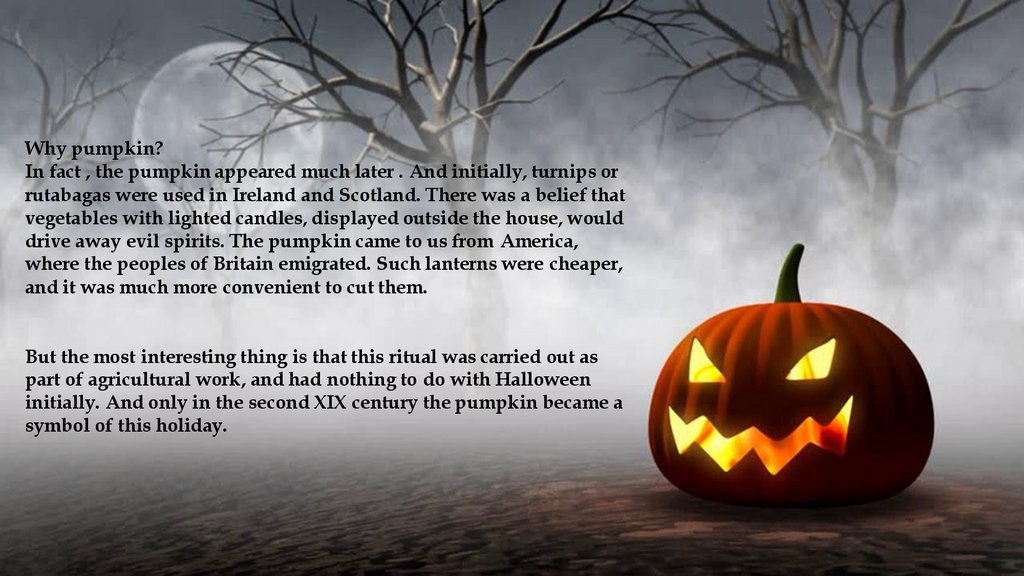
Why pumpkin?In fact , the pumpkin appeared much later . And initially, turnips or
rutabagas were used in Ireland and Scotland. There was a belief that
vegetables with lighted candles, displayed outside the house, would
drive away evil spirits. The pumpkin came to us from America,
where the peoples of Britain emigrated. Such lanterns were cheaper,
and it was much more convenient to cut them.
But the most interesting thing is that this ritual was carried out as
part of agricultural work, and had nothing to do with Halloween
initially. And only in the second XIX century the pumpkin became a
symbol of this holiday.
7.
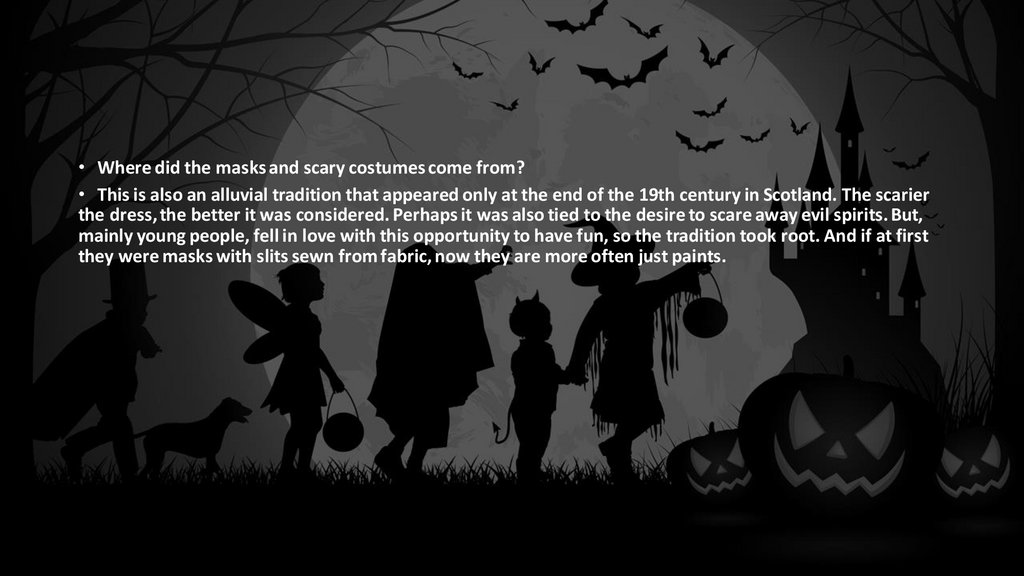
• Where did the masks and scary costumes come from?• This is also an alluvial tradition that appeared only at the end of the 19th century in Scotland. The scarier
the dress, the better it was considered. Perhaps it was also tied to the desire to scare away evil spirits. But,
mainly young people, fell in love with this opportunity to have fun, so the tradition took root. And if at first
they were masks with slits sewn from fabric, now they are more often just paints.