


 english
Similar presentations:


National Symbols, Political and Economic System, and Traditions of Russia
1.
National symbols.Political and
economic system
of Russia
2.
Translate into Russian:1. flag
2. coat of arms
3. anthem
4. double-headed eagle
5. sceptre
6. orb
7. federal republic
8. head of state
9. prime minister
10. parliament
11. Federal Assembly
12. State Duma
13. Federation Council
14. mixed economy
15. currency
3.
4.
5.
6.
What do the white, blue and red colours symbolize?Why does the eagle have two heads?
What does the sceptre symbolize?
Who appoints the Prime Minister?
What is the lower house of parliament called?
When was the Constitution adopted?
What type of economy does Russia have?
What is the national currency?
7.
8.
True/False/Not statedThe Russian flag has vertical stripes.
The eagle on the coat of arms has one head.
The anthem was written by Mikhalkov alone
The President can be elected for three terms.
The State Duma has 450 deputies.
The Constitution was adopted in 1991.
Russia exports oil and gas.
Russia's main export is bananas.
9.
Find a mistake10.
11.
12.
13.
Traditions of Russia14.
Translate:1. tradition
2. custom
3. hospitality
4. feast
5. wedding ceremony
6. blessing
7. birch broom
8. scarecrow
9. dye eggs
10. samovar
11. plough festival
12. Buddhist New Year
15.
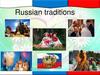
Russian traditions· Hospitality: Guests are greeted with bread and
salt (khleb-sol). It’s a sign of respect.
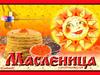
· Maslenitsa: A week before Lent. People cook
pancakes (blini), burn a scarecrow of winter, and
have fun.
· Easter: Dye eggs (traditionally red – symbol of
Christ’s blood). Bake kulich (sweet bread). Greeting:
"Christ is Risen!" – "Truly He is Risen!"
· Wedding: The couple is blessed with an icon.
Guests shout "Gorko!" (bitter) – the couple must kiss
to make the drink sweet.
· Banya: A steam room with birch brooms (veniki).
After steam, people jump into cold water or snow.
It’s for health and cleansing.
· Tea drinking: From a samovar. Served with jam,
honey, gingerbread, and saucers (they drink from a
saucer).
16.
Other people’s traditions· Tatars (Tatarstan): Sabantuy – a summer plough
festival with horse riding, wrestling (koresh), and
national food (chak-chak – honey dessert).
· Buryats (Eastern Siberia): Sagaalgan (White
Month) – Buddhist New Year in February. Families
visit temples, offer food to monks, and tie coloured
ribbons on sacred trees.
· Peoples of the North (Chukchi, Evenki):
Reindeer herding traditions. Nomadic lifestyle.
Yakutia has Yhyakh – summer solstice festival,
circle dances (osuokhai), and drinking kumys
(mare’s milk).
· Peoples of the Caucasus (Chechens, Avars,
etc.): Lezginka dance, respect for elders, wedding
traditions lasting several days.
17.
1. What do Russians give to guests as a symbol ofhospitality?
2. Why do people dye eggs red at Easter?
3. What do guests shout at a Russian wedding and why?
4. What is the purpose of banya?
5. What is Sabantuy?
6. When is Sagaalgan celebrated?
7. What drink is associated with Yhyakh festival?
8. What dance is famous in the Caucasus?
18.
19.
T/F/NS1. Maslenitsa lasts one day.
2. At Easter, people bake pancakes.
3. Banya uses oak brooms.
4. Sabantuy includes horse riding.
5. Sagaalgan is celebrated in summer.
6. Kumys is made from cow's milk.
7. Lezginka is a slow dance.
20.
Find a mistake21.
22.
Arrange the actionsin the correct order.
23.
Creative task: Describe your favorite traditionWrite a short paragraph (3-4 sentences) about any
tradition of the peoples of Russia that you like. Use
new words. What is this tradition? When and how is
it celebrated? Why do you like it?