 culturology
Similar presentations:





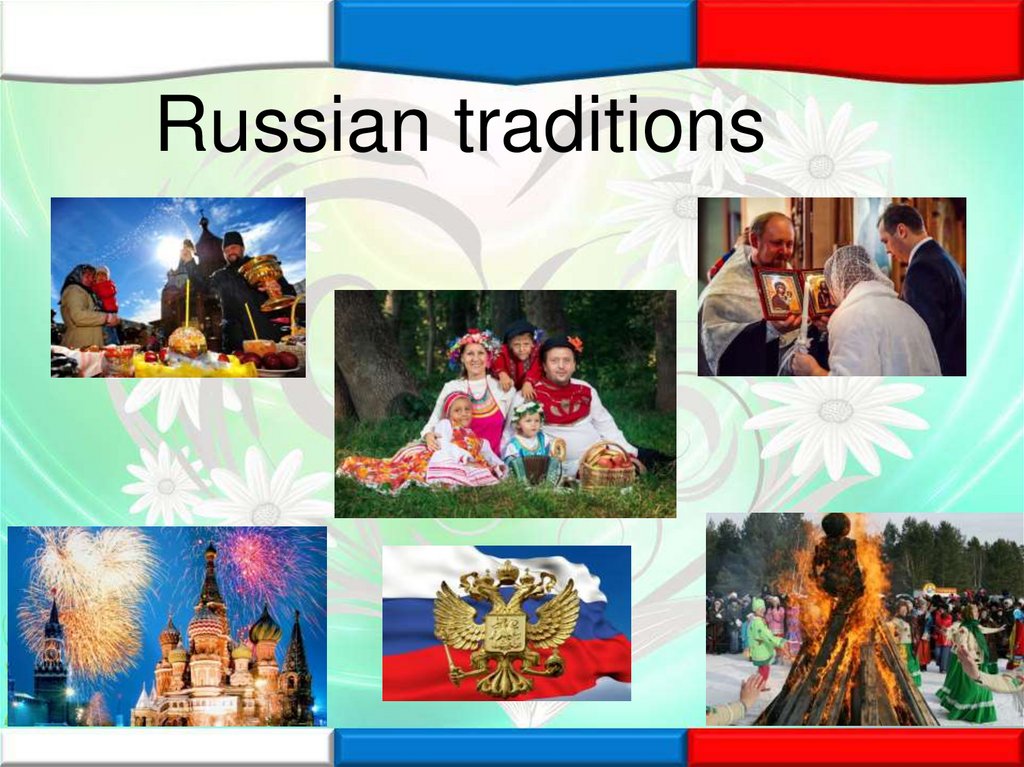
Russian traditions
1.
Russian traditions2.
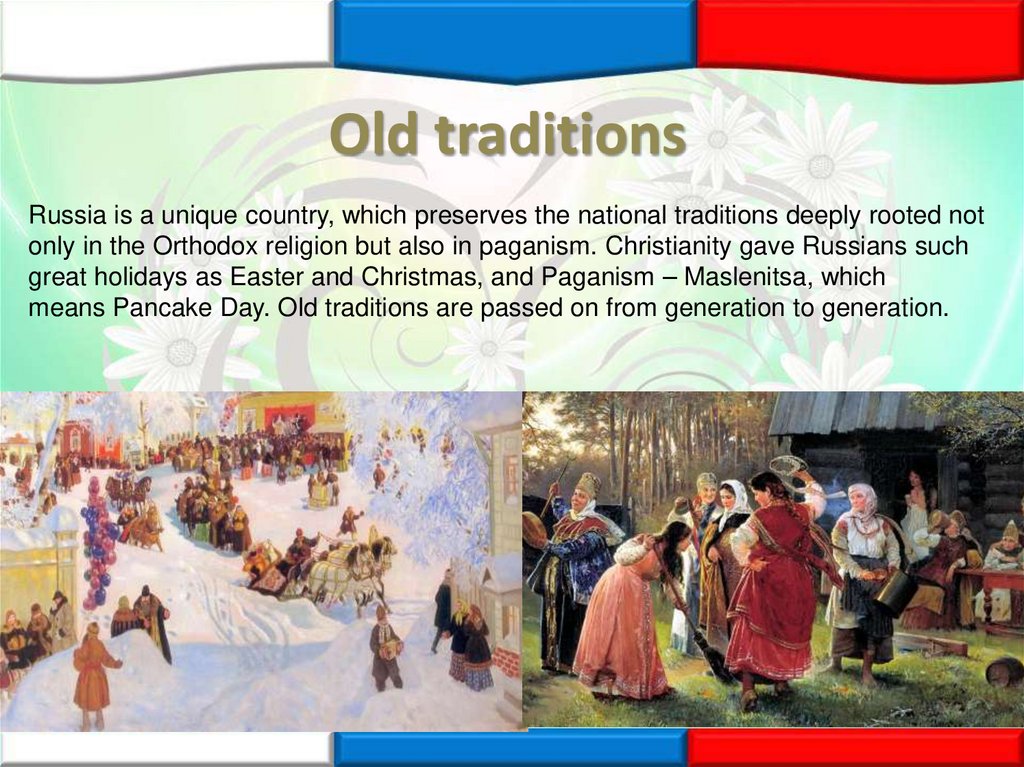
Old traditionsRussia is a unique country, which preserves the national traditions deeply rooted not
only in the Orthodox religion but also in paganism. Christianity gave Russians such
great holidays as Easter and Christmas, and Paganism – Maslenitsa, which
means Pancake Day. Old traditions are passed on from generation to generation.
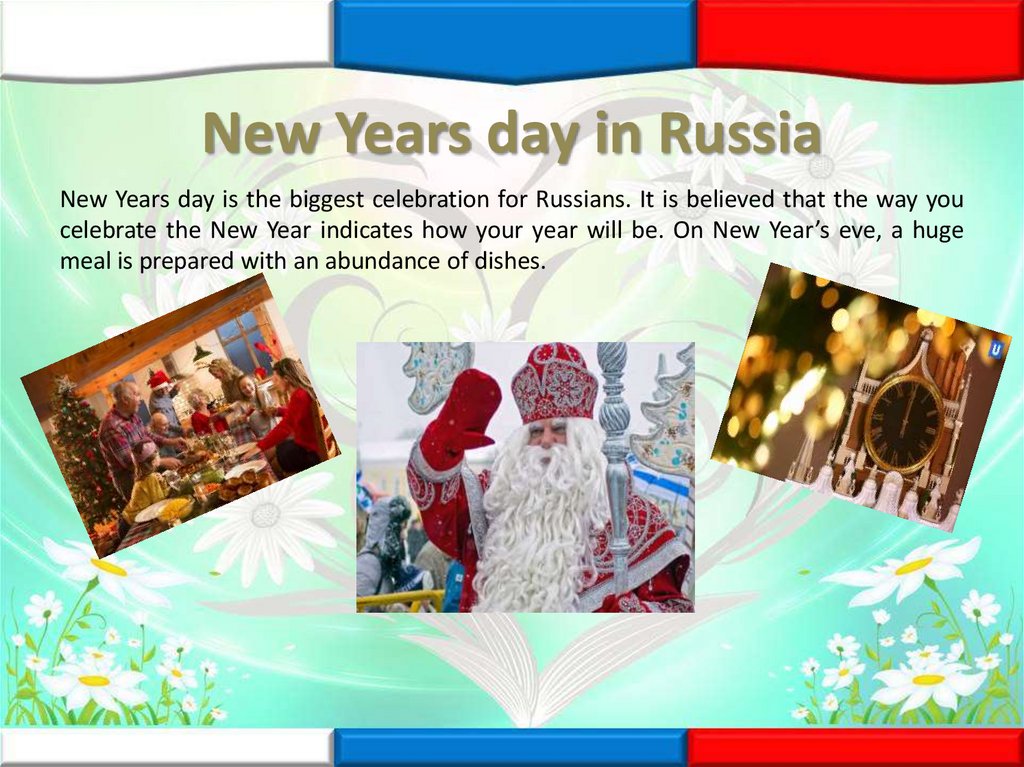
3. New Years day in Russia
New Years day is the biggest celebration for Russians. It is believed that the way youcelebrate the New Year indicates how your year will be. On New Year’s eve, a huge
meal is prepared with an abundance of dishes.
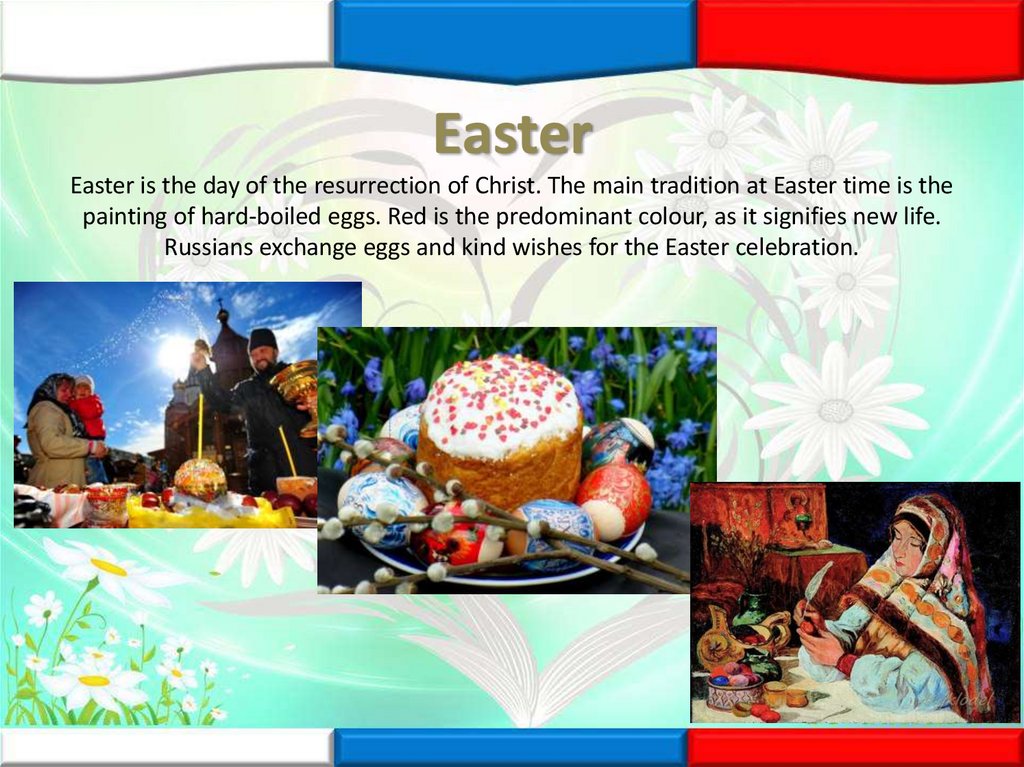
4. Easter Easter is the day of the resurrection of Christ. The main tradition at Easter time is the painting of hard-boiled eggs.
Red is the predominant colour, as it signifies new life.Russians exchange eggs and kind wishes for the Easter celebration.
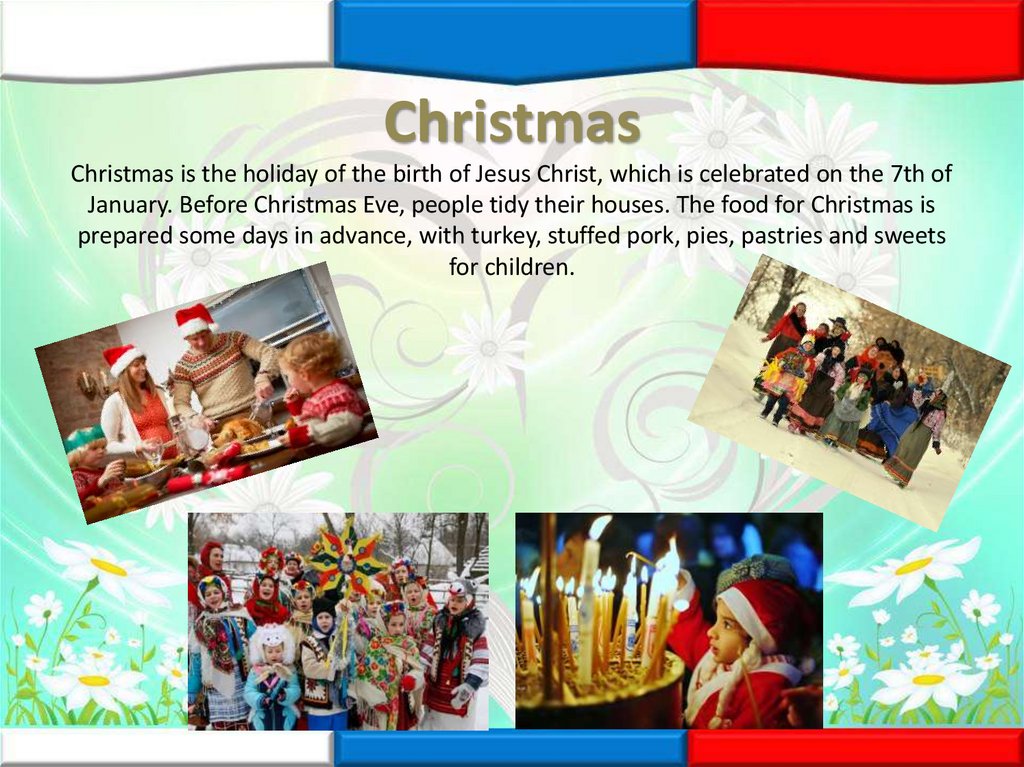
5. Christmas Christmas is the holiday of the birth of Jesus Christ, which is celebrated on the 7th of January. Before Christmas
Eve, people tidy their houses. The food for Christmas isprepared some days in advance, with turkey, stuffed pork, pies, pastries and sweets
for children.
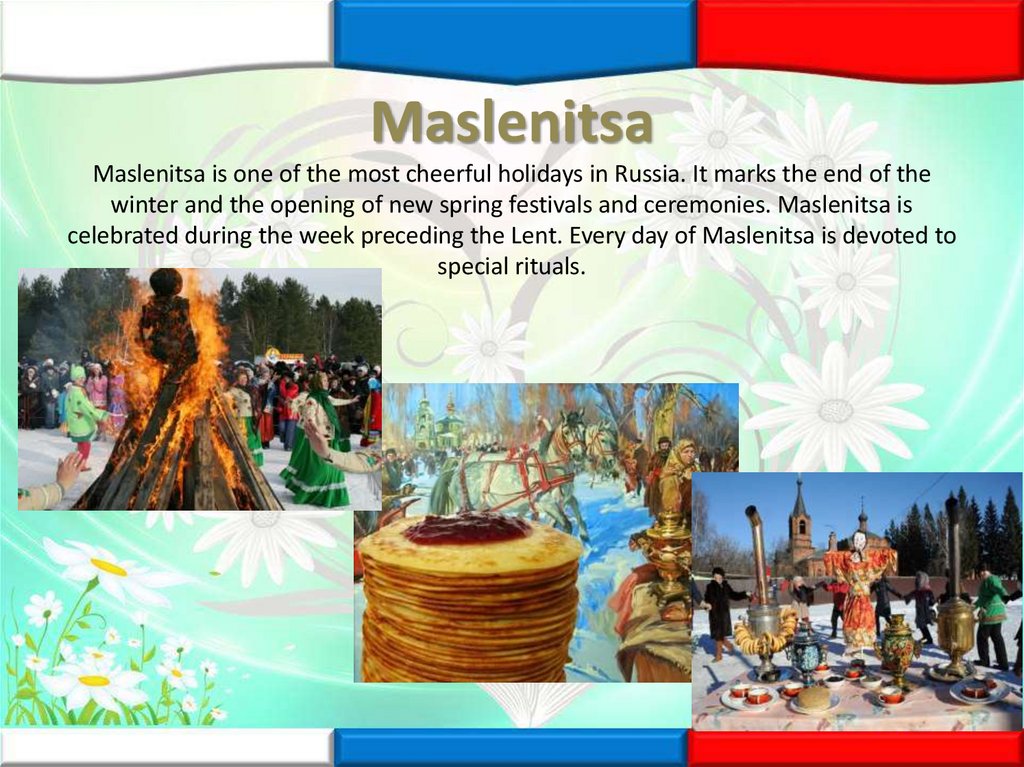
6. Maslenitsa Maslenitsa is one of the most cheerful holidays in Russia. It marks the end of the winter and the opening of new
spring festivals and ceremonies. Maslenitsa iscelebrated during the week preceding the Lent. Every day of Maslenitsa is devoted to
special rituals.
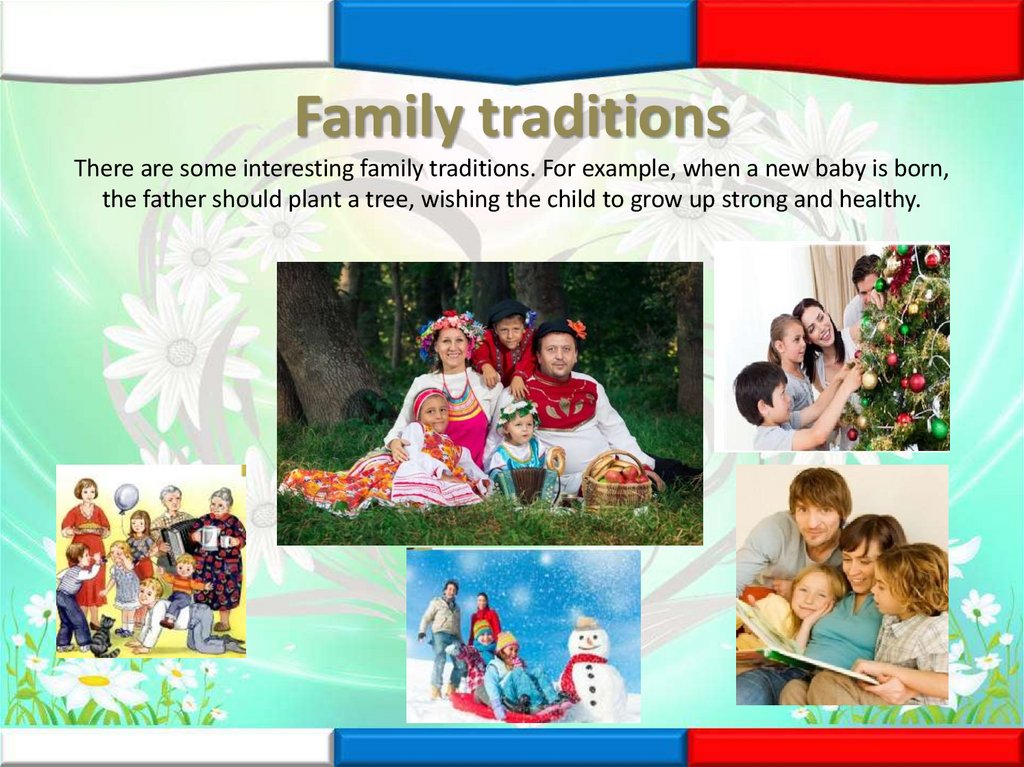
7. Family traditions There are some interesting family traditions. For example, when a new baby is born, the father should plant a
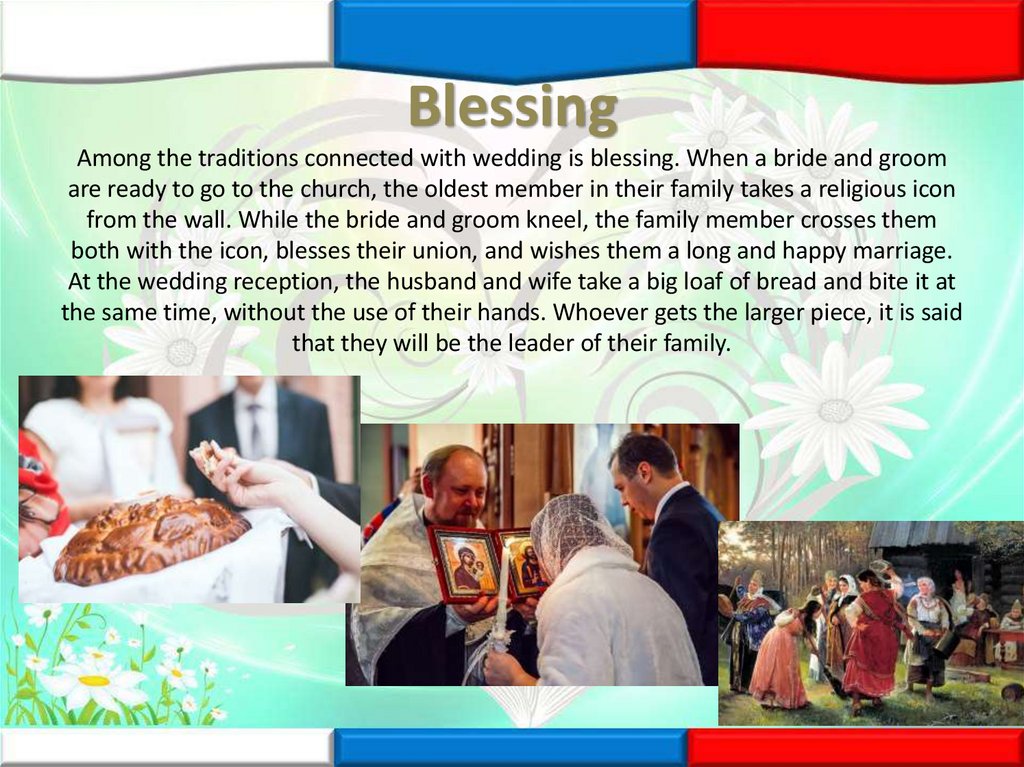
tree, wishing the child to grow up strong and healthy.8. Blessing Among the traditions connected with wedding is blessing. When a bride and groom are ready to go to the church, the
oldest member in their family takes a religious iconfrom the wall. While the bride and groom kneel, the family member crosses them
both with the icon, blesses their union, and wishes them a long and happy marriage.
At the wedding reception, the husband and wife take a big loaf of bread and bite it at
the same time, without the use of their hands. Whoever gets the larger piece, it is said
that they will be the leader of their family.