




 biology
Similar presentations:




Biotechnology and Molecules of Interest
1.
People's Democratic Republic of AlgeriaMinistry of Higher Education and Scientific Research
Ibn Khaldoun University
Faculty of Natural and Life Sciences
Research Title:
Biotechnology & Molecules of
Interest Biotechnology and Molecules of Interest
Discovering, producing, and applying tomorrow's
biomolecules
Prepared by:
Zerrouk Soumia
Zobbidi bochra naziha
Taleb Hamida
Academic Year: 2025/2026
2.
What is a Molecule of Interest?Chemical compounds of biological origin with high added value for
society
Diverse origins: Plant, microbial, marine, and synthetic biology
sources
High specificity and molecular precision in biological activity
Economic and therapeutic importance across multiple industries
Global impact on health, ecology, and sustainable development
3.
Major Categories ofBiomolecules
Nucleic Acids
Proteins & Peptides
Small Molecules
4.
The 3 Main Pillars of ApplicationHealth & Pharmacy
Agri-Food
Green Industry
Development of
Crop improvement via natural
Replacement of petrochemicals
biopharmaceuticals, monoclonal
bio-pesticides, use of probiotics,
with biodegradable bioplastics,
antibodies, recombinant
and production of flavors or
advanced biofuels, and high-
vaccines, and new antibiotics to
additives by fermentation.
performance industrial enzymes.
counter resistance.
5.
Revolutionizing HealthcareCancer Immunotherapy: CAR-T cell therapies and checkpoint inhibitors
transforming oncology outcomes
Rare Disease Treatment: Enzyme replacement therapies and orphan drugs
addressing unmet medical needs
Personalized Medicine: Pharmacogenomics enabling tailored therapeutic
strategies for individual patients
Regenerative Medicine: Stem cell technologies and tissue engineering
pioneering organ repair solutions
6.
Biotechnological ProductionMethods
Fermentation
Extraction
Cell Culture
Utilizing microbes (bacteria,
Isolating and purifying complex
In vitro engineering of animal or
yeast) in bioreactors for precision
active compounds directly from
plant cells to synthesize highly
manufacturing at an industrial
natural terrestrial or marine
complex therapeutic proteins.
scale.
biomass.
7.
Next-Generation ProductionPlatforms
Continuous Manufacturing: Real-time process control for maximum
efficiency and consistent quality output
Microfluidics: Miniaturized precision systems enabling rapid
screening and controlled reactions at microscale
3D Bioprinting: Revolutionary fabrication of tissues, organs, and
complex biological structures layer by layer
Automated Bioprocessing: AI-driven optimization for intelligent
monitoring and adaptive production workflows
8.
TherapeuticApplications
Entering the Revolutionary Era of
Biopharmaceuticals
9.
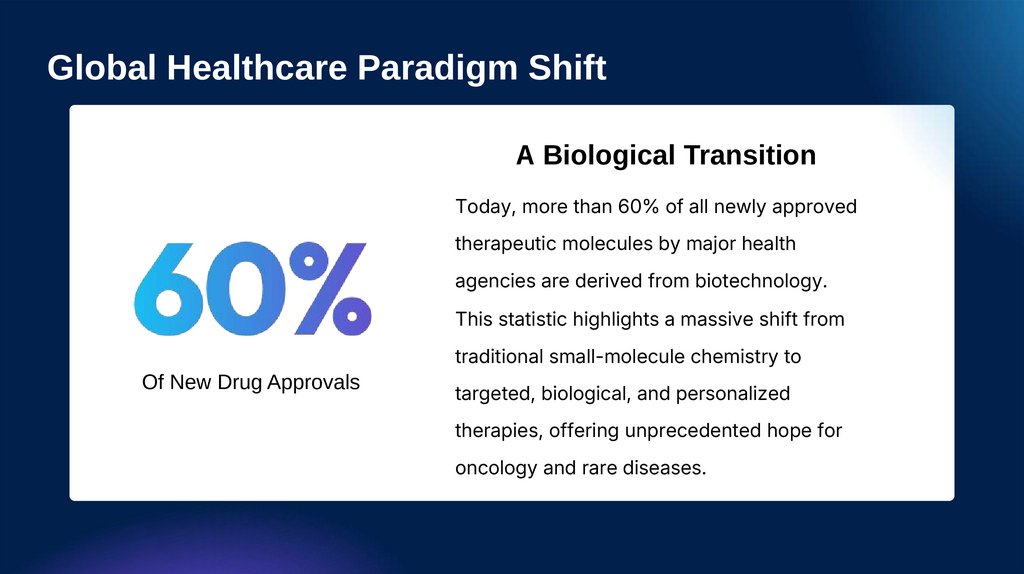
Global Healthcare Paradigm ShiftA Biological Transition
Today, more than 60% of all newly approved
therapeutic molecules by major health
agencies are derived from biotechnology.
This statistic highlights a massive shift from
traditional small-molecule chemistry to
Of New Drug Approvals
targeted, biological, and personalized
therapies, offering unprecedented hope for
oncology and rare diseases.
10.
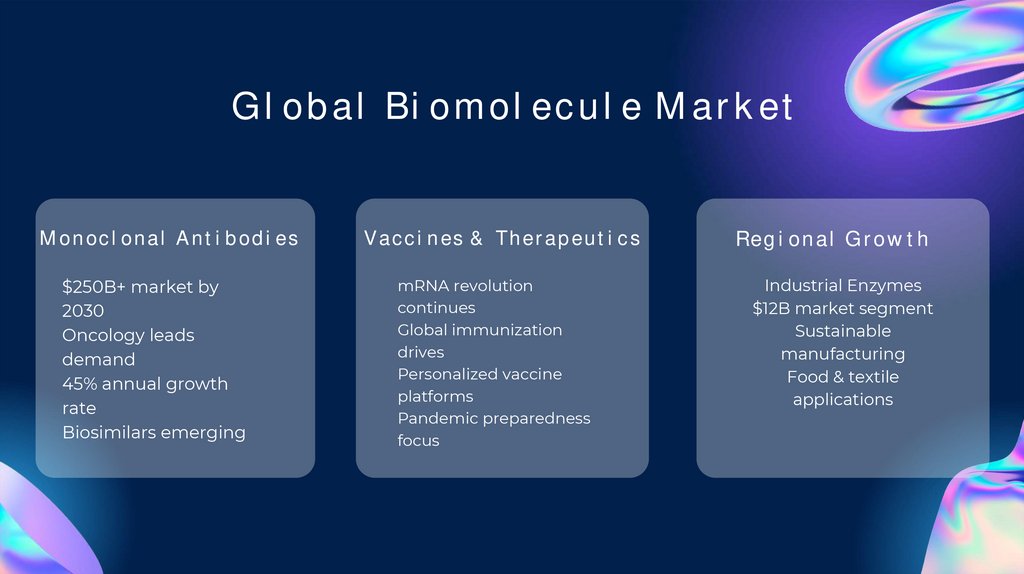
Global Biomolecule MarketMonoclonal Antibodies
$250B+ market by
2030
Oncology leads
demand
45% annual growth
rate
Biosimilars emerging
Vaccines & Therapeutics
Regional Growth
mRNA revolution
continues
Global immunization
drives
Personalized vaccine
platforms
Pandemic preparedness
focus
Industrial Enzymes
$12B market segment
Sustainable
manufacturing
Food & textile
applications
11.
Industrial &Environmental
Innovations
Industrial Enzymes
Green Chemistry
Biological catalysts replacing
harsh chemicals in detergents,
the paper industry, and textile
treatment, thereby reducing
water pollution.
carbon footprint.
Advanced
Sustainable Materials
Bioplastics
Next-Gen Biofuels
Development of 100%
biodegradable and bio-sourced
plastic alternatives, produced by
the bacterial fermentation of
sugars or plant starches
Valorization of cellulosic biomass
and exploitation of oleaginous
microalgae to generate
renewable energy with a low
carbon footprint.
Renewable Energy
12.
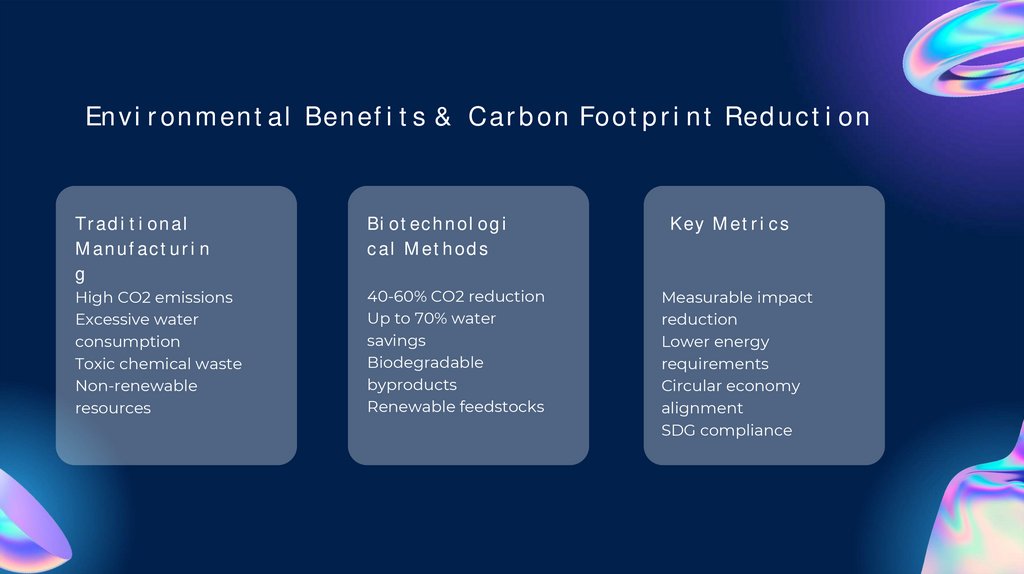
Environmental Benefits & Carbon Footprint ReductionTraditional
Manufacturin
g
Biotechnologi
cal Methods
Key Metrics
High CO2 emissions
Excessive water
consumption
Toxic chemical waste
Non-renewable
resources
40-60% CO2 reduction
Up to 70% water
savings
Biodegradable
byproducts
Renewable feedstocks
Measurable impact
reduction
Lower energy
requirements
Circular economy
alignment
SDG compliance
13.
The Future: SyntheticBiology
CRISPR & Gene Editing: Targeted DNA modification and cellular
reprogramming for precise genetic interventions
AI & Machine Learning: Revolutionary protein folding prediction and
molecular design accelerating drug discovery
Computational Biology: In silico drug design and advanced molecular
modeling reducing development timelines
Metabolic Engineering: Cellular pathway optimization enabling
enhanced production of valuable biomolecules
14.
Lifecycle: From Discovery to Market2. Optimization
4. Validation
Genetic engineering of the
Executing clinical trials,
production strain and in
regulatory approval, and
vitro trials.
commercialization.
1. Screening
3. Scale-up
Identifying the molecule of
Transitioning to industrial-
interest in nature or via in
scale bioreactors and
silico modeling.
purification.
15.
Challenges & OpportunitiesAhead
Production costs and scale-up difficulties remain significant barriers
to widespread adoption
Regulatory complexity varies globally, requiring strategic navigation
across jurisdictions
Public acceptance and ethical considerations demand transparent
communication
Emerging markets and technology convergence (AI, synthetic
biology) unlock unprecedented growth potential
16.
Thank you for your attentionQuestions?