


 biography
Similar presentations:




Ivan Pavlov: Nobel Laureate in Physiology
1. Ivan Pavlov Petrovich Nobel laureate
IVAN PAVLOV PETROVICHNOBEL LAUREATE
Аносова Анастасия 11 АА
2. Ivan Pavlov: Nobel Laureate in Physiology
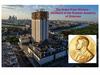
IVAN PAVLOV: NOBEL LAUREATEIN PHYSIOLOGY
• Ivan Pavlov, a pioneering physiologist, is
renowned for his groundbreaking research
on conditioned reflexes. His work laid the
foundation for the field of behavioral
psychology and earned him the Nobel Prize
in Physiology in 1904.
3. Early Life and Education of Ivan Pavlov
EARLY LIFE AND EDUCATION OFIVAN PAVLOV
• Ivan Pavlov was born in 1849 in Ryazan,
Russia, into a family of a village priest.
• He studied at the University of St.
Petersburg, where he developed an
interest in physiology.
4. Pavlov's Groundbreaking Research on Conditioned Reflexes
PAVLOV'S GROUNDBREAKINGRESEARCH ON CONDITIONED
REFLEXES
1) Discovery of Conditioned Reflexes
• Pavlov's experiments showed dogs could
learn to associate stimuli.
2) Impact on Behavioral Science
• Pavlov's work formed the basis for
behaviorism in psychology.
3) Experimental Methodology
• Pavlov used rigorous methods to study
physiological responses.
5. Nobel Prize and Its Impact on Science
NOBEL PRIZE AND ITS IMPACT ONSCIENCE
Recognition of Scientific Achievements
• The Nobel Prize honors groundbreaking discoveries.
Promotion of Scientific Research
• Encourages further exploration and innovation in
science.
Global Influence and Collaboration
• Enhances international cooperation among scientists.
Inspiring Future Generations
• Motivates young scientists to pursue impactful work.
6. Conclusion: Pavlov's Enduring Influence
CONCLUSION: PAVLOV'SENDURING INFLUENCE
1) Foundational Work in Psychology
• Pavlov's research laid the
groundwork for behaviorism.
2) Impact on Modern Therapies
• His theories inform techniques like
CBT and exposure therapy.
3) Cross-Disciplinary Relevance
• Influences fields such as education
and artificial intelligence.