Similar presentations:





Military_Communications_Presentation.pptx_имошицький
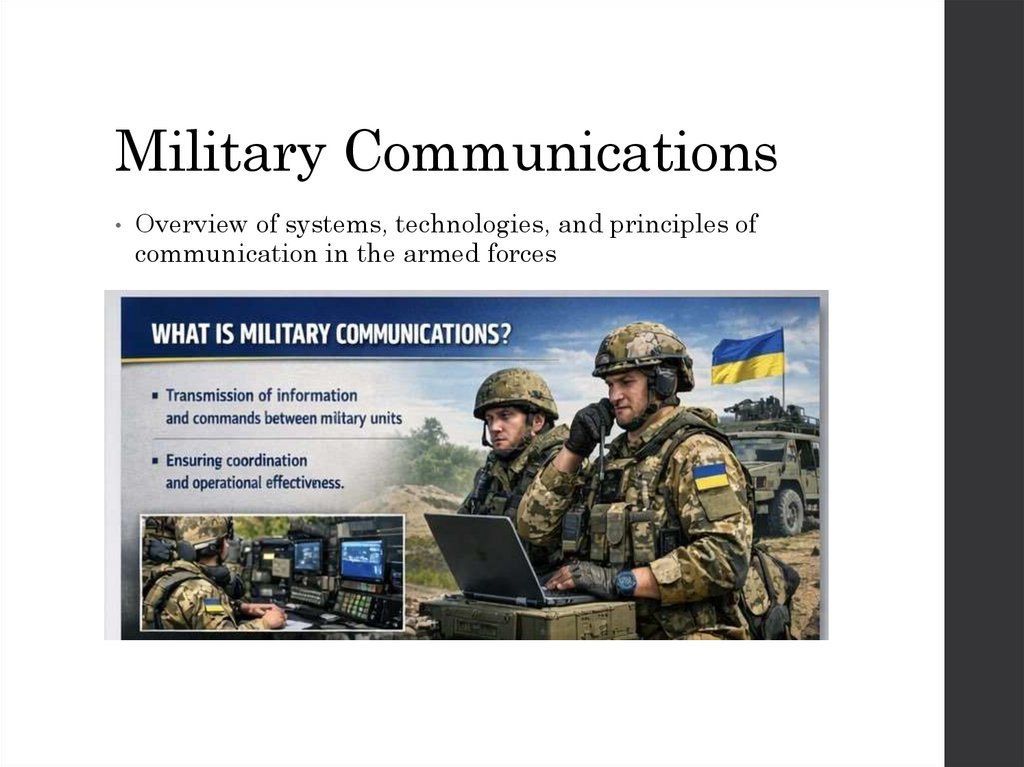
1. Military Communications
• Overview of systems, technologies, and principles ofcommunication in the armed forces
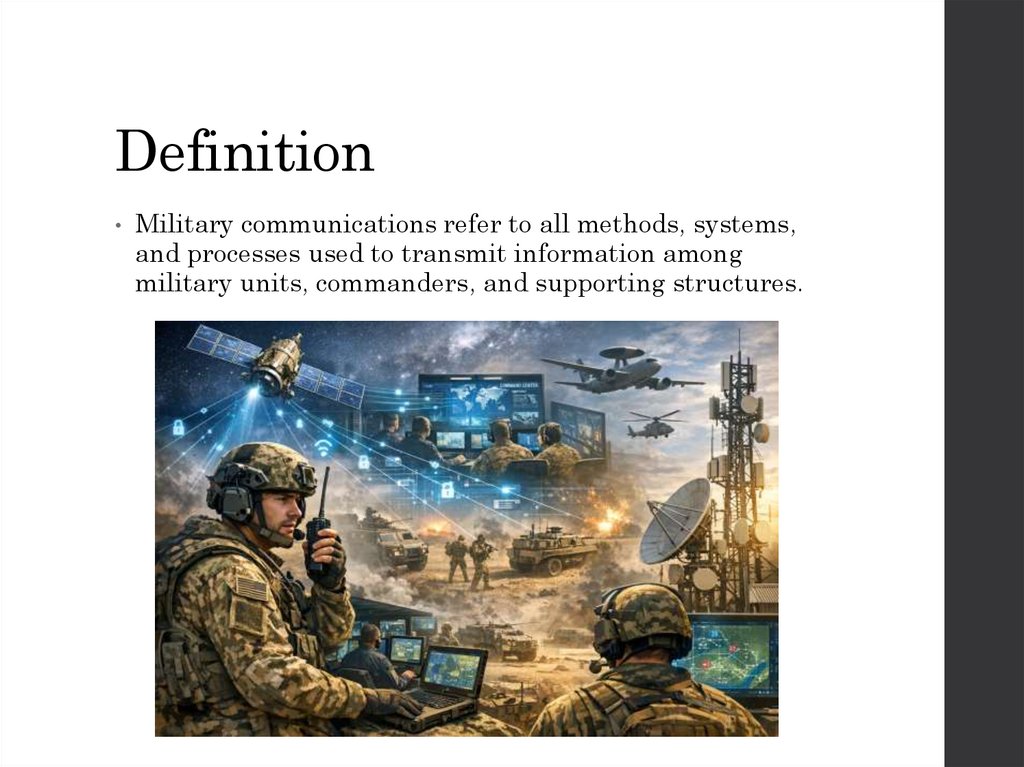
2. Definition
• Military communications refer to all methods, systems,and processes used to transmit information among
military units, commanders, and supporting structures.
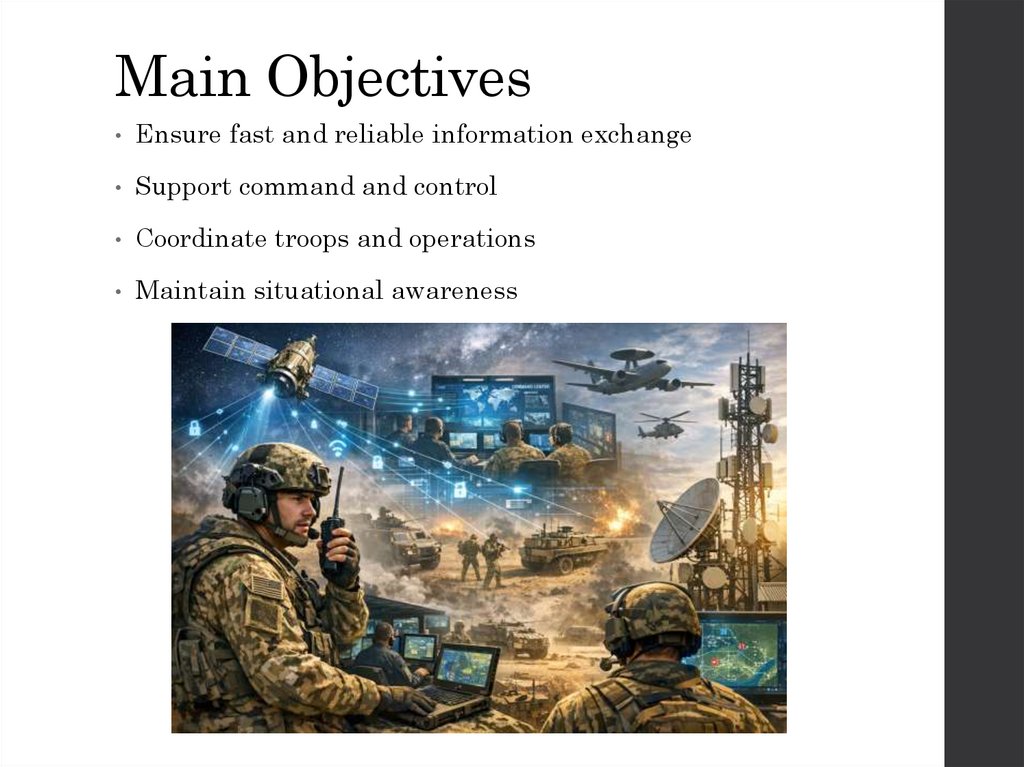
3. Main Objectives
• Ensure fast and reliable information exchange• Support command and control
• Coordinate troops and operations
• Maintain situational awareness
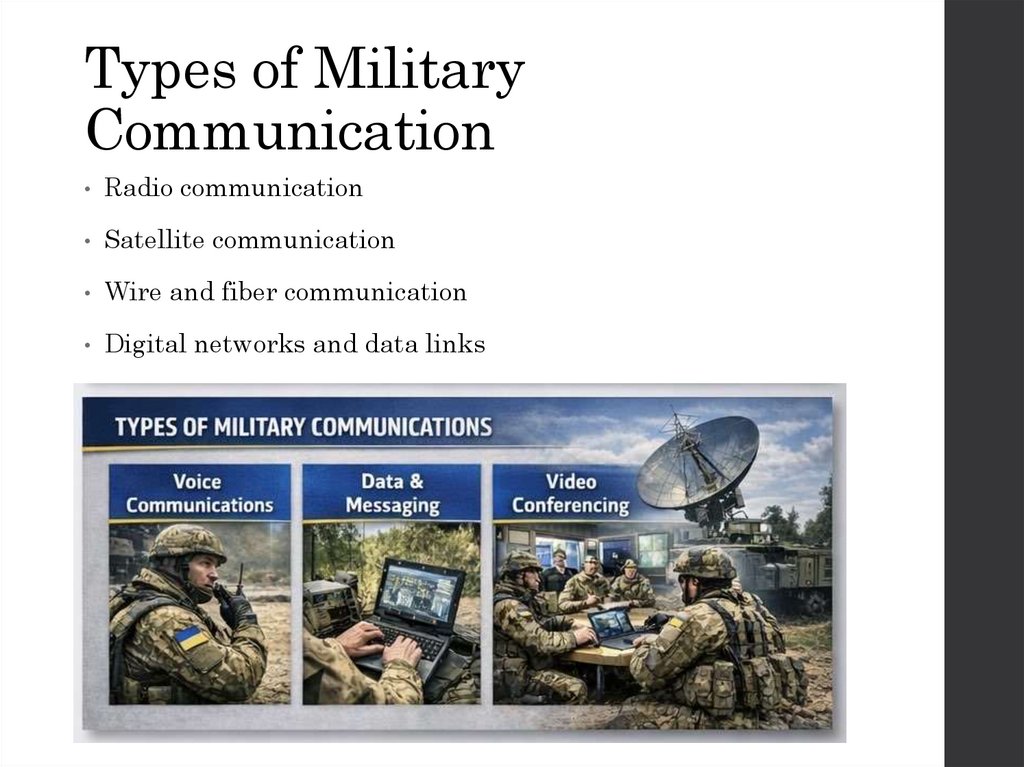
4. Types of Military Communication
• Radio communication• Satellite communication
• Wire and fiber communication
• Digital networks and data links
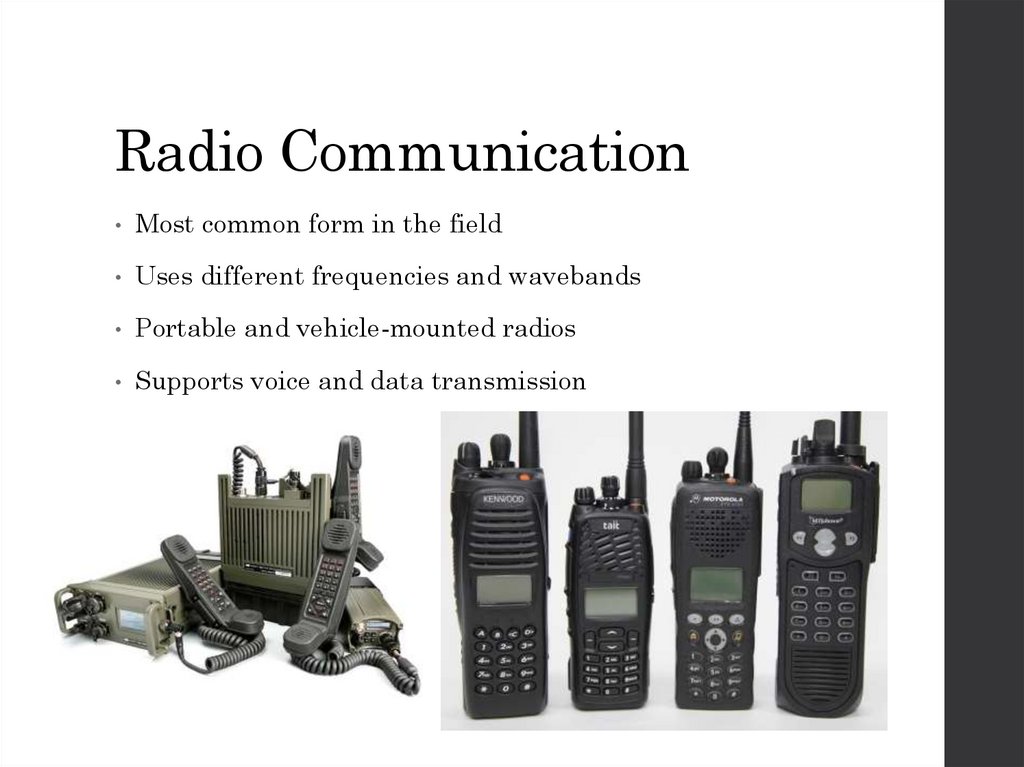
5. Radio Communication
• Most common form in the field• Uses different frequencies and wavebands
• Portable and vehicle-mounted radios
• Supports voice and data transmission
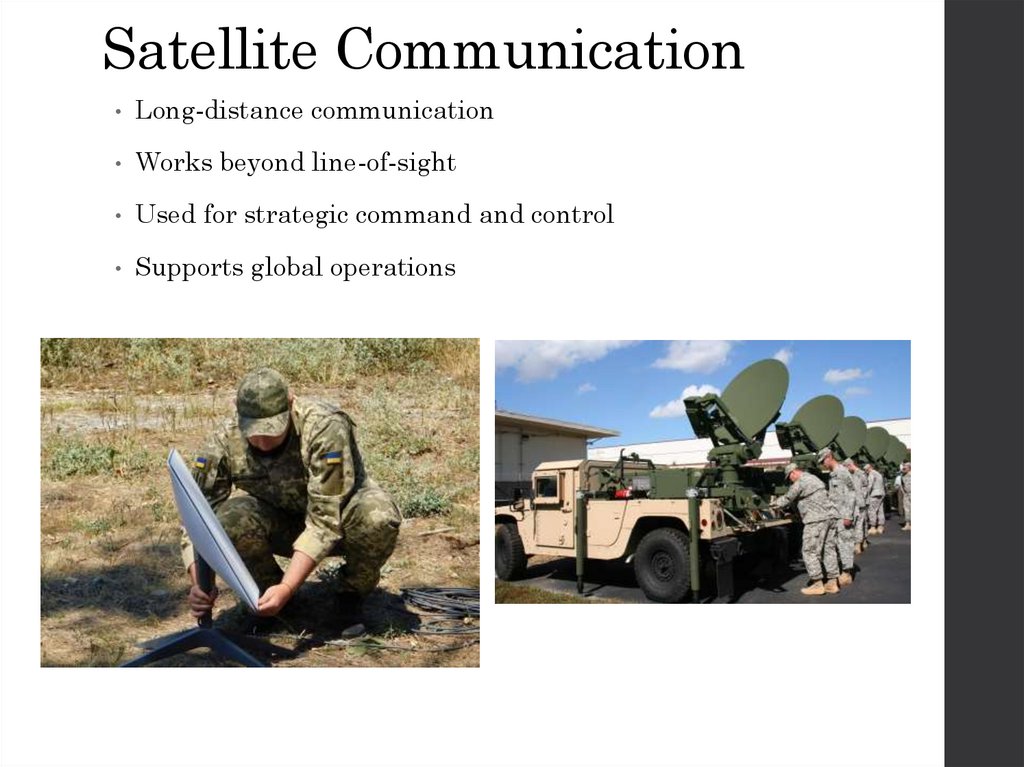
6. Satellite Communication
• Long-distance communication• Works beyond line-of-sight
• Used for strategic command and control
• Supports global operations
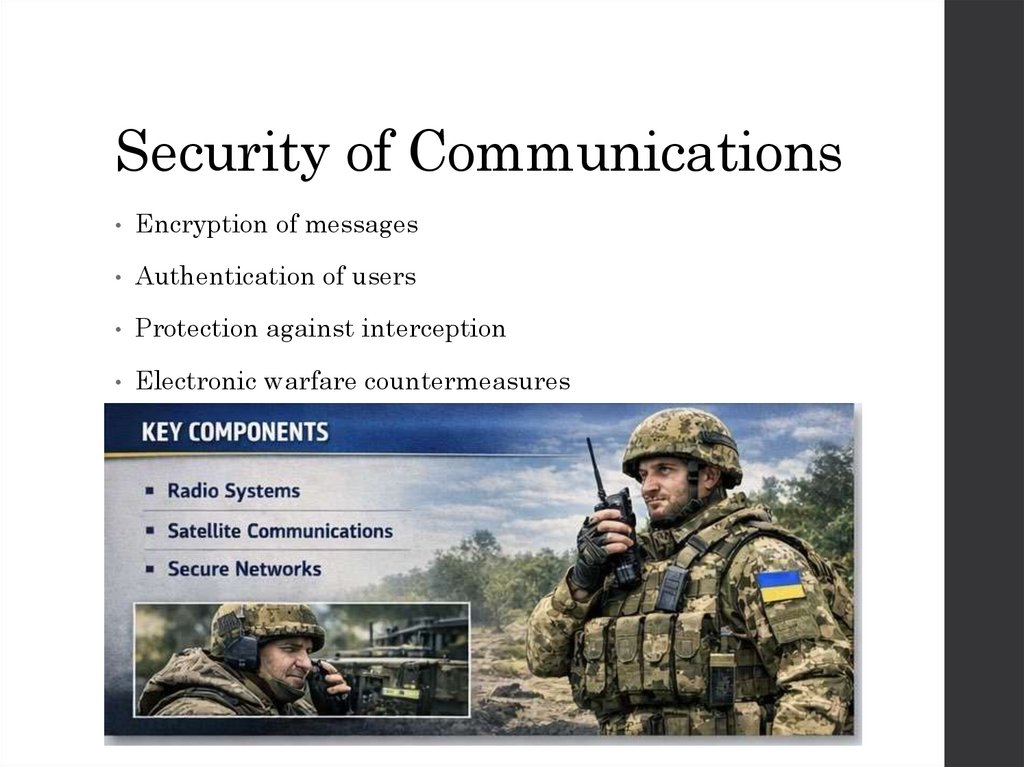
7. Security of Communications
• Encryption of messages• Authentication of users
• Protection against interception
• Electronic warfare countermeasures
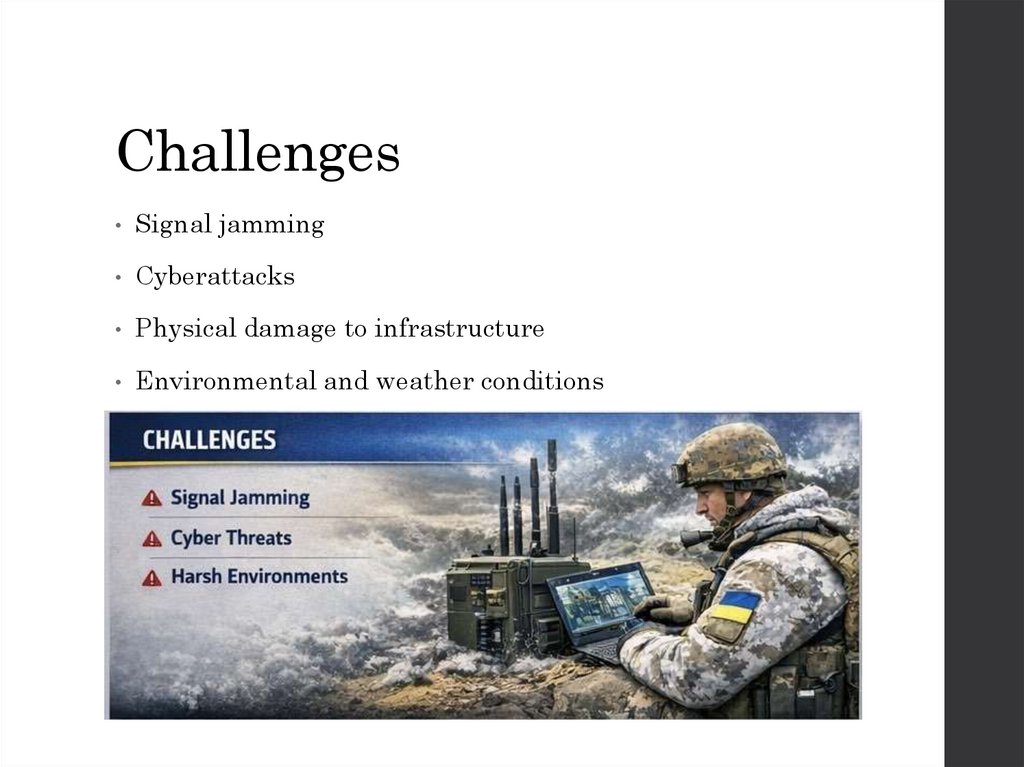
8. Challenges
• Signal jamming• Cyberattacks
• Physical damage to infrastructure
• Environmental and weather conditions
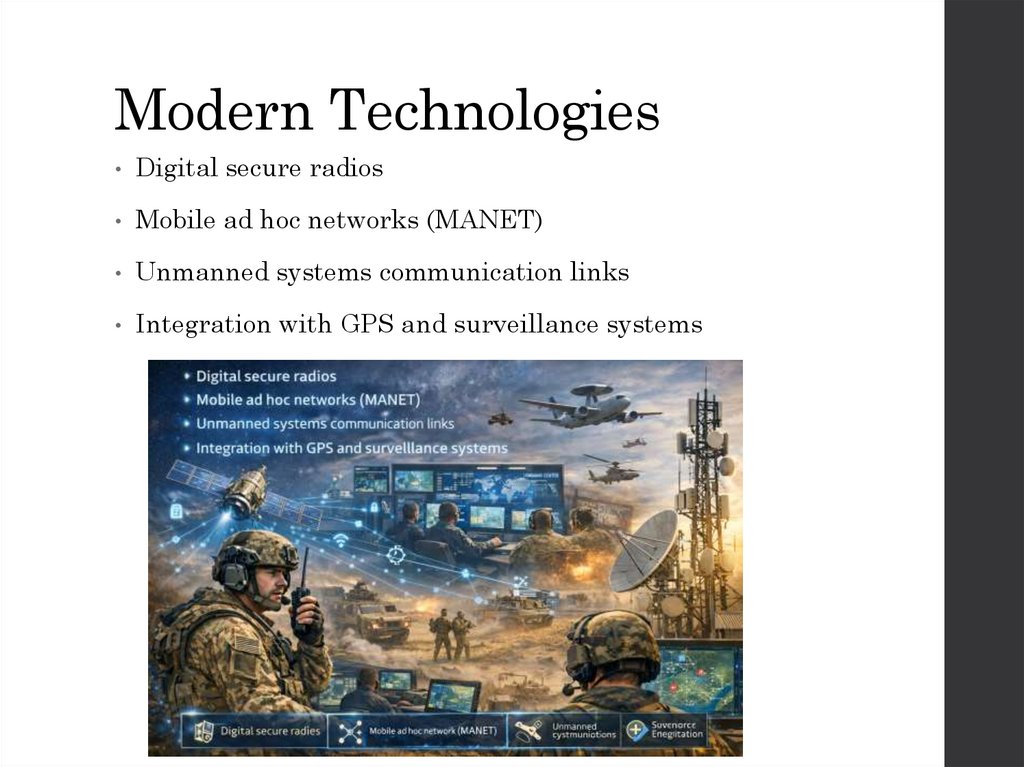
9. Modern Technologies
• Digital secure radios• Mobile ad hoc networks (MANET)
• Unmanned systems communication links
• Integration with GPS and surveillance systems
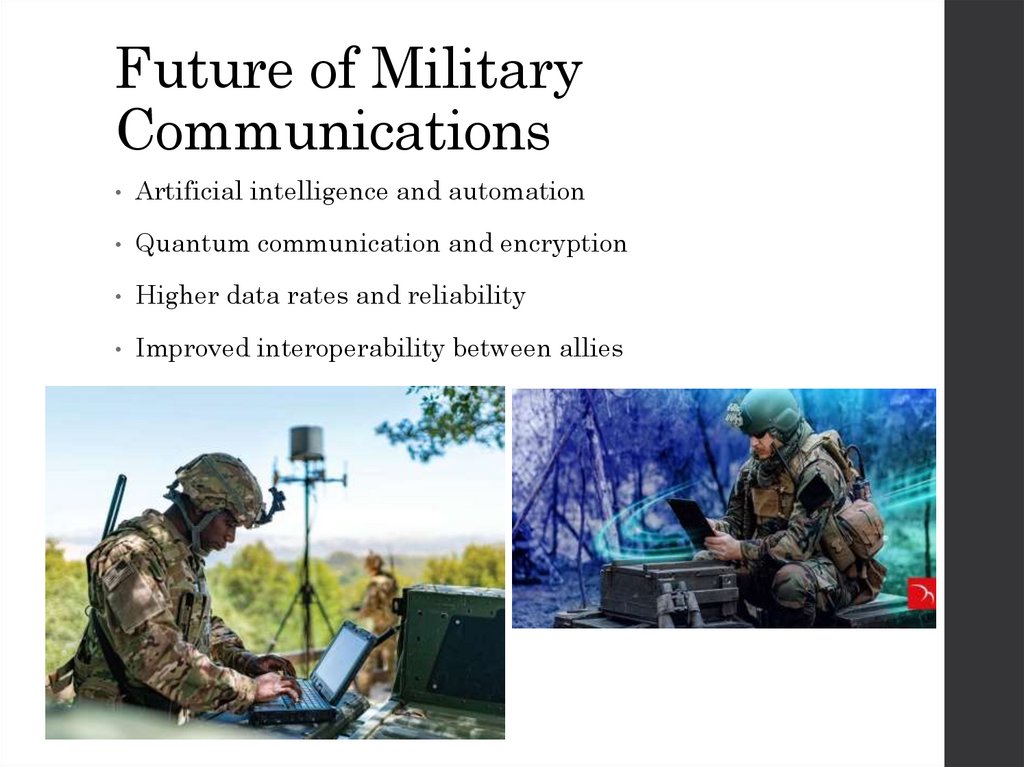
10. Future of Military Communications
• Artificial intelligence and automation• Quantum communication and encryption
• Higher data rates and reliability
• Improved interoperability between allies
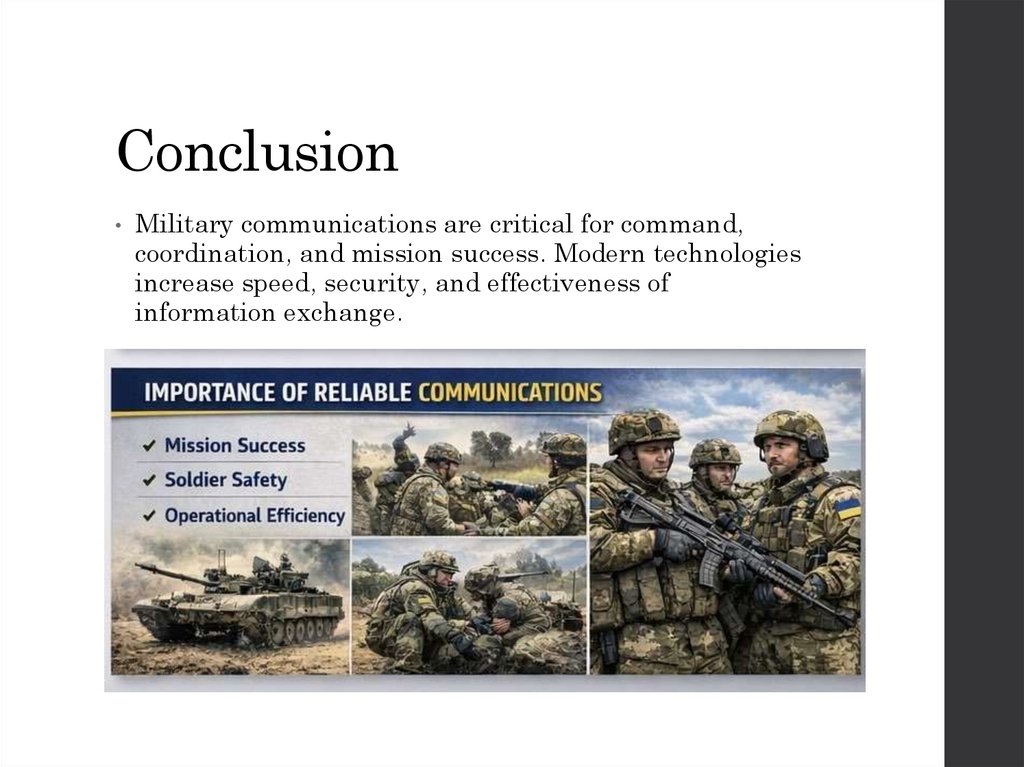
11. Conclusion
• Military communications are critical for command,coordination, and mission success. Modern technologies
increase speed, security, and effectiveness of
information exchange.