![Practical assignment: dissatisfied the number of morphemes — 4. 1) [dis-]: lex.-gram.(prefix), full, cont., add., bound,](https://cf5.ppt-online.org/files5/slide/x/xFHkW5lu4v2n9VRENT3sKSYgbJmzjyrIqcCMPt/slide-11.jpg "Practical assignment: dissatisfied the number of morphemes — 4. 1) [dis-]: lex.-gram.(prefix), full, cont., add., bound,")
![Practical assignment: salesgirl the number of morphemes — 3. 1) [sale-]: lex. (root), full, cont., add., free, linear. 2)](https://cf5.ppt-online.org/files5/slide/x/xFHkW5lu4v2n9VRENT3sKSYgbJmzjyrIqcCMPt/slide-12.jpg "Practical assignment: salesgirl the number of morphemes — 3. 1) [sale-]: lex. (root), full, cont., add., free, linear. 2)")
 lingvistics
Similar presentations:


Essential Notions of Morphology
1. Lecture 1: Essential Notions of Morphology
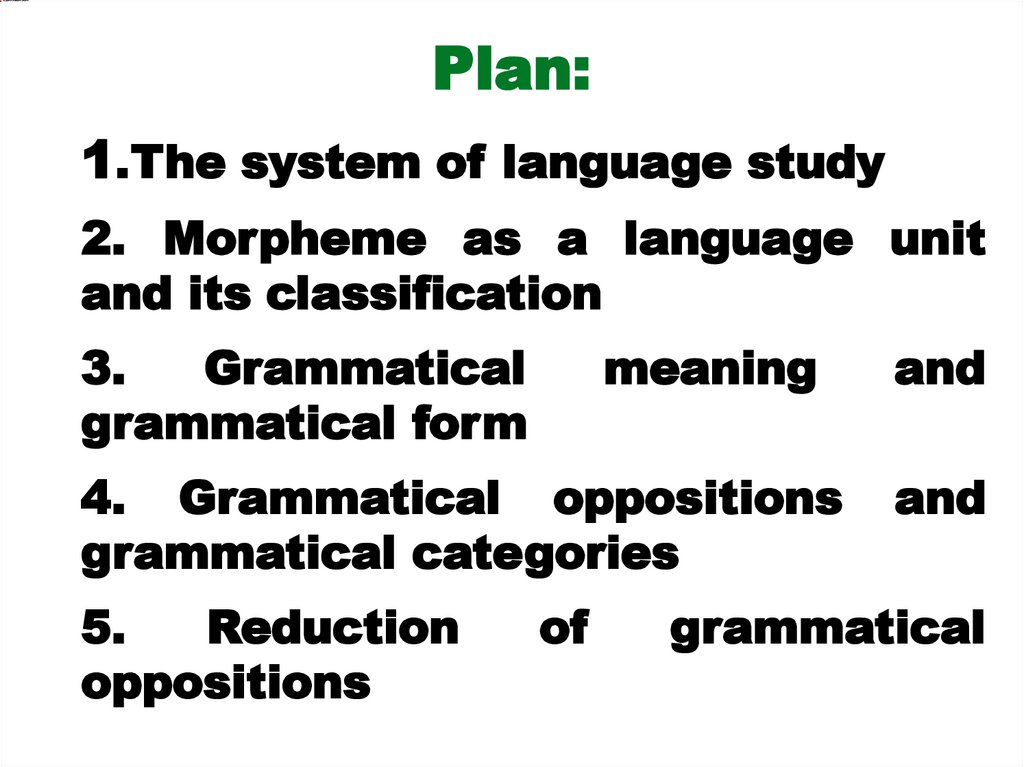
2. Plan:
1.The system of language study2. Мorpheme as a language unit
and its classification
3.
Grammatical
grammatical form
meaning
and
4. Grammatical oppositions
grammatical categories
and
5.
Reduction
oppositions
of
grammatical
3.
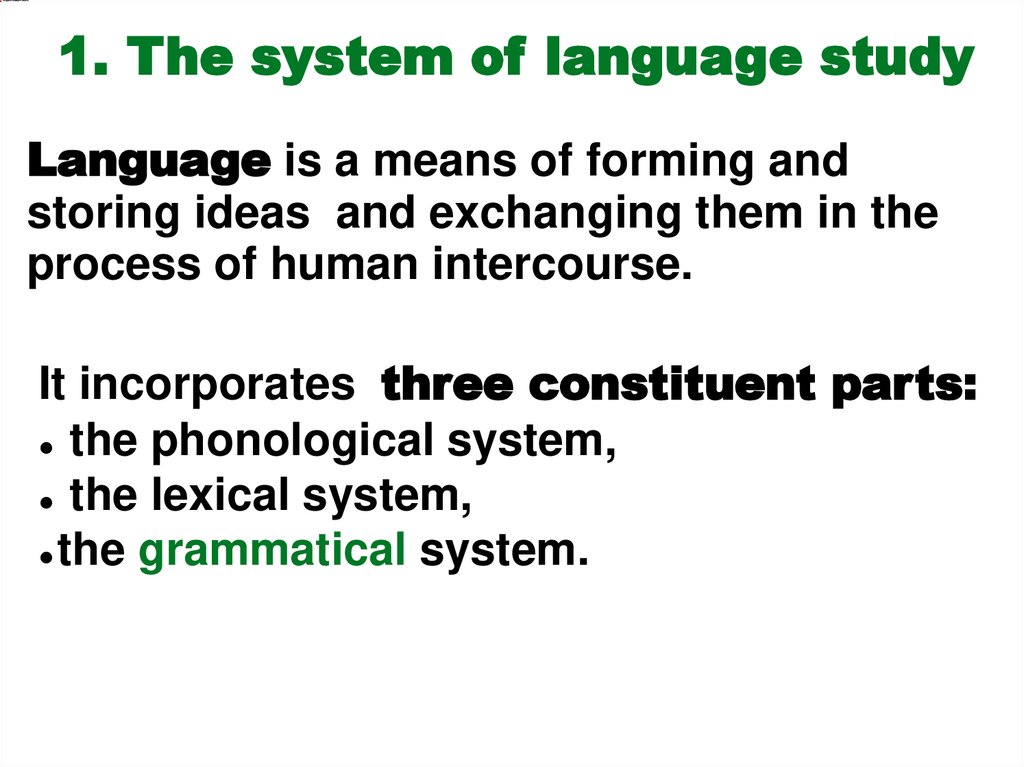
1. The system of language studyLanguage is a means of forming and
storing ideas and exchanging them in the
process of human intercourse.
It incorporates three constituent parts:
the phonological system,
the lexical system,
the grammatical system.
4.
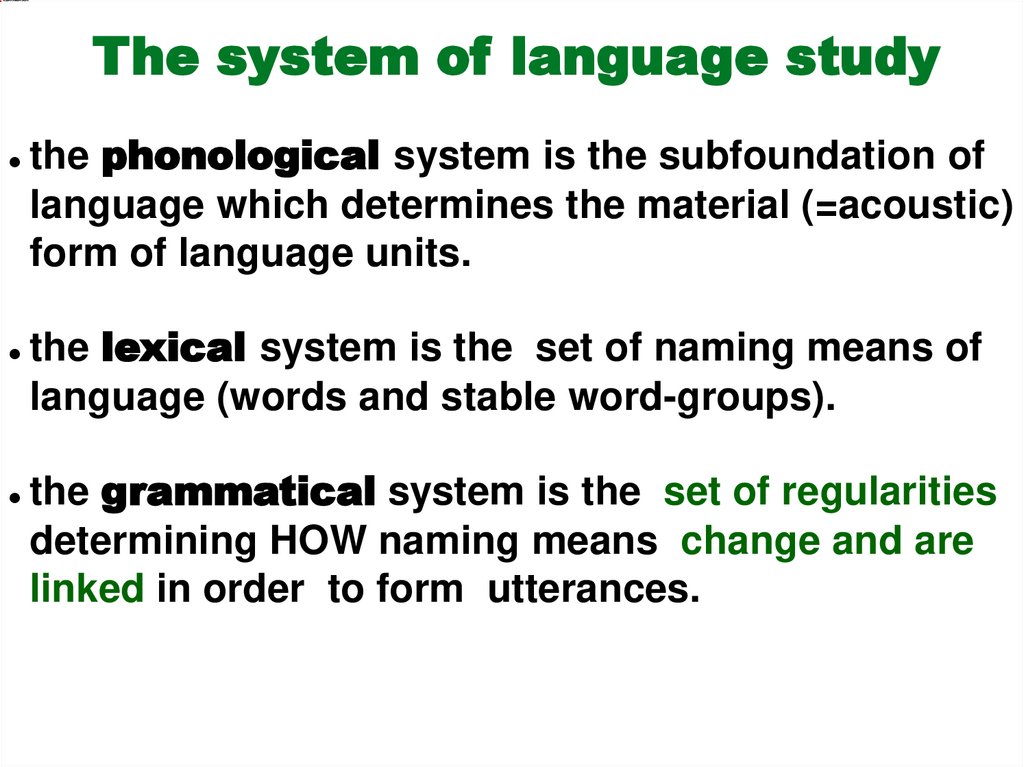
The system of language studythe phonological system is the subfoundation of
language which determines the material (=acoustic)
form of language units.
the lexical system is the set of naming means of
language (words and stable word-groups).
the grammatical system is the set of regularities
determining HOW naming means change and are
linked in order to form utterances.
5.
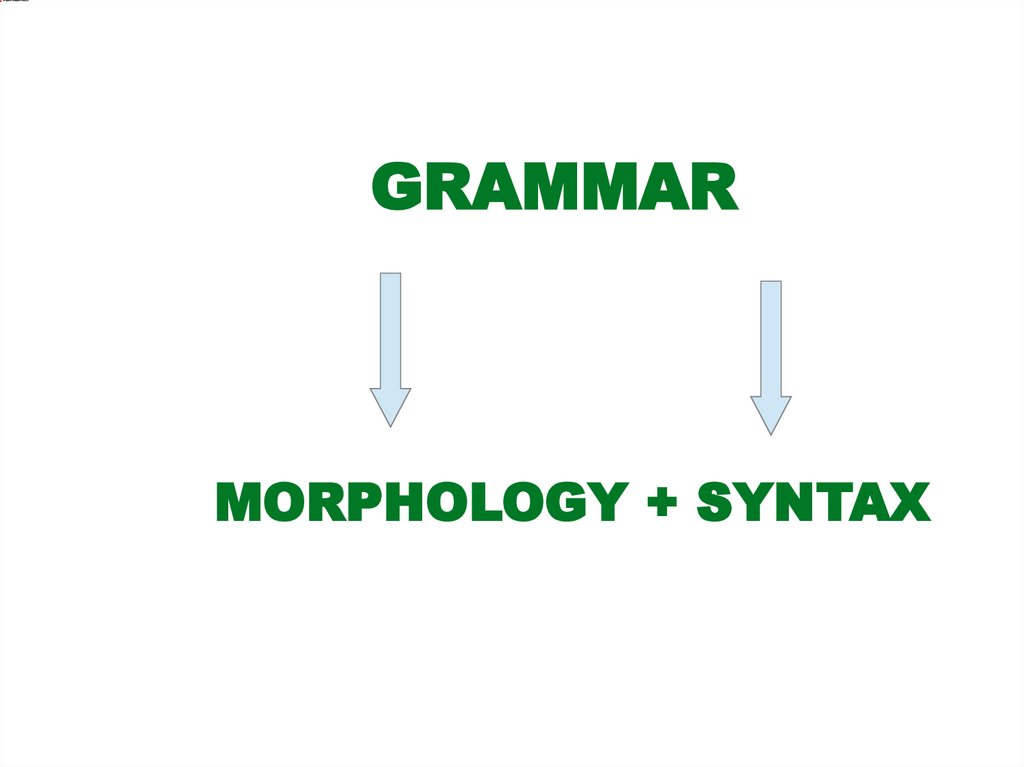
GRAMMARMORPHOLOGY + SYNTAX
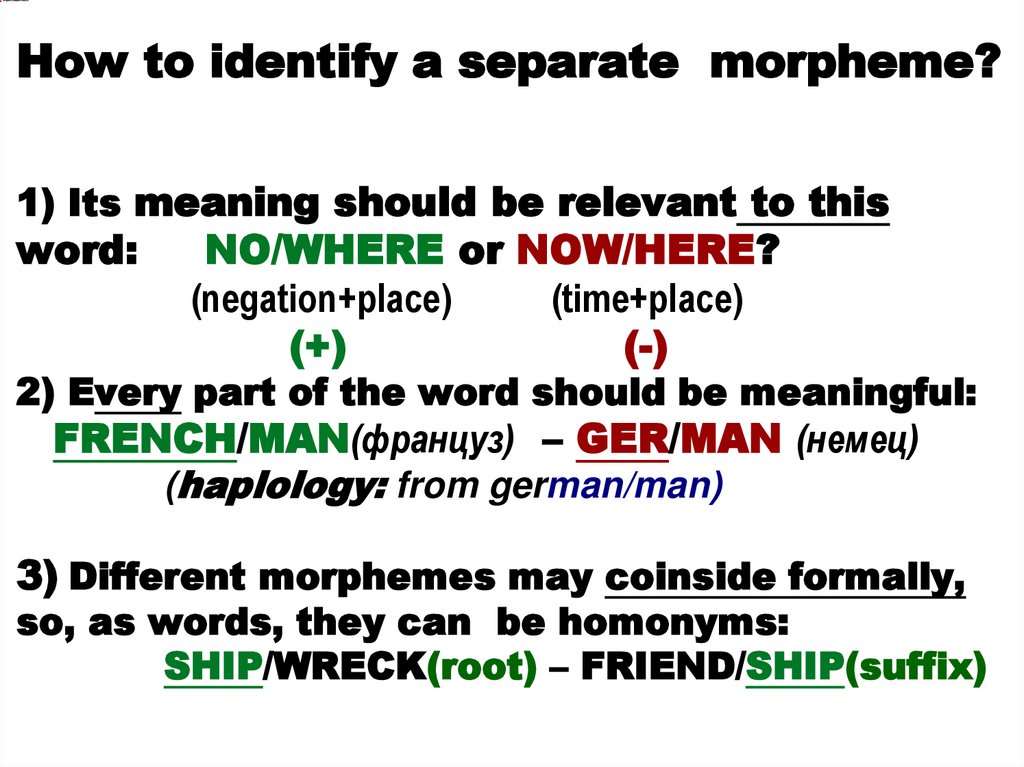
6. How to identify a separate morpheme? 1) Its meaning should be relevant to this word: NO/WHERE or NOW/HERE? (negation+place)
(time+place)(+)
(-)
2) Every part of the word should be meaningful:
FRENCH/MAN(француз) – GER/MAN (немец)
(haplology: from german/man)
3) Different morphemes may coinside formally,
so, as words, they can be homonyms:
SHIP/WRECK(root) – FRIEND/SHIP(suffix)
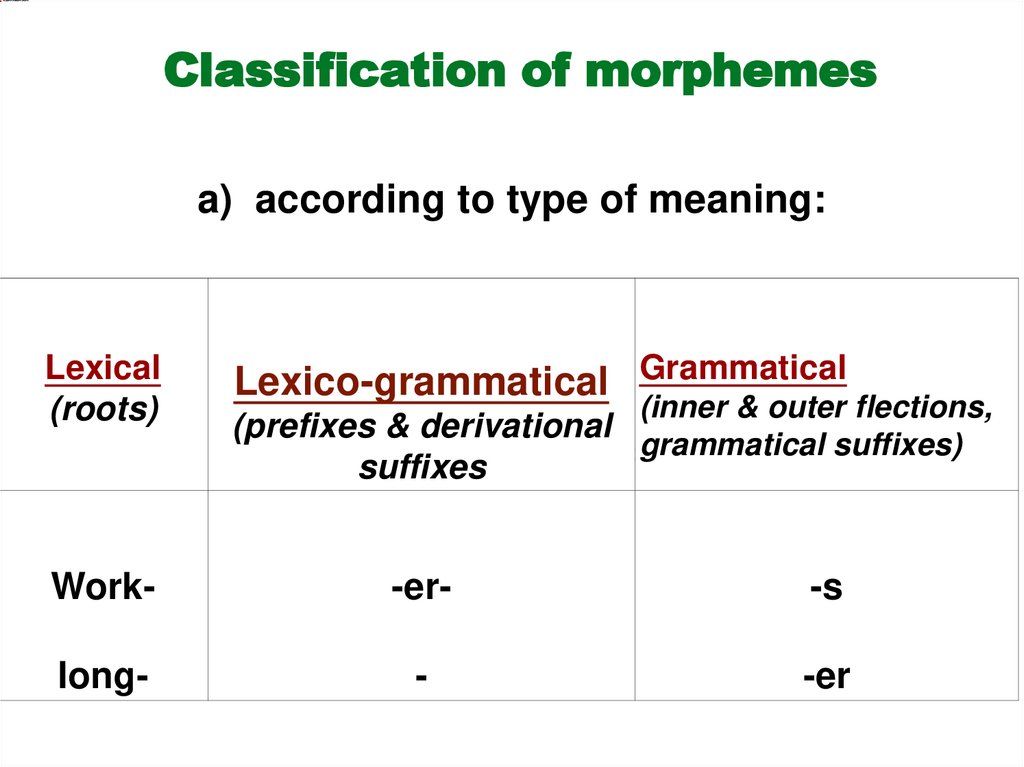
7. Classification of morphemes a) according to type of meaning:
Lexical(roots)
Lexico-grammatical Grammatical
(inner & outer flections,
(prefixes & derivational
grammatical
suffixes)
b) presence/
absence
of
meaning
suffixes
Work-
-er-
-s
long-
-
-er
8. Classification of morphemes
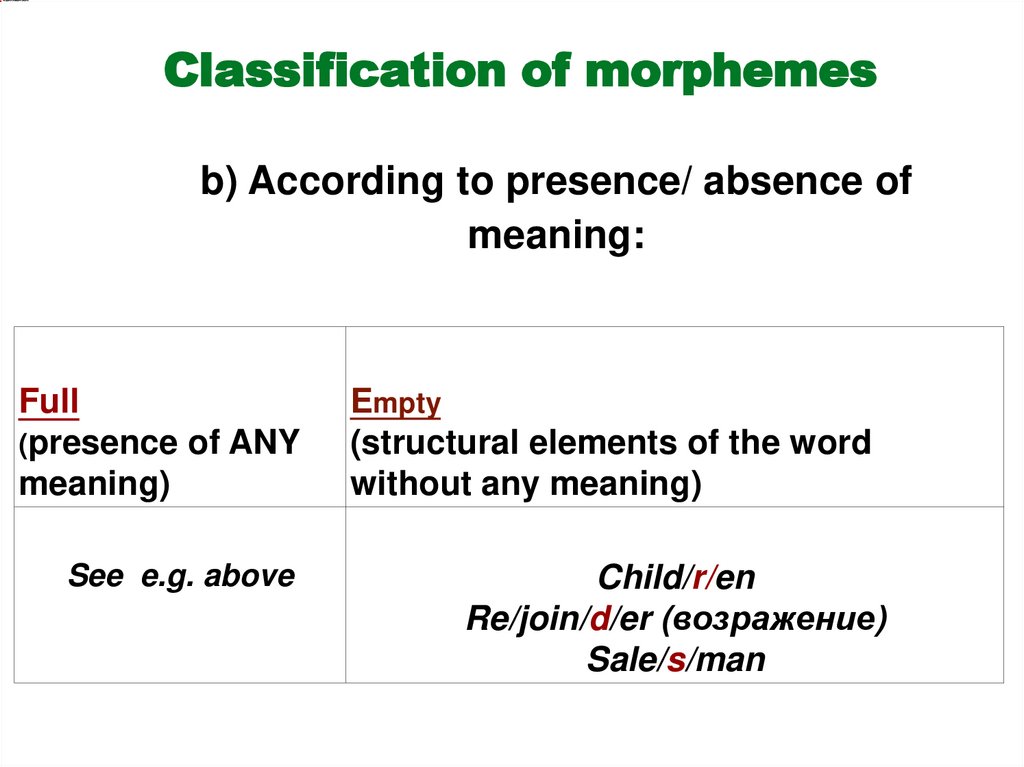
b) According to presence/ absence ofmeaning:
Full
(presence of ANY
meaning)
Empty
(structural elements of the word
without any meaning)
See e.g. above
Child/r/en
Re/join/d/er (возражение)
Sale/s/man
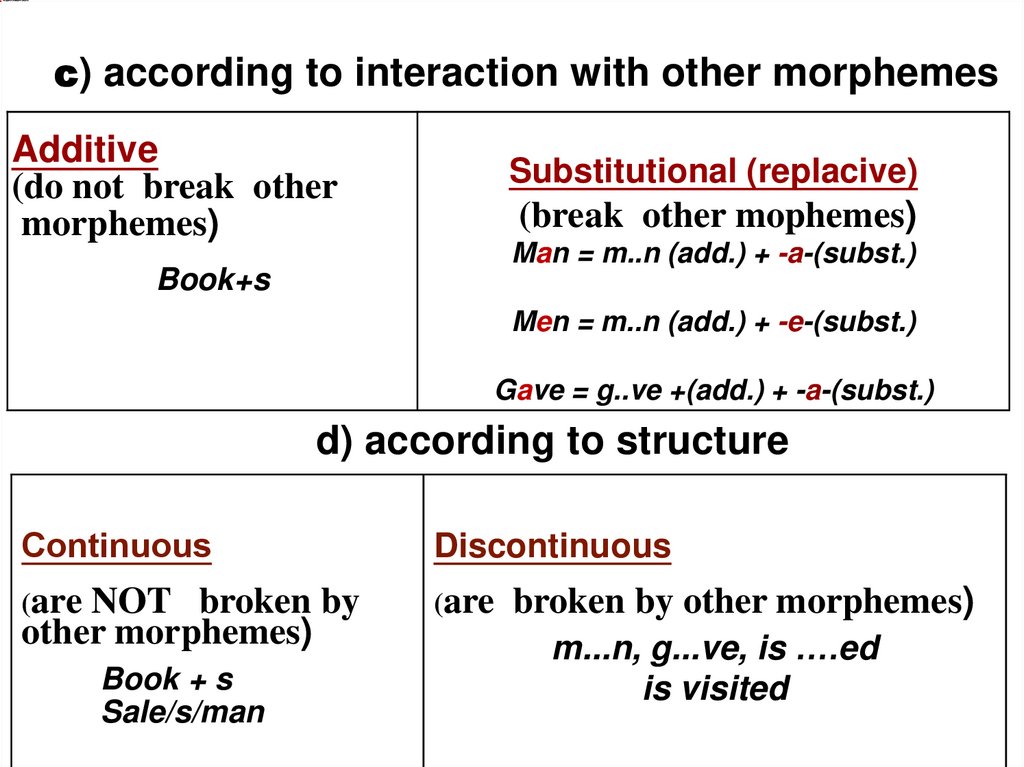
9. c) according to interaction with other morphemes
Additive(do not break other
morphemes)
Book+s
Substitutional (replacive)
(break other mophemes)
Man = m..n (add.) + -a-(subst.)
Men = m..n (add.) + -e-(subst.)
Gave = g..ve +(add.) + -a-(subst.)
d) according to structure
Сontinuous
Discontinuous
(are NOT
(are broken by other morphemes)
broken by
other morphemes)
Book + s
Sale/s/man
m...n, g...ve, is ….ed
is visited
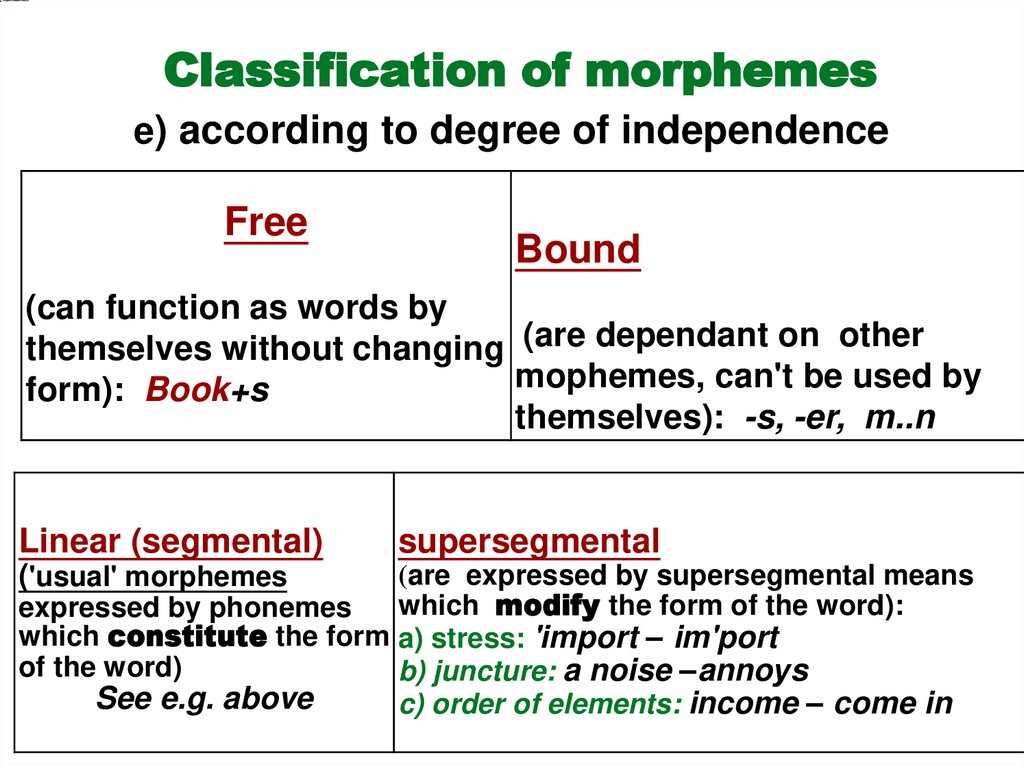
10. Classification of morphemes e) according to degree of independence
FreeBound
(can function as words by
themselves without changing (are dependant on other
mophemes, can't be used by
form): Book+s
f) way of themselves):
representation
-s, -er, m..n
Linear (segmental)
('usual' morphemes
supersegmental
(are expressed by supersegmental means
which modify the form of the word):
expressed by phonemes
which constitute the form a) stress: 'import – im'port
of the word)
b) juncture: a noise –annoуs
See e.g. above
c) order of elements: income – come in
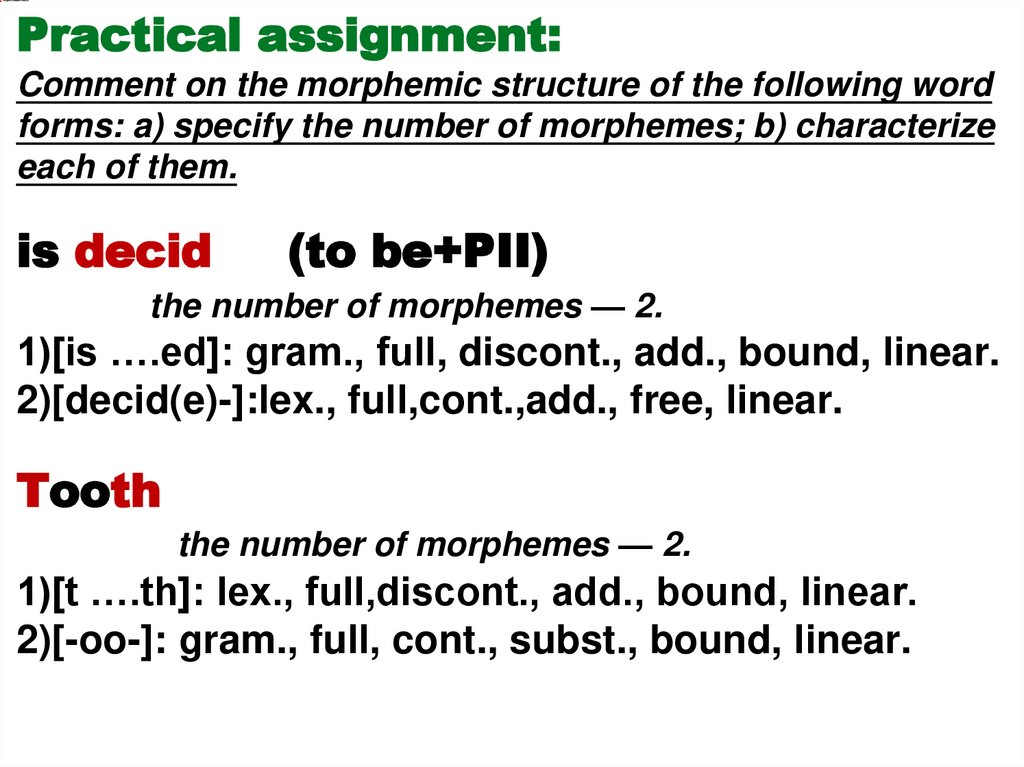
11. Practical assignment: Comment on the morphemic structure of the following word forms: a) specify the number of morphemes; b)
characterizeeach of them.
is decid
(to be+PII)
the number of morphemes — 2.
1)[is ….ed]: gram., full, discont., add., bound, linear.
2)[decid(e)-]:lex., full,cont.,add., free, linear.
Tooth
the number of morphemes — 2.
1)[t ….th]: lex., full,discont., add., bound, linear.
2)[-oo-]: gram., full, cont., subst., bound, linear.
12. Practical assignment: dissatisfied the number of morphemes — 4. 1) [dis-]: lex.-gram.(prefix), full, cont., add., bound,
linear.2) [-satis-]:lex.(root), full, cont.,add.,bound, linear.
3) [-fi-](y)]:lex.-gram.(suffix), full, cont., add., bound,
linear.
4) [-ed]: 2 variants:
- «недовольный»: lex.-gram.(suffix of participle II),
full,cont., add., bound, linear.
- «вызвало недовольство»: gram.(inflection of
tense), full, cont., add., bound, linear.
13. Practical assignment: salesgirl the number of morphemes — 3. 1) [sale-]: lex. (root), full, cont., add., free, linear. 2)
[-s-]:structural, empty, cont., add., bound, linear.3) [-girl]: lex. (root),full, cont., add., free, linear.
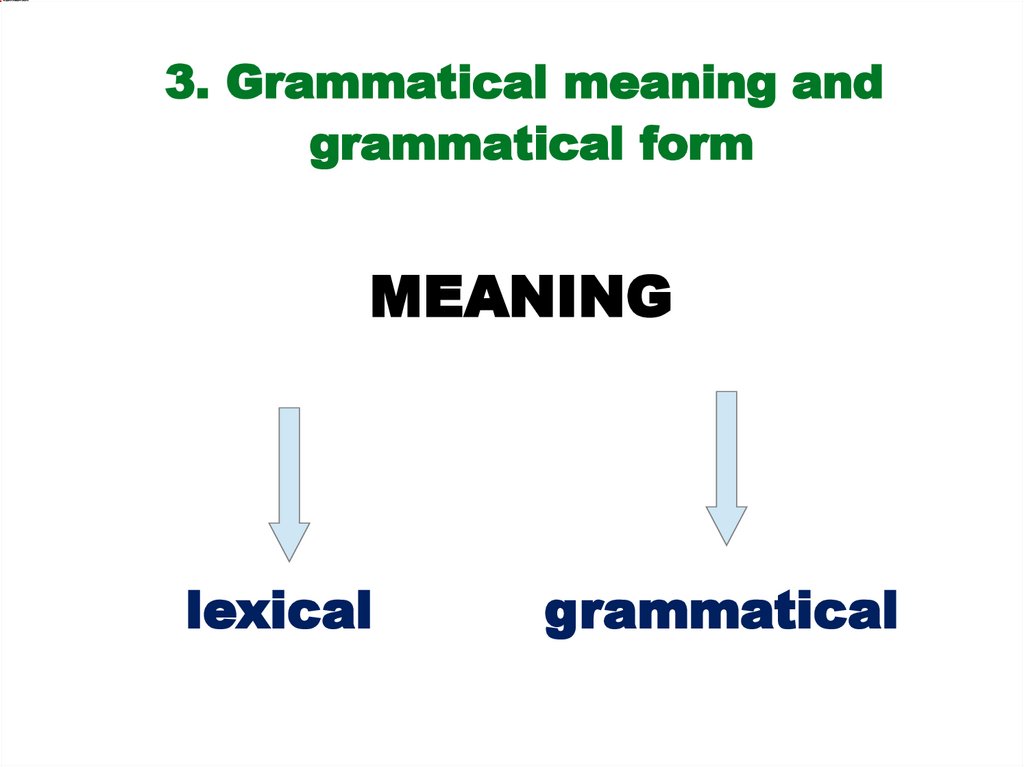
14. 3. Grammatical meaning and grammatical form
MEANINGlexical
grammatical
15.
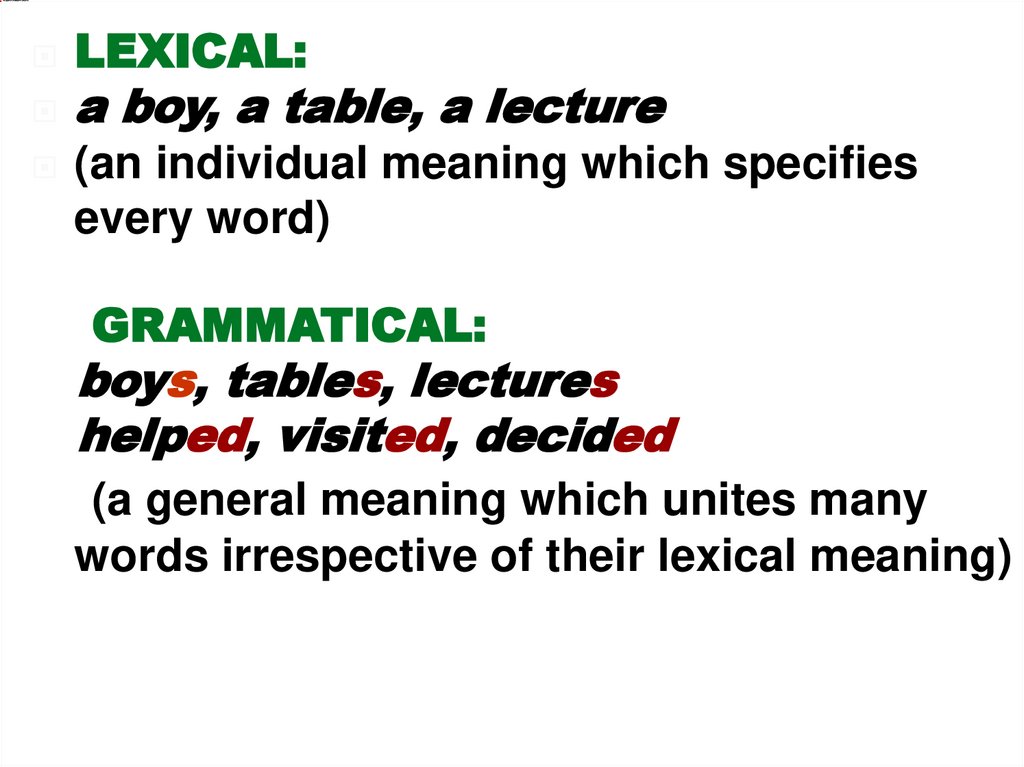
LEXICAL:a boy, a table, a lecture
(an individual meaning which specifies
every word)
GRAMMATICAL:
boys, tables, lectures
helped, visited, decided
(a general meaning which unites many
words irrespective of their lexical meaning)
16.
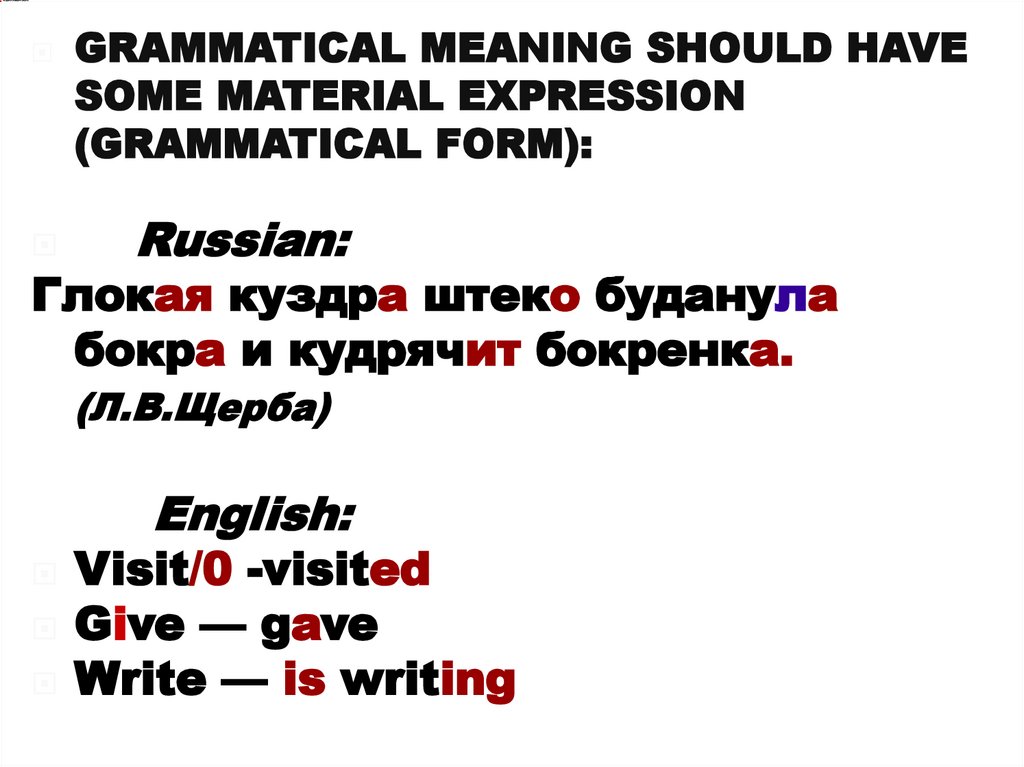
GRAMMATICAL MEANING SHOULD HAVESOME MATERIAL EXPRESSION
(GRAMMATICAL FORM):
Russian:
Глокая куздра штеко буданула
бокра и кудрячит бокренка.
(Л.В.Щерба)
English:
Visit/0 -visited
Give — gave
Write — is writing
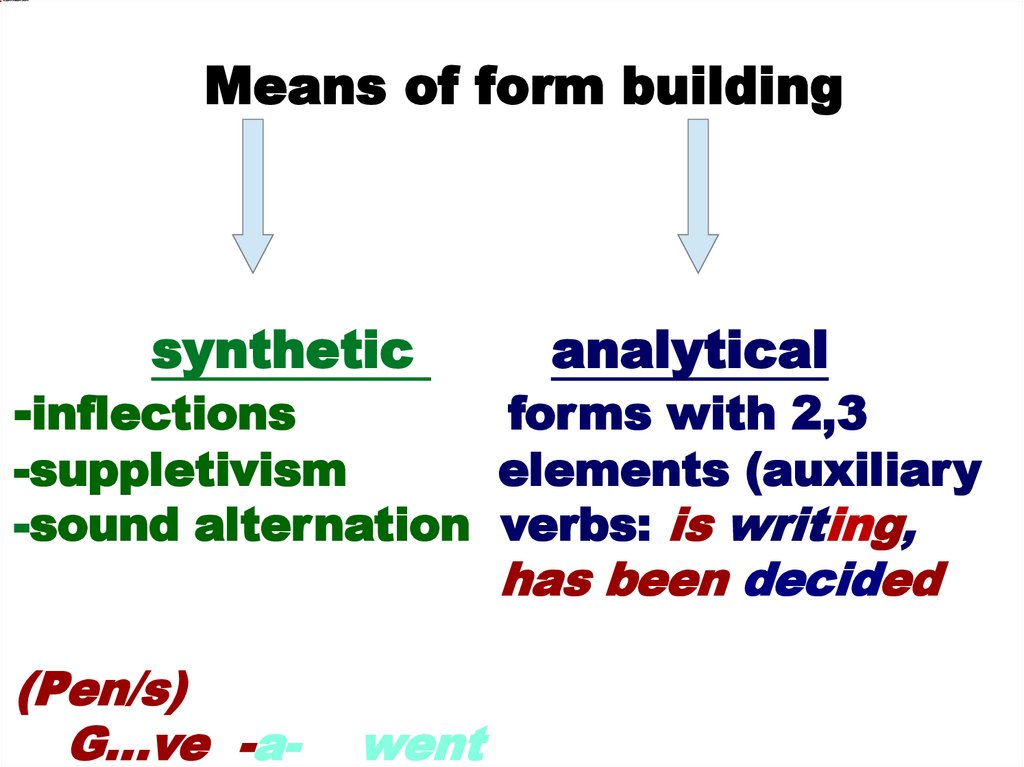
17. Means of form building
synthetic-inflections
analytical
forms with 2,3
-suppletivism
elements (auxiliary
-sound alternation verbs: is writing,
has been decided
(Реn/s)
G…ve -a-
went
18.
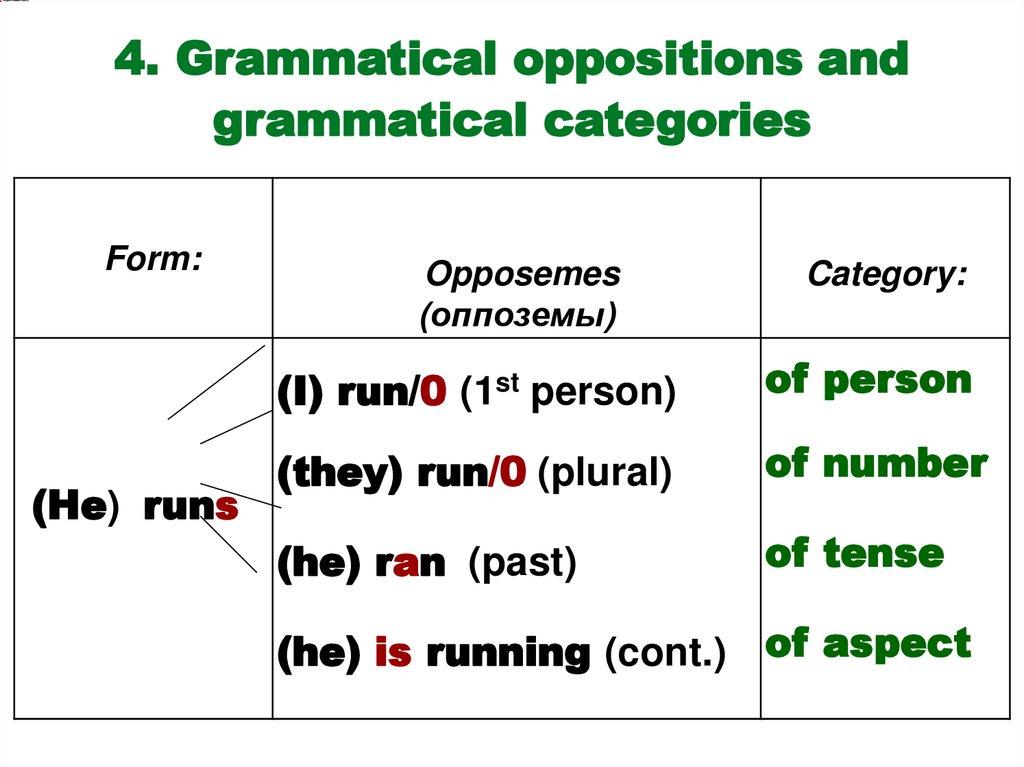
4. Grammatical oppositions andgrammatical categories
Form:
(He) runs
Opposemes
(оппоземы)
Category:
(I) run/0 (1st person)
of person
(they) run/0 (plural)
of number
(he) ran (past)
of tense
(he) is running (cont.) of aspect
19. Types of oppositions:
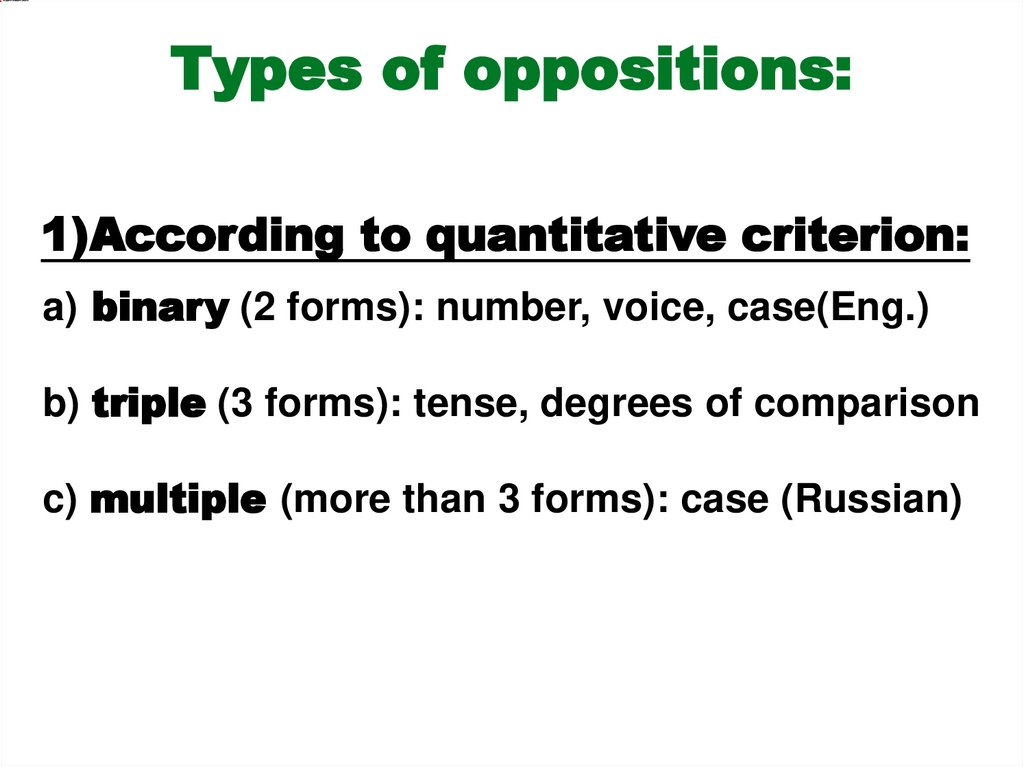
1)According to quantitative criterion:a) binary (2 forms): number, voice, case(Eng.)
b) triple (3 forms): tense, degrees of comparison
c) multiple (more than 3 forms): case (Russian)
20. Types of oppositions:
2) According to qualitative criterion(meaning of forms):
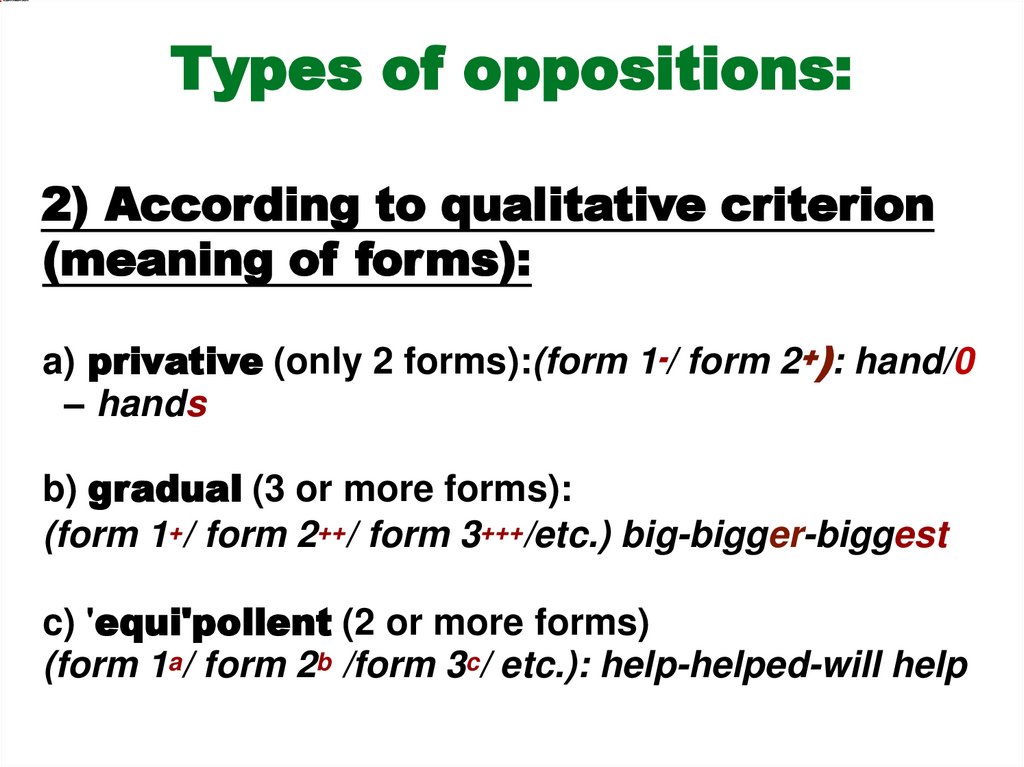
a) privative (only 2 forms):(form 1-/ form 2+): hand/0
– hands
b) gradual (3 or more forms):
(form 1+/ form 2++/ form 3+++/etc.) big-bigger-biggest
c) 'equi'pollent (2 or more forms)
(form 1a/ form 2b /form 3c/ etc.): help-helped-will help
21. Types of categories:
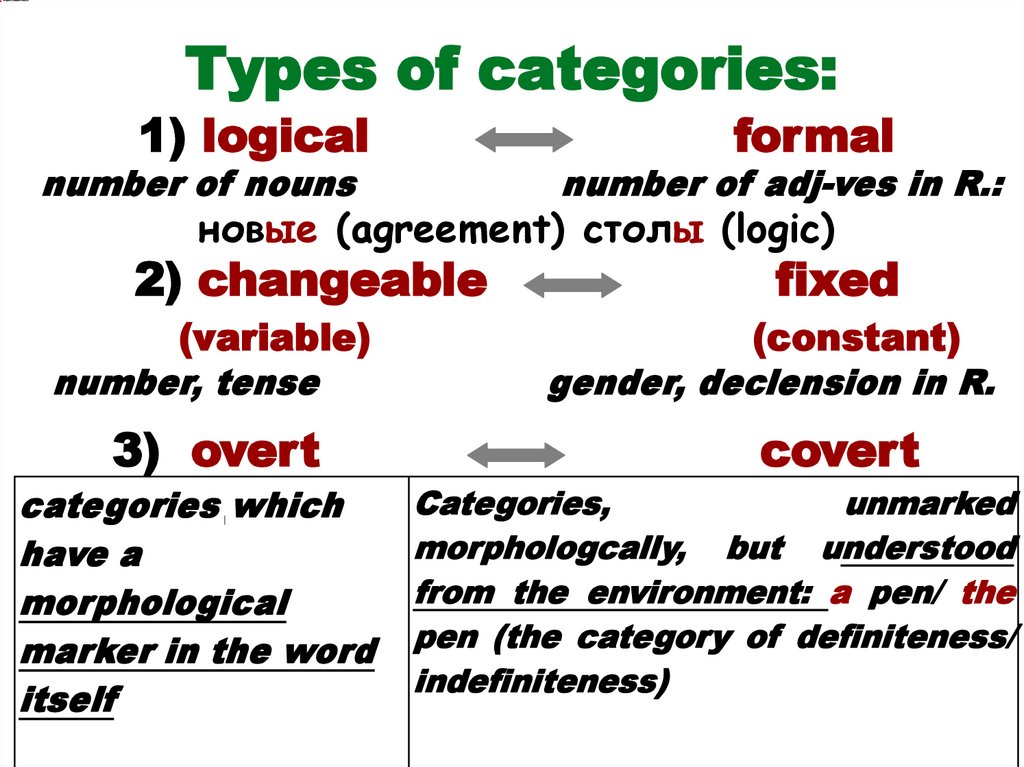
1) logicalformal
number of nouns
number of adj-ves in R.:
новые (agreement) столы (logic)
2) changeable
(variable)
number, tense
3) overt
categories which
have a
morphological
marker in the word
itself
fixed
(constant)
gender, declension in R.
covert
Categories,
unmarked
morphologcally, but understood
from the environment: a pen/ the
pen (the category of definiteness/
indefiniteness)
22.
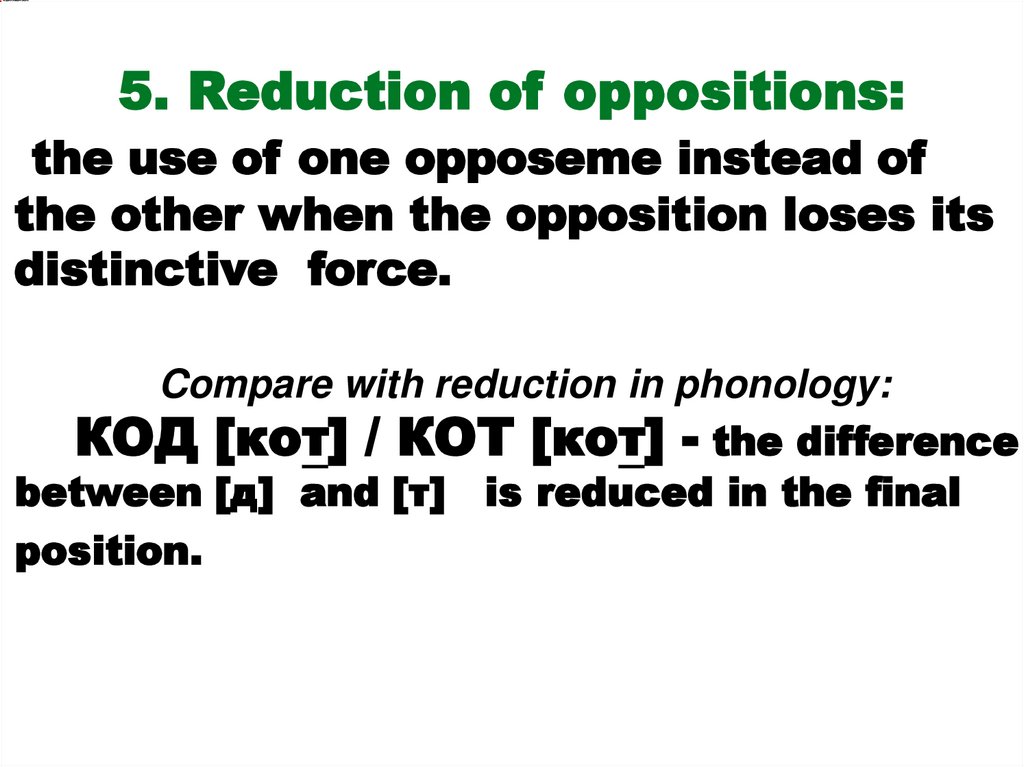
5. Reduction of oppositions:the use of one opposeme instead of
the other when the opposition loses its
distinctive force.
Compare with reduction in phonology:
КОД [кот] / КОТ [кот] - the difference
between [д] and [т] is reduced in the final
position.
23.
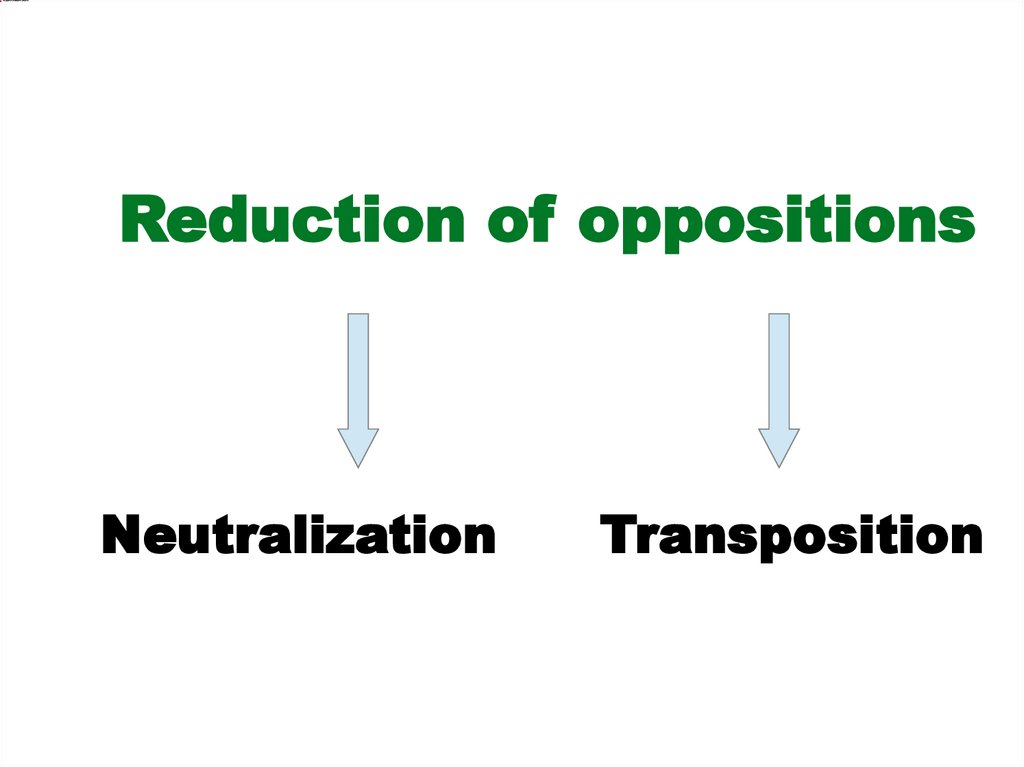
Reduction of oppositionsNeutralization
Transposition
24.
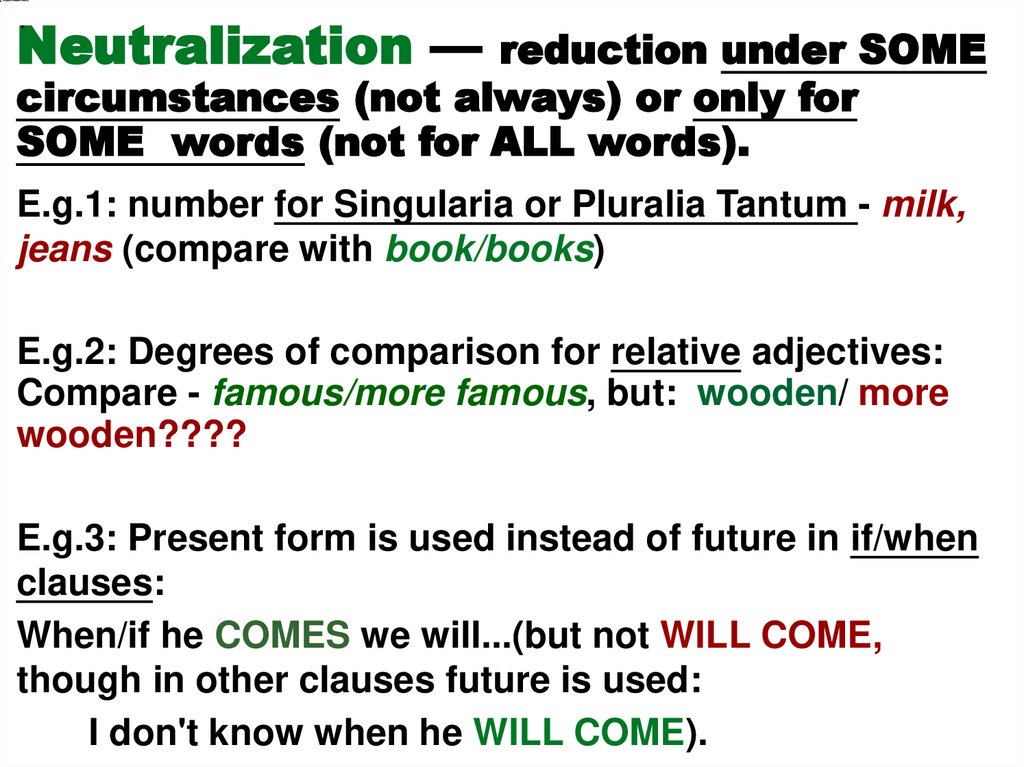
Neutralization — reduction under SOME.
circumstances (not always) or only for
SOME words (not for ALL words).
E.g.1: number for Singularia or Pluralia Tantum - milk,
jeans (compare with book/books)
E.g.2: Degrees of comparison for relative adjectives:
Compare - famous/more famous, but: wooden/ more
wooden????
E.g.3: Present form is used instead of future in if/when
clauses:
When/if he COMES we will...(but not WILL COME,
though in other clauses future is used:
I don't know when he WILL COME).
25.
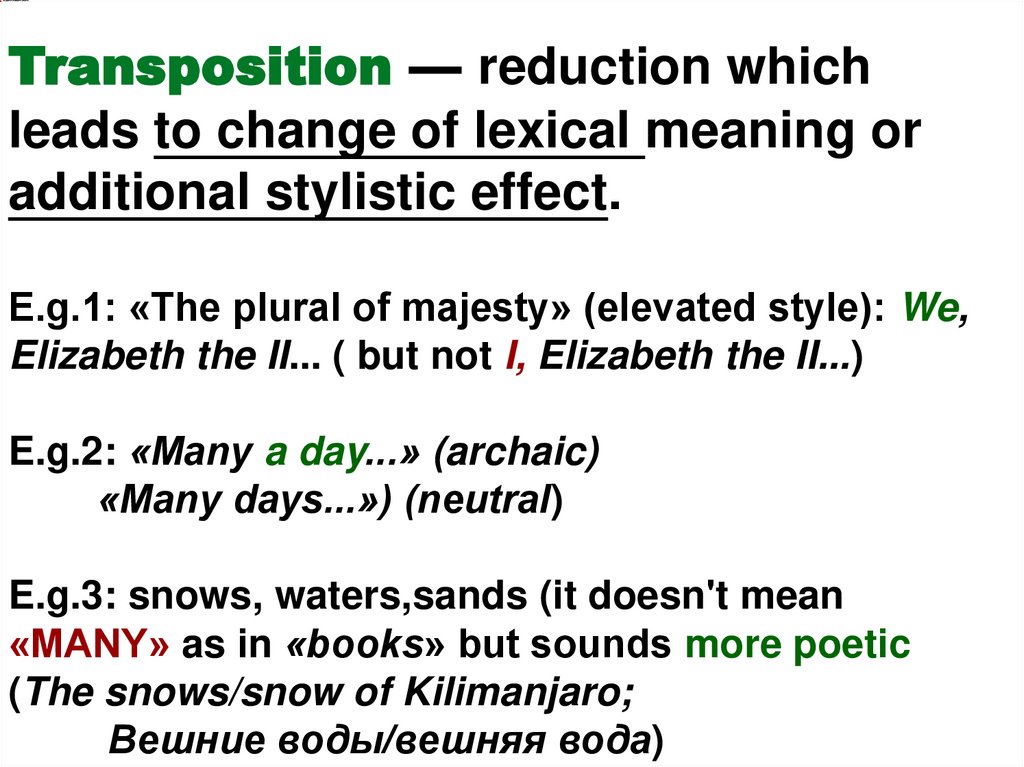
Transposition — reduction whichleads to change of lexical meaning or
additional stylistic effect.
E.g.1: «The plural of majesty» (elevated style): We,
Elizabeth the II... ( but not I, Elizabeth the II...)
E.g.2: «Many a day...» (archaic)
«Many days...») (neutral)
E.g.3: snows, waters,sands (it doesn't mean
«MANY» as in «books» but sounds more poetic
(The snows/snow of Kilimanjaro;
Вешние воды/вешняя вода)
26.
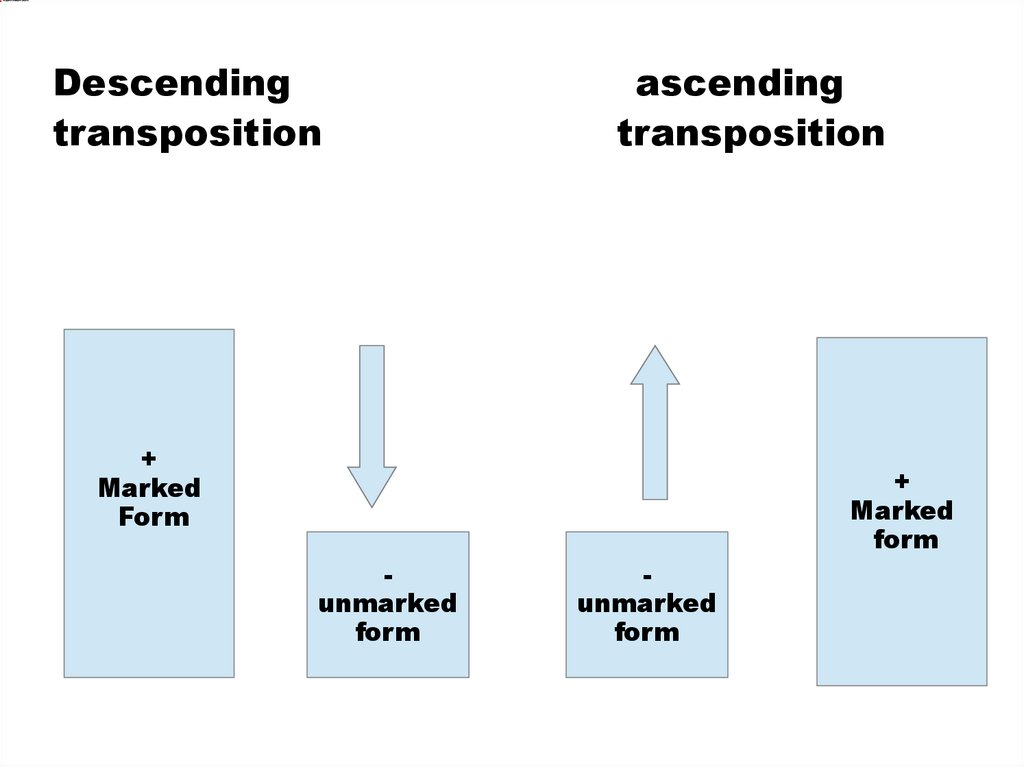
Descendingtransposition
ascending
transposition
+
Marked
Form
+
Marked
form
unmarked
form
unmarked
form
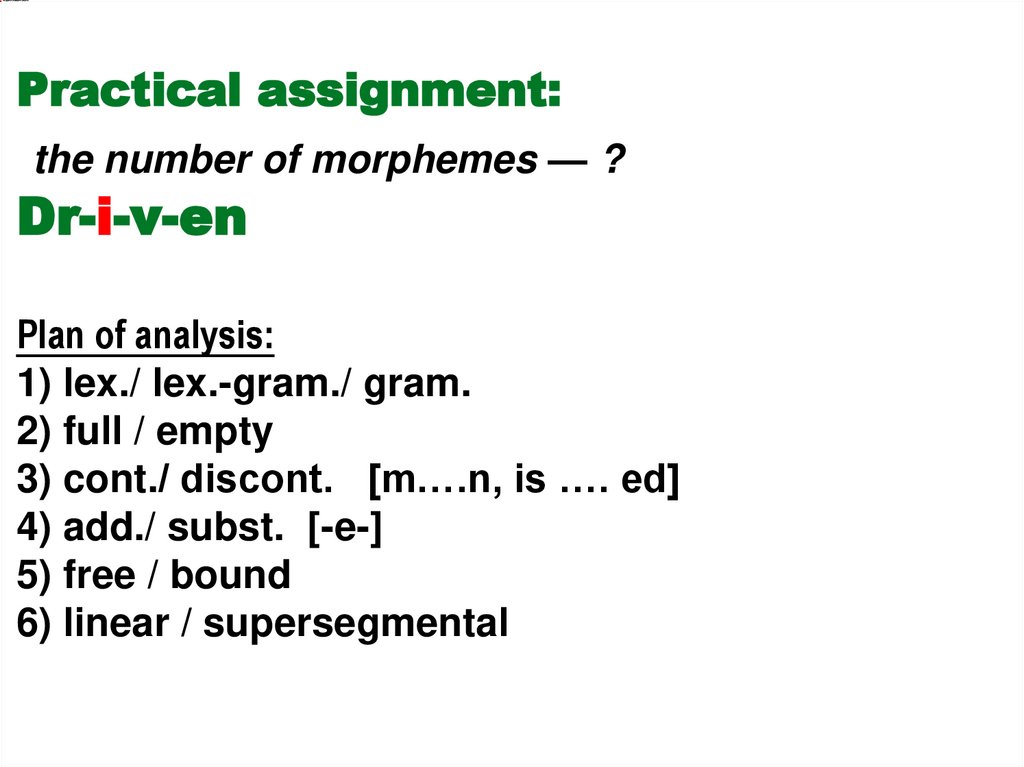
27. Practical assignment: the number of morphemes — ? Dr-i-v-en Plan of analysis: 1) lex./ lex.-gram./ gram. 2) full / empty 3)
cont./ discont. [m….n, is …. ed]4) add./ subst. [-e-]
5) free / bound
6) linear / supersegmental