
Similar presentations:







005bd8b3-0271-44d9-9a76-96ada210c88f
1.
The 18th Century: The IndustrialRevolution - Transforming Society,
Economy, and Technology
A pivotal era initiating mechanization, urban growth, and economic
transformation.
Belinskaya A.
Baranova D.
2.
Setting the Stage: Origins of the IndustrialRevolution
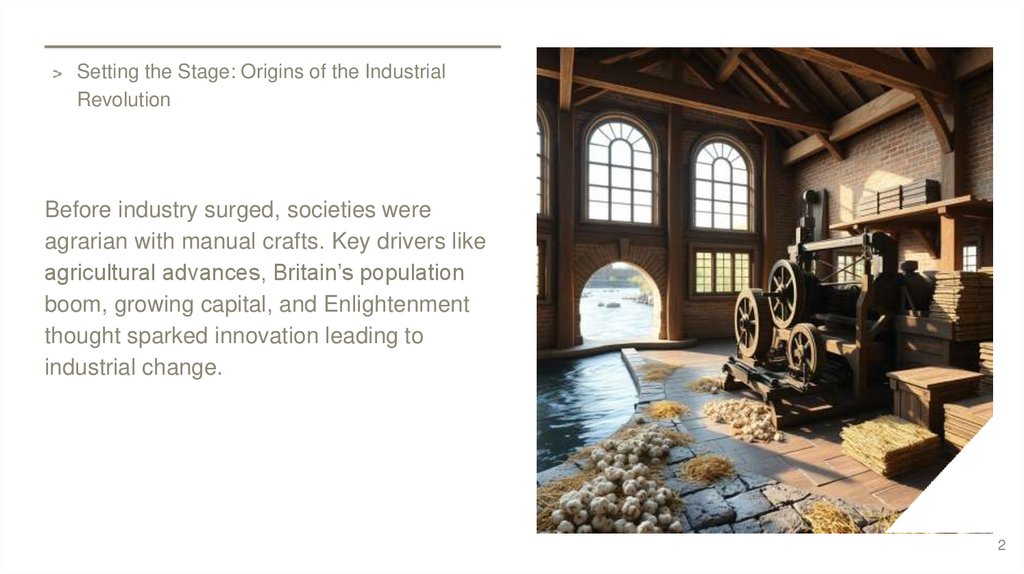
Before industry surged, societies were
agrarian with manual crafts. Key drivers like
agricultural advances, Britain’s population
boom, growing capital, and Enlightenment
thought sparked innovation leading to
industrial change.
2
3.
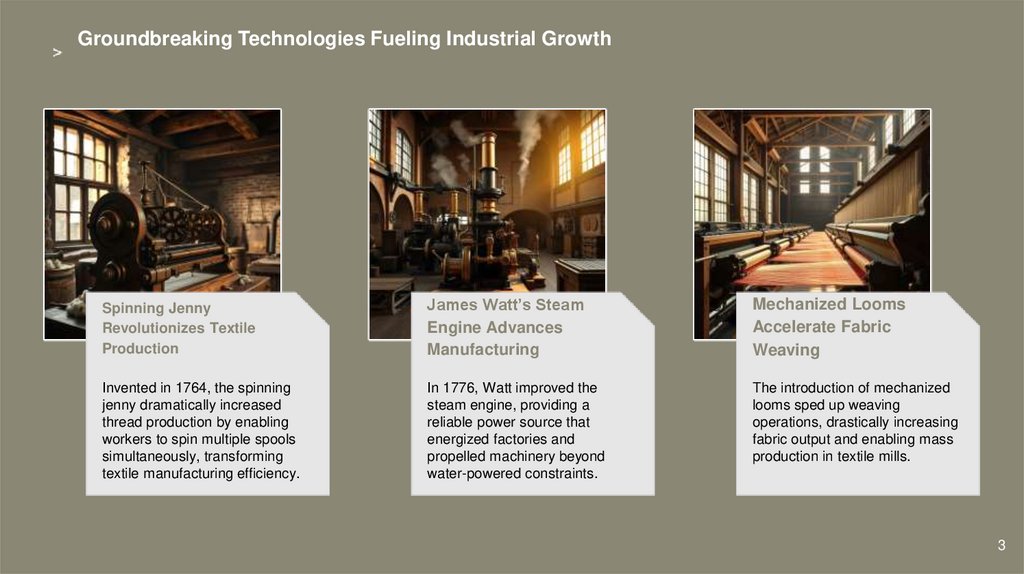
Groundbreaking Technologies Fueling Industrial GrowthSpinning Jenny
Revolutionizes Textile
Production
James Watt’s Steam
Engine Advances
Manufacturing
Mechanized Looms
Accelerate Fabric
Weaving
Invented in 1764, the spinning
jenny dramatically increased
thread production by enabling
workers to spin multiple spools
simultaneously, transforming
textile manufacturing efficiency.
In 1776, Watt improved the
steam engine, providing a
reliable power source that
energized factories and
propelled machinery beyond
water-powered constraints.
The introduction of mechanized
looms sped up weaving
operations, drastically increasing
fabric output and enabling mass
production in textile mills.
3
4.
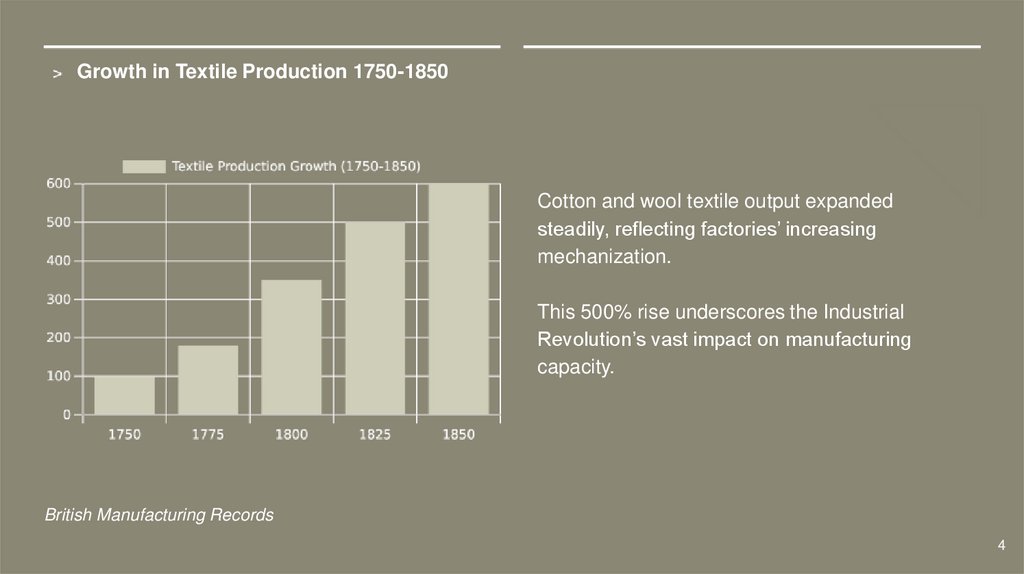
Growth in Textile Production 1750-1850Cotton and wool textile output expanded
steadily, reflecting factories’ increasing
mechanization.
This 500% rise underscores the Industrial
Revolution’s vast impact on manufacturing
capacity.
British Manufacturing Records
4
5.
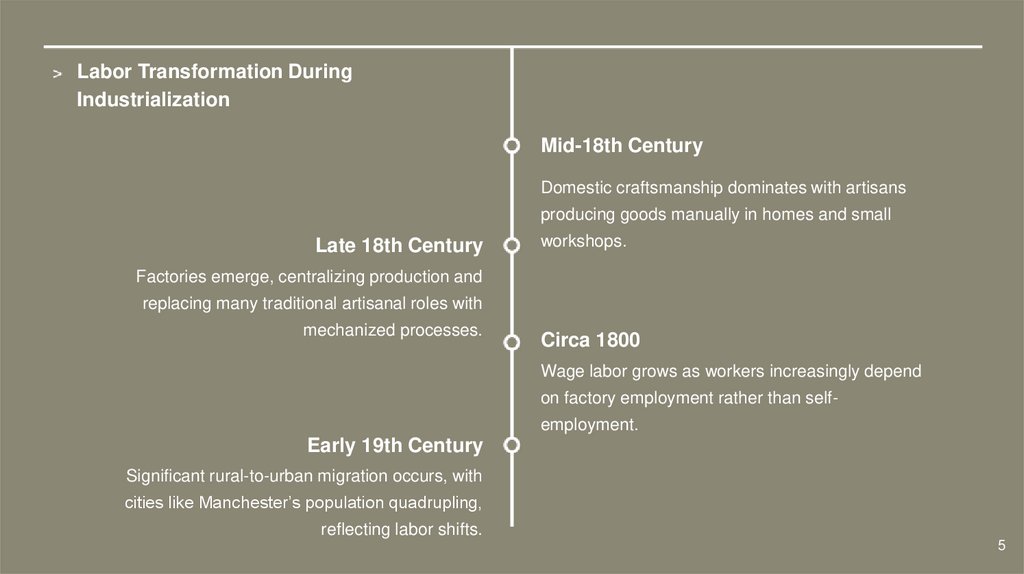
Labor Transformation DuringIndustrialization
Mid-18th Century
Domestic craftsmanship dominates with artisans
producing goods manually in homes and small
Late 18th Century
workshops.
Factories emerge, centralizing production and
replacing many traditional artisanal roles with
mechanized processes.
Circa 1800
Wage labor grows as workers increasingly depend
on factory employment rather than selfemployment.
Early 19th Century
Significant rural-to-urban migration occurs, with
cities like Manchester’s population quadrupling,
reflecting labor shifts.
5
6.
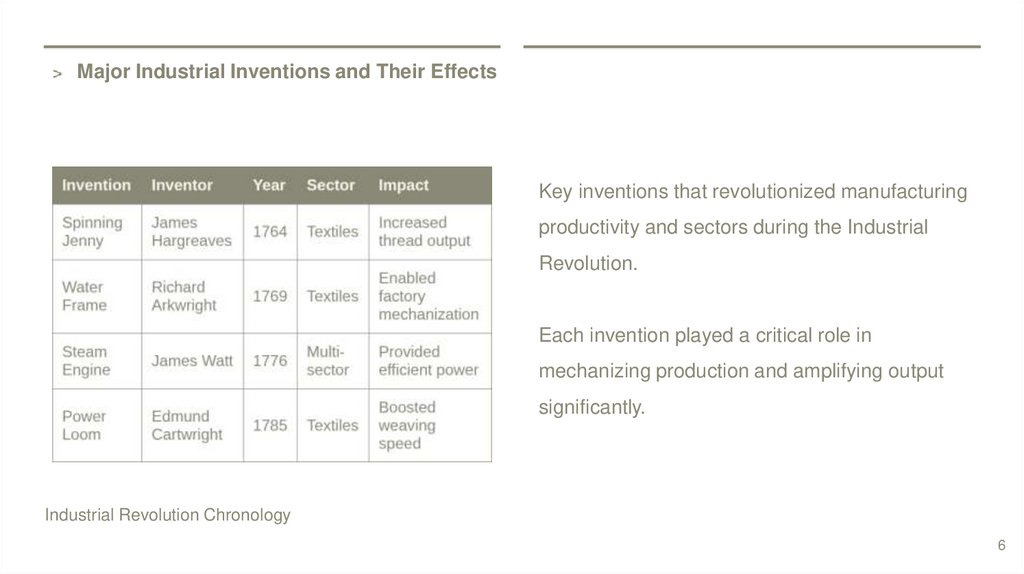
Major Industrial Inventions and Their EffectsKey inventions that revolutionized manufacturing
productivity and sectors during the Industrial
Revolution.
Each invention played a critical role in
mechanizing production and amplifying output
significantly.
Industrial Revolution Chronology
6
7.
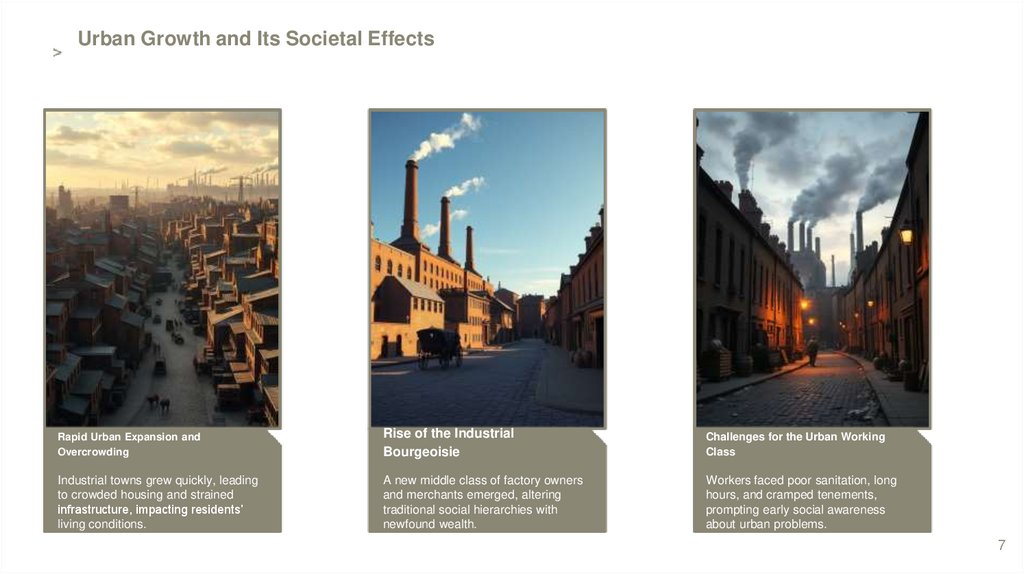
Urban Growth and Its Societal EffectsRapid Urban Expansion and
Overcrowding
Rise of the Industrial
Bourgeoisie
Challenges for the Urban Working
Class
Industrial towns grew quickly, leading
to crowded housing and strained
infrastructure, impacting residents’
living conditions.
A new middle class of factory owners
and merchants emerged, altering
traditional social hierarchies with
newfound wealth.
Workers faced poor sanitation, long
hours, and cramped tenements,
prompting early social awareness
about urban problems.
7
8.
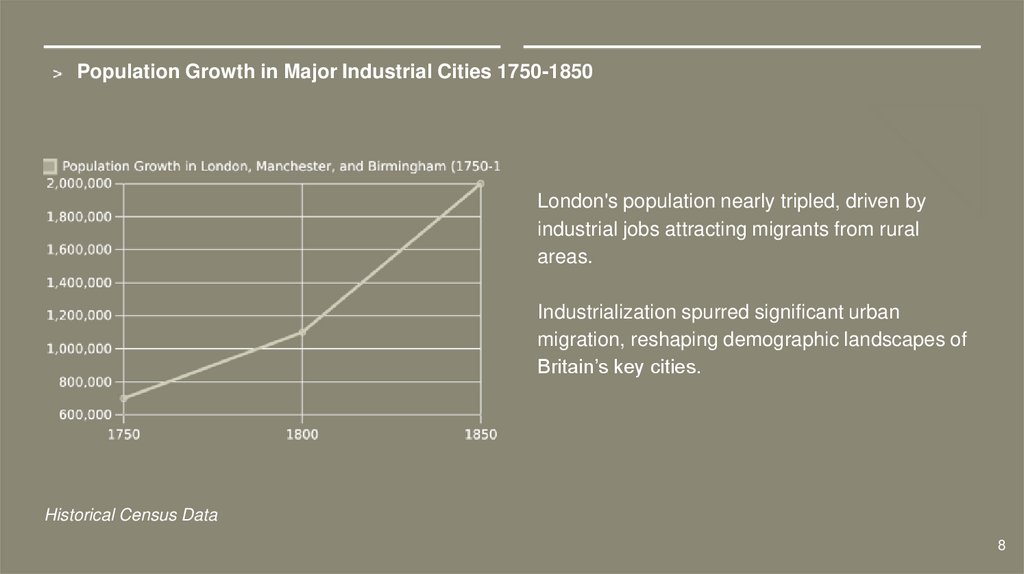
Population Growth in Major Industrial Cities 1750-1850London's population nearly tripled, driven by
industrial jobs attracting migrants from rural
areas.
Industrialization spurred significant urban
migration, reshaping demographic landscapes of
Britain’s key cities.
Historical Census Data
8
9.
Economic Impacts: Capitalism and Global TradeExpansion of Capitalist Manufacturing
Global Trade Networks Flourish
Industrial methods increased production scales,
fostering capitalist market growth and factory-based
economies.
British exports of manufactured goods expanded
worldwide, integrating global markets and
fostering imperial connections.
Britain as 'Workshop of the World'
Dominance in industrial output positioned Britain
as a global industrial leader and economic
powerhouse.
9
10.
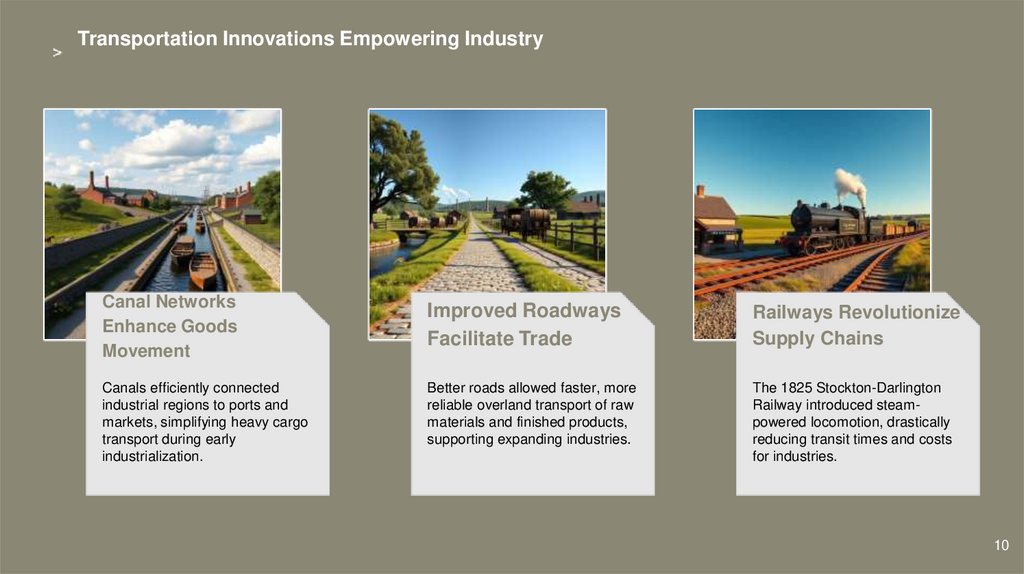
Transportation Innovations Empowering IndustryCanal Networks
Enhance Goods
Movement
Canals efficiently connected
industrial regions to ports and
markets, simplifying heavy cargo
transport during early
industrialization.
Improved Roadways
Facilitate Trade
Railways Revolutionize
Supply Chains
Better roads allowed faster, more
reliable overland transport of raw
materials and finished products,
supporting expanding industries.
The 1825 Stockton-Darlington
Railway introduced steampowered locomotion, drastically
reducing transit times and costs
for industries.
10
11.
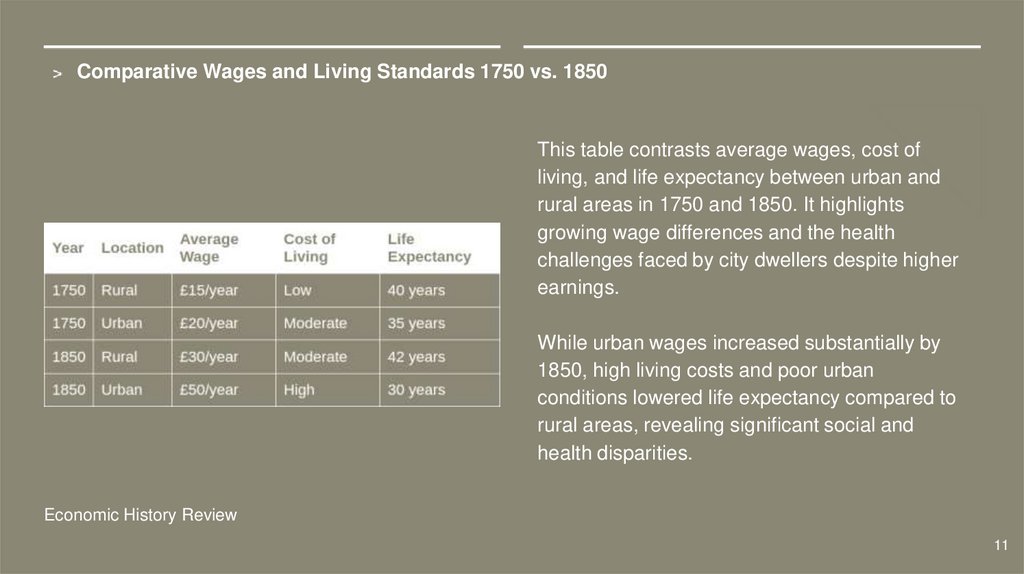
Comparative Wages and Living Standards 1750 vs. 1850This table contrasts average wages, cost of
living, and life expectancy between urban and
rural areas in 1750 and 1850. It highlights
growing wage differences and the health
challenges faced by city dwellers despite higher
earnings.
While urban wages increased substantially by
1850, high living costs and poor urban
conditions lowered life expectancy compared to
rural areas, revealing significant social and
health disparities.
Economic History Review
11
12.
Environmental and Health ConsequencesThe surge in industrial production caused severe
air pollution, notably from coal-fired factories,
leading to widespread smog that compromised
urban air quality and residents’ respiratory health.
Waterways became heavily contaminated from
industrial waste disposal, adversely affecting
drinking water sources and contributing to
outbreaks of waterborne diseases in growing
industrial towns.
Factory workers suffered increased incidence of
occupational illnesses due to unsafe working
environments, long hours, and exposure to
hazardous materials without adequate protections.
Infant mortality rates rose significantly in industrial
cities due to overcrowding, poor sanitation, and
limited healthcare infrastructure during the late
18th and early 19th centuries.
12
13.
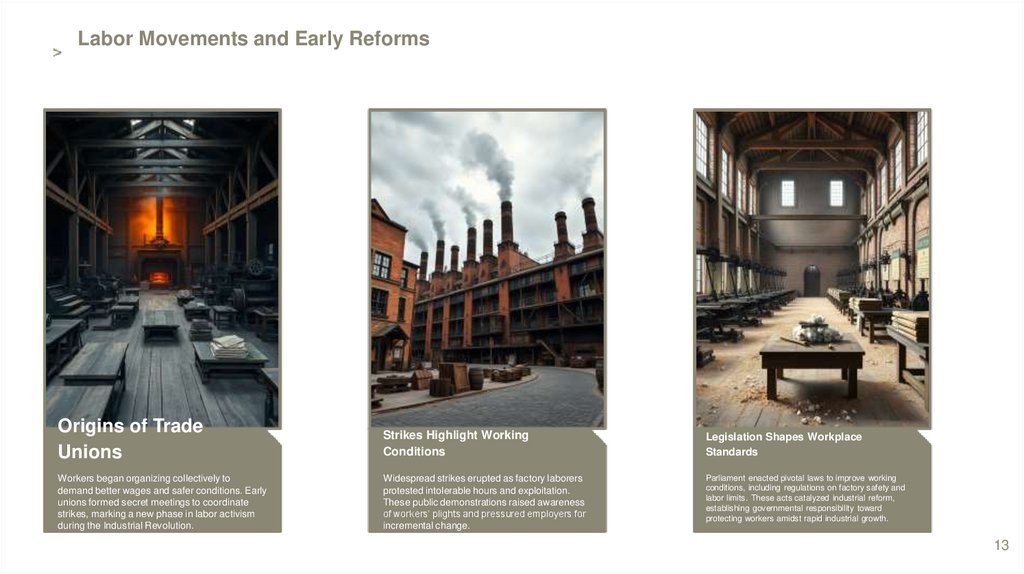
Labor Movements and Early ReformsOrigins of Trade
Unions
Strikes Highlight Working
Conditions
Legislation Shapes Workplace
Standards
Workers began organizing collectively to
demand better wages and safer conditions. Early
unions formed secret meetings to coordinate
strikes, marking a new phase in labor activism
during the Industrial Revolution.
Widespread strikes erupted as factory laborers
protested intolerable hours and exploitation.
These public demonstrations raised awareness
of workers’ plights and pressured employers for
incremental change.
Parliament enacted pivotal laws to improve working
conditions, including regulations on factory safety and
labor limits. These acts catalyzed industrial reform,
establishing governmental responsibility toward
protecting workers amidst rapid industrial growth.
13
14.
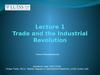
Industrial Output and GDP Growth in Britain 1700-1850Post-1750, industrial growth accelerated rapidly,
closely paralleling increases in national GDP,
underscoring the Industrial Revolution's
economic significance.
The data confirms that industrial expansion
directly fueled Britain's rise as a global economic
power through sustained growth in production
and wealth generation.
British Economic Statistics, 19th Century
14
15.
Enduring Legacy of the Industrial RevolutionThe Industrial Revolution redefined
industrial production, urban life, and
economic systems, establishing
foundations for the modern world and
prompting ongoing social and
technological developments.