 medicine
Similar presentations:






Physiology of aging and prevention of skin aging
1. physiology of aging and prevention of skin aging
Completed by Golovina Alisa, a student in Group 302. Why Does Skin Age? The Big Picture
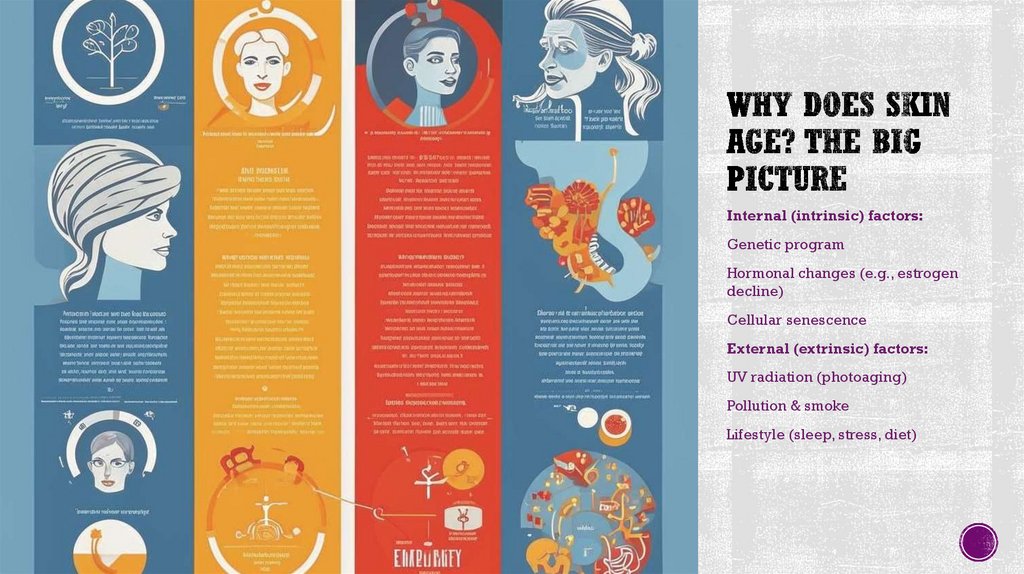
Internal (intrinsic) factors:Genetic program
Hormonal changes (e.g., estrogen
decline)
Cellular senescence
External (extrinsic) factors:
UV radiation (photoaging)
Pollution & smoke
Lifestyle (sleep, stress, diet)
3. Key Cellular Mechanisms of Skin Aging
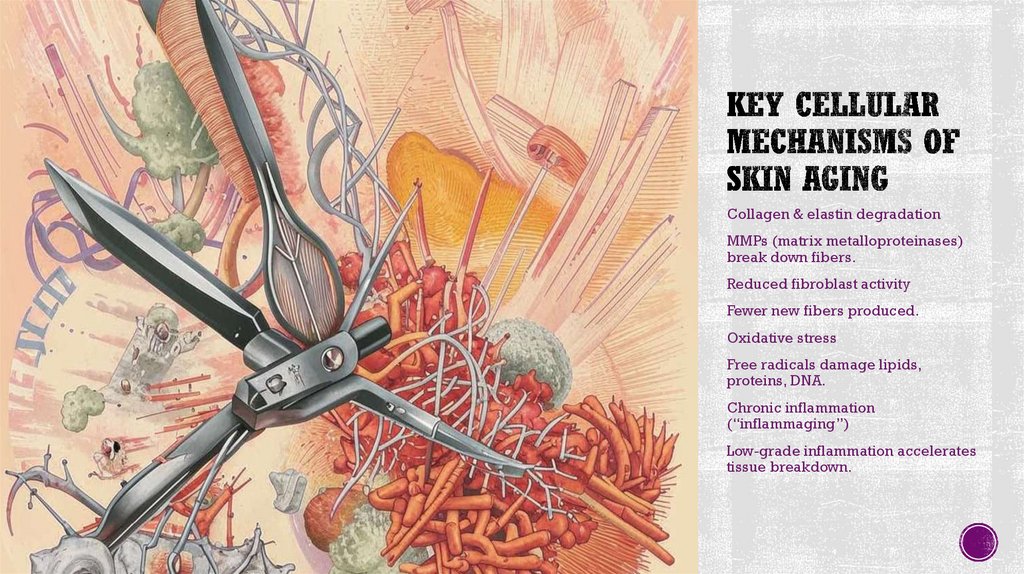
Collagen & elastin degradationMMPs (matrix metalloproteinases)
break down fibers.
Reduced fibroblast activity
Fewer new fibers produced.
Oxidative stress
Free radicals damage lipids,
proteins, DNA.
Chronic inflammation
(“inflammaging”)
Low-grade inflammation accelerates
tissue breakdown.
4. The Role of UV Radiation (Photoaging)
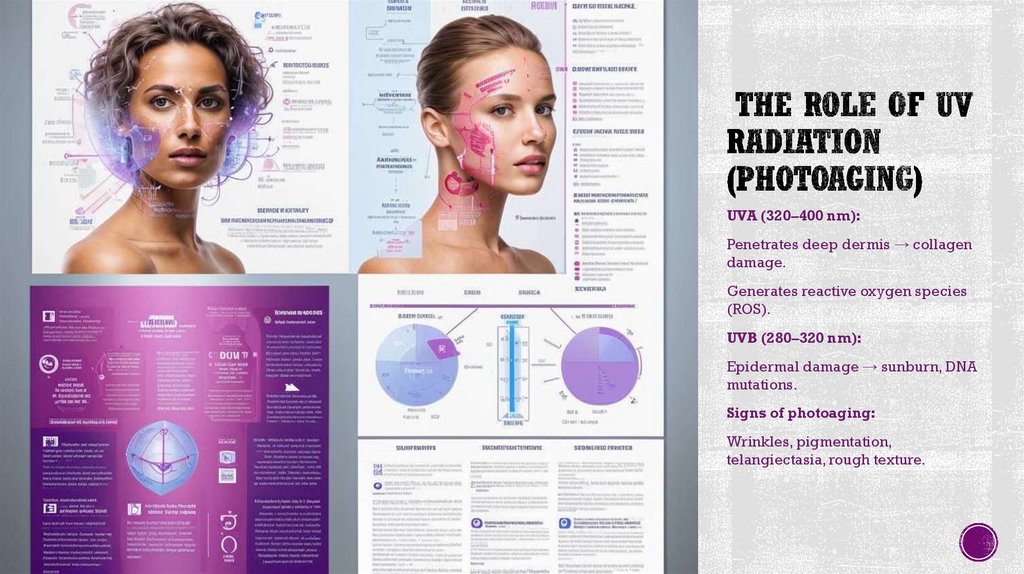
UVA (320–400 nm):Penetrates deep dermis → collagen
damage.
Generates reactive oxygen species
(ROS).
UVB (280–320 nm):
Epidermal damage → sunburn, DNA
mutations.
Signs of photoaging:
Wrinkles, pigmentation,
telangiectasia, rough texture.
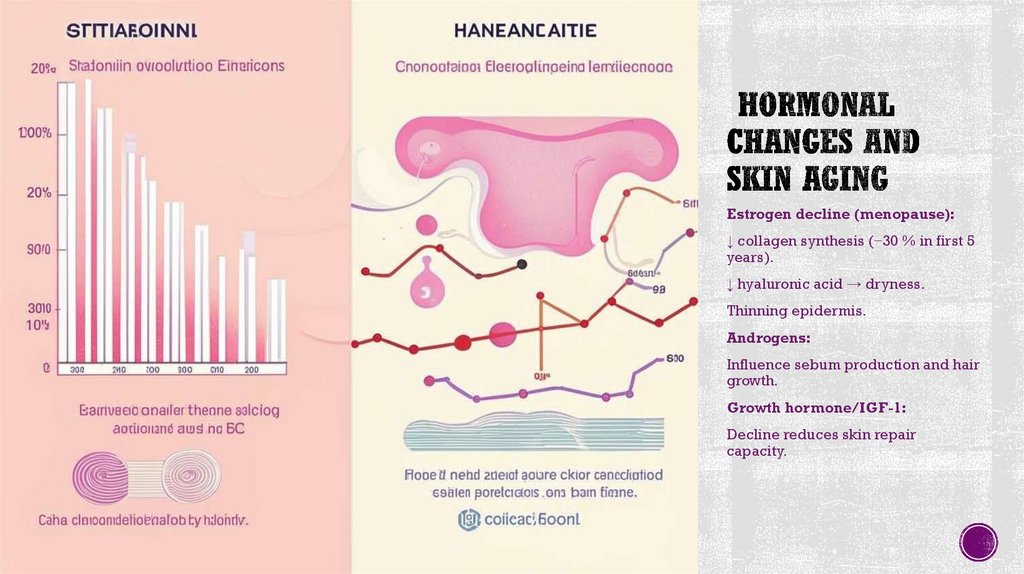
5. Hormonal Changes and Skin Aging
Estrogen decline (menopause):↓ collagen synthesis (−30 % in first 5
years).
↓ hyaluronic acid → dryness.
Thinning epidermis.
Androgens:
Influence sebum production and hair
growth.
Growth hormone/IGF-1:
Decline reduces skin repair
capacity.
6. Lifestyle Factors: What Accelerates Aging?
Smoking:Vasoconstriction → hypoxia →
premature wrinkles.
Chronic stress:
Cortisol → collagen breakdown.
Poor sleep:
Reduced repair (growth hormone
peak at night).
High sugar diet:
AGEs (advanced glycation
end-products) cross-link collagen.
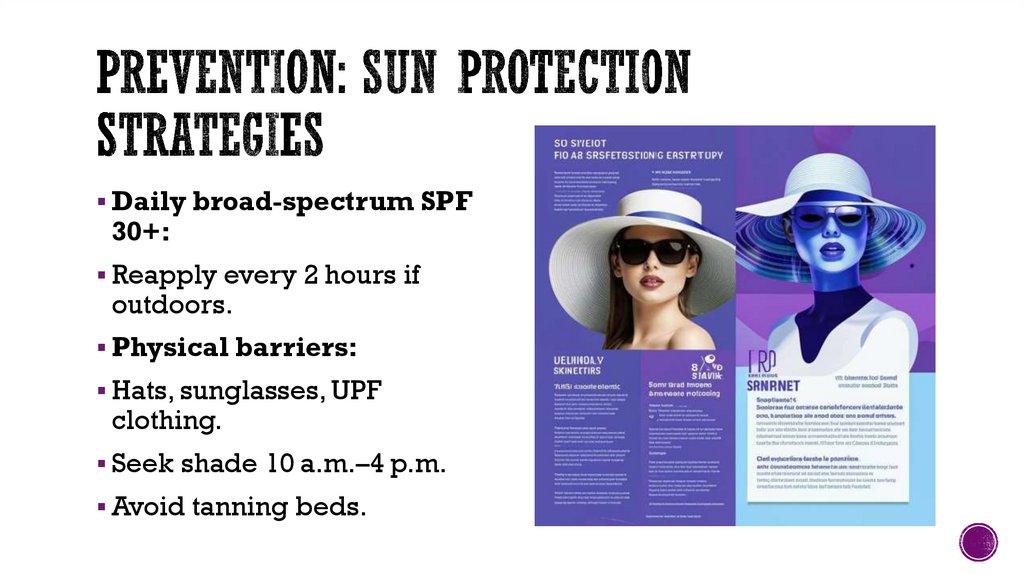
7. Prevention: Sun Protection Strategies
Daily broad-spectrum SPF30+:
Reapply every 2 hours if
outdoors.
Physical barriers:
Hats, sunglasses, UPF
clothing.
Seek shade 10 a.m.–4 p.m.
Avoid tanning beds.
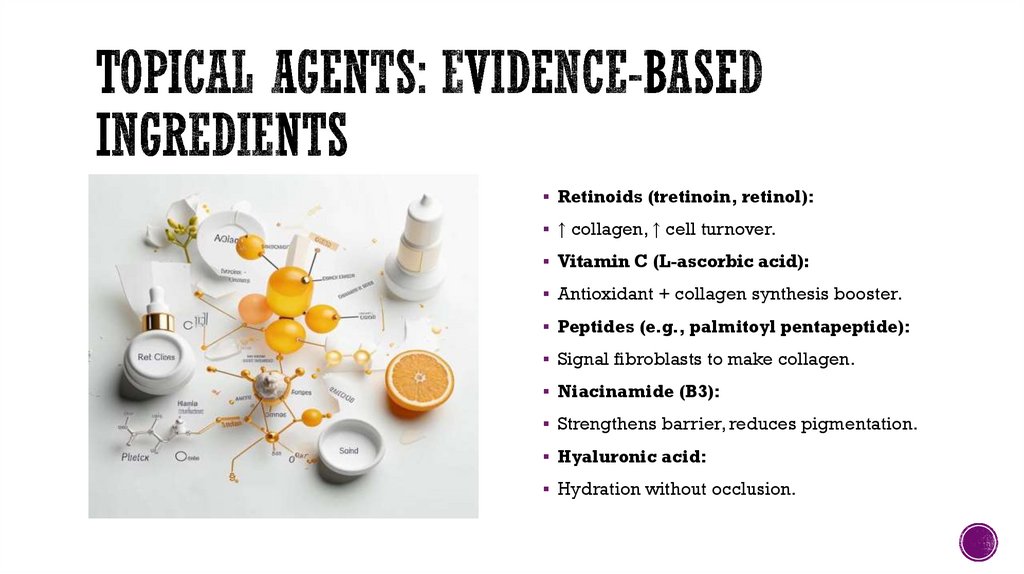
8. Topical Agents: Evidence‑Based Ingredients
Retinoids (tretinoin, retinol):↑ collagen, ↑ cell turnover.
Vitamin C (L-ascorbic acid):
Antioxidant + collagen synthesis booster.
Peptides (e.g., palmitoyl pentapeptide):
Signal fibroblasts to make collagen.
Niacinamide (B3):
Strengthens barrier, reduces pigmentation.
Hyaluronic acid:
Hydration without occlusion.
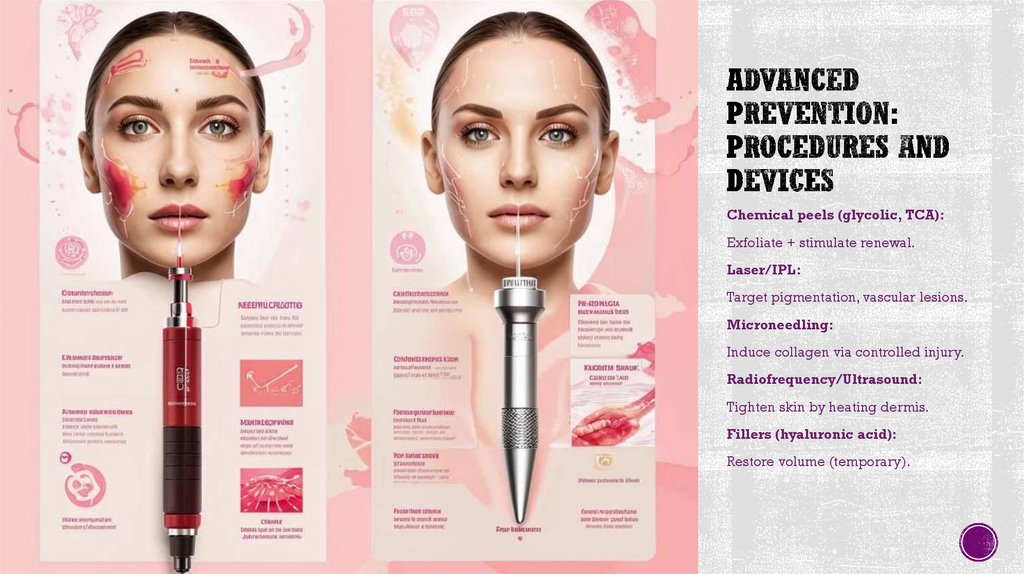
9. Advanced Prevention: Procedures and Devices
Chemical peels (glycolic, TCA):Exfoliate + stimulate renewal.
Laser/IPL:
Target pigmentation, vascular lesions.
Microneedling:
Induce collagen via controlled injury.
Radiofrequency/Ultrasound:
Tighten skin by heating dermis.
Fillers (hyaluronic acid):
Restore volume (temporary).
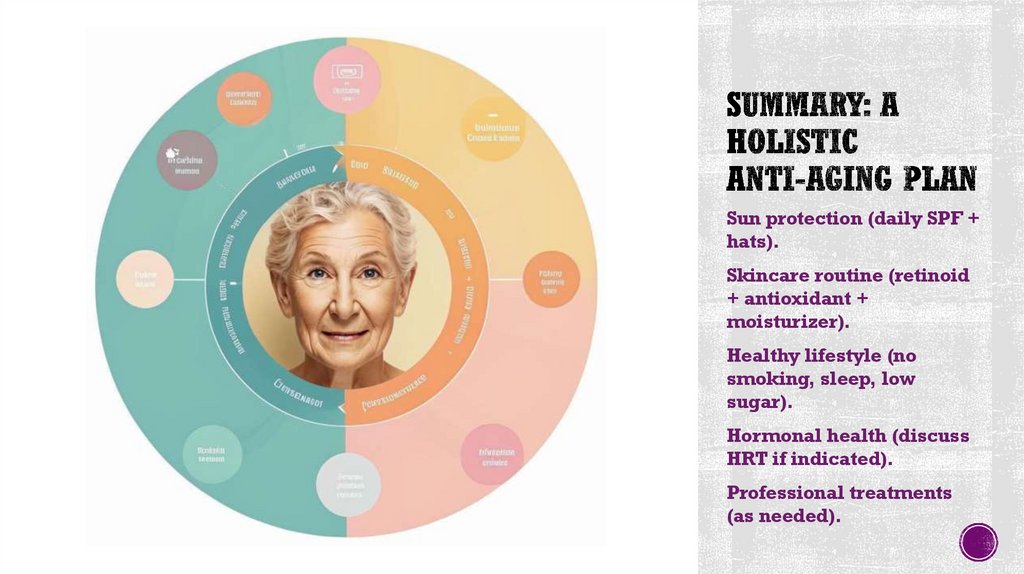
10. Summary: A Holistic Anti‑Aging Plan
Sun protection (daily SPF +hats).
Skincare routine (retinoid
+ antioxidant +
moisturizer).
Healthy lifestyle (no
smoking, sleep, low
sugar).
Hormonal health (discuss
HRT if indicated).
Professional treatments
(as needed).