 english
Similar presentations:








Structurally Dependent Use of Forms Expressing Unreality
1.
Structurally Dependent Use of FormsExpressing Unreality
The Use of Forms Expressing
Unreality (the Oblique Moods) in
OBJECT CLAUSES
2.
OBJECT CLAUSEIn OBJECT CLAUSES
the use of different forms of
the predicate depends on the
LEXICAL character of the
predicate verb in the principal
clause
3.
OBJECT CLAUSEAs a rule, the Indicative Mood
is used in Object Clauses
e.g.: We know (that) he is doing very well
in his studies.
4.
OBJECT CLAUSEHowever, after certain verbs
and expressions the Oblique
Moods are used in Object
Clauses
5.
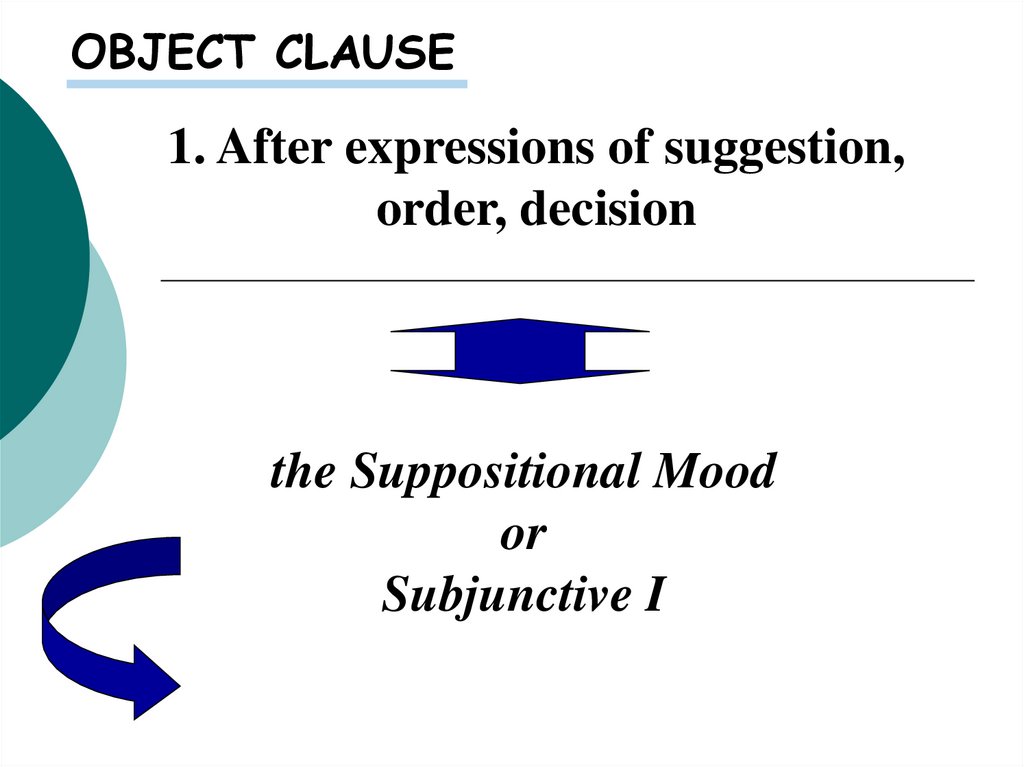
OBJECT CLAUSE1. After expressions of suggestion,
order, decision
the Suppositional Mood
or
Subjunctive I
6.
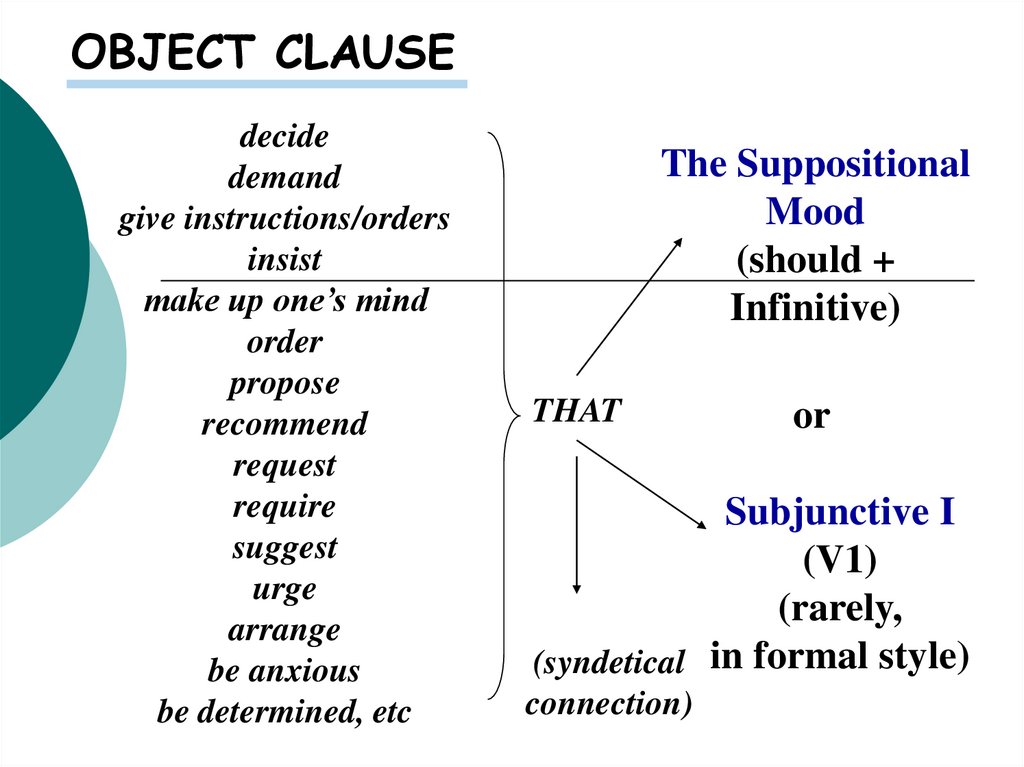
OBJECT CLAUSEdecide
demand
give instructions/orders
insist
make up one’s mind
order
propose
recommend
request
require
suggest
urge
arrange
be anxious
be determined, etc
The Suppositional
Mood
(should +
Infinitive)
THAT
or
Subjunctive I
(V1)
(rarely,
(syndetical in formal style)
connection)
7.
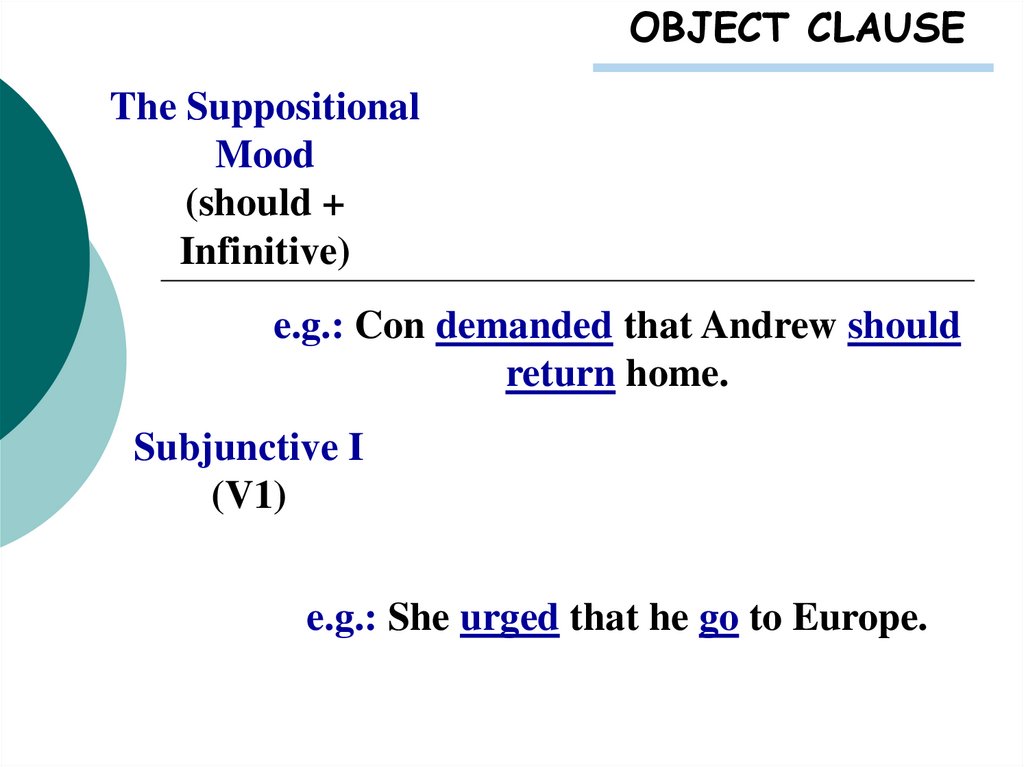
OBJECT CLAUSEThe Suppositional
Mood
(should +
Infinitive)
e.g.: Con demanded that Andrew should
return home.
Subjunctive I
(V1)
e.g.: She urged that he go to Europe.
8.
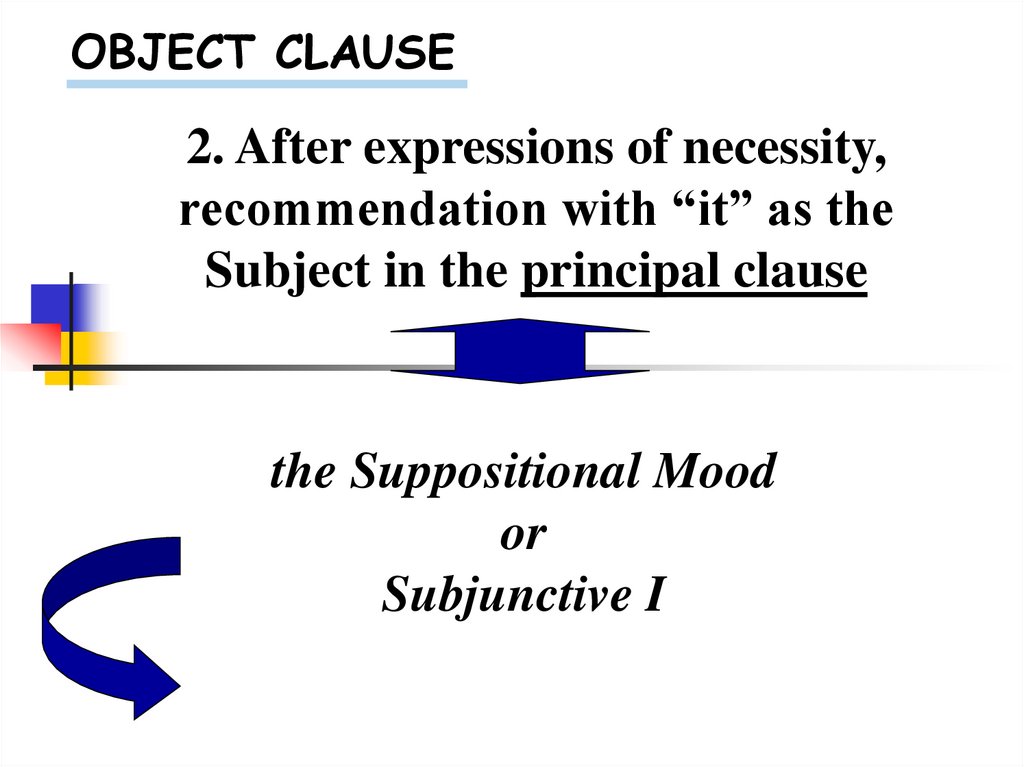
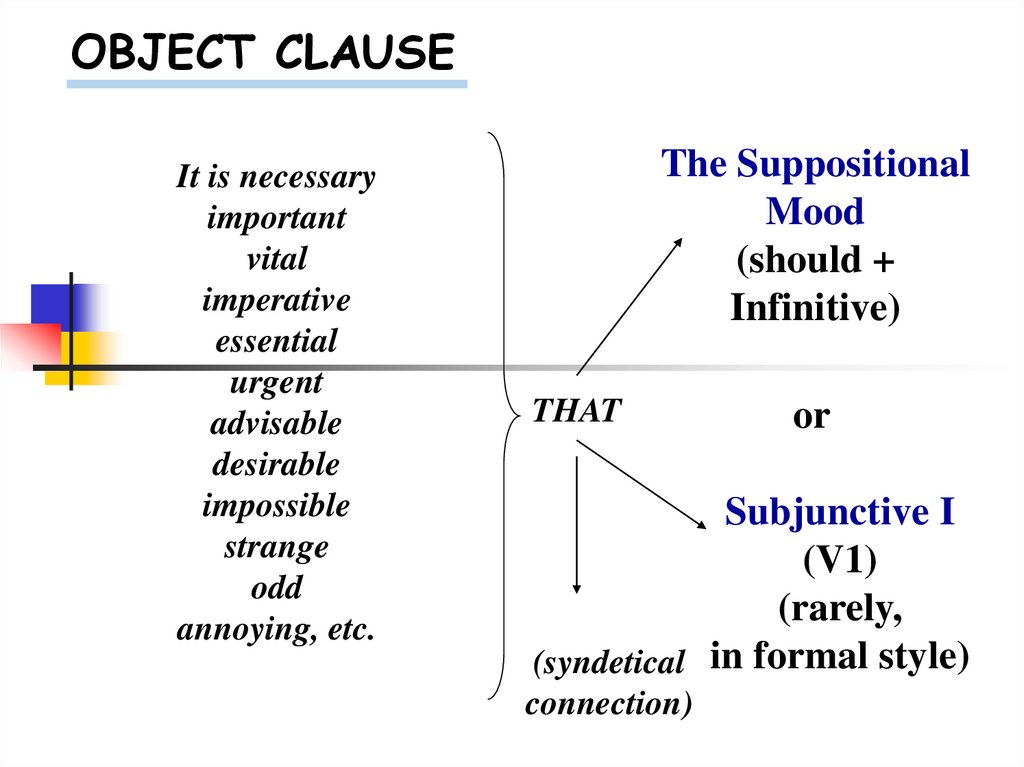
OBJECT CLAUSE2. After expressions of necessity,
recommendation with “it” as the
Subject in the principal clause
the Suppositional Mood
or
Subjunctive I
9.
OBJECT CLAUSEIt is necessary
important
vital
imperative
essential
urgent
advisable
desirable
impossible
strange
odd
annoying, etc.
The Suppositional
Mood
(should +
Infinitive)
THAT
or
Subjunctive I
(V1)
(rarely,
(syndetical in formal style)
connection)
10.
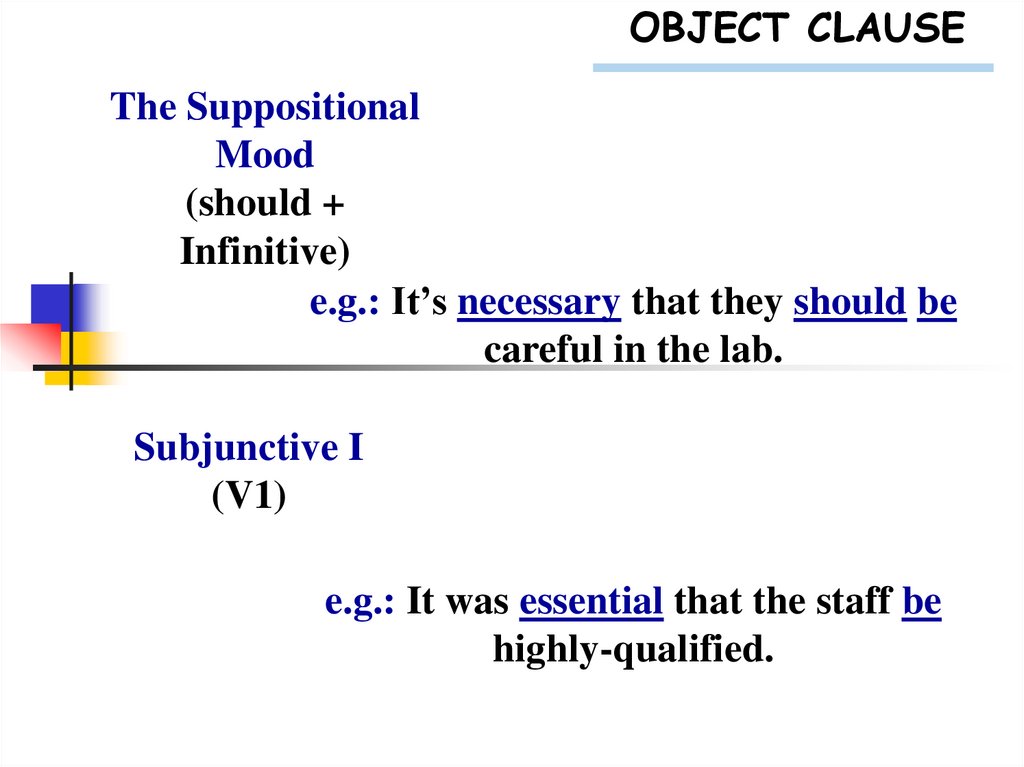
OBJECT CLAUSEThe Suppositional
Mood
(should +
Infinitive)
e.g.: It’s necessary that they should be
careful in the lab.
Subjunctive I
(V1)
e.g.: It was essential that the staff be
highly-qualified.
11.
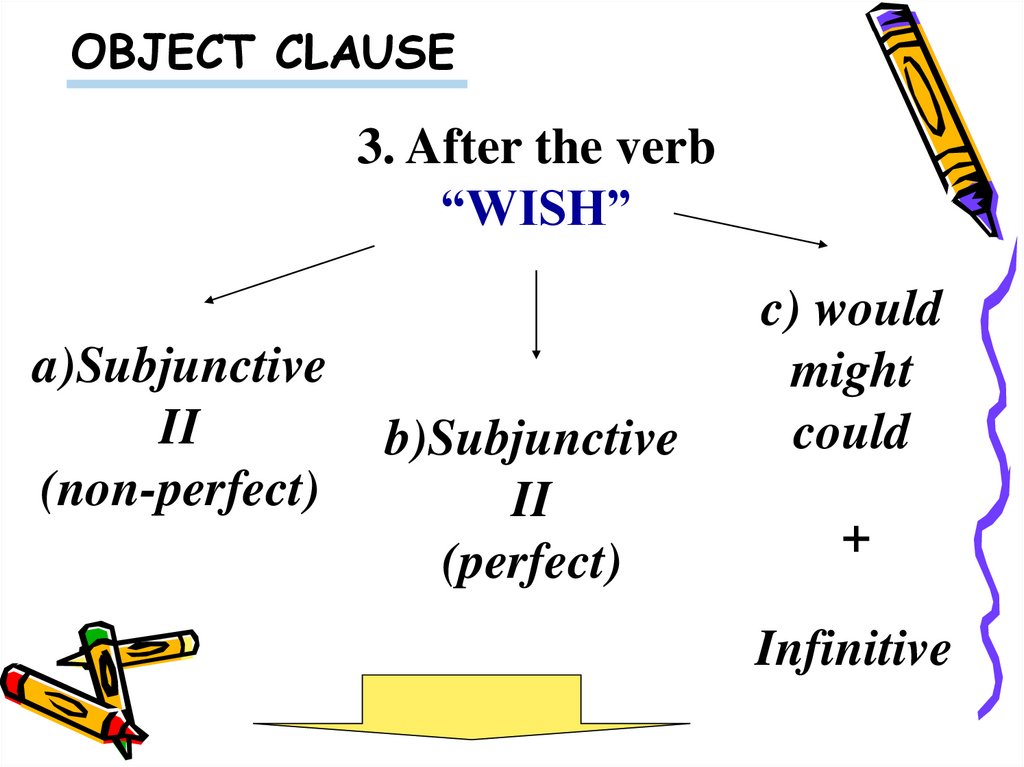
OBJECT CLAUSE3. After the verb
“WISH”
a)Subjunctive
II
(non-perfect)
b)Subjunctive
II
(perfect)
c) would
might
could
+
Infinitive
12.
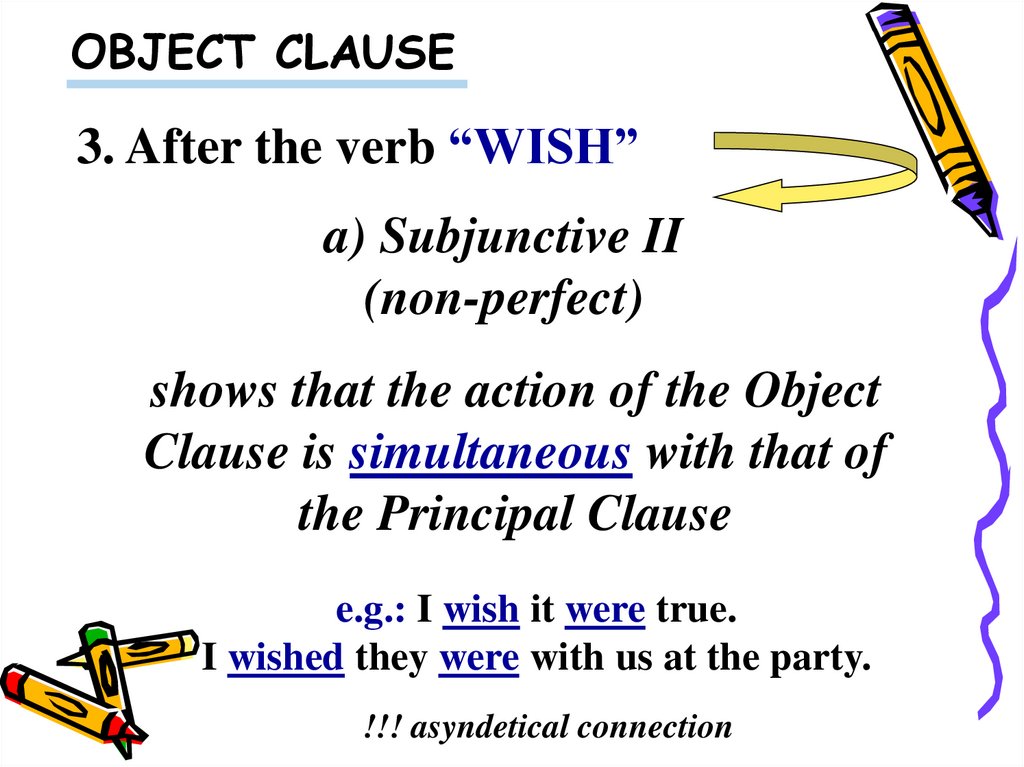
OBJECT CLAUSE3. After the verb “WISH”
a) Subjunctive II
(non-perfect)
shows that the action of the Object
Clause is simultaneous with that of
the Principal Clause
e.g.: I wish it were true.
I wished they were with us at the party.
!!! asyndetical connection
13.
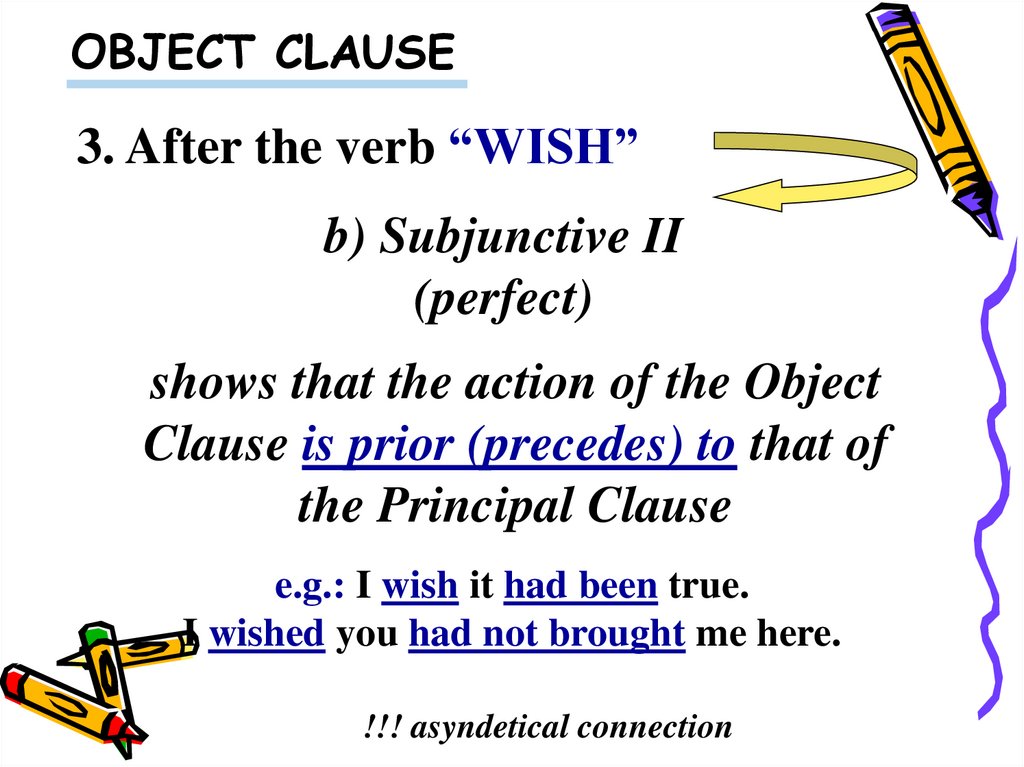
OBJECT CLAUSE3. After the verb “WISH”
b) Subjunctive II
(perfect)
shows that the action of the Object
Clause is prior (precedes) to that of
the Principal Clause
e.g.: I wish it had been true.
I wished you had not brought me here.
!!! asyndetical connection
14.
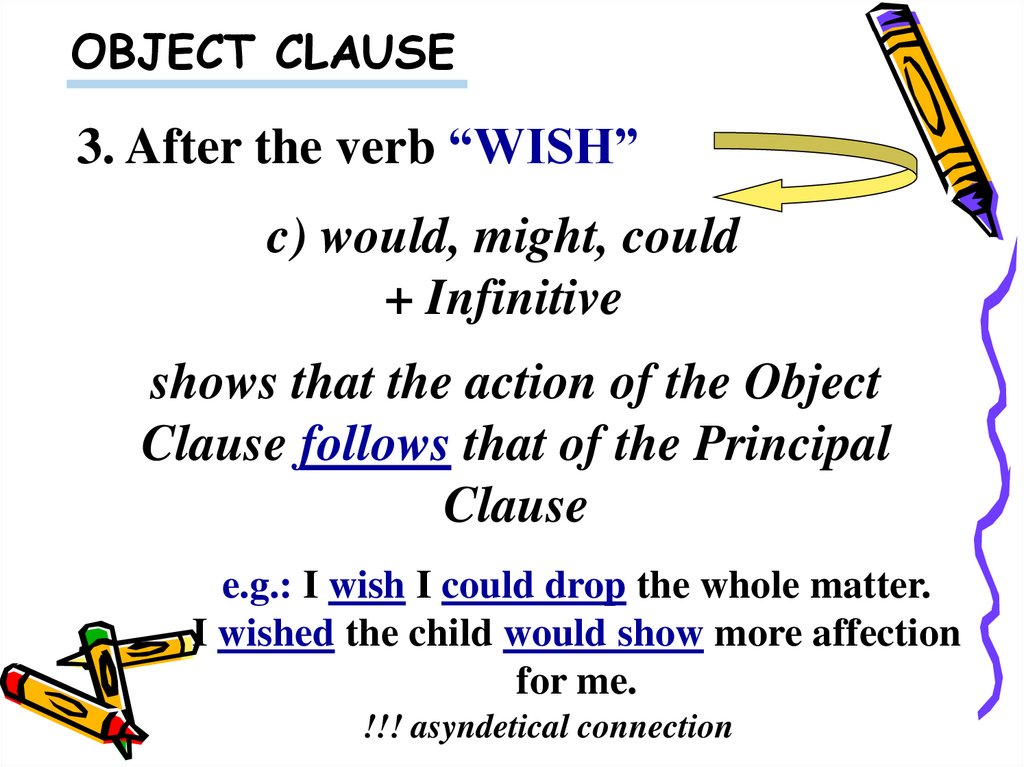
OBJECT CLAUSE3. After the verb “WISH”
c) would, might, could
+ Infinitive
shows that the action of the Object
Clause follows that of the Principal
Clause
e.g.: I wish I could drop the whole matter.
I wished the child would show more affection
for me.
!!! asyndetical connection
15.
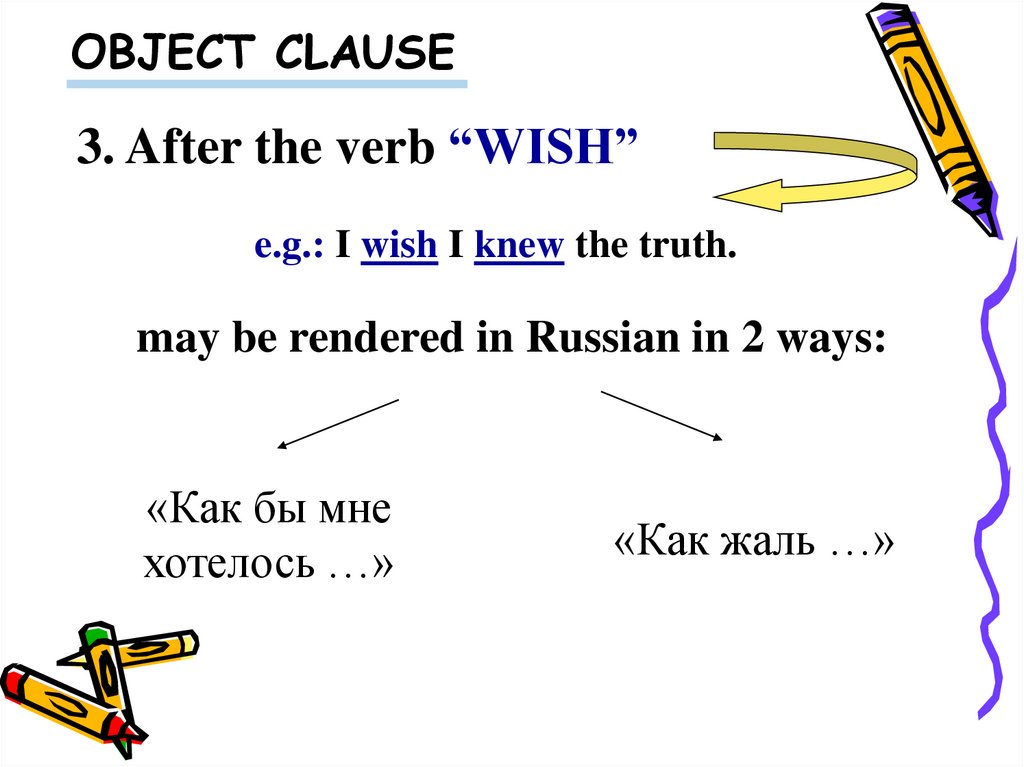
OBJECT CLAUSE3. After the verb “WISH”
e.g.: I wish I knew the truth.
may be rendered in Russian in 2 ways:
«Как бы мне
хотелось …»
«Как жаль …»
16.
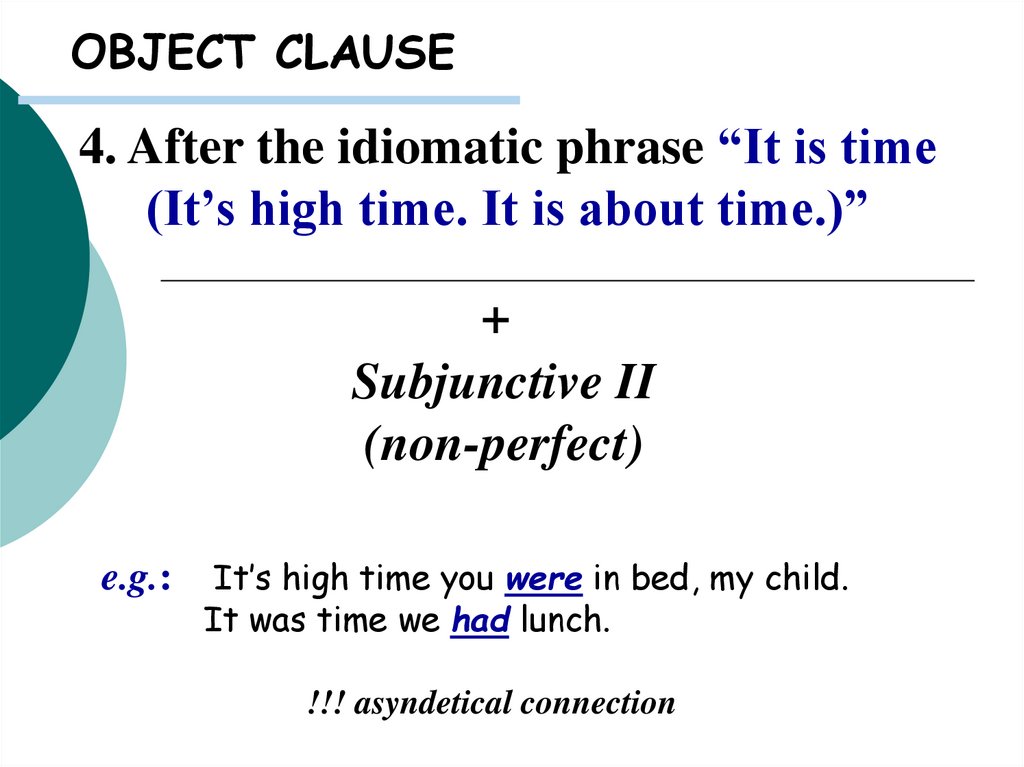
OBJECT CLAUSE4. After the idiomatic phrase “It is time
(It’s high time. It is about time.)”
+
Subjunctive II
(non-perfect)
e.g.:
It’s high time you were in bed, my child.
It was time we had lunch.
!!! asyndetical connection
17.
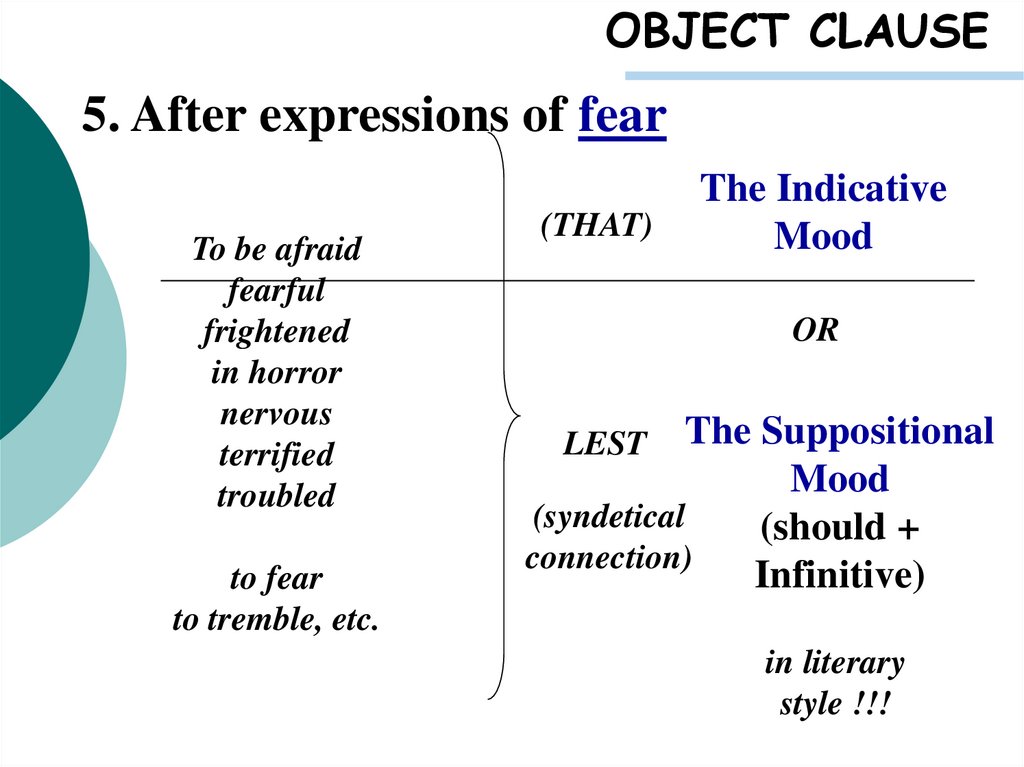
OBJECT CLAUSE5. After expressions of fear
To be afraid
fearful
frightened
in horror
nervous
terrified
troubled
to fear
to tremble, etc.
(THAT)
The Indicative
Mood
OR
The Suppositional
Mood
(syndetical
(should +
connection)
Infinitive)
LEST
in literary
style !!!
18.
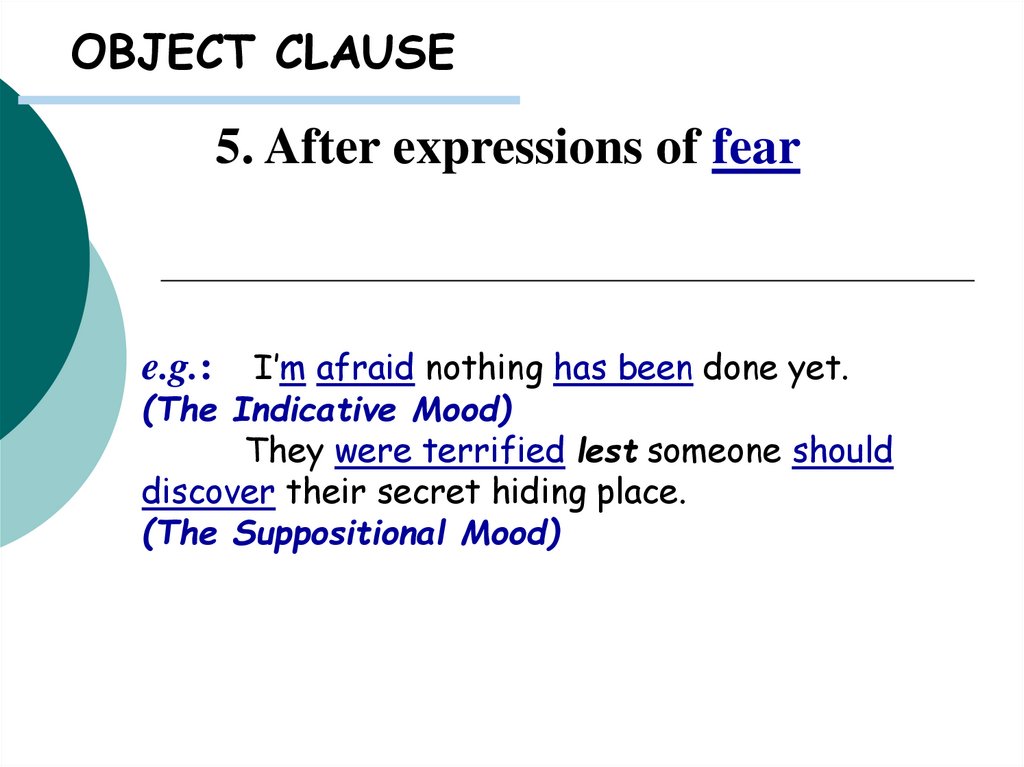
OBJECT CLAUSE5. After expressions of fear
I’m afraid nothing has been done yet.
(The Indicative Mood)
They were terrified lest someone should
discover their secret hiding place.
(The Suppositional Mood)
e.g.: