 english
Similar presentations:






Morphological category of the VERB establishes the connection between the action expressed by the predicate verb and reality
1.
MOODMorphological category of the VERB
establishes the connection between the
action expressed by the predicate verb and
reality
2.
MOODSThe Indicative Mood
The Imperative Mood
The Oblique Moods / Means Expressing
Unreality
3.
The Indicative Moodpresents the actions as real,
doesn’t contradict the reality
All tense-aspect forms are preserved!
4.
The Imperative Moode.g.:
Sit down!
Let’s go home!
presents the actions as
problematic, shows
commands, requests
5.
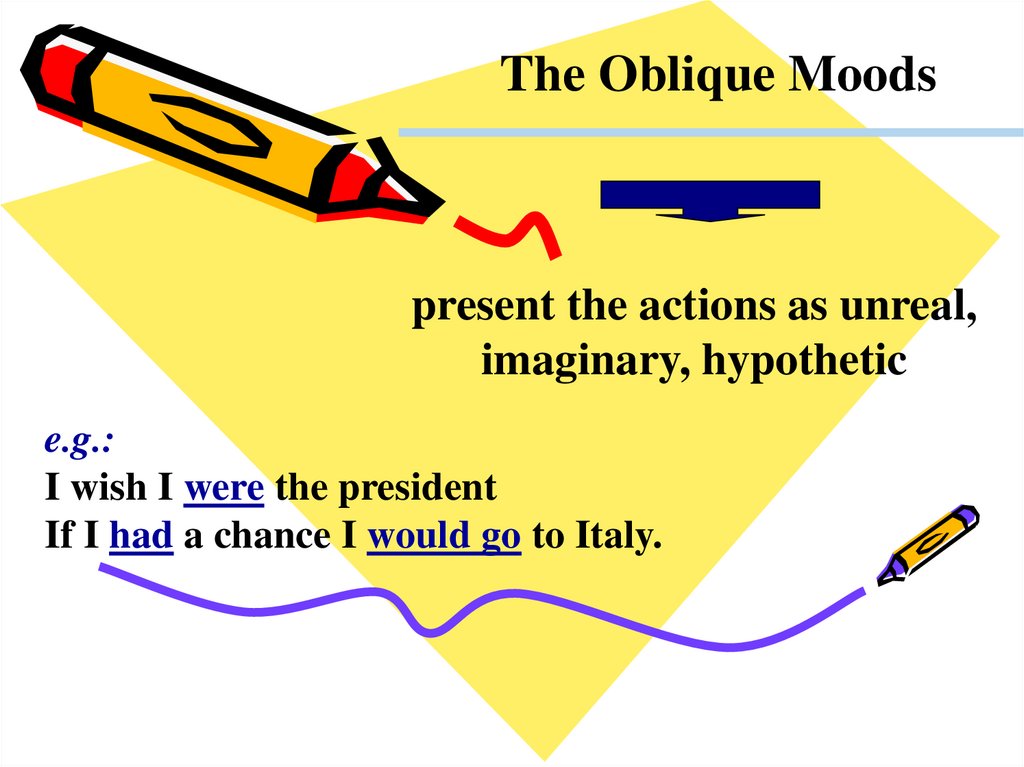
The Oblique Moodspresent the actions as unreal,
imaginary, hypothetic
e.g.:
I wish I were the president
If I had a chance I would go to Italy.
6.
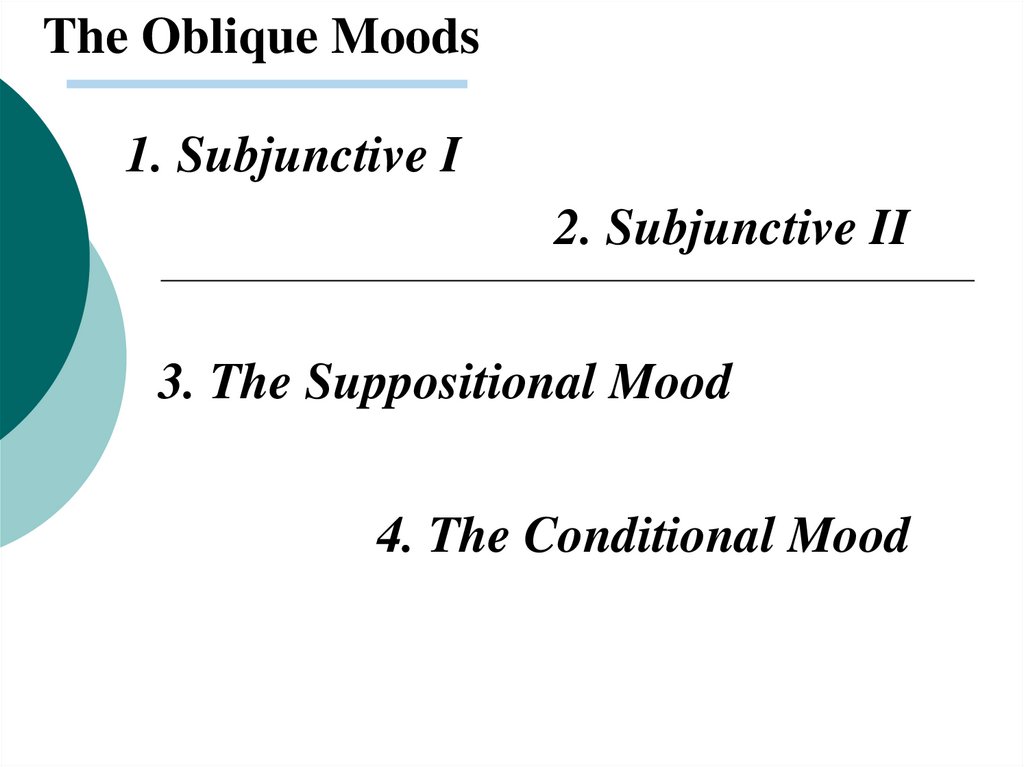
The Oblique Moods1. Subjunctive I
2. Subjunctive II
3. The Suppositional Mood
4. The Conditional Mood
7.
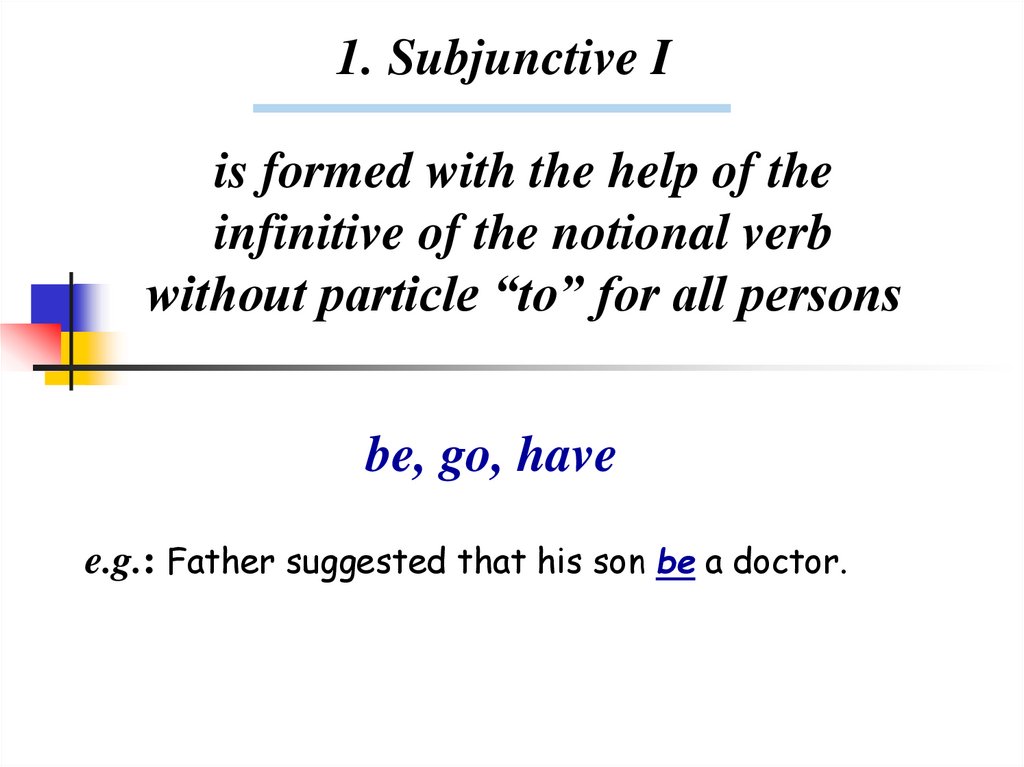
1. Subjunctive Iis formed with the help of the
infinitive of the notional verb
without particle “to” for all persons
be, go, have
e.g.: Father suggested that his son be a doctor.
8.
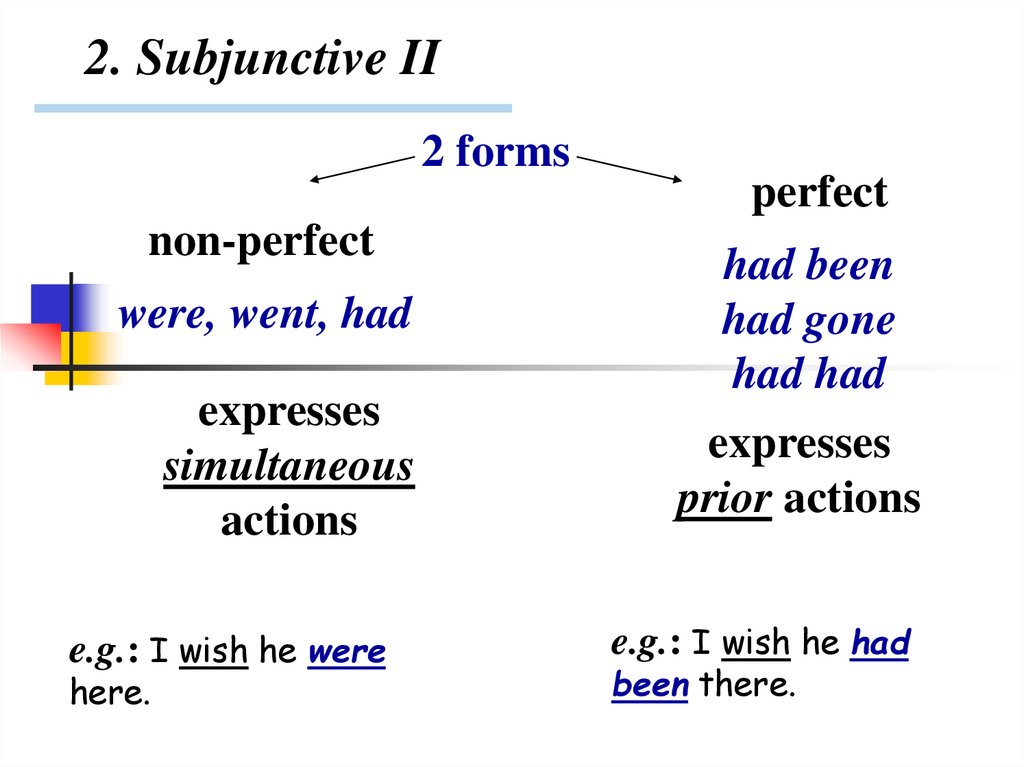
2. Subjunctive II2 forms
non-perfect
were, went, had
expresses
simultaneous
actions
e.g.: I wish he were
here.
perfect
had been
had gone
had had
expresses
prior actions
e.g.: I wish he had
been there.
9.
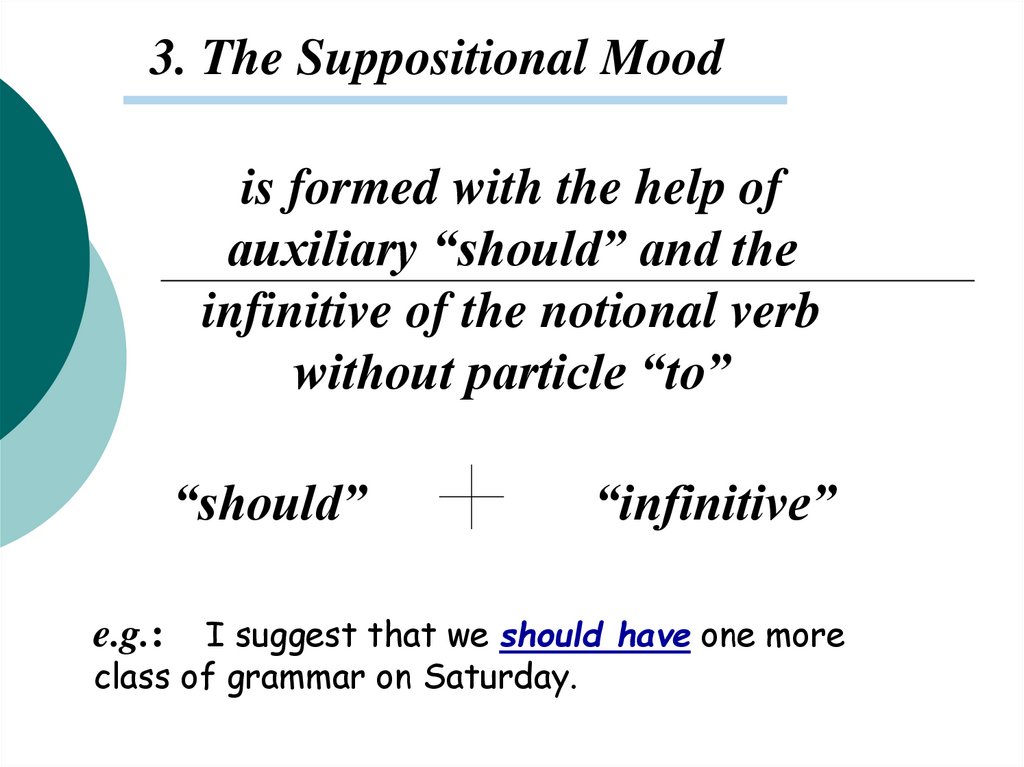
3. The Suppositional Moodis formed with the help of
auxiliary “should” and the
infinitive of the notional verb
without particle “to”
“should”
“infinitive”
I suggest that we should have one more
class of grammar on Saturday.
e.g.:
10.
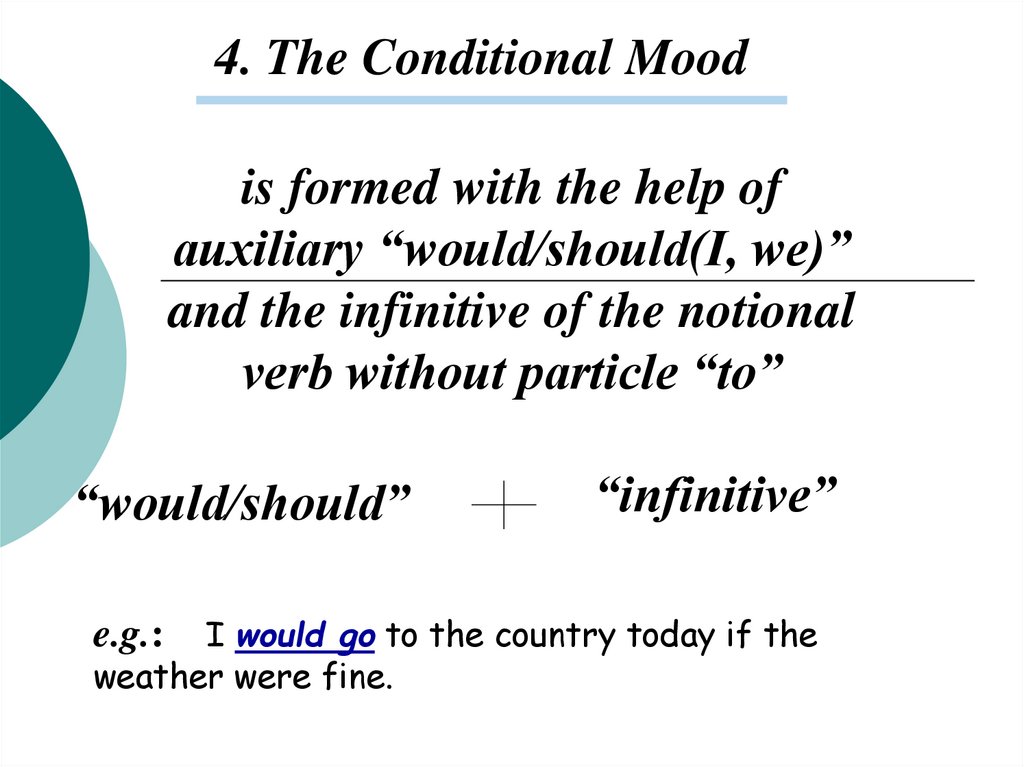
4. The Conditional Moodis formed with the help of
auxiliary “would/should(I, we)”
and the infinitive of the notional
verb without particle “to”
“would/should”
“infinitive”
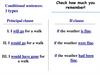
I would go to the country today if the
weather were fine.
e.g.:
11.
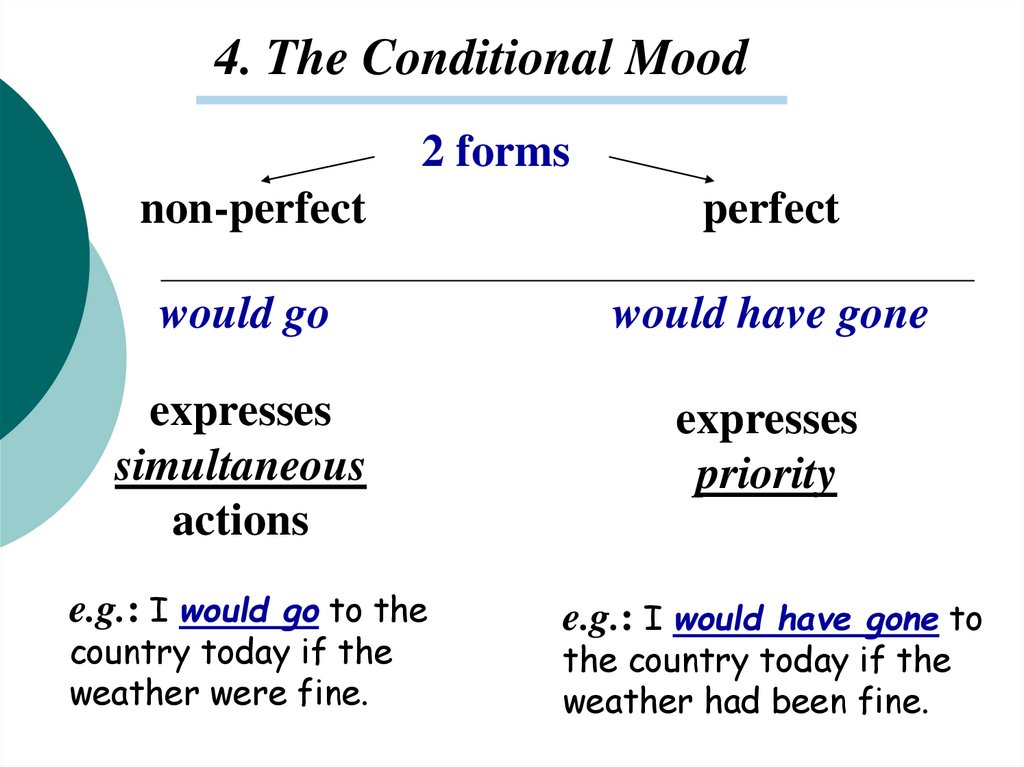
4. The Conditional Mood2 forms
non-perfect
perfect
would go
would have gone
expresses
simultaneous
actions
expresses
priority
e.g.: I would go to the
e.g.: I would have gone to
country today if the
weather were fine.
the country today if the
weather had been fine.