 english
Similar presentations:








The Use of Forms Expressing Unreality (the Oblique Moods)
1.
The Use of Forms ExpressingUnreality (the Oblique Moods) in
ADVERBIAL CLAUSE of PURPOSE
2.
ADVERBIAL CLAUSE ofPURPOSE
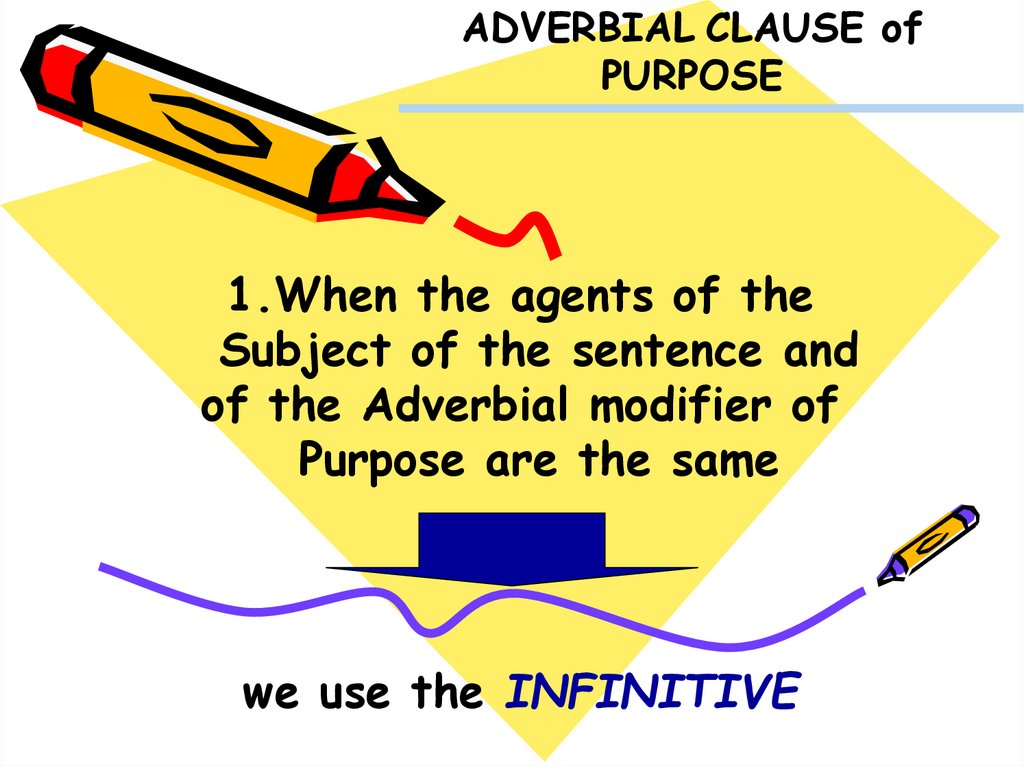
1.When the agents of the
Subject of the sentence and
of the Adverbial modifier of
Purpose are the same
we use the INFINITIVE
3.
ADVERBIAL CLAUSE ofPURPOSE
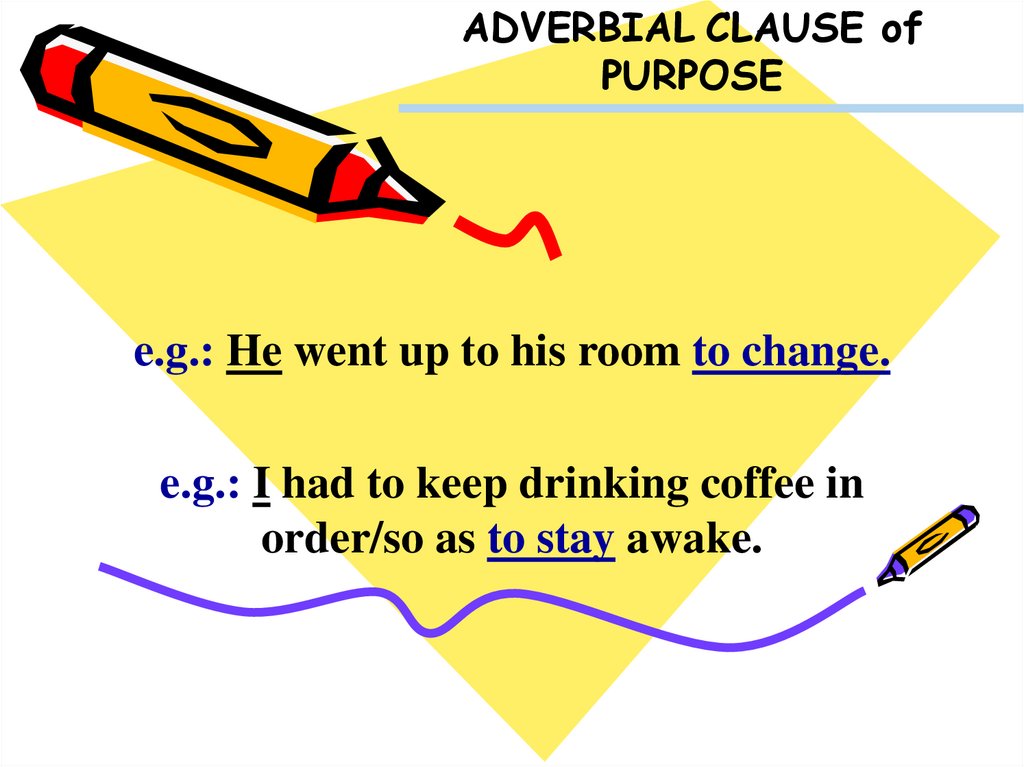
e.g.: He went up to his room to change.
e.g.: I had to keep drinking coffee in
order/so as to stay awake.
4.
ADVERBIAL CLAUSE ofPURPOSE
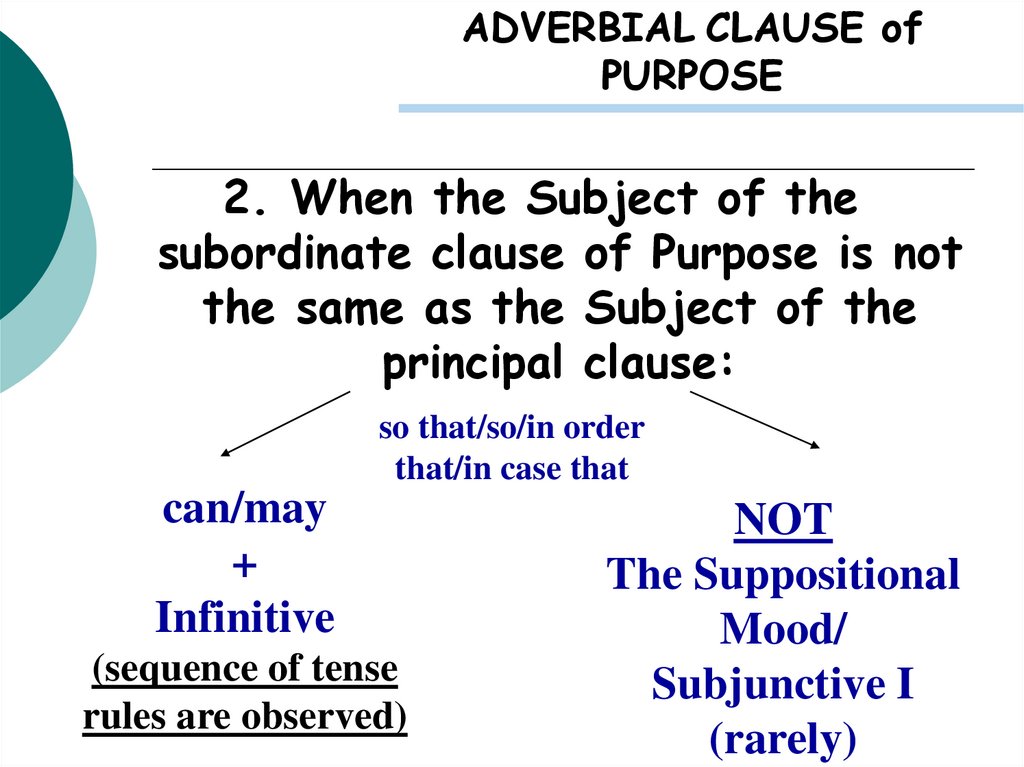
2. When the Subject of the
subordinate clause of Purpose is not
the same as the Subject of the
principal clause:
so that/so/in order
that/in case that
can/may
+
Infinitive
(sequence of tense
rules are observed)
NOT
The Suppositional
Mood/
Subjunctive I
(rarely)
5.
ADVERBIAL CLAUSE ofPURPOSE
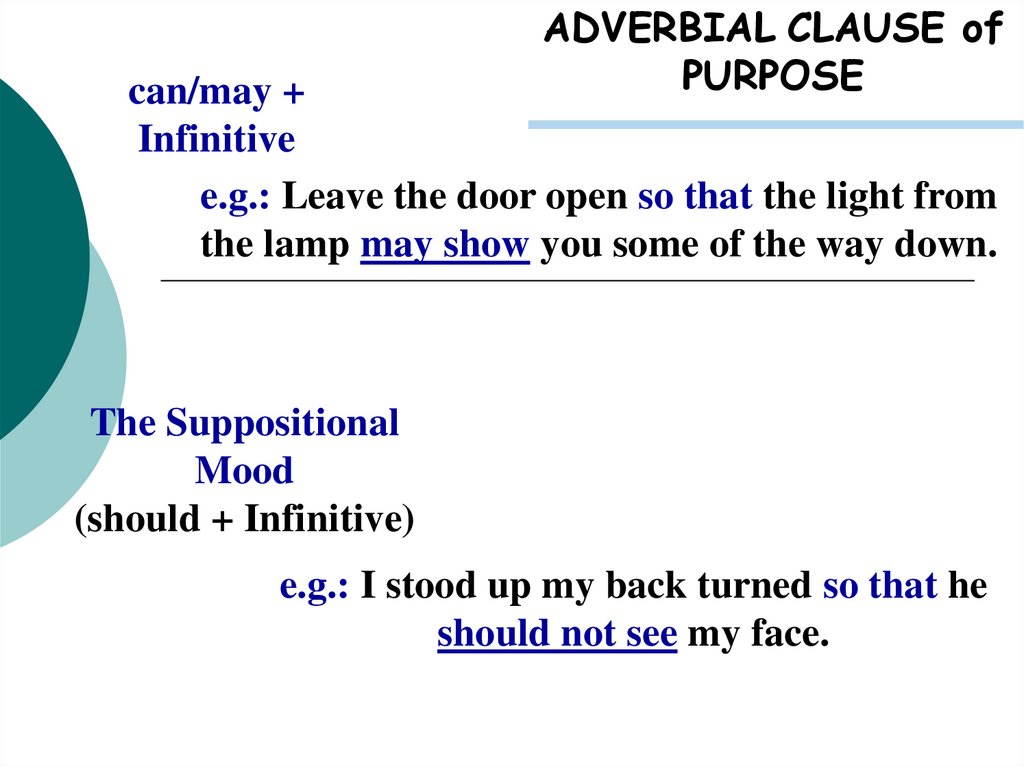
can/may +
Infinitive
e.g.: Leave the door open so that the light from
the lamp may show you some of the way down.
The Suppositional
Mood
(should + Infinitive)
e.g.: I stood up my back turned so that he
should not see my face.
6.
ADVERBIAL CLAUSE ofPURPOSE
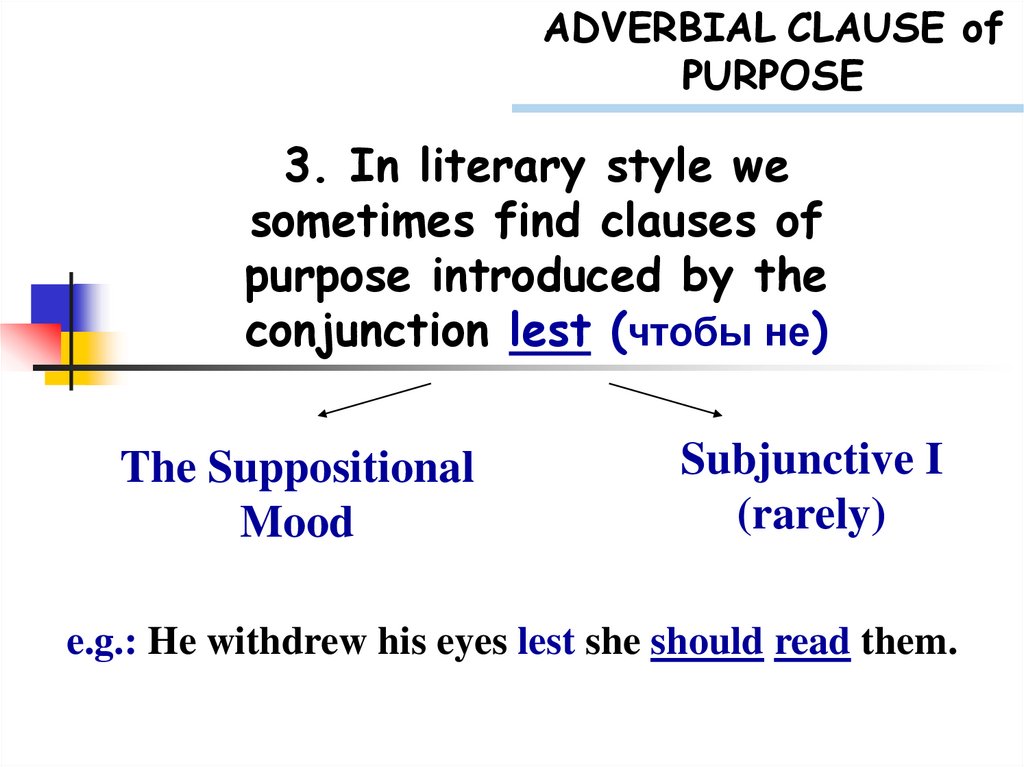
3. In literary style we
sometimes find clauses of
purpose introduced by the
conjunction lest (чтобы не)
The Suppositional
Mood
Subjunctive I
(rarely)
e.g.: He withdrew his eyes lest she should read them.