Similar presentations:





1 ДЕКАБРЯ Tourism-and-Types-of-Travel
1.
Tourism and Types of Travel2.
Why Do People Travel?Explore & Discover
Relaxation
Many are drawn by the allure (очарование) of
new cultures, breathtaking landscapes, and
historical sites, seeking unique experiences.
Others travel to unwind, escape daily routines,
and find tranquility in different environments,
often by beaches or mountains.
Connect & Visit
Business & Education
Travel is also a way to reconnect with loved
ones, visit family and friends, or attend
significant life events.
Beyond leisure, travel serves professional
purposes like conferences or educational
pursuits, enriching knowledge and networks.
3.
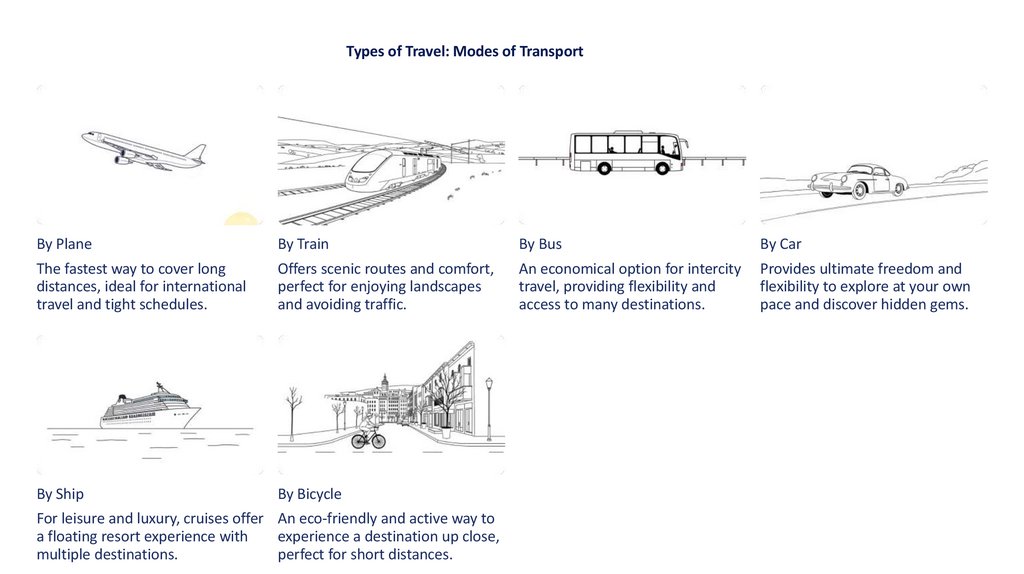
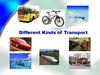
Types of Travel: Modes of TransportBy Plane
By Train
By Bus
By Car
The fastest way to cover long
distances, ideal for international
travel and tight schedules.
Offers scenic routes and comfort,
perfect for enjoying landscapes
and avoiding traffic.
An economical option for intercity
travel, providing flexibility and
access to many destinations.
Provides ultimate freedom and
flexibility to explore at your own
pace and discover hidden gems.
By Ship
By Bicycle
For leisure and luxury, cruises offer An eco-friendly and active way to
a floating resort experience with
experience a destination up close,
multiple destinations.
perfect for short distances.
4.
Travel Vocabulary: Transportation TermsKey Transportation Modes
Important Locations & Items
• Plane / Aircraft: For air travel.
• Bus: Public road transport.
• Train: Rail transport for various
distances.
• Taxi: Private car for hire.
• Ferry: Boat for transporting
passengers and vehicles.
• Subway / Metro: Underground
urban rail.
• Tram: Streetcar on rails.
• Bicycle: Two-wheeled, pedalpowered vehicle.
Airport: Where planes depart and arrive.
Station: For trains and buses.
Platform: Area for boarding trains.
Bus Stop: Designated place for
buses to pick up/drop off.
Terminal: Building at an airport
or station.
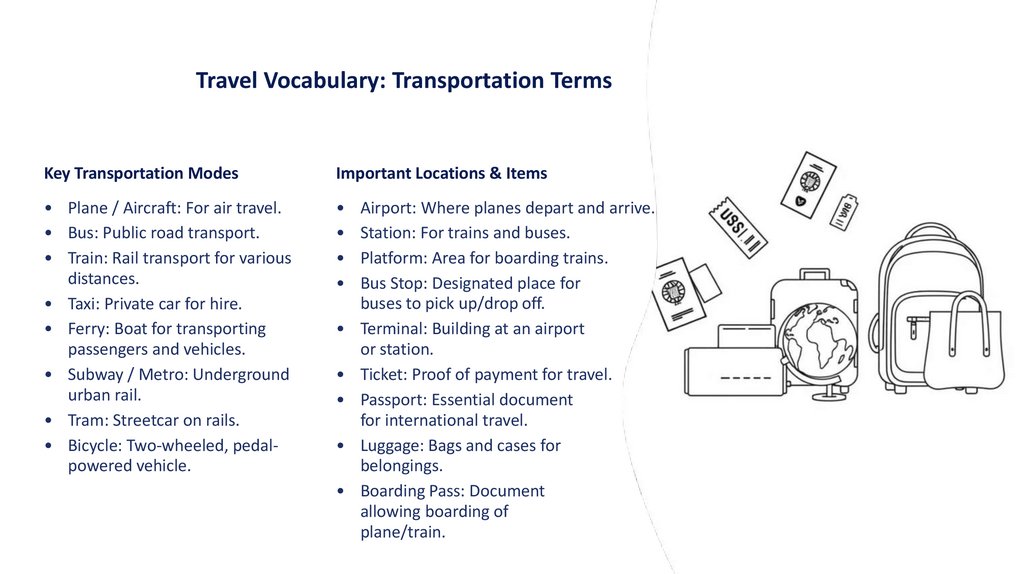
Ticket: Proof of payment for travel.
Passport: Essential document
for international travel.
Luggage: Bags and cases for
belongings.
Boarding Pass: Document
allowing boarding of
plane/train.
5.
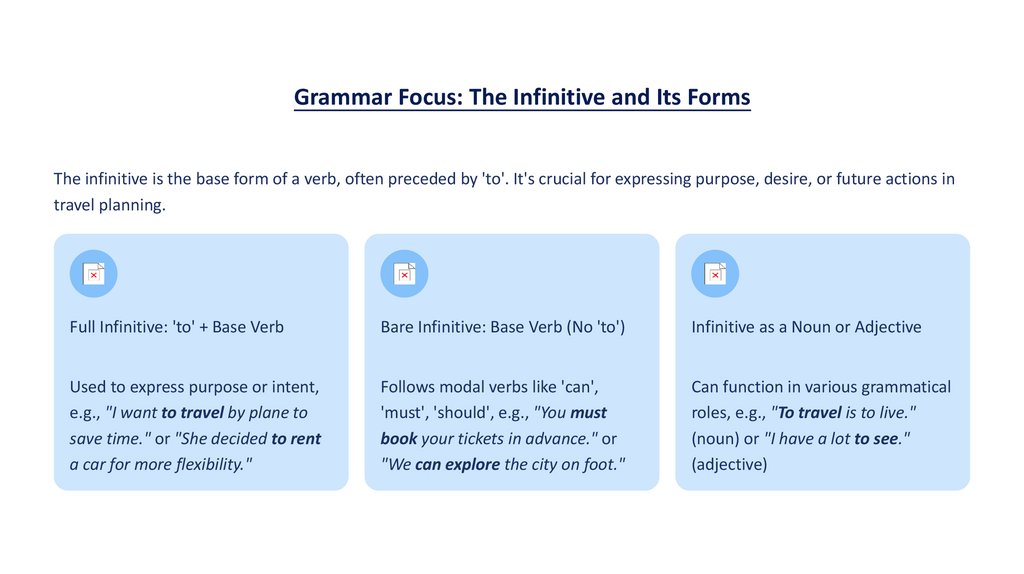
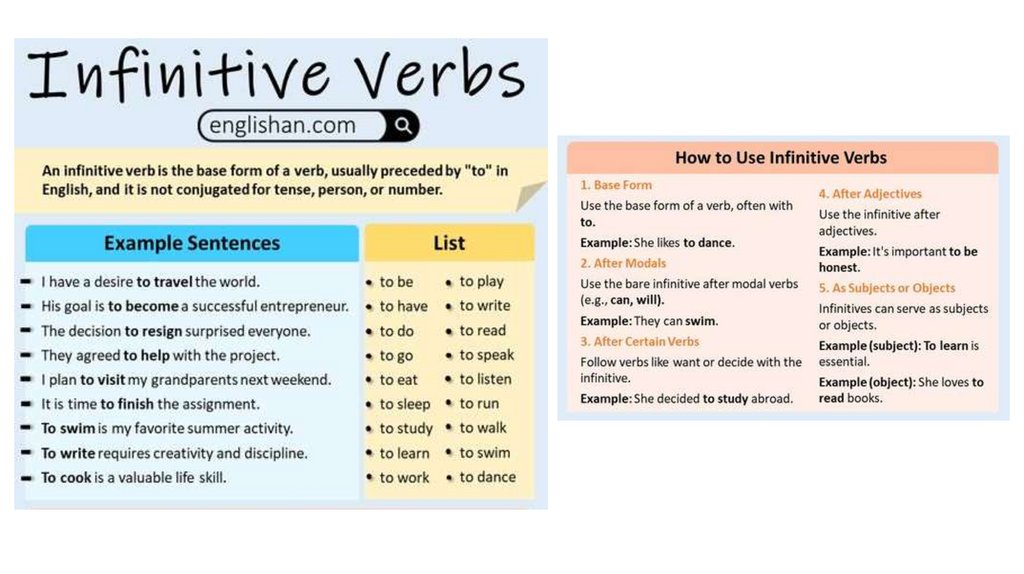
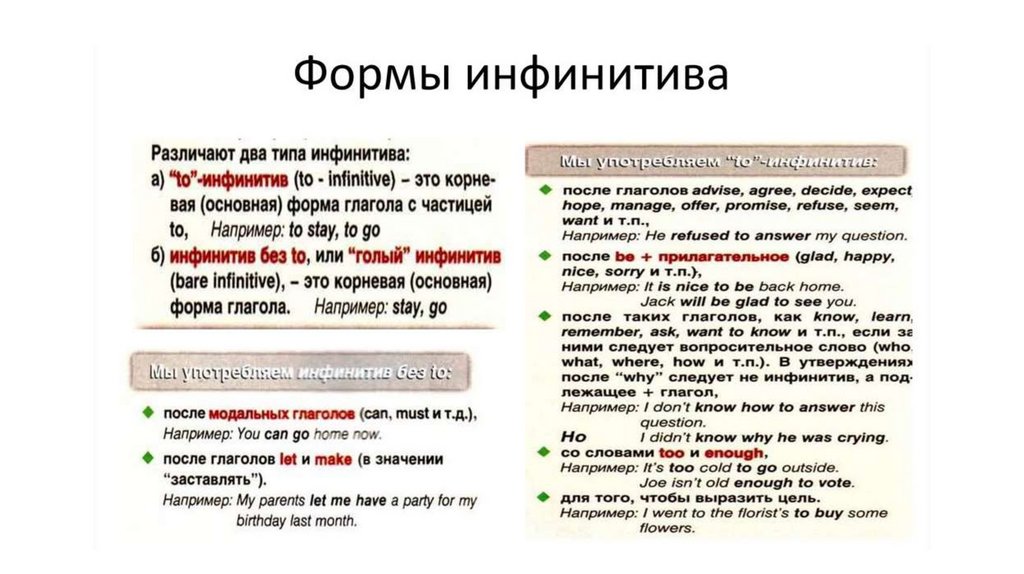
Grammar Focus: The Infinitive and Its FormsThe infinitive is the base form of a verb, often preceded by 'to'. It's crucial for expressing purpose, desire, or future actions in
travel planning.
Full Infinitive: 'to' + Base Verb
Bare Infinitive: Base Verb (No 'to')
Infinitive as a Noun or Adjective
Used to express purpose or intent,
e.g., "I want to travel by plane to
save time." or "She decided to rent
a car for more flexibility."
Follows modal verbs like 'can',
'must', 'should', e.g., "You must
book your tickets in advance." or
"We can explore the city on foot."
Can function in various grammatical
roles, e.g., "To travel is to live."
(noun) or "I have a lot to see."
(adjective)
6.
7.
8.
9.
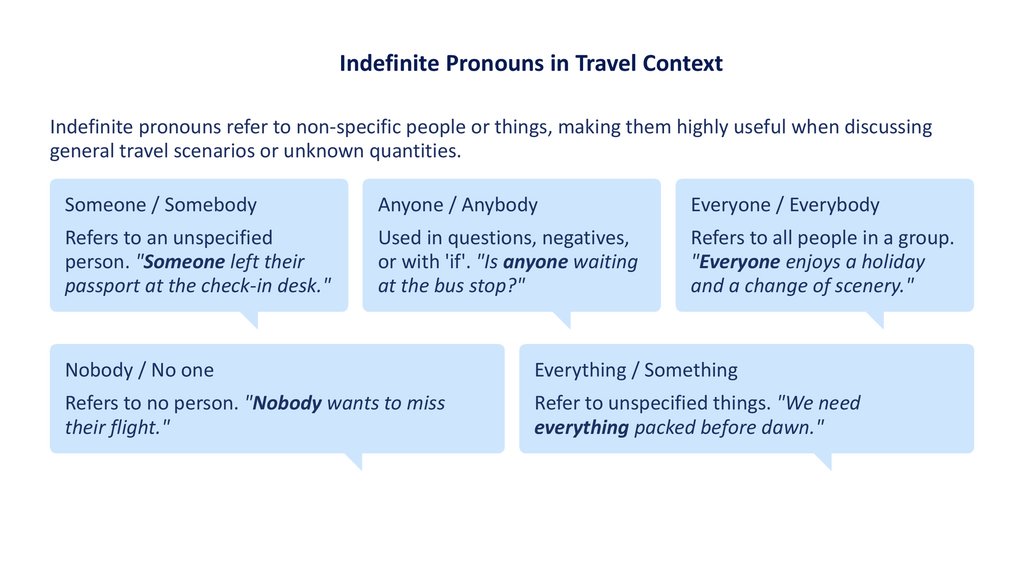
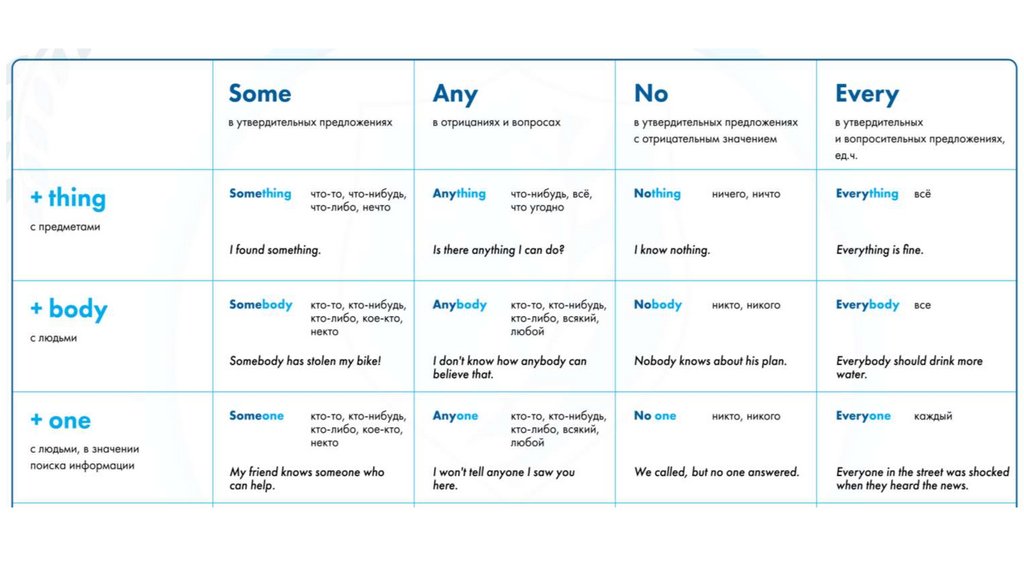
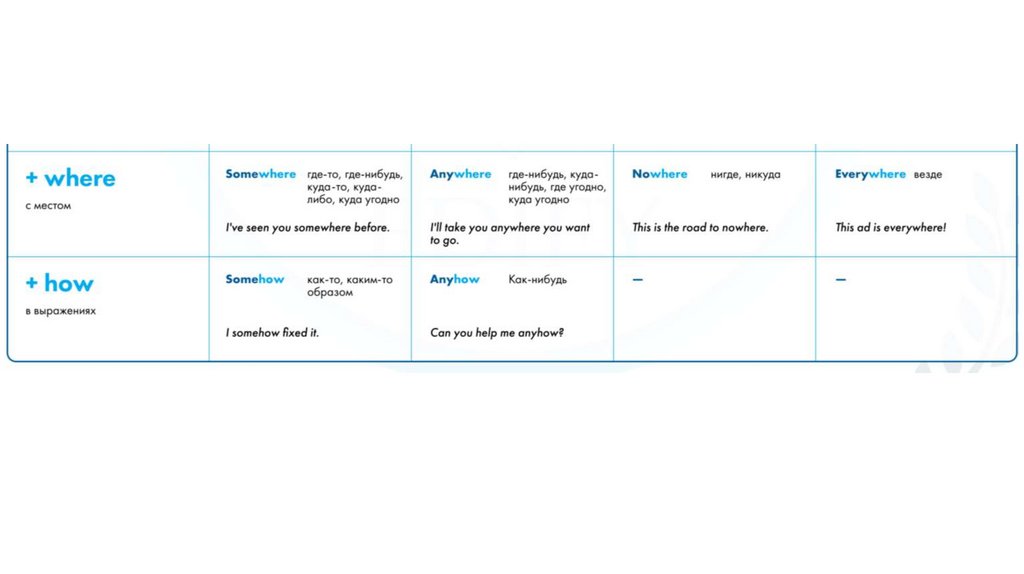
Indefinite Pronouns in Travel ContextIndefinite pronouns refer to non-specific people or things, making them highly useful when discussing
general travel scenarios or unknown quantities.
Someone / Somebody
Anyone / Anybody
Everyone / Everybody
Refers to an unspecified
person. "Someone left their
passport at the check-in desk."
Used in questions, negatives,
or with 'if'. "Is anyone waiting
at the bus stop?"
Refers to all people in a group.
"Everyone enjoys a holiday
and a change of scenery."
Nobody / No one
Everything / Something
Refers to no person. "Nobody wants to miss
their flight."
Refer to unspecified things. "We need
everything packed before dawn."
10.
11.
12.
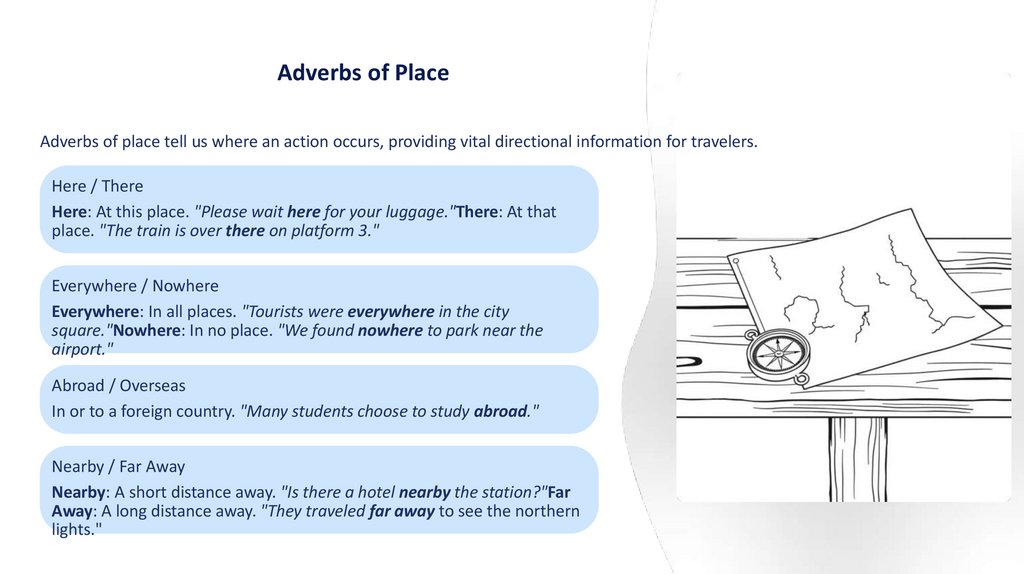
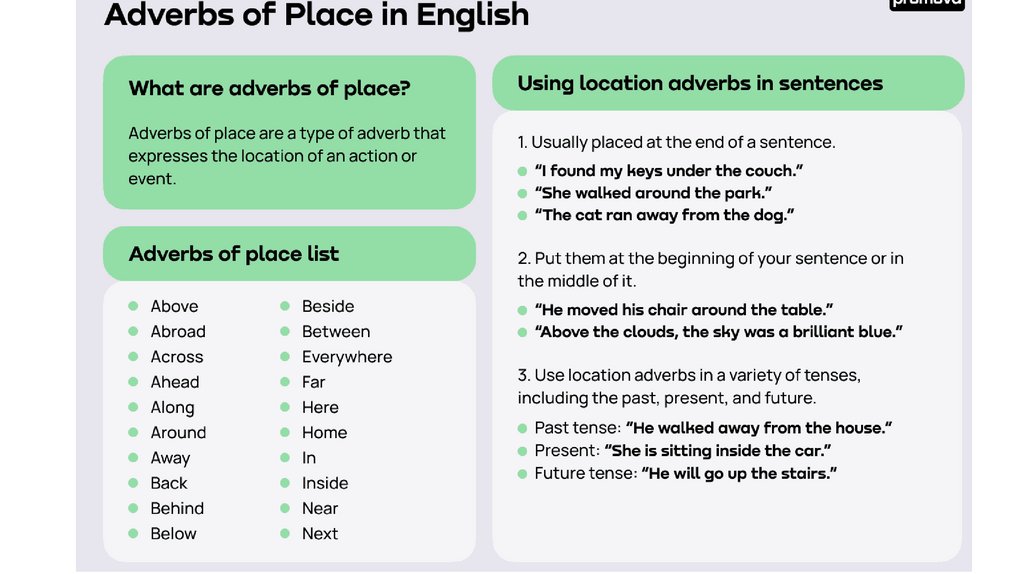
Adverbs of PlaceAdverbs of place tell us where an action occurs, providing vital directional information for travelers.
Here / There
Here: At this place. "Please wait here for your luggage."There: At that
place. "The train is over there on platform 3."
Everywhere / Nowhere
Everywhere: In all places. "Tourists were everywhere in the city
square."Nowhere: In no place. "We found nowhere to park near the
airport."
Abroad / Overseas
In or to a foreign country. "Many students choose to study abroad."
Nearby / Far Away
Nearby: A short distance away. "Is there a hotel nearby the station?"Far
Away: A long distance away. "They traveled far away to see the northern
lights."
13.
14.
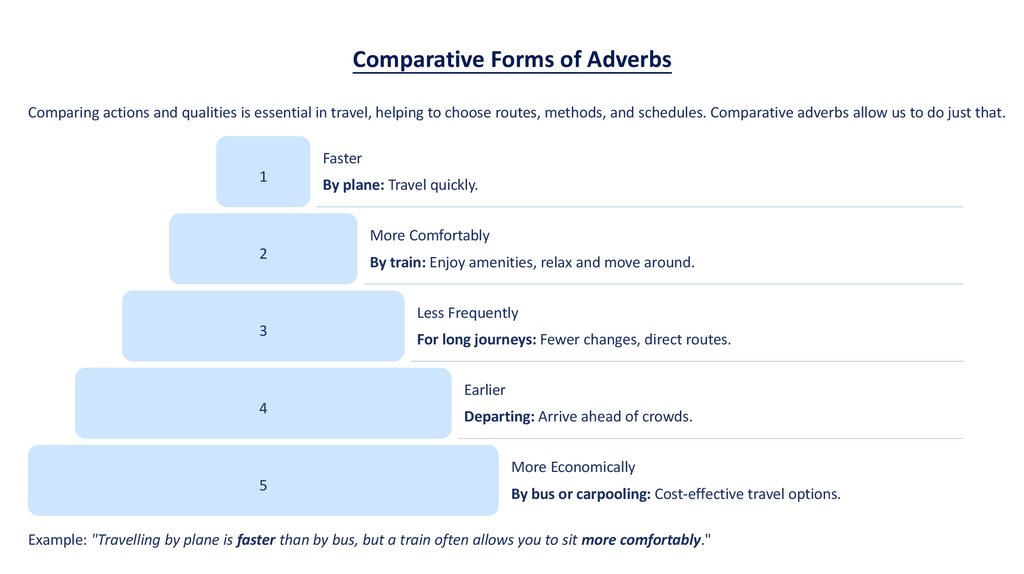
Comparative Forms of AdverbsComparing actions and qualities is essential in travel, helping to choose routes, methods, and schedules. Comparative adverbs allow us to do just that.
Faster
1
By plane: Travel quickly.
More Comfortably
2
By train: Enjoy amenities, relax and move around.
Less Frequently
3
For long journeys: Fewer changes, direct routes.
Earlier
4
Departing: Arrive ahead of crowds.
More Economically
5
By bus or carpooling: Cost-effective travel options.
Example: "Travelling by plane is faster than by bus, but a train often allows you to sit more comfortably."
15.
16.
17.
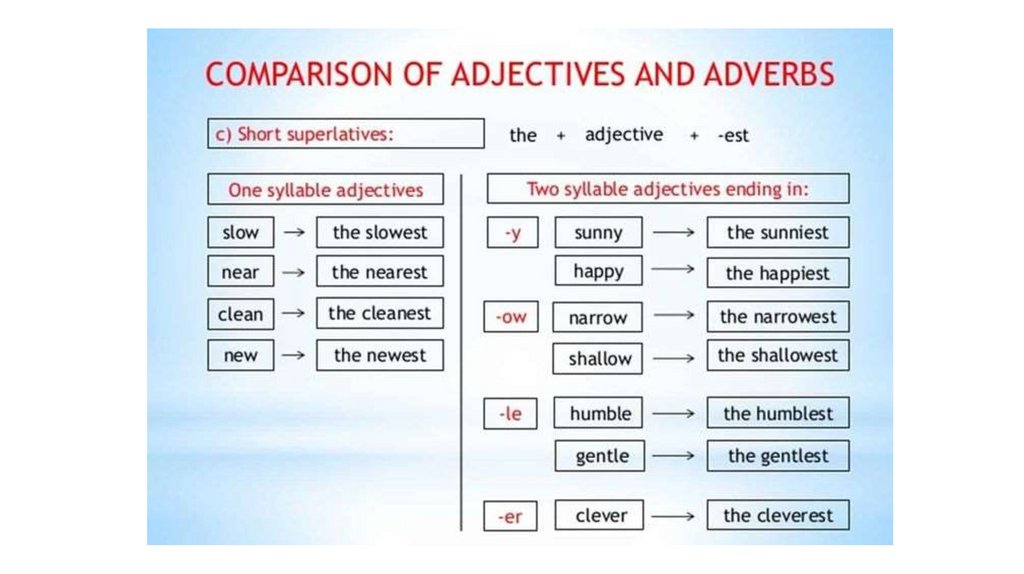
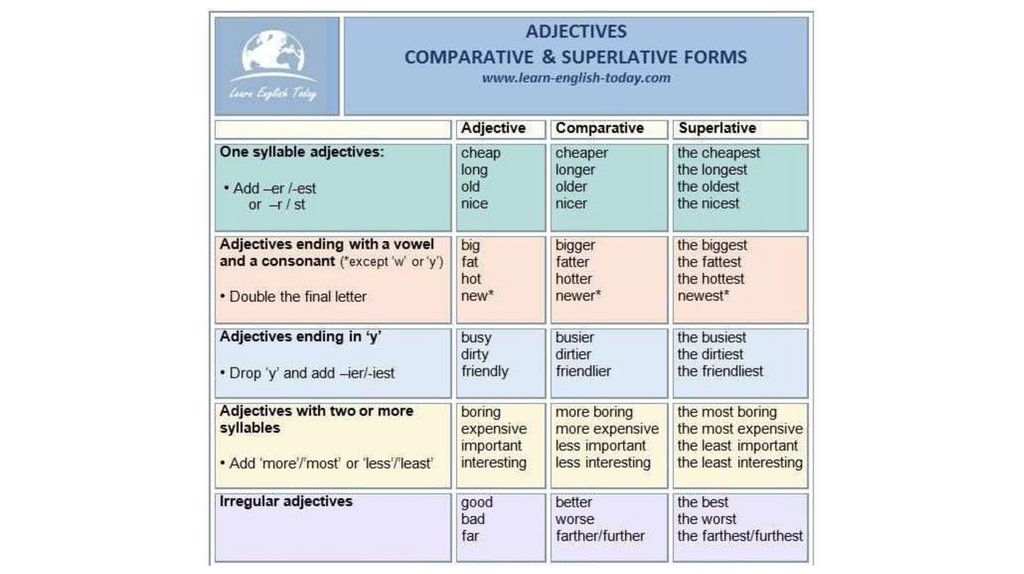
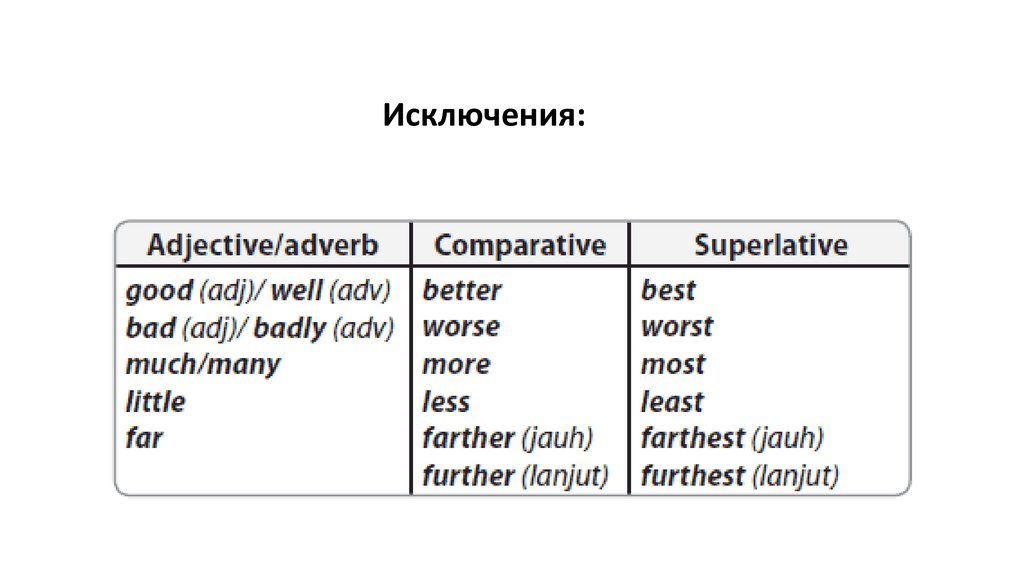
Исключения:18.
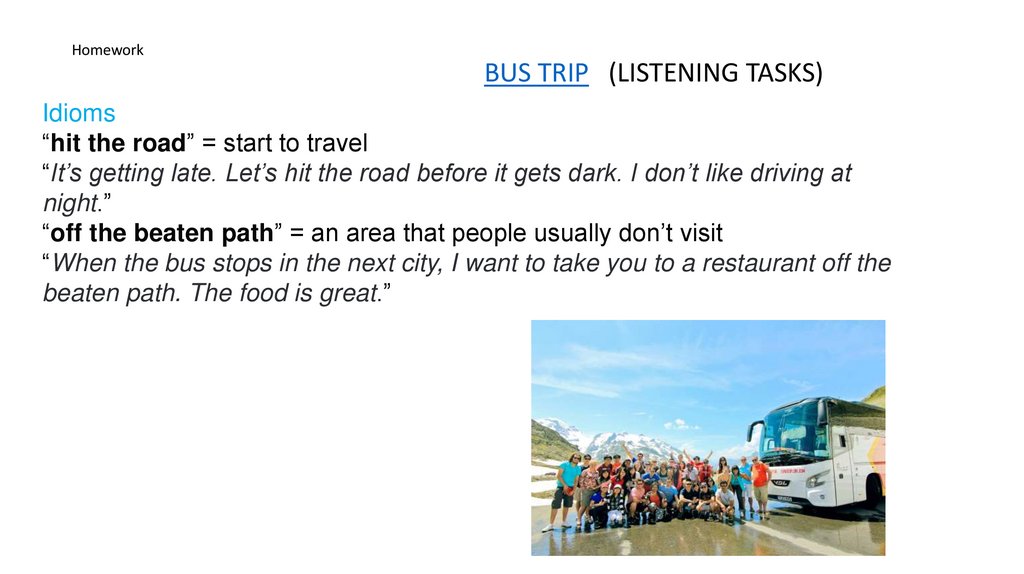
HomeworkBUS TRIP (LISTENING TASKS)
Idioms
“hit the road” = start to travel
“It’s getting late. Let’s hit the road before it gets dark. I don’t like driving at
night.”
“off the beaten path” = an area that people usually don’t visit
“When the bus stops in the next city, I want to take you to a restaurant off the
beaten path. The food is great.”