 informatics
Similar presentations:





Smart home
1. Smart home
SMARTHOME
2.
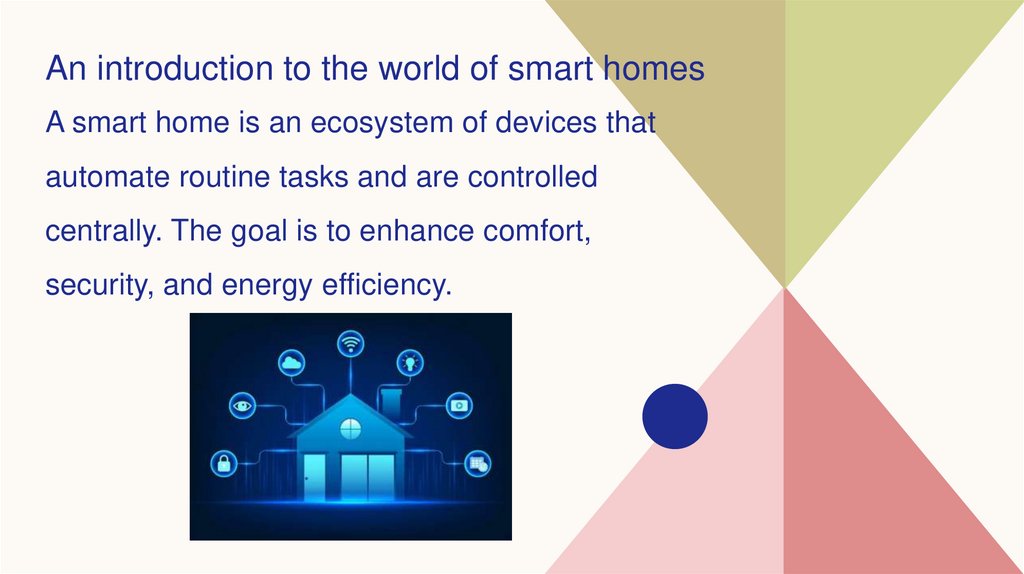
An introduction to the world of smart homesA smart home is an ecosystem of devices that
automate routine tasks and are controlled
centrally. The goal is to enhance comfort,
security, and energy efficiency.
3. The brain of the system: A smart hub or controller
THE BRAIN OF THESYSTEM: A SMART HUB
OR CONTROLLER
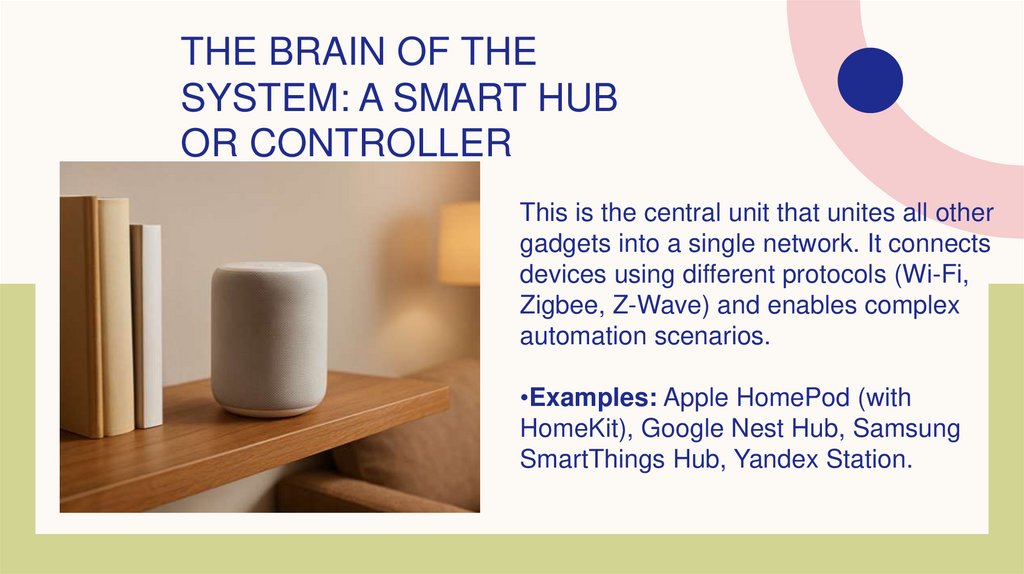
This is the central unit that unites all other
gadgets into a single network. It connects
devices using different protocols (Wi-Fi,
Zigbee, Z-Wave) and enables complex
automation scenarios.
•Examples: Apple HomePod (with
HomeKit), Google Nest Hub, Samsung
SmartThings Hub, Yandex Station.
4. Smart lighting and climate control
SMART LIGHTING ANDCLIMATE CONTROL
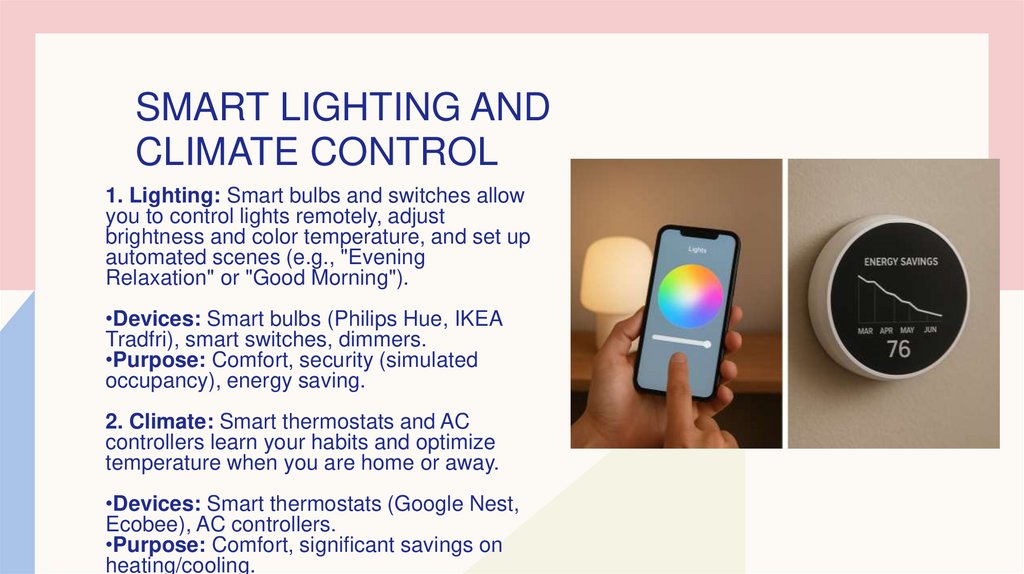
1. Lighting: Smart bulbs and switches allow
you to control lights remotely, adjust
brightness and color temperature, and set up
automated scenes (e.g., "Evening
Relaxation" or "Good Morning").
•Devices: Smart bulbs (Philips Hue, IKEA
Tradfri), smart switches, dimmers.
•Purpose: Comfort, security (simulated
occupancy), energy saving.
2. Climate: Smart thermostats and AC
controllers learn your habits and optimize
temperature when you are home or away.
•Devices: Smart thermostats (Google Nest,
Ecobee), AC controllers.
•Purpose: Comfort, significant savings on
heating/cooling.
5. Security and surveillance
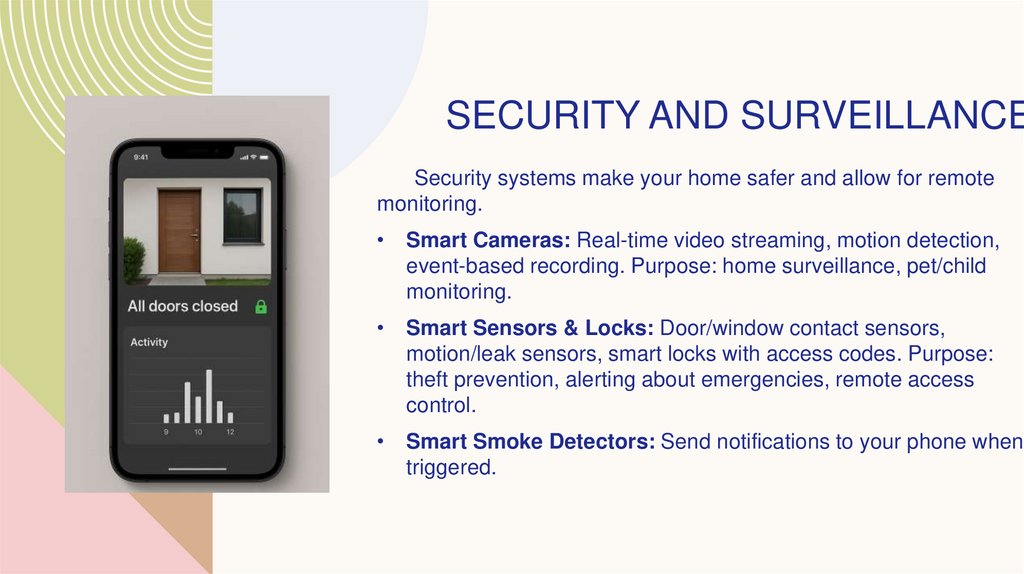
SECURITY AND SURVEILLANCESecurity systems make your home safer and allow for remote
monitoring.
Smart Cameras: Real-time video streaming, motion detection,
event-based recording. Purpose: home surveillance, pet/child
monitoring.
Smart Sensors & Locks: Door/window contact sensors,
motion/leak sensors, smart locks with access codes. Purpose:
theft prevention, alerting about emergencies, remote access
control.
Smart Smoke Detectors: Send notifications to your phone when
triggered.
6. Multimedia and home appliance management
MULTIMEDIA AND HOMEAPPLIANCE
MANAGEMENT
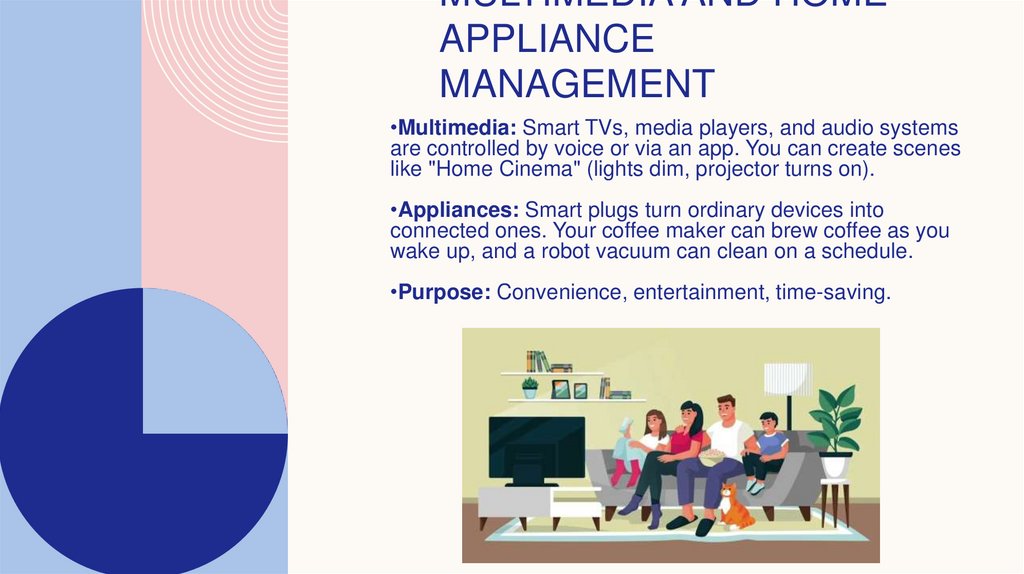
•Multimedia: Smart TVs, media players, and audio systems
are controlled by voice or via an app. You can create scenes
like "Home Cinema" (lights dim, projector turns on).
•Appliances: Smart plugs turn ordinary devices into
connected ones. Your coffee maker can brew coffee as you
wake up, and a robot vacuum can clean on a schedule.
•Purpose: Convenience, entertainment, time-saving.
7. Advantages and challenges
ADVANTAGES AND CHALLENGESAdvantages:
•Comfort & Convenience: Automation of routine tasks.
•Security: 24/7 monitoring and instant alerts.
•Energy Efficiency: Smart control of lighting and
climate reduces utility bills.
•Accessibility:
•Assists people with disabilities.
Challenges:
•Compatibility: It's crucial to choose devices within the
same ecosystem (Apple HomeKit, Google Home,
Yandex Alice).
•Data Security: Risk of device hacking. Using strong
passwords and updating firmware is essential.
•Cost: Initial investment can be significant.
8. Conclusion
8CONCLUSION
A smart home is not a distant future
but an accessible reality. It's
technology that works for you, making
life easier, safer, and more
economical. Start with one or two
devices (like a smart bulb and plug)
and gradually build your perfect
ecosystem.