




 software
Similar presentations:










IT Project Team Building
1.
IT Project Team BuildingDeveloping a new software product requires a carefully assembled team
of specialists, each bringing unique skills crucial for project success. The
process begins with identifying the core roles needed to navigate the
complexities of modern IT development, from initial concept to final
deployment. Understanding the contribution of each team member
ensures efficient workflow and high-quality output, meeting client
expectations and project objectives.
This presentation outlines the essential specialists for a new IT project and
explains their vital roles in achieving a successful outcome.
2.
Project ManagerRole:
Oversees the entire project lifecycle.
Importance:
Ensures timely completion and within budget.
Key Skills:
Planning, communication, risk management.
3.
Software DevelopersRole:
Key Skills:
Responsible for writing, testing, and maintaining the code
that forms the backbone of the software product. They
translate project requirements into functional and efficient
software solutions, ensuring the application performs as
intended and meets user needs.
Proficiency in relevant programming languages, problemsolving abilities, algorithmic thinking, and understanding of
software development methodologies like Agile or Waterfall.
Importance:
Their work directly builds the product. High-quality code
prevents bugs, improves performance, and makes future
updates and maintenance much easier, directly impacting
user satisfaction and product longevity.
4.
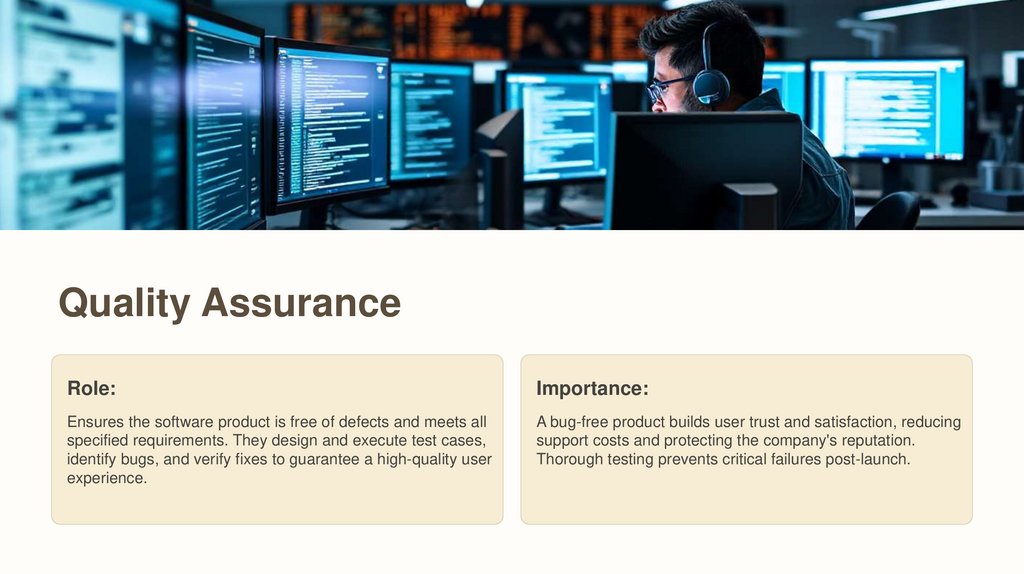
Quality AssuranceRole:
Importance:
Ensures the software product is free of defects and meets all
specified requirements. They design and execute test cases,
identify bugs, and verify fixes to guarantee a high-quality user
experience.
A bug-free product builds user trust and satisfaction, reducing
support costs and protecting the company's reputation.
Thorough testing prevents critical failures post-launch.
5.
UI/UX DesignersImportance:
Role:
Focus on creating an intuitive and
engaging user interface (UI) and a
seamless user experience (UX).
They design the visual elements and
interaction flow of the software.
A good UI/UX makes the product
easy and enjoyable to use, driving
user adoption and retention. It
directly impacts how users perceive
and interact with the software.
Key Skills:
User research, wireframing,
prototyping, visual design principles,
and usability testing methodologies.
This role is vital for creating a product that users will want to engage with regularly.
6.
System Architects1
2
Role:
Define the overall structure and technical framework of the software
product. They make high-level design choices and dictate technical
standards, ensuring scalability and performance.
Importance:
A well-designed architecture is fundamental for a stable, secure, and
easily maintainable product, preventing costly future refactoring.
7.
Database AdministratorsRole:
Importance:
Key Skills:
Responsible for the design,
implementation, maintenance, and
performance of the software's
database. They ensure data integrity,
security, and efficient retrieval, which
is critical for any data-driven
application.
The database is where critical project
information resides; its proper
management ensures that data is
always accessible, accurate, and
protected from loss or unauthorized
access.
Expertise in database management
systems (SQL, NoSQL), data
modeling, performance tuning,
backup and recovery procedures,
and database security protocols.
8.
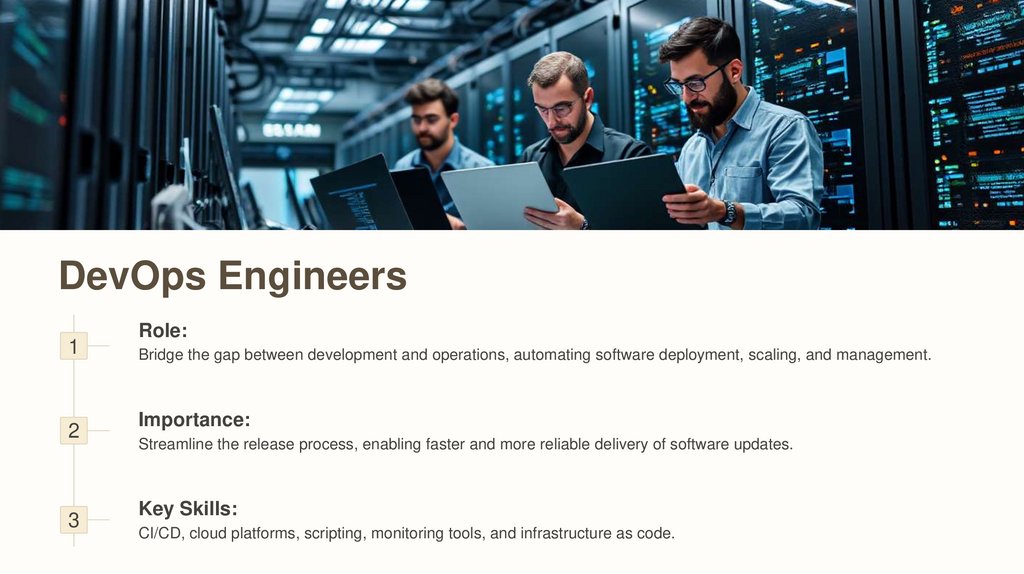
DevOps Engineers1
2
3
Role:
Bridge the gap between development and operations, automating software deployment, scaling, and management.
Importance:
Streamline the release process, enabling faster and more reliable delivery of software updates.
Key Skills:
CI/CD, cloud platforms, scripting, monitoring tools, and infrastructure as code.
9.
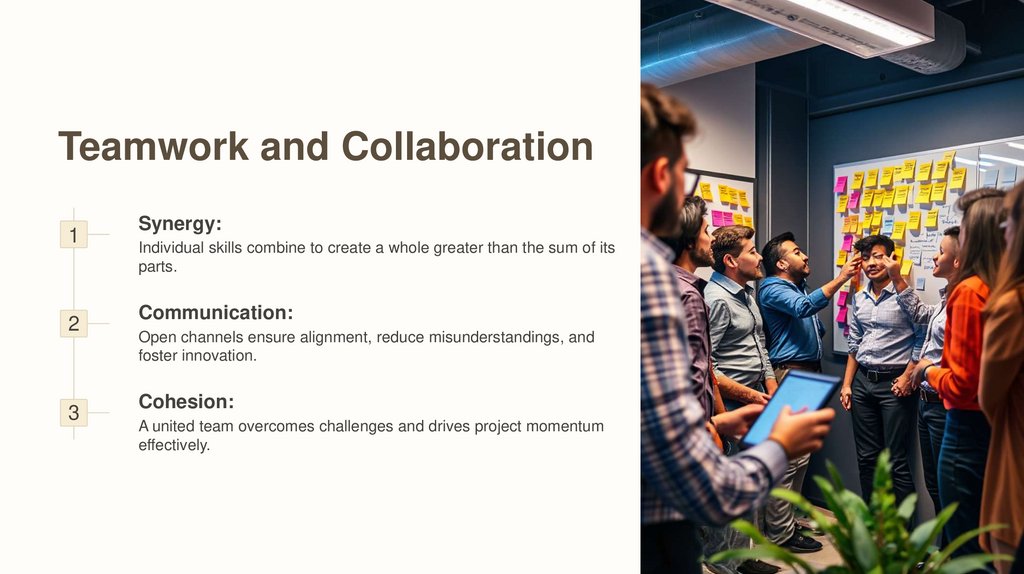
Teamwork and Collaboration1
2
3
Synergy:
Individual skills combine to create a whole greater than the sum of its
parts.
Communication:
Open channels ensure alignment, reduce misunderstandings, and
foster innovation.
Cohesion:
A united team overcomes challenges and drives project momentum
effectively.
10.
Project Delivery AchievedThe successful development and delivery of a new IT product hinge on
assembling a team with diverse, complementary expertise. From the
strategic guidance of a Project Manager to the intricate coding of Software
Developers, the meticulousness of QA specialists, the user-centric vision
of UI/UX Designers, the foundational planning of System Architects, the
data stewardship of DBAs, and the efficiency of DevOps Engineers, each
role is indispensable.
Effective collaboration and communication among these professionals
transform individual contributions into a cohesive, high-performing unit,
ultimately leading to the successful realization of project goals and client
satisfaction.