
 cookery
Similar presentations:








Eating and Drinking Habits Across Cultures
1.
Eating andDrinking
Habits Across
Cultures
Made by
Petrovsky Vlad,
Zubovich Egor.
Group A-22.
2.
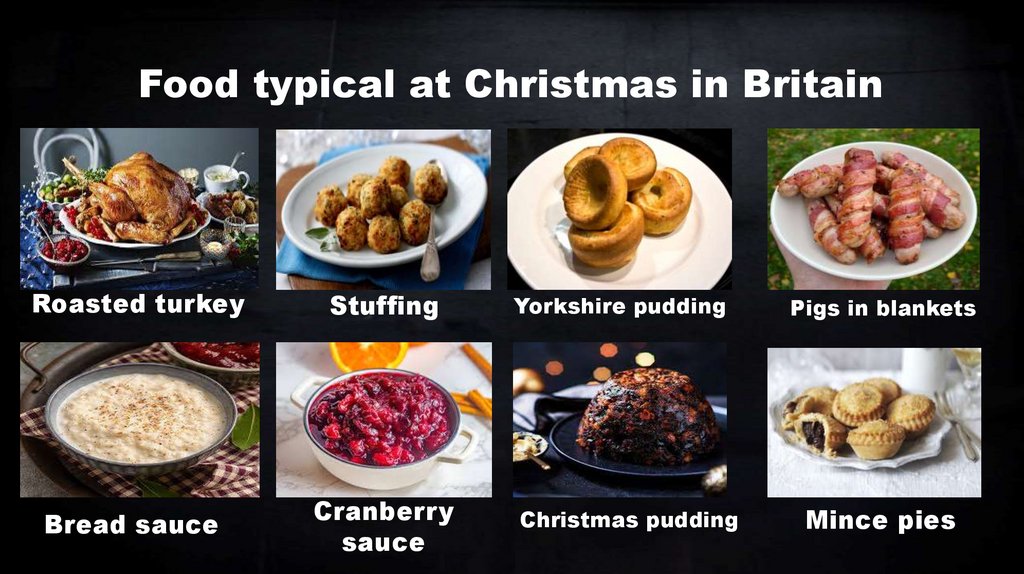
Food typical at Christmas in BritainRoasted turkey
Stuffing
Yorkshire pudding
Pigs in blankets
Bread sauce
Cranberry
sauce
Christmas pudding
Mince pies
3.
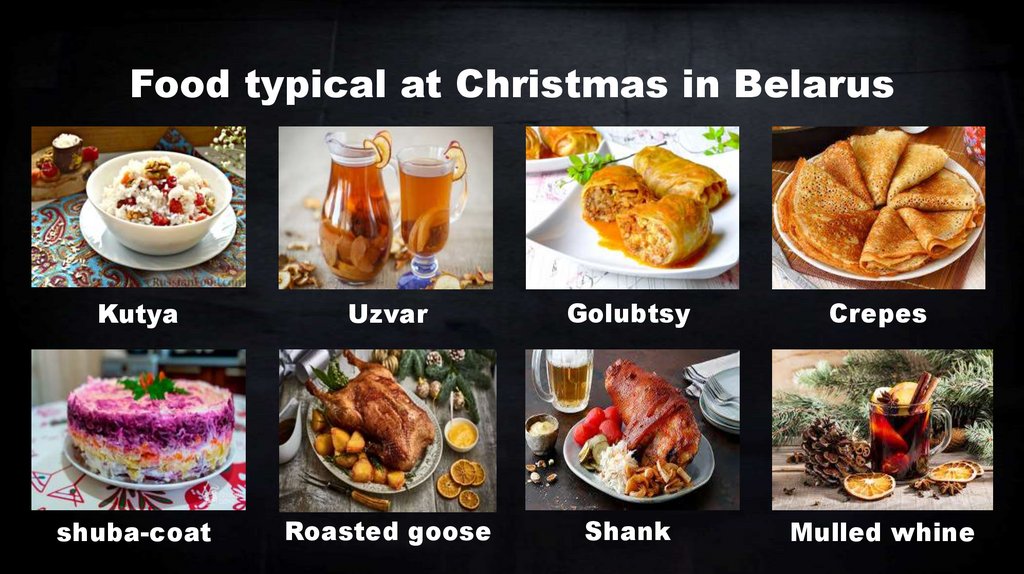
Food typical at Christmas in BelarusKutya
Uzvar
Golubtsy
Crepes
shuba-coat
Roasted goose
Shank
Mulled whine
4.
How do American fast food habits differ from traditionalSlavic meals?
1. American fast food Often eaten on the go or quickly between
activities. And Slavic Meals are typically eaten at home, shared with
family, and more ceremonial, Lunch tends to be a hot, cooked, multicourse meal.
2. American food has a simpler structure, a Single main item:
hamburger, fries, soda and is high in carbs, fats and sugar. Slavic
meals are more layered and often include soup (first course), main
dish like meat or fish with potatoes (second course), salads and then
tea.
3. Fast food has Highly processed ingredients (Beef patties, refined
buns, fried potatoes, sweetened beverages.) and Belarusian meals
are simple and farm-based (potatoes, cabbage, mushrooms, pork,
fish, sour cream etc)
5.
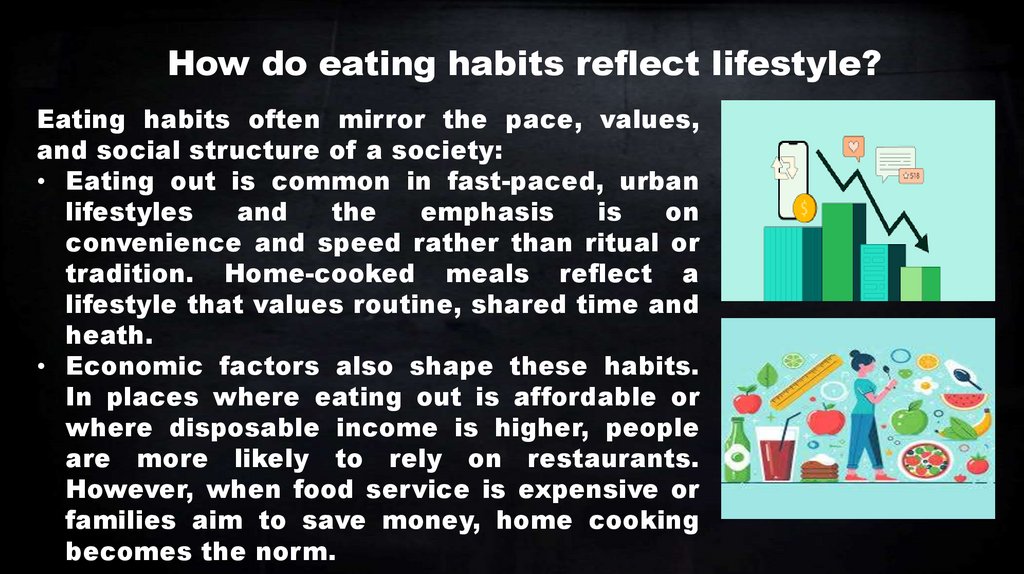
How do eating habits reflect lifestyle?Eating habits often mirror the pace, values,
and social structure of a society:
• Eating out is common in fast-paced, urban
lifestyles
and
the
emphasis
is
on
convenience and speed rather than ritual or
tradition. Home-cooked meals reflect a
lifestyle that values routine, shared time and
heath.
• Economic factors also shape these habits.
In places where eating out is affordable or
where disposable income is higher, people
are more likely to rely on restaurants.
However, when food service is expensive or
families aim to save money, home cooking
becomes the norm.
6.
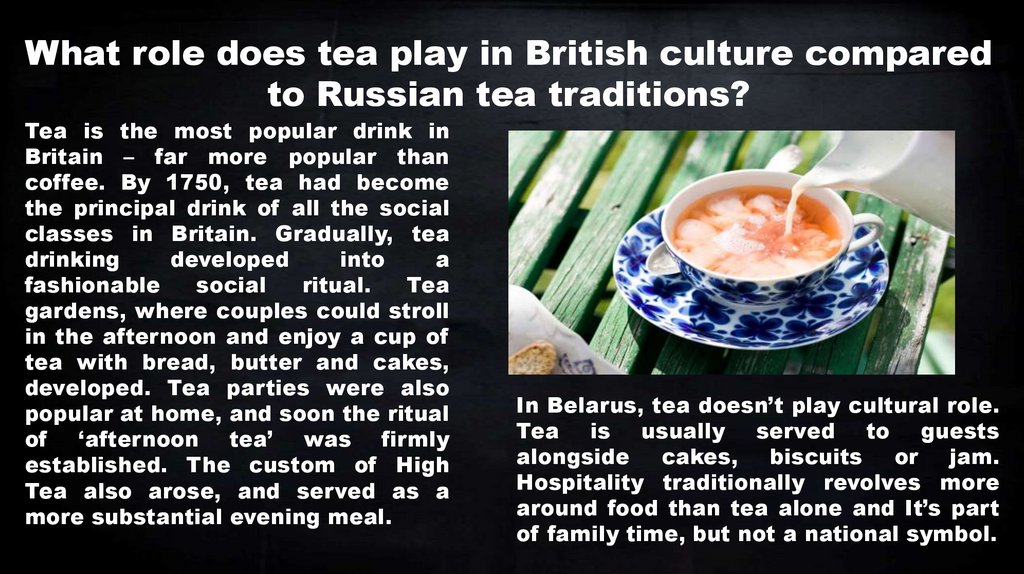
What role does tea play in British culture comparedto Russian tea traditions?
Tea is the most popular drink in
Britain – far more popular than
coffee. By 1750, tea had become
the principal drink of all the social
classes in Britain. Gradually, tea
drinking
developed
into
a
fashionable
social
ritual.
Tea
gardens, where couples could stroll
in the afternoon and enjoy a cup of
tea with bread, butter and cakes,
developed. Tea parties were also
popular at home, and soon the ritual
of ‘afternoon tea’ was firmly
established. The custom of High
Tea also arose, and served as a
more substantial evening meal.
In Belarus, tea doesn’t play cultural role.
Tea is usually served to guests
alongside cakes, biscuits or jam.
Hospitality traditionally revolves more
around food than tea alone and It’s part
of family time, but not a national symbol.
7.
Are there similarities in festive meals across thesecultures?
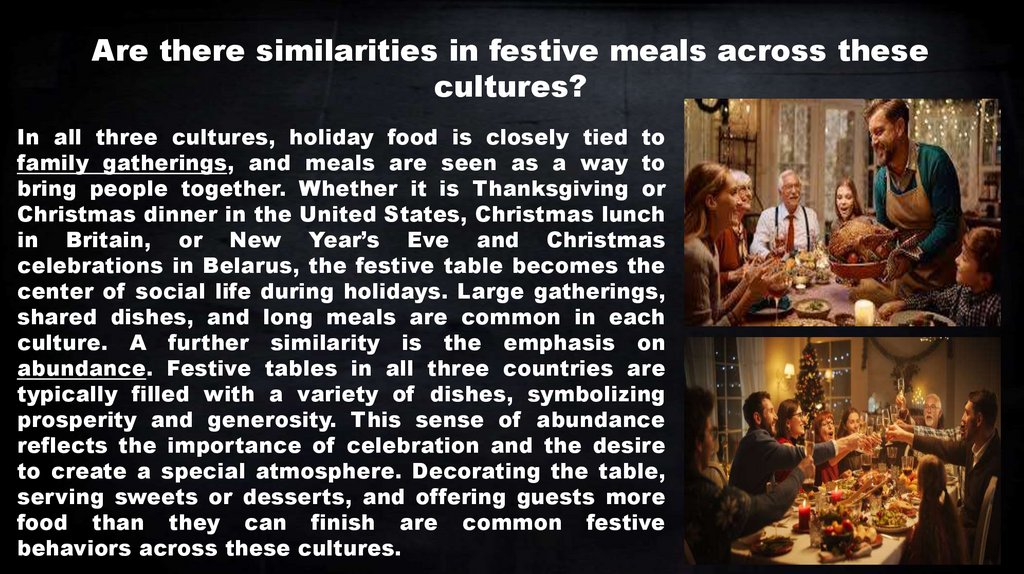
In all three cultures, holiday food is closely tied to
family gatherings, and meals are seen as a way to
bring people together. Whether it is Thanksgiving or
Christmas dinner in the United States, Christmas lunch
in Britain, or New Year’s Eve and Christmas
celebrations in Belarus, the festive table becomes the
center of social life during holidays. Large gatherings,
shared dishes, and long meals are common in each
culture. A further similarity is the emphasis on
abundance. Festive tables in all three countries are
typically filled with a variety of dishes, symbolizing
prosperity and generosity. This sense of abundance
reflects the importance of celebration and the desire
to create a special atmosphere. Decorating the table,
serving sweets or desserts, and offering guests more
food than they can finish are common festive
behaviors across these cultures.
8.
ConclusionOverall, while American, British, and Belarusian festive meals
differ in flavors and specific traditions, they share key
similarities: bringing families together, preparing special dishes,
creating a feeling of abundance, and celebrating with foods that
reflect cultural identity.