 management
Similar presentations:



Site Safety
1.
Site SafetyWhy is safety so important? What is safety culture?
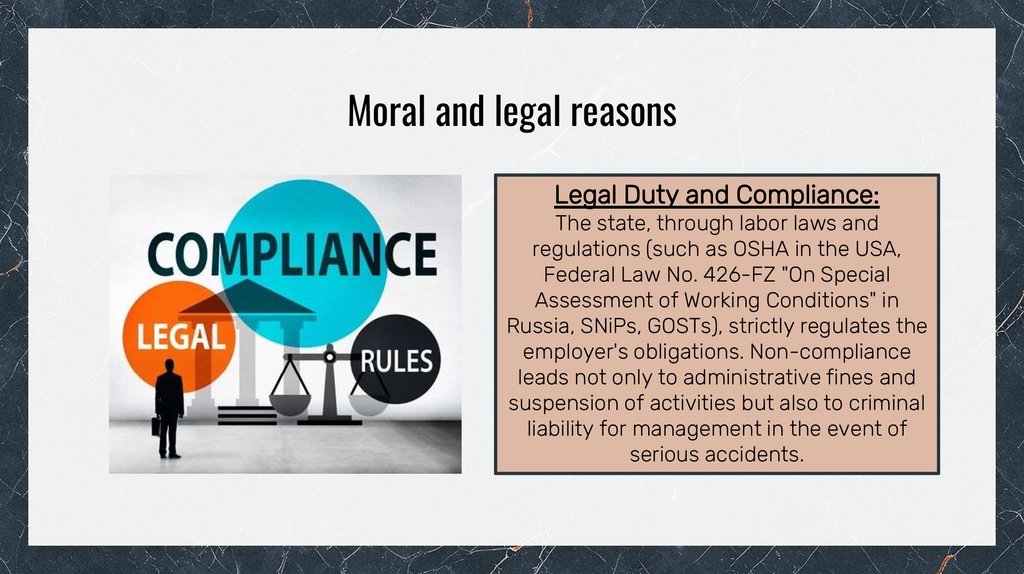
What is the difference between occupational safety and
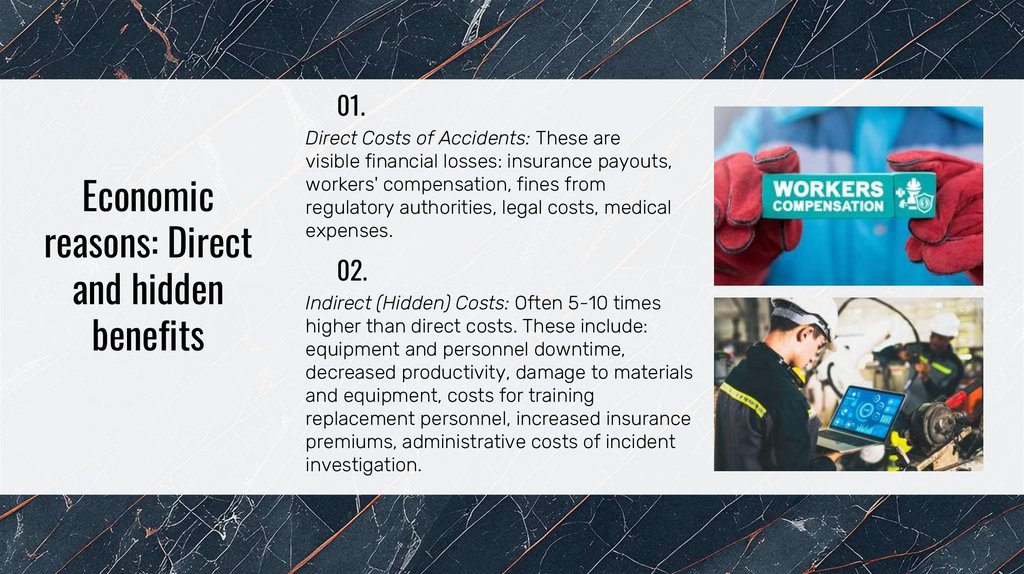
public safety?
2.
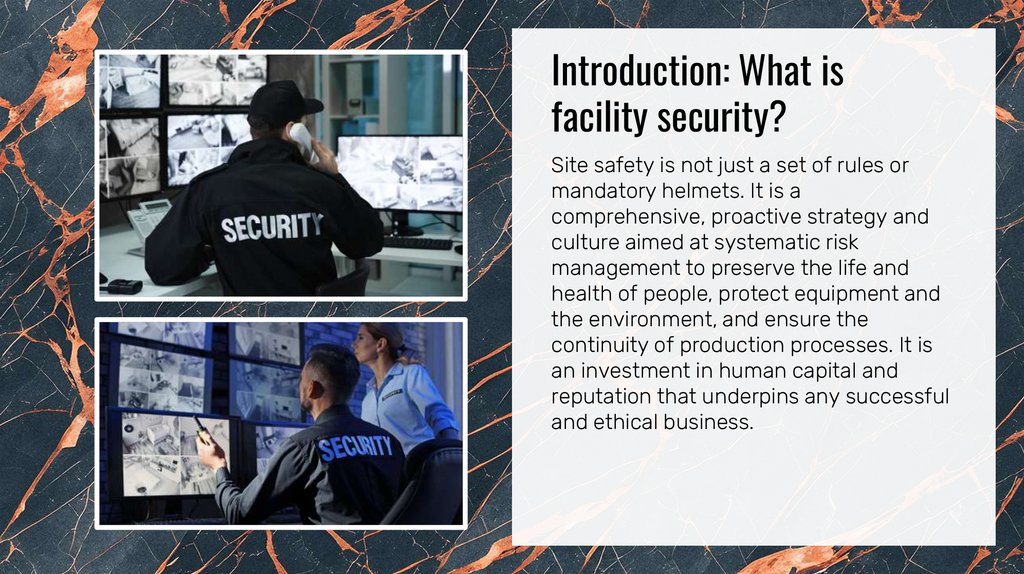
Introduction: What isfacility security?
Site safety is not just a set of rules or
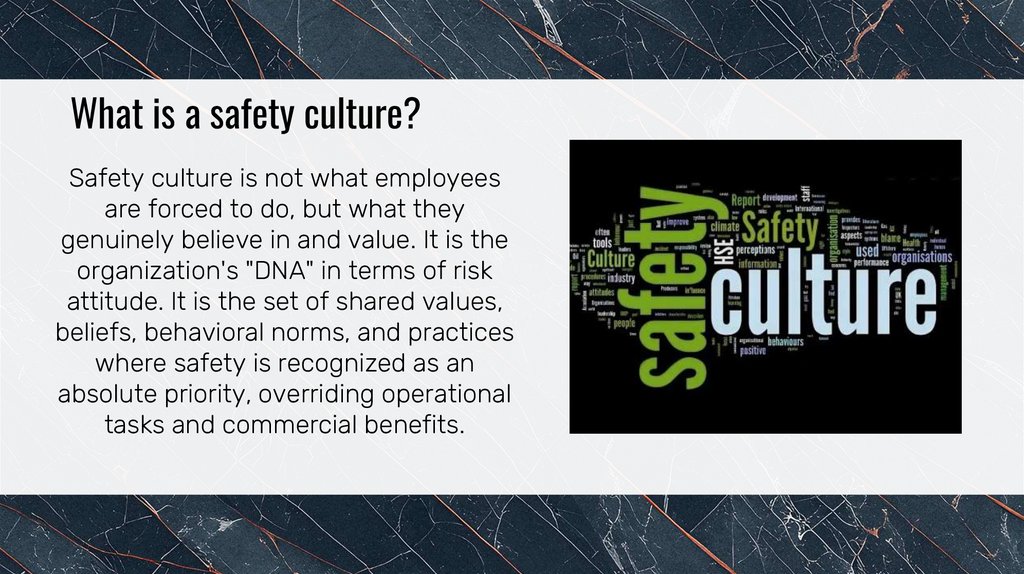
mandatory helmets. It is a
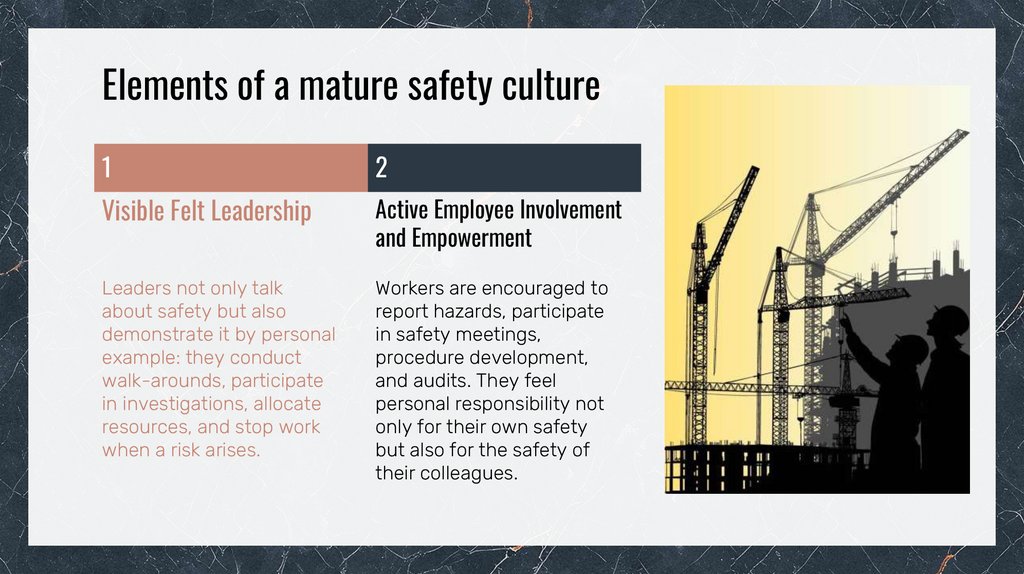
comprehensive, proactive strategy and
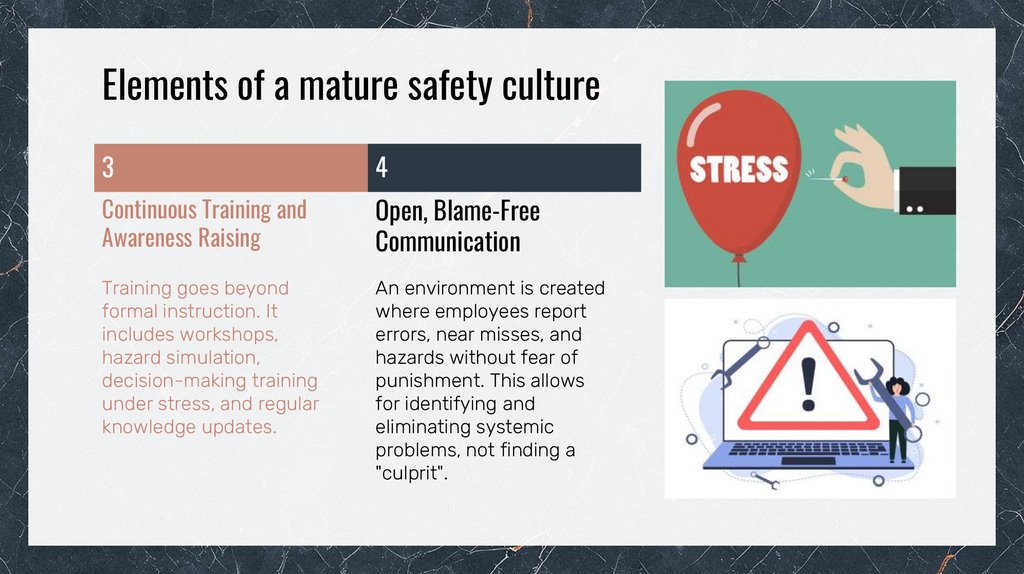
culture aimed at systematic risk
management to preserve the life and
health of people, protect equipment and
the environment, and ensure the
continuity of production processes. It is
an investment in human capital and
reputation that underpins any successful
and ethical business.
3.
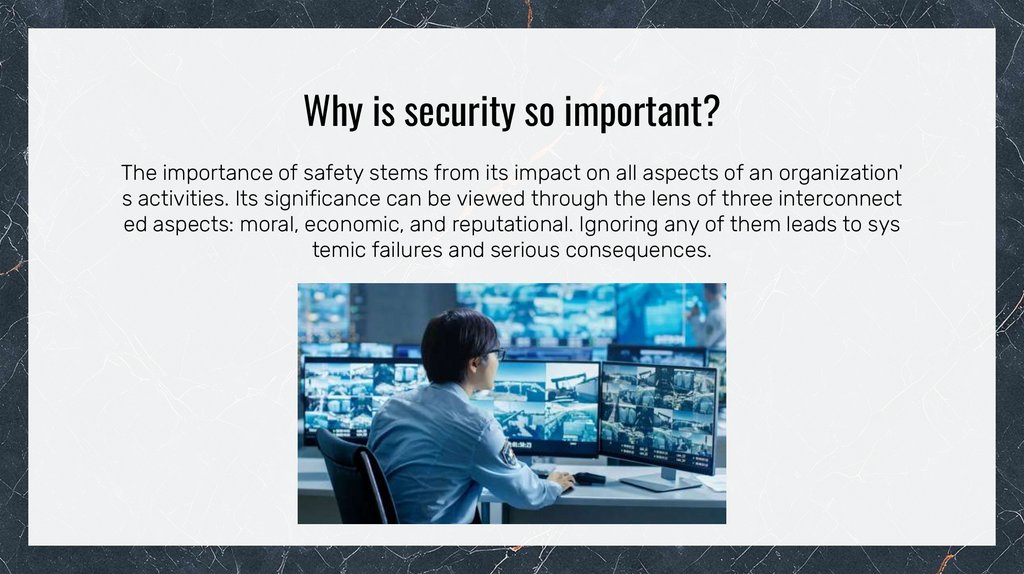
Why is security so important?The importance of safety stems from its impact on all aspects of an organization'
s activities. Its significance can be viewed through the lens of three interconnect
ed aspects: moral, economic, and reputational. Ignoring any of them leads to sys
temic failures and serious consequences.
4.
Moral and legal reasonsMoral and Ethical:
The most fundamental reason.
Every worker is an individual with
a family, plans, and a future. The
employer has the highest moral
responsibility to ensure that
each employee's working day
ends as safely as it began.
Creating safe conditions is a
manifestation of respect for
human life and dignity.
5.
Moral and legal reasonsLegal Duty and Compliance:
The state, through labor laws and
regulations (such as OSHA in the USA,
Federal Law No. 426-FZ "On Special
Assessment of Working Conditions" in
Russia, SNiPs, GOSTs), strictly regulates the
employer's obligations. Non-compliance
leads not only to administrative fines and
suspension of activities but also to criminal
liability for management in the event of
serious accidents.
6.
01.Economic
reasons: Direct
and hidden
benefits
Direct Costs of Accidents: These are
visible financial losses: insurance payouts,
workers' compensation, fines from
regulatory authorities, legal costs, medical
expenses.
02.
Indirect (Hidden) Costs: Often 5-10 times
higher than direct costs. These include:
equipment and personnel downtime,
decreased productivity, damage to materials
and equipment, costs for training
replacement personnel, increased insurance
premiums, administrative costs of incident
investigation.
7.
Economicreasons: Direct
and hidden
benefits
03.
Economic Benefits of Safety:
Reduction of all the above costs,
increased efficiency and work
quality (as safe workers are less
distracted and more focused),
improved morale and reduced
staff turnover.
8.
Reputational reasons and sustainable developmentBusiness Reputation and Trust: A
company with an impeccable safety
record attracts and retains the best
talent, as people want to work where
they are cared for. It also gains more
trust from clients, investors, and
business partners.
9.
Reputational reasons and sustainable developmentCompetitive Advantage: In many industries,
especially in public procurement and major
projects, having a certified occupational
health and safety management system (ISO
45001) and a low Lost Time Injury Frequency
Rate is a mandatory or highly weighted
criterion in contractor selection.
10.
What is a safety culture?Safety culture is not what employees
are forced to do, but what they
genuinely believe in and value. It is the
organization's "DNA" in terms of risk
attitude. It is the set of shared values,
beliefs, behavioral norms, and practices
where safety is recognized as an
absolute priority, overriding operational
tasks and commercial benefits.
11.
Elements of a mature safety culture1
2
Visible Felt Leadership
Active Employee Involvement
and Empowerment
Leaders not only talk
about safety but also
demonstrate it by personal
example: they conduct
walk-arounds, participate
in investigations, allocate
resources, and stop work
when a risk arises.
Workers are encouraged to
report hazards, participate
in safety meetings,
procedure development,
and audits. They feel
personal responsibility not
only for their own safety
but also for the safety of
their colleagues.
12.
Elements of a mature safety culture3
4
Continuous Training and
Awareness Raising
Open, Blame-Free
Communication
Training goes beyond
formal instruction. It
includes workshops,
hazard simulation,
decision-making training
under stress, and regular
knowledge updates.
An environment is created
where employees report
errors, near misses, and
hazards without fear of
punishment. This allows
for identifying and
eliminating systemic
problems, not finding a
"culprit".
13.
Occupational safety vs Public safety− Focus: Protecting employees,
contractors, and any person
present at the workplace in
connection with work-related
tasks.
− Goal: Prevention of occupational
diseases and work-related injuries.
Measures: Special assessment of
working conditions (SAWC), briefings,
issuance and control of PPE use,
investigation of industrial accidents,
medical examinations.
Example: Providing a installer with a
safety harness for work at height.
14.
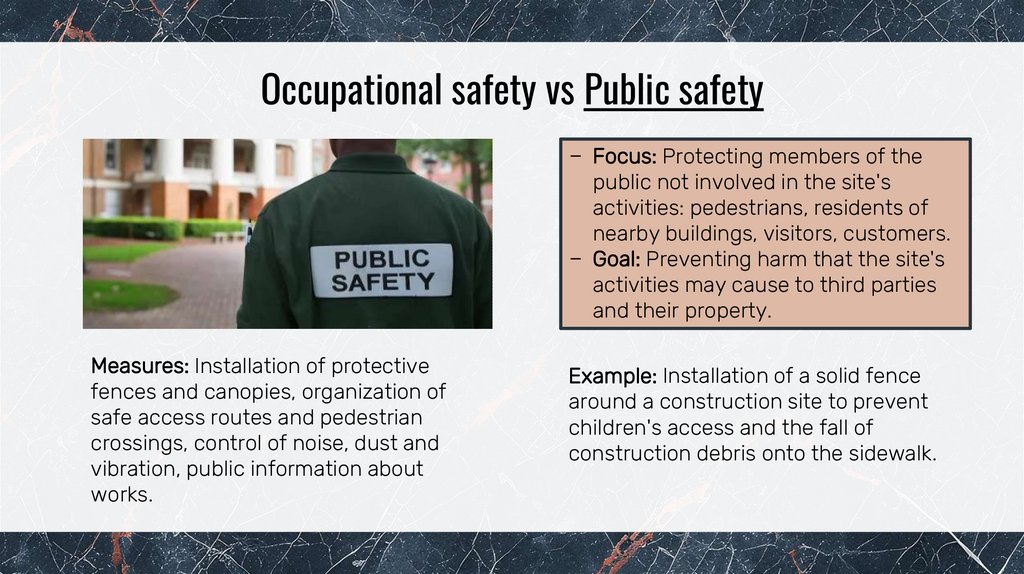
Occupational safety vs Public safety− Focus: Protecting members of the
public not involved in the site's
activities: pedestrians, residents of
nearby buildings, visitors, customers.
− Goal: Preventing harm that the site's
activities may cause to third parties
and their property.
Measures: Installation of protective
fences and canopies, organization of
safe access routes and pedestrian
crossings, control of noise, dust and
vibration, public information about
works.
Example: Installation of a solid fence
around a construction site to prevent
children's access and the fall of
construction debris onto the sidewalk.
15.
A systematic approach:Hierarchy of control measures
For effective risk control, a hierarchy of controls is used,
prioritizing measures from most to least effective:
• Elimination: Physically remove the hazard. (e.g., replace
a toxic chemical with a safe one)
• Substitution: Replace the hazardous process or material
with a less hazardous one. (e.g., use water-based paints
instead of solvent-based ones)
• Engineering Controls: Isolate people from the hazard.
(Guards, ventilation, soundproofing, interlocks)
16.
A systematic approach:Hierarchy of control measures
• Administrative Controls: Change the way people work.
(Procedures, work permits, training, limiting exposure
time, warning signs)
• Personal Protective Equipment: The last line of defense!
Used when all other risks cannot be controlled by other
means. (Helmets, goggles, respirators, safety footwear)
17.
ConclusionAchieving zero harm is an ambitious but
achievable goal. Safety is not a project with an
end date, but a continuous process of
improvement requiring constant effort, learning,
and adaptation. It is a strategic choice that
determines whether a company is merely a
contractor or becomes a responsible partner
and leader in its industry. By investing in safety
today, we are investing in the future of our
employees, our company, and our society.