 economics
Similar presentations:




Economics. Learning objectives
1. Economics
Week 2. Lessons 1-32. Learning objectives
• Understand the formula ofcalculation deposit
profitability and loan
payments.
• Calculate deposit profitability
and loan payments using
simple and compound
interest.
3. Discuss
If you put $100 in a bank at 5%per year, how much will you
have after 1 year?
4. Interest
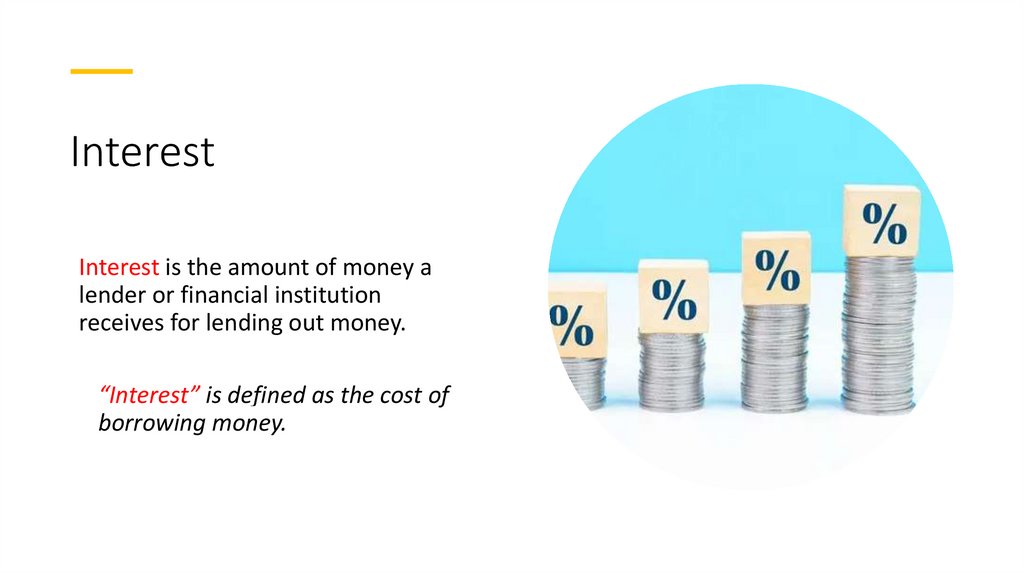
Interest is the amount of money alender or financial institution
receives for lending out money.
“Interest” is defined as the cost of
borrowing money.
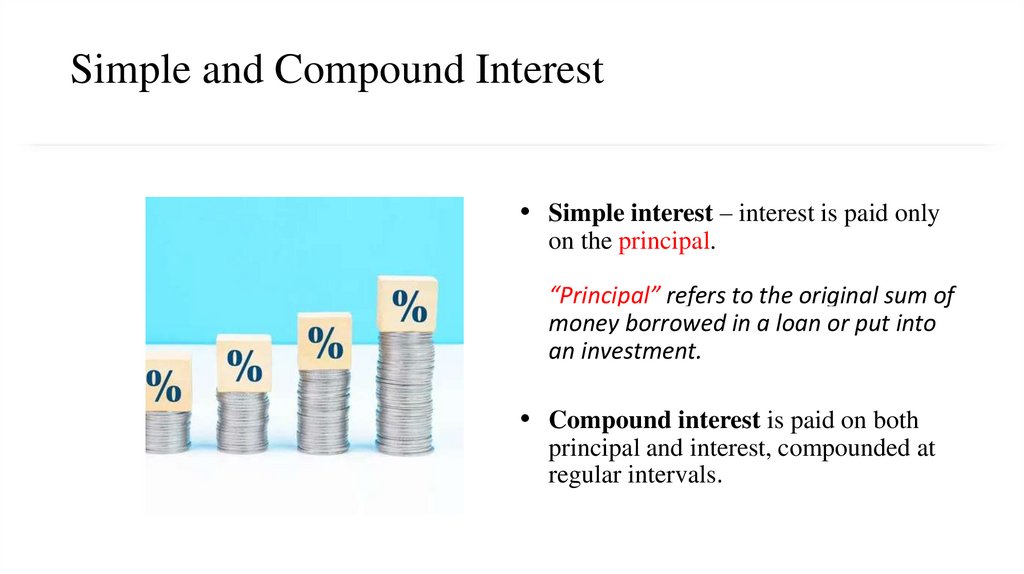
5. Simple and Compound Interest
• Simple interest – interest is paid onlyon the principal.
“Principal” refers to the original sum of
money borrowed in a loan or put into
an investment.
• Compound interest is paid on both
principal and interest, compounded at
regular intervals.
6. Simple Interest Formula
Simple interest = P×i×nwhere:
P=Principal
i=interest rate
n=term of the loan (in years)
Simple Interest
Formula
7. Example
Example: a $1000 principal paying 10%simple interest after 3 years pays.
1000$ ×0.1 ×3 = $300
Simple interest = P×i×n
(0.1= 10%:100)
where:
P=Principal
i=interest rate
n=term of the loan (in years)
8. Compound interest
If interest is compounded annually, it pays0.1 × $1000 = $100 the first year,
0.1 × $1100 = $110 the second year and
0.1 × $1210 = $121 the third year
totaling $100 + $110 + $121 = $331 interest
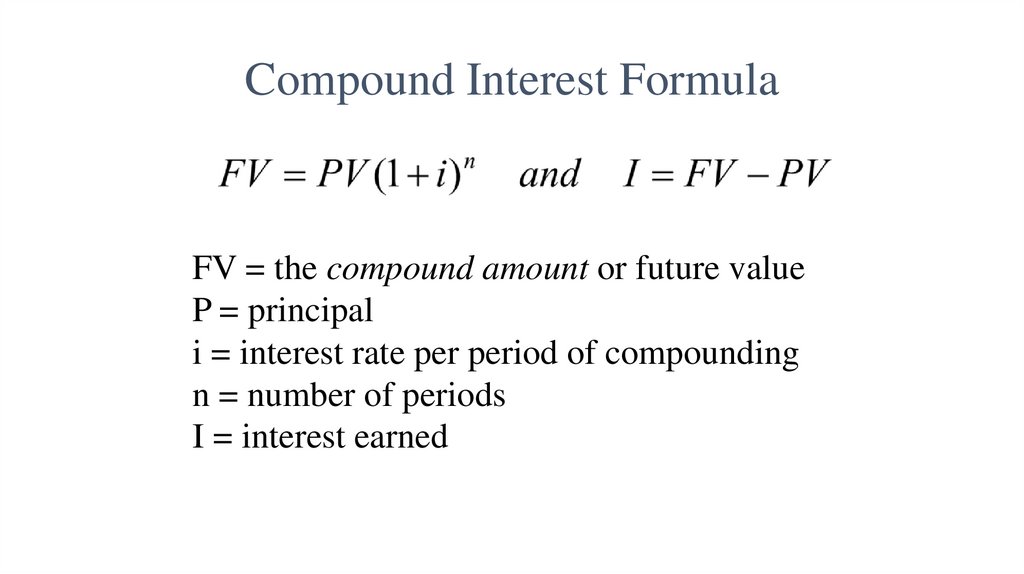
9. Compound Interest Formula
FV = the compound amount or future valueP = principal
i = interest rate per period of compounding
n = number of periods
I = interest earned
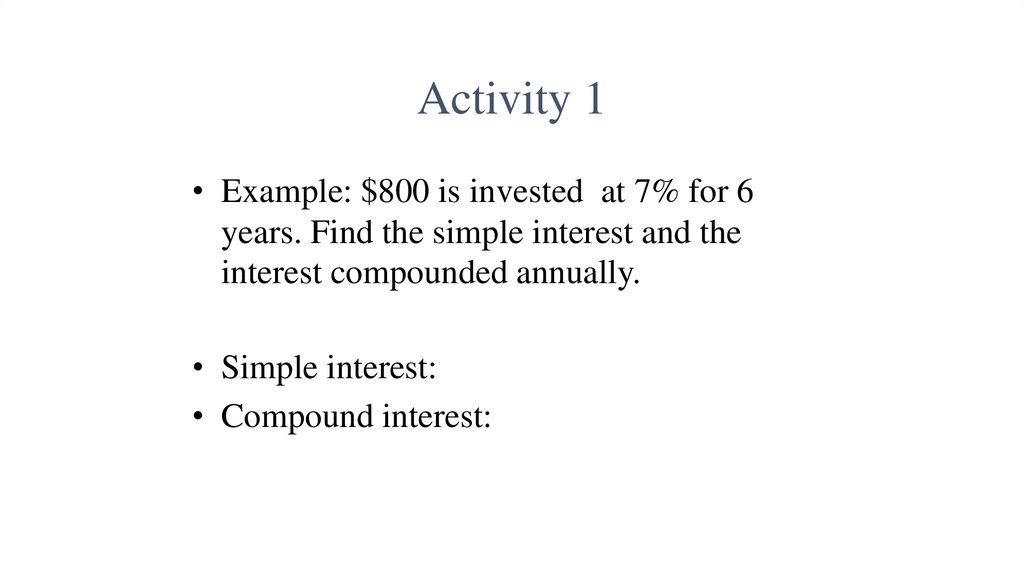
10. Activity 1
• Example: $800 is invested at 7% for 6years. Find the simple interest and the
interest compounded annually.
• Simple interest:
• Compound interest:
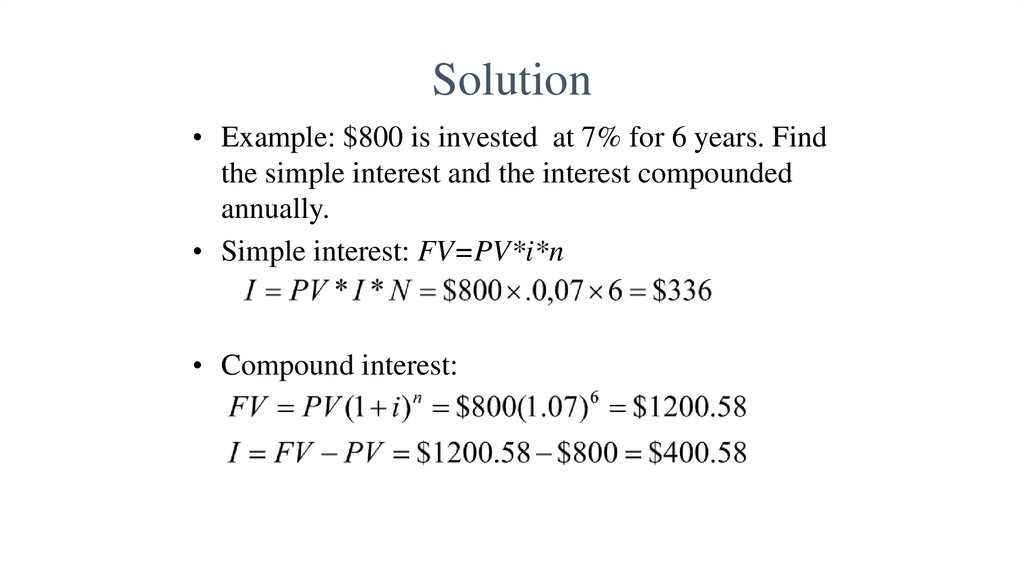
11. Solution
• Example: $800 is invested at 7% for 6 years. Findthe simple interest and the interest compounded
annually.
• Simple interest: FV=PV*i*n
• Compound interest:
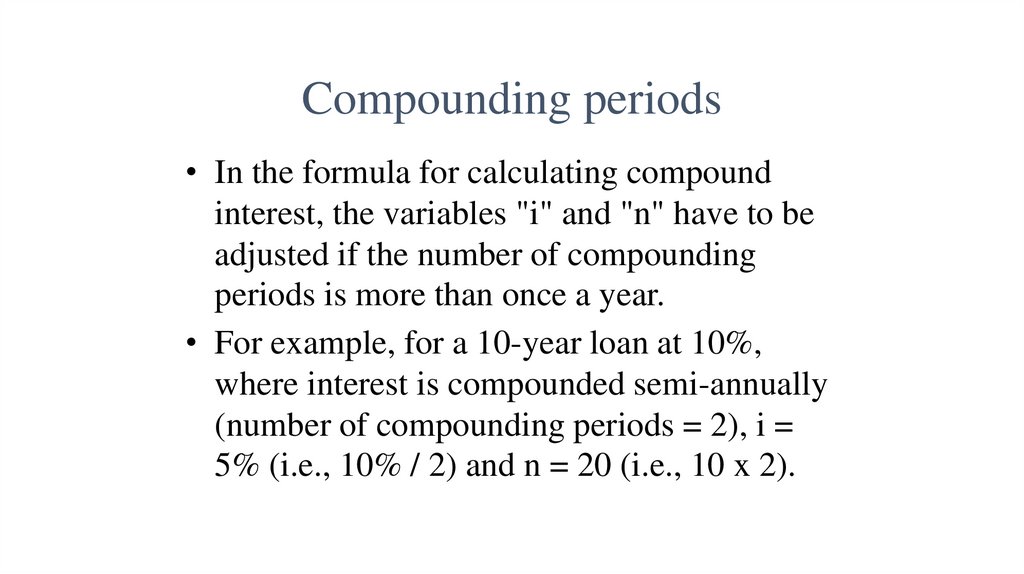
12. Compounding periods
• In the formula for calculating compoundinterest, the variables "i" and "n" have to be
adjusted if the number of compounding
periods is more than once a year.
• For example, for a 10-year loan at 10%,
where interest is compounded semi-annually
(number of compounding periods = 2), i =
5% (i.e., 10% / 2) and n = 20 (i.e., 10 x 2).
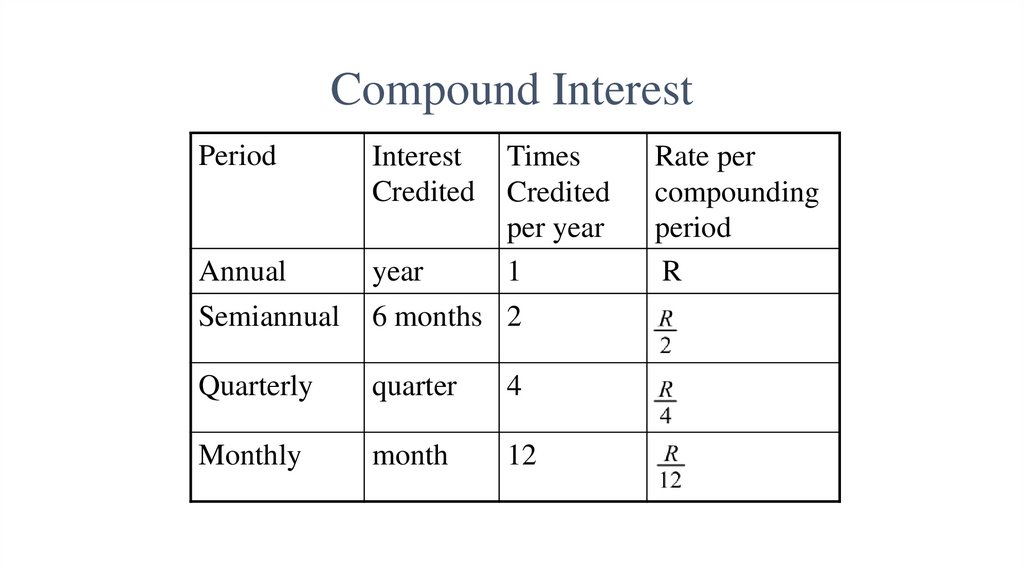
13. Compound Interest
PeriodInterest
Credited
Annual
year
Semiannual
6 months 2
Quarterly
quarter
4
Monthly
month
12
Times
Credited
per year
1
Rate per
compounding
period
R
14. Compound Interest
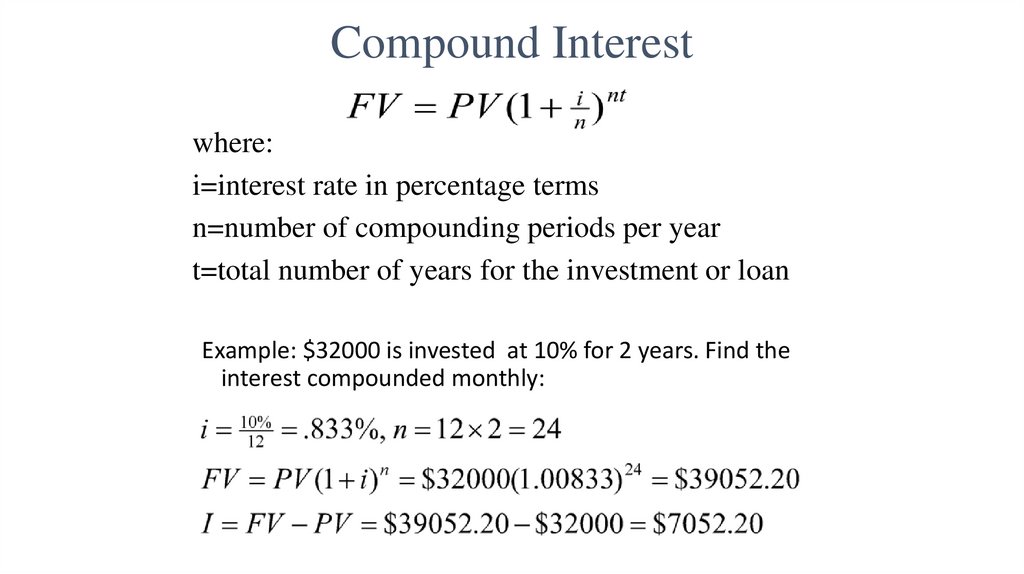
where:i=interest rate in percentage terms
n=number of compounding periods per year
t=total number of years for the investment or loan
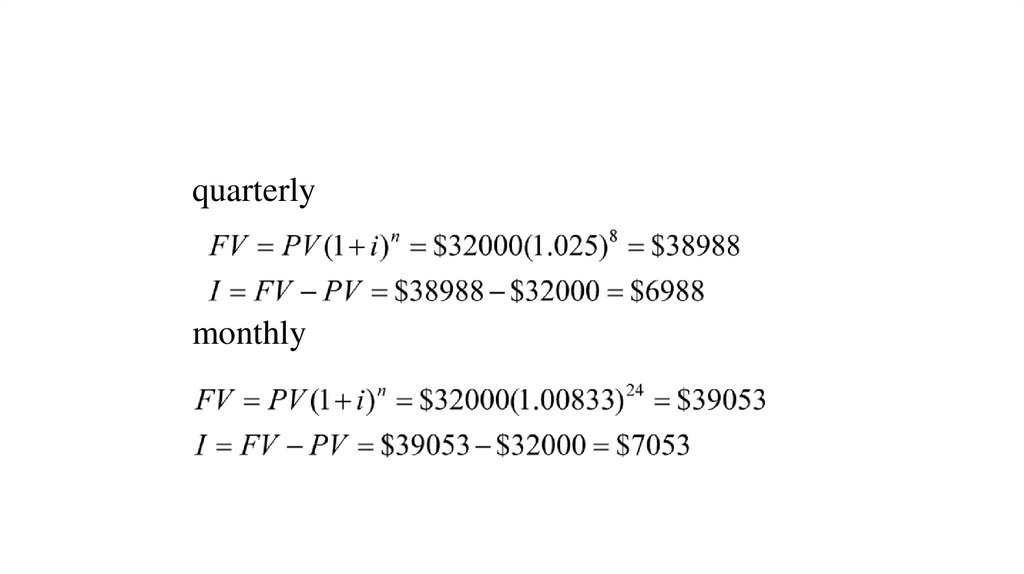
Example: $32000 is invested at 10% for 2 years. Find the
interest compounded monthly:
15. Activity 1
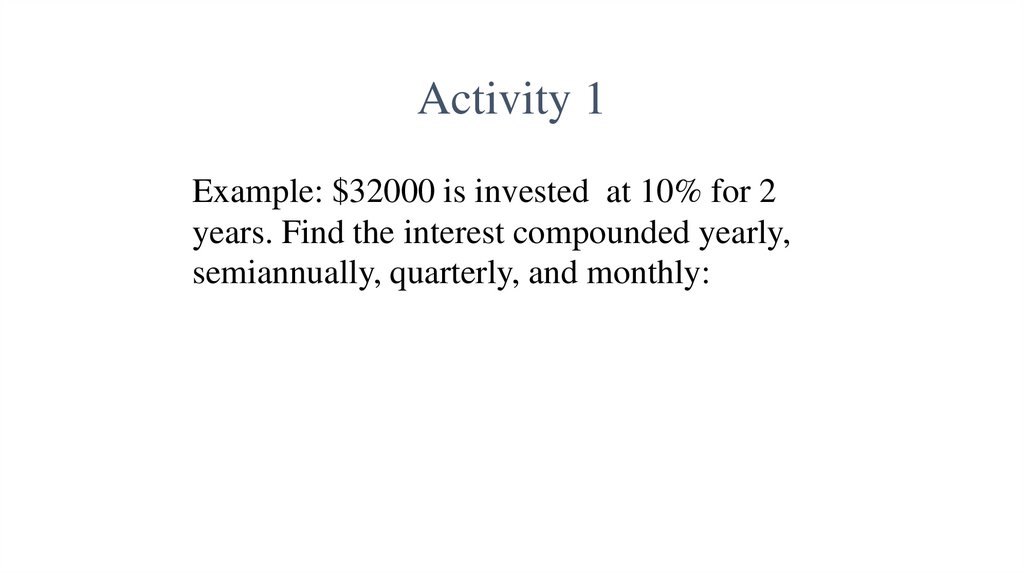
Example: $32000 is invested at 10% for 2years. Find the interest compounded yearly,
semiannually, quarterly, and monthly:
16. Answer
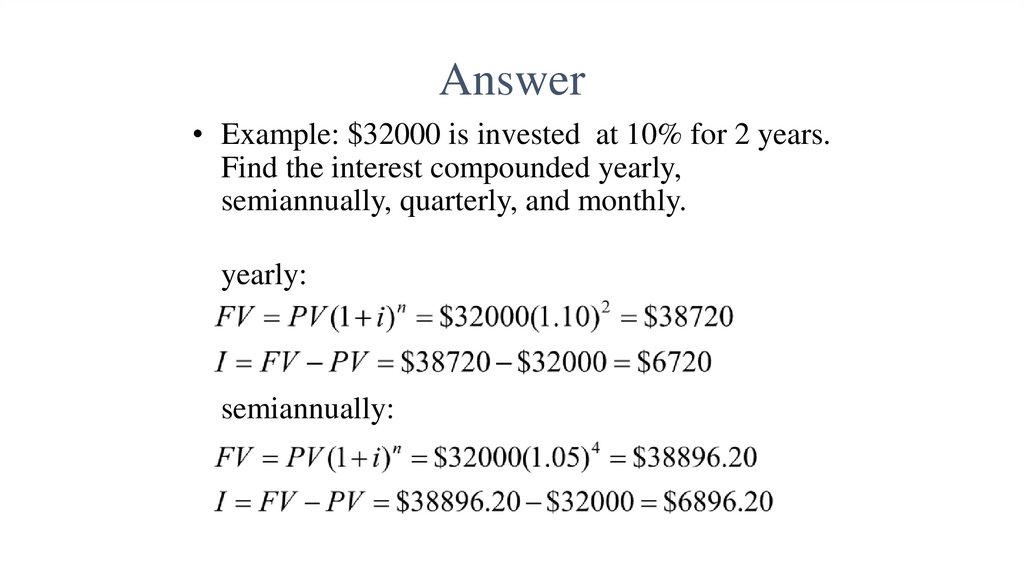
• Example: $32000 is invested at 10% for 2 years.Find the interest compounded yearly,
semiannually, quarterly, and monthly.
yearly:
semiannually:
17.
quarterlymonthly
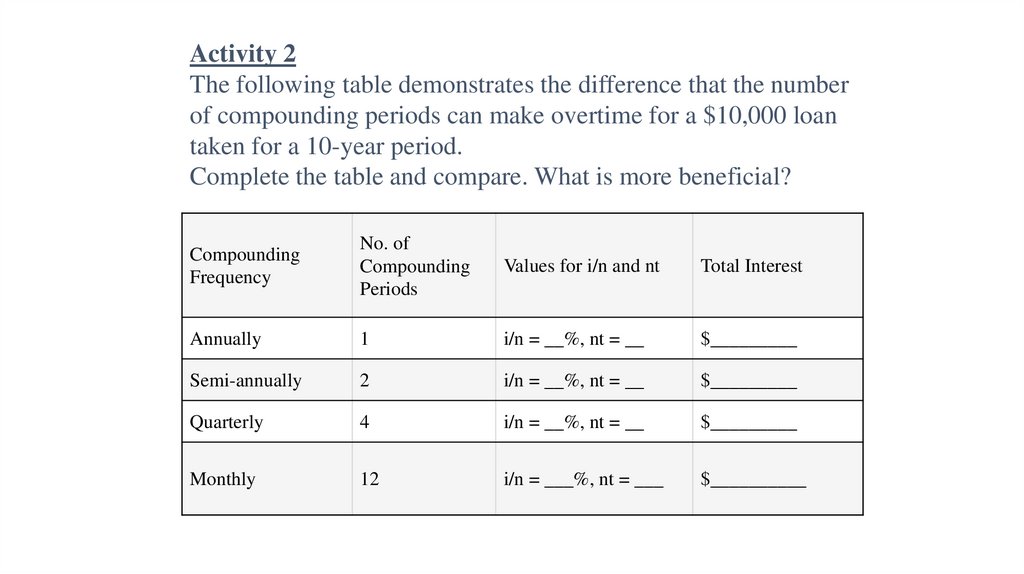
18. Activity 2 The following table demonstrates the difference that the number of compounding periods can make overtime for a
$10,000 loantaken for a 10-year period.
Complete the table and compare. What is more beneficial?
Compounding
Frequency
No. of
Compounding
Periods
Values for i/n and nt
Total Interest
Annually
1
i/n = __%, nt = __
$_________
Semi-annually
2
i/n = __%, nt = __
$_________
Quarterly
4
i/n = __%, nt = __
$_________
Monthly
12
i/n = ___%, nt = ___
$__________
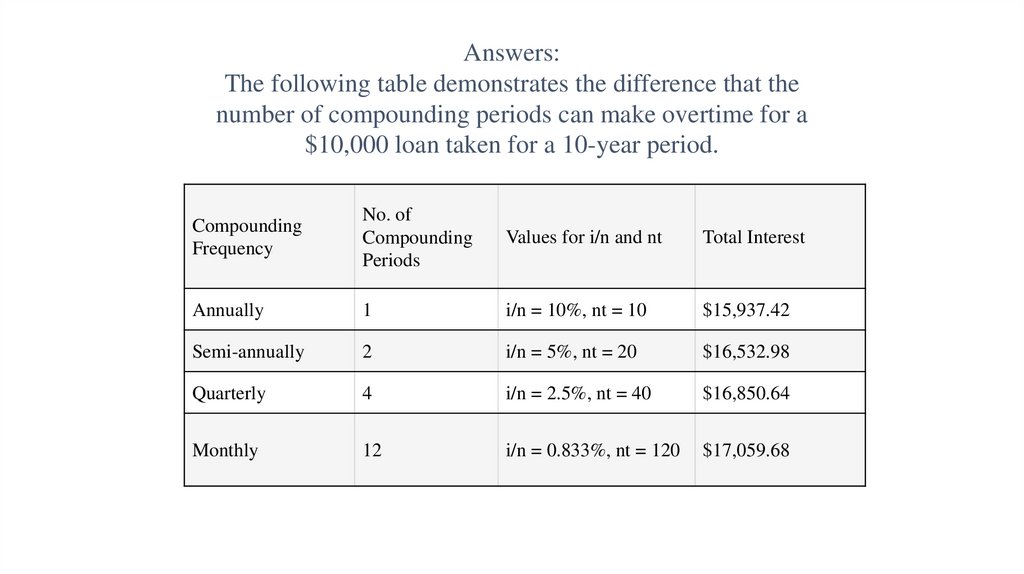
19. Answers: The following table demonstrates the difference that the number of compounding periods can make overtime for a $10,000
loan taken for a 10-year period.Compounding
Frequency
No. of
Compounding
Periods
Values for i/n and nt
Total Interest
Annually
1
i/n = 10%, nt = 10
$15,937.42
Semi-annually
2
i/n = 5%, nt = 20
$16,532.98
Quarterly
4
i/n = 2.5%, nt = 40
$16,850.64
Monthly
12
i/n = 0.833%, nt = 120
$17,059.68
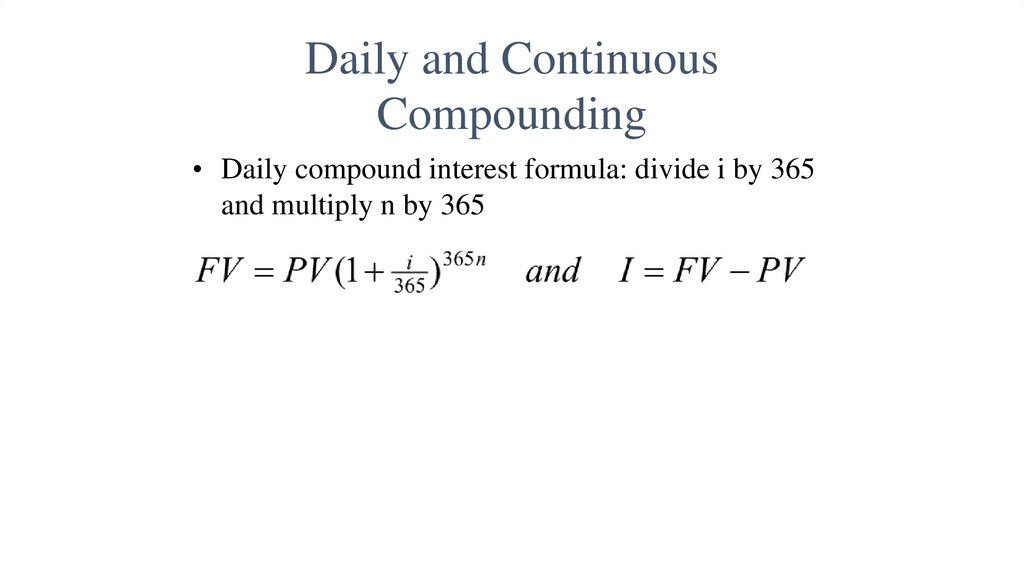
20. Daily and Continuous Compounding
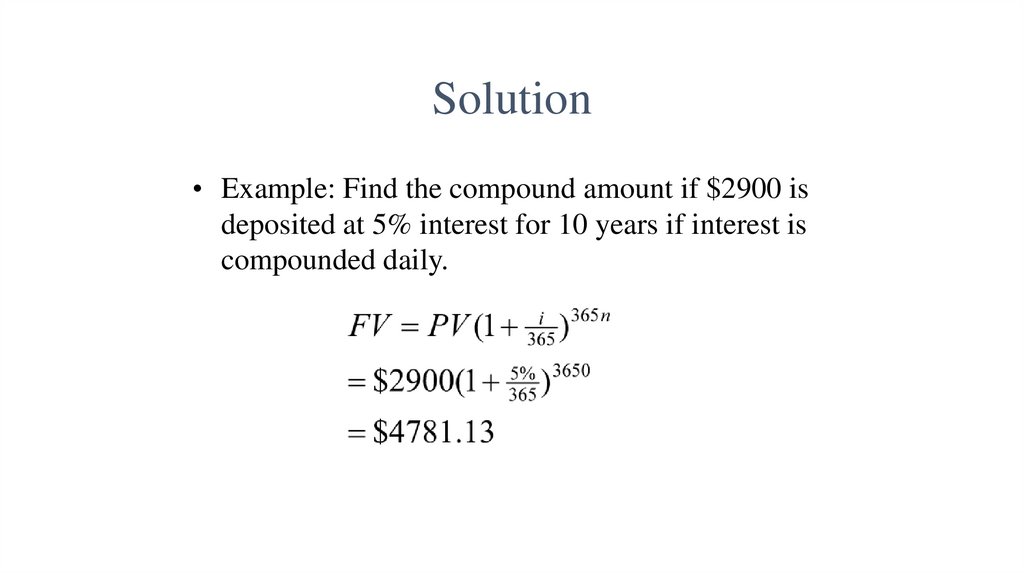
• Daily compound interest formula: divide i by 365and multiply n by 365
21. Activity Daily and Continuous Compounding
• Example: Find the compound amount if$2900 is deposited at 5% interest for 10
years if interest is compounded daily.
22. Solution
• Example: Find the compound amount if $2900 isdeposited at 5% interest for 10 years if interest is
compounded daily.